
lovethailand home >North Travel Attractions >Chiang Mai Travel Attractions >Doi Lo >Yang Khram > Wat Don Chai (Yang Kram)
TL;DR: Wat Don Chai (Yang Kram) is located at Ban Don Chai, Moo 5, Yang Kram Subdistrict, Doi Lo District, Chiang Mai 50160, Thailand, open Daily, hours 08:00 - 17:00.

Wat Don Chai (Yang Kram)
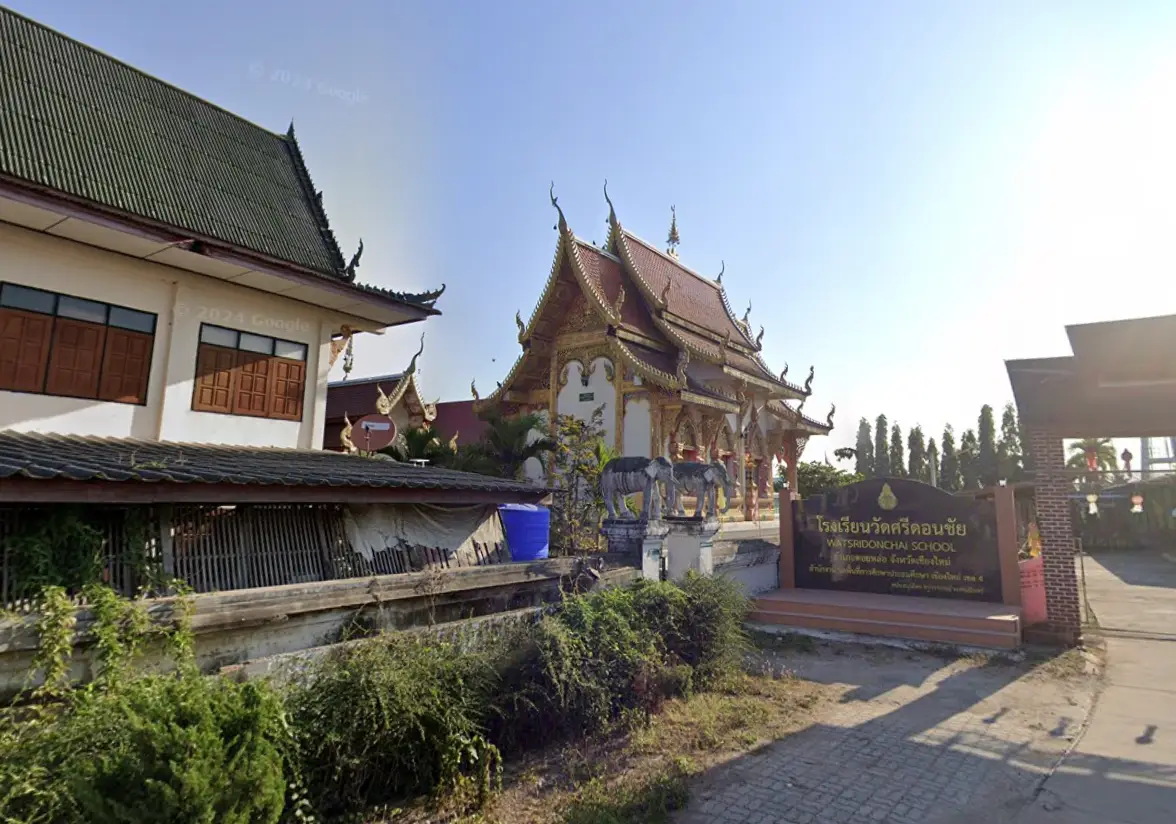
Open Days: Daily
Opening Hours: 08:00 - 17:00
Wat Don Chai (Yang Kram) is a community Buddhist temple of the Maha Nikaya order located in Ban Don Chai, Moo 5, Yang Kram Subdistrict, Doi Lo District, Chiang Mai Province 50160. Its official temple code is 350240302. The temple was officially established in 1887 and received a royal grant of Wisungkhamasima in 1950. With a history of more than 130 years, Wat Don Chai is one of the long-established community temples of the Doi Lo area and remains part of the active Maha Nikaya Sangha system today.
The temple should always be identified together with “Yang Kram” and “Doi Lo” because several Buddhist temples in Chiang Mai and northern Thailand share the name Wat Don Chai or Wat Don Chaiy. The temple covered here is specifically Wat Don Chai in Moo 5, Yang Kram Subdistrict, Doi Lo District, temple code 350240302.
Ban Don Chai is Moo 5 of Yang Kram Subdistrict, one of Doi Lo's rural agricultural communities. Yang Kram contains a network of villages including Huai Nam Khao, Mai Phatthana, Yang Kram, Huai Rak Mai, Don Chai, Si Daen Mueang, Mae Ao, Mai Don Chai, Huai Rak Mai Bon, Phanang, and Nong Muang. Buddhist temples are distributed among these communities and form an important part of the area's social and cultural landscape.
Wat Don Chai was established in 1887, decades before Doi Lo became a separate district. The temple therefore belongs to an earlier period in the history of the region, when the area was administratively connected with the wider Chom Thong territory. Its continued presence provides a direct link between today's Doi Lo communities and their nineteenth-century religious landscape.
For a Lanna village in the late nineteenth century, a temple was far more than a place containing Buddha images. It served as a center for religious ceremonies, community gatherings, Buddhist teaching, seasonal festivals, and social relationships between monks and lay residents. The establishment of Wat Don Chai therefore represented the creation of an enduring community institution for Ban Don Chai.
More than six decades after its establishment, Wat Don Chai received a royal grant of Wisungkhamasima in 1950. The Wisungkhamasima is the formally consecrated area used by the Sangha for important ecclesiastical ceremonies, particularly ordination. Receiving this grant marked an important stage in the temple's institutional development.
The two major dates, 1887 and 1950, illustrate the gradual growth of the monastery from a village religious foundation into a temple equipped to support formal Sangha functions. Such development required long-term cooperation among monks and lay supporters and reflects the continuity of Buddhist faith in the surrounding community.
Wat Don Chai is currently registered as a Maha Nikaya temple under code 350240302 and belongs to the Yang Kram Sangha administrative area together with other temples including Wat Mai Phatthana, Wat Nong Lua, Wat Yang Kram, Wat Si Sai Mun, Wat Chetawan, Wat Si Daen Mueang, and Wat Ban Tham.
Recent monastic records also confirm the continuing presence of monks affiliated with the temple. In 2025, Phra Niphad Chinawangso Tawanphailin was officially recorded as a monk of Wat Don Chai, Yang Kram, Doi Lo, in Sangha documentation concerning travel to Buddhist sacred sites in India, Nepal, and Sri Lanka.
The most recent public record does not clearly identify a current abbot in a way that can be separated with complete certainty from the several other temples named Wat Don Chai. For that reason, no unverified abbot name is assigned. Phra Niphad Chinawangso is mentioned specifically as a monk affiliated with the temple in a contemporary official record.
Wat Don Chai also continues to play a role in Buddhist education. Chiang Mai Dhamma-study examination records for 2024 and 2025 include students affiliated with Wat Don Chai. This shows that the monastery remains connected with the religious education of younger generations rather than functioning only as a ceremonial place for adults.
Dhamma studies maintain an important relationship between schools and temples. Although formal education now takes place primarily in modern schools, local monasteries continue to support moral education, Buddhist teaching, and knowledge of religious traditions. Wat Don Chai therefore preserves one of the classic educational roles of northern Thai temples in a contemporary form.
The temple is located at approximately 18.55377, 98.83408 in Ban Don Chai. The surrounding area is a rural agricultural landscape connected with Yang Kram, Mai Don Chai, Si Daen Mueang, and other nearby settlements. The atmosphere is distinctly different from the tourist-heavy temple districts of central Chiang Mai.
The name “Don Chai” combines a geographic and auspicious character typical of northern Thai place names. “Don” commonly refers to raised land or slightly elevated ground, while “chai” carries the meaning of victory or auspicious success. No surviving public historical record establishes a specific founding legend for the name, so the traditional place name is preserved without adding an unsupported story.
Government records concerning Ban Don Chai also reflect the agricultural character of the community, including projects related to irrigation channels and local roads. This context helps explain the temple's setting within a landscape where agriculture, water management, village infrastructure, and Buddhist community life have long been closely connected.
Detailed public architectural records for individual structures at this specific Wat Don Chai remain limited. Exact construction dates, restoration histories, and artistic classifications for the viharn, chedi, principal Buddha image, bell tower, and sermon hall are not sufficiently documented for precise attribution. The strongest historical facts are therefore the temple's 1887 foundation, the 1950 Wisungkhamasima, and its continuous religious use.
Visitors should focus on the active Buddhist spaces that are open on the day of their visit, pay respect to the Buddha, and walk through the grounds quietly. Wat Don Chai is particularly suitable for travelers interested in village Buddhism, local history, and the everyday religious culture of rural Chiang Mai rather than monumental tourist architecture.
One of the temple's most important qualities is continuity. Wat Don Chai existed long before Doi Lo became a modern district and has remained part of local religious life through changes in administration, roads, agriculture, and settlement patterns. This long continuity gives the temple historical value without the need for an exaggerated miracle narrative.
Kathin is one of the important traditions connected with community monasteries such as Wat Don Chai. The temple has appeared in Chiang Mai Sangha documentation related to Kathin sponsorship, confirming its participation in the annual robe-offering tradition after Buddhist Lent.
Other important periods include Buddhist holy days, Makha Bucha, Visakha Bucha, Asalha Bucha, the beginning and end of Buddhist Lent, forest-robe offerings, and family merit-making ceremonies. The exact annual schedule varies, so visitors interested in a particular ceremony should check the current year's local announcement.
The atmosphere of the monastery can change considerably depending on the day. Ordinary weekdays are generally quiet and suitable for personal worship or contemplation, while Buddhist holy days and community ceremonies bring more local residents into the temple. Visitors should always remember that the monastery's primary role is to serve its Buddhist community.
Appropriate temple etiquette includes modest clothing, covering shoulders and knees inside religious buildings, removing shoes where required, speaking quietly, and avoiding unnecessary contact with Buddha images or sacred objects. Monks' residential areas should not be entered without permission, and visitors should ask before photographing monks or private ceremonies.
The temple is open daily from 08:00 to 17:00. Morning is particularly suitable for visitors seeking a peaceful atmosphere, while the afternoon works well as a cultural stop when traveling between Chiang Mai, San Pa Tong, and Doi Lo. No official admission charge is published, and visitors may make voluntary merit donations.
Getting There from central Chiang Mai is straightforward. Follow Highway 108, the Chiang Mai-Hot Road, south through Hang Dong and San Pa Tong into Doi Lo District. Continue into Yang Kram Subdistrict and Ban Don Chai, Moo 5. Search for “Wat Don Chai, Yang Kram, Doi Lo, Chiang Mai” or use the coordinates 18.55377, 98.83408.
The temple can be combined easily with several nearby temples and cultural attractions in Yang Kram, making the area suitable for a half-day or full-day cultural route without returning to Chiang Mai city between stops.
Wat Yang Kram is approximately 1 kilometer away and serves another nearby community within the same subdistrict. Visiting both temples provides a useful perspective on the close relationship between individual villages and their local Buddhist institutions.
Wat Mai Phatthana is approximately 1.9 kilometers from Wat Don Chai. It can be included easily in a compact merit-making route through Yang Kram.
Wat Chetawan lies roughly 1.5 kilometers away and belongs to the same Sangha administrative network. Together, these nearby monasteries illustrate how Buddhist temples are distributed across the villages of Yang Kram.
The Ganesha Himal Museum is approximately 1.2 kilometers from the temple and provides a contrasting cultural experience focused on Ganesha-related art and belief. It offers an interesting addition to an itinerary otherwise centered on Buddhist village temples.
Wat Ban Tham is approximately 4.8 kilometers away and can be added to a longer Yang Kram cultural route. Travelers with more time can continue toward other Doi Lo temples and the district's wider cultural landscape.
Nearby food and café options include Hop Chafe, only about 0.2 kilometers from the temple; Lake Restaurant, about 4.2 kilometers away, Tel. 081-606-1426; and Rin Coffee at Doi Lo, approximately 4.7 kilometers away, Tel. 089-953-8276.
Along the wider Chiang Mai-Hot corridor, Ta Ton Yon Coffee&Cafe is around 7.8 kilometers from the temple, Tel. 052-000-566, while PHANSA COFFEE is approximately 11.2 kilometers away, Tel. 099-272-9849.
Green Tree Resort is one of the closest accommodation options, approximately 1.1 kilometers away, Tel. 063-383-3183. The Starly Night Cottage is around 5.9 kilometers away, Tel. 081-939-5610. De Aerng Boutique Hotel is approximately 12.3 kilometers away, Tel. 061-316-0822.
Baan Rim Ping River Side Resort is approximately 15.9 kilometers from the temple, Tel. 089-894-9172. Travelers extending their journey toward Lamphun may also consider Phu Proud Resort, approximately 10.8 kilometers away, Tel. 093-140-5414.
A practical half-day itinerary can begin at Wat Don Chai in the morning, continue to Wat Yang Kram, Wat Mai Phatthana, and the Ganesha Himal Museum, and finish with lunch or coffee in Yang Kram. A full-day route can also include Wat Chetawan, Wat Ban Tham, and additional temples in central Doi Lo.
The strength of this route lies in the opportunity to see several community temples within a single subdistrict. Their close spacing reflects the traditional Lanna settlement pattern in which individual villages maintained their own religious centers rather than depending entirely on one large regional monastery.
Wat Don Chai also provides valuable historical perspective because it predates the modern administrative district of Doi Lo by more than a century. Doi Lo became a minor district in 1995 and a full district in 2007, while Wat Don Chai had already been serving the local Buddhist community since 1887.
The 1950 Wisungkhamasima adds another important institutional layer. The consecrated boundary enabled the Sangha to conduct formal ceremonies such as ordination, demonstrating that the temple had developed into a fully functioning monastic institution long before the creation of modern Doi Lo District.
Within the community, the monastery connects several generations. Older residents attend merit-making ceremonies, families use the temple for important life events, young people study Buddhist teachings, and monks continue their religious duties. This relationship gives Wat Don Chai continuing social significance beyond its age alone.
Travelers accustomed to Chiang Mai's famous city temples will find a very different atmosphere here. Wat Don Chai offers an opportunity to experience a monastery in the context of an agricultural village, with far less commercial tourism and a stronger sense of everyday local religious life.
For photography, the most meaningful subjects are the temple grounds, religious buildings, village atmosphere, and surrounding rural landscape. Visitors should avoid intrusive photography during ceremonies and always respect the privacy of monks and local residents.
Wat Don Chai does not need a famous miracle legend or nationally celebrated monument to be significant. Its value comes from more than 130 years of continuous community use, its royal consecrated boundary dating from 1950, its place within the contemporary Sangha, and its continuing relationship with Buddhist education.
From its establishment in 1887 to the present, Wat Don Chai forms part of the historical timeline of Ban Don Chai and Yang Kram. It has endured changes in administration, transportation, agriculture, and modern development while continuing to serve as a Buddhist center for the local community.
For travelers exploring old temples in Doi Lo, Wat Don Chai is a worthwhile cultural stop. A visit combines Buddhist worship, local history, and an opportunity to experience the quieter community landscape of southern Chiang Mai beyond the province's major tourist temples.
| Name | Wat Don Chai (Yang Kram) |
| Temple Type | Community Buddhist Temple, Maha Nikaya |
| Temple Code | 350240302 |
| Address | Ban Don Chai, Moo 5, Yang Kram Subdistrict, Doi Lo District, Chiang Mai 50160, Thailand |
| Coordinates | Approx. 18.55377, 98.83408 |
| Established | 1887 (B.E. 2430) |
| Wisungkhamasima | Royal consecrated boundary granted in 1950 (B.E. 2493) |
| Sangha Administration | Yang Kram Sangha administrative area |
| Monk In Recent Records | Phra Niphad Chinawangso Tawanphailin, affiliated with Wat Don Chai in 2025 Sangha documentation |
| Buddhist Education | Students continue to appear under Wat Don Chai in Chiang Mai Dhamma-study examination records |
| Highlights | Historic community temple founded in 1887, royal Wisungkhamasima granted in 1950, and continuing religious and educational links with Ban Don Chai |
| Open Days | Daily |
| Opening Hours | 08:00 - 17:00 |
| Admission | No official admission fee is published |
| Getting There | Follow Highway 108 south from Chiang Mai through Hang Dong and San Pa Tong into Doi Lo, then continue to Yang Kram Subdistrict and Ban Don Chai, Moo 5. Search for “Wat Don Chai, Yang Kram, Doi Lo, Chiang Mai” or use the coordinates. |
| Current Status | Active Maha Nikaya temple with monks affiliated in contemporary Sangha records |
| Nearby Tourist Attractions | 1. Wat Yang Kram, about 1 km 2. Ganesha Himal Museum, about 1.2 km, Tel. 053-024-287 3. Wat Chetawan, about 1.5 km 4. Wat Mai Phatthana, about 1.9 km 5. Wat Ban Tham, about 4.8 km |
| Nearby Restaurants And Cafés | 1. Hop Chafe, about 0.2 km 2. Lake Restaurant, about 4.2 km, Tel. 081-606-1426 3. Rin Coffee at Doi Lo, about 4.7 km, Tel. 089-953-8276 4. Ta Ton Yon Coffee&Cafe, about 7.8 km, Tel. 052-000-566 5. PHANSA COFFEE, about 11.2 km, Tel. 099-272-9849 |
| Nearby Accommodations | 1. Green Tree Resort, about 1.1 km, Tel. 063-383-3183 2. The Starly Night Cottage, about 5.9 km, Tel. 081-939-5610 3. Phu Proud Resort, about 10.8 km, Tel. 093-140-5414 4. De Aerng Boutique Hotel, about 12.3 km, Tel. 061-316-0822 5. Baan Rim Ping River Side Resort, about 15.9 km, Tel. 089-894-9172 |
Frequently Asked Questions (FAQ)
Q: Where is Wat Don Chai in Doi Lo?
A: It is located in Ban Don Chai, Moo 5, Yang Kram Subdistrict, Doi Lo District, Chiang Mai 50160, at approximately 18.55377, 98.83408.
Q: When was Wat Don Chai established?
A: Wat Don Chai was officially established in 1887, making it one of the long-established community temples in the Doi Lo area.
Q: When did the temple receive its Wisungkhamasima?
A: The royal consecrated boundary was granted in 1950, allowing formal Sangha ceremonies to be conducted within the designated sacred area.
Q: Is Wat Don Chai still an active temple?
A: Yes. It remains listed as a Maha Nikaya temple, and a monk affiliated with Wat Don Chai appears in official Sangha documentation from 2025.
Q: Is there an admission fee?
A: No official admission fee is published. Visitors may make voluntary merit donations.
Q: What are the opening hours?
A: The temple is open daily from 08:00 to 17:00. Access to individual buildings may vary according to temple activities.
Q: What role does Wat Don Chai play in the community?
A: It serves as a Buddhist center for Ban Don Chai, supports merit-making and community ceremonies, and remains connected with Buddhist education through Dhamma-study examinations.
Q: What nearby places can be combined with a visit?
A: Nearby options include Wat Yang Kram, the Ganesha Himal Museum, Wat Chetawan, Wat Mai Phatthana, and Wat Ban Tham.
 Category: ●Places of Worship
 Group: ●Temple
Last Update : 2 MonthAgo
 Last Update : 2 MonthAgo
 Click to Access the Navigation Map GPS
Wat Don Chai (Yang Kram) Map
Recommend

 Muang Chiang Mai(121)Chom Thong(47)Mae Chaem(25)Chiang Dao(33)Doi Saket(68)Mae Taeng(85)Mae Rim(69)Samoeng(29)Fang(71)Mae Ai(59)Phrao(70)San Pa Tong(103)San Kamphaeng(66)San Sai(73)Hang Dong(73)Hot(32)Doi Tao(22)Omkoi(11)Saraphi(74)Wiang Haeng(15)Chai Prakan(28)Mae Wang(32)Mae On(22)Doi Lo(33)Galyani Vadhana(1)


