
lovethailand home >North Travel Attractions >Chiang Mai Travel Attractions >Doi Lo >Doi Lo > Wat Phra That Doi Lo
TL;DR: Wat Phra That Doi Lo is located at Ban Doi Lo, Moo 6, Doi Lo Subdistrict, Doi Lo District, Chiang Mai 50160, Thailand, open Daily, hours 08:00 - 17:00.

Wat Phra That Doi Lo
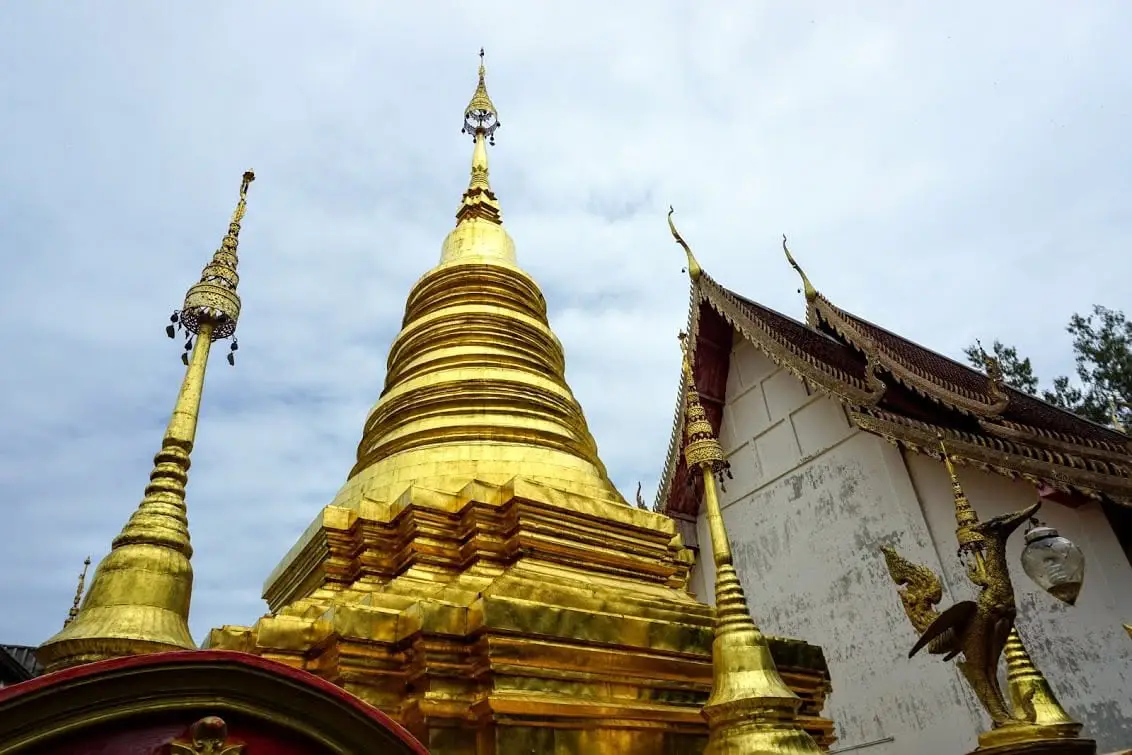
Open Days: Daily
Opening Hours: 08:00 - 17:00
Wat Phra That Doi Lo is located in Ban Doi Lo, Moo 6, Doi Lo Subdistrict, Doi Lo District, Chiang Mai Province. It is an active public Buddhist temple under the Maha Nikaya order, registered under temple code 350240105. The temple was formally established in 1907 and received a royal grant of Wisungkhamasima on 9 May 1991. The compound occupies approximately 18 rai, 1 wa and 44 square wah and stands on a low hill within the Ping River basin, east of the Chiang Mai–Hot route. Important structures include a vihara, monks’ residences, sermon and assembly hall, lay community pavilion, Tripitaka library, bell tower and chedi. Among the temple’s most distinctive cultural treasures are centuries-old wooden Buddha images and rare old wooden buildings that reflect the religious and artistic heritage of Doi Lo.
Wat Phra That Doi Lo has long played an important role in the religious life of Doi Lo. Its value extends beyond worship because the temple brings together local history, Lanna Buddhist art, village religious life and the agricultural landscape of the Ping River basin. Doi Lo Subdistrict Administrative Organization identifies the monastery as an important cultural attraction and a spiritual center for local residents, particularly noting its old wooden Buddha images and historic wooden architecture.
The temple’s official establishment in 1907 gives Wat Phra That Doi Lo approximately 119 years of registered history by 2026. The royal grant of Wisungkhamasima in 1991 was another important stage in its institutional development. Wisungkhamasima designates a formally granted monastic boundary in which the Sangha may conduct specific ceremonies according to Buddhist discipline, making it an important element in the religious status of a Thai temple.
The monastery stands in Ban Doi Lo, Moo 6, in today’s Doi Lo District, Chiang Mai Province. It occupies a low rise east of Highway 108, the major Chiang Mai–Hot road. The surrounding area belongs to the broader Ping River basin and remains closely associated with agricultural communities, local waterways and rural villages.
The current location code is approximately FQ3R+V6P, Doi Lo, Chiang Mai 50160. Travelers should search specifically for “Wat Phra That Doi Lo, Doi Lo” because another nearby monastery, Wat Phra That Doi Noi, has a very similar name and is only a few kilometers away.
The temple’s cultural memory extends beyond its official 1907 registration. Local tradition refers to an earlier name, Wat Nang Liao or Wat Phra That Doi Lo Nang Liao, and connects the site with Queen Chamadevi, the first ruler of Hariphunchai. According to local tradition, she traveled north from Lavo by way of the Ping River on her journey to rule Hariphunchai and paused with her entourage in the Doi Lo area.
This story belongs to the realm of local historical tradition and should be distinguished from the temple’s formal registration date. Nevertheless, it is valuable because it connects Wat Phra That Doi Lo with the wider cultural landscape of the Ping River and the many northern religious sites associated with Queen Chamadevi and the foundation of Hariphunchai.
The name Doi Lo links the temple directly to the identity of the surrounding community. The monastery existed decades before modern Doi Lo District was formally established. Doi Lo first became a minor district in the 1990s before later receiving full district status, so the temple represents continuity between the older rural community and the modern administrative landscape.
The temple’s chedi is one of its principal devotional features. In Lanna Buddhism, a sacred stupa or chedi is more than an architectural object. It functions as a focus of faith, religious memory and merit-making. Visitors should therefore consider the chedi together with the vihara and sacred images as part of the spiritual core of the monastery.
The vihara serves as the principal devotional hall for lay Buddhists. It is used for paying respect to Buddha images, listening to sermons, making merit and participating in important Buddhist observances. At Wat Phra That Doi Lo, the vihara is especially significant because the monastery preserves old wooden Buddha images that form part of the religious and artistic heritage of the community.
The centuries-old wooden Buddha images are among Wat Phra That Doi Lo’s most important cultural features. Wooden Buddhist sculpture has deep roots in Lanna because northern communities possessed strong traditions of wood carving and temple craftsmanship. These sacred images therefore carry religious, artistic and historical value simultaneously.
Visitors should view old wooden Buddha images with care and respect. The wood should not be touched, particularly where surfaces retain lacquer or gilding, because historic wooden objects can be sensitive to moisture, oils and repeated physical contact.
The temple also preserves historic wooden buildings that local authorities describe as increasingly rare. Traditional wooden architecture reflects local construction techniques, regional materials and the skills of craftsmen from different periods. Such structures help visitors understand Lanna culture in its original religious setting rather than through museum displays alone.
The sermon and assembly hall supports sermons, merit-making ceremonies, community meetings and large religious events. In a rural monastery, this type of hall often serves both religious and social purposes, allowing residents to cooperate in preparing ceremonies and organizing community activities.
A lay community pavilion provides additional space for families and temple supporters during religious and community gatherings. Such spaces demonstrate how village temples function as community institutions rather than as isolated religious monuments.
The Tripitaka library reflects another major role of Buddhist temples: preserving religious knowledge. Traditional northern monasteries often maintained scripture buildings for Buddhist manuscripts, palm-leaf texts and other sacred literature. The presence of a Tripitaka library at Wat Phra That Doi Lo reinforces the monastery’s educational and cultural dimension.
The bell tower is associated with the daily rhythm of monastic and village life. Temple bells have traditionally marked prayer, ceremonies and other activities. In older communities, the sound of the temple bell could also function as a public signal, making the bell tower part of both the religious and social landscape.
The monks’ residences remain private areas within the active monastery. Visitors should avoid entering residential areas without permission and should maintain quiet behavior around monks, particularly during chanting, meals and rest periods.
Wat Phra That Doi Lo remains an important spiritual center for Doi Lo residents. Community monasteries in northern Thailand typically support Buddhist holy days, family merit-making, annual ceremonies and other social occasions. The temple therefore connects generations of residents through religion, ethics and community participation.
The monastery must also be understood within the agricultural landscape of the Ping River basin. Traditional Lanna communities developed around water, rice cultivation, irrigation, homes and monasteries. Religion was not separated from agricultural life; temple festivals, seasonal cycles and village cooperation developed together.
Morning is one of the best times to visit. Temperatures are generally more comfortable, and the temple environment is quieter. Travelers interested in architecture and old wooden art should allow approximately 30–60 minutes for the temple alone.
Visitors should dress modestly, covering shoulders and knees, remove shoes before entering designated religious buildings and keep their voices low. Old Buddha images and historic wooden structures should not be touched unnecessarily. Flash photography around fragile objects is best avoided.
Travelers interested in architecture should observe the relationship between the old wooden structures, vihara, scripture library, bell tower and chedi rather than expecting monumental buildings on the scale of Chiang Mai’s major urban temples. Wat Phra That Doi Lo is most valuable as an active rural monastery that preserves layers of local religious architecture.
For visitors interested in local history, the tradition of Wat Nang Liao and Queen Chamadevi adds another dimension to the site. Stories of her journey along the Ping River form part of the historical memory of several religious places in northern Thailand and connect Doi Lo with Hariphunchai and the wider cultural history of Lamphun.
Doi Lo contains several other important temples. The most prominent nearby comparison is Wat Phra That Doi Noi, a historic hilltop monastery associated with sacred relics and traditions connected with Queen Chamadevi. The two temples can easily be visited on the same route but offer different experiences.
Wat Phra That Doi Noi lies roughly 2–4 kilometers away depending on the route. It is known for its hilltop sacred stupa, naga staircase, archaeological remains and annual relic-bathing ceremony on the full moon of the eighth northern lunar month. Visiting both monasteries provides a useful comparison between a low-hill community temple and a more elevated historic pilgrimage site.
The Ganesha Museum in Yang Kram Subdistrict is another nearby cultural stop, approximately 3–6 kilometers away. Its collections focus on artistic and devotional representations of Ganesha, providing a different perspective on religious art and belief.
The Hariphunchai Buddha Arts Museum is another useful stop for travelers interested in Buddhist art. Combining the museum with Wat Phra That Doi Lo can help visitors place the temple’s old wooden Buddha images within a broader northern Thai artistic context.
For nature, Pha Chor in Mae Wang National Park is one of Doi Lo’s most important attractions. The dramatic cliffs and pillars were created by long-term sediment deposition and erosion, with some formations reaching around 30 meters in height. Depending on the route and entry point, travelers should allow roughly 8–15 kilometers from the temple.
Near Pha Chor is Kio Suea Ten, another erosional landscape formed through related geological processes. It lies about two kilometers beyond the Pha Chor area, making both sites practical additions to the same nature itinerary.
A relaxed full-day route can begin at Wat Phra That Doi Lo around 08:00–09:00, continue to Wat Phra That Doi Noi and the Ganesha Museum, pause for lunch or coffee in Doi Lo, and finish with Pha Chor during the afternoon.
Food and coffee options around Doi Lo include Rin Coffee at Doi Lo, DOK JIK Coffee Homemade, PHANSA COFFEE, M.8 Coffee Road and Krua Baan Baan. They are distributed across the district rather than concentrated directly outside the temple, so it is practical to choose a stop that matches the onward travel route.
Accommodation options include De Aerng Boutique Hotel, around two kilometers from Wat Phra That Doi Lo, Baan Rim Ping River Side Resort, Bandin Resort, Pimprajan Homestay and Chiang Mai Inthanon Golf and Natural Resort on the wider Doi Lo–Chom Thong route.
Doi Lo is also a convenient stop between Chiang Mai and Chom Thong. Travelers can visit Wat Phra That Doi Lo before continuing south toward Wat Phra That Si Chom Thong, Doi Inthanon National Park and other attractions in Chom Thong without significant backtracking.
Getting There from central Chiang Mai is straightforward by private car or rental vehicle. Follow Highway 108 south through Hang Dong and San Pa Tong to Doi Lo, a journey of approximately 45 kilometers. Search for “Wat Phra That Doi Lo” or location code FQ3R+V6P. The monastery lies east of the main highway on a low hill.
Public transport traveling toward Chom Thong or Hot can bring visitors to the Doi Lo area, but a local transfer may still be needed to reach the temple and surrounding attractions. Private transport is considerably more practical for a multi-stop itinerary.
Basic facilities include toilets and temple grounds for parking. Current place information also indicates wheelchair-accessible parking and entrance access to parts of the compound. Access to individual historic buildings may depend on temple activities and whether specific structures are open on the day of the visit.
Older travelers may find Wat Phra That Doi Lo easier to visit than the nearby Wat Phra That Doi Noi because it stands on a much lower hill and does not require a long staircase climb. Care should still be taken on uneven or wet surfaces, especially during the rainy season.
The cool season is particularly suitable for combining temple visits with outdoor attractions around Doi Lo. The rainy season brings greener agricultural scenery but may create slippery surfaces, while hot-season travelers should visit temples early and avoid hiking at Pha Chor during the hottest hours.
Photographers can focus on the chedi, vihara, historic wooden buildings, bell tower and the relationship between architecture and the surrounding rural landscape. Respect for worshippers and monks should take priority over photography in active religious areas.
Wat Phra That Doi Lo is particularly valuable to travelers interested in Buddhist art because its old wooden Buddha images and historic wooden architecture remain within an active community monastery. This allows visitors to experience religious art within the environment for which it was created.
Religiously, the temple continues to support the everyday Buddhist life of the community. The vihara, assembly hall, community pavilion, scripture library, bell tower and monks’ residences form a complete system that allows monastic and lay religious life to continue throughout the year.
The royal grant of Wisungkhamasima on 9 May 1991 represents an important institutional milestone. Considered together with the temple’s formal establishment in 1907, it shows how Wat Phra That Doi Lo developed over many decades into a fully established Buddhist monastery.
The monastery has also witnessed major changes in the surrounding area. It existed before Doi Lo became a modern district and therefore represents continuity between older village society and contemporary local administration.
Another advantage is accessibility. Travelers do not need to climb a high mountain or make a long detour from Highway 108. This makes the temple suitable for families, older visitors and travelers wishing to include a meaningful cultural stop while traveling between Chiang Mai and Chom Thong.
With only 30 minutes, visitors can pay respect to the Buddha images, view the chedi and visit the vihara. With around one hour, they can spend more time examining the historic wooden structures, Tripitaka library and bell tower before continuing to Wat Phra That Doi Noi or other Doi Lo attractions.
Wat Phra That Doi Lo is significant not merely because of its 1907 establishment date or its 1991 Wisungkhamasima. Its real importance lies in the layers preserved within the same site: local traditions connected with Queen Chamadevi, the sacred chedi, old wooden Buddha images, historic wooden buildings, active religious halls and the continuing role of the Sangha within the community.
For travelers who want to see Chiang Mai beyond the famous temples of the old city, Wat Phra That Doi Lo provides a strong example of living Lanna Buddhism in a rural setting. Its quiet atmosphere allows visitors to observe old religious art, community identity and the wider landscape of the Ping River basin at a slower pace.
With its documented history from 1907, royal Wisungkhamasima granted in 1991, 18-rai temple compound, centuries-old wooden Buddha images, historic wooden architecture, chedi, vihara, Tripitaka library, bell tower and role as a spiritual center of Doi Lo, Wat Phra That Doi Lo remains an important cultural and religious site in southern Chiang Mai and an excellent starting point for exploring the temples, museums and natural landscapes of Doi Lo District.
| Name | Wat Phra That Doi Lo |
| Type | Public Buddhist Temple, Maha Nikaya Order |
| Temple Code | 350240105 |
| Location | Ban Doi Lo, Moo 6, Doi Lo Subdistrict, Doi Lo District, Chiang Mai 50160, Thailand |
| Location Code | FQ3R+V6P, Doi Lo, Chiang Mai |
| Established | 1907 |
| Wisungkhamasima | Royal grant received on 9 May 1991 |
| Temple Area | 18 rai, 1 wa and 44 square wah |
| Open Days | Daily |
| Opening Hours | 08:00 - 17:00 |
| Setting | Low hill east of the Chiang Mai–Hot route in the Ping River basin, approximately 45 km from central Chiang Mai |
| Highlights | Centuries-old wooden Buddha images, rare historic wooden buildings, sacred chedi and traditional Lanna community-temple atmosphere |
| Main Structures | Vihara, monks’ residences, sermon and assembly hall, lay community pavilion, Tripitaka library, bell tower, chedi and toilets |
| Historical Tradition | Local tradition associates the site with the former name Wat Nang Liao or Wat Phra That Doi Lo Nang Liao and Queen Chamadevi’s journey along the Ping River; the formal temple registration dates to 1907 |
| Community Role | Spiritual center of Doi Lo, supporting Buddhist worship, merit-making and community religious life |
| Getting There | Follow Highway 108 south from Chiang Mai through Hang Dong and San Pa Tong to Doi Lo, approximately 45 km. Search for “Wat Phra That Doi Lo” or FQ3R+V6P. |
| Nearby Attractions | 1. Hariphunchai Buddha Arts Museum, about 1–2 km 2. Wat Phra That Doi Noi, about 2–4 km 3. Ganesha Museum, about 3–6 km, Tel. 053-024-287 4. Pha Chor, Mae Wang National Park, about 8–15 km, Tel. 053-106-759 5. Kio Suea Ten, about 10–17 km |
| Nearby Restaurants And Cafés | 1. Rin Coffee at Doi Lo, about 2–5 km, Tel. 089-953-8276 2. DOK JIK Coffee Homemade, about 2–5 km, Tel. 080-945-3376 3. PHANSA COFFEE, about 2–5 km, Tel. 099-272-9849 4. M.8 Coffee Road, about 4–8 km, Tel. 093-889-3145 5. Krua Baan Baan, about 4–8 km, Tel. 061-501-9175 |
| Nearby Accommodation | 1. De Aerng Boutique Hotel, about 2 km, Tel. 061-316-0822 2. Baan Rim Ping River Side Resort, about 3–6 km, Tel. 089-894-9172 3. Bandin Resort, about 3–6 km, Tel. 053-360-189 4. Pimprajan Homestay, about 8–15 km, Tel. 090-885-1545 5. Chiang Mai Inthanon Golf and Natural Resort, about 12–18 km, Tel. 052-001-645 |
Frequently Asked Questions (FAQ)
Q: Where is Wat Phra That Doi Lo located?
A: Wat Phra That Doi Lo is located in Ban Doi Lo, Moo 6, Doi Lo Subdistrict, Doi Lo District, Chiang Mai 50160, approximately 45 kilometers south of central Chiang Mai.
Q: When was Wat Phra That Doi Lo established?
A: The temple was formally established in 1907 and received a royal grant of Wisungkhamasima on 9 May 1991.
Q: What should visitors see at Wat Phra That Doi Lo?
A: Important features include centuries-old wooden Buddha images, historic wooden buildings, the chedi, vihara, Tripitaka library, bell tower and traditional Lanna community-temple setting.
Q: Are Wat Phra That Doi Lo and Wat Phra That Doi Noi the same temple?
A: No. They are separate temples in Doi Lo Subdistrict and are only a few kilometers apart, making them easy to visit on the same itinerary.
Q: Is Wat Phra That Doi Lo connected with Queen Chamadevi?
A: Local tradition associates an earlier site known as Wat Nang Liao or Wat Phra That Doi Lo Nang Liao with Queen Chamadevi’s journey along the Ping River. The temple’s formal registration date is 1907.
Q: What are the opening hours of Wat Phra That Doi Lo?
A: The temple is open daily from 08:00 to 17:00. Morning is generally the most comfortable time for a quiet visit.
Q: Is Wat Phra That Doi Lo suitable for older visitors?
A: Yes. The temple stands on a low hill and is easier to access than many high mountain temples, although visitors should still take care on uneven or wet surfaces.
Q: What can travelers visit after Wat Phra That Doi Lo?
A: Nearby options include Wat Phra That Doi Noi, the Ganesha Museum, Hariphunchai Buddha Arts Museum, Pha Chor and Kio Suea Ten, allowing travelers to create a half-day or full-day Doi Lo itinerary.
 Category: ●Places of Worship
 Group: ●Temple
Last Update : 2 MonthAgo
 Last Update : 2 MonthAgo
 Click to Access the Navigation Map GPS
Wat Phra That Doi Lo Map
Recommend

 Muang Chiang Mai(121)Chom Thong(47)Mae Chaem(25)Chiang Dao(33)Doi Saket(68)Mae Taeng(85)Mae Rim(69)Samoeng(29)Fang(71)Mae Ai(59)Phrao(70)San Pa Tong(103)San Kamphaeng(66)San Sai(73)Hang Dong(73)Hot(32)Doi Tao(22)Omkoi(11)Saraphi(74)Wiang Haeng(15)Chai Prakan(28)Mae Wang(32)Mae On(22)Doi Lo(33)Galyani Vadhana(1)


