
lovethailand home >North Travel Attractions >Chiang Mai Travel Attractions >Fang >Wiang > Wat Sao Hin (Wiang)
TL;DR: Wat Sao Hin (Wiang) is located at Ban Sao Hin, Moo 14, Fang–Tha Ton Road, Wiang Subdistrict, Fang District, Chiang Mai Province, open Daily, hours 08.00 – 17.00.

Wat Sao Hin (Wiang)
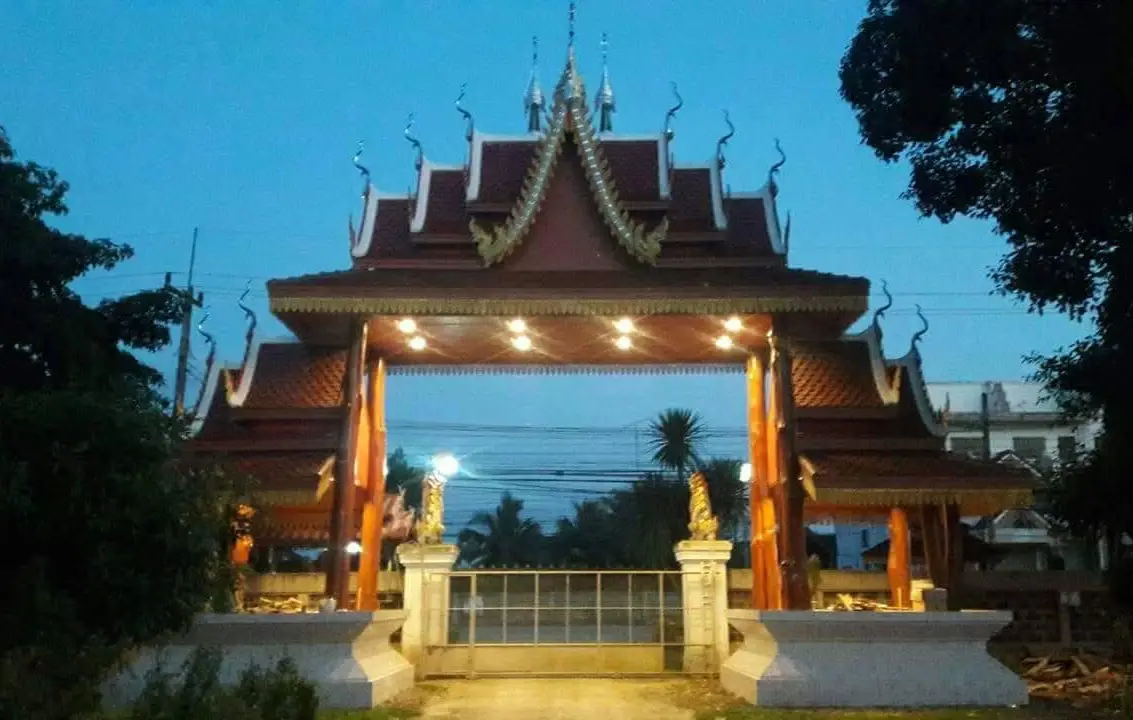
Open Days: Daily
Opening Hours: 08.00 – 17.00
Wat Sao Hin (Wiang) is a private Buddhist temple under the Mahanikaya monastic order. It is located at 107 Moo 14, Ban Sao Hin, on the Fang–Tha Ton road, Wiang Subdistrict, Fang District, Chiang Mai Province 50110. The temple was officially established in 1938 and received Wisungkhamsima, the royal consecrated boundary for important monastic ceremonies, on 25 March 1998. Phra Athikan Bun Luean Paphakaro is identified as the abbot of Wat Sao Hin in the temple information. The temple serves as a community religious center for Ban Sao Hin and remains connected with Buddhist practice, village life, and Lanna cultural traditions.
Wat Sao Hin (Wiang) is suitable for travelers who want to visit a peaceful local temple in Fang District and see how a community temple remains part of everyday village life. It is not a large mainstream tourist attraction, but it has strong value as a temple rooted in Ban Sao Hin. Its location on the Fang–Tha Ton route also places it within a meaningful local travel corridor connecting Fang town with northern communities and the Tha Ton area.
The history of Wat Sao Hin is closely connected with its relocation. The temple was created in 1938. Its original site was on a hill about 1 km from the present location. Because the hilltop site was difficult for villagers to access, Phra Kham Siriwanno led local supporters to move the temple down to the plain near the village. Local residents called it Wat Ban Mai Sao Hin. This story shows how the temple adapted to the needs of the community and became more accessible for merit-making, ceremonies, and everyday Buddhist practice.
The granting of Wisungkhamsima on 25 March 1998 was an important milestone. A Wisungkhamsima is a consecrated boundary used for formal monastic acts, especially ceremonies connected with the ordination hall and ordination. This confirms Wat Sao Hin’s formal status within the Thai Buddhist system and shows that the temple is more than a local village worship site. It is a recognized Buddhist temple capable of supporting important monastic and community religious functions.
The name “Sao Hin” suggests a strong connection with local identity and the village name. In Thai, the name can evoke the idea of a stone pillar, a symbol of stability, place, and memory. For Wat Sao Hin in Moo 14, the name is closely tied to Ban Sao Hin itself, making the temple a religious and geographic landmark of the community.
Ban Sao Hin is part of Wiang Subdistrict, an area of Fang District where many temples are distributed across village communities. In Lanna society, each village temple usually serves as a center for merit-making, ritual life, community gathering, and the transmission of Buddhist values. Wat Sao Hin therefore plays a direct role for Ban Sao Hin, supporting both religious life and village identity.
The temple structures include a viharn, monks’ residences, a multipurpose hall, and a funeral or merit-making hall. These structures show the practical function of a community temple. The viharn is used for worship and religious gatherings. The monks’ residences support resident monks. The multipurpose hall supports merit-making and community activities. The funeral or merit-making hall serves families and villagers during important life-cycle ceremonies.
The sacred objects at Wat Sao Hin include various Buddha images. Specific details about individual Buddha images should not be added without further verification, but the presence of Buddha images confirms the temple’s role as a place for worship, reflection, and Buddhist practice. Visitors should approach these sacred areas respectfully, especially inside the viharn and during religious activities.
Phra Athikan Bun Luean Paphakaro is identified as the abbot of Wat Sao Hin. In a community temple, the abbot plays an important role in caring for temple property, supporting monks, coordinating with villagers, organizing merit-making activities, and maintaining the relationship between the temple and the local community. Wat Sao Hin therefore reflects the living connection between monks and lay supporters in Ban Sao Hin.
One of the most important contemporary traditions associated with Wat Sao Hin is the Tang Tham Luang sermon tradition for the Vessantara Jataka. This event is a major Buddhist and Lanna cultural activity involving sermon-listening, merit-making, and preservation of local tradition. The 23rd edition of this event was held at Wat Sao Hin in Wiang Subdistrict, Fang District, with cooperation from monks, local administrative organizations, village leaders, cultural councils, schools, women’s groups, and the senior citizens school of Wiang Subdistrict.
The Tang Tham Luang tradition is important in Lanna Buddhist culture because it connects merit-making, generosity, sermon-listening, and moral lessons from the Vessantara Jataka. By hosting this event, Wat Sao Hin becomes more than a village temple. It becomes a cultural gathering space where people from different parts of the community come together to preserve Buddhism and local heritage.
Wat Sao Hin is also connected with the regular Buddhist calendar, including Makha Bucha Day, Visakha Bucha Day, Asalha Bucha Day, Buddhist Lent, the end of Buddhist Lent, Buddhist holy days, Kathin, Pha Pa, and village merit-making activities. These events help villagers support the temple, listen to teachings, offer food to monks, and pass Buddhist values to younger generations.
The appeal of Wat Sao Hin for travelers is its strong local character. It is a temple that grew from the needs of the village, moved closer to the community for practical reasons, and continues to host important religious and cultural events. Visitors interested in local temples and community-based travel in Fang District will find Wat Sao Hin meaningful because it shows Buddhism at the village level rather than as a staged tourist experience.
The atmosphere of Wat Sao Hin is simple and calm. Visitors can make merit, pay respect to the Buddha, and spend time quietly in the temple area. During religious festivals or sermon events, visitors should follow the arrangement of the temple and community, behave respectfully, and avoid disturbing ceremonies. A village temple should be treated as a living religious space, not merely as a photo stop.
Visitors should dress modestly, speak quietly, avoid disturbing monks or worshippers, and keep the temple clean. Sacred objects should not be touched inappropriately. Those who wish to join merit-making events such as Kathin, Pha Pa, or Tang Tham Luang should check the current schedule with the local community or temple caretakers before visiting.
Wat Sao Hin can be included in a cultural route around Wiang Subdistrict and Fang District. Travelers can combine the visit with Wat Phra Bat Udom, the King Fang Udomsin and Queen Sam Phio Monument, Wat Pannaram, Wat Chedi Ngam, or Wat Sa Nikhom. Those who want to add nature to the route can continue to Fang Hot Spring in Doi Pha Hom Pok National Park, or extend the journey northward along the Fang–Tha Ton route.
Getting There is easiest by private car or rental car. From Chiang Mai city, take Highway 107 toward Fang District, passing Mae Rim, Mae Taeng, Chiang Dao, and Chai Prakan before entering Fang. The distance from Chiang Mai city to Fang is roughly 150–160 km and usually takes around 2.5–3.5 hours depending on traffic and road conditions. Once in Fang, continue to Wiang Subdistrict and Ban Sao Hin, Moo 14, on the Fang–Tha Ton route, or search for Wat Sao Hin in a navigation app.
Travelers using public transport can take a Chiang Mai–Fang bus or van, then continue from Fang town by local transport, songthaew, or hired vehicle to Ban Sao Hin. A private vehicle is more convenient because it allows travelers to combine several nearby temples, restaurants, accommodations, and historical or natural attractions in one day.
The best time to visit Wat Sao Hin is in the morning from about 08.00 to 10.00 or later in the afternoon when the weather is milder. During the cool season, Fang District is pleasant for combining temple visits with natural attractions. During the rainy season, travelers should allow extra time and check road conditions, especially if continuing toward Tha Ton, Fang Hot Spring, or mountain areas.
Wat Sao Hin (Wiang) is best understood as an important community temple of Ban Sao Hin. Its key strengths are its establishment in 1938, Wisungkhamsima in 1998, the relocation from the former hill site to a more accessible village location, the temple structures supporting community religious life, and its role in the Tang Tham Luang sermon tradition. A visit here gives travelers a grounded view of Buddhism, Lanna tradition, and village life in Fang District.
| Name | Wat Sao Hin (Wiang) |
| Location | Ban Sao Hin, Moo 14, Fang–Tha Ton Road, Wiang Subdistrict, Fang District, Chiang Mai Province |
| Address | 107 Moo 14, Ban Sao Hin, Wiang Subdistrict, Fang District, Chiang Mai 50110, Thailand |
| Highlights | A Mahanikaya community temple of Ban Sao Hin, established in 1938, granted Wisungkhamsima on 25 March 1998, relocated from a former hill site to a more accessible village location, and connected with the Tang Tham Luang Vessantara Jataka sermon tradition |
| History | Created in 1938, originally located on a hill about 1 km from the present site, later relocated closer to the village by Phra Kham Siriwanno and local supporters, and granted Wisungkhamsima on 25 March 1998 |
| Affiliation | Private temple under the Mahanikaya monastic order |
| Temple Area | About 3 rai, 2 ngan, and 80 square wah |
| Name Origin | The name is connected with Ban Sao Hin, Moo 14, and reflects the local identity of the community in Wiang Subdistrict |
| Important Sacred Objects / Structures | Viharn, monks’ residences, multipurpose hall, funeral or merit-making hall, and various Buddha images |
| Distinctive Tradition | Tang Tham Luang Vessantara Jataka sermon tradition, an important Buddhist and Lanna cultural event in Wiang Subdistrict |
| Travel Information | From Chiang Mai city, take Highway 107 toward Fang District, then continue to Wiang Subdistrict and Ban Sao Hin, Moo 14, on the Fang–Tha Ton route. Private car or rental car is the most convenient option. |
| Current Status | Open as an active community temple in Wiang Subdistrict, Fang District, Chiang Mai Province |
| Open Days | Daily |
| Opening Hours | 08.00 – 17.00 |
| Abbot / Caretaker | Phra Athikan Bun Luean Paphakaro |
| Related Traditions | Tang Tham Luang Vessantara Jataka sermon tradition, Buddhist holy days, Kathin, Pha Pa, Buddhist Lent, the end of Buddhist Lent, and merit-making activities of Ban Sao Hin |
| Nearby Tourist Attractions | 1. Wat Phra Bat Udom, about 3 km 2. King Fang Udomsin and Queen Sam Phio Monument, about 3 km 3. Wat Pannaram or Wat Ton Nun, about 4 km 4. Wat Chedi Ngam, about 5 km 5. Fang Hot Spring, Doi Pha Hom Pok National Park, about 13 km |
| Nearby Restaurants | 1. Ban Rim Nam Fang Restaurant, about 3 km, Tel. 053-382-174 2. Hong Nang Len Fang Chiang Mai, about 3 km, Tel. 083-201-8503, 095-134-6442 3. Add Line Shabu Fang, about 4 km, Tel. 061-127-3013 4. Fang Cafe, about 5 km, Tel. 087-301-6200 5. GREAT VIEW FANG, about 8 km, Tel. 062-048-4222 |
| Nearby Accommodations | 1. Huen San Fang, about 3 km, Tel. 081-881-6430, 063-790-0666 2. Fang Villa Hotel, about 4 km, Tel. 086-451-7682 3. Fang Modern Hotel, about 6 km, Tel. 086-439-1843 4. Fang Chayapa Hotel, about 6 km, Tel. 091-879-2664 5. Tangerine Ville Hotel, about 7 km, Tel. 053-452-114 |
Frequently Asked Questions (FAQ)
Q: Where is Wat Sao Hin (Wiang) located?
A: Wat Sao Hin (Wiang) is located at 107 Moo 14, Ban Sao Hin, on the Fang–Tha Ton road, Wiang Subdistrict, Fang District, Chiang Mai Province 50110.
Q: What are the opening days and opening hours of Wat Sao Hin (Wiang)?
A: Wat Sao Hin (Wiang) is open daily from 08.00 to 17.00.
Q: What type of temple is Wat Sao Hin (Wiang)?
A: Wat Sao Hin (Wiang) is a private Buddhist temple under the Mahanikaya monastic order and serves the Ban Sao Hin community.
Q: What is the historical background of Wat Sao Hin (Wiang)?
A: The temple was created in 1938. Its original location was on a hill about 1 km from the present site, before Phra Kham Siriwanno and local supporters moved it closer to the village. It received Wisungkhamsima on 25 March 1998.
Q: Who is the abbot of Wat Sao Hin (Wiang)?
A: Phra Athikan Bun Luean Paphakaro is identified as the abbot of Wat Sao Hin in the temple information.
Q: What important structures are found at Wat Sao Hin?
A: Confirmed structures include a viharn, monks’ residences, multipurpose hall, funeral or merit-making hall, and various Buddha images.
Q: What important tradition is connected with Wat Sao Hin?
A: Wat Sao Hin is connected with the Tang Tham Luang Vessantara Jataka sermon tradition, an important Buddhist and Lanna cultural event in Wiang Subdistrict.
Q: Which nearby places can be visited with Wat Sao Hin?
A: Nearby places include Wat Phra Bat Udom, the King Fang Udomsin and Queen Sam Phio Monument, Wat Pannaram, Wat Chedi Ngam, and Fang Hot Spring.
 Category: ●Places of Worship
 Group: ●Temple
Last Update : 1 MonthAgo
 Last Update : 1 MonthAgo
 Click to Access the Navigation Map GPS
Wat Sao Hin (Wiang) Map
Recommend

 Muang Chiang Mai(121)Chom Thong(47)Mae Chaem(25)Chiang Dao(33)Doi Saket(68)Mae Taeng(85)Mae Rim(69)Samoeng(29)Fang(71)Mae Ai(59)Phrao(70)San Pa Tong(103)San Kamphaeng(66)San Sai(73)Hang Dong(73)Hot(32)Doi Tao(22)Omkoi(11)Saraphi(74)Wiang Haeng(15)Chai Prakan(28)Mae Wang(32)Mae On(22)Doi Lo(33)Galyani Vadhana(1)


