
lovethailand home >North Travel Attractions >Chiang Mai Travel Attractions >Fang >Wiang > Wat Thep Amnuay
TL;DR: Wat Thep Amnuay is located at Ban Pa Bong, Moo 2, Wiang Subdistrict, Fang District, Chiang Mai Province, open Daily, hours 08.00 – 17.00.

Wat Thep Amnuay
Open Days: Daily
Opening Hours: 08.00 – 17.00
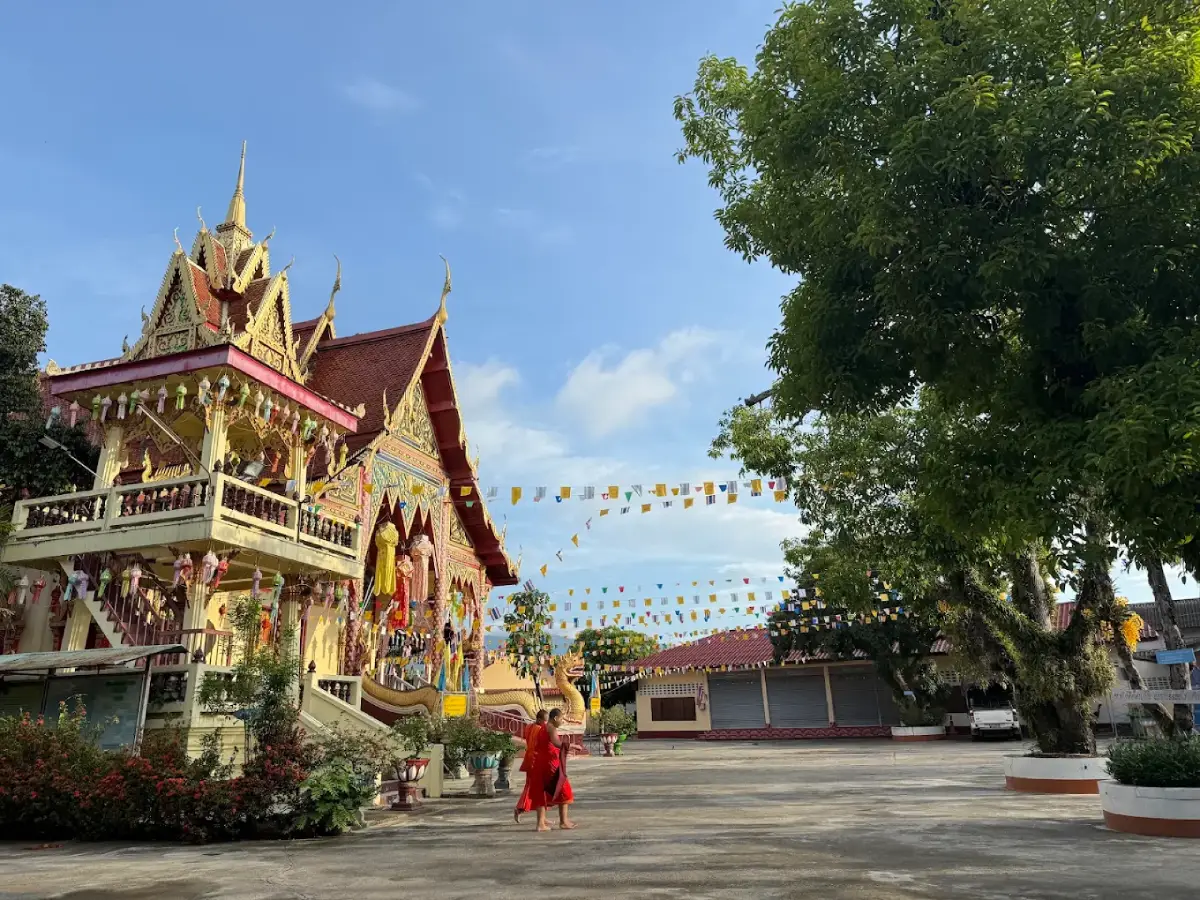
Wat Thep Amnuay is a local Buddhist temple in Ban Pa Bong, Moo 2, Wiang Subdistrict, Fang District, Chiang Mai Province. It is a private temple under the Mahanikaya monastic order and has long served as a spiritual and community center for local residents in the Fang area. The temple was officially established in 1923 and received its royal consecrated boundary, known as Wisungkhamsima, on 1 January 1965. This makes Wat Thep Amnuay an important community temple with a clear religious status and a continuing role in local Buddhist life.
For travelers planning a cultural route in Fang, Wat Thep Amnuay is suitable for a quiet temple visit, merit-making, and a short stop before continuing to other attractions in the district. The temple is located in Wiang Subdistrict, close to the urban and community areas of Fang, making it easy to combine with nearby temples, local restaurants, hotels, and natural attractions. A half-day route can include Wat Thep Amnuay, Wat Phra Bat Udom, the King Fang Monument, Wat Chedi Ngam, Wat Si Mongkhon, or a longer trip to Fang Hot Spring in Doi Pha Hom Pok National Park.
The value of Wat Thep Amnuay lies not in large-scale tourism infrastructure, but in its identity as a living community temple. It reflects the close relationship between temple, village, and local society in northern Thailand. The temple stands in Ban Pa Bong, Moo 2, and is connected with the Thep Amnuay community in local records. For this reason, Wat Thep Amnuay should be understood not only as a religious site, but also as a social landmark for residents who use the temple for merit-making, community gatherings, and local activities.
The documented history of Wat Thep Amnuay begins with its official establishment in 1923. This was a period when local communities in Fang needed Buddhist temples to support religious ceremonies, ordination, seasonal merit-making, and community rituals. In northern Thailand, a temple is more than a place of worship. It is a center of education, social memory, local identity, and moral life. Wat Thep Amnuay therefore represents the long relationship between Ban Pa Bong and the Buddhist traditions of Fang District.
The granting of Wisungkhamsima on 1 January 1965 is a significant milestone in the temple’s history. A Wisungkhamsima is a royal consecrated boundary that allows important monastic ceremonies to be performed within a formally designated sacred area. This status confirms Wat Thep Amnuay as a fully recognized Buddhist temple within the Thai ecclesiastical system. It also shows that the temple has supported the religious life of the local community for generations.
The atmosphere of Wat Thep Amnuay is calm and modest. It is appropriate for travelers who prefer authentic community temples rather than crowded tourist sites. Visitors can make merit, pay respect to the Buddha, walk around the temple grounds, and observe the rhythm of local life in Fang. This kind of temple visit is especially meaningful for travelers who want to understand the everyday role of Buddhism in northern Thai communities.
Confirmed details about the temple include its location, monastic affiliation, establishment year, and consecrated boundary year. The temple grounds have also been used for local public activities. For example, Sala 1 at Wat Thep Amnuay has served as a local polling station for Wiang Fang Municipality, showing that the temple functions as a shared community space as well as a religious site. Specific details about individual buildings such as the main chapel, viharn, chedi, principal Buddha image, bell tower, or sermon hall should be added only when verified by reliable local records or field inspection.
The monk associated with Wat Thep Amnuay is Phra Khru Sathaphon Thammaphisit Thitadhammo. His name appears in connection with the temple and the monastic administration of Fang District. This information is important because it adds a verifiable personal entity to the article and helps readers understand that Wat Thep Amnuay remains active within the Buddhist community structure of the district.
Wat Thep Amnuay also plays a role in the local environment and civic life of Wiang Fang. The area behind the temple has been mentioned in municipal activities related to canal clearing and waterway maintenance near the old city moat area. This reflects the temple’s place within the broader landscape of community management, flood prevention, and local public space, not only religious practice.
In terms of northern Thai culture, Wat Thep Amnuay is connected with the merit-making traditions of Fang and the Lanna Buddhist calendar. One relevant tradition in the district is Tan Lua Hing Fai Phra Chao, a northern Thai custom held in the fourth lunar month of the northern calendar. The tradition involves offering firewood to warm and honor the Buddha image during the cool season. It reflects community devotion, seasonal awareness, and the relationship between Buddhism and local climate. Travelers interested in this tradition should check local announcements before visiting, as event dates and participating temples may vary each year.
Visitors to Wat Thep Amnuay should dress respectfully, speak quietly, avoid disturbing monks or local residents, and take photographs with care. Community temples are active religious spaces, so travelers should move through the grounds with mindfulness. If visitors wish to make a donation, it is useful to prepare small banknotes for donation boxes or temple maintenance. Morning visits are recommended because the weather is cooler and the temple atmosphere is usually more peaceful.
Getting There is easiest by private car or rental vehicle. From Chiang Mai city, take Highway 107 toward Fang District, passing Mae Rim, Mae Taeng, Chiang Dao, and Chai Prakan before entering Fang. The distance from Chiang Mai city to Fang is roughly 150–160 km and usually takes around 2.5–3.5 hours depending on traffic and road conditions. Once in Fang, head toward Wiang Subdistrict and Ban Pa Bong, Moo 2, or search for “Wat Thep Amnuay Fang Chiang Mai” in a navigation app. Travelers using public transport can take a Chiang Mai–Fang bus or van, then continue by local transport in Fang town.
A practical half-day route can begin at Wat Thep Amnuay, continue to Wat Phra Bat Udom and the King Fang Monument, then move on to Wat Chedi Ngam or Wat Si Mongkhon. Travelers with more time can extend the trip to Wat Phra That Chaloem Phrakiat in Mon Pin Subdistrict or Fang Hot Spring in Doi Pha Hom Pok National Park. This route combines community temple life, local history, and natural attractions in one itinerary.
Wat Thep Amnuay is suitable for travelers who want a deeper view of Fang beyond mainstream sightseeing. It offers a calm environment, documented historical background, and a strong connection with local Buddhist life. While it is not a heavily promoted tourist attraction, that is part of its appeal. A visit here gives travelers a more grounded understanding of how a village temple continues to support faith, community identity, and daily life in northern Thailand.
The best time to visit is in the morning from about 08.00 to 10.00 or later in the afternoon when the sun is softer. During the rainy season, allow extra travel time and check road conditions. During the cool season, Fang District is pleasant for temple visits and easy to combine with nearby natural attractions such as Fang Hot Spring, Doi Pha Hom Pok, or Doi Ang Khang.
| Name | Wat Thep Amnuay |
| Location | Ban Pa Bong, Moo 2, Wiang Subdistrict, Fang District, Chiang Mai Province |
| Address | 143 Moo 2, Wiang Subdistrict, Fang District, Chiang Mai 50110, Thailand |
| Highlights | A long-established Mahanikaya community temple in Ban Pa Bong, officially established in 1923 and granted Wisungkhamsima in 1965 |
| History | Established as a temple in 1923; granted Wisungkhamsima on 1 January 1965 |
| Distinctive Features | A local community temple connected with religious, cultural, and civic life in Wiang Fang |
| Travel Information | From Chiang Mai city, take Highway 107 toward Fang District, then continue to Wiang Subdistrict and Ban Pa Bong, Moo 2. Private car, rental car, or local transport from Fang town is recommended. |
| Current Status | Open as an active community temple in Wiang Subdistrict, Fang District |
| Open Days | Daily |
| Opening Hours | 08.00 – 17.00 |
| Main Areas / Zones | Temple grounds used for religious activities and Sala 1, which has served as a local public polling area |
| Abbot / Caretaker | Phra Khru Sathaphon Thammaphisit Thitadhammo |
| Related Traditions | Tan Lua Hing Fai Phra Chao tradition in Fang District and regular Buddhist merit-making activities of the local community |
| Nearby Tourist Attractions | 1. Wat Phra Bat Udom and King Fang Monument, about 2 km 2. Wat Chedi Ngam, about 3 km 3. Wat Si Mongkhon, about 5 km 4. Wat Phra That Chaloem Phrakiat, Mon Pin Subdistrict, about 12 km 5. Fang Hot Spring, Doi Pha Hom Pok National Park, about 11 km |
| Nearby Restaurants | 1. Ban Rim Nam Fang Restaurant, about 2 km, Tel. 053-382-174 2. Hong Nang Len Fang Chiang Mai, about 3 km, Tel. 083-201-8503, 095-134-6442 3. Add Line Shabu Fang, about 3 km, Tel. 061-127-3013 4. Fang Cafe, about 4 km, Tel. 087-301-6200 5. GREAT VIEW FANG, about 7 km, Tel. 062-048-4222 |
| Nearby Accommodations | 1. Huen San Fang, about 2 km, Tel. 081-881-6430, 063-790-0666 2. Fang Villa Hotel, about 2 km, Tel. 086-451-7682 3. Fang Modern Hotel, about 5 km, Tel. 086-439-1843 4. Fang Chayapa Hotel, about 5 km, Tel. 091-879-2664 5. Fak Fang Homestay, about 14 km, Tel. 086-117-6914 |
Frequently Asked Questions (FAQ)
Q: Where is Wat Thep Amnuay located?
A: Wat Thep Amnuay is located at 143 Moo 2, Ban Pa Bong, Wiang Subdistrict, Fang District, Chiang Mai Province 50110.
Q: What are the opening days and opening hours of Wat Thep Amnuay?
A: Wat Thep Amnuay is open daily from 08.00 to 17.00.
Q: Why is Wat Thep Amnuay historically important?
A: The temple was officially established in 1923 and received its Wisungkhamsima on 1 January 1965, confirming its formal religious status within the Thai Buddhist system.
Q: What makes Wat Thep Amnuay worth visiting?
A: It is a peaceful community temple in Fang District, suitable for merit-making, cultural observation, and understanding local Buddhist life in northern Thailand.
Q: Who is associated with Wat Thep Amnuay?
A: Phra Khru Sathaphon Thammaphisit Thitadhammo is associated with Wat Thep Amnuay and the monastic community of Fang District.
Q: How can travelers get to Wat Thep Amnuay from Chiang Mai city?
A: Travel north from Chiang Mai city on Highway 107 toward Fang District, then continue to Wiang Subdistrict and Ban Pa Bong, Moo 2. Public transport to Fang is available, but local transport is needed for the final section.
Q: Which nearby attractions can be combined with Wat Thep Amnuay?
A: Travelers can combine the visit with Wat Phra Bat Udom, the King Fang Monument, Wat Chedi Ngam, Wat Si Mongkhon, Wat Phra That Chaloem Phrakiat, and Fang Hot Spring.
Q: Is Wat Thep Amnuay suitable for foreign travelers?
A: Yes. It is suitable for foreign travelers who prefer quiet local temples, respectful cultural experiences, and less crowded places in northern Thailand.
 Category: ●Places of Worship
 Group: ●Temple
Last Update : 1 MonthAgo
 Last Update : 1 MonthAgo
 Click to Access the Navigation Map GPS
Wat Thep Amnuay Map
Recommend

 Muang Chiang Mai(121)Chom Thong(47)Mae Chaem(25)Chiang Dao(33)Doi Saket(68)Mae Taeng(85)Mae Rim(69)Samoeng(29)Fang(71)Mae Ai(59)Phrao(70)San Pa Tong(103)San Kamphaeng(66)San Sai(73)Hang Dong(73)Hot(32)Doi Tao(22)Omkoi(11)Saraphi(74)Wiang Haeng(15)Chai Prakan(28)Mae Wang(32)Mae On(22)Doi Lo(33)Galyani Vadhana(1)


