
lovethailand home >North Travel Attractions >Chiang Mai Travel Attractions >Fang >Mae Sun > Wat Chai Kasem
TL;DR: Wat Chai Kasem is located at Ban Ton San, Moo 6, Mae Sun Subdistrict, Fang District, Chiang Mai Province, open Daily, hours 08.00 – 17.00.

Wat Chai Kasem
Open Days: Daily
Opening Hours: 08.00 – 17.00
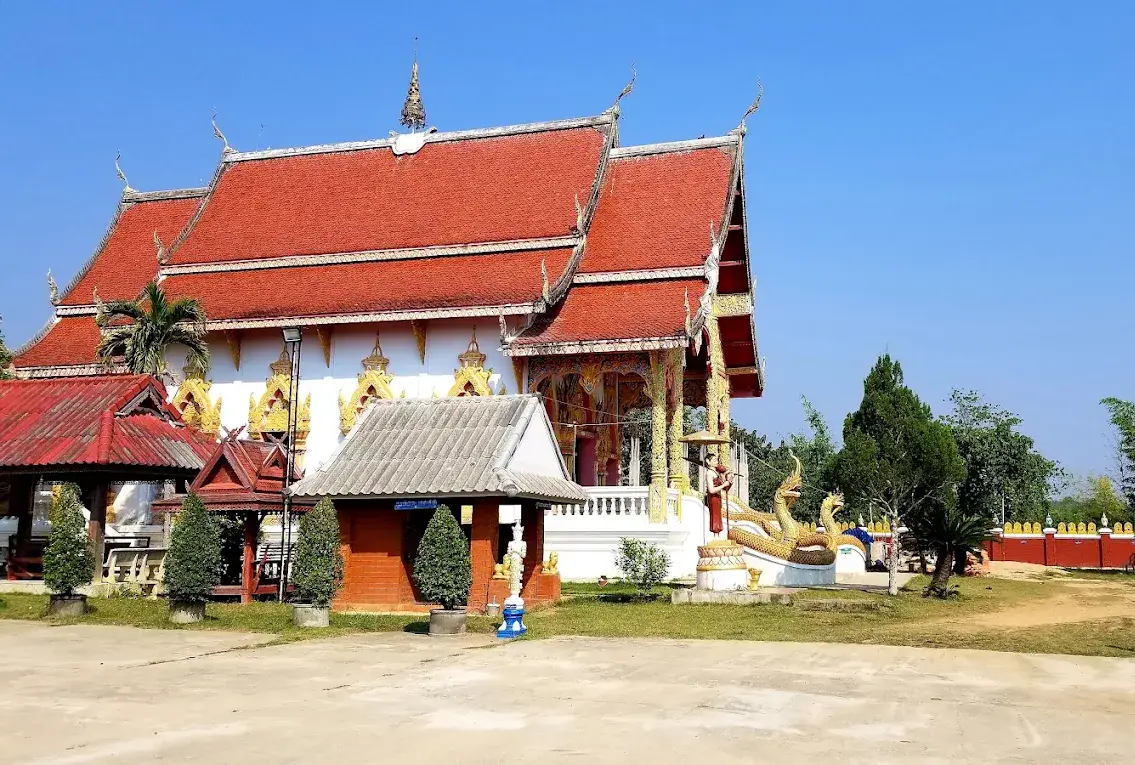
Wat Chai Kasem is a local Buddhist temple at 91 Moo 6, Ban Ton San, Mae Sun Subdistrict, Fang District, Chiang Mai Province. It is a private-sector temple under the Mahanikaya monastic order. The temple occupies 3 rai and 3 ngan of land. It was originally built in 1887 and was officially established as a temple in 1946. Important structures include a viharn, merit-making hall, and monks’ residences. The main sacred objects are Buddha images used for worship by local residents and visitors.
Wat Chai Kasem should be understood as a community temple of Ban Ton San rather than a large commercial tourist attraction. The temple grew from the religious needs of the local village. In rural northern Thailand, temples often developed together with settlement, farming life, family networks, and Buddhist merit-making traditions. Wat Chai Kasem reflects this pattern. It became a place where villagers could worship, listen to Dhamma, hold ceremonies, and gather as a community.
Ban Ton San is Moo 6 of Mae Sun Subdistrict in Fang District. The area is part of a wider rural landscape that includes agricultural villages, local waterways, village roads, and several Buddhist temples. Wat Chai Kasem is closely connected with this setting. It is not an isolated religious monument. It is part of the village structure and the everyday Buddhist life of Mae Sun.
The temple’s name carries an auspicious meaning. “Chai” suggests victory, success, and blessing, while “Kasem” suggests peace, happiness, and well-being. Together, the name gives the sense of a place associated with spiritual peace and auspiciousness. Although no detailed public legend explains the name, its meaning fits the temple’s role as a place of worship and community merit-making.
The history of Wat Chai Kasem begins with its construction in 1887. This makes the temple an old religious place within the Ban Ton San community. It was later officially established as a temple in 1946, giving it formal status within the Thai Sangha system. This development shows the continuity between village faith and formal Buddhist administration in Fang District.
The viharn is an important worship space at Wat Chai Kasem. It is where visitors can pay respect to the Buddha, make merit, and experience the quiet atmosphere of a local northern Thai temple. For village temples, the viharn often functions as the spiritual heart of the temple. It supports Buddhist holy days, merit-making, Dhamma listening, and community religious events.
The merit-making hall reflects another important function of the temple. Local temples in northern Thailand are often used for memorial ceremonies, communal merit-making, robe offerings, and village gatherings. Wat Chai Kasem therefore serves both religious and social roles. It is a place where villagers come together during important moments in family and community life.
The monks’ residences allow the temple to maintain daily monastic life. Recent Kathin activity information lists Wat Chai Kasem as a temple with five resident monks. This confirms the temple’s ongoing role as an active Buddhist place. Kathin, the robe-offering ceremony after the rains retreat, is one of the most important annual events for Thai Buddhist temples. For community temples, Kathin is also a time for villagers and supporters to maintain the temple together.
The main sacred objects of the temple are Buddha images. These images are central to worship and merit-making. For local residents, Buddha images are not only religious art. They are the focus of faith, prayer, reflection, and moral practice. Visitors should approach these sacred objects respectfully, dress modestly, and behave quietly within the temple grounds.
Wat Chai Kasem is listed as a Mahanikaya temple in Mae Sun, Fang District, Chiang Mai Province. As a local private-sector temple, it depends on the cooperation of monks, temple committees, village leaders, and lay supporters. This relationship between the temple and the community is one of the key features of rural Buddhist life in northern Thailand.
Older temple information identifies Phra Ma Susawaro as the abbot of Wat Chai Kasem. Recent Kathin activity information for 2025 identifies Phra Athikan Parinthon Thitaworasattho as the current abbot. Such changes are normal for long-established temples, where several generations of monks may serve and maintain the temple over time.
The main appeal of Wat Chai Kasem lies in its quiet local character. This is not a place designed for large tourist crowds. Its value is in its age, village setting, religious role, and connection with Ban Ton San. Travelers who appreciate small community temples will find Wat Chai Kasem meaningful as a place for worship, merit-making, and understanding the Buddhist life of Mae Sun.
Mae Sun Subdistrict also gives the temple additional travel context. Other temples in the subdistrict include Wat Thep Prasit, Wat Mae Sun, Wat Long O, Wat Wiwek Karam, Wat San Pu Loei, and Wat Nong Yao. Travelers interested in local temples can connect Wat Chai Kasem with these nearby Buddhist places to better understand the religious landscape of Fang District.
The temple can also be combined with natural attractions in Fang District. Fang Hot Springs and Doi Pha Hom Pok National Park are among the major destinations in the area. Adding Wat Chai Kasem to a route that includes these sites creates a more balanced trip, combining worship, village culture, local food, and nature in one journey.
Wat Chai Kasem remains connected with living Buddhist traditions. In 2025, it appeared in annual Kathin activity information, with a Kathin date on 29 October 2025. The temple was also included in a local Mae Sun candle-casting and Buddhist Lent offering activity in 2025. These activities show that Wat Chai Kasem continues to take part in community Buddhist practice.
Getting There is easiest by private car or rental car. From Fang town, drive toward Mae Sun Subdistrict and continue to Ban Ton San, Moo 6. From Chiang Mai city, take Highway 107 toward Fang District, then connect to Mae Sun. Public transport may not stop directly at the temple throughout the day, so travelers without their own vehicle should arrange local transport from Fang town.
The best time to visit is in the morning or late afternoon. Morning visits are suitable for quiet worship and merit-making, while afternoon visits work well before continuing to local restaurants, Fang Hot Springs, or Doi Pha Hom Pok National Park. Visitors should dress modestly, speak quietly, avoid disturbing monks or worshippers, and ask permission before photographing people or religious activities.
A recommended route begins with Wat Chai Kasem for worship and a quiet temple visit, then continues to Wat Thep Prasit, Wat Mae Sun, Wat Wiwek Karam, or Wat San Pu Loei. Travelers can then continue to Fang Hot Springs or Doi Pha Hom Pok National Park. This route combines local Buddhism, village history, food stops, and natural attractions in northern Chiang Mai.
Overall, Wat Chai Kasem is a valuable stop for travelers who want to explore Fang District in greater depth. The temple combines a clear construction year, official temple status, a quiet village setting, important community structures, Buddha images, active Kathin traditions, and a strong connection with Ban Ton San and Mae Sun. It adds a meaningful spiritual and cultural dimension to a northern Chiang Mai travel itinerary.
| Name | Wat Chai Kasem |
| Location | Ban Ton San, Moo 6, Mae Sun Subdistrict, Fang District, Chiang Mai Province |
| Address | 91 Moo 6, Ban Ton San, Mae Sun Subdistrict, Fang District, Chiang Mai 50110, Thailand |
| Coordinates | 19.83247, 99.13847 |
| Temple Type | Local Buddhist Temple Under The Mahanikaya Order |
| Highlights | A historic Ban Ton San community temple built in 1887, with a viharn, merit-making hall, monks’ residences, and Buddha images for worship |
| History | Built in 1887 and officially established as a temple in 1946 |
| Temple Area | 3 Rai And 3 Ngan |
| Important Structures | Viharn, Merit-Making Hall, And Monks’ Residences |
| Sacred Objects | Buddha Images Within The Temple |
| Distinctive Features | A peaceful old community temple in Ban Ton San, suitable for worship, merit-making, and learning about local Buddhist life in Mae Sun |
| Local Importance | A spiritual center for Ban Ton San, supporting worship, merit-making, Kathin, robe offerings, and community Buddhist activities |
| Travel Information | Best reached by private car or rental car from Fang town toward Mae Sun Subdistrict and Ban Ton San, Moo 6; it can be combined with temples in Mae Sun, Fang Hot Springs, and Doi Pha Hom Pok National Park |
| Current Status | Still active as a local Buddhist temple in Mae Sun and listed in 2025 Kathin activity information |
| Open Days | Daily |
| Opening Hours | 08.00 – 17.00 |
| Main Areas / Zones | Worship Area, Viharn, Merit-Making Hall, Temple Grounds, And Monks’ Residences |
| Current Abbot | Phra Athikan Parinthon Thitaworasattho |
| Abbot Listed In Older Temple History | Phra Ma Susawaro |
| Nearby Tourist Attractions | 1. Wat Thep Prasit, about 5 km 2. Wat Mae Sun, about 6 km 3. Wat Wiwek Karam, about 7 km 4. Wat San Pu Loei, about 8 km 5. Fang Hot Springs, about 13 km 6. Doi Pha Hom Pok National Park, about 15 km 7. Doi Ang Khang, about 45 km |
| Nearby Restaurants | 1. Khao Soi Wan Rung, about 4 km, Tel. 099-292-8484 2. Ban Fang Coffee, about 5 km, Tel. 082-385-4599, 080-958-7918 3. Harmony Homecafe, about 5 km, Tel. 065-562-9249 4. Prakhun, about 6 km, Tel. 065-404-2143 5. Kha Mu Krop Kai Yang San Ma Fueang, about 8 km, Tel. 081-882-5589, 081-467-3624 6. Khao Soi Parichat Fang, about 14 km, Tel. 053-451-164 |
| Nearby Accommodations | 1. TonFang Hotel, about 7 km, Tel. 063-781-5425 2. Ban Luang Homestay, about 8 km 3. Fak Fang Homestay, about 9 km 4. Ban Phak Thanaphon, about 9 km 5. Fang Modern Hotel, about 15 km, Tel. 086-439-1843 6. Huen San Fang, about 16 km, Tel. 081-881-6430, 063-790-0666 |
Frequently Asked Questions (FAQ)
Q: Where is Wat Chai Kasem located?
A: Wat Chai Kasem is located at 91 Moo 6, Ban Ton San, Mae Sun Subdistrict, Fang District, Chiang Mai Province.
Q: What is the historical importance of Wat Chai Kasem?
A: Wat Chai Kasem was built in 1887 and officially established as a temple in 1946. It is a Mahanikaya community temple serving Ban Ton San in Mae Sun.
Q: What are the opening days and hours of Wat Chai Kasem?
A: The temple is open daily from 08.00 to 17.00.
Q: Who is the abbot of Wat Chai Kasem?
A: Recent 2025 Kathin activity information lists Phra Athikan Parinthon Thitaworasattho as the current abbot, while older temple history lists Phra Ma Susawaro.
Q: What important structures are found at Wat Chai Kasem?
A: Important structures include the viharn, merit-making hall, monks’ residences, temple grounds, and Buddha images used for worship.
Q: Is Wat Chai Kasem suitable for travelers?
A: Yes. It is suitable for travelers who want to worship, make merit, and visit a peaceful local Buddhist temple in Fang District.
Q: How can travelers get to Wat Chai Kasem?
A: The most convenient way is by private car or rental car from Fang town toward Mae Sun Subdistrict and Ban Ton San, Moo 6.
Q: What nearby places can be visited with Wat Chai Kasem?
A: Travelers can combine the visit with Wat Thep Prasit, Wat Mae Sun, Wat Wiwek Karam, Wat San Pu Loei, Fang Hot Springs, Doi Pha Hom Pok National Park, and Doi Ang Khang.
 Category: ●Places of Worship
 Group: ●Temple
Last Update : 2 MonthAgo
 Last Update : 2 MonthAgo
 Click to Access the Navigation Map GPS

 Muang Chiang Mai(121)Chom Thong(47)Mae Chaem(25)Chiang Dao(33)Doi Saket(68)Mae Taeng(85)Mae Rim(69)Samoeng(29)Fang(71)Mae Ai(59)Phrao(70)San Pa Tong(103)San Kamphaeng(66)San Sai(73)Hang Dong(73)Hot(32)Doi Tao(22)Omkoi(11)Saraphi(74)Wiang Haeng(15)Chai Prakan(28)Mae Wang(32)Mae On(22)Doi Lo(33)Galyani Vadhana(1)


