
lovethailand home >North Travel Attractions >Chiang Mai Travel Attractions >Fang >Mae Ngon > Wat Sukhanthawari
TL;DR: Wat Sukhanthawari is located at Moo 8, Ban Nong Khwang, Mae Ngon Subdistrict, Fang District, Chiang Mai Province, open Daily, hours 08.00 – 17.00.

Wat Sukhanthawari
Open Days: Daily
Opening Hours: 08.00 – 17.00
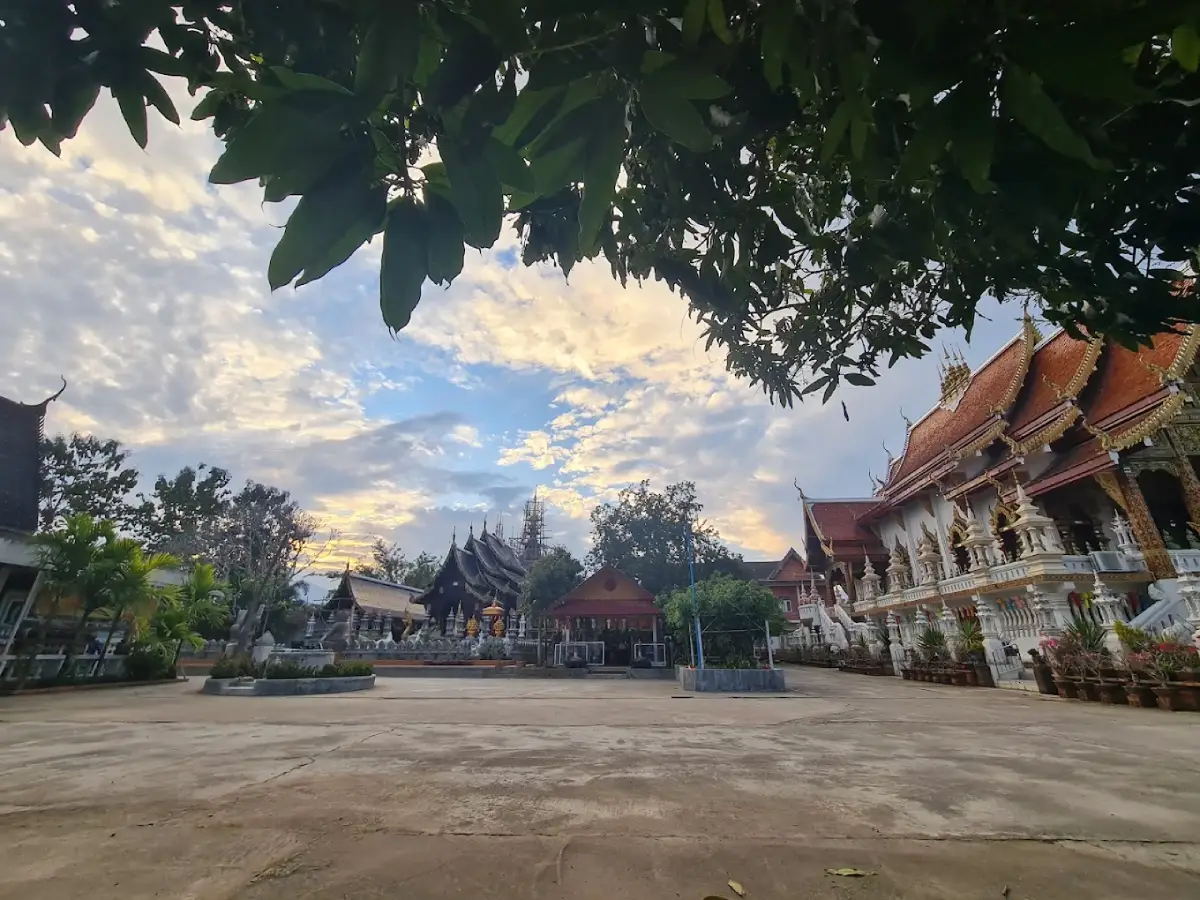
Wat Sukhanthawari is a local Buddhist temple in Moo 8, Ban Nong Khwang, Mae Ngon Subdistrict, Fang District, Chiang Mai Province. It is a private-sector community temple under the Mahanikaya monastic order. The temple was officially established in 1915 and received its royal boundary for monastic rites in 1994. Today, Phra Khru Sukhon Sutta Sophon, also known as Phra Maha Anan Suwannasiri, serves as the abbot. Wat Sukhanthawari is a meaningful stop for travelers who want to worship, make merit, and understand the village history of Mae Ngon on the Fang – Ban Yang – Doi Ang Khang route.
The importance of Wat Sukhanthawari comes from its close relationship with Ban Nong Khwang community. The temple’s early history is connected with villagers who migrated from Ban Bong Nong Khwang in Mae Suai District, Chiang Rai Province. Around seven families settled in the area, and as the village grew, local residents worked together to create a religious place for worship and community life. The temple began as a monastic residence and was once locally known as Wat Nong Khwang before developing into Wat Sukhanthawari.
This origin story makes Wat Sukhanthawari more than a simple village temple. It reflects how Buddhist temples in northern Thailand often grew together with settlement, agriculture, family networks, and local roads. A temple was not created only for religious ceremonies. It became the place where villagers could make merit, listen to Dhamma, hold community events, and maintain a shared spiritual identity. Wat Sukhanthawari is therefore closely tied to the history of Ban Nong Khwang and Mae Ngon.
The name “Sukhanthawari” has a gentle and auspicious sound. “Sukhantha” relates to fragrance or pleasant scent, while “Wari” means water. Although no detailed public legend explains the full naming history, the name fits the character of a local temple that offers calmness, spiritual refreshment, and a peaceful place for merit-making. For visitors, the name adds a poetic layer to the temple’s identity.
The temple covers 3 rai, 2 ngan, and 82 square wah. Important structures include a viharn, sermon hall, monks’ residences, multipurpose hall, and funeral merit-making hall. The main sacred objects include various Buddha images used for worship. These structures show that Wat Sukhanthawari supports many parts of community religious life, from daily worship and merit-making to larger ceremonies, Dhamma activities, and memorial rites.
The viharn is the main place for worship and religious respect. The sermon hall supports Dhamma listening, merit-making, meetings, and community gatherings. The monks’ residences form the monastic area, while the multipurpose hall and funeral merit-making hall show how deeply the temple is involved in the life cycle of local residents. Wat Sukhanthawari is therefore not only a place to visit briefly. It is a functioning community temple used by local people throughout the year.
The temple also has an important educational role in local Buddhism. Its history includes a Dhamma studies school opened in 1917 and a Sunday Buddhist study center opened in 1985. This makes the temple significant not only as a place for rituals but also as a space for learning Buddhist teachings, ethics, and community values. For village temples, education is a key way to pass Buddhist culture from one generation to the next.
Wat Sukhanthawari received its royal boundary for monastic rites in 1994. In Thai Buddhism, this boundary is important because it allows formal monastic ceremonies to be conducted according to Buddhist discipline and the Thai Sangha system. This marks the temple’s development from an early monastic residence into a fully recognized Buddhist temple with a clear role in community religious practice.
The temple remains active today. It appears in recent annual Kathin activity information, which lists resident monks and the abbot. Kathin is an important post-rains-retreat ceremony in Thai Buddhism, where lay supporters offer robes and donations to support the temple. For a community temple like Wat Sukhanthawari, Kathin is not only a religious ritual. It is also a way for villagers, monks, and supporters to strengthen unity and maintain the temple together.
Wat Sukhanthawari plays several roles in Ban Nong Khwang and Mae Ngon. It is a religious center for worship, merit-making, and Buddhist ceremonies. It is a social space where villagers gather and help one another. It is a cultural place that preserves local Lanna Buddhist traditions. It is also a meaningful cultural stop for travelers exploring Mae Ngon, Ban Yang, the First Royal Factory Museum (Fang), and Doi Ang Khang.
Visitors should approach Wat Sukhanthawari as a living community temple. The best experience is to worship respectfully, make merit, walk quietly around the temple grounds, and observe the local atmosphere. This is not a large commercial attraction built mainly for crowds. Its value lies in its history, its village setting, and its continuing religious role in Mae Ngon.
Mae Ngon itself adds depth to the visit. The subdistrict contains agricultural villages, Buddhist temples, Ban Yang Chinese-Yunnanese community, the First Royal Factory Museum (Fang), and the mountain route to Doi Ang Khang. Ban Yang is especially known for its Chinese-Yunnanese identity, food culture, and multicultural community life. The First Royal Factory Museum presents the story of royal development work, agricultural processing, and the relationship between the factory and Ban Yang community. Visiting Wat Sukhanthawari together with these places gives travelers a fuller view of Mae Ngon.
Wat Sukhanthawari is also a good cultural stop before continuing to Doi Ang Khang. The mountain is known for cool weather, highland agriculture, and scenic landscapes. Adding the temple to the route balances the journey by connecting nature with faith, village history, and community culture. A good route can begin at Wat Sukhanthawari, continue to Ban Yang for Chinese-Yunnanese food, visit the First Royal Factory Museum, and then continue toward Doi Ang Khang or return to Fang town.
Getting There is easiest by private car or rental car. From Fang town, drive toward Mae Ngon Subdistrict and continue to Ban Nong Khwang, Moo 8. From Chiang Mai city, take Highway 107 toward Fang District, then connect to Mae Ngon. Public transport may not stop directly at the temple throughout the day, so travelers without their own vehicle should arrange local transport from Fang town or hire a vehicle for a multi-stop Mae Ngon itinerary.
The best time to visit is in the morning or late afternoon. Morning visits are suitable for quiet worship and merit-making, while afternoon visits work well before continuing to Ban Yang, the First Royal Factory Museum, or Doi Ang Khang. Visitors should dress modestly, speak quietly, avoid disturbing monks or worshippers, and ask permission before photographing people or religious activities.
Overall, Wat Sukhanthawari is a valuable stop for travelers who want to explore Fang District in greater depth. The temple combines a clear founding history, a village migration story, important temple structures, Buddhist education history, active Kathin traditions, and a strong connection with Ban Nong Khwang and Mae Ngon. It adds a meaningful spiritual and cultural dimension to a northern Chiang Mai itinerary.
| Name | Wat Sukhanthawari |
| Location | Moo 8, Ban Nong Khwang, Mae Ngon Subdistrict, Fang District, Chiang Mai Province |
| Address | Ban Nong Khwang, Moo 8, Mae Ngon Subdistrict, Fang District, Chiang Mai 50320, Thailand |
| Temple Type | Local Buddhist Temple Under The Mahanikaya Order |
| Highlights | A historic Ban Nong Khwang community temple connected with early village migration, Buddhist education, and local merit-making traditions |
| History | Developed from the faith of Ban Nong Khwang villagers around 1911, officially established as a temple in 1915, and granted a royal boundary for monastic rites in 1994 |
| Former Name / Community Context | Formerly known locally as Wat Nong Khwang, after Ban Nong Khwang in Moo 8, Mae Ngon Subdistrict |
| Temple Area | 3 Rai, 2 Ngan, 82 Square Wah |
| Important Structures | Viharn, Sermon Hall, Monks’ Residences, Multipurpose Hall, And Funeral Merit-Making Hall |
| Sacred Objects | Various Buddha Images Within The Temple |
| Distinctive Features | A peaceful village temple with a strong connection to Ban Nong Khwang settlement history and Mae Ngon community life |
| Local Importance | A spiritual center for Ban Nong Khwang, supporting Buddhist worship, merit-making, Kathin, forest robe offerings, and local religious activities |
| Buddhist Education History | A Dhamma Studies School opened in 1917, and a Sunday Buddhist Study Center opened in 1985 |
| Travel Information | Best reached by private car or rental car from Fang town toward Mae Ngon Subdistrict and Ban Nong Khwang, Moo 8; it can be combined with Ban Yang, the First Royal Factory Museum (Fang), and Doi Ang Khang |
| Current Status | Still active as a Mahanikaya community temple in Mae Ngon and listed in recent annual Kathin activity information |
| Open Days | Daily |
| Opening Hours | 08.00 – 17.00 |
| Main Areas / Zones | Worship Area, Viharn, Sermon Hall, Temple Grounds, Monastic Area, Multipurpose Hall, And Funeral Merit-Making Hall |
| Abbot | Phra Khru Sukhon Sutta Sophon, Also Known As Phra Maha Anan Suwannasiri |
| Main Contact Number | 089-701-8825 |
| Nearby Tourist Attractions | 1. Ban Yang Chinese-Yunnanese Community, about 5 km 2. First Royal Factory Museum (Fang), about 6 km 3. Wat Mae Ngon, about 9 km 4. Wat Phra That Doi Kaeo, about 10 km 5. Wat Phrom Chariyawat, about 11 km 6. Doi Ang Khang, about 30 km 7. Fang Hot Springs, about 35 km |
| Nearby Restaurants | 1. Je Mei Chinese Yunnan Suki, about 5 km, Tel. 081-366-3010 2. Ban Yang Khao Soi, about 6 km 3. Naha Restaurant, about 10 km, Tel. 053-450-008 4. GREAT VIWE FANG, Fang Branch, about 22 km, Tel. 062-048-4222 5. Hong Nung Len Fang Chiang Mai, about 23 km, Tel. 083-201-8503, 095-134-6442 6. Khao Soi Parichat Fang, about 24 km, Tel. 053-451-164 7. Cafe’ de fang, about 25 km, Tel. 093-614-6697 |
| Nearby Accommodations | 1. Ban Yang Guesthouse, about 5 km, Tel. 081-035-0690 2. Ban Din Lao Zhang Resort, about 6 km, Tel. 087-124-8060 3. Ban Luang Resort, about 10 km, Tel. 081-881-7002 4. Ban Phak Thanaphon, about 12 km, Tel. 090-672-7530 5. Fang Modern Hotel, about 24 km, Tel. 086-439-1843 6. Huen San Fang, about 25 km, Tel. 081-881-6430, 063-790-0666 |
Frequently Asked Questions (FAQ)
Q: Where is Wat Sukhanthawari located?
A: Wat Sukhanthawari is located in Moo 8, Ban Nong Khwang, Mae Ngon Subdistrict, Fang District, Chiang Mai Province.
Q: What is the historical importance of Wat Sukhanthawari?
A: The temple grew from the faith of Ban Nong Khwang villagers, was once known as Wat Nong Khwang, was officially established in 1915, and received its royal boundary for monastic rites in 1994.
Q: What are the opening days and hours of Wat Sukhanthawari?
A: The temple is open daily from 08.00 to 17.00.
Q: Who is the abbot of Wat Sukhanthawari?
A: The abbot is Phra Khru Sukhon Sutta Sophon, also known as Phra Maha Anan Suwannasiri.
Q: What important structures are found at Wat Sukhanthawari?
A: Important structures include the viharn, sermon hall, monks’ residences, multipurpose hall, funeral merit-making hall, and Buddha images used for worship.
Q: Is Wat Sukhanthawari suitable for travelers?
A: Yes. It is suitable for travelers who want to worship, make merit, visit a peaceful community temple, and understand the local history of Ban Nong Khwang and Mae Ngon.
Q: How can travelers get to Wat Sukhanthawari?
A: The most convenient way is by private car or rental car from Fang town toward Mae Ngon Subdistrict and Ban Nong Khwang, Moo 8.
Q: What nearby places can be visited with Wat Sukhanthawari?
A: Travelers can combine the visit with Ban Yang, the First Royal Factory Museum (Fang), Wat Mae Ngon, Wat Phra That Doi Kaeo, Wat Phrom Chariyawat, Doi Ang Khang, and Fang Hot Springs.
 Category: ●Places of Worship
 Group: ●Temple
Last Update : 2 MonthAgo
 Last Update : 2 MonthAgo
 Click to Access the Navigation Map GPS

 Muang Chiang Mai(121)Chom Thong(47)Mae Chaem(25)Chiang Dao(33)Doi Saket(68)Mae Taeng(85)Mae Rim(69)Samoeng(29)Fang(71)Mae Ai(59)Phrao(70)San Pa Tong(103)San Kamphaeng(66)San Sai(73)Hang Dong(73)Hot(32)Doi Tao(22)Omkoi(11)Saraphi(74)Wiang Haeng(15)Chai Prakan(28)Mae Wang(32)Mae On(22)Doi Lo(33)Galyani Vadhana(1)


