
lovethailand home >North Travel Attractions >Chiang Mai Travel Attractions >Fang >Mae Ngon > Wat Phrom Chariyawat
TL;DR: Wat Phrom Chariyawat is located at Moo 4, Mae Ngon Subdistrict, Fang District, Chiang Mai Province, open Daily, hours 08.00 – 17.00.

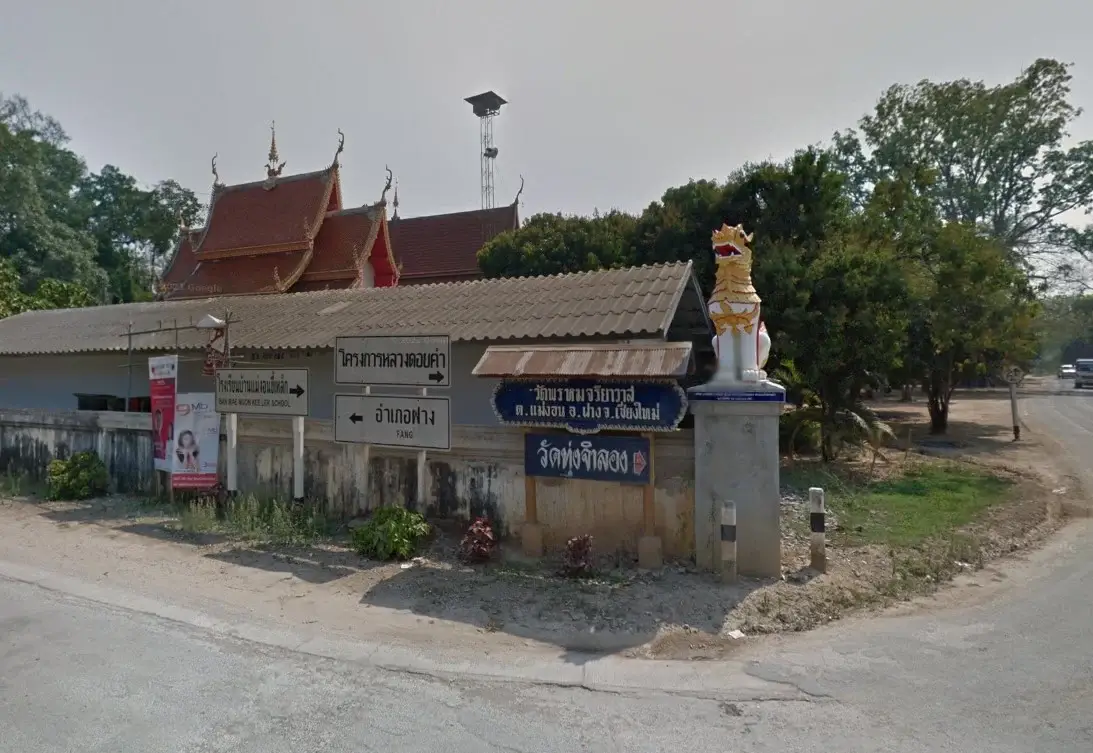
Wat Phrom Chariyawat
Open Days: Daily
Opening Hours: 08.00 – 17.00
Wat Phrom Chariyawat is a long-established local Buddhist temple in Moo 4, Mae Ngon Subdistrict, Fang District, Chiang Mai Province. It is a private-sector community temple under the Mahanikaya monastic order. The temple was officially established in 1826 and received its royal boundary for monastic rites in 1951. Today, Phra Athikan Sawaeng Thitathammo serves as the abbot. For travelers exploring northern Chiang Mai, Wat Phrom Chariyawat is a meaningful stop for worship, merit-making, and understanding the Buddhist community life of Mae Ngon.
Wat Phrom Chariyawat is not a large commercial tourist temple. Its value lies in its age, its role in the local community, and its connection with the cultural landscape of Fang District. With an official temple history dating back to 1826, the temple is one of the older religious places in Mae Ngon. It represents the way village temples in northern Thailand developed together with settlements, agricultural communities, local roads, and the need for a spiritual center.
The royal boundary granted in 1951 is an important part of the temple’s history. In Thai Buddhism, this boundary allows formal monastic rites to be performed according to Buddhist discipline and the Thai Sangha system. This makes Wat Phrom Chariyawat more than a small rural religious site. It is a fully recognized Buddhist temple that has supported Buddhist ceremonies and community religious life for generations.
Mae Ngon Subdistrict is one of the most culturally interesting areas of Fang District. The area connects local Buddhist temples, agricultural communities, Ban Yang Chinese-Yunnanese village, the First Royal Factory Museum (Fang), and the mountain route to Doi Ang Khang. Wat Phrom Chariyawat adds a Buddhist and historical dimension to this route. A visit here helps travelers see Mae Ngon not only as a gateway to the mountains, but also as a living community shaped by faith, migration, agriculture, and local culture.
The temple’s name carries a Buddhist meaning. “Phrom Chariya” refers to noble conduct or a virtuous way of life, while “Wat” and “Awat” relate to a religious dwelling or temple. Although no detailed public legend explains the name, the meaning itself fits the temple’s role as a place for moral practice, worship, and community religious life.
For local residents, Wat Phrom Chariyawat functions as a spiritual center. Like many village temples in northern Thailand, it supports merit-making, Buddhist observances, Kathin ceremonies, forest robe offerings, and community gatherings. These activities are not only religious rituals. They also help maintain social ties, bring villagers together, and keep local Buddhist culture alive in daily life.
Visitors should approach Wat Phrom Chariyawat as a functioning community temple. The most meaningful way to visit is to pay respect to the Buddha, make merit, walk calmly around the temple grounds, and observe the peaceful local atmosphere. This is not a place designed mainly for photography or sightseeing crowds. It is a temple where respect, modest clothing, and quiet behavior matter.
The temple is especially suitable for travelers who enjoy quiet local temples and cultural routes. It can be combined with Wat Phra That Doi Kaew, Wat Thung Chamlong, Ban Yang, the First Royal Factory Museum (Fang), Doi Ang Khang, and Fang Hot Springs. This makes the temple a useful stop for travelers who want to understand Fang District through both faith and landscape.
The surrounding Mae Ngon area gives Wat Phrom Chariyawat additional depth. Ban Yang, located nearby, is known as a Chinese-Yunnanese community with distinctive food, architecture, and multicultural identity. The First Royal Factory Museum (Fang) presents the story of agricultural processing, royal development work, and the relationship between the factory and the local community. When these places are visited together, travelers gain a more complete picture of Mae Ngon as a place where Buddhism, ethnic culture, agriculture, and highland development meet.
Getting There is easiest by private car or rental car. From Fang town, drive toward Mae Ngon Subdistrict and continue to Moo 4, where the temple is located. From Chiang Mai city, take Highway 107 toward Fang District, then connect to the Mae Ngon area. Public transport may not stop directly at the temple throughout the day, so travelers without a private vehicle should arrange local transport from Fang town in advance.
The best time to visit is in the morning or late afternoon when the weather is more comfortable and the temple is usually quieter. Morning visits are suitable for merit-making, while afternoon visits work well before continuing to Ban Yang, the First Royal Factory Museum, or Doi Ang Khang. Visitors should dress modestly, speak softly, avoid disturbing monks or worshippers, and ask permission before photographing people or religious activities.
A good travel route begins with Wat Phrom Chariyawat for worship and merit-making, then continues to Wat Phra That Doi Kaew and Wat Thung Chamlong. Travelers can then visit Ban Yang and the First Royal Factory Museum (Fang), and continue to Doi Ang Khang if time allows. This route combines old community temples, local culture, museum learning, and mountain scenery in one journey.
Overall, Wat Phrom Chariyawat is a meaningful destination for travelers who want to experience Chiang Mai beyond major tourist landmarks. Its long history, Mahanikaya temple status, royal monastic boundary, local abbot, and location in Mae Ngon make it an important Buddhist community temple. It adds depth to a Fang itinerary by connecting faith, village life, cultural diversity, and the mountain landscape of northern Chiang Mai.
| Name | Wat Phrom Chariyawat |
| Location | Moo 4, Mae Ngon Subdistrict, Fang District, Chiang Mai Province |
| Address | 180 Moo 4, Mae Ngon Subdistrict, Fang District, Chiang Mai 50320, Thailand |
| Temple Type | Local Buddhist Temple Under The Mahanikaya Order |
| Highlights | A historic community temple in Mae Ngon, officially established in 1826 and suitable for worship, merit-making, and cultural travel along the Fang – Mae Ngon – Doi Ang Khang route |
| History | Officially established as a temple in 1826 and granted a royal boundary for monastic rites in 1951 |
| Name Origin | The name reflects noble conduct and moral practice in the Buddhist tradition |
| Distinctive Features | Quiet local temple atmosphere reflecting rural Buddhist life in Mae Ngon and Fang District |
| Local Importance | A community religious place for merit-making, Buddhist observances, Kathin, forest robe offerings, and local Buddhist activities |
| Travel Information | Best reached by private car or rental car from Fang town toward Mae Ngon Subdistrict and Moo 4; it can be combined with Ban Yang, the First Royal Factory Museum (Fang), and Doi Ang Khang |
| Current Status | Still listed as a local Mahanikaya temple in Mae Ngon, Fang District, Chiang Mai Province |
| Open Days | Daily |
| Opening Hours | 08.00 – 17.00 |
| Main Areas / Zones | Worship area, temple grounds, and community religious activity spaces |
| Abbot | Phra Athikan Sawaeng Thitathammo |
| Main Contact Number | 053-884-611 |
| Nearby Tourist Attractions | 1. Wat Phra That Doi Kaew, about 2 km 2. Wat Thung Chamlong, about 4 km 3. Ban Yang Chinese-Yunnanese Community, about 5 km 4. First Royal Factory Museum (Fang), about 6 km 5. Doi Ang Khang, about 33 km 6. Fang Hot Springs, about 37 km |
| Nearby Restaurants | 1. Je Mei Chinese Yunnan Suki, about 5 km, Tel. 081-366-3010 2. Ban Yang Khao Soi, about 6 km, Tel. 081-993-3626 3. Naha Restaurant, about 18 km, Tel. 053-450-008 4. GREAT VIWE FANG, Fang Branch, about 23 km, Tel. 062-048-4222 5. Hong Nung Len Fang Chiang Mai, about 24 km, Tel. 083-201-8503, 095-134-6442 6. Khao Soi Parichat Fang, about 25 km, Tel. 053-451-164 7. Cafe’ de fang, about 26 km, Tel. 093-614-6697, 085-706-0003, 097-154-0455 |
| Nearby Accommodations | 1. Ban Yang Guesthouse, about 5 km, Tel. 081-035-0690 2. Ban Din Lao Zhang Resort, about 6 km, Tel. 087-124-8060, 089-852-0576 3. Ban Luang Resort, about 18 km, Tel. 081-881-7002 4. Ban Phak Thanaphon, about 18 km, Tel. 090-672-7530 5. Angkhang Nature Resort, about 28 km, Tel. 053-450-110-9 6. Fang Modern Hotel, about 26 km, Tel. 086-439-1843 |
Frequently Asked Questions (FAQ)
Q: Where is Wat Phrom Chariyawat located?
A: Wat Phrom Chariyawat is located in Moo 4, Mae Ngon Subdistrict, Fang District, Chiang Mai Province.
Q: What is the historical importance of Wat Phrom Chariyawat?
A: The temple was officially established in 1826 and received its royal boundary for monastic rites in 1951, making it one of the older community temples in Mae Ngon.
Q: What are the opening days and hours of Wat Phrom Chariyawat?
A: The temple is open daily from 08.00 to 17.00.
Q: Who is the abbot of Wat Phrom Chariyawat?
A: The abbot is Phra Athikan Sawaeng Thitathammo.
Q: Is Wat Phrom Chariyawat suitable for travelers?
A: Yes. It is suitable for travelers who want a quiet stop for worship, merit-making, and local cultural travel in Fang District.
Q: How can travelers get to Wat Phrom Chariyawat?
A: The most convenient way is by private car or rental car from Fang town toward Mae Ngon Subdistrict and Moo 4.
Q: What nearby places can be visited with Wat Phrom Chariyawat?
A: Travelers can combine the visit with Wat Phra That Doi Kaew, Wat Thung Chamlong, Ban Yang, the First Royal Factory Museum (Fang), Doi Ang Khang, and Fang Hot Springs.
 Category: ●Places of Worship
 Group: ●Temple
Last Update : 2 MonthAgo
 Last Update : 2 MonthAgo
 Click to Access the Navigation Map GPS
Wat Phrom Chariyawat Map
Recommend

 Muang Chiang Mai(121)Chom Thong(47)Mae Chaem(25)Chiang Dao(33)Doi Saket(68)Mae Taeng(85)Mae Rim(69)Samoeng(29)Fang(71)Mae Ai(59)Phrao(70)San Pa Tong(103)San Kamphaeng(66)San Sai(73)Hang Dong(73)Hot(32)Doi Tao(22)Omkoi(11)Saraphi(74)Wiang Haeng(15)Chai Prakan(28)Mae Wang(32)Mae On(22)Doi Lo(33)Galyani Vadhana(1)


