
lovethailand home >North Travel Attractions >Chiang Mai Travel Attractions >Fang >Mae Kha > Wat Khongkharam
TL;DR: Wat Khongkharam is located at Moo 6, Mae Kha Subdistrict, Fang District, Chiang Mai Province, open Daily, hours 08.00 - 17.00.
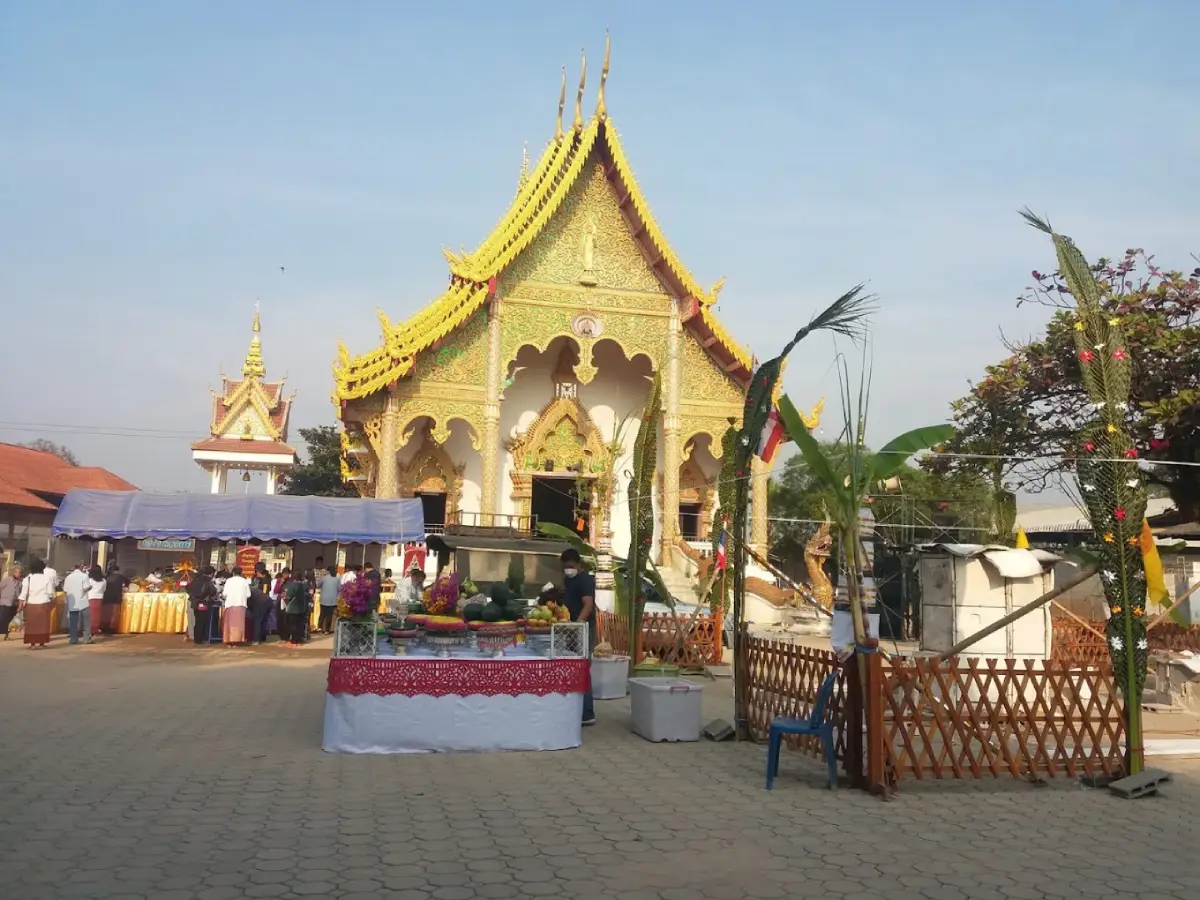
Wat Khongkharam
Open Days: Daily
Opening Hours: 08.00 - 17.00
Wat Khongkharam, also known locally as Wat Lai Fang, is a community Buddhist temple in Moo 6, Mae Kha Subdistrict, Fang District, Chiang Mai Province. It is a local temple under the Mahanikaya order and has long served the Ban Lai Fang community. The temple was officially permitted as a Buddhist temple in 1923 and received its Wisungkhamasima in 1969, making it one of the long-established community temples in Mae Kha.
Wat Khongkharam is suitable for travelers who want to make merit, pay respect, and experience a quiet rural temple in northern Chiang Mai. The temple is not a large commercial tourist attraction. Its importance comes from its continuing religious role, its connection with the local village, and its function as a spiritual center for people in Mae Kha Subdistrict.
The temple stands within a rural community setting in Fang District. Around Mae Kha, visitors will find villages, agricultural areas, schools, nearby temples, and routes leading to natural attractions. This setting gives Wat Khongkharam a calm and local character. Visiting the temple allows travelers to see a working Buddhist temple that remains part of daily community life rather than a site designed mainly for tourism.
The name “Khongkharam” carries a peaceful Buddhist meaning. “Khongkha” is associated with water, while “aram” means a temple or a calm religious place. Together, the name gives an impression of a peaceful monastery connected with coolness, continuity, and spiritual nourishment. The local name Wat Lai Fang also links the temple directly with Ban Lai Fang, showing that the temple is rooted in its village setting.
The temple’s history is important for understanding Mae Kha’s community development. Wat Khongkharam was officially permitted as a temple in 1923, which reflects the stability of the local settlement and the shared faith of villagers who supported a temple for their community. In 1969, the temple received its Wisungkhamasima, the consecrated boundary used for important monastic acts. This gave the temple a formal religious role for ordination-related and monastic ceremonies.
As a Wat Rat, or community-supported temple, Wat Khongkharam is closely connected with local residents. It is not a royal monastery. Instead, it is sustained by monks, lay supporters, and the village community. Local people may come to the temple for Buddhist holy days, sermons, Kathin, robe-offering ceremonies, Buddhist Lent, the end of Buddhist Lent, family merit-making, funeral rites, and other community events.
Phra Maha Saranphong Mahasilapanyo is the abbot of Wat Khongkharam. In a rural community temple, the abbot has an important role in maintaining monastic life, caring for temple facilities, leading religious activities, and working with lay supporters. The continuity of the temple depends on the cooperation between monks, temple committees, local villagers, and supporters who help preserve the temple’s role in community life.
The main appeal of Wat Khongkharam is its quiet community identity. Visitors can make merit, pay respect, and walk calmly around the temple grounds. The temple’s value is not based on crowds or major landmark architecture. It is found in its age, local faith, and the way it remains part of the religious life of Ban Lai Fang and Mae Kha Subdistrict.
Important areas associated with Wat Khongkharam include religious activity spaces, the temple courtyard, and community merit-making areas. The temple’s Wisungkhamasima status also gives it significance for formal monastic activities. Publicly available information about specific architectural details is limited, so the temple is best understood as a functioning community temple whose main value lies in its religious continuity and village role.
Wat Khongkharam reflects the relationship between Buddhism and Lanna community life in Fang District. In northern Thai villages, temples are not only places for worship. They are also spaces for moral learning, community cooperation, seasonal ceremonies, and the transmission of local values. Wat Khongkharam therefore offers visitors a view of Buddhism as part of everyday village life.
Merit-making activities at Wat Khongkharam can be understood within the wider Buddhist calendar. These include Buddhist holy days, Makha Bucha, Visakha Bucha, Asalha Bucha, Buddhist Lent, the end of Buddhist Lent, Kathin, robe-offering ceremonies, and local merit-making events. Kathin is especially important after Buddhist Lent, when lay supporters offer robes and support to the temple.
The atmosphere of Wat Khongkharam is best suited to respectful cultural travel. Visitors should dress modestly, speak quietly, avoid disturbing monks or worshippers, and avoid entering monastic areas without permission. If a ceremony or community event is taking place, visitors should give space to local participants. This is an active religious site, so a visit should be approached with calmness and respect.
Getting There is easiest from Fang town. Travelers can drive toward Mae Kha Subdistrict and continue to Ban Lai Fang in Moo 6. A private car, rental car, or local hired vehicle is the most practical option because the surrounding attractions are spread across village, rural, and mountain routes. Travelers using public transportation should first reach Fang town and then arrange local transport to Mae Kha.
A suitable travel route is to combine Wat Khongkharam with nearby community temples and attractions in Fang District. Visitors can begin at Wat Khongkharam, continue to Wat Udom Mongkhon, Wat Huai Cho, or Wat Sri Bua Ngoen, and then travel onward to the First Royal Factory Museum Fang, Fang Hot Springs, Doi Pha Hom Pok National Park, or Doi Ang Khang. This route combines village temples, local history, hot springs, and mountain scenery.
For cultural travelers, Wat Khongkharam is meaningful because it represents a long-established community temple in Mae Kha. Visitors who seek large monuments may spend only a short time here, but those interested in village life, Buddhist practice, and local identity will find the temple valuable. It offers a quieter and more grounded view of Fang District beyond its better-known natural attractions.
In summary, Wat Khongkharam is a Mahanikaya community temple in Moo 6, Mae Kha Subdistrict, Fang District, Chiang Mai. It was officially permitted as a temple in 1923 and received Wisungkhamasima in 1969. The temple remains a spiritual center for Ban Lai Fang and Mae Kha, suitable for merit-making, quiet worship, and cultural travel in rural northern Chiang Mai.
| Name | Wat Khongkharam, Also Known As Wat Lai Fang |
| Location | Moo 6, Mae Kha Subdistrict, Fang District, Chiang Mai Province |
| Address | 268 Moo 6, Mae Kha Subdistrict, Fang District, Chiang Mai 50110, Thailand |
| Coordinates | 19.78683, 99.16611 |
| Temple Type | Community Temple Under The Mahanikaya Order |
| History | Officially permitted as a temple in 1923 and granted Wisungkhamasima in 1969 |
| Abbot / Caretaker | Phra Maha Saranphong Mahasilapanyo |
| Highlights | A long-established community temple of Mae Kha and Ban Lai Fang, suitable for merit-making and quiet cultural travel |
| Distinctive Features | A local Lanna temple reflecting the relationship between Buddhism, village life, and community identity in Fang District |
| Main Areas / Zones | Religious activity spaces, temple courtyard, and community merit-making areas |
| Traditions / Merit-Making Events | Buddhist holy days, Buddhist Lent, the end of Buddhist Lent, Kathin, robe-offering ceremonies, and community merit-making events |
| Travel Information | Travel from Fang town toward Mae Kha Subdistrict and Ban Lai Fang; private car, rental car, or local hired transport is recommended |
| Current Status | Open as an active Buddhist temple and community religious site in Mae Kha Subdistrict |
| Open Days | Daily |
| Opening Hours | 08.00 - 17.00 |
| Telephone | 053-884-907 |
| Nearby Tourist Attractions | 1. Wat Udom Mongkhon, Mae Kha, About 1 km 2. Wat Huai Cho, Mae Kha, About 1 km 3. Wat Sri Bua Ngoen, Mae Kha, About 2 km 4. First Royal Factory Museum Fang, About 24 km 5. Fang Hot Springs / Doi Pha Hom Pok National Park, About 25 km |
| Nearby Restaurants | 1. Tiao Ruea Rangsit Mae Kha, About 3 km, Tel. 089-175-3940 2. Ahan Ran Mai, About 5 km, Tel. 086-114-6858 3. Hong Nung Len Fang, About 8 km, Tel. 083-201-8503, 095-134-6442 4. Bamee Je Hua Fang Branch, About 9 km, Tel. 064-721-8851 5. Kha Mu Krop Kai Yang San Ma Fueang, About 10 km, Tel. 081-882-5589, 081-467-3624 |
| Nearby Accommodations | 1. Fak Fang Homestay, About 9 km, Tel. 086-117-6914 2. Fang Modern Hotel, About 10 km, Tel. 086-439-1843 3. Fang Villa Hotel, About 10 km, Tel. 086-451-7682 4. Baan Sathitphon Hotel, About 12 km, Tel. 081-113-8882 5. Huen San Fang Hotel, About 14 km, Tel. 081-881-6430 |
Frequently Asked Questions (FAQ)
Q: Where is Wat Khongkharam located?
A: Wat Khongkharam is located in Moo 6, Mae Kha Subdistrict, Fang District, Chiang Mai Province.
Q: What is another local name for Wat Khongkharam?
A: Wat Khongkharam is also known locally as Wat Lai Fang because of its connection with the Ban Lai Fang community.
Q: When was Wat Khongkharam officially established?
A: Wat Khongkharam was officially permitted as a temple in 1923 and received Wisungkhamasima in 1969.
Q: Who is the abbot of Wat Khongkharam?
A: The abbot of Wat Khongkharam is Phra Maha Saranphong Mahasilapanyo.
Q: What type of travelers is Wat Khongkharam suitable for?
A: It is suitable for travelers who want a quiet temple visit, merit-making, and a local cultural experience in Mae Kha and Fang District.
Q: How can travelers get to Wat Khongkharam?
A: Travelers can start from Fang town and continue toward Mae Kha Subdistrict and Ban Lai Fang. A private car, rental car, or local hired transport is the most practical option.
Q: What nearby places can be combined with Wat Khongkharam?
A: Nearby places include Wat Udom Mongkhon, Wat Huai Cho, Wat Sri Bua Ngoen, the First Royal Factory Museum Fang, Fang Hot Springs, and Doi Pha Hom Pok National Park.
 Category: ●Places of Worship
 Group: ●Temple
Last Update : 2 WeekAgo
 Last Update : 2 WeekAgo
 Click to Access the Navigation Map GPS
 Muang Chiang Mai(121)Chom Thong(47)Mae Chaem(25)Chiang Dao(33)Doi Saket(68)Mae Taeng(85)Mae Rim(69)Samoeng(29)Fang(71)Mae Ai(59)Phrao(70)San Pa Tong(103)San Kamphaeng(66)San Sai(73)Hang Dong(73)Hot(32)Doi Tao(22)Omkoi(11)Saraphi(74)Wiang Haeng(15)Chai Prakan(28)Mae Wang(32)Mae On(22)Doi Lo(33)Galyani Vadhana(1)


