
lovethailand home >North Travel Attractions >Chiang Mai Travel Attractions >Fang >Mon Pin > Wat Suntharawat
TL;DR: Wat Suntharawat is located at Moo 9, Ban Wiang Wai, Mon Pin Subdistrict, Fang District, Chiang Mai Province, open Daily, hours 08.00 - 17.00. Highlights include A Tai Yai community temple of Ban Wiang Wai and an important site for Poy Sang Long traditions.
Wat Suntharawat
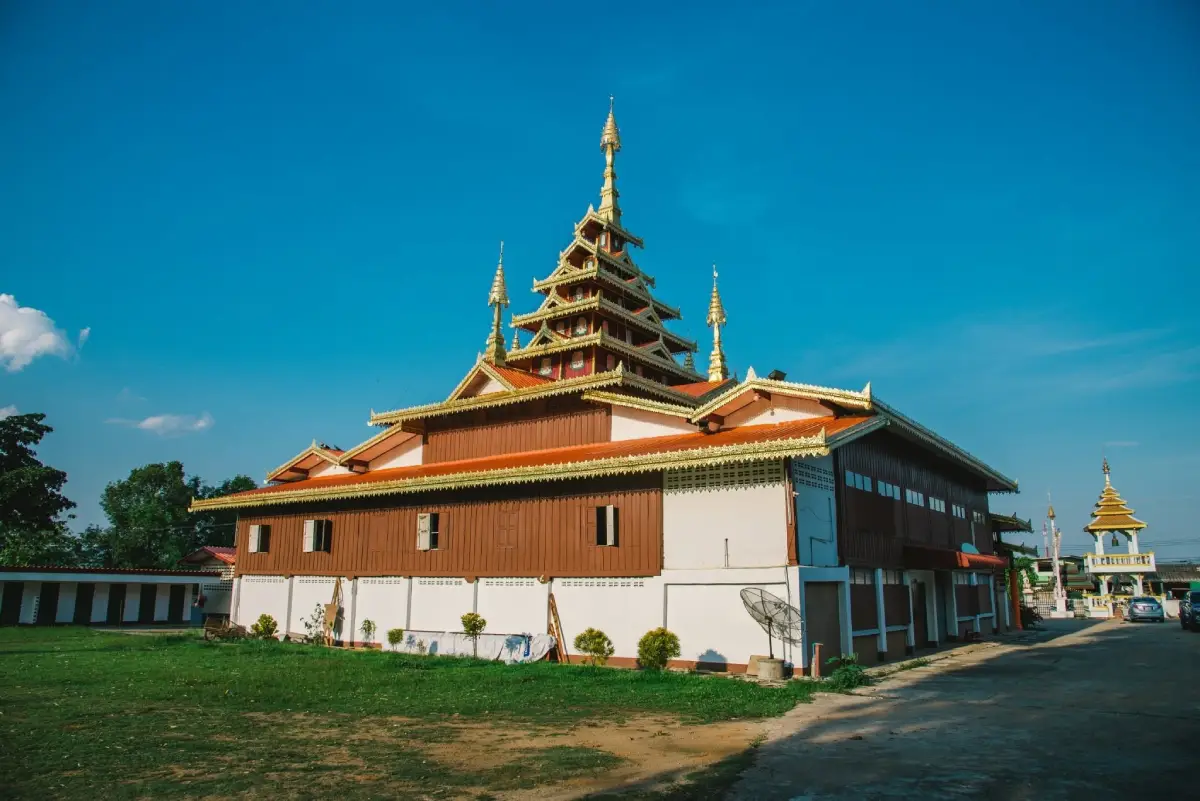
Open Days: Daily
Opening Hours: 08.00 - 17.00
Wat Suntharawat, also known locally as Wat Wiang Wai, is a community Buddhist temple in Moo 9, Ban Wiang Wai, Mon Pin Subdistrict, Fang District, Chiang Mai Province. It is a local Mahanikaya temple closely connected with the Tai Yai community of Ban Wiang Wai. This temple is suitable for travelers who want to make merit, visit a quiet village temple, and understand the cultural layers of northern Chiang Mai beyond mainstream tourist routes. Its value lies in its religious role, its connection with Tai Yai traditions, and its position as a spiritual center of the village.
Wat Suntharawat stands in the historical and cultural setting of Ban Wiang Wai, an old community in Mon Pin Subdistrict. The village is associated with Tai Yai settlement, local memory, and long-standing Buddhist faith. Visiting the temple is therefore not only a temple stop. It is an opportunity to understand how a rural northern Thai village uses its temple as a center of worship, community gathering, local ceremonies, and cultural continuity.
The temple was officially permitted as a Buddhist temple in 1929 and received its Wisungkhamasima in 1982. Wisungkhamasima is important because it defines the consecrated boundary used for key monastic acts, especially ordination and ceremonies related to the ordination hall. This status shows that Wat Suntharawat has been formally recognized as a functioning temple for the local Buddhist community. It also reflects the growth of Ban Wiang Wai as a settled community with organized religious life.
In local history, Ban Wiang Wai is linked with Tai Yai migration and settlement in Fang District. The temple known as Wat Wiang Wai, or Wat Suntharawat, became the village’s religious center. Its role goes beyond worship. It represents settlement, identity, collective faith, and the continuity of Tai Yai Buddhist practice in northern Thailand. For this reason, Wat Suntharawat should be understood as both a temple and a cultural anchor of Ban Wiang Wai.
The local name “Wat Wiang Wai” is important because it connects the temple directly with the village. In northern Thai and ethnic communities, temple names often preserve local geography, settlement history, or village memory. The name makes the temple inseparable from Ban Wiang Wai. It tells visitors that this is not an isolated religious site but a temple rooted in the life of the community around it.
Phra Somchai Panyawaro is the abbot of Wat Suntharawat. In a village temple, the abbot plays a central role in maintaining religious discipline, temple facilities, ceremonies, and relationships with lay supporters. Under local faith networks, Wat Suntharawat is also connected with the construction of Phra That Sunthon Chedi Si Wiang Wai, a major religious project intended to enshrine Buddha relics and serve as a new spiritual focus for the community.
One of the most important religious structures associated with the temple is Phra That Sunthon Chedi Si Wiang Wai. The chedi is designed as a prasat-style stupa with 9 spires. Its base is 10 meters wide, and its height from the base to the top of the finial is 30 meters. The foundation ceremony was held on November 9, 2023, at Wat Suntharawat, Moo 9, Ban Wiang Wai, Mon Pin Subdistrict, Fang District, Chiang Mai Province. The project reflects the living faith of the monks and the Ban Wiang Wai community.
The significance of Phra That Sunthon Chedi Si Wiang Wai is not only architectural. It is being built to enshrine Buddha relics and provide a sacred place for Buddhist worship. The project is also connected with the veneration of Khruba Siwichai, one of the most respected monk-saints of Lanna. The enshrinement of relics connected with Khruba Siwichai inside the chedi space adds a strong Lanna devotional dimension to the site and deepens the temple’s cultural meaning.
Important areas around Wat Suntharawat include the temple vihara, the temple courtyard, religious activity spaces, and the area associated with Phra That Sunthon Chedi Si Wiang Wai. The vihara is a place for worship and merit-making, while the courtyard serves as a gathering space during community ceremonies. The temple’s modest setting allows visitors to experience a working rural temple rather than a commercialized tourist attraction.
Wat Suntharawat is especially important for Tai Yai traditions. One of the best-known ceremonies connected with the temple is Poy Sang Long, the Tai Yai novice ordination festival. During this ceremony, boys who will be ordained as novice monks are dressed like young princes. The rituals include head-shaving, ceremonial bathing, dressing the boys as Sang Long, and processions through important village routes. The event is a major act of merit for families and an important way to preserve Tai Yai identity.
Other Tai Yai and Buddhist traditions connected with the community include Poy Tian Ok Phansa, Poy Kong Lo, Poy Khuen That, Buddhist Lent, the end of Buddhist Lent, merit-making with traditional food, and ceremonies for paying respect to elders. These traditions make Wat Suntharawat more than a religious building. It is a living cultural stage where faith, clothing, music, food, processions, and community relationships are carried across generations.
The atmosphere of Wat Suntharawat is best suited to respectful cultural travel. On ordinary days, visitors can make merit, pay respect, and walk quietly through the temple grounds. During major ceremonies, visitors may see processions, Tai Yai dress, music, and community gatherings. Travelers should dress modestly, keep their voices low, avoid disrupting ceremonies, and give priority to local participants.
For cultural travelers, Wat Suntharawat is a meaningful stop in Fang District. It is suitable for those interested in village temples, Tai Yai culture, Ban Wiang Wai history, and northern Buddhist life. Visitors who only seek a quick photo spot may not fully appreciate the temple, but those who pay attention to its history, ceremonies, and community role will find a site with deep local value.
Getting There is easiest from Fang town. Travelers can drive toward Mon Pin Subdistrict and continue to Ban Wiang Wai in Moo 9. A private car, rental car, or local hired vehicle is recommended because nearby attractions are spread across rural and mountain routes. Travelers using public transportation should first reach Fang town, then arrange local transport to Ban Wiang Wai.
A good travel route is to combine Wat Suntharawat with other cultural and natural attractions around Fang. Visitors can begin with merit-making at the temple, learn about Ban Wiang Wai, continue to nearby local sites in Mon Pin, then travel onward to Fang Hot Spring, Doi Pha Hom Pok National Park, or Doi Ang Khang. The temple can be visited as a short stop or as part of a slower cultural route focused on Tai Yai heritage and rural northern Chiang Mai.
In summary, Wat Suntharawat is a Mahanikaya community temple in Ban Wiang Wai, Mon Pin Subdistrict, Fang District, Chiang Mai. It was officially permitted as a temple in 1929 and received Wisungkhamasima in 1982. The temple is led by Phra Somchai Panyawaro and remains closely connected with Tai Yai traditions such as Poy Sang Long. For travelers exploring Fang, it offers a deeper view of local Buddhist faith, village identity, and the living culture of Ban Wiang Wai.
| Name | Wat Suntharawat, Also Known As Wat Wiang Wai |
| Location | Moo 9, Ban Wiang Wai, Mon Pin Subdistrict, Fang District, Chiang Mai Province |
| Address | Moo 9, Mon Pin Subdistrict, Fang District, Chiang Mai 50110, Thailand |
| Temple Type | Local Community Temple Under The Mahanikaya Order |
| History | A community temple of Ban Wiang Wai, officially permitted as a temple in 1929 and granted Wisungkhamasima in 1982 |
| Abbot / Caretaker | Phra Somchai Panyawaro |
| Highlights | A Tai Yai community temple of Ban Wiang Wai and an important site for Poy Sang Long traditions |
| Distinctive Features | A living village temple reflecting the connection between Buddhism, Tai Yai identity, and Lanna community life in Fang District |
| Main Areas / Zones | Temple vihara, temple courtyard, religious activity spaces, and the area of Phra That Sunthon Chedi Si Wiang Wai |
| Important Religious Structure | Phra That Sunthon Chedi Si Wiang Wai, a prasat-style chedi with 9 spires, built to enshrine Buddha relics |
| Traditions / Merit-Making Events | Poy Sang Long, Poy Tian Ok Phansa, Poy Kong Lo, Poy Khuen That, Buddhist Lent, the end of Buddhist Lent, Kathin, robe-offering ceremonies, and local Tai Yai merit-making events |
| Travel Information | Travel from Fang town toward Mon Pin Subdistrict and Ban Wiang Wai; private car, rental car, or local hired transport is recommended |
| Current Status | Open as an active Buddhist temple and community religious site in Ban Wiang Wai, Mon Pin Subdistrict |
| Open Days | Daily |
| Opening Hours | 08.00 - 17.00 |
| Nearby Tourist Attractions | 1. Wat Phra That Chaloem Phrakiat, Mon Pin, About 7 km 2. Nam Ru Suan Cha, About 8 km 3. Mae Mao Hydropower Dam, About 13 km 4. Fang Hot Spring / Doi Pha Hom Pok National Park, About 20 km 5. Doi Ang Khang / Royal Agricultural Station Angkhang, About 44 km |
| Nearby Restaurants | 1. Parichat Khao Soi Fang, About 15 km, Tel. 053-451-164 2. Banrimnum Fang Restaurant, About 14 km, Tel. 053-382-174 3. Wiang Fang Wang Kung Restaurant, About 15 km 4. Krua Sabai Sabai, About 15 km, Tel. 053-451-707 5. Chill Café Fang, About 15 km |
| Nearby Accommodations | 1. Aumhum Homestay And Organic Farm, About 7 km 2. Baan Innto Resort, About 12 km, Tel. 087-906-7084, 098-919-3454 3. Baan Sathitporn Hotel, About 15 km, Tel. 081-113-8882 4. Huen San Fang Hotel, About 16 km, Tel. 081-881-6430 5. Fang Modern Hotel, About 17 km, Tel. 086-439-1843 |
Frequently Asked Questions (FAQ)
Q: Where is Wat Suntharawat located?
A: Wat Suntharawat is located in Moo 9, Ban Wiang Wai, Mon Pin Subdistrict, Fang District, Chiang Mai Province.
Q: What is another local name for Wat Suntharawat?
A: The temple is also locally known as Wat Wiang Wai because it is the community temple of Ban Wiang Wai.
Q: When was Wat Suntharawat officially established?
A: Wat Suntharawat was officially permitted as a temple in 1929 and received Wisungkhamasima in 1982.
Q: Who is the abbot of Wat Suntharawat?
A: The abbot of Wat Suntharawat is Phra Somchai Panyawaro.
Q: What traditions are associated with Wat Suntharawat?
A: The temple is associated with Tai Yai traditions such as Poy Sang Long, Poy Tian Ok Phansa, Poy Kong Lo, and Buddhist merit-making events.
Q: What is Phra That Sunthon Chedi Si Wiang Wai?
A: It is a prasat-style chedi with 9 spires, built to enshrine Buddha relics and serve as a spiritual landmark for the community.
Q: How can travelers get to Wat Suntharawat?
A: Travelers can start from Fang town, head toward Mon Pin Subdistrict and Ban Wiang Wai, and use a private car, rental car, or local hired transport.
Q: What nearby places can be combined with Wat Suntharawat?
A: Nearby places include Wat Phra That Chaloem Phrakiat, Nam Ru Suan Cha, Mae Mao Hydropower Dam, Fang Hot Spring, Doi Pha Hom Pok National Park, and Doi Ang Khang.
 Category: ●Places of Worship
 Group: ●Temple
Last Update : 2 WeekAgo
 Last Update : 2 WeekAgo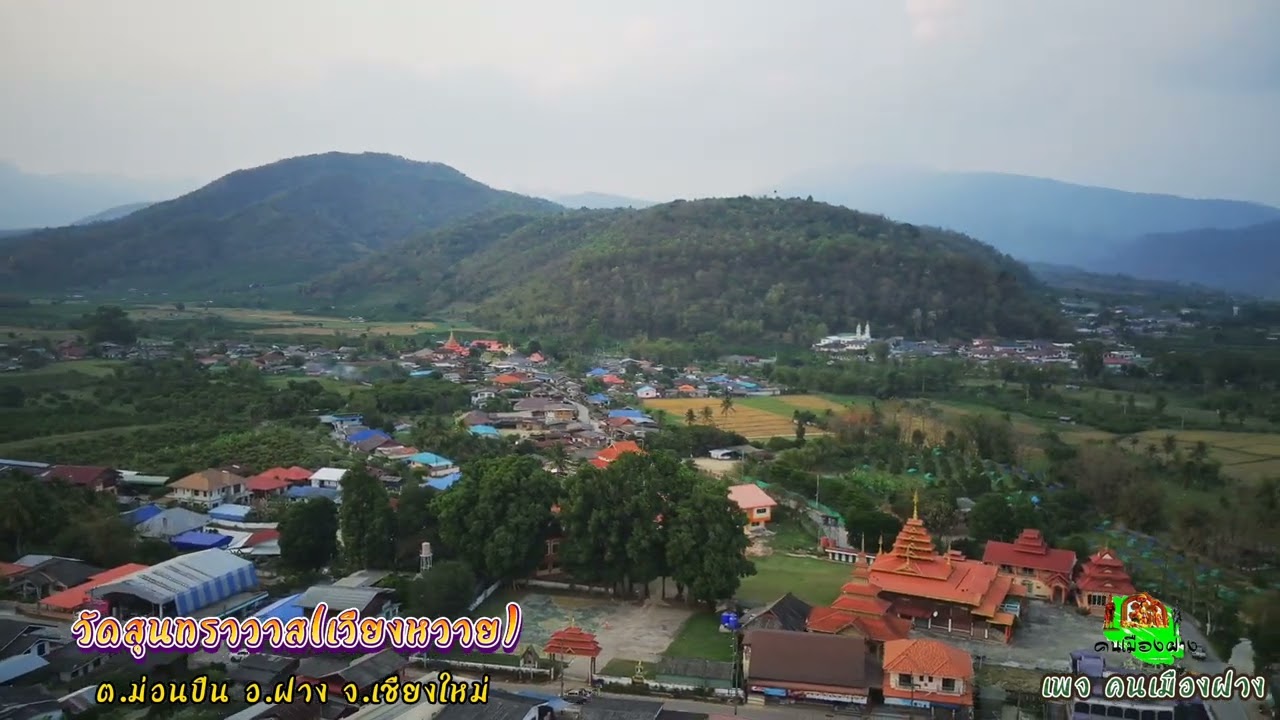
 Click to Access the Navigation Map GPS
Wat Suntharawat Map
Recommend

 Muang Chiang Mai(121)Chom Thong(47)Mae Chaem(25)Chiang Dao(33)Doi Saket(68)Mae Taeng(85)Mae Rim(69)Samoeng(29)Fang(71)Mae Ai(59)Phrao(70)San Pa Tong(103)San Kamphaeng(66)San Sai(73)Hang Dong(73)Hot(32)Doi Tao(22)Omkoi(11)Saraphi(74)Wiang Haeng(15)Chai Prakan(28)Mae Wang(32)Mae On(22)Doi Lo(33)Galyani Vadhana(1)


