
lovethailand home >North Travel Attractions >Chiang Mai Travel Attractions >Doi Saket >San Pu Loei > Wat Chai Sathit
TL;DR: Wat Chai Sathit is located at Ban Pa Sao Luang, Moo 8, San Pu Loei Subdistrict, Doi Saket District, Chiang Mai Province., also known as Wat Pa Sao Luang, is located in Ban Pa Sao Luang, Moo 8, San Pu Loei Subdistrict, Doi Saket District, Chiang Mai Province.

Wat Chai Sathit
Operating day: Daily
Operating time: 08.00 - 17.00
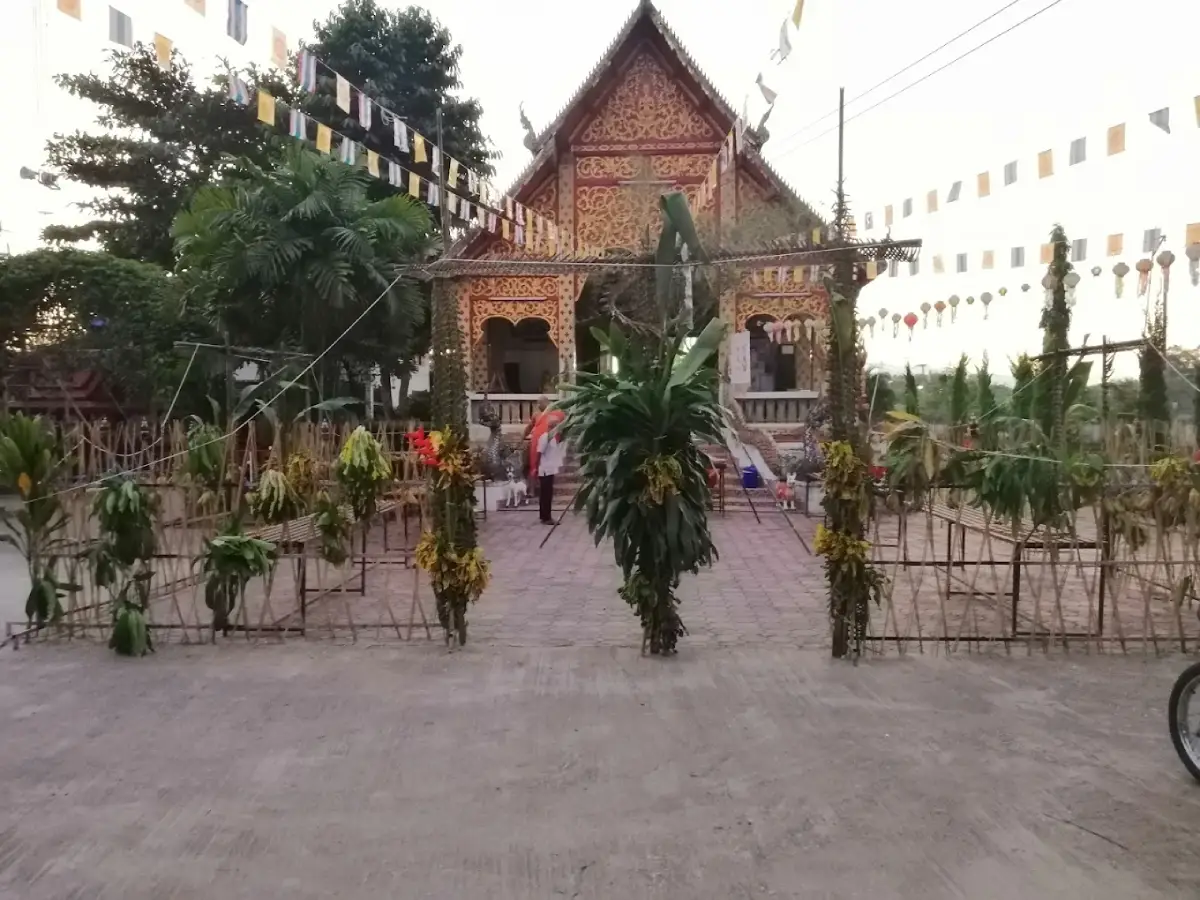
Wat Chai Sathit, also known as Wat Pa Sao Luang, is located in Ban Pa Sao Luang, Moo 8, San Pu Loei Subdistrict, Doi Saket District, Chiang Mai Province. It is a local Buddhist temple under the Mahanikaya order and an important spiritual center of the Pa Sao Luang community. The temple was officially established in 1897 and is currently cared for by Phra Athikan Sanga Wachirayanano. Its value lies in its old village history, its connection with the Pa Sao forest landscape, its sacred Buddha footprint replica, and its role as a living community temple in San Pu Loei.
The name Pa Sao is closely connected with the former landscape of the area. In the past, this area was shaded by pa sao trees and served as a resting place for travelers before entering Chiang Mai. People once traveled by foot and by ox cart, and the wooded area offered shade and rest. In northern Thai usage, “sao” or “sao” can be associated with taking a rest. This local memory became part of the name of the village and the identity of the temple.
The formal name Wat Chai Sathit carries an auspicious meaning. “Chai” suggests victory, success, and good fortune, while “Sathit” means to reside or remain firmly established. The name therefore gives the sense of a sacred place where faith remains stable and victorious. The local name Wat Pa Sao Luang connects the temple directly with the village and helps distinguish it from Wat Pa Sao Noi, another related temple in the same cultural area.
The origin of the temple is linked with a wandering forest monk who once stayed in the Pa Sao forest for meditation. Seeing the area as suitable for Buddhist practice, he began creating a sacred space by making a Buddha image from clay and lime, using pa sao wood as the core of the image. He also built a simple viharn with a thatched roof. This early story gives the temple a strong connection with forest meditation, local materials, and community devotion.
After the first monk passed away, villagers invited Phra Chanta, a monk from Wat Kok Mon in San Pu Loei, to look after the temple. Phra Chanta restored and developed the temple further. When the viharn was completed but still lacked principal Buddha images, he traveled to Chiang Mai and later brought Buddha images from the abandoned Wat Nang Liao, along with a Buddha footprint replica, to be enshrined at Wat Pa Sao Luang for local worship.
The Buddha footprint replica is one of the most important sacred objects of Wat Chai Sathit. It is kept in the temple’s cruciform viharn. In Buddhist culture, a Buddha footprint represents remembrance of the Buddha and the path of Dhamma. For visitors, paying respect to this sacred footprint helps connect the present temple with its long local history and the faith of the Pa Sao Luang community.
The temple land covers 5 rai and 1 ngan. The temple also has four plots of monastic land totaling 4 rai and 3 ngan. Important buildings include the viharn, alms pavilion, multipurpose pavilion, and cruciform viharn used for keeping the Buddha footprint replica. These structures show that the temple is not only a place for worship, but also a community space for merit-making, gatherings, ceremonies, and religious activities.
The viharn is the central worship space of Wat Chai Sathit. The alms pavilion and multipurpose pavilion support merit-making, community gatherings, and religious events. The cruciform viharn has special importance because it houses the Buddha footprint replica. Together, these buildings create a working village temple that continues to serve the needs of monks, villagers, and visitors.
The abbot lineage of the temple reflects continuity between monastic leadership and village faith. Historical records mention Phra Chanta, Phra Boon Toeng, Phra Boonsri, Phra Thongkham, Phra Duang Kaew, Phra Dam Phut, Phra Kham Ai, Phra Boon Yang, Phra Boon Yuen, and Phra Athikan Insuan Ariyathammo. The current abbot is Phra Athikan Sanga Wachirayanano, who continues the temple’s role as a religious and community center.
Wat Chai Sathit should be understood together with the wider Pa Sao community. The area once functioned as a wooded resting point on an old travel route. As families settled and the village grew, the temple became a central place for merit-making, funerals, ordinations, annual traditions, and community gatherings. This makes the temple part of the social structure of Ban Pa Sao Luang rather than only a historical site.
The temple is also connected with nearby Wat Chai Sathan or Wat Pa Sao Noi. In local naming history, Wat Chai Sathit was known as the larger or southern temple, while Wat Chai Sathan was known as the smaller or northern temple. These names show how village communities distinguish temples through geography, community size, and local memory. The two temples together help explain the religious landscape of the Pa Sao area.
Wat Chai Sathit serves the community in several ways. Religiously, it is a place for worship, merit-making, offerings to monks, sermons, and Buddhist holy day observances. Socially, it is a gathering place for villagers during important events. Culturally, it helps preserve the northern Thai pattern in which home, temple, elders, merit-making, and local cooperation remain closely connected.
Annual traditions connected with the temple and the wider San Pu Loei area include Buddhist holy day merit-making, offerings to monks, Kathin ceremonies, forest robe offerings, Buddhist Lent, Ok Phansa, Yi Peng, Tan Kuai Salak, Lanna New Year, water-pouring ceremonies for elders, and Poi Luang. These events allow villagers to support the temple, gather as a community, and pass Buddhist values to younger generations.
The main appeal of Wat Chai Sathit is its combination of history, community atmosphere, and sacred objects. It is not a large commercial tourist attraction. Instead, it is a quiet village temple with a deep story connected to forest monks, old travel routes, pa sao trees, Buddha images, and a Buddha footprint replica. Visitors who enjoy local temple history will find the temple especially meaningful.
Important things to observe include the viharn, alms pavilion, multipurpose pavilion, cruciform viharn, Buddha footprint replica, temple courtyard, and the surrounding Pa Sao Luang village atmosphere. The temple’s meaning becomes clearer when visitors look at its relationship with the village, nearby roads, homes, and other Pa Sao temples rather than treating it only as a map point.
Wat Chai Sathit is suitable for travelers interested in Lanna community temples, old temples in Doi Saket, local village history, forest monk traditions, sacred footprints, and cultural routes in San Pu Loei. It provides a calmer and more local experience than major tourist temples and helps visitors understand how Buddhism functions within a village community.
Travel to Wat Chai Sathit is most convenient by private car, rental car, or local hired transport. From Chiang Mai city, use Highway 121 or the San Pu Loei–Tha Rua route, then continue into Ban Pa Sao Luang, Moo 8. The temple can be found on map services using the Plus Code R33C+4XV. Having a private vehicle makes it easier to combine the temple with nearby temples, food stops, and attractions.
A good San Pu Loei temple route can begin at Wat Chai Sathit for worship and local history, then continue to Wat Chai Sathan or Wat Pa Sao Noi, Wat San Pu Loei Sali Wiang Kaeo, Wat Don Chai or Wat Tha Rua, and Wat Ku Man Mongkhon Chai. This route helps visitors see different types of local temples within the same subdistrict and understand the religious landscape of Doi Saket more deeply.
Visitors can also combine the temple with Tha Rua Market, Bo Sang Umbrella Village, Chamcha Market, or Tweechol Botanical Garden. Tha Rua Market is useful for local food stops. Bo Sang is ideal for those interested in northern Thai crafts. Chamcha Market offers a creative community-market atmosphere. These nearby places make Wat Chai Sathit a good starting point for a half-day cultural route.
Nearby dining options include Lung Boon Thai Steak, Som Tam Kai Yang Khon Kaen Tha Rua, Tokyo Homemade Tha Rua, Khrua Ton Som at Wan Thong Tha Rua, and Som Tam Muen Kham Nua Tha Rua. Nearby accommodation options include Ouychai Resort/Home Stay, Cool Vintage Doisaket, Baan Chai Thung Resort, Villa Albizia, and Tao Garden Health Spa & Resort.
Visitors should follow normal Thai temple etiquette. Dress modestly, keep voices low, remove shoes where required, respect monks and local worshippers, avoid disturbing ceremonies, and do not enter private monastic areas without permission. If visiting during a community merit-making event, follow the temple’s space arrangements and help keep the temple clean.
In summary, Wat Chai Sathit, or Wat Pa Sao Luang, is a historic Mahanikaya community temple in Ban Pa Sao Luang, San Pu Loei, Doi Saket, Chiang Mai. Established in 1897, the temple is important for its Pa Sao forest origin, its story of a wandering monk, its Buddha footprint replica, its cruciform viharn, and its ongoing role as a spiritual center for the local community. It is a valuable destination for travelers who want to understand Doi Saket through living village temples and local Buddhist history.
| Name | Wat Chai Sathit |
| Local Name | Wat Pa Sao Luang, Wat Tai, Wat Luang |
| Thai Name | วัดชัยสถิตย์ |
| Location | Ban Pa Sao Luang, Moo 8, San Pu Loei Subdistrict, Doi Saket District, Chiang Mai Province |
| Address | Moo 8, San Pu Loei Subdistrict, Doi Saket District, Chiang Mai 50220, Thailand |
| Coordinates | Plus Code: R33C+4XV |
| Temple Type | Local Buddhist temple under the Mahanikaya order |
| History | Officially established as a temple in 1897 and developed from a sacred forest-monk site in the Pa Sao area |
| Temple Land Area | 5 rai, 1 ngan |
| Monastic Land | 4 plots totaling 4 rai, 3 ngan |
| Abbot / Caretaker | Phra Athikan Sanga Wachirayanano |
| Former Abbots In Temple Records | 1. Phra Chanta 2. Phra Boon Toeng 3. Phra Boonsri 4. Phra Thongkham 5. Phra Duang Kaew 6. Phra Dam Phut 7. Phra Kham Ai 8. Phra Boon Yang 9. Phra Boon Yuen 10. Phra Athikan Insuan Ariyathammo |
| Important Buildings | Viharn, alms pavilion, multipurpose pavilion, and cruciform viharn |
| Sacred Objects / Worship Points | Buddha footprint replica and Buddha images connected with the restoration history of Wat Pa Sao Luang |
| Name Origin | Connected with the former Pa Sao forest, a shaded resting place for travelers before entering Chiang Mai; the local term “sao” relates to stopping or resting |
| Distinctive Features | A historic Pa Sao Luang community temple with forest-monk origins, a clay-and-lime Buddha image story, and a Buddha footprint replica kept in a cruciform viharn |
| Community Role | A spiritual center of Ban Pa Sao Luang, supporting worship, sermons, merit-making, funerary rites, and village gatherings in San Pu Loei |
| Traditions / Merit-Making | Buddhist holy day merit-making, offerings to monks, Kathin ceremonies, forest robe offerings, Buddhist Lent, Ok Phansa, Yi Peng, Tan Kuai Salak, Lanna New Year, elder water-pouring ceremonies, and Poi Luang |
| Main Areas / Zones | Viharn, alms pavilion, multipurpose pavilion, cruciform viharn, courtyard, worship areas, and community activity spaces |
| Travel Information | From Chiang Mai city, use Highway 121 or the San Pu Loei–Tha Rua route, then continue to Ban Pa Sao Luang, Moo 8. Private car, rental car, or local hired transport is recommended. |
| Current Status | An active community Buddhist temple listed in temple references, municipal information, travel sources, and current mapping sources |
| Main Contact Number | 053-887-022 |
| Nearby Tourist Attractions | 1. Wat Chai Sathan or Wat Pa Sao Noi, about 2 km 2. Tha Rua Market, about 3 km 3. Wat San Pu Loei Sali Wiang Kaeo, about 4 km 4. Wat Don Chai or Wat Tha Rua, about 4 km 5. Bo Sang Umbrella Village, about 5 km 6. Chamcha Market, about 5 km 7. Wat Ku Man Mongkhon Chai, about 6 km |
| Nearby Restaurants | 1. Lung Boon Thai Steak, about 2 km, Tel. 089-432-1775 2. Som Tam Kai Yang Khon Kaen Tha Rua, about 3 km, Tel. 093-172-1141 3. Tokyo Homemade Tha Rua, about 3 km, Tel. 082-635-2195 4. Khrua Ton Som at Wan Thong Tha Rua, about 3 km, Tel. 063-750-8781, 098-749-9882 5. Som Tam Muen Kham Nua Tha Rua, about 3 km |
| Nearby Accommodations | 1. Ouychai Resort/Home Stay, about 4 km, Tel. 098-074-1374 2. Cool Vintage Doisaket, about 7 km, Tel. 086-654-4566 3. Baan Chai Thung Resort, about 8 km, Tel. 098-014-3383 4. Villa Albizia, about 9 km 5. Tao Garden Health Spa & Resort, about 10 km, Tel. 084-028-0230 |
Frequently Asked Questions (FAQ)
Q: Where is Wat Chai Sathit located?
A: Wat Chai Sathit is located in Ban Pa Sao Luang, Moo 8, San Pu Loei Subdistrict, Doi Saket District, Chiang Mai Province.
Q: Does Wat Chai Sathit have another name?
A: Yes. It is also known as Wat Pa Sao Luang. In local context, it is connected with names such as Wat Tai or Wat Luang to distinguish it from Wat Pa Sao Noi or Wat Chai Sathan nearby.
Q: What is historically important about Wat Chai Sathit?
A: The temple was officially established in 1897 and is linked with a forest monk who meditated in the Pa Sao forest and began creating a sacred Buddhist site there.
Q: Who is the abbot of Wat Chai Sathit?
A: The abbot of Wat Chai Sathit is Phra Athikan Sanga Wachirayanano.
Q: What important buildings are found at Wat Chai Sathit?
A: Important buildings include the viharn, alms pavilion, multipurpose pavilion, and cruciform viharn that houses the Buddha footprint replica.
Q: What is the main sacred object at Wat Chai Sathit?
A: The main sacred object is the Buddha footprint replica, along with Buddha images connected with the temple’s restoration history.
Q: Who should visit Wat Chai Sathit?
A: The temple is suitable for travelers interested in Lanna community temples, Pa Sao village history, forest monk traditions, Buddha footprints, and San Pu Loei temple routes.
Q: What nearby places can be visited with Wat Chai Sathit?
A: Nearby places include Wat Chai Sathan, Wat San Pu Loei Sali Wiang Kaeo, Wat Don Chai, Tha Rua Market, Bo Sang Umbrella Village, Chamcha Market, and Wat Ku Man Mongkhon Chai.
 Category: ●Places of Worship
 Group: ●Temple
Last Update : 2 DayAgo
 Last Update : 2 DayAgo
 Click to Access the Navigation Map GPS
Wat Chai Sathit Map
Recommend

 Muang Chiang Mai(121)Chom Thong(47)Mae Chaem(25)Chiang Dao(33)Doi Saket(68)Mae Taeng(85)Mae Rim(69)Samoeng(29)Fang(71)Mae Ai(62)Phrao(70)San Pa Tong(105)San Kamphaeng(66)San Sai(73)Hang Dong(74)Hot(32)Doi Tao(22)Omkoi(11)Saraphi(74)Wiang Haeng(15)Chai Prakan(28)Mae Wang(32)Mae On(22)Doi Lo(34)Galyani Vadhana(1)


