
lovethailand home >North Travel Attractions >Chiang Mai Travel Attractions >Doi Saket >Luang Nuea > Wat Suwannakhiri Mongkhon
TL;DR: Wat Suwannakhiri Mongkhon is located at Luang Nuea Subdistrict, Doi Saket District, Chiang Mai Province. Highlights include A peaceful hill-based community temple in Luang Nuea, connected with Buddhist merit-making, moral education, Lanna craft learning, and.
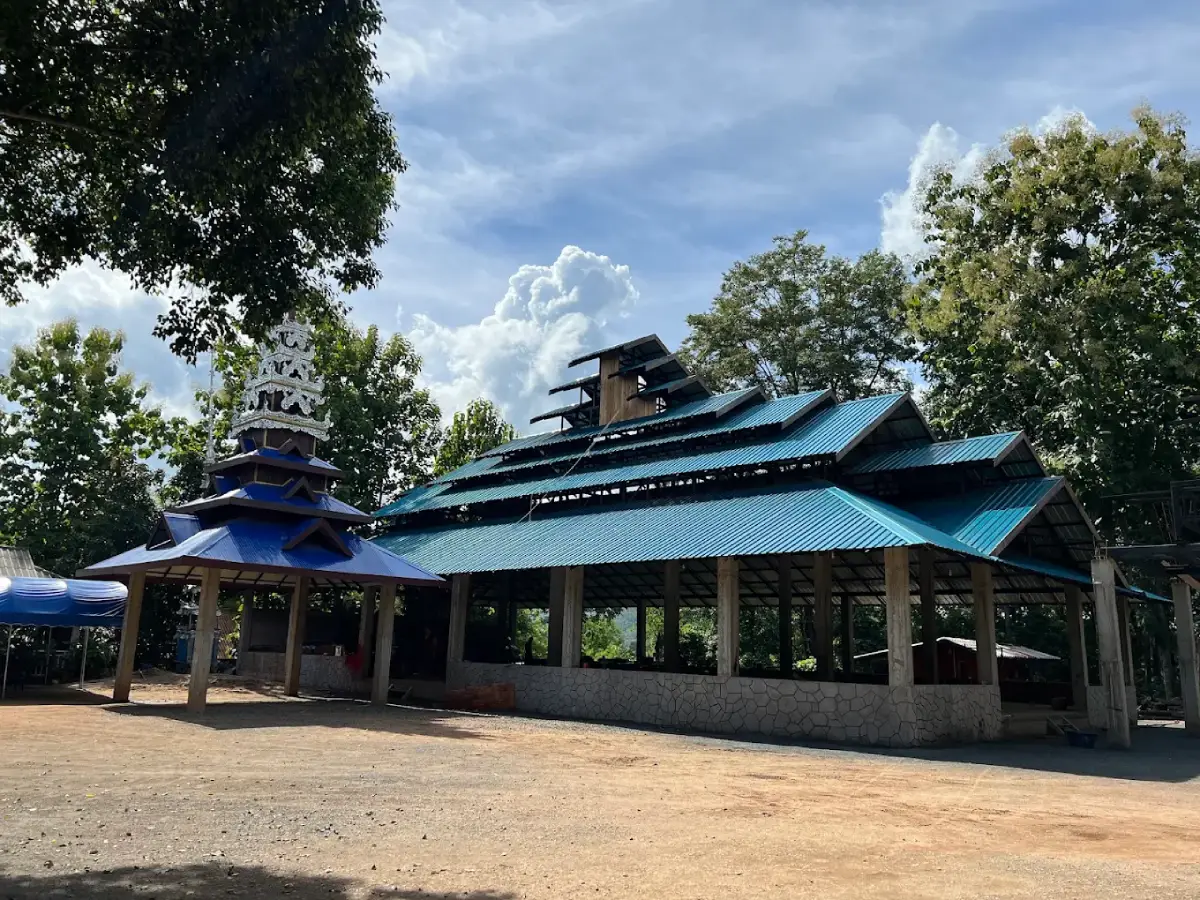
Wat Suwannakhiri Mongkhon
Operating day: Daily
Operating time: 08.00 - 17.00
Wat Suwannakhiri Mongkhon, also known locally as Wat Mon, is located in Luang Nuea Subdistrict, Doi Saket District, Chiang Mai Province. It is a local Buddhist temple under the Mahanikaya order and an important community temple in the Luang Nuea area. The temple remains active today through merit-making, Kathin ceremonies, candle offering activities for Buddhist Lent, moral training, Lanna craft learning, and community support activities. Its character comes from its location on a “mon,” a northern Thai term referring to a small hill or raised ground, giving the temple a calm and distinctly local atmosphere.
Luang Nuea is one of the culturally rich areas of Doi Saket. The subdistrict is connected with Tai Lue community life, old temples, irrigation channels, agricultural landscapes, Mae Kuang Udom Thara Dam, and routes linking Chiang Mai city with outlying communities. Wat Suwannakhiri Mongkhon is part of this religious and cultural landscape, helping visitors understand Luang Nuea through temple life, community faith, and local traditions.
The name “Suwannakhiri Mongkhon” carries a strong auspicious meaning. “Suwanna” means gold or precious value, “khiri” means mountain or hill, and “mongkhon” means auspiciousness. Together, the name suggests a sacred and auspicious hill temple. The local name Wat Mon also matches the physical character of the site, because in northern Thai usage “mon” often refers to a small hill or raised area above its surroundings.
This hill-temple identity gives Wat Suwannakhiri Mongkhon a special atmosphere. It is a quiet community temple rather than a crowded tourist landmark. Visitors can come to make merit, pay respect, and observe a temple that remains closely connected with local Buddhist life. The temple’s value is not in scale or spectacle, but in its ongoing role as a place of worship, learning, and community gathering.
Wat Suwannakhiri Mongkhon is a local Mahanikaya temple listed among the Buddhist temples of Luang Nuea, Doi Saket, Chiang Mai. As a community temple, it is supported by local faith and everyday religious practice. The temple provides space for worship, Buddhist observances, annual ceremonies, and activities that bring villagers, students, and devotees together.
The abbot of Wat Suwannakhiri Mongkhon is Phra Achan Danai Nandhammiko. He has appeared in public activities as the presiding monk for candle offering ceremonies, as a moral instructor for students, and as a teacher of Lanna craft knowledge. This shows that the temple is not limited to ritual activities. It also functions as a learning space for ethics, discipline, and local cultural wisdom.
The temple’s educational role can be seen through moral training activities in which Phra Achan Danai taught students about precepts and the dangers of addictive substances. In this way, the temple connects Buddhist teachings with modern education and youth development. It helps young people build discipline, responsibility, and inner resilience through Dhamma-based learning.
Another important aspect of Wat Suwannakhiri Mongkhon is its role in preserving Lanna arts and crafts. The temple has hosted learning activities related to metal pattern work, including traditional decorative techniques used in northern Thai craftsmanship. This demonstrates how a temple can serve as a cultural learning center, preserving local wisdom while connecting it with schools, universities, and community groups.
Annual Buddhist activities at Wat Suwannakhiri Mongkhon include Kathin ceremonies and candle offering for Buddhist Lent. Kathin is one of the important merit-making events after the end of the rains retreat, while candle offering is closely linked with the beginning of Buddhist Lent. These activities require cooperation from villagers, devotees, organizations, and local networks, keeping the temple active as a center of community faith.
Wat Suwannakhiri Mongkhon also has a social-service role. The temple has been mentioned in donation activities for children in remote highland schools, including bedding, clothing, learning supplies, and daily necessities. Other public activities have included donations of quality milk products to novices and orphaned children. These activities show that the temple works as a place of compassion, sharing, and support for vulnerable children and communities.
The temple therefore has three layers of significance. First, it is a Buddhist place of worship for merit-making and religious ceremonies. Second, it is a community space where villagers and faith networks gather. Third, it is a learning and support center connected with Lanna crafts, youth moral education, and social welfare. These layers make the temple meaningful beyond a simple sightseeing stop.
Important things to observe at Wat Suwannakhiri Mongkhon include the temple grounds, courtyard, worship areas, and the calm atmosphere of a hill-based community temple. Visitors should take time to appreciate the temple’s simplicity and its relationship with the surrounding community. The most important feature of the temple is not a single monument but the living connection between Buddhism, local culture, and community support.
Wat Suwannakhiri Mongkhon is suitable for travelers interested in quiet local temples, Doi Saket community routes, Lanna culture, Buddhist merit-making, and cultural learning. It is also suitable for those who want to avoid crowded tourist sites and experience Chiang Mai through community temples that still serve real social and religious functions.
A good temple route can begin at Wat Suwannakhiri Mongkhon, then continue to Wat Wang Than, Wat Sukhwiwekaram, Wat Sarakham Rangsan, and Wat Si Mung Mueang. This route helps visitors understand the temple network of Luang Nuea. For a wider route, travelers can continue to Mae Kuang Udom Thara Dam or Wat Phra That Doi Saket, combining community temples, local culture, and scenic landscapes in one trip.
Luang Nuea is also connected with Tai Lue and Lanna cultural identity. Visiting Wat Suwannakhiri Mongkhon can be a starting point for understanding how temples, villages, agriculture, local crafts, and Buddhist ceremonies are connected in Doi Saket. This kind of route is best experienced slowly because the value lies in the relationships between places, not only in individual landmarks.
Travel to Wat Suwannakhiri Mongkhon is most convenient by private car, rental car, or local hired transport. From Chiang Mai city, travel toward Doi Saket via the Chiang Mai–Doi Saket road or Highway 118, then continue into Luang Nuea Subdistrict and use map navigation for Wat Mon or Wat Suwannakhiri Mongkhon. Having a private vehicle makes it easier to combine the temple with nearby temples, restaurants, and attractions.
The surrounding Luang Nuea and Doi Saket area offers local restaurants, cafés, riverside or reservoir-side dining, and peaceful accommodations. A practical one-day route can include a morning temple visit, nearby Luang Nuea temples, lunch around Mae Kuang or Choeng Doi, and an afternoon stop at Mae Kuang Dam or Wat Phra That Doi Saket.
Visitors should follow normal Thai temple etiquette. Dress modestly, keep voices low, remove shoes where required, respect monks and local worshippers, avoid disturbing ceremonies, and do not enter private monastic areas without permission. If visiting during a ceremony or community event, follow the temple’s space arrangements and help keep the temple clean.
In summary, Wat Suwannakhiri Mongkhon, or Wat Mon, is a Mahanikaya community temple in Luang Nuea, Doi Saket, Chiang Mai. Its importance lies in its peaceful hill-temple setting, its role in merit-making and Buddhist ceremonies, its connection with Lanna craft learning, and its social contribution to children and local communities. It is a meaningful stop for travelers who want to understand Doi Saket through Buddhism, local culture, and community life.
| Name | Wat Suwannakhiri Mongkhon |
| Local Name | Wat Mon |
| Thai Name | วัดสุวรรณคีรีมงคล |
| Location | Luang Nuea Subdistrict, Doi Saket District, Chiang Mai Province |
| Address | No. 5, Moo 8, Luang Nuea Subdistrict, Doi Saket District, Chiang Mai 50220, Thailand |
| Temple Type | Local Buddhist temple under the Mahanikaya order |
| Abbot / Caretaker | Phra Achan Danai Nandhammiko |
| Highlights | A peaceful hill-based community temple in Luang Nuea, connected with Buddhist merit-making, moral education, Lanna craft learning, and community support activities |
| Local Importance | A spiritual and social center for the Luang Nuea community, supporting merit-making, sermons, candle offering, Kathin ceremonies, and cultural learning |
| Name Significance | The formal name suggests an auspicious golden hill, while the local name Wat Mon reflects the northern Thai term for a small hill or raised ground |
| Learning Role | A place for moral education and Lanna craft learning, including traditional metal pattern work |
| Social Role | A place associated with donation activities for highland schoolchildren, novices, orphaned children, and people in need |
| Traditions / Merit-Making | Candle offering for Buddhist Lent, Kathin ceremonies, Buddhist holy day merit-making, offerings to monks, forest robe offerings, Buddhist Lent, Ok Phansa, and annual Buddhist activities |
| Main Areas / Zones | Temple grounds, courtyard, worship areas, religious activity spaces, and community activity areas |
| Travel Information | From Chiang Mai city, travel toward Doi Saket via the Chiang Mai–Doi Saket road or Highway 118, then continue into Luang Nuea Subdistrict and navigate to Wat Mon or Wat Suwannakhiri Mongkhon. Private car or rental car is recommended. |
| Current Status | An active community Buddhist temple with ongoing religious, educational, cultural, and volunteer activities |
| Nearby Tourist Attractions | 1. Wat Wang Than, about 2 km 2. Wat Sukhwiwekaram, about 3 km 3. Wat Sarakham Rangsan, about 4 km 4. Wat Si Mung Mueang, about 5 km 5. Mae Kuang Udom Thara Dam, about 6 km 6. Wat Phra That Doi Saket, about 9 km |
| Nearby Restaurants | 1. Tha Ruea Lung Charoen Restaurant, about 4 km, Tel. 081-961-4627 2. Sane Mae Kuang, about 5 km, Tel. 087-178-1153, 098-747-3386 3. The Lemontree Garden & Restaurant, about 6 km 4. Mininim Store Coffee Luang Nuea, about 6 km, Tel. 093-737-4105 5. Doi Saket Steakhouse, about 8 km, Tel. 064-110-4778, 095-391-9457 |
| Nearby Accommodations | 1. Soulmates Retreat, about 1 km 2. Villa Albizia, about 3 km 3. Sak Homestay, about 4 km, Tel. 081-884-0093 4. The Palm Village, about 5 km, Tel. 092-430-3850 5. Tao Garden Health Spa & Resort, about 7 km, Tel. 084-028-0230 |
Frequently Asked Questions (FAQ)
Q: Where is Wat Suwannakhiri Mongkhon located?
A: Wat Suwannakhiri Mongkhon is located in Luang Nuea Subdistrict, Doi Saket District, Chiang Mai Province. It is also locally known as Wat Mon.
Q: Does Wat Suwannakhiri Mongkhon have another name?
A: Yes. The temple is commonly known as Wat Mon, a local name connected with the northern Thai word for a small hill or raised ground.
Q: What type of temple is Wat Suwannakhiri Mongkhon?
A: Wat Suwannakhiri Mongkhon is a local Buddhist temple under the Mahanikaya order.
Q: Who is the abbot of Wat Suwannakhiri Mongkhon?
A: The abbot of Wat Suwannakhiri Mongkhon is Phra Achan Danai Nandhammiko.
Q: What is special about Wat Suwannakhiri Mongkhon?
A: The temple is special for its peaceful hill-temple atmosphere, its role in community merit-making, its moral education activities, its Lanna craft learning activities, and its social support work.
Q: Who should visit Wat Suwannakhiri Mongkhon?
A: The temple is suitable for travelers interested in quiet community temples, Lanna culture, local Buddhist life, Luang Nuea village routes, and Doi Saket temple circuits.
Q: What nearby places can be visited with Wat Suwannakhiri Mongkhon?
A: Nearby places include Wat Wang Than, Wat Sukhwiwekaram, Wat Sarakham Rangsan, Wat Si Mung Mueang, Mae Kuang Udom Thara Dam, and Wat Phra That Doi Saket.
 Category: ●Places of Worship
 Group: ●Temple
Last Update : 23 HourAgo
 Last Update : 23 HourAgo
 Click to Access the Navigation Map GPS
Wat Suwannakhiri Mongkhon Map
Recommend

 Muang Chiang Mai(121)Chom Thong(47)Mae Chaem(25)Chiang Dao(33)Doi Saket(68)Mae Taeng(85)Mae Rim(69)Samoeng(29)Fang(71)Mae Ai(62)Phrao(70)San Pa Tong(105)San Kamphaeng(66)San Sai(73)Hang Dong(74)Hot(32)Doi Tao(22)Omkoi(11)Saraphi(74)Wiang Haeng(15)Chai Prakan(28)Mae Wang(32)Mae On(22)Doi Lo(34)Galyani Vadhana(1)


