
lovethailand home >North Travel Attractions >Chiang Mai Travel Attractions >Doi Saket >Luang Nuea > Wat Sarakham Rangsan
TL;DR: Wat Sarakham Rangsan is located at Ban Mueang Wa, Moo 3, Luang Nuea Subdistrict, Doi Saket District, Chiang Mai Province, open Daily, hours 06.00 – 18.00.

Wat Sarakham Rangsan
Open Days: Daily
Opening Hours: 06.00 – 18.00
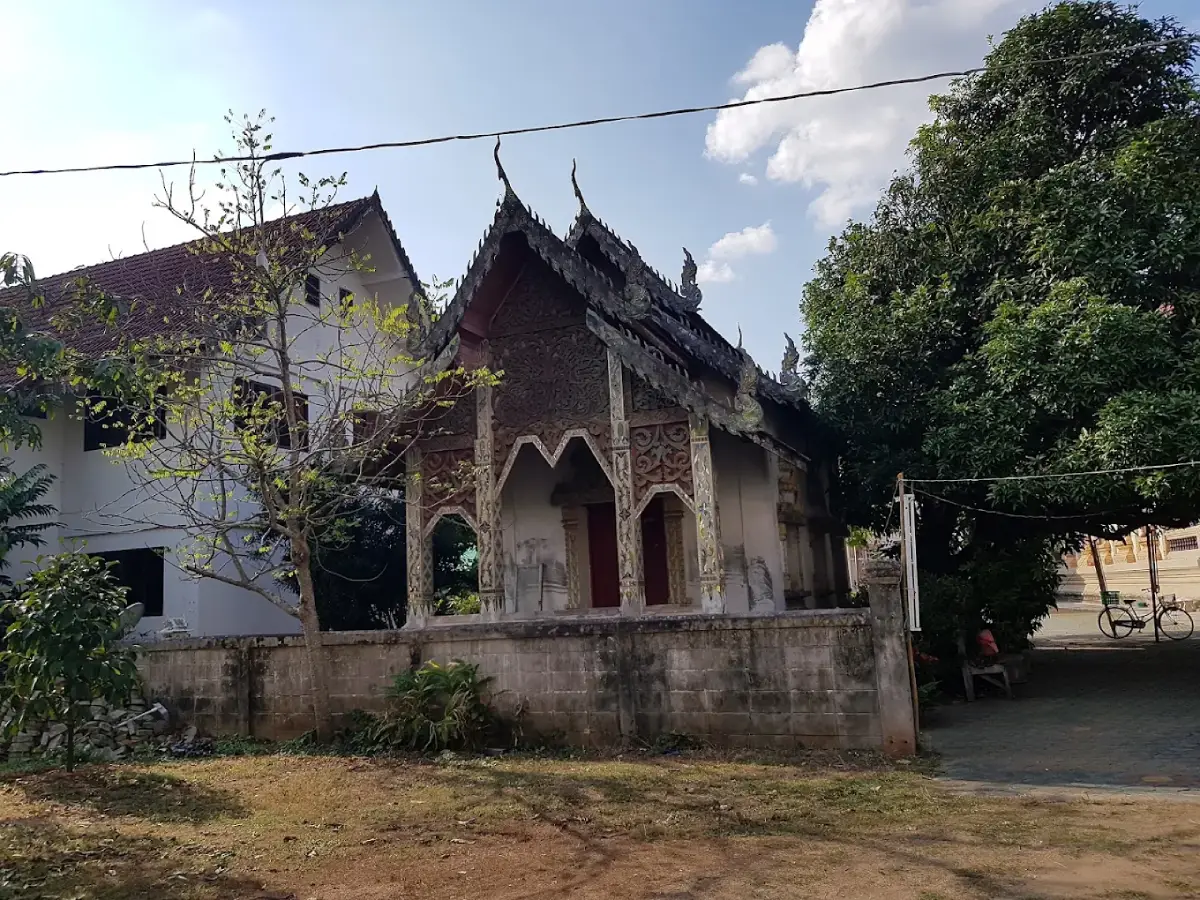
Wat Sarakham Rangsan, also known locally as Wat Sarakham Rangsan Mueang Wa, is a local Buddhist temple under the Mahanikaya order. It is located in Ban Mueang Wa, Moo 3, Luang Nuea Subdistrict, Doi Saket District, Chiang Mai Province. The temple is one of the long-established community temples of Luang Nuea and is important for Buddhist practice, Lanna culture, and local knowledge preservation.
The temple was officially established in 1517 CE according to the Buddhist Era year 2060, and later received its royal consecrated boundary in 1929. These dates show that Wat Sarakham Rangsan is not a newly developed temple, but a long-standing religious site within the cultural landscape of Doi Saket. Its history gives the temple a strong connection to the local community and to the continuity of Buddhism in northern Thailand.
Wat Sarakham Rangsan is located in Ban Mueang Wa, a village in Luang Nuea Subdistrict. Luang Nuea is known for its connection with Tai Lue and Lanna culture. The area contains temples, local communities, cultural learning spaces, and village traditions that continue to shape local identity. For this reason, Wat Sarakham Rangsan should be understood not only as a temple for worship, but also as a community institution that helps preserve local memory.
The name “Sarakham Rangsan” carries a sense of creation and community identity. “Rangsan” means to create or construct with intention, while “Sarakham” functions as the temple’s distinctive name within the Mueang Wa community. Together, the name reflects a temple built and maintained through community faith, merit-making, and the effort to preserve a meaningful sacred space for future generations.
The abbot of Wat Sarakham Rangsan is Phra Khru Mongkhon Silawong Techapanyo. He is also associated with important Buddhist activities in Doi Saket District. His role makes Wat Sarakham Rangsan more than a village temple, because the temple is also connected with wider ecclesiastical and religious activities in the district.
One of the most distinctive features of Wat Sarakham Rangsan is the Village Knowledge Center at Wat Sarakham Rangsan. The center began in 1987 and is housed in an old wooden building that was formerly the abbot’s residence. The upper floor was once used by monks, while the lower floor contains a reading corner and displays of cultural objects donated by villagers. These objects include everyday tools and items related to local life, such as basketry, weaving tools, farming equipment, and traditional musical instruments.
This village knowledge center gives the temple a special cultural role. Visitors can learn about the life of the Mueang Wa community through objects connected with agriculture, weaving, household work, and local craftsmanship. The temple therefore serves both as a place of worship and as a local learning space. It is especially suitable for travelers interested in community history, Lanna culture, Tai Lue identity, and local wisdom.
The atmosphere of Wat Sarakham Rangsan is calm and local. It is not a large commercial tourist attraction. Its value lies in its role as a living temple where local people make merit, attend Buddhist ceremonies, listen to teachings, and gather for community activities. Visitors who want to experience a quieter side of Chiang Mai will find the temple meaningful as part of a cultural route through Doi Saket.
Important areas to notice inside the temple include the temple grounds, the community worship areas, the Village Knowledge Center, the reading corner, and the display of local cultural objects. The temple also provides parking for visitors. A visit here is best approached slowly and respectfully, with attention to the temple’s community context rather than only to photography.
Wat Sarakham Rangsan plays several roles in the local community. Religiously, it is a place for worship, merit-making, Buddhist holy day activities, and offerings to monks. Socially, it is a gathering place for villagers during merit-making events and community ceremonies. Culturally, it preserves memories of local life through its knowledge center and traditional objects donated by villagers.
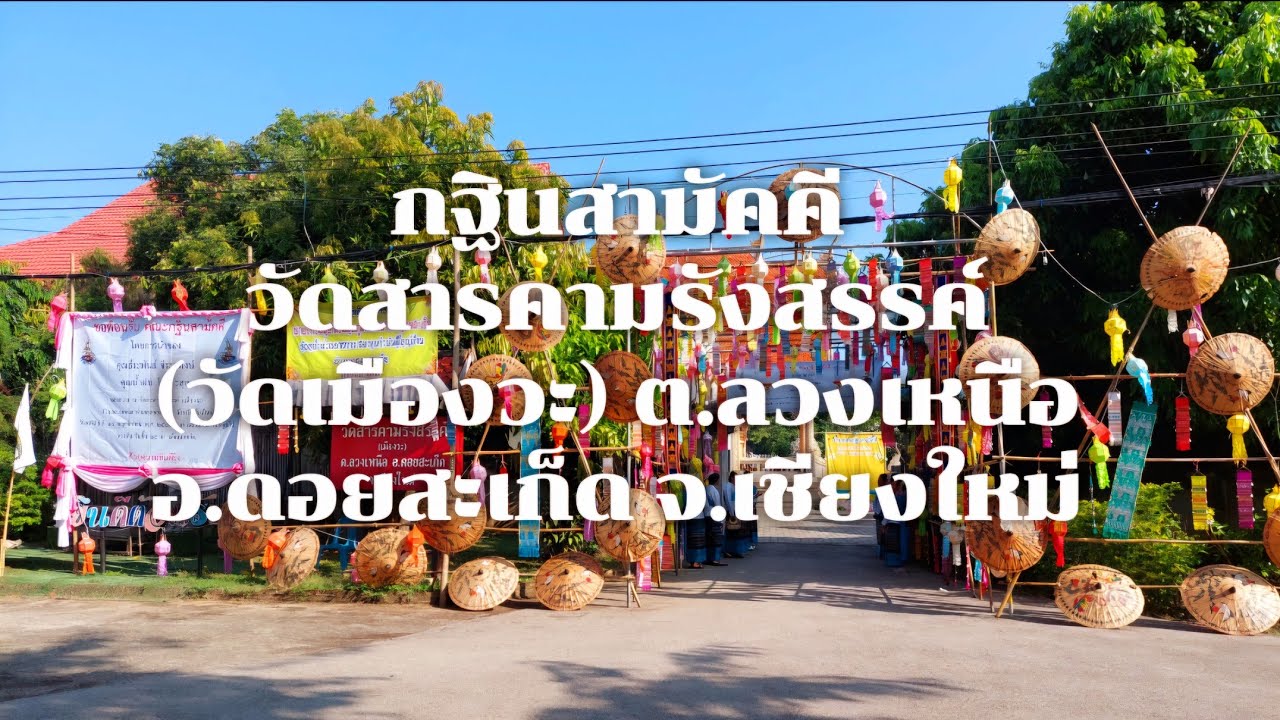
Temple activities associated with Wat Sarakham Rangsan include Buddhist holy day merit-making, offerings to monks, Kathin ceremonies, forest robe offerings, Songkran or Lanna New Year merit-making, and important Buddhist calendar events such as Makha Bucha Day. The temple has also hosted important district-level Buddhist activities connected with the abbot and Doi Saket ecclesiastical community.
Luang Nuea is an important cultural area because many local residents are connected with Tai Lue heritage. The community preserves language, dress, foodways, traditions, Buddhist customs, and local wisdom in different forms. Wat Sarakham Rangsan is part of this wider cultural landscape, together with Wat Si Mung Mueang, the Tai Lue Mueang Luang Nuea community, Mae Kuang Udom Thara Dam, and other nearby sites.
For travelers, Wat Sarakham Rangsan is most suitable for cultural and community-based travel. Visitors can begin by paying respect at the temple, then spend time observing the Village Knowledge Center and its local objects. The visit can then continue to Wat Si Mung Mueang or the Tai Lue Mueang Luang Nuea community to gain a deeper understanding of Tai Lue culture in Doi Saket.
Wat Si Mung Mueang is one of the most meaningful nearby sites to combine with Wat Sarakham Rangsan. It is an important temple of the Tai Lue community in Luang Nuea and is known for its distinctive cultural context. Visiting both temples in the same route allows travelers to see two different but connected dimensions of Luang Nuea: a historic community temple with a village knowledge center and a major Tai Lue cultural temple.
Getting There is most convenient by private car, rental car, or local hired transport. From Chiang Mai city, travel toward Doi Saket District via the Chiang Mai–Doi Saket route or Highway 118. Continue into Luang Nuea Subdistrict and Ban Mueang Wa, Moo 3. The temple is located within the local community and can be combined with nearby temples, restaurants, accommodations, and cultural attractions.
A practical half-day route can begin at Wat Sarakham Rangsan for worship and a visit to the Village Knowledge Center. From there, continue to Wat Si Mung Mueang and the Tai Lue Mueang Luang Nuea community. Travelers with more time can continue to Mae Kuang Udom Thara Dam for scenery, Wat Phra That Doi Saket for an important district temple, or Huai Hong Khrai Royal Development Study Centre for nature and learning.
Visitors should follow normal Thai temple etiquette. Dress modestly, keep noise low, remove shoes where required, respect monks and local worshippers, and avoid touching displayed cultural objects without permission. Because the temple also functions as a community learning space, respectful behavior helps preserve both the sacred atmosphere and the local heritage items kept there.
In summary, Wat Sarakham Rangsan is a historically important temple in Ban Mueang Wa, Luang Nuea, Doi Saket, Chiang Mai. Established in 1517 and granted its royal consecrated boundary in 1929, it continues to serve as a Buddhist, cultural, and community center. Its Village Knowledge Center, started in 1987, makes the temple especially valuable for travelers who want to understand local wisdom, Tai Lue heritage, and Lanna village life beyond mainstream tourist routes.
| Name | Wat Sarakham Rangsan |
| Local Name | Wat Sarakham Rangsan Mueang Wa |
| Thai Name | วัดสารคามรังสรรค์ |
| Location | Ban Mueang Wa, Moo 3, Luang Nuea Subdistrict, Doi Saket District, Chiang Mai Province |
| Address | 84 Moo 3, Luang Nuea Subdistrict, Doi Saket District, Chiang Mai 50220, Thailand |
| Temple Type | Local Buddhist temple under the Mahanikaya order |
| Highlights | A historic temple in Ban Mueang Wa with a Village Knowledge Center preserving local life, cultural objects, and community wisdom |
| History | Officially established as a temple in 1517 and granted its royal consecrated boundary in 1929 |
| Abbot / Caretaker | Phra Khru Mongkhon Silawong Techapanyo |
| Important Structures / Areas | Village Knowledge Center in an old wooden former abbot’s residence, reading corner, local cultural object display, and Buddhist worship areas |
| Distinctive Features | A Lanna community temple connected with Ban Mueang Wa and the Tai Lue cultural landscape of Luang Nuea |
| Admission Fee | No admission fee |
| Facilities | Parking and accessible visitor areas |
| Traditions / Merit-Making | Buddhist holy day merit-making, offerings to monks, Kathin ceremonies, forest robe offerings, Lanna New Year merit-making, Makha Bucha activities, and community Buddhist events |
| Community Role | A religious and cultural center for Ban Mueang Wa, supporting worship, sermons, merit-making, community gatherings, and local wisdom preservation |
| Travel Information | From Chiang Mai city, travel toward Doi Saket via the Chiang Mai–Doi Saket route or Highway 118, then continue into Luang Nuea Subdistrict and Ban Mueang Wa, Moo 3. Private car or rental car is recommended. |
| Current Status | An active community Buddhist temple listed in temple, museum, learning center, and current mapping sources |
| Open Days | Daily |
| Opening Hours | 06.00 – 18.00 |
| Main Contact Number | 053-496-273 |
| Main Areas / Zones | Temple grounds, courtyard, Village Knowledge Center, reading corner, local cultural object display, and worship areas |
| Nearby Tourist Attractions | 1. Wat Si Mung Mueang, about 3 km 2. Tai Lue Mueang Luang Nuea Community, about 3 km 3. Mae Kuang Udom Thara Dam, about 6 km 4. Wat Phra That Doi Saket, about 8 km 5. Huai Hong Khrai Royal Development Study Centre, about 13 km |
| Nearby Restaurants | 1. Lue Yang Luang Nuea, about 3 km, Tel. 098-779-0333 2. Imphan Tum Isan Luang Nuea Doi Saket, about 3 km, Tel. 080-905-5639 3. Mininim Store Coffee Luang Nuea, about 3 km, Tel. 093-737-4105 4. Tha Ruea Lung Charoen Restaurant, about 6 km, Tel. 081-961-4627 5. Arbusto Italian House & Thai Kitchen, about 4 km, Tel. 089-758-4197 |
| Nearby Accommodations | 1. The Palm Village, about 2 km, Tel. 092-430-3850 2. WangTarn Resort, about 4 km, Tel. 081-021-8080 3. Sak Homestay, about 3 km, Tel. 081-884-0093 4. Tao Garden Health Spa & Resort, about 4 km, Tel. 084-028-0230 5. Soulmates Retreat, about 2 km |
Frequently Asked Questions (FAQ)
Q: Where is Wat Sarakham Rangsan located?
A: Wat Sarakham Rangsan is located in Ban Mueang Wa, Moo 3, Luang Nuea Subdistrict, Doi Saket District, Chiang Mai Province.
Q: What is historically important about Wat Sarakham Rangsan?
A: The temple was officially established in 1517 and received its royal consecrated boundary in 1929, making it one of the historic community temples of Luang Nuea.
Q: What is the main highlight of Wat Sarakham Rangsan?
A: Its main highlight is the Village Knowledge Center, which preserves local wisdom, cultural objects, reading materials, and everyday tools from the Mueang Wa community.
Q: Who should visit Wat Sarakham Rangsan?
A: The temple is suitable for travelers interested in quiet local temples, Lanna culture, Tai Lue heritage, local wisdom, and cultural routes in Doi Saket.
Q: What nearby places can be visited with Wat Sarakham Rangsan?
A: Nearby places include Wat Si Mung Mueang, the Tai Lue Mueang Luang Nuea Community, Mae Kuang Udom Thara Dam, Wat Phra That Doi Saket, and Huai Hong Khrai Royal Development Study Centre.
Q: Is there an admission fee for Wat Sarakham Rangsan?
A: No. There is no admission fee for visiting the temple and its village knowledge center.
Q: What are the opening days and hours of Wat Sarakham Rangsan?
A: The temple is listed as open daily from 06.00 to 18.00.
 Category: ●Places of Worship
 Group: ●Temple
Last Update : 2 MonthAgo
 Last Update : 2 MonthAgo
 Click to Access the Navigation Map GPS
Wat Sarakham Rangsan Map
Recommend

 Muang Chiang Mai(121)Chom Thong(47)Mae Chaem(25)Chiang Dao(33)Doi Saket(68)Mae Taeng(85)Mae Rim(69)Samoeng(29)Fang(71)Mae Ai(59)Phrao(70)San Pa Tong(103)San Kamphaeng(66)San Sai(73)Hang Dong(73)Hot(32)Doi Tao(22)Omkoi(11)Saraphi(74)Wiang Haeng(15)Chai Prakan(28)Mae Wang(32)Mae On(22)Doi Lo(33)Galyani Vadhana(1)


