
lovethailand home >North Travel Attractions >Chiang Mai Travel Attractions >Doi Saket >Mae Pong > Wat Mae Pong
TL;DR: Wat Mae Pong is located at Moo 4, Mae Pong Subdistrict, Doi Saket District, Chiang Mai Province., also listed in some travel sources as Wat Mae Pong (Wat Phra Noon), is a local Buddhist temple in Moo 4, Mae Pong Subdistrict, Doi Saket.

Wat Mae Pong
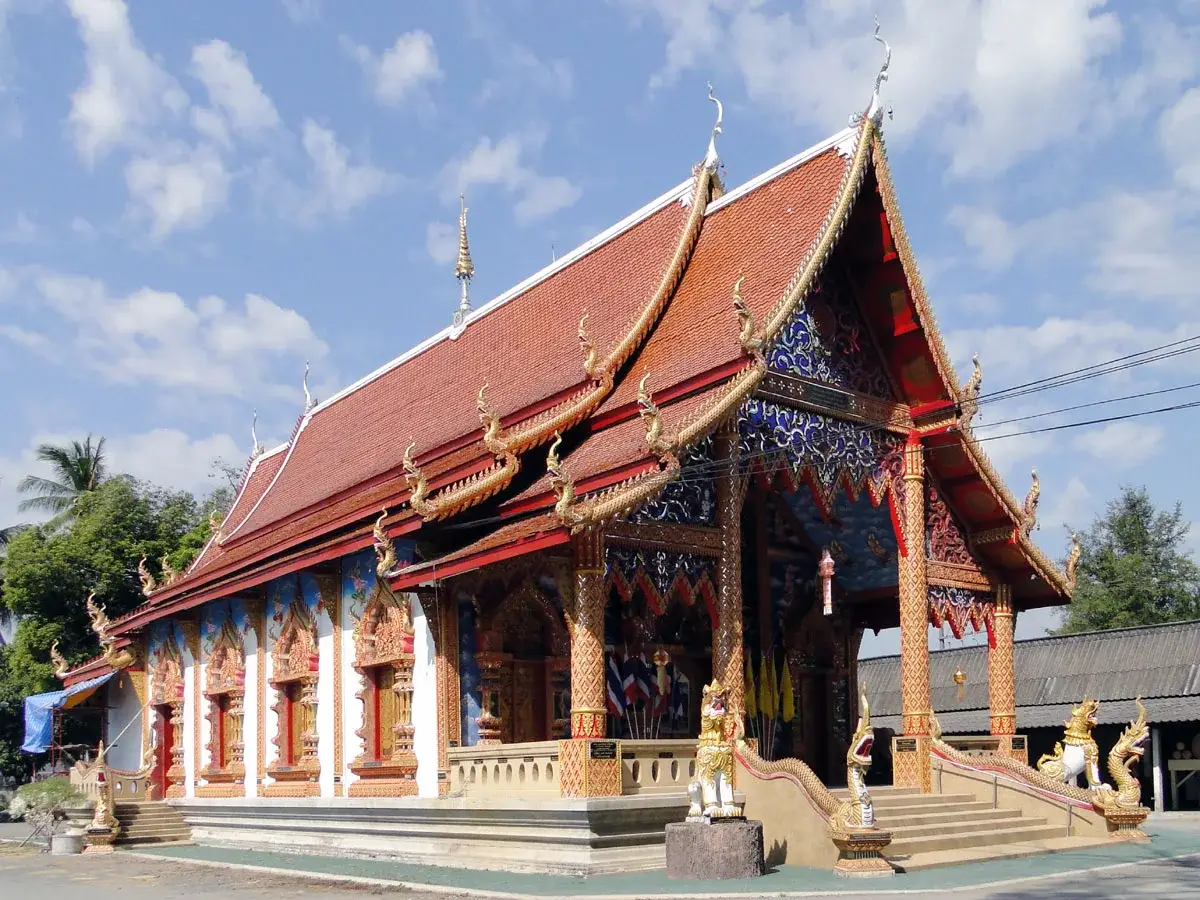
Operating day: Daily
Operating time: 08.00 - 17.00
Wat Mae Pong, also listed in some travel sources as Wat Mae Pong (Wat Phra Noon), is a local Buddhist temple in Moo 4, Mae Pong Subdistrict, Doi Saket District, Chiang Mai Province. It is a community temple under the Maha Nikaya tradition, officially permitted to be established in 1883 and granted Wisung Kham Sima in 1948. The temple is currently associated with Phra Khru Manit Phattharakhun Kantawanno as its abbot. Wat Mae Pong is one of the important community temples of Mae Pong and remains closely connected with local faith, education, and Lanna Buddhist traditions.
Wat Mae Pong is located in Mae Pong, a community area east of Chiang Mai city. Mae Pong has villages, agricultural land, water sources, schools, local temples, and rural routes connected with Doi Saket, Mae On, and San Kamphaeng. This setting makes Wat Mae Pong more than an isolated place of worship. It is part of a village landscape where Buddhism, education, family life, and community activities are closely linked.
The historical importance of Wat Mae Pong begins with its official establishment in 1883. With more than 140 years of history, the temple has served the Mae Pong community across several generations. A temple with this kind of continuity is usually more than a place for worship. It is a centre for Buddhist ceremonies, merit-making, ordination, life-cycle rituals, community meetings, and moral learning.
The granting of Wisung Kham Sima in 1948 is another important religious detail. Wisung Kham Sima is the consecrated boundary used for formal monastic acts according to Buddhist discipline. This confirms Wat Mae Pong’s status as a recognized Buddhist temple with an established religious function for monks and the local community.
The name Wat Mae Pong is directly connected with Mae Pong community identity. The temple grew together with the village and should be understood as a community temple rooted in local life. For visitors, the temple offers an opportunity to understand Chiang Mai beyond famous urban temples by observing how Buddhism continues in a village setting.
Wat Mae Pong also has an important connection with community education. The history of Mae Pong Prachasamakkee School records that the school once used the temple’s monastic land as its learning space before later developing into a formal community school. This link shows how the temple supported local education, not only Buddhist ceremonies.
This educational role reflects a traditional Lanna pattern. In many local communities, temples were places where children and young people learned reading, writing, morality, discipline, and community values. Wat Mae Pong therefore represents the wider role of a temple as a religious, educational, and social centre.
One of the distinctive points of Wat Mae Pong is its association with the name Wat Phra Noon Mae Pong, or the reclining Buddha temple of Mae Pong. The reclining Buddha is a memorable spiritual feature and gives the temple a clear identity among other temples in Mae Pong and Doi Saket.
The reclining Buddha image represents the Buddha entering Parinirvana. It is connected with calmness, impermanence, release, and reflection on Buddhist teachings. Visitors who come to pay respect to the reclining Buddha at Wat Mae Pong can make merit, pray for auspiciousness, and spend quiet time in a local temple atmosphere.
Another religious feature connected with Wat Mae Pong is Phra Borommathat Noppharat, also referred to in Buddhist sources as Chedi Chiang Mai. This gives the temple another layer of significance as a place connected with Buddhist relic veneration and local devotional practice.
A key community event associated with the temple is the Poi Luang festival of Wat Phra Noon Mae Pong. Poi Luang is an important Lanna Buddhist tradition often connected with temple celebration, renovation, and communal merit-making. It brings together villagers, monks, families, and visitors through offerings, ceremonies, processions, and shared support for the temple.
The Poi Luang tradition is more than a festival. It is a social and religious event through which local people help maintain the temple, make merit, welcome guests, and pass Lanna Buddhist traditions to the next generation. Wat Mae Pong therefore remains part of an active community merit-making cycle.
Throughout the year, Wat Mae Pong supports Buddhist activities such as Buddhist holy days, Buddhist Lent, the end of Buddhist Lent, Kathin offerings, forest robe offerings, merit-making for ancestors, alms offering, and ceremonies connected with important life events. These activities keep the relationship between monks and laypeople active and help preserve Buddhist values in the community.
Phra Khru Manit Phattharakhun Kantawanno is the abbot of Wat Mae Pong. Visitors who wish to make offerings, donate, or participate in temple activities should behave respectfully, keep their voices low, and give space to monks and local worshippers, especially when ceremonies are taking place.
The area around Wat Mae Pong also shows how the temple fits into the daily life of the village. Nearby community places include Ban Mae Pong School, Mae Pong health facilities, Wat Doi Ploi Nok, and several village routes. This relationship between temple, school, health services, and local homes is a clear example of a northern Thai community structure.
The atmosphere at Wat Mae Pong is quiet and community-based. It is not a mass-tourism landmark, but its value lies in its authenticity. Visitors can pay respect to the reclining Buddha, make merit, learn about the temple’s role in local education, and experience the calm rhythm of a Mae Pong village temple.
Wat Mae Pong is suitable for travellers interested in local history. The temple combines several important elements: establishment in 1883, Wisung Kham Sima in 1948, the reclining Buddha identity, a connection with local education, and the Poi Luang tradition. Together, these details make the temple a strong cultural stop in Mae Pong.
Mae Pong has several nearby temples that can be connected into a meaningful temple route, including Wat Doi Ploi Nok, Wat Kanjanitayaram, Wat Doi Chom Chaeng, Wat Mae Hong Khrai, and Wat Mai Mongkhon Chai. These temples help visitors understand the Buddhist landscape of Mae Pong and Doi Saket more deeply.
A half-day route can begin at Wat Mae Pong, with merit-making and a visit to the reclining Buddha, then continue to Wat Doi Ploi Nok, Wat Kanjanitayaram, and Wat Doi Chom Chaeng. This route is suitable for travellers who want to explore several local temples in the same area without rushing.
With a full day, visitors can extend the route to Huai Hong Khrai Royal Development Study Centre, San Kamphaeng Hot Springs, Wat Phra That Doi Saket, and Bo Sang Village. This creates a balanced itinerary with merit-making, local culture, nature, relaxation, and handicraft communities.
Travellers who prefer slow travel can also combine Wat Mae Pong with cafés, restaurants, and small accommodation in Mae Pong and Doi Saket. The area has resort restaurants, village cafés, small international restaurants, and nature-based stays suitable for a relaxed one-day or overnight trip.
Getting There is easiest by private car, rental car, or local hired transport. From Chiang Mai city, travel toward Doi Saket District and continue into Mae Pong Subdistrict, or use the San Kamphaeng–Mae On–Mae Pong connection. Visitors can search for “Wat Mae Pong” or “Wat Phra Noon Mae Pong” on a navigation map.
Wat Mae Pong is located along a rural route in Mae Pong. Visitors should allow enough time for local roads, especially on Buddhist holy days, temple events, or community merit-making days. Morning to early afternoon is the most suitable period for merit-making, temple visits, and continuing to nearby attractions.
Visitors should dress modestly when entering Wat Mae Pong. Clothing should be appropriate for a sacred place. Shoes should be removed before entering religious buildings, voices should be kept low, and private monastic areas should not be entered without permission. If visitors want to photograph people or ceremonies, they should ask first.
In summary, Wat Mae Pong, also known as Wat Phra Noon Mae Pong, is a Maha Nikaya community temple in Mae Pong Subdistrict, Doi Saket District, Chiang Mai Province. It was officially established in 1883, granted Wisung Kham Sima in 1948, and is associated with Phra Khru Manit Phattharakhun Kantawanno as abbot. The temple is meaningful for merit-making, paying respect to the reclining Buddha, learning about Lanna community temples, and building a deeper Mae Pong–Doi Saket cultural itinerary.
| Name | Wat Mae Pong |
| Alternative Travel Name | Wat Mae Pong (Wat Phra Noon) |
| Location | Moo 4, Mae Pong Subdistrict, Doi Saket District, Chiang Mai Province |
| Navigation Address | 4021 Rural Rd, Mae Pong, Doi Saket District, Chiang Mai 50220 |
| Coordinates | 18.82114, 99.17056 |
| Navigation Code | Plus Code: 7MCXR5CC+F6 |
| Temple Type | Local Buddhist temple under the Maha Nikaya tradition |
| History | Officially permitted to be established in 1883 and granted Wisung Kham Sima in 1948 |
| Abbot / Caretaker | Phra Khru Manit Phattharakhun Kantawanno |
| Important Sacred Features | The reclining Buddha of Mae Pong and Phra Borommathat Noppharat / Chedi Chiang Mai |
| Important Tradition | Poi Luang festival of Wat Phra Noon Mae Pong, plus Buddhist Lent, Kathin, robe-offering, and local merit-making activities |
| Community Role | A spiritual centre of Mae Pong community, historically connected with local education and community life |
| Travel Information | Travel from Chiang Mai city toward Doi Saket District and continue into Mae Pong Subdistrict, or use the San Kamphaeng–Mae On–Mae Pong connection. Private car, rental car, or local hired transport is recommended. |
| Current Status | Open as a community temple and listed in public temple, map, and travel sources |
| Nearby Tourist Attractions | 1. Wat Doi Ploi Nok, about 1 km 2. Wat Kanjanitayaram, about 3 km 3. Wat Doi Chom Chaeng, about 6 km 4. Wat Mae Hong Khrai, about 7 km 5. San Kamphaeng Hot Springs, about 9 km 6. Huai Hong Khrai Royal Development Study Centre, about 10 km 7. Wat Phra That Doi Saket, about 12 km |
| Nearby Restaurants | 1. Lap Pa Ut, about 2 km 2. Tara Restaurant at Papai Country Lodge, about 2 km, Tel. 081-882-7100 3. Sole & Luna Restaurant and Homestay, about 3 km 4. Village Green Cafe & Retreat, about 4 km, Tel. 087-656-9213 5. Peppercorns Restaurant, about 5 km, Tel. 087-460-0451 6. Baan Na Coffee and Restaurant, about 9 km, Tel. 098-014-3383 |
| Nearby Accommodations | 1. Papai Country Lodge, about 2 km, Tel. 081-882-7100 2. Village Green Cafe & Retreat, about 4 km, Tel. 087-656-9213 3. Capybara Zen Resort And Spa, about 4 km 4. North Pine Forest Homestay, about 5 km 5. Secret Garden Chiang Mai, about 9 km, Tel. 053-339-502 6. Ban Tung Residence, about 10 km |
Frequently Asked Questions (FAQ)
Q: Where is Wat Mae Pong located?
A: Wat Mae Pong is located in Moo 4, Mae Pong Subdistrict, Doi Saket District, Chiang Mai Province.
Q: Does Wat Mae Pong have another name?
A: Wat Mae Pong is also listed in some travel sources as Wat Mae Pong (Wat Phra Noon), or Wat Phra Noon Mae Pong.
Q: When was Wat Mae Pong officially established?
A: Wat Mae Pong was officially permitted to be established in 1883.
Q: When did Wat Mae Pong receive Wisung Kham Sima?
A: Wat Mae Pong was granted Wisung Kham Sima in 1948.
Q: Who is the abbot of Wat Mae Pong?
A: The abbot of Wat Mae Pong is Phra Khru Manit Phattharakhun Kantawanno.
Q: What important sacred features are associated with Wat Mae Pong?
A: Important features include the reclining Buddha of Mae Pong and Phra Borommathat Noppharat / Chedi Chiang Mai.
Q: What is Wat Mae Pong’s role in the local community?
A: Wat Mae Pong is a spiritual centre of the local community and has historical links with community education in Mae Pong.
Q: What nearby attractions can be combined with Wat Mae Pong?
A: Nearby places include Wat Doi Ploi Nok, Wat Kanjanitayaram, Wat Doi Chom Chaeng, Wat Mae Hong Khrai, San Kamphaeng Hot Springs, Huai Hong Khrai Royal Development Study Centre, and Wat Phra That Doi Saket.
 Category: ●Places of Worship
 Group: ●Temple
Last Update : 2 MonthAgo
 Last Update : 2 MonthAgo
 Click to Access the Navigation Map GPS

 Muang Chiang Mai(121)Chom Thong(47)Mae Chaem(25)Chiang Dao(33)Doi Saket(68)Mae Taeng(85)Mae Rim(69)Samoeng(29)Fang(71)Mae Ai(59)Phrao(70)San Pa Tong(103)San Kamphaeng(66)San Sai(73)Hang Dong(73)Hot(32)Doi Tao(22)Omkoi(11)Saraphi(74)Wiang Haeng(15)Chai Prakan(28)Mae Wang(32)Mae On(22)Doi Lo(33)Galyani Vadhana(1)


