
lovethailand home >North Travel Attractions >Chiang Mai Travel Attractions >Doi Saket >Mae Khue > Wat Chai Phrueksawat
TL;DR: Wat Chai Phrueksawat is located at 87 Moo 3, Ban San Ton Haen, Mae Khue Subdistrict, Doi Saket District, Chiang Mai Province, open Daily, hours 08.00 – 17.00.
Wat Chai Phrueksawat
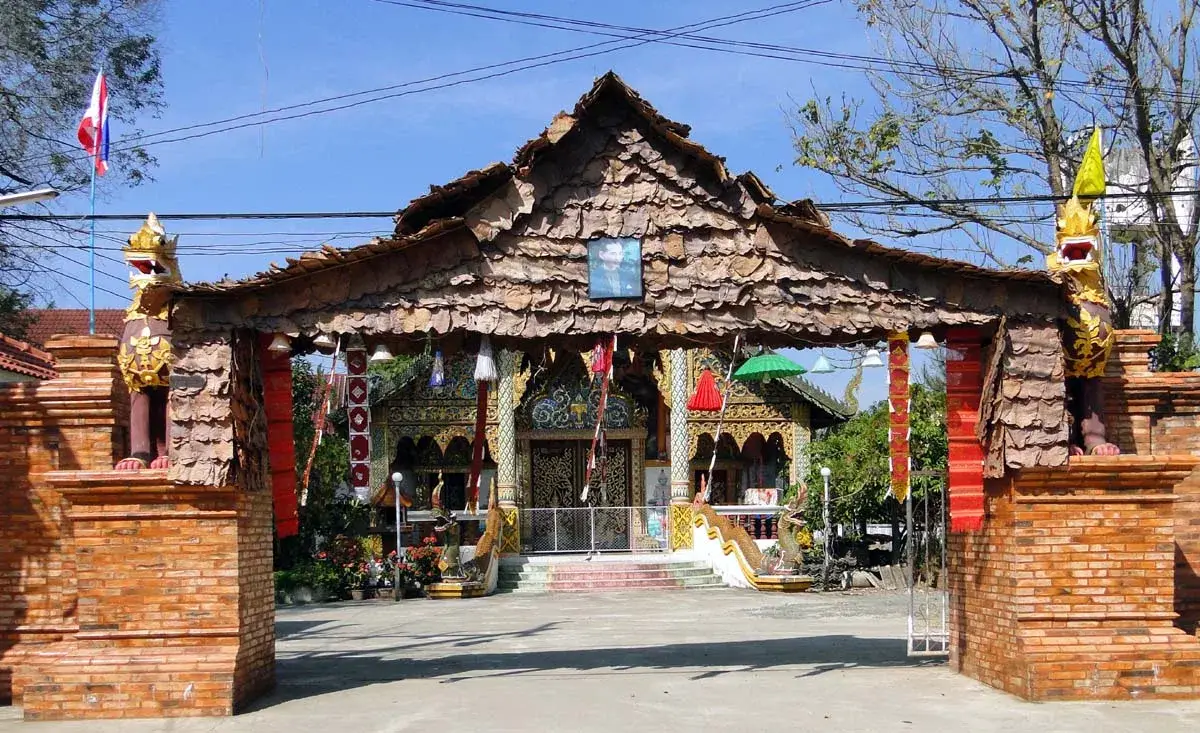
Open Days: Daily
Opening Hours: 08.00 – 17.00
Wat Chai Phrueksawat is a local Buddhist temple located at 87 Moo 3, Ban San Ton Haen, Mae Khue Subdistrict, Doi Saket District, Chiang Mai Province. It is a community temple under the Maha Nikaya tradition, covering 6 rai and 84 square wah of land. The temple was built in 1924, officially permitted to be established in the same year, and granted Wisung Kham Sima in 1948. The temple is currently associated with Phra Athikan Narong Jitasilo as its abbot.
Local people also call Wat Chai Phrueksawat “Wat San Ton Haen,” following the name of the village. This local name reflects the close relationship between the temple and Ban San Ton Haen. For visitors, the temple should be understood as a living village temple that grew together with the community, not only as a short sightseeing stop.
Mae Khue Subdistrict is part of Doi Saket District, east of Chiang Mai city. The area has several local temples, including Wat Chai Phrueksawat, Wat Thep Intharam, Wat Naka Sathit, Wat Pa Phaeng, Wat Mae Khue, and Wat Saraphi. This concentration of community temples reflects the strong Buddhist character of the area and makes Mae Khue suitable for a quiet cultural route focused on village temples and local merit-making traditions.
The official history of Wat Chai Phrueksawat began in 1924, the year the temple was built and officially established. The temple reached its centennial milestone in 2024. This makes Wat Chai Phrueksawat meaningful not only as a village temple, but also as evidence of a century of Buddhist faith and community continuity in Mae Khue and Doi Saket.
The granting of Wisung Kham Sima in 1948 is another important religious detail. Wisung Kham Sima is a consecrated boundary granted to the Sangha for formal monastic acts according to Buddhist discipline. This confirms the temple’s status as a recognized Buddhist temple with an established religious function for monks and the local community.
Wat Chai Phrueksawat covers 6 rai and 84 square wah. This scale is suitable for a community temple that supports merit-making, Buddhist ceremonies, and village activities. Its appeal lies in its calm and modest atmosphere. Visitors can come to pay respect to the Buddha, make merit, offer alms, and experience the quiet setting of a northern Thai village temple.
The temple is closely connected with the religious life of Ban San Ton Haen. Community temples of this kind serve as places of worship, social gathering, moral learning, and annual ceremonies. They connect monks, villagers, elders, families, and younger generations through shared Buddhist activities throughout the year.
One of the most important features of Wat Chai Phrueksawat is its pagoda, which is the focus of the temple’s annual relic-bathing ceremony. The relic-bathing tradition is a meaningful Lanna Buddhist practice. It allows devotees to show respect to the Triple Gem, make merit, seek blessings, and preserve local cultural identity through a shared community event.
The relic-bathing ceremony at Wat Chai Phrueksawat, also known locally as Wat San Ton Haen, brings together faith and community life. The event includes merit-making, worship, blessing rituals, and Buddhist activities within the temple. Its atmosphere reflects the character of Lanna merit-making, where the temple remains the spiritual and cultural center of the village.
Phra Athikan Narong Jitasilo is the abbot of Wat Chai Phrueksawat. Visitors who wish to make offerings, donate, or take part in temple activities should visit during the daytime. If a ceremony or community event is taking place, visitors should behave respectfully, keep their voices low, and give space to monks and local worshippers.
Wat Chai Phrueksawat is suitable for travelers interested in local culture in Doi Saket. The temple shows another side of Chiang Mai beyond the famous temples in the old city. It represents a community-based form of Buddhist life, where the temple continues to support faith, tradition, and local relationships in everyday village life.
Mae Khue Subdistrict can be explored as a half-day Buddhist route. Visitors can begin at Wat Chai Phrueksawat and continue to nearby temples such as Wat Thep Intharam, Wat Naka Sathit, Wat Mae Khue, and Wat Saraphi. This route is suitable for travelers who want a calm, respectful, and community-centered temple experience.
With a full day, Wat Chai Phrueksawat can be combined with important attractions in Doi Saket, such as Wat Phra That Doi Saket, Tweechol Botanic Garden, Mae Kuang Udom Thara Dam, and the Suspension Bridge at Mae Kuang Dam. This creates a balanced itinerary that includes merit-making, cultural learning, local scenery, and nature.
Wat Phra That Doi Saket is one of the best-known temples in the district and is also a popular viewpoint. Tweechol Botanic Garden is suitable for families and visitors who enjoy landscaped gardens and green spaces. Mae Kuang Udom Thara Dam and the Suspension Bridge offer scenic views and a relaxed nature stop within the same district.
Visitors should dress modestly when visiting Wat Chai Phrueksawat. Clothing should be appropriate for a sacred place. Shoes should be removed before entering religious buildings, voices should be kept low, and private monastic areas should not be entered without permission. Respectful behavior is especially important at community temples because they are active religious spaces used by local people.
Getting There is easiest by private car, rental car, or local hired transport. From Chiang Mai city, travel east toward Doi Saket District, follow the Chiang Mai–Doi Saket route, then continue into Mae Khue Subdistrict and Ban San Ton Haen. Visitors can search for “Wat Chai Phrueksawat” or “Wat San Ton Haen” on a navigation map.
The temple is located in Mae Khue Subdistrict, Doi Saket District, Chiang Mai Province, near local village roads and within reach of the district’s main travel routes. Visitors coming from Chiang Mai city should allow enough travel time, especially during weekends or temple events, when local activities may take place around the temple grounds.
The best time to visit Wat Chai Phrueksawat is from morning to early afternoon. Morning is suitable for merit-making and offering alms, while the daytime opening hours make it easier to visit respectfully. During the relic-bathing ceremony, visitors should allow extra time for parking, temple activities, and community participation.
Wat Chai Phrueksawat is ideal for travelers who want to understand Chiang Mai at the local level. The temple is not defined by large-scale tourism. Its value lies in its role as a community temple with a clear history, a pagoda connected to local merit-making, and a continuing religious function for Ban San Ton Haen.
In summary, Wat Chai Phrueksawat, or Wat San Ton Haen, is a Maha Nikaya community temple in Ban San Ton Haen, Mae Khue Subdistrict, Doi Saket District, Chiang Mai Province. It was built and officially established in 1924, granted Wisung Kham Sima in 1948, and covers 6 rai and 84 square wah. With Phra Athikan Narong Jitasilo as its abbot, the temple remains a meaningful place for merit-making, local Buddhist ceremonies, and cultural travel in Doi Saket.
| Name | Wat Chai Phrueksawat |
| Local Name | Wat San Ton Haen |
| Location | 87 Moo 3, Ban San Ton Haen, Mae Khue Subdistrict, Doi Saket District, Chiang Mai Province |
| Coordinates | 18.78282, 99.10117 |
| Navigation Code | Q4M2+8FF, Mae Khue, Doi Saket District, Chiang Mai 50220 |
| Temple Type | Local Buddhist temple under the Maha Nikaya tradition |
| Land Area | 6 rai and 84 square wah |
| History | Built in 1924, officially established in 1924, and granted Wisung Kham Sima in 1948 |
| Highlights | A community temple of Ban San Ton Haen with a pagoda connected to the local relic-bathing ceremony |
| Important Areas / Structures | Pagoda, religious activity area, merit-making area, and community temple grounds |
| Important Tradition | Relic-bathing ceremony of Wat Chai Phrueksawat, also known locally as Wat San Ton Haen |
| Travel Information | Travel from Chiang Mai city toward Doi Saket District, follow the Chiang Mai–Doi Saket route, then continue into Mae Khue Subdistrict and Ban San Ton Haen. |
| Current Status | Open as a local community temple and listed in public travel, map, and temple databases |
| Open Days | Daily |
| Opening Hours | 08.00 – 17.00 |
| Abbot / Caretaker | Phra Athikan Narong Jitasilo |
| Main Contact Number | Tel. 053-386-626 |
| Nearby Tourist Attractions | 1. Wat Thep Intharam, about 3 km 2. Wat Naka Sathit, about 4 km 3. Wat Mae Khue, about 4 km 4. Wat Phra That Doi Saket, about 9 km 5. Tweechol Botanic Garden, about 8 km 6. Mae Kuang Udom Thara Dam, about 14 km 7. Suspension Bridge at Mae Kuang Dam, about 17 km |
| Nearby Restaurants | 1. Madam Olive Cafe, about 5 km 2. Chiang Mai Floating Restaurant, about 5 km 3. Baan Na Coffee and Restaurant, about 9 km, Tel. 098-014-3383 4. Huean Thip 456, about 8 km 5. PAPA'S GARDEN Doi Saket, about 10 km, Tel. 063-651-9415 |
| Nearby Accommodations | 1. Secret Garden Chiangmai, about 1 km 2. Ban Tung Residence, about 1 km, Tel. 065-669-8246 3. Chang Kaew Resort Chiang Mai, about 4 km 4. Ratchawang-Inn Art Village, about 4 km 5. Cool Vintage Doisaket, about 6 km 6. La Bonita Chiang Mai, about 7 km 7. Imagine Resort Chiang Mai, about 8 km |
Frequently Asked Questions (FAQ)
Q: Where is Wat Chai Phrueksawat located?
A: Wat Chai Phrueksawat is located at 87 Moo 3, Ban San Ton Haen, Mae Khue Subdistrict, Doi Saket District, Chiang Mai Province.
Q: What is the local name of Wat Chai Phrueksawat?
A: Local people also call it Wat San Ton Haen, following the name of Ban San Ton Haen village.
Q: What are the opening hours of Wat Chai Phrueksawat?
A: Wat Chai Phrueksawat is open daily from 08.00 to 17.00.
Q: What type of temple is Wat Chai Phrueksawat?
A: It is a local Buddhist temple under the Maha Nikaya tradition.
Q: When was Wat Chai Phrueksawat established?
A: Wat Chai Phrueksawat was built and officially established in 1924.
Q: When did Wat Chai Phrueksawat receive Wisung Kham Sima?
A: Wat Chai Phrueksawat was granted Wisung Kham Sima in 1948.
Q: Who is the abbot of Wat Chai Phrueksawat?
A: The abbot of Wat Chai Phrueksawat is Phra Athikan Narong Jitasilo.
Q: What nearby attractions can be combined with Wat Chai Phrueksawat?
A: Nearby places include Wat Thep Intharam, Wat Naka Sathit, Wat Mae Khue, Wat Phra That Doi Saket, Tweechol Botanic Garden, Mae Kuang Udom Thara Dam, and the Suspension Bridge at Mae Kuang Dam.
 Category: ●Places of Worship
 Group: ●Temple
Last Update : 4 DayAgo
 Last Update : 4 DayAgo
 Click to Access the Navigation Map GPS
Wat Chai Phrueksawat Map
Recommend

 Muang Chiang Mai(121)Chom Thong(47)Mae Chaem(25)Chiang Dao(33)Doi Saket(68)Mae Taeng(85)Mae Rim(69)Samoeng(29)Fang(71)Mae Ai(62)Phrao(70)San Pa Tong(105)San Kamphaeng(66)San Sai(73)Hang Dong(74)Hot(32)Doi Tao(22)Omkoi(11)Saraphi(74)Wiang Haeng(15)Chai Prakan(28)Mae Wang(32)Mae On(22)Doi Lo(34)Galyani Vadhana(1)


