
lovethailand home >North Travel Attractions >Chiang Mai Travel Attractions >Doi Saket >Pa Miang > Wat Pang An
TL;DR: Wat Pang An is located at 31 Moo 1, Ban Pang An, Chiang Mai-Chiang Rai Road, Pa Miang Subdistrict, Doi Saket District, Chiang Mai Province, open Contact The Temple Directly Before Visiting, hours Contact The Temple Directly Before Visiting.

Wat Pang An
Open Days: Contact The Temple Directly Before Visiting
Opening Hours: Contact The Temple Directly Before Visiting
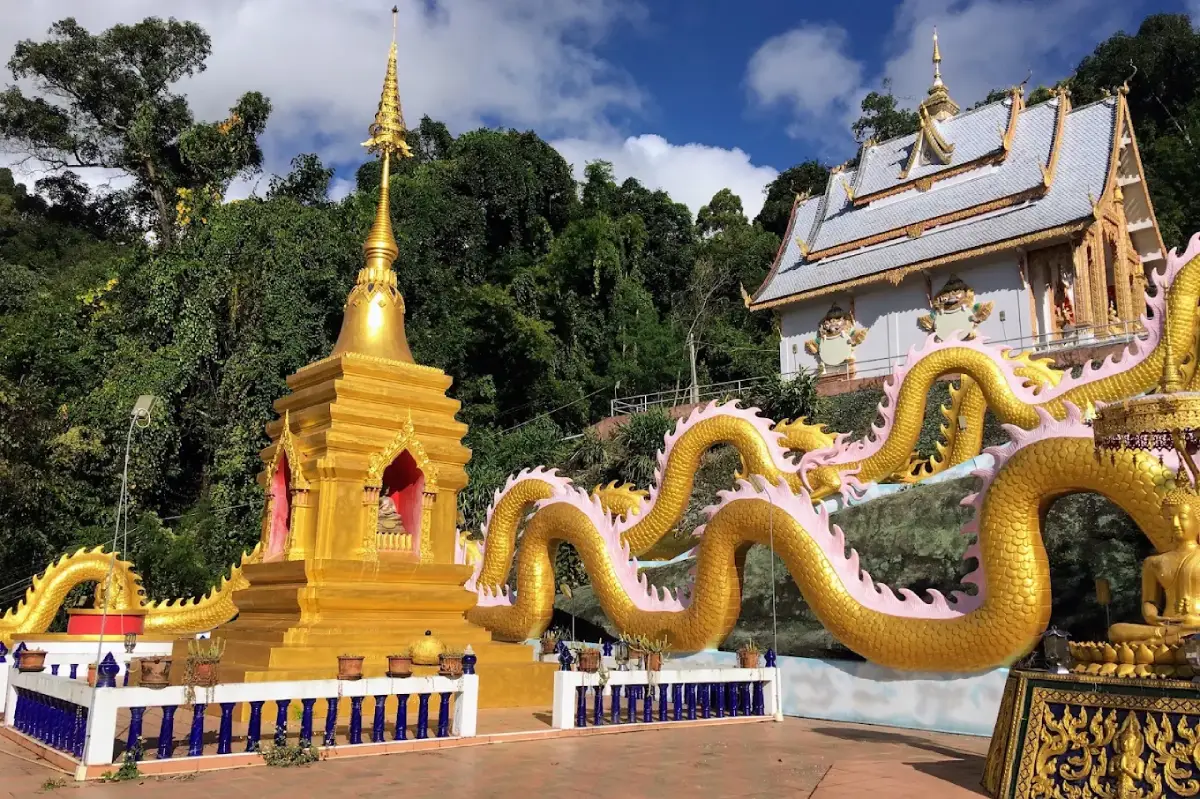
Wat Pang An is a private Buddhist temple under the Mahanikaya order, located at 31 Moo 1, Ban Pang An, on the Chiang Mai-Chiang Rai road in Pa Miang Subdistrict, Doi Saket District, Chiang Mai Province. The temple sits in a mountain community along Highway 118 and is closely connected with the religious life of Ban Pang An. It is a quiet local temple suitable for worship, merit-making, and learning about a village temple with strong local memories related to Khru Ba Siwichai, the revered Buddhist saint of Lanna.
The temple covers 3 ngan and 20 square wah. Although the site is not large, its historical and spiritual story is highly distinctive. Wat Pang An is remembered in the local community as a temple revived from an old abandoned temple site. This gives the temple value beyond its physical size. It represents the cooperation between monks, villagers, and local faith in restoring a sacred place for community Buddhist practice.
The temple’s history is preserved partly through oral tradition. According to the account passed down by Nang Man Jai Pin, aged 92 in the recorded community memory, her parents told her that Wat Pang An was built around 1898 based on stories from her grandparents’ generation. This gives Wat Pang An the character of a community-memory temple, where history is not only written in official records but also transmitted through elders and families in Ban Pang An.
The most important story connects Wat Pang An with Khru Ba Siwichai. Local tradition says that a monk later known as Khru Ba Siwichai traveled to build Wat Khun Lao in Mae Chedi Mai Subdistrict. On the way back, he stopped to rest at the place where Wat Pang An now stands. He had a vision that the area had once been an old temple site. At that time, the place was an abandoned temple, so he told the villagers, including the grandparents of Nang Man Jai Pin, to restore it as a temple.
This story gives Wat Pang An a strong Lanna spiritual identity. Khru Ba Siwichai is deeply respected across northern Thailand as a monk who built and restored temples, roads, and religious places. The memory of his journey, vision, and instruction to restore the old site places Wat Pang An within the wider devotional landscape of Lanna Buddhism, even though the temple itself remains a small village temple.
During the restoration of Wat Pang An, villagers discovered many old Buddha images, especially Phra Singh images. Today, three Phra Singh images with a lap width of about 9 inches are preserved in the viharn. Phra Singh images are highly significant in Lanna Buddhist culture because they are associated with the Phra Buddha Sihing tradition and northern Thai Buddhist art. The discovery of these images strengthens the belief that the site had been a Buddhist place before its restoration.
The old Buddha images found at the temple are important both spiritually and historically. To protect them from theft, villagers built a chedi and enshrined many of the old Buddha images inside it. This act shows the community’s respect for sacred objects and its effort to preserve Buddhist heritage. The chedi at Wat Pang An is therefore not just a religious structure. It is a protective and devotional monument containing the temple’s older sacred objects.
The chedi is one of the most important sacred features of Wat Pang An. In Lanna temples, a chedi often functions as a spiritual center for the community. It is a place for paying respect, making merit, and remembering the continuity of Buddhism in the village. At Wat Pang An, the chedi is especially meaningful because it holds old Buddha images that connect the present temple with the abandoned temple site remembered in local tradition.
The temple has been cared for by a succession of abbots over time, with about fourteen abbots recorded or remembered in the local account. This continuity shows that Wat Pang An has remained an active religious site for generations. Even though it is located in a mountain village rather than a large town, the temple has continued to support worship, community merit-making, and the development of religious buildings for local Buddhist life.
The current abbot of Wat Pang An is Phra Athikan Phisan Dhammathipo. In a village temple, the abbot has a central role as caretaker, religious leader, and coordinator between the monastic community and local residents. This role is especially important at Wat Pang An because the temple preserves local historical memory, old Buddha images, a chedi, and a distinctive Maha Ut ordination hall.
The temple’s monastic structures have been developed to support religious activities and community worship. The most distinctive building is the Maha Ut ordination hall built in 2008. This ubosot has no ordinary doors or windows and is entered through a tunnel. This makes the ordination hall very different from typical temple buildings and gives it a strong sacred atmosphere for worship and quiet reflection.
The Maha Ut style carries an important symbolic meaning in Thai Buddhist belief. The term suggests protection, enclosed sacredness, auspicious power, and spiritual strength. The design of an ordination hall without normal doors or windows creates a quiet, concentrated interior space. Visitors should enter respectfully and follow the temple’s rules when visiting this special building.
Inside the Maha Ut ordination hall is a 50-inch Luang Pho Phuttha Sothon Buddha image serving as the principal Buddha image. Luang Pho Phuttha Sothon is widely revered in Thailand, and the presence of this image gives the hall a strong devotional focus. Visitors come to pay respect, make merit, and pray in the quiet atmosphere of the ubosot.
Wat Pang An is also notable for its mountain setting. Pa Miang Subdistrict lies along the Chiang Mai-Chiang Rai road and includes village communities on both sides of the highway. The area has a cooler climate than the lowlands and is connected with forests, mountain communities, tea and coffee landscapes, and local Buddhist temples. This setting makes Wat Pang An suitable for a calm cultural stop along the Doi Saket-Pa Miang route.
Ban Pang An is Moo 1 of Pa Miang Subdistrict. Local government information identifies Moo 1 as including Ban Pang An and Ban Pang Nam Thu. This confirms the temple’s position within a real village community. Wat Pang An is therefore not only a point on a map but part of the religious and social structure of Ban Pang An.
Visitors should explore Wat Pang An slowly and respectfully. A meaningful visit can begin with the Maha Ut ordination hall, then continue to the viharn where the three Phra Singh images are preserved, and finally to the chedi that enshrines the old Buddha images. This walking order helps visitors understand the temple’s story from an abandoned sacred site to a restored community temple with continuing devotional importance.
Wat Pang An is suitable for travelers interested in Lanna temples, Khru Ba Siwichai, old Buddha images, Phra Singh images, chedis, and unusual temple architecture. It is not a large tourist temple with heavy commercial activity. Its value lies in the calm atmosphere, the local story, and its relationship with the Ban Pang An community.
Visitors should follow proper temple etiquette. Modest clothing is recommended. Shoulders and knees should be covered. Shoes should be removed before entering sacred buildings. Visitors should keep quiet, avoid entering monastic areas without permission, and ask before photographing monks, local residents, sacred objects, or the interior of religious buildings. This is especially important because Wat Pang An is an active community temple, not a museum.
Getting There is most convenient by private car, rental car, or hired vehicle. From Chiang Mai city, take Highway 118, the Chiang Mai-Chiang Rai road, through Doi Saket District toward Pa Miang Subdistrict and Ban Pang An. The temple is located at 31 Moo 1, Ban Pang An. In a map application, search for “Wat Pang An, Pa Miang, Doi Saket” to avoid confusion with places of similar names.
Wat Pang An can be combined with other places in Pa Miang and Doi Saket. Nearby routes may include Dong Yen Arboretum, Wat Pong Nam Ron, Pangfan Rock n’ River, Pa Miang Royal Project Development Center, Mae Kampong village, and Wat Phra That Doi Saket. This creates a balanced route of temple history, mountain scenery, coffee culture, and local village life.
The best time to visit Wat Pang An is in the morning or late afternoon. Morning is suitable for worship and a quiet walk around the temple, while afternoon works well for travelers passing along the Chiang Mai-Chiang Rai road. Visitors planning a group visit, merit-making ceremony, or specific religious activity should contact the temple or the local village office in advance.
In summary, Wat Pang An is a Mahanikaya community temple in Ban Pang An, Pa Miang Subdistrict, Doi Saket District, Chiang Mai Province. Local tradition says the temple was restored from an abandoned temple site around 1898 after Khru Ba Siwichai stopped there and had a vision of its former sacred status. The temple preserves three Phra Singh images, a chedi containing old Buddha images, and a distinctive Maha Ut ordination hall built in 2008 with a 50-inch Luang Pho Phuttha Sothon Buddha image as the principal image. It is a meaningful stop for travelers interested in Lanna faith, village history, and quiet temple atmospheres in the mountains of Doi Saket.
| Name | Wat Pang An |
| Place Type | Private Buddhist Temple Under The Mahanikaya Order |
| Location | 31 Moo 1, Ban Pang An, Chiang Mai-Chiang Rai Road, Pa Miang Subdistrict, Doi Saket District, Chiang Mai Province |
| Address | 31 Moo 1, Ban Pang An, Pa Miang Subdistrict, Doi Saket District, Chiang Mai 50220, Thailand |
| Temple Area | 3 ngan and 20 square wah |
| Highlights | Community temple connected with Khru Ba Siwichai, three old Phra Singh images, a chedi containing old Buddha images, and a Maha Ut ordination hall entered through a tunnel |
| History | Local oral tradition says the temple was restored from an abandoned temple site around 1898 after Khru Ba Siwichai stopped at the site and had a vision that it was once an old temple |
| Connection With Khru Ba Siwichai | The community story says Khru Ba Siwichai stopped at the present temple site while returning from building Wat Khun Lao, then told villagers to restore the abandoned sacred site |
| Important Sacred Objects | Three Phra Singh images with a lap width of about 9 inches, preserved in the viharn, and many old Buddha images enshrined inside the chedi |
| Chedi | Built to enshrine many old Buddha images and protect them from theft in the past |
| Maha Ut Ordination Hall | Built in 2008, without ordinary doors or windows, entered through a tunnel, and housing a 50-inch Luang Pho Phuttha Sothon Buddha image as the principal image |
| Abbot / Caretaker | Phra Athikan Phisan Dhammathipo |
| Local Contact Information | Ban Pang An Village Headman, Tel. 098-221-7010 / Pa Miang Subdistrict Municipality, Tel. 053-106-896, 061-268-1119 |
| Travel Information | From Chiang Mai city, take Highway 118, the Chiang Mai-Chiang Rai road, through Doi Saket District toward Pa Miang Subdistrict and Ban Pang An. Search for “Wat Pang An, Pa Miang, Doi Saket” in a map application |
| Current Status | Listed as a Mahanikaya temple in Pa Miang Subdistrict, Doi Saket District, Chiang Mai Province, and used by the Ban Pang An community for Buddhist activities |
| Open Days | Contact The Temple Directly Before Visiting |
| Opening Hours | Contact The Temple Directly Before Visiting |
| Nearby Tourist Attractions | 1. Dong Yen Arboretum, about 10 km 2. Wat Pong Nam Ron, about 12 km 3. Pangfan Rock n’ River / Pangfan Back To Basic, about 14 km 4. Pa Miang Royal Project Development Center, about 24 km 5. Mae Kampong Village, about 26 km 6. Wat Phra That Doi Saket, about 28 km |
| Nearby Restaurants | 1. Pangfan Rock n’ River, about 14 km, Tel. 063-265-6566 2. Pangfan Back To Basic / Pangfan Resort, about 14 km, Tel. 087-594-2469 3. Nine One Coffee Rim Than-Ban Miang, about 15 km 4. Mae Kampong Pai Daeng Restaurant, about 26 km, Tel. 091-067-7651 5. Lung Pud Pa Peng Mae Kampong, about 26 km, Tel. 081-847-8043, 089-559-9371, 082-182-2838 |
| Nearby Accommodations | 1. Charamai Resort, about 8 km, Tel. 090-624-1663 2. Pangfan Resort, about 14 km, Tel. 096-145-4195 3. Monn Phu Phrai Resort, about 18 km, Tel. 053-389-036 4. Pangfan Rock n’ River, about 14 km, Tel. 064-246-4291, 082-575-6158 5. Lanna Inthan Hotel & Resort, about 30 km |
Frequently Asked Questions (FAQ)
Q: Where is Wat Pang An located?
A: Wat Pang An is located at 31 Moo 1, Ban Pang An, on the Chiang Mai-Chiang Rai road in Pa Miang Subdistrict, Doi Saket District, Chiang Mai Province.
Q: What is the history of Wat Pang An?
A: Local tradition says Wat Pang An was restored from an abandoned temple site around 1898 after Khru Ba Siwichai stopped there and had a vision that the place had once been an old temple.
Q: How is Wat Pang An connected with Khru Ba Siwichai?
A: The community story says Khru Ba Siwichai stopped at the present temple site while returning from building Wat Khun Lao and told villagers to restore the abandoned sacred site.
Q: What important sacred objects are found at Wat Pang An?
A: The temple preserves three Phra Singh images with a lap width of about 9 inches, a chedi containing many old Buddha images, and a 50-inch Luang Pho Phuttha Sothon Buddha image inside the Maha Ut ordination hall.
Q: What is special about the Maha Ut ordination hall at Wat Pang An?
A: The Maha Ut ordination hall was built in 2008. It has no ordinary doors or windows and is entered through a tunnel. Inside is a 50-inch Luang Pho Phuttha Sothon Buddha image as the principal image.
Q: Who is the abbot of Wat Pang An?
A: The abbot of Wat Pang An is Phra Athikan Phisan Dhammathipo.
Q: How can visitors get to Wat Pang An?
A: From Chiang Mai city, take Highway 118, the Chiang Mai-Chiang Rai road, through Doi Saket District toward Pa Miang Subdistrict and Ban Pang An. Search for “Wat Pang An, Pa Miang, Doi Saket” in a map application.
Q: What nearby attractions can be combined with Wat Pang An?
A: Nearby attractions include Dong Yen Arboretum, Wat Pong Nam Ron, Pangfan Rock n’ River, Pa Miang Royal Project Development Center, Mae Kampong Village, and Wat Phra That Doi Saket.
 Category: ●Places of Worship
 Group: ●Temple
Last Update : 2 MonthAgo
 Last Update : 2 MonthAgo
 Click to Access the Navigation Map GPS
Wat Pang An Map
Recommend

 Muang Chiang Mai(121)Chom Thong(47)Mae Chaem(25)Chiang Dao(33)Doi Saket(68)Mae Taeng(85)Mae Rim(69)Samoeng(29)Fang(71)Mae Ai(59)Phrao(70)San Pa Tong(103)San Kamphaeng(66)San Sai(73)Hang Dong(73)Hot(32)Doi Tao(22)Omkoi(11)Saraphi(74)Wiang Haeng(15)Chai Prakan(28)Mae Wang(32)Mae On(22)Doi Lo(33)Galyani Vadhana(1)


