
lovethailand home >North Travel Attractions >Chiang Mai Travel Attractions >Doi Saket >Pa Pong > Wat Chayalangkar
TL;DR: Wat Chayalangkar is located at Moo 4, Pa Pong Subdistrict, Doi Saket District, Chiang Mai Province, open Daily, hours 08.00 - 17.00.
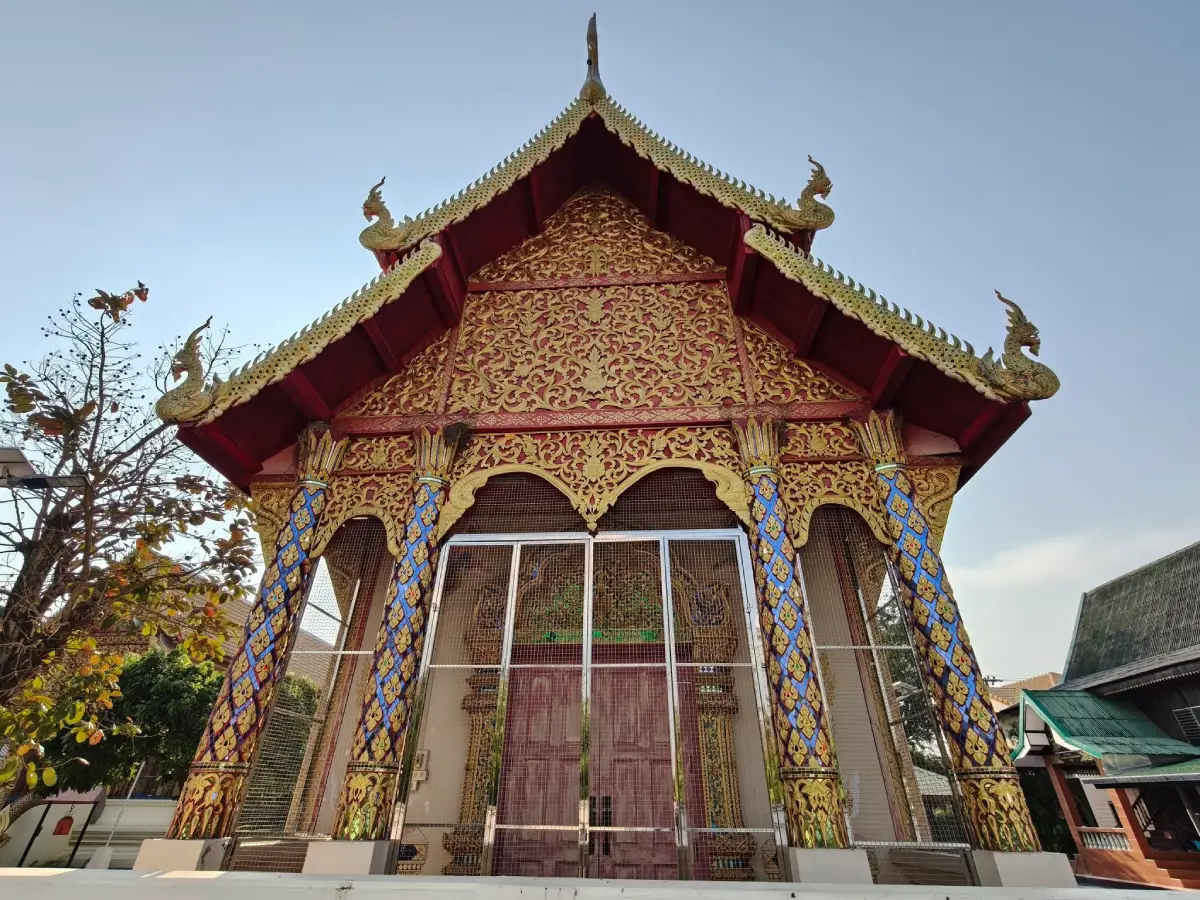
Wat Chayalangkar
Open Days: Daily
Opening Hours: 08.00 - 17.00
Wat Chayalangkar, also known locally as Wat Pa Pong, is a private Buddhist temple under the Mahanikaya order. It is located at 93 Moo 4, Pa Pong Subdistrict, Doi Saket District, Chiang Mai Province. The temple is a spiritual center of the Pa Pong community and an important cultural site for the Tai Khoen community in Doi Saket. Historical temple records state that Wat Chayalangkar was established in 1292 and received its royal consecrated boundary on 18 April 1916. Today, the temple also houses the Thai Cultural Learning Center of Wat Chayalangkar Community Network, which preserves and presents local Tai Khoen heritage.
The importance of Wat Chayalangkar goes beyond its status as an old temple. It is a community temple where local residents make merit, pay respect, listen to sermons, join Buddhist ceremonies, and maintain their cultural memory. Pa Pong is strongly connected with Tai Khoen identity, including language, traditions, textiles, household tools, agricultural life, and Buddhist practices. For travelers who want to understand Chiang Mai beyond major tourist temples, Wat Chayalangkar offers a grounded view of local culture and village-based Buddhism.
Pa Pong Subdistrict is a culturally significant area of Doi Saket District, east of Chiang Mai city. The community has roots connected with Tai Khoen people whose ancestors came from Kengtung. The name Pa Pong is linked to their former homeland, Ban Pong, and to the new settlement they created in a forested area near hills and water sources. This cultural background gives the temple a wider meaning. Wat Chayalangkar is not only a place of worship, but also a site that helps explain the history of the Pa Pong community.
The name Wat Chayalangkar has an auspicious tone. “Chaya” suggests victory, success, and prosperity, while “Langkar” conveys beauty, refinement, and graceful order. As a temple name, it gives the sense of a blessed and dignified Buddhist monastery. The local name Wat Pa Pong directly links the temple with the surrounding village, showing how closely the temple and community are connected in daily life.
Historical temple records state that Wat Chayalangkar was established in 1292 and received its royal consecrated boundary on 18 April 1916. In Thai Buddhism, a royal consecrated boundary is important because it marks the area where monks can perform formal monastic acts, including ordination-related ceremonies. This confirms the temple’s role as an established religious site for both the monastic community and local residents.
At the community level, Wat Chayalangkar has long functioned as the temple of Ban Pa Pong. Local residents use the temple for Buddhist holy day merit-making, sermons, ordination ceremonies, funeral rites, robe offerings, Kathin ceremonies, and major Buddhist observances. The temple also supports social unity by bringing people together for community events and cultural activities across generations.
One of the most distinctive features of Wat Chayalangkar is the Thai Cultural Learning Center of Wat Chayalangkar Community Network. Established in 2005, the center collects, preserves, and presents local cultural heritage. Its displays include antiques, household objects, agricultural tools, traditional Tai Khoen textiles, old documents, and historical photographs. These are not merely decorative items. They are evidence of local life, work, belief, and memory.
For visitors interested in Tai Khoen culture, the learning center inside Wat Chayalangkar is a key part of the visit. Traditional textiles show local craftsmanship and design. Agricultural tools reflect the farming life of earlier generations. Household objects reveal everyday routines, while old photographs and documents help visitors understand how Pa Pong changed over time. The temple therefore offers a cultural experience based on real community objects and stories.
Phra Khru Pariyat Chayalangkar Piyadhammo is identified as the abbot of Wat Chayalangkar based on the information used for this article. In a local temple, the abbot plays a central role as religious leader, caretaker, and coordinator between the temple and the community. At a temple that also serves as a cultural learning site, continuous leadership is important for keeping the temple active as both a place of worship and a place of heritage preservation.
Visitors should approach Wat Chayalangkar respectfully. The temple is still an active religious place, not only a tourist attraction. Modest clothing is recommended. Shoulders and knees should be covered. Shoes should be removed before entering sacred buildings. Visitors should keep their voices low, avoid entering monastic areas without permission, and ask before photographing monks, novices, local residents, or ceremonies.
The learning center is best explored slowly. Each object has cultural meaning. Agricultural tools explain how local people worked the land. Tai Khoen textiles show traditional skill and aesthetic identity. Household tools reflect the daily life of earlier generations. Old documents and photographs reveal the continuity of Pa Pong as a living community. A visit to Wat Chayalangkar is therefore both a temple visit and a cultural study of local history.
Wat Chayalangkar works well as part of a cultural route in Doi Saket. Visitors can begin with the temple and its learning center, then continue to Wat Phra That Doi Saket, Bo Sang Umbrella Village, San Kamphaeng Hot Springs, Tweechol Botanic Garden, or Mae Kuang Udom Thara Dam. This route combines Buddhism, community culture, handicrafts, local history, and natural scenery in one day.
Getting There is convenient by private car, rental car, or motorcycle. There are two main routes. The first route starts from Bo Sang in San Kamphaeng District and continues toward Doi Saket for about 11 kilometers. The second route starts from Doi Saket District Office and follows the road toward Bo Sang for about 4 kilometers before entering Pa Pong Subdistrict. The local roads are paved and suitable for cars and motorcycles.
From Chiang Mai city, visitors can choose either the San Kamphaeng-Bo Sang route or the Doi Saket route. The Bo Sang route is suitable for travelers who want to combine the temple with local handicraft sightseeing. The Doi Saket route is suitable for visitors who want to combine the temple with Wat Phra That Doi Saket and nearby natural attractions. When using a map application, search for “Wat Chayalangkar” or “Thai Cultural Learning Center of Wat Chayalangkar Community Network” and confirm the location in Pa Pong Subdistrict, Doi Saket District, Chiang Mai.
The best time to visit is in the morning or late afternoon, when the weather is more comfortable. Morning is suitable for worship, merit-making, and quiet viewing of the learning center. Afternoon works well for visitors who include the temple in a wider Doi Saket or Bo Sang route. The temple and learning center are open daily from 08.00 to 17.00. Groups, students, or visitors planning a study visit should contact the temple or learning center in advance.
In summary, Wat Chayalangkar is a historic Mahanikaya temple in Pa Pong Subdistrict, Doi Saket District, Chiang Mai Province. It is a religious center, a Tai Khoen cultural landmark, and a community learning site in one place. Visitors can pay respect, learn about local history, view cultural objects, and understand Doi Saket through the deeper lens of faith, community, and heritage.
| Name | Wat Chayalangkar / Wat Pa Pong |
| Place Type | Private Buddhist Temple Under The Mahanikaya Order And Community Cultural Learning Center |
| Location | Moo 4, Pa Pong Subdistrict, Doi Saket District, Chiang Mai Province |
| Address | 93 Moo 4, Pa Pong Subdistrict, Doi Saket District, Chiang Mai 50220, Thailand |
| Highlights | Historic temple of Pa Pong and home to the Thai Cultural Learning Center of Wat Chayalangkar Community Network, with antiques, traditional tools, Tai Khoen textiles, old documents, and community photographs |
| History | Established in 1292 and granted a royal consecrated boundary on 18 April 1916 |
| Temple Area | 2 rai, 1 ngan, and 24 square wah |
| Cultural Learning Center | Established in 2005 to preserve and present Tai Khoen culture and local Pa Pong heritage |
| Exhibits | Antiques, household objects, agricultural tools, traditional Tai Khoen textiles, old documents, and historical photographs |
| Distinctive Features | A Tai Khoen community temple combining Buddhist faith, Pa Pong local history, and community heritage preservation |
| Travel Information | Travel from Bo Sang toward Doi Saket for about 11 km, or from Doi Saket District Office toward Bo Sang for about 4 km, then enter Pa Pong Subdistrict following local signs |
| Current Status | Open as a community temple and local cultural learning center |
| Open Days | Daily |
| Opening Hours | 08.00 - 17.00 |
| Abbot / Caretaker | Phra Khru Pariyat Chayalangkar Piyadhammo |
| Contact Number | 053-495-174, 053-291-106, 081-884-0350 |
| Nearby Tourist Attractions | 1. Wat Phra That Doi Saket, about 6 km 2. Bo Sang Umbrella Village, about 8 km 3. San Kamphaeng Hot Springs, about 10 km, Tel. 053-037-101, 087-659-1791 4. Tweechol Botanic Garden, about 12 km 5. Mae Kuang Udom Thara Dam, about 15 km |
| Nearby Restaurants | 1. Lap Mueang Lap Pa Pong, about 2 km, Tel. 080-976-1059, 053-865-200 2. Krua Saeng Thong Doi Saket, about 3 km, Tel. 099-356-8547 3. Baanpa's Cafe Pa Pong, about 5 km, Tel. 053-291-123, 084-464-1617, 093-152-6173 4. Krua Rim Khlong Halal Foods Doi Saket, about 7 km, Tel. 095-009-0427 5. Krua THE CAMP Choeng Doi, about 8 km, Tel. 064-012-4266, 091-168-2224 |
| Nearby Accommodations | 1. Jasmine Hills Lodge Doi Saket, about 9 km, Tel. 053-495-832, 081-746-4000 2. Wangtarn Resort Doi Saket, about 10 km, Tel. 081-021-8080 3. Srida Resort Lanna & Cafe, about 12 km, Tel. 087-886-0721 4. Horizon Village & Resort, about 12 km, Tel. 053-292-381 5. Lanna Inthan Resort, about 15 km, Tel. 061-263-2208 |
Frequently Asked Questions (FAQ)
Q: Where is Wat Chayalangkar located?
A: Wat Chayalangkar is located at 93 Moo 4, Pa Pong Subdistrict, Doi Saket District, Chiang Mai Province.
Q: What are the opening days and hours of Wat Chayalangkar?
A: The temple and cultural learning center are open daily from 08.00 to 17.00.
Q: Why is Wat Chayalangkar important?
A: Wat Chayalangkar is an old Pa Pong community temple established in 1292. It received its royal consecrated boundary on 18 April 1916 and remains an important Tai Khoen cultural center.
Q: What can visitors see inside Wat Chayalangkar?
A: Visitors can see the Thai Cultural Learning Center of Wat Chayalangkar Community Network, which displays antiques, household objects, agricultural tools, Tai Khoen textiles, old documents, and historical photographs.
Q: Who is the abbot of Wat Chayalangkar?
A: The abbot of Wat Chayalangkar is Phra Khru Pariyat Chayalangkar Piyadhammo.
Q: How can visitors get to Wat Chayalangkar?
A: Visitors can travel from Bo Sang toward Doi Saket for about 11 km, or from Doi Saket District Office toward Bo Sang for about 4 km, then enter Pa Pong Subdistrict following local signs.
Q: What nearby attractions can be combined with Wat Chayalangkar?
A: Nearby attractions include Wat Phra That Doi Saket, Bo Sang Umbrella Village, San Kamphaeng Hot Springs, Tweechol Botanic Garden, and Mae Kuang Udom Thara Dam.
Q: What should visitors wear when visiting Wat Chayalangkar?
A: Visitors should dress modestly, cover shoulders and knees, remove shoes before entering sacred buildings, keep quiet, and avoid entering monastic areas without permission.
 Category: ●Places of Worship
 Group: ●Temple
Last Update : 2 DayAgo
 Last Update : 2 DayAgo
 Click to Access the Navigation Map GPS
 Muang Chiang Mai(121)Chom Thong(47)Mae Chaem(25)Chiang Dao(33)Doi Saket(68)Mae Taeng(85)Mae Rim(69)Samoeng(29)Fang(71)Mae Ai(62)Phrao(70)San Pa Tong(105)San Kamphaeng(66)San Sai(73)Hang Dong(74)Hot(32)Doi Tao(22)Omkoi(11)Saraphi(74)Wiang Haeng(15)Chai Prakan(28)Mae Wang(32)Mae On(22)Doi Lo(34)Galyani Vadhana(1)


