
lovethailand home >North Travel Attractions >Chiang Mai Travel Attractions >Chai Prakan >Mae Tha Lop > Wat Pakkanthawas
TL;DR: Wat Pakkanthawas is located at Moo 1, Mae Thalop Subdistrict, Chai Prakan District, Chiang Mai 50320, open Daily For Merit-Making And General Temple Activities, hours Daytime Visits Are Recommended.

Wat Pakkanthawas
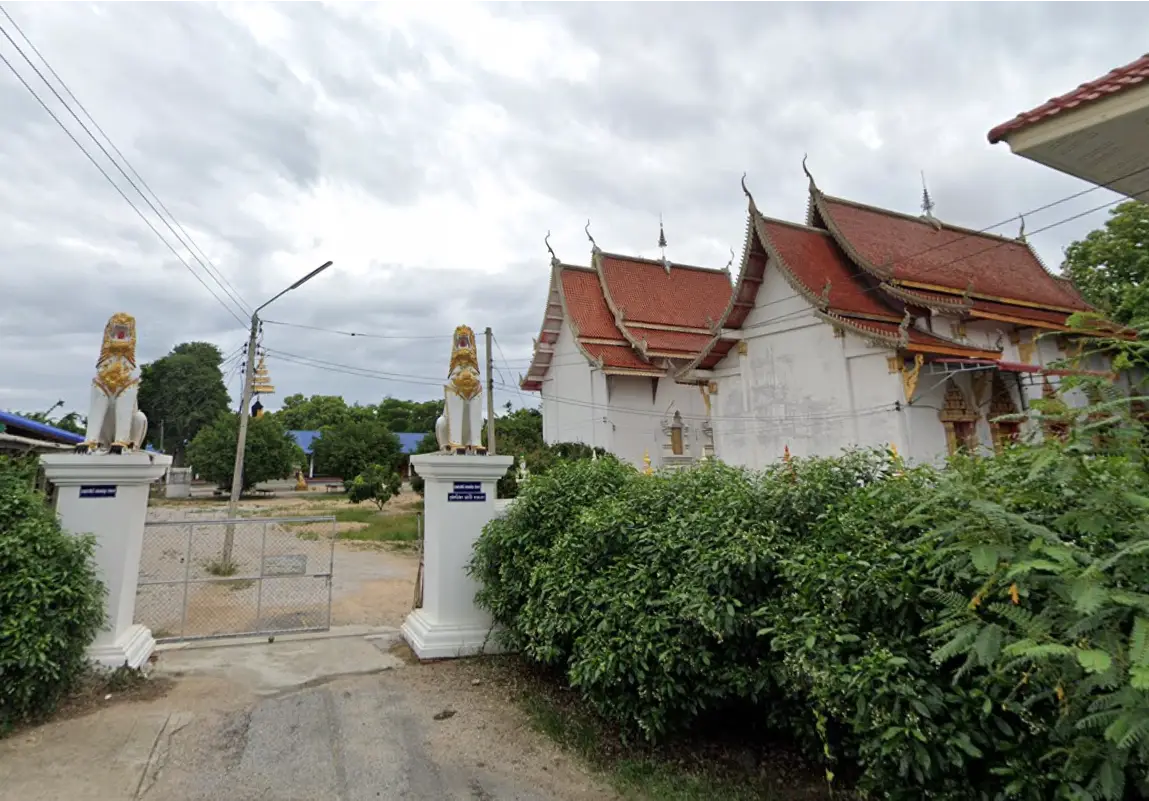
Open Days: Daily For Merit-Making And General Temple Activities
Opening Hours: Daytime Visits Are Recommended
Wat Pakkanthawas, formerly known as Wat Mae Thalop Luang, is a local Buddhist temple in Moo 1, Mae Thalop Subdistrict, Chai Prakan District, Chiang Mai Province. It is a community temple under the Mahanikaya order and one of the important spiritual landmarks of Mae Thalop. The temple is closely tied to the history of the village, the restoration of an old viharn, and the royal granting of its Wisungkhamsima boundary on 24 March 1969. For travelers who prefer quiet cultural sites rather than crowded tourist attractions, Wat Pakkanthawas offers a meaningful stop in northern Chiang Mai, especially when combined with Wat Phra That Chom Khiri, Wat Chimphliwan, Wat Pa Daeng, Hinoki Land, and Wat Tham Tab Tao.
The appeal of Wat Pakkanthawas is not based on large-scale tourism. Its value lies in its role as an old village temple that has grown together with the Mae Thalop community. Mae Thalop is surrounded by mountains, forested areas, farmland, and villages with diverse local traditions. For many generations, temple life has been connected with Buddhist holy days, funerals, Kathin ceremonies, robe-offering events, Songkran or Northern Thai New Year, and other merit-making activities. In this setting, the temple is more than a religious building. It is a shared space where faith, local memory, language, and community life meet.
Local history records that Wat Pakkanthawas is older than its formal administrative records. According to community accounts, the temple existed before 1757, although the exact year of foundation is not known. In 1757, Phra Khru Ba Thanan Chai is said to have arrived while traveling as a wandering monk. He stayed at the temple, began restoring it, and repaired the old viharn. This restoration became an important turning point that brought new life to the temple and helped it develop into a central religious site for Mae Thalop.
The temple’s former name, Wat Mae Thalop Luang, clearly reflects its relationship with the village. The temple stands in Ban Mae Thalop, Moo 1, and once served as an important religious center before nearby villages established their own temples. In earlier times, the area was linked to Mae Thalop territory under Mae Suai District in Chiang Rai. Later, the administrative area changed to Mae Thalop Subdistrict in Fang District, Chiang Mai, before becoming part of Chai Prakan District today. These changes make Wat Pakkanthawas a useful cultural landmark for understanding the historical development of communities in northern Chiang Mai’s mountain corridor.
In 1907, monks and local devotees formally declared possession of the temple land and requested landholding evidence from the Fang district authorities. The temple was later officially permitted as a temple in 1911 and received its royal Wisungkhamsima boundary on 24 March 1969. For a Thai Buddhist temple, the Wisungkhamsima is significant because it marks the consecrated boundary for formal monastic acts. This status shows how Wat Pakkanthawas developed from a long-standing local sacred site into a recognized temple within the Thai Sangha system.
Wat Pakkanthawas belongs to the Mahanikaya order, the main Theravada Buddhist order in Thailand. The current abbot is Phra Athikan Suradet Dhammavaro. In a community temple such as this, the abbot’s role extends beyond looking after monks and temple buildings. He also supports Buddhist practice, maintains temple property, oversees religious ceremonies, and helps connect the temple with the daily life of villagers in Mae Thalop.
One of the temple’s most important features is the old viharn mentioned in the local restoration history. In Northern Thai Buddhist culture, a viharn is not merely an architectural structure. It is a sacred gathering space where the principal Buddha image is worshipped, where religious ceremonies are held, and where villagers come together on important Buddhist days. At Wat Pakkanthawas, the old viharn represents the revival of the temple and the continuity of local faith from one generation to the next.
The atmosphere at Wat Pakkanthawas is calm and modest. Travelers should approach it as a living community temple rather than a commercial tourist site. A visit here is best spent paying respect to the Buddha image, making merit, walking quietly around the temple grounds, and considering how the temple fits into the surrounding village landscape. With mountains and farmland nearby, the temple retains the feeling of a rural Lanna Buddhist community where religion remains part of everyday life.
Another important aspect of Wat Pakkanthawas is its connection with other temples in Mae Thalop. The history of Wat Chimphliwan in Ban Pa Ngio mentions that villagers once traveled to Wat Mae Thalop for merit-making before building their own village temple. This shows that Wat Pakkanthawas once served a wider religious area, not only the immediate village of Mae Thalop. Visiting Wat Pakkanthawas together with Wat Chimphliwan, Wat Pa Daeng, Wat Doi Lo, and Wat Phra That Chom Khiri helps travelers understand how Buddhist temples developed across the villages of northern Thailand.
Religious and cultural life around Wat Pakkanthawas follows the rhythm of Buddhist and Northern Thai traditions. Important observances in the Mae Thalop area include Makha Bucha Day, Visakha Bucha Day, Asalha Bucha Day, Northern Thai New Year, Salak Phat merit-making, Kathin ceremonies, and robe-offering events. These activities show the close relationship between monks, temples, and villagers. The temple is not only visited on major holy days, but also remains part of local life through family ceremonies, community support, and shared merit-making.
For travelers interested in Lanna culture, Wat Pakkanthawas works well as part of a cultural route through Chai Prakan. A morning route can include Wat Pakkanthawas, Wat Phra That Chom Khiri, Wat Chimphliwan, and Wat Pa Daeng. Later in the day, visitors can continue to Chai Prakan town, Hinoki Land, Wat Tham Tab Tao, Chai Prakan Hot Spring, or Doi Wiang Pha National Park. This route combines village temples, local history, farmland scenery, and mountain landscapes in a single day.
The main reason to visit Wat Pakkanthawas is to experience a temple that still matters deeply to its local community. Its former name, Wat Mae Thalop Luang, the restoration of its old viharn, and the role of villagers in preserving the temple give the site strong cultural depth. A visit here is not only about worshipping and leaving. It is about seeing how faith, land, memory, and community work together to keep a village temple alive over centuries.
Getting There is easiest by private car or rental car. From Chiang Mai city, follow the Chiang Mai–Fang route along Highway 107 toward Chai Prakan District, then continue into Mae Thalop Subdistrict, Moo 1. The temple is located within a local community area, so travelers should allow enough time and use a navigation map together with local directions when entering Mae Thalop. Because Chai Prakan is in the northern part of Chiang Mai Province, the journey from Chiang Mai city takes several hours and is best planned as part of a wider Fang–Chai Prakan route.
Visitors should dress modestly, keep the temple grounds quiet, and avoid taking photographs of monks or villagers during ceremonies without permission. Daytime visits are recommended for easier travel and a more respectful experience. Wat Pakkanthawas is a working community temple, so respecting the space and the daily rhythm of local people is part of responsible travel.
| Name | Wat Pakkanthawas |
| Former Name | Wat Mae Thalop Luang |
| Location | Moo 1, Mae Thalop Subdistrict, Chai Prakan District, Chiang Mai 50320 |
| Temple Type | Community Buddhist Temple Under The Mahanikaya Order |
| Highlights | Old community temple of Mae Thalop, formerly known as Wat Mae Thalop Luang, with a history connected to the restoration of an old viharn in 1757 |
| History | Local history states that the temple existed before 1757. Phra Khru Ba Thanan Chai later restored the temple and its old viharn in 1757. The temple was officially permitted in 1911 and received its royal Wisungkhamsima boundary on 24 March 1969. |
| Name Origin | The former name Wat Mae Thalop Luang reflects its link with Ban Mae Thalop and its former role as a religious center for the local community. |
| Distinctive Features | A quiet Lanna community temple suitable for merit-making, respectful temple visits, and learning about village-based Buddhist culture in Mae Thalop |
| Main Areas / Zones | Old Viharn, Wisungkhamsima Area, And Temple Grounds Used For Community Religious Activities |
| Abbot | Phra Athikan Suradet Dhammavaro |
| Current Status | An active community temple serving Mae Thalop Subdistrict |
| Open Days | Daily For Merit-Making And General Temple Activities |
| Opening Hours | Daytime Visits Are Recommended |
| Travel Information | Travel by private car or rental car along the Chiang Mai–Fang route to Chai Prakan District, then continue to Mae Thalop Subdistrict, Moo 1. |
| Nearby Tourist Attractions | 1. Wat Phra That Chom Khiri, About 2 km 2. Wat Pa Daeng Charoen Rat, About 4 km 3. Wat Chimphliwan, About 5 km 4. Wat Doi Lo, About 6 km 5. Hinoki Land, About 16 km 6. Wat Tham Tab Tao, About 20 km |
| Nearby Restaurants | 1. Krua Phimthip Na Nong Nok Tae, About 6 km, Tel. 092-390-9211 2. Nom Na Farm, Chai Prakan Agricultural Cooperative, About 9 km, Tel. 092-884-9632 3. Pop-Pe Restaurant, About 10 km, Tel. 053-457-067 4. Cafe' De Mamana, About 13 km, Tel. 099-435-4061, 090-435-4061 5. Pizza & View Pang, Chai Prakan Branch, About 13 km, Tel. 082-198-8792 |
| Nearby Accommodations | 1. Nang Lao Chai Prakan, About 13 km, Tel. 053-870-410 2. Anton Place, About 14 km, Tel. 091-853-1586 3. Ban Suan Ngoon Sirisuk Rooms, About 15 km, Tel. 092-398-8884 4. Pang Kham Pom Homestay Chai Prakan, About 16 km, Tel. 084-170-7943 5. Pha Daeng Happy House, About 21 km, Tel. 082-568-9691 |
Frequently Asked Questions (FAQ)
Q: Where is Wat Pakkanthawas located?
A: Wat Pakkanthawas is located in Moo 1, Mae Thalop Subdistrict, Chai Prakan District, Chiang Mai Province 50320.
Q: What was the former name of Wat Pakkanthawas?
A: Its former name was Wat Mae Thalop Luang, reflecting its close relationship with the Mae Thalop community.
Q: Why is Wat Pakkanthawas historically important?
A: Local history states that the temple existed before 1757. It was restored by Phra Khru Ba Thanan Chai in 1757, officially permitted as a temple in 1911, and granted its royal Wisungkhamsima boundary on 24 March 1969.
Q: Who is the abbot of Wat Pakkanthawas?
A: The abbot is Phra Athikan Suradet Dhammavaro.
Q: What kind of travelers should visit Wat Pakkanthawas?
A: It is suitable for travelers interested in quiet temples, Lanna village culture, local Buddhist history, and community-based travel in northern Chiang Mai.
Q: What nearby places can be visited with Wat Pakkanthawas?
A: Nearby places include Wat Phra That Chom Khiri, Wat Chimphliwan, Wat Pa Daeng, Wat Doi Lo, Hinoki Land, and Wat Tham Tab Tao.
Q: How can visitors get to Wat Pakkanthawas?
A: The easiest way is by private car or rental car. Follow the Chiang Mai–Fang route to Chai Prakan District, then continue into Mae Thalop Subdistrict, Moo 1.
 Category: ●Places of Worship
 Group: ●Temple
Last Update : 1 MonthAgo
 Last Update : 1 MonthAgo
 Click to Access the Navigation Map GPS
Wat Pakkanthawas Map
Recommend

 Muang Chiang Mai(121)Chom Thong(47)Mae Chaem(25)Chiang Dao(33)Doi Saket(68)Mae Taeng(85)Mae Rim(69)Samoeng(29)Fang(71)Mae Ai(59)Phrao(70)San Pa Tong(103)San Kamphaeng(66)San Sai(73)Hang Dong(73)Hot(32)Doi Tao(22)Omkoi(11)Saraphi(74)Wiang Haeng(15)Chai Prakan(28)Mae Wang(32)Mae On(22)Doi Lo(33)Galyani Vadhana(1)


