
lovethailand home >North Travel Attractions >Chiang Mai Travel Attractions >Chom Thong >Sop Tia > Wat Thung Pun
TL;DR: Wat Thung Pun is located at Moo 10, Sop Tia Subdistrict, Chom Thong District, Chiang Mai Province, open Daily, hours 08.00 – 17.00. Highlights include Community temple in Sop Tia, suitable for worship, merit-making, and cultural travel in Chom Thong District.

Wat Thung Pun
Open Days: Daily
Opening Hours: 08.00 – 17.00
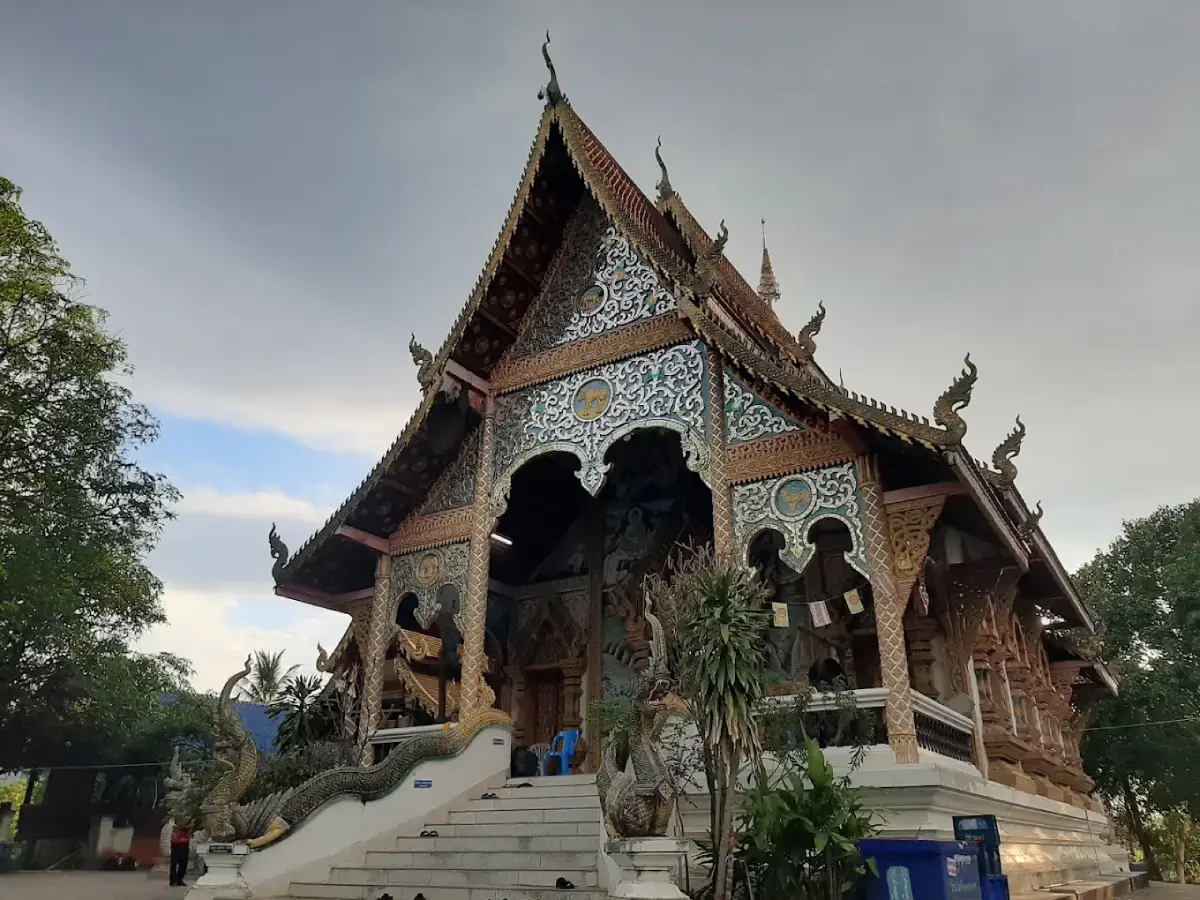
Wat Thung Pun is a local Buddhist temple in Moo 10, Sop Tia Subdistrict, Chom Thong District, Chiang Mai Province. It is a community temple under the Maha Nikaya tradition and serves as a religious center for Ban Thung Pun and nearby residents. The temple was officially permitted to be established in B.E. 2480, giving it a clear historical identity within the network of local temples in Chom Thong District.
Wat Thung Pun is best understood as a quiet village temple rather than a large tourist attraction. Its value lies in its relationship with the local community. For nearby residents, the temple is a place for merit-making, Buddhist observances, ceremonies, and community activities. For travelers, it offers a calm view of rural temple life in southern Chiang Mai, away from busier tourist routes and heavily promoted landmarks.
Sop Tia Subdistrict has several community temples, including Wat Tha Luk Wang Pla Soi, Wat Phuttha Nimit, Wat Mok Khan Lan, Wat Wang Champa, Wat Wang Pan, Wat Sop Tia, Wat Nong Ap Chang, Wat Huai Cho, Wat Huai Muang, and Wat Hat Nak. This pattern reflects the traditional structure of many northern Thai communities, where local temples stand at the center of village life. A temple is not only a religious building but also a shared cultural space where villagers gather for ceremonies, merit-making, and important Buddhist events.
The recorded establishment of Wat Thung Pun in B.E. 2480 gives the temple a strong community identity. A local temple of this kind is closely linked with settlement, village memory, and Buddhist practice across generations. Its role is not measured by the size of tourist crowds but by its function as a living religious space for people in the surrounding community.
The name “Thung Pun” is directly connected with the local place name in Sop Tia. The temple is therefore part of the identity of Ban Thung Pun, not just a point on a map. Visitors interested in local history can use the temple as a starting point for understanding how village temples are distributed across Sop Tia Subdistrict and how they remain connected to everyday community life.
The atmosphere of Wat Thung Pun is calm and local. Visitors should expect a community temple rather than a commercial sightseeing destination. The experience is best appreciated slowly, through respectful worship, quiet observation, and attention to the surrounding village setting. The temple’s simplicity is part of its character, especially for travelers who want to understand rural Chiang Mai beyond famous landmarks and crowded routes.
For cultural travelers, Wat Thung Pun helps explain how local temples function in northern Thai society. Many village temples may be modest in size, but they are deeply important to the people who live around them. They provide a place for Buddhist practice, seasonal merit-making, ceremonies, and social connection. Visiting Wat Thung Pun gives travelers a grounded understanding of how Buddhism, village identity, and community life remain connected in rural Chiang Mai.
Chom Thong District is widely associated with important cultural and natural attractions, including Wat Phra That Si Chom Thong Worawihan, Mae Ya Waterfall, and routes toward Doi Inthanon. Wat Thung Pun can be included as a quiet local stop within this broader travel area. It is especially suitable for travelers who want to balance major attractions with smaller community places that show the everyday cultural life of the district.
Getting to Wat Thung Pun is most convenient by private car or rental car. From Chiang Mai city, travelers can follow the Chiang Mai–Hot route toward Chom Thong District, then continue into Sop Tia Subdistrict and Moo 10 Ban Thung Pun. The final approach passes through local village roads, so careful driving is recommended, especially near homes, schools, intersections, and agricultural traffic. A private vehicle gives the most flexibility for combining the temple with nearby attractions.
Wat Thung Pun works well as part of a local temple route in Sop Tia. Travelers can combine it with Wat Phuttha Nimit, Wat Mok Khan Lan, Wat Wang Pan, Wat Wang Champa, and Wat Sop Tia. This route helps visitors see how several temples in the same subdistrict serve different village communities while still belonging to the wider Buddhist and cultural landscape of Chom Thong.
For travelers who want to combine culture and nature, Wat Thung Pun can also be linked with Wat Phra That Si Chom Thong Worawihan, Mae Ya Waterfall, and routes toward Doi Inthanon. A balanced itinerary may include the temple in the morning before continuing to natural attractions, or as a quiet late-afternoon stop after visiting major sites in Chom Thong. This creates a travel route that includes faith, village culture, and landscape in one trip.
The best time to visit is in the morning or late afternoon, when the weather is more comfortable and the temple atmosphere is usually calm. Visitors should dress modestly, speak softly, and avoid disturbing monks or local residents who use the temple for religious activities. If a merit-making event or local ceremony is taking place, travelers should give space to the community and observe politely.
Wat Thung Pun is suitable for slow travelers, cultural writers, documentary photographers, and visitors who want to understand Chiang Mai at the village level. It is not a destination built around large monuments or commercial activities. Its strength lies in its community role, its religious status, and its place within the network of temples in Sop Tia.
Travelers should set the right expectation before visiting. Wat Thung Pun is a community temple, not a commercial attraction. The main reasons to visit are worship, merit-making, cultural observation, and quiet travel. If meals or accommodation are needed, travelers should plan around Chom Thong town, Khuang Pao, Doi Kaeo, or the Doi Inthanon route, where there are more restaurant and lodging choices than in the immediate village area.
In cultural travel terms, Wat Thung Pun helps complete the story of Chiang Mai. The province is not defined only by royal temples, famous landmarks, and crowded tourist areas. It also includes many village temples that continue to support local faith and community life. Visiting Wat Thung Pun gives travelers a quieter, deeper, and more local perspective on southern Chiang Mai.
In summary, Wat Thung Pun is a Maha Nikaya community temple in Moo 10, Sop Tia Subdistrict, Chom Thong District, Chiang Mai Province. It was officially permitted to be established in B.E. 2480. The temple is best visited as a peaceful cultural and religious stop within a broader Chom Thong travel route, especially for travelers who want to understand the quiet local temple life of rural Chiang Mai.
| Name | Wat Thung Pun |
| Type | Local Buddhist temple under the Maha Nikaya tradition |
| Location | Moo 10, Sop Tia Subdistrict, Chom Thong District, Chiang Mai Province |
| Address | Moo 10, Sop Tia Subdistrict, Chom Thong District, Chiang Mai Province |
| Highlights | Community temple in Sop Tia, suitable for worship, merit-making, and cultural travel in Chom Thong District |
| History | Officially permitted to be established as a temple in B.E. 2480 |
| Distinctive Features | A local village temple with a religious and community role in Ban Thung Pun and Sop Tia Subdistrict |
| Travel Information | Travel by private car or rental car from Chiang Mai city via the Chiang Mai–Hot route toward Chom Thong District, then continue into Sop Tia Subdistrict and Moo 10 Ban Thung Pun |
| Current Status | Open for visits and worship |
| Open Days | Daily |
| Opening Hours | 08.00 – 17.00 |
| Nearby Tourist Attractions | 1. Wat Phuttha Nimit, about 3 km 2. Wat Mok Khan Lan, about 4 km 3. Wat Wang Pan, about 5 km 4. Wat Wang Champa, about 5 km 5. Wat Phra That Si Chom Thong Worawihan, about 8 km |
| Nearby Restaurants | 1. Khao Soi Ka Long, about 8 km 2. Khao Soi Kaew Noi, about 9 km, Tel. 053-826-043, 086-198-2999 3. Khon Muang Chom Thong, about 9 km, Tel. 081-885-8851 4. Krua Cobal, about 9 km, Tel. 089-559-9329, 080-124-3393, 080-501-3622 5. Hug Sen Huen Tiao, about 15 km, Tel. 091-068-8522 |
| Nearby Accommodations | 1. Smile Place Chom Thong, about 8 km, Tel. 065-753-8313 2. B-tel Chom Thong Resort Chiang Mai, about 9 km, Tel. 098-759-2003 3. Chom Thong Boutique House, about 9 km, Tel. 081-582-9889 4. Touch Star Resort, about 13 km, Tel. 092-419-4142, 053-033-595 5. Cornetto Resort, about 16 km, Tel. 099-084-2288 |
Frequently Asked Questions (FAQ)
Q: Where is Wat Thung Pun located?
A: Wat Thung Pun is located in Moo 10, Sop Tia Subdistrict, Chom Thong District, Chiang Mai Province.
Q: What are the opening days and hours of Wat Thung Pun?
A: The temple is open daily from 08.00 to 17.00.
Q: Why is Wat Thung Pun important?
A: Wat Thung Pun is a Maha Nikaya community temple officially permitted to be established in B.E. 2480.
Q: Is Wat Thung Pun suitable for travelers?
A: Yes. It is suitable for travelers who want a quiet Buddhist temple visit and a local cultural stop in Chom Thong District.
Q: How can travelers get to Wat Thung Pun?
A: The most convenient way is by private car or rental car from Chiang Mai city toward Chom Thong District, then onward to Sop Tia Subdistrict and Moo 10 Ban Thung Pun.
Q: When is the best time to visit Wat Thung Pun?
A: Morning or late afternoon is recommended because the weather is more comfortable and the temple atmosphere is usually quiet.
Q: What nearby attractions can be combined with Wat Thung Pun?
A: Travelers can combine the visit with Wat Phuttha Nimit, Wat Mok Khan Lan, Wat Wang Pan, Wat Wang Champa, and Wat Phra That Si Chom Thong Worawihan.
 Category: ●Places of Worship
 Group: ●Temple
Last Update : 2 MonthAgo
 Last Update : 2 MonthAgo
 Click to Access the Navigation Map GPS

 Muang Chiang Mai(121)Chom Thong(47)Mae Chaem(25)Chiang Dao(33)Doi Saket(68)Mae Taeng(85)Mae Rim(69)Samoeng(29)Fang(71)Mae Ai(59)Phrao(70)San Pa Tong(103)San Kamphaeng(66)San Sai(73)Hang Dong(73)Hot(32)Doi Tao(22)Omkoi(11)Saraphi(74)Wiang Haeng(15)Chai Prakan(28)Mae Wang(32)Mae On(22)Doi Lo(33)Galyani Vadhana(1)


