
lovethailand home >North Travel Attractions >Chiang Mai Travel Attractions >Chom Thong >Ban Luang > Wat Phra Bat Hua Suea
TL;DR: Wat Phra Bat Hua Suea is located at Moo 12, Ban Luang Subdistrict, Chom Thong District, Chiang Mai Province, open Daily, hours 08.00 - 17.00.
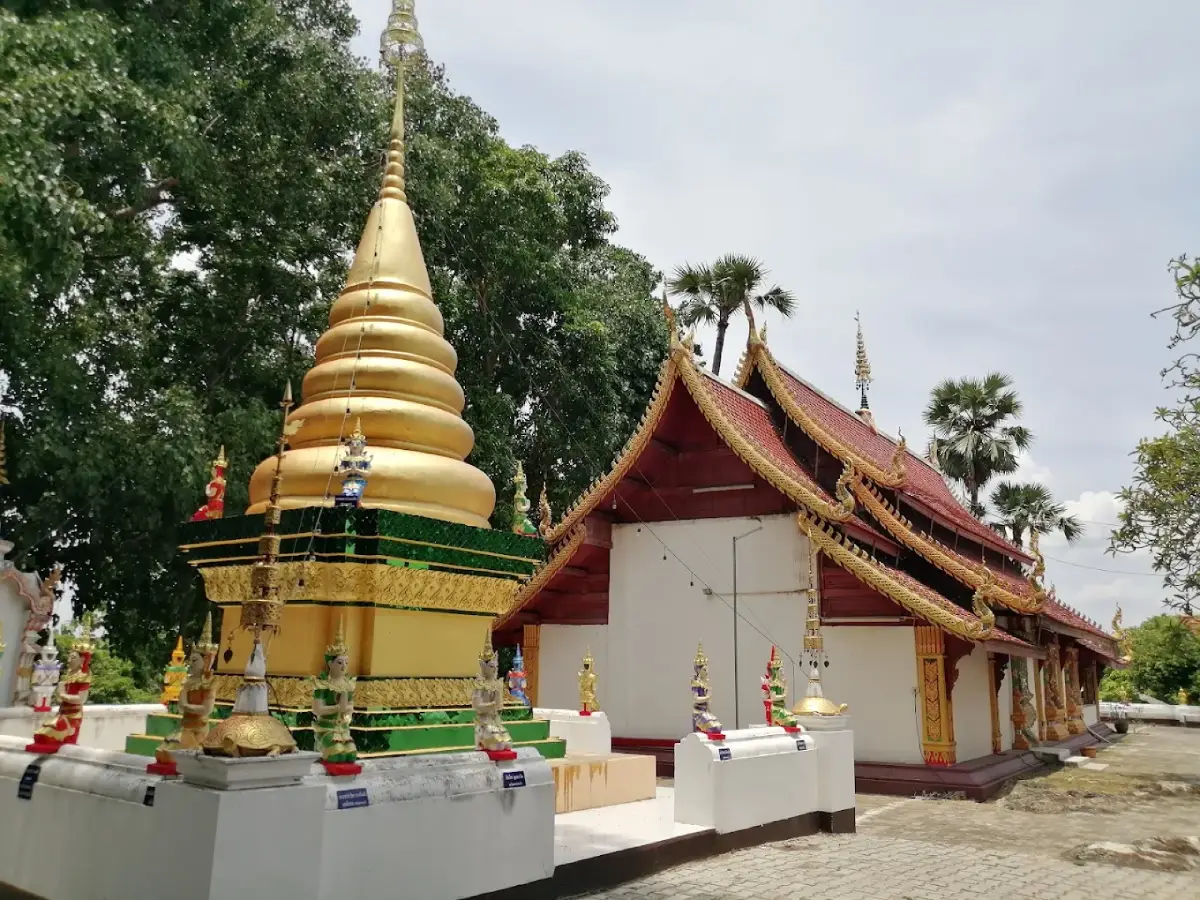
Wat Phra Bat Hua Suea
Open Days: Daily
Opening Hours: 08.00 - 17.00
Wat Phra Bat, also known as Wat Phra Bat Hua Suea, is located in Moo 12, Ban Luang Subdistrict, Chom Thong District, Chiang Mai Province. It is a community Buddhist temple under the Mahanikaya order and an old religious site of Ban Hua Suea. According to the source information provided, the temple was officially established in 1657. This makes Wat Phra Bat one of the long-standing community temples in the Chom Thong area, with strong connections to local faith, Buddhist footprints, relic worship, and the cultural landscape of Ban Luang.
Wat Phra Bat is suitable for travelers who want to explore Chiang Mai beyond the main tourist temples. Its value lies in its local Buddhist meaning, community traditions, and legends connected with Chom Thong. The name “Phra Bat” refers to the Buddha’s footprint, a sacred symbol widely respected in Thai and Lanna Buddhist culture. A visit to this temple is therefore not only a temple stop, but also a way to understand how faith, landscape, and community memory are connected in northern Thailand.
Ban Luang Subdistrict is one of the important cultural areas of Chom Thong District. It includes major temples, village temples, local communities, agricultural landscapes, waterfalls, and the route toward Doi Inthanon. Wat Phra Bat is located in Moo 12, Ban Hua Suea, and is commonly known in local sources as Wat Phra Bat Hua Suea. Using both names helps identify the temple clearly and distinguishes it from other temples named Wat Phra Bat in Thailand.
The word “Phra Bat” means the Buddha’s footprint. In Buddhist tradition, a footprint is not seen merely as a physical mark; it is a sign of the Buddha’s sacred presence and a symbol of the establishment of Buddhism in a particular landscape. In northern Thailand, sacred footprints are often connected with legends of the Buddha’s journey through the world, mountain sites, relics, and ancient communities. This makes Wat Phra Bat meaningful as a devotional site linked with local Buddhist belief.
Local sources connect Wat Phra Bat Hua Suea with legends found in the tradition of Wat Phra That Si Chom Thong Worawihan and the history of old Chom Thong. The temple is associated with the ancient city known as Angkharattha, or Chom Thong in later memory. Stories of this kind are common in the Lanna sacred landscape, where temples, relics, footprints, hills, and old settlements are woven into a shared cultural narrative.
Another local account states that Wat Phra Bat Hua Suea was formerly known as Wat Phra Bat Don Klang. The word “don” usually suggests a raised area, while “klang” means middle or central. This older name helps preserve a memory of the temple’s landscape and earlier identity. The later name Wat Phra Bat Hua Suea connects the temple more directly with Ban Hua Suea, the community in Moo 12 where the temple stands today.
The temple’s official establishment in 1657 gives it considerable historical depth. Many community temples in northern Thailand have limited written records, but their importance is preserved through local memory, legends, seasonal ceremonies, and community faith. Wat Phra Bat belongs to this category: an old village temple whose meaning is carried through both formal temple status and living tradition.
The most important sacred features of Wat Phra Bat are the Buddha’s footprint and the relic shrine. Recent information about the annual relic-bathing tradition at Wat Phra Bat Hua Suea describes religious ceremonies, the bathing of the relic shrine, worship of Buddha images, and veneration of the Buddha’s footprint. These elements confirm that the footprint and relic shrine remain central to the temple’s devotional life.
The annual relic-bathing tradition at Wat Phra Bat Hua Suea is an important community event. It is held so that villagers and devotees can bathe the relic shrine, make merit, worship sacred objects, and continue Lanna Buddhist culture. Participants may prepare flowers, candles, incense, scented water, turmeric water, som poi water, or other merit-making offerings. The ceremony expresses respect for Buddhism, creates auspiciousness, and strengthens the bond between the temple and the community.
For Ban Hua Suea, the relic-bathing ceremony is not only a religious event. It is also a time when villagers, descendants, and devotees gather, return to the community, meet relatives, and help maintain the temple. This reflects a central pattern in Lanna culture: temple festivals are not separate from family and community life, but serve as occasions for social connection, merit-making, and cultural continuity.
As a community temple under the Mahanikaya order, Wat Phra Bat plays a role beyond tourism. It functions as a place for merit-making, sermons, Buddhist ceremonies, annual festivals, and community gatherings. Such temples survive through local support and faith. They are part of the social structure of the village, not merely places to be visited from the outside.
For travelers, Wat Phra Bat provides a different perspective on Chom Thong. Many visitors know the district because of Wat Phra That Si Chom Thong Worawihan, Doi Inthanon, Mae Klang Waterfall, or other natural attractions. Wat Phra Bat adds another dimension: a local temple connected with Buddhist footprints, relic worship, and the religious life of Ban Hua Suea. Visiting the temple can make a Chom Thong trip more culturally complete.
The temple is also connected with routes toward Mae Ya Waterfall and other natural sites in Chom Thong. Travelers can combine a visit to Wat Phra Bat with nearby temples, waterfalls, and the Doi Inthanon route. This makes it suitable for an itinerary that includes both community Buddhism and nature.
Wat Phra Bat can also be understood together with other temples in Ban Luang, such as Wat Phra Koet, Wat Nam Lat, Wat Phra That Si Chom Thong Worawihan, Wat Mueang Klang, Wat Nam Tok Mae Klang, and Wat Nam Tong. These temples together form a local Buddhist network. Some are major sacred sites, while others are village temples with local legends and community roles. This network gives Ban Luang a rich religious landscape.
Getting There is most convenient by private car. From Chiang Mai city, take Highway 108, the Chiang Mai–Hot route, toward Chom Thong District. From Chom Thong, continue into Ban Luang Subdistrict and Moo 12, Ban Hua Suea, via local roads. Travelers without a private car can take a bus from Chiang Mai to Chom Thong and then arrange local transport. Planning ahead is recommended, especially when combining the temple with Wat Phra That Si Chom Thong, Mae Ya Waterfall, Mae Klang Waterfall, or Doi Inthanon.
The best time to visit is in the morning or afternoon, when the weather is more comfortable. Wat Phra Bat is open daily from 08.00 to 17.00. Visitors who wish to join the annual relic-bathing tradition should check the yearly community schedule before traveling, as the exact date may follow the local religious calendar.
Visitors should dress modestly, speak quietly, avoid disturbing monks or villagers, and avoid entering monks’ private areas without permission. Special respect should be given to the Buddha’s footprint, the relic shrine, Buddha images, and ceremonial areas. If a temple festival or relic-bathing ceremony is taking place, follow local guidance and observe the ceremony respectfully.
No confirmed public information indicates that a fixed admission fee is charged for general visitors. Travelers may visit respectfully and make merit according to their faith. A verified main telephone number and current abbot name were not found in reliable public sources, so visitors who need direct contact should ask locally in Ban Hua Suea or through local offices in Ban Luang.
In summary, Wat Phra Bat, or Wat Phra Bat Hua Suea, is an old Mahanikaya community temple in Moo 12, Ban Luang Subdistrict, Chom Thong District, Chiang Mai Province. It was officially established in 1657 and is important for its Buddha’s footprint, relic shrine, local legends, and annual relic-bathing tradition. It is a meaningful stop for travelers who want to experience the cultural and spiritual side of Chom Thong beyond the main tourist route.
| Name | Wat Phra Bat, also known as Wat Phra Bat Hua Suea |
| Location | Moo 12, Ban Luang Subdistrict, Chom Thong District, Chiang Mai Province |
| Address | Moo 12, Ban Hua Suea, Ban Luang Subdistrict, Chom Thong District, Chiang Mai 50160, Thailand |
| Temple Type | Community Buddhist temple under the Mahanikaya order |
| History | Officially established as a temple in 1657; an old community temple in Ban Luang, Chom Thong. |
| Former / Related Names | Wat Phra Bat Don Klang and Wat Phra Bat Hua Suea |
| Highlights | Buddha’s footprint, relic shrine, local Chom Thong legends, and the annual relic-bathing tradition of Wat Phra Bat Hua Suea. |
| Sacred Objects / Key Features | Buddha’s footprint, relic shrine, and Buddha images within the temple grounds. |
| Main Areas | Buddha’s footprint worship area, relic-bathing area, Buddha image worship area, and community ceremonial space. |
| Name Origin | “Phra Bat” refers to the Buddha’s footprint, while “Hua Suea” identifies Ban Hua Suea, the village where the temple is located. |
| Community Role | A Ban Hua Suea community temple used for merit-making, relic-bathing ceremonies, Buddhist holy days, and local religious activities. |
| Related Traditions | Annual relic-bathing tradition at Wat Phra Bat Hua Suea, veneration of the Buddha’s footprint, Buddhist holy-day merit-making, Kathin, robe-offering ceremonies, memorial merit-making, and Buddhist festival days. |
| Travel Information | From Chiang Mai city, take Highway 108 toward Chom Thong, then continue into Ban Luang Subdistrict and Moo 12, Ban Hua Suea. Private car is the most convenient option. |
| Current Status | The temple continues to appear in Mahanikaya temple listings for Ban Luang Subdistrict, Chom Thong District, Chiang Mai Province, and in public information about the annual relic-bathing tradition. |
| Open Days | Daily |
| Opening Hours | 08.00 - 17.00 |
| Nearby Tourist Attractions | 1. Wat Phra Koet, about 4 km 2. Wat Nam Lat, about 5 km 3. Wat Phra That Si Chom Thong Worawihan, about 8 km, Tel. 053-342184 4. Mae Klang Waterfall, about 12 km 5. Doi Inthanon National Park, about 32 km |
| Nearby Restaurants | 1. Khon Mueang Chom Thong, about 8 km, Tel. 081-8858851 2. Food Center near Wat Phra That, about 8 km, Tel. 090-7588224 3. Krua Fueang Fa, about 9 km, Tel. 053-341274, 086-1825031 4. Pa Oi Krua Rim Than, about 20 km 5. Ban Hom Doi Inthanon Restaurant, about 22 km |
| Nearby Accommodations | 1. Chom Thong Boutique House, about 9 km, Tel. 081-5829889 2. Smile Place Chom Thong, about 10 km, Tel. 065-7538313 3. Touch Star Resort Doi Inthanon, about 13 km, Tel. 092-4194142, 097-4491415, 053-033594 4. Suan Sook Homestay Resort, about 13 km 5. Rim Na Ban Phak, about 29 km |
Frequently Asked Questions (FAQ)
Q: Where is Wat Phra Bat located?
A: Wat Phra Bat, also known as Wat Phra Bat Hua Suea, is located in Moo 12, Ban Hua Suea, Ban Luang Subdistrict, Chom Thong District, Chiang Mai Province, Thailand.
Q: What are the opening days and hours of Wat Phra Bat?
A: Wat Phra Bat is open daily from 08.00 to 17.00.
Q: What is the historical importance of Wat Phra Bat?
A: Wat Phra Bat is an old Mahanikaya community temple that was officially established in 1657 and is connected with local Chom Thong legends.
Q: Does Wat Phra Bat have another name?
A: Yes. It is commonly known as Wat Phra Bat Hua Suea, and local information also connects it with the older name Wat Phra Bat Don Klang.
Q: What are the main sacred features of Wat Phra Bat?
A: The main sacred features are the Buddha’s footprint, the relic shrine, and Buddha images within the temple grounds.
Q: What important tradition is associated with Wat Phra Bat?
A: The temple is associated with the annual relic-bathing tradition of Wat Phra Bat Hua Suea, a community Buddhist ceremony that includes merit-making, relic bathing, and worship of sacred objects.
Q: How can visitors get to Wat Phra Bat?
A: From Chiang Mai city, take Highway 108 toward Chom Thong, then continue into Ban Luang Subdistrict and Moo 12, Ban Hua Suea. Private car is the most convenient option.
Q: What nearby places can be combined with a visit to Wat Phra Bat?
A: Visitors can combine the trip with Wat Phra Koet, Wat Nam Lat, Wat Phra That Si Chom Thong Worawihan, Mae Klang Waterfall, and the Doi Inthanon route.
 Category: ●Places of Worship
 Group: ●Temple
Last Update : 1 WeekAgo
 Last Update : 1 WeekAgo
 Click to Access the Navigation Map GPS
Wat Phra Bat Hua Suea Map
Recommend

 Muang Chiang Mai(121)Chom Thong(47)Mae Chaem(25)Chiang Dao(33)Doi Saket(68)Mae Taeng(85)Mae Rim(69)Samoeng(29)Fang(71)Mae Ai(59)Phrao(70)San Pa Tong(105)San Kamphaeng(66)San Sai(73)Hang Dong(74)Hot(32)Doi Tao(22)Omkoi(11)Saraphi(74)Wiang Haeng(15)Chai Prakan(28)Mae Wang(32)Mae On(22)Doi Lo(34)Galyani Vadhana(1)


