
lovethailand home >North Travel Attractions >Chiang Mai Travel Attractions >Chom Thong >Ban Luang > Wat Nam Tok Mae Klang
TL;DR: Wat Nam Tok Mae Klang is located at No. 181, Moo 20, Chom Thong–Inthanon Road, Ban Luang Subdistrict, Chom Thong District, Chiang Mai Province, open Daily, hours 08.00 - 17.00.

Wat Nam Tok Mae Klang
Open Days: Daily
Opening Hours: 08.00 - 17.00
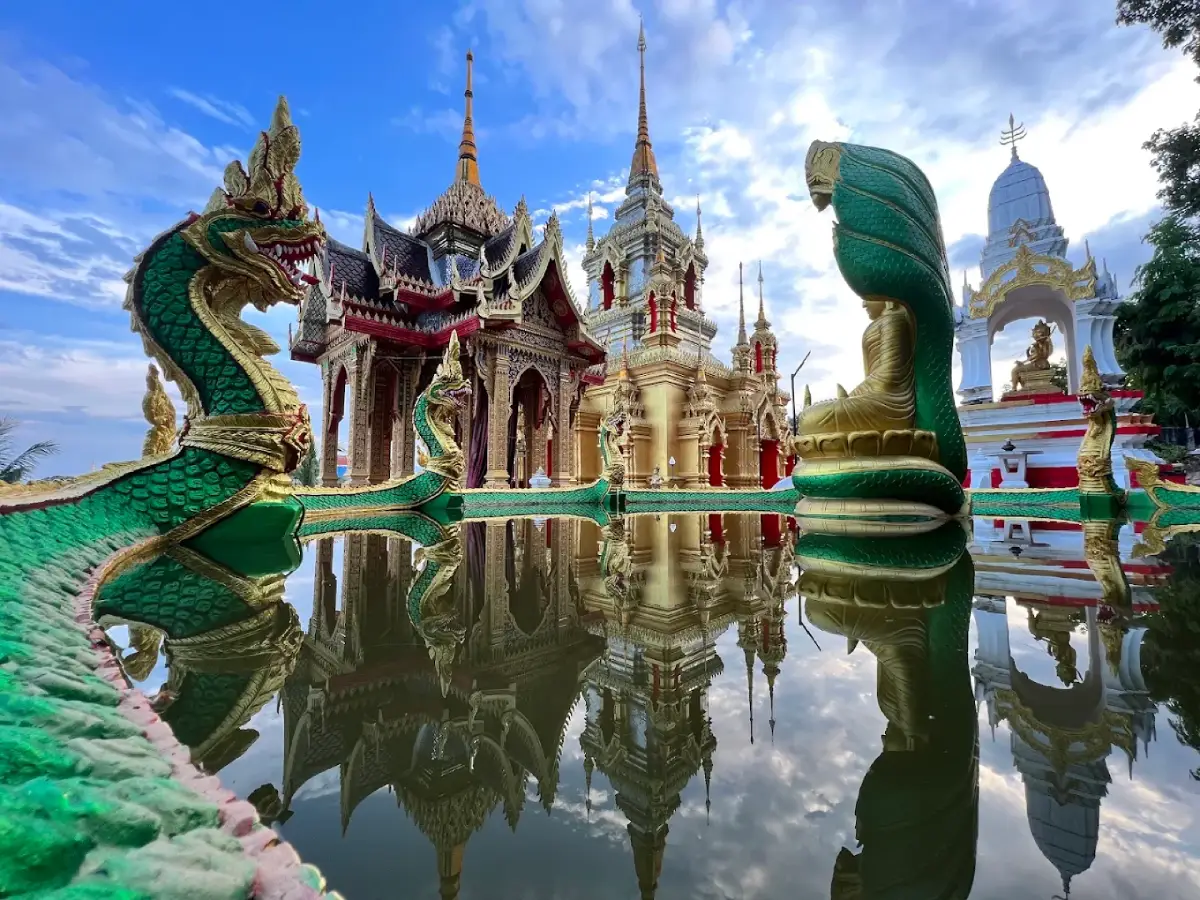
Wat Nam Tok Mae Klang is located at No. 181, Moo 20, Chom Thong–Inthanon Road, Ban Luang Subdistrict, Chom Thong District, Chiang Mai Province, postal code 50160. It is a community Buddhist temple under the Mahanikaya order, covering about 14 rai. The temple is important because it stands on the cultural and natural route between Chom Thong town, Mae Klang Waterfall, and Doi Inthanon. For travelers who want to experience more than scenery, Wat Nam Tok Mae Klang adds a spiritual and community dimension to the Doi Inthanon route.
The temple is closely connected with its setting. The name “Nam Tok Mae Klang” refers to Mae Klang Waterfall, one of the well-known waterfalls in the Doi Inthanon area. Many visitors know this route for forests, waterfalls, mountain air, and the road to Thailand’s highest peak, but the temple shows another side of the same landscape: a local Buddhist community where monks, villagers, merit-making, and religious ceremonies continue beside the natural attractions.
Wat Nam Tok Mae Klang was officially established as a temple in 1937 and received royal Wisungkhamsima in 1973. This status is important because Wisungkhamsima gives a temple a consecrated boundary for important monastic acts, including ceremonies that require a proper sacred boundary according to Buddhist monastic discipline. The temple is therefore not only a local place of worship, but a recognized Buddhist temple with a formal role in the Sangha system.
The location of the temple makes it suitable for travelers who want to combine Buddhist culture with nature. A visit can be planned before or after Mae Klang Waterfall, or as part of a wider route to Wat Phra That Si Chom Thong Worawihan, Wachirathan Waterfall, Mae Klang Luang village, and Doi Inthanon National Park. The temple gives the route a more complete sense of place by connecting the waterfall landscape with the religious life of Ban Luang.
The temple’s sacred objects include Phra Chao Tan Jai, Phra Sivali, Khruba Siwichai, Luang Pho Pha Dam, and the Guan Yin pavilion. These objects show the range of devotional life at the temple. Phra Chao Tan Jai is associated with quick fulfillment and encouragement, Phra Sivali is respected for abundance and auspicious travel, Khruba Siwichai connects the temple with wider Lanna Buddhist devotion, Luang Pho Pha Dam adds a local sacred presence, and Guan Yin represents compassion and mercy.
Khruba Siwichai is especially meaningful in the context of northern Thailand. He is widely respected as a major Lanna monk and a symbol of Buddhist devotion, temple restoration, and community faith. The presence of his image at Wat Nam Tok Mae Klang gives visitors a link to the broader religious history of Chiang Mai and northern Thailand.
Phra Chao Tan Jai is one of the sacred images that many northern Thai temples are known for. The name suggests a wish or prayer that is answered quickly. For visitors traveling toward Doi Inthanon or Mae Klang Waterfall, paying respect to Phra Chao Tan Jai can be part of a short merit-making stop before continuing the journey.
Phra Sivali is another important figure in Thai Buddhist devotion. He is commonly associated with prosperity, smooth travel, and good fortune. His presence at a temple on a major travel route gives the site additional meaning for people who stop to make merit before continuing into the mountains.
The Guan Yin pavilion reflects the diversity of devotional practice in Thai Buddhist communities. Guan Yin represents compassion and care for those in suffering. The pavilion allows visitors with different forms of faith to find a point of devotion within the same temple grounds.
Wat Nam Tok Mae Klang has a complete set of temple structures. These include Phra Maha That Rattana Chedi Chaloem Phra Kiat, the viharn, ubosot, sermon hall, crematorium, monks’ quarters, multipurpose building, meeting hall, toilets, and kitchen. These facilities show that the temple serves many community functions, from worship and sermons to merit-making, funerals, meetings, and food preparation during temple events.
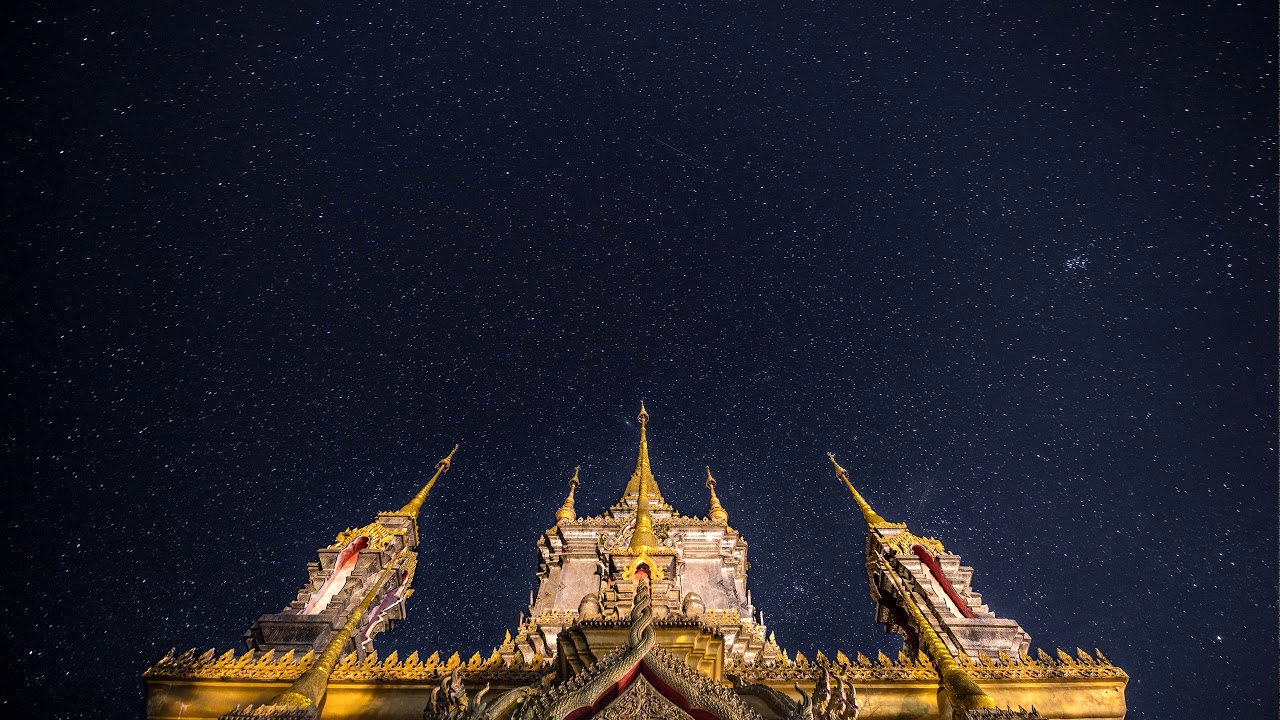
Phra Maha That Rattana Chedi Chaloem Phra Kiat is one of the temple’s important religious landmarks. A chedi is a Buddhist monument that often serves as a focus of devotion and remembrance. At Wat Nam Tok Mae Klang, the chedi gives the temple a strong religious center and a visible symbol of Buddhist faith.
The viharn is used for worship, chanting, sermons, and communal religious activities. The ubosot is connected with the temple’s consecrated boundary and monastic acts. The sermon hall and multipurpose buildings support merit-making and community gatherings, while the crematorium reflects the temple’s role in life-cycle ceremonies. The monks’ quarters support monastic residence, and the kitchen and toilets help the temple serve villagers and visitors during larger events.
The temple grounds can be understood in practical zones: the sacred-object zone, the chedi and main worship zone, the monastic ceremony zone, the community hall zone, the monks’ residence zone, the cremation area, and the visitor-service area. This helps visitors move respectfully through the temple and understand which spaces are public and which are connected with monastic or community functions.
Recent Kathin information for 2025 lists Phra Athikan Damrong Thammavaro as the abbot of Wat Nam Tok Mae Klang and records five resident monks. This confirms that the temple remains active with monastic residence and annual merit-making activity. In a community temple, the abbot plays an important role in caring for monks, maintaining temple buildings, leading ceremonies, and coordinating with villagers.
Religious traditions connected with Wat Nam Tok Mae Klang include Buddhist holy-day merit-making, Kathin, robe-offering ceremonies, annual community merit-making, memorial merit-making, and the northern Thai Tan Kuai Salak tradition. These events help villagers support the temple, maintain social ties, dedicate merit to ancestors, and preserve the relationship between Buddhism and daily life.
Kathin is particularly important after Buddhist Lent. It is not only a robe-offering ceremony, but also a collective act of support for the temple. Through Kathin, laypeople help maintain temple buildings, support monastic life, and strengthen the community’s shared sense of merit and responsibility.
The temple’s location makes it ideal for a combined cultural and nature trip. Visitors can begin at Wat Phra That Si Chom Thong Worawihan, continue along Highway 1009 toward Wat Nam Tok Mae Klang, make a merit-making stop at the temple, and then continue to Mae Klang Waterfall, Wachirathan Waterfall, Mae Klang Luang village, or Doi Inthanon National Park. This route gives travelers a balanced experience of sacred places, village life, waterfalls, and mountain scenery.
Getting There is most convenient by private car. From Chiang Mai city, take Highway 108, the Chiang Mai–Hot route, toward Chom Thong District. From Chom Thong, turn onto Highway 1009, the Chom Thong–Inthanon road. The temple is located on Chom Thong–Inthanon Road in Ban Luang Subdistrict, making it a convenient stop for visitors heading toward Mae Klang Waterfall and Doi Inthanon.
Travelers without a private car can take a bus from Chiang Mai to Chom Thong and then arrange local transport to the Chom Thong–Inthanon route. Planning ahead is recommended because local public transport may not stop directly in front of the temple at all times. Visiting in the morning or late morning is practical for those who want to combine the temple with waterfalls in the same day.
Visitors should approach Wat Nam Tok Mae Klang with respect. Dress modestly, speak quietly, do not disturb monks or villagers making merit, and avoid entering monks’ private areas without permission. If a ceremony or temple event is taking place, follow the guidance of local residents or temple caretakers. The temple is an active religious site, not only a sightseeing stop.
Wat Nam Tok Mae Klang is suitable for travelers who want to make merit before visiting Doi Inthanon, those interested in local temples in Chiang Mai, and visitors who want a quieter cultural stop near a natural attraction. The temple adds religious and community context to a route that many travelers otherwise experience only through waterfalls and mountain scenery.
The temple’s strengths as a travel destination include its location on the Chom Thong–Inthanon road, its sacred objects, its major chedi, its complete temple facilities, its status as a Mahanikaya community temple, its 14-rai grounds, and its connection with Mae Klang Waterfall. These details make the temple suitable for a complete cultural travel article because it can answer questions about history, worship, buildings, travel, nearby attractions, and the wider meaning of the place.
No confirmed public information indicates that a fixed admission fee is charged for general visitors. Travelers may visit respectfully and make merit according to their faith. A verified main telephone number for the temple was not found in reliable public sources, so visitors who need specific arrangements should ask locally in Ban Luang or contact community representatives before traveling.
In summary, Wat Nam Tok Mae Klang is a Mahanikaya community temple in Ban Luang Subdistrict, Chom Thong District, Chiang Mai Province. It was officially established in 1937 and received royal Wisungkhamsima in 1973. Its sacred objects include Phra Chao Tan Jai, Phra Sivali, Khruba Siwichai, Luang Pho Pha Dam, and the Guan Yin pavilion. Its main structures include Phra Maha That Rattana Chedi Chaloem Phra Kiat, the viharn, ubosot, sermon hall, crematorium, monks’ quarters, multipurpose building, meeting hall, toilets, and kitchen. Because it stands on the Chom Thong–Inthanon route near Mae Klang Waterfall, it is a meaningful stop for travelers who want to experience both Buddhist faith and the natural landscape of Doi Inthanon.
| Name | Wat Nam Tok Mae Klang |
| Location | No. 181, Moo 20, Chom Thong–Inthanon Road, Ban Luang Subdistrict, Chom Thong District, Chiang Mai Province |
| Address | 181 Moo 20, Ban Luang Subdistrict, Chom Thong District, Chiang Mai 50160, Thailand |
| Coordinates | 18.49387, 98.67037 |
| Temple Type | Community Buddhist temple under the Mahanikaya order |
| Area | 14 rai |
| History | Officially established as a temple in 1937 and granted royal Wisungkhamsima in 1973. |
| Abbot | Phra Athikan Damrong Thammavaro |
| Resident Monks | 5 monks |
| Highlights | A community temple on the Chom Thong–Inthanon route near Mae Klang Waterfall, suitable for a merit-making stop before visiting Doi Inthanon. |
| Sacred Objects | Phra Chao Tan Jai, Phra Sivali, Khruba Siwichai, Luang Pho Pha Dam, and the Guan Yin pavilion. |
| Main Areas And Buildings | Phra Maha That Rattana Chedi Chaloem Phra Kiat, viharn, ubosot, sermon hall, crematorium, monks’ quarters, multipurpose building, meeting hall, toilets, and kitchen. |
| Name Origin | The name is connected with Mae Klang Waterfall and Ban Luang on the Chom Thong–Inthanon route, a key route toward Doi Inthanon. |
| Related Traditions | Buddhist holy-day merit-making, Kathin, robe-offering ceremonies, annual merit-making, memorial merit-making, and the northern Thai Tan Kuai Salak tradition. |
| Travel Information | From Chiang Mai city, take Highway 108 toward Chom Thong, then continue onto Highway 1009, the Chom Thong–Inthanon road. The temple is located on Chom Thong–Inthanon Road in Ban Luang Subdistrict. |
| Current Status | The temple continues to appear in travel information and recent Kathin-related records for Ban Luang Subdistrict, Chom Thong District, Chiang Mai Province. |
| Open Days | Daily |
| Opening Hours | 08.00 - 17.00 |
| Nearby Tourist Attractions | 1. Mae Klang Waterfall, about 1 km 2. Wat Phra That Si Chom Thong Worawihan, about 9 km, Tel. 053-342184 3. Wachirathan Waterfall, about 13 km 4. Mae Klang Luang Village, about 20 km 5. Doi Inthanon National Park, about 28 km |
| Nearby Restaurants | 1. Food Center near Wat Phra That, about 9 km, Tel. 090-7588224 2. Khon Mueang Chom Thong, about 9 km, Tel. 081-8858851 3. Krua Fueang Fa, about 10 km, Tel. 053-341274, 086-1825031 4. Pa Oi Krua Rim Than, about 16 km, Tel. 053-286760 5. Ban Hom Doi Inthanon Restaurant, about 18 km, Tel. 053-361381 |
| Nearby Accommodations | 1. Touch Star Resort Doi Inthanon, about 2 km, Tel. 092-4194142, 097-4491415, 053-033594 2. Suan Sook Homestay Resort, about 6 km 3. Chom Thong Boutique House, about 10 km, Tel. 081-5829889 4. Smile Place Chom Thong, about 11 km, Tel. 065-7538313 5. Rim Na Ban Phak, about 25 km, Tel. 096-6536521 |
Frequently Asked Questions (FAQ)
Q: Where is Wat Nam Tok Mae Klang located?
A: Wat Nam Tok Mae Klang is located at No. 181, Moo 20, Chom Thong–Inthanon Road, Ban Luang Subdistrict, Chom Thong District, Chiang Mai Province, Thailand.
Q: What are the opening days and hours of Wat Nam Tok Mae Klang?
A: Wat Nam Tok Mae Klang is open daily from 08.00 to 17.00.
Q: What is the historical importance of Wat Nam Tok Mae Klang?
A: The temple was officially established in 1937 and received royal Wisungkhamsima in 1973. It is a Mahanikaya community temple in Ban Luang, Chom Thong.
Q: What sacred objects are found at Wat Nam Tok Mae Klang?
A: Important sacred objects include Phra Chao Tan Jai, Phra Sivali, Khruba Siwichai, Luang Pho Pha Dam, and the Guan Yin pavilion.
Q: What buildings and areas are inside the temple?
A: The temple includes Phra Maha That Rattana Chedi Chaloem Phra Kiat, the viharn, ubosot, sermon hall, crematorium, monks’ quarters, multipurpose building, meeting hall, toilets, and kitchen.
Q: Who is the abbot of Wat Nam Tok Mae Klang?
A: Recent Kathin information lists Phra Athikan Damrong Thammavaro as the abbot of Wat Nam Tok Mae Klang.
Q: How can visitors get to Wat Nam Tok Mae Klang?
A: From Chiang Mai city, take Highway 108 toward Chom Thong, then continue onto Highway 1009, the Chom Thong–Inthanon road. The temple is located on this route in Ban Luang Subdistrict.
Q: What nearby places can be combined with a visit to Wat Nam Tok Mae Klang?
A: Visitors can combine the trip with Mae Klang Waterfall, Wat Phra That Si Chom Thong Worawihan, Wachirathan Waterfall, Mae Klang Luang Village, and Doi Inthanon National Park.
 Category: ●Places of Worship
 Group: ●Temple
Last Update : 2 MonthAgo
 Last Update : 2 MonthAgo
 Click to Access the Navigation Map GPS
Wat Nam Tok Mae Klang Map
Recommend

 Muang Chiang Mai(121)Chom Thong(47)Mae Chaem(25)Chiang Dao(33)Doi Saket(68)Mae Taeng(85)Mae Rim(69)Samoeng(29)Fang(71)Mae Ai(59)Phrao(70)San Pa Tong(103)San Kamphaeng(66)San Sai(73)Hang Dong(73)Hot(32)Doi Tao(22)Omkoi(11)Saraphi(74)Wiang Haeng(15)Chai Prakan(28)Mae Wang(32)Mae On(22)Doi Lo(33)Galyani Vadhana(1)


