
lovethailand home >North Travel Attractions >Chiang Mai Travel Attractions >Chom Thong >Khuang Pao > Wat Lanna Yanasangwararam
TL;DR: Wat Lanna Yanasangwararam is located at Ban Mai Ang Rak, Moo 15, Khuang Pao Subdistrict, Chom Thong District, Chiang Mai Province, open Daily, hours 08.00 – 17.00.

Wat Lanna Yanasangwararam
Open Days: Daily
Opening Hours: 08.00 – 17.00
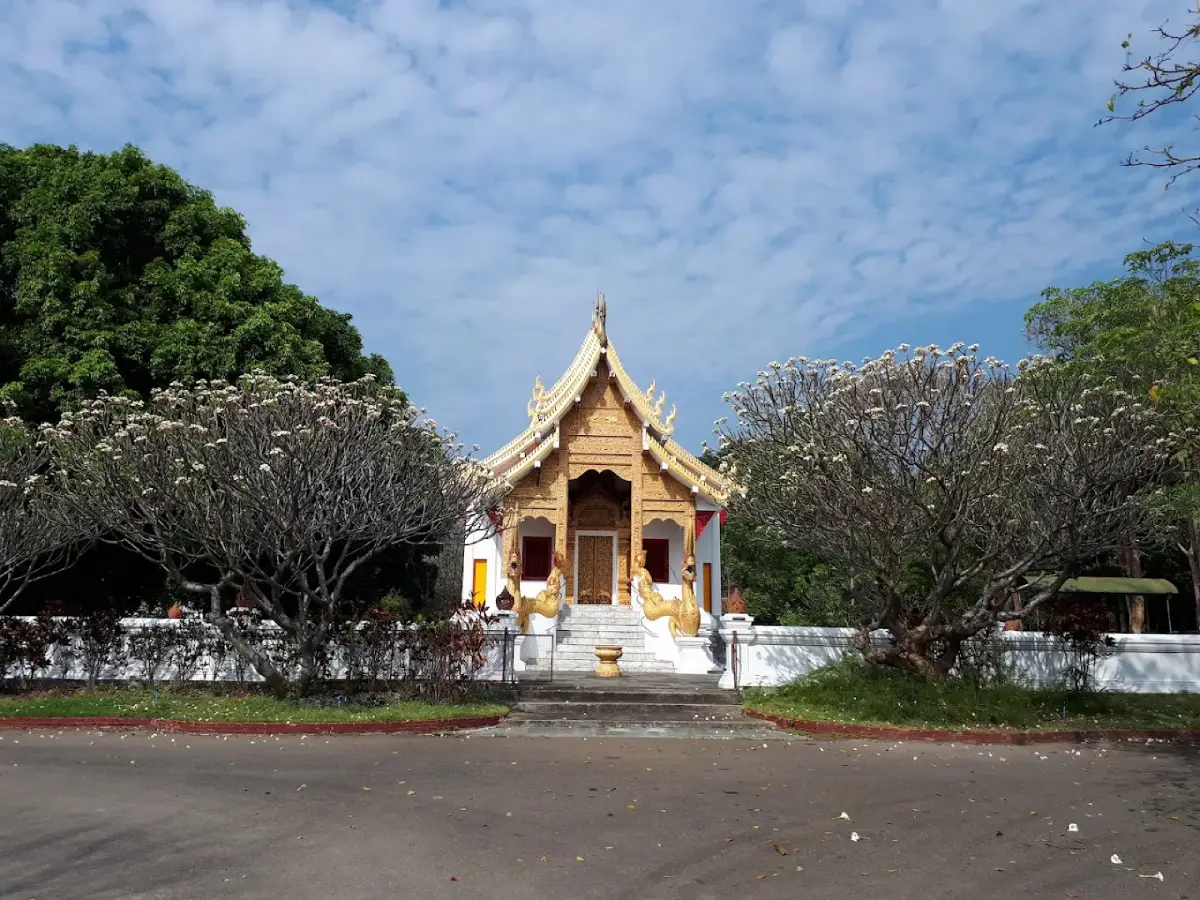
Wat Lanna Yanasangwararam is located at 33 Ban Mai Ang Rak, Moo 15, Khuang Pao Subdistrict, Chom Thong District, Chiang Mai Province. It is a Dhammayut local Buddhist temple with a distinctive history connected with Somdet Phra Nyanasamvara, the Supreme Patriarch of Thailand, and the intention to create temple structures inspired by Lanna art. Unlike many small village temples in Khuang Pao, this temple stands on a large and peaceful site with an atmosphere that combines forest-like calm, northern Thai religious architecture, and the disciplined character of a Dhammayut temple.
The temple’s historical background is associated with Ban Huai Tong Sak, while current local records identify its address as 33 Ban Mai Ang Rak, Moo 15, Khuang Pao Subdistrict, Chom Thong District, Chiang Mai 50160. This distinction is useful for travelers because Khuang Pao has several temples and monastic sites, including Wat Huai Tong Sak, Wat Wang Din, Wat Tha Sala, Wat Mai San Tueng, Wat Mongkhon Waree, and Wat Khamaet. For accurate navigation, visitors should search for the full name “Wat Lanna Yanasangwararam” together with Ban Mai Ang Rak or Chom Thong.
Wat Lanna Yanasangwararam is notable for its spacious temple grounds and clear functional layout. The temple includes a Buddhist worship zone, a monastic residential zone, and areas used for temple support. Major structures include an ordination hall, viharn, sermon hall, multipurpose hall, chedi, monks’ residences, bell tower, kitchen, storage building, and guest houses. These features make it more than a simple roadside temple; it is a substantial religious site that supports monastic residence, worship, merit-making, and Buddhist activities.
The temple received permission for construction on 21 January 1988 and was established as a temple in 1989. A key foundation of the temple was the donation of land by Nai Warin Phattiyakun to Somdet Phra Nyanasamvara of Wat Bowonniwet Vihara, Bangkok, for the construction of a Buddhist temple in Chom Thong District. This act of donation gave the temple a strong connection with a major figure in Thai Buddhism and set the foundation for its later development as a Dhammayut temple in northern Thailand.
During the initial phase, Nai Chaiya Poonsiriwong, who was then Governor of Chiang Mai Province, helped process the land and administrative matters so the temple could be built according to official regulations. The construction committee included Phra Thep Kawi as the monastic chairman and Dr. Amnuay Yossuk as the lay chairman. The founding of the temple therefore involved cooperation among the Sangha, provincial administration, lay supporters, and donors.
The name Wat Lanna Yanasangwararam carries a specific meaning. “Lanna” reflects the northern Thai cultural and artistic setting, while “Yanasangwara” connects with Somdet Phra Nyanasamvara, whose name inspired the temple. The name therefore expresses both place and lineage: a temple built in Lanna territory with spiritual inspiration linked to Somdet Phra Nyanasamvara. This makes the name itself an important part of the temple’s identity.
The temple received its royal grant of Wisungkhamsima on 13 July 1993. The consecrated boundary measures 25 meters wide and 40 meters long. In Thai Buddhist monastic practice, Wisungkhamsima is the consecrated boundary for the ordination hall and formal Sangha acts. This gives the ordination hall a clear legal and religious status within the monastic system.
Current local records state that the temple land consists of two plots totaling 58 rai, 3 ngan, and 46 square wah. The temple also has one plot of monastic land measuring 57 rai and 15 square wah, as well as one plot of income-supporting land measuring 1 rai, 3 ngan, and 31 square wah. Its northern boundary touches Chom Thong Industrial and Community Education College, the southern boundary touches Wat Huai Tong Sak, the eastern boundary touches the Chom Thong-Inthanon road, and the western boundary touches public land.
The temple grounds are described as a gently elevated plain with natural forest-like greenery. This setting supports the calm atmosphere associated with a Dhammayut temple. Visitors can feel a different rhythm from temples in market areas or busy town centers. Wat Lanna Yanasangwararam offers a quiet and spacious environment for worship, reflection, and respectful observation of Lanna-inspired religious architecture.
The temple can be understood through three main zones. The first is the Buddhist worship zone, including the ordination hall, viharn, chedi, halls, and areas for paying respect. The second is the monastic residential zone, which includes monks’ residences. The third is the support zone, including productive areas such as a longan orchard or temple-use land. This layout allows the temple to support worship, monastic living, and long-term temple management.
Important sacred objects include the principal Buddha image in the ordination hall, a brass Mara-subduing Buddha image created in 1989, and the principal Buddha image in the sermon hall, created in 2005. Temple records also mention Singha-style Buddha images, a Guan Yin shrine, a King Naresuan shrine, and a chedi. These elements give the temple several points of worship, ranging from Lanna Buddhist imagery to devotional shrines found in local religious practice.
The Singha-style Buddha images are especially meaningful in the Lanna context. This style is closely associated with northern Thai Buddhist art and is respected for its dignified form and graceful proportions. Because the temple’s founding concept emphasizes Lanna art, the presence of Singha-style Buddha images supports the temple’s artistic and spiritual identity.
The ordination hall measures 25 meters wide and 40 meters long and was built in 1989 as a reinforced concrete structure. It is one of the most important buildings in the temple because it is used for formal Sangha acts, including ordination and other monastic ceremonies. Visitors should treat this area with special respect, dress modestly, remove shoes before entering, and remain quiet inside the building.
The viharn measures 20 meters wide and 40 meters long and was also built in 1989 as a reinforced concrete structure. The viharn is generally more accessible to lay visitors and is used for worship, merit-making, listening to Dhamma, and temple activities. Understanding the difference between the ordination hall and the viharn helps visitors appreciate the temple’s layout and religious function.
The chedi measures 10 meters wide and 20 meters high and was built in 1993. In Lanna Buddhist culture, a chedi is not only an architectural structure but also a symbol of faith, memory, and devotion. Visitors should walk around the chedi respectfully and avoid touching or climbing on any sacred element.
The sermon hall measures 20 meters wide and 40 meters long and was built in 1989. It supports merit-making, Dhamma listening, ceremonies, meetings, and community events. A large sermon hall is important for a temple that hosts lay supporters during Buddhist holy days, Kathin ceremonies, robe-offering events, and other religious gatherings.
The multipurpose hall also measures 20 meters wide and 40 meters long and was built in 1989. This building gives the temple flexible space for ceremonies, preparation work, community coordination, and large religious activities. Together with the sermon hall, it helps the temple accommodate events without disturbing monastic residential areas or the ordination hall.
The temple has 10 wooden monks’ residences, each measuring 5 meters by 8 meters, built in 1989. These residences form part of the monastic zone. Visitors should not enter monks’ residential areas without permission and should maintain a respectful distance to preserve the privacy and discipline of the resident monks.
The bell tower measures 6 meters by 12 meters and was built in 2007. Bell towers remain an important symbol of Thai Buddhist temple life because they mark time, ceremonies, and religious activities. Even though communication has changed in modern times, the bell tower still reflects the rhythm of temple life and the connection between sound, community, and Dhamma.
The kitchen measures 8 meters by 18 meters and was built in 1996. The storage building measures 12.5 meters by 32 meters and was built in 2005. The temple also has two guest houses, built in 1989, each measuring 9 meters by 24.5 meters. These buildings support food preparation, equipment storage, hospitality, and large-scale temple activities.
The temple’s utilities include Provincial Waterworks Authority water supply and Provincial Electricity Authority electricity. These basic services support the daily needs of monks and lay visitors, as well as the temple’s ability to host religious events. The temple record does not list an internet system, so it is best understood as a religious site focused on worship, residence, and community functions rather than visitor-service infrastructure.
The temple’s administrative history includes several important monastic figures, including Phra Khru Sangkharak Wichai, Phra Prayong Chantachitto, Phra Thep Kawi, and Phra Thep Mongkhon Moli Sukkhaputto. A 2025 Kathin record lists Phra Thep Mongkhon Moli as abbot and records five resident monks. The 2023 local temple record was certified by Phra Khru Samu Chakraphong Kittithano, identified there as abbot. These records show the temple’s ongoing connection with respected Dhammayut monastic leadership.
Wat Lanna Yanasangwararam also has an important educational role. Temple records state that a Dhamma study section and a Pali study section were opened in 1990. This means the temple has functioned not only as a place for merit-making and worship but also as a place for Buddhist learning. Its role in Dhamma and Pali education adds depth to its significance within Chom Thong District.
The temple has also supported social welfare through a funeral welfare fund and a buffalo bank to assist poor people. This reflects a wider role for the temple beyond ritual life. In rural communities, such support can help strengthen livelihoods and social solidarity. Wat Lanna Yanasangwararam should therefore be understood as a religious, educational, and community-support institution.
For visitors, Wat Lanna Yanasangwararam is best experienced slowly. Important places to observe include the ordination hall, viharn, chedi, sermon hall, multipurpose hall, bell tower, and the overall landscaped temple grounds. The temple is not a quick photo stop; its value lies in the relationship between Dhammayut practice, Lanna artistic intention, spacious temple planning, and the memory of Somdet Phra Nyanasamvara.
Visitors should dress modestly, speak quietly, remove shoes before entering religious buildings, avoid entering monastic residences without permission, and take photographs respectfully. Because the temple remains active with resident monks and religious activities, respectful conduct is essential for a meaningful visit.
Getting There is convenient by private car, rental car, motorbike, or local transport. From Chiang Mai city, take Highway 108 south toward Chom Thong, then connect to the Chom Thong-Inthanon road in Khuang Pao Subdistrict. The temple is in Ban Mai Ang Rak, Moo 15. For navigation, search for “Wat Lanna Yanasangwararam, Ban Mai Ang Rak, Chom Thong, Chiang Mai.”
The temple can be combined with nearby temples and attractions such as Wat Huai Tong Sak, Wat Wang Din, Wat Tha Sala, Wat Mongkhon Waree, Wat Khuang Pao Nuea, Wat Phrathat Si Chom Thong Worawihan, Mae Klang Waterfall, and Doi Inthanon National Park. A half-day trip can combine the temple with Chom Thong town and Wat Phrathat Si Chom Thong, while a full-day trip can continue toward Doi Inthanon.
In summary, Wat Lanna Yanasangwararam is a Dhammayut local temple with strong historical, artistic, religious, and community value. Its highlights include its connection with Somdet Phra Nyanasamvara, the donation of land for temple construction, the intention to build Lanna-style religious structures, Wisungkhamsima granted in 1993, spacious temple grounds, an ordination hall, viharn, chedi, Singha-style Buddha images, sermon hall, and educational role in Dhamma and Pali studies. It is a meaningful destination for travelers seeking a quieter and deeper Buddhist experience in Chom Thong District.
| Name | Wat Lanna Yanasangwararam |
| Location | Ban Mai Ang Rak, Moo 15, Khuang Pao Subdistrict, Chom Thong District, Chiang Mai Province |
| Address | 33 Ban Mai Ang Rak, Moo 15, Khuang Pao Subdistrict, Chom Thong District, Chiang Mai 50160, Thailand |
| Highlights | Dhammayut local temple connected with Somdet Phra Nyanasamvara, founded with the intention of creating Lanna-style religious structures, with an ordination hall, viharn, chedi, Singha-style Buddha images, sermon hall, monks’ residences, and spacious green grounds |
| History | Construction permission was granted on 21 January 1988, and the temple was established in 1989 after Nai Warin Phattiyakun donated land to Somdet Phra Nyanasamvara for temple construction |
| Sect | Dhammayut |
| Wisungkhamsima | Granted on 13 July 1993; the consecrated boundary measures 25 meters wide and 40 meters long |
| Temple Land | Current local records list 58 rai, 3 ngan, 46 square wah of temple land, 57 rai and 15 square wah of monastic land, and 1 rai, 3 ngan, 31 square wah of income-supporting land |
| Distinctive Features | A spacious Dhammayut temple in Khuang Pao with Lanna artistic identity, Buddhist education history, and a calm environment suitable for respectful worship and cultural visits |
| Travel Information | From Chiang Mai city, take Highway 108 south toward Chom Thong, then continue to the Chom Thong-Inthanon road in Khuang Pao Subdistrict. Search for “Wat Lanna Yanasangwararam, Ban Mai Ang Rak, Chom Thong” for navigation |
| Current Status | Open as a Dhammayut local temple for worship, merit-making, temple visits, and Buddhist activities according to temple schedules |
| Open Days | Daily |
| Opening Hours | 08.00 – 17.00 |
| Facilities | Ordination hall, viharn, chedi, sermon hall, multipurpose hall, 10 monks’ residences, bell tower, kitchen, storage building, guest houses, Provincial Waterworks Authority water supply, and Provincial Electricity Authority electricity |
| Main Areas / Zones | 1. Buddhist Worship Zone: Ordination Hall, Viharn, Chedi, Halls, And Worship Areas 2. Monastic Residential Zone: Monks’ Residences 3. Temple Support Zone: Utility And Productive Areas Such As Longan Orchard Land |
| Buddha Images / Sacred Objects | Principal Mara-subduing Buddha image in the ordination hall, created in 1989; principal Buddha image in the sermon hall, created in 2005; Singha-style Buddha images; Guan Yin shrine; King Naresuan shrine; and chedi |
| Abbot / Key Monastic Figures | Phra Thep Mongkhon Moli Sukkhaputto appears in contemporary records as abbot and key monastic figure of the temple. Phra Khru Samu Chakraphong Kittithano certified the 2023 local temple record |
| Resident Monks | A 2025 Kathin record lists 5 resident monks |
| Main Contact Number | 087-986-9662 |
| Nearby Tourist Attractions | 1. Wat Huai Tong Sak, about 1 km 2. Wat Wang Din, about 4 km 3. Wat Tha Sala, about 5 km 4. Wat Mongkhon Waree, about 6 km 5. Wat Phrathat Si Chom Thong Worawihan, about 8 km 6. Mae Klang Waterfall, about 16 km 7. Doi Inthanon National Park, about 18 km |
| Nearby Restaurants | 1. Kuai Tiao Aphai, about 6 km, Tel. 053-341-996 2. Pao Male Makro Chom Thong, about 6 km, Tel. 098-282-1040 3. Khon Mueang Chom Thong, about 8 km, Tel. 081-885-8851 4. Khao Soi Kalong, about 9 km, Tel. 087-189-2619 5. Krua Koban, about 10 km, Tel. 089-559-9329, 080-124-3393, 080-501-3622 6. Phing Phukao, about 11 km, Tel. 089-556-4854 |
| Nearby Accommodations | 1. The Farmer Farm Stay & Cafe, about 2 km, Tel. 064-801-7389 2. B-tel Chomthong Chiang Mai, about 3 km, Tel. 098-759-2003 3. Huan Khwan Khao, about 6 km, Tel. 084-687-0025, 081-602-0221 4. Chom Thong Boutique House, about 7 km, Tel. 081-582-9889 5. Bansuan Inthanon Resort, about 11 km, Tel. 086-429-1642 |
Frequently Asked Questions (FAQ)
Q: Where is Wat Lanna Yanasangwararam located?
A: Wat Lanna Yanasangwararam is located at 33 Ban Mai Ang Rak, Moo 15, Khuang Pao Subdistrict, Chom Thong District, Chiang Mai 50160.
Q: What are the opening days and hours of Wat Lanna Yanasangwararam?
A: The temple is open daily from 08.00 to 17.00.
Q: Which Buddhist sect does Wat Lanna Yanasangwararam belong to?
A: Wat Lanna Yanasangwararam belongs to the Dhammayut order and is a local temple in Chom Thong District, Chiang Mai Province.
Q: What is the origin of the temple’s name?
A: The name combines the inspiration from Somdet Phra Nyanasamvara with the intention to create Lanna-style religious structures inside the temple.
Q: When did Wat Lanna Yanasangwararam receive Wisungkhamsima?
A: The temple received Wisungkhamsima on 13 July 1993, with a consecrated boundary measuring 25 meters wide and 40 meters long.
Q: What are the main features inside Wat Lanna Yanasangwararam?
A: The temple includes an ordination hall, viharn, chedi, sermon hall, multipurpose hall, monks’ residences, bell tower, Singha-style Buddha images, Guan Yin shrine, and King Naresuan shrine.
Q: What nearby places can be visited with Wat Lanna Yanasangwararam?
A: Nearby places include Wat Huai Tong Sak, Wat Wang Din, Wat Tha Sala, Wat Mongkhon Waree, Wat Phrathat Si Chom Thong Worawihan, Mae Klang Waterfall, and Doi Inthanon National Park.
Q: How can travelers get to Wat Lanna Yanasangwararam?
A: From Chiang Mai city, take Highway 108 south toward Chom Thong, then continue to the Chom Thong-Inthanon road in Khuang Pao Subdistrict. Search for Wat Lanna Yanasangwararam, Ban Mai Ang Rak, Chom Thong, for navigation.
 Category: ●Places of Worship
 Group: ●Temple
Last Update : 1 DayAgo
 Last Update : 1 DayAgo
 Click to Access the Navigation Map GPS
Wat Lanna Yanasangwararam Map
Recommend

 Muang Chiang Mai(121)Chom Thong(47)Mae Chaem(25)Chiang Dao(33)Doi Saket(68)Mae Taeng(85)Mae Rim(69)Samoeng(29)Fang(71)Mae Ai(62)Phrao(70)San Pa Tong(105)San Kamphaeng(66)San Sai(73)Hang Dong(74)Hot(32)Doi Tao(22)Omkoi(11)Saraphi(74)Wiang Haeng(15)Chai Prakan(28)Mae Wang(32)Mae On(22)Doi Lo(34)Galyani Vadhana(1)


