
lovethailand home >North Travel Attractions >Chiang Mai Travel Attractions >Doi Tao >Bong Tan > Wat Bong Tan
TL;DR: Wat Bong Tan is located at Ban Bong Tan And Ban Den Pa Matan Area, Bong Tan Subdistrict, Doi Tao District, Chiang Mai Province 50260, Thailand.

Wat Bong Tan
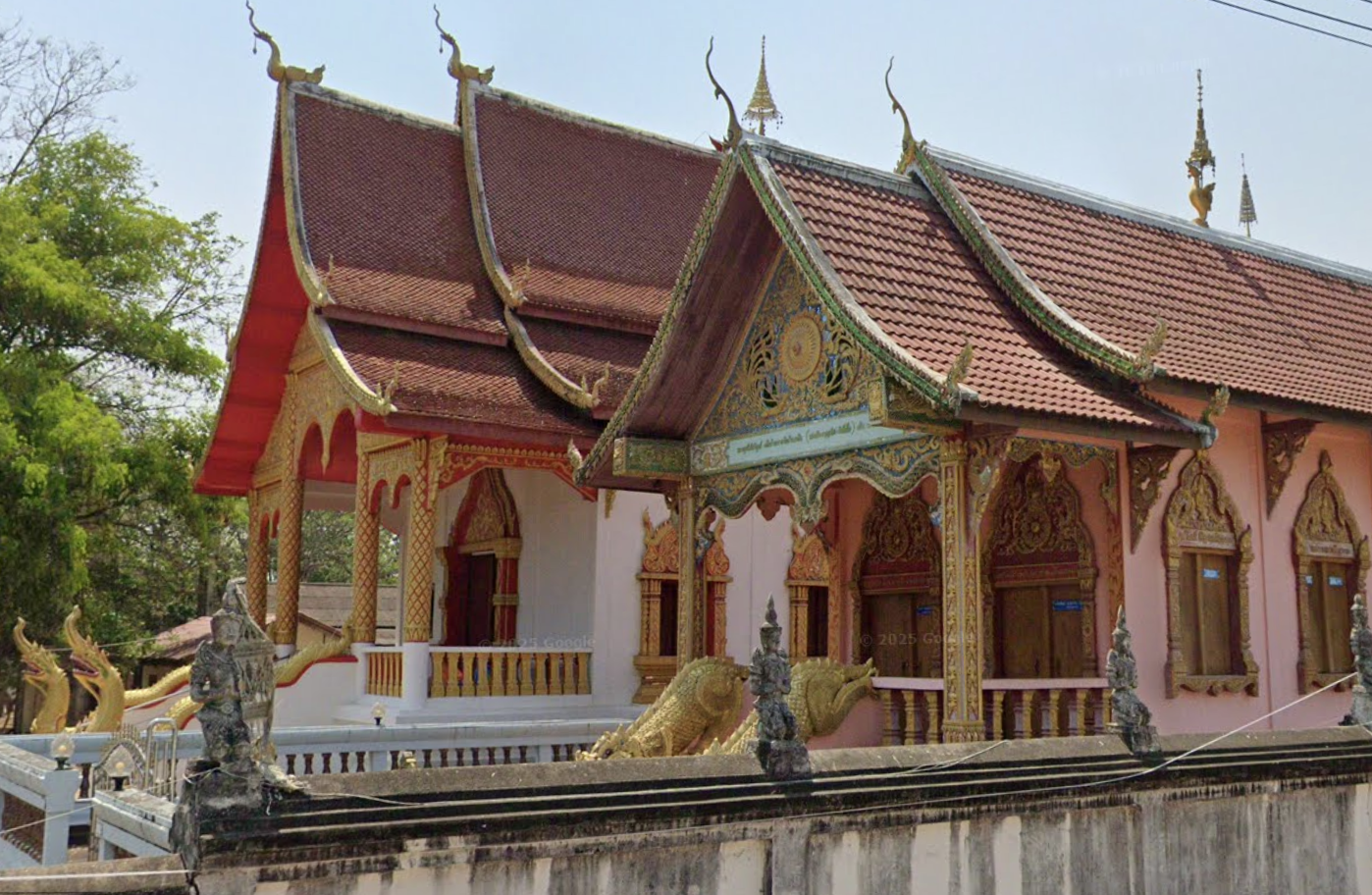
Operating day: Daily
Operating time: 08.00 - 17.00
Wat Bong Tan is located in the Ban Bong Tan and Ban Den Pa Matan area of Bong Tan Subdistrict, Doi Tao District, Chiang Mai Province 50260. It is a local Buddhist temple under the Maha Nikaya order and covers about 10 rai and 1 ngan. The temple began around 1952 through the faith of the local community. Khru Ba Khao Pi passed through the area and built one thatched-roof monk’s residence. Later, Khru Ba Wongsa Chaiwatthana also passed through and built one wooden monk’s residence so that villagers could have a place for merit-making and Buddhist activities. Wat Bong Tan therefore grew directly from local faith and remains an important spiritual center of Bong Tan Subdistrict.
Wat Bong Tan should be understood through the wider context of Bong Tan Subdistrict rather than as only a small rural temple. The area is connected with the Ping River basin, agricultural communities, forest landscapes, the Hot – Doi Tao – Mae Tuen route, and the changes that affected Doi Tao after the construction of Bhumibol Dam. Temples in this area are more than places for formal worship. They are community anchors, meeting places, centers of merit-making, and spaces where Lanna Buddhist traditions continue in everyday life.
The beginning of Wat Bong Tan around 1952 is significant because the temple emerged from the needs of local residents. Villagers needed a place to make merit, listen to Dhamma, and conduct Buddhist ceremonies within their own community. The thatched-roof residence built by Khru Ba Khao Pi became the first seed of local faith. Khru Ba Khao Pi is remembered as an important northern Thai monk associated with the building and restoration of many temples. His appearance in the story of Wat Bong Tan gives the temple a meaningful connection with the wider Lanna tradition of wandering monks and community temple building.
Khru Ba Wongsa Chaiwatthana later built a wooden monk’s residence at the site. This marked another step in the temple’s development. A monk’s residence is not merely a building for shelter; it allows monks to stay, villagers to gather, and Buddhist practice to continue. From a simple thatched structure and a wooden residence, Wat Bong Tan gradually developed into a religious space that served the people of Ban Bong Tan and Ban Den Pa Matan.
The temple history also records that more than 10 abbots served the temple in succession, although their names are not clearly preserved in surviving records. This pattern is common in many rural community temples that began from local faith and the presence of itinerant monks before written administration became more systematic. Even though some names are not preserved, the continuity of monastic presence shows that Wat Bong Tan has served the community for many decades.
A wandering monk came to stay at the temple around 1995. Later, Phra Athikan Phrommin Punnakamo came to the temple on 17 December 1995 and became the abbot of Wat Bong Tan according to the temple history used for this article. This period marked a transition from earlier community-based beginnings and itinerant monastic presence toward more stable temple administration. The temple has continued to serve as a spiritual center for the community.
Bong Tan Subdistrict covers about 41.63 square kilometers, or approximately 26,018.75 rai, and includes several villages. It is about 12 kilometers from Doi Tao District Office and about 115 kilometers south of Chiang Mai city. The area includes villages, agricultural land, forest, and waterways. The Ping River passes through the western part of Bong Tan Subdistrict, flowing near communities such as Ban Noi, Ban Huai Rin, Ban Thong, and Ban Nong Phak Bung. This landscape helps explain the role of local temples as community centers in an area shaped by farming, river life, and travel routes.
Historically, Doi Tao is associated with old local communities and groups connected with the Lua or Thin people. Earlier Doi Tao communities were often located around the Mae Hat basin and the Ping River basin, including old Doi Tao, Ban Rai, Ban Pong Thung, Ban Mae Ka, Ban Tha Duea, and Ban Noi. After the construction of Bhumibol Dam, many communities had to adapt, relocate, or rebuild. Temples in Doi Tao therefore became important spiritual anchors for communities facing major landscape change.
Wat Bong Tan is connected with Ban Bong Tan and Ban Den Pa Matan, rural communities in Bong Tan Subdistrict. The temple supports merit-making, Buddhist ceremonies, and local religious life. It is not a temple known for large-scale tourism or grand architecture. Its value lies in its living community role, its history of early monk residences, and its continued place in village Buddhist life.
The temple’s distinctive identity comes from its origin story: a thatched monk’s residence built by Khru Ba Khao Pi and a wooden residence built by Khru Ba Wongsa Chaiwatthana. These may seem like small structures, but they carry strong historical meaning. They represent the moment when local Buddhist life began to take root in the community, giving villagers a place for faith, worship, and merit-making.
Confirmed details about the temple’s early structures include the thatched monk’s residence and the wooden monk’s residence. The temple area covers about 10 rai and 1 ngan. Other specific architectural details such as an ubosot, chedi, principal Buddha image, bell tower, or sermon hall should not be stated as fixed information without direct supporting evidence. As a local Maha Nikaya temple, however, Wat Bong Tan functions as a place for community Buddhist activities, merit-making, and worship in the village.
Wat Bong Tan plays an important role in the community. Villagers use the temple for Buddhist holy days, Dhamma listening, memorial merit-making, Buddhist Lent, the end of Lent, Kathin, robe-offering ceremonies, and other annual merit activities. These events connect monks, elders, families, youth, and local residents through shared religious practice. The temple helps maintain both Buddhist faith and social cohesion in the village.
In Lanna life, a temple is not separate from the village. It is one of the foundations of community life. Wat Bong Tan therefore has both religious and social value. Villagers make merit to support Buddhism, while the temple also provides a place for cooperation, mutual support, and the continuation of local customs. Temple events help younger generations see how community, faith, and tradition are connected.
Wat Bong Tan is also historically linked with nearby Wat Lai Kaeo. The history of Wat Lai Kaeo notes that residents of Ban Lai Kaeo Nong Pu once went to make merit at Wat Bong Tan before their own temple was established. This shows that Wat Bong Tan once served as a central temple for nearby villagers before other village temples developed in their own communities.
The atmosphere of Wat Bong Tan is best suited to travelers interested in quiet community temples rather than major tourist attractions. Visitors can make merit, pay respect, walk calmly around the temple area, and connect the place with the story of Lanna monks, wandering monastics, and villagers who sustained the temple over time. The temple is especially meaningful for those who want to understand Doi Tao at village level.
A useful temple route in Bong Tan Subdistrict can include Wat Bong Tan, Wat Ban Thong, Wat Ban Noi, Wat Tha Duea, Wat Lai Kaeo, and Phutthasathan Doi Tok. This route reveals the religious network of Bong Tan Subdistrict, from temples connected with relocation history to quiet village temples and elevated sacred places overlooking Doi Tao Lake. Travelers can also continue to Doi Tao Lake and Phra Borommathat Doi Koeng for a fuller cultural and scenic route.
Getting There is most convenient by private car, rental car, or local hired transport. From Chiang Mai city, travel south on Highway 108 through Hang Dong, San Pa Tong, Chom Thong, and Hot District. At Hot, continue onto Highway 1103, the Hot – Doi Tao – Mae Tuen route, then proceed into Bong Tan Subdistrict, Doi Tao District. The temple is in the Ban Bong Tan and Ban Den Pa Matan community area. Using the names Wat Bong Tan, Bong Tan Subdistrict, and Doi Tao District together in a navigation app is recommended.
A half-day route can begin at Wat Bong Tan for merit-making and learning about its early thatched and wooden monk residences, then continue to Wat Lai Kaeo or Wat Ban Thong to understand nearby village temples, and end at Doi Tao Lake for scenery or lakeside food. With more time, travelers can add Wat Tha Duea, Ban Nong Phak Bung, Phutthasathan Doi Tok, and Phra Borommathat Doi Koeng to combine religion, community history, and natural scenery.
Visitors should dress modestly, keep noise low, and respect monks and local residents. If a merit-making event or ceremony is taking place, local worshippers should be given priority. Photography should be done respectfully, especially around ceremonies. Wat Bong Tan is a living community temple, so a meaningful visit is one that respects both the sacred space and the village that maintains it.
Overall, Wat Bong Tan is a Maha Nikaya local temple in Bong Tan Subdistrict, Doi Tao District, Chiang Mai Province. Its value lies in its community-based origin around 1952, when Khru Ba Khao Pi built a thatched residence and Khru Ba Wongsa Chaiwatthana later built a wooden residence so villagers could have a place for merit-making. The temple remains a spiritual center for Ban Bong Tan and Ban Den Pa Matan and is a worthwhile stop for travelers who want to experience the quieter, deeper, and more local side of Doi Tao.
| Name | Wat Bong Tan |
| Type | Local Buddhist Temple, Maha Nikaya Order |
| Location | Ban Bong Tan And Ban Den Pa Matan Area, Bong Tan Subdistrict, Doi Tao District, Chiang Mai Province 50260, Thailand |
| Related Registered Temple Name | Wat Ban Bong Tan |
| Temple Code | 350170504 / 03501705005 |
| Temple Area | About 10 Rai And 1 Ngan |
| History | Began around 1952 through local faith; Khru Ba Khao Pi built one thatched monk’s residence and Khru Ba Wongsa Chaiwatthana later built one wooden monk’s residence for villagers to make merit. |
| Important Historical Figures | Khru Ba Khao Pi, Khru Ba Wongsa Chaiwatthana, a wandering monk around 1995, and Phra Athikan Phrommin Punnakamo |
| Abbot | Phra Athikan Phrommin Punnakamo |
| Confirmed Early Structures | One thatched monk’s residence and one wooden monk’s residence from the temple’s early development period |
| Related Communities | Ban Bong Tan, Ban Den Pa Matan, And Communities In Bong Tan Subdistrict |
| Community Role | Spiritual center for local villagers, used for merit-making, Dhamma listening, Kathin, robe offerings, and Buddhist community activities |
| Travel Information | From Chiang Mai, take Highway 108 through Hang Dong, San Pa Tong, Chom Thong, and Hot, then continue on Highway 1103, the Hot – Doi Tao – Mae Tuen route, toward Bong Tan Subdistrict in Doi Tao District. |
| Current Status | Active local Buddhist temple appearing in temple databases of Bong Tan Subdistrict, Doi Tao District, Chiang Mai Province |
| Facilities | Temple grounds, courtyard, worship area, and spaces for community Buddhist activities |
| Nearby Tourist Attractions | 1. Wat Lai Kaeo, about 4 km 2. Wat Ban Thong, about 5 km 3. Wat Tha Duea, about 6 km 4. Phutthasathan Doi Tok, about 8 km 5. Doi Tao Lake, about 10 km |
| Nearby Restaurants | 1. Check In Doi Tao Cafe’ And Resort, about 10 km, Tel. 062-969-8264 2. Krua Than Thip And Ruean Pha Than Thip, about 10 km, Tel. 091-026-4970 3. Ruean Pha Luk Mae Ping, about 10 km, Tel. 081-993-4162, 081-724-5470 4. Ruean Pha Doi Tao Rim Ping, about 10 km, Tel. 081-961-1854, 084-885-5982 5. Bandin In The Doi, about 14 km, Tel. 087-951-6778, 084-810-5058 |
| Nearby Accommodations | 1. Check In Doi Tao Cafe’ And Resort, about 10 km, Tel. 062-969-8264 2. Ruean Pha Than Thip, about 10 km, Tel. 091-026-4970 3. Ruean Pha Luk Mae Ping, about 10 km, Tel. 081-993-4162, 081-724-5470 4. Ruean Pha Doi Tao Rim Ping, about 10 km, Tel. 081-961-1854, 084-885-5982 5. The Creek Resort, about 20 km, Tel. 097-282-8982 |
Frequently Asked Questions (FAQ)
Q: Where Is Wat Bong Tan Located?
A: Wat Bong Tan is located in the Ban Bong Tan and Ban Den Pa Matan area of Bong Tan Subdistrict, Doi Tao District, Chiang Mai Province 50260, Thailand.
Q: When Did Wat Bong Tan Begin?
A: Wat Bong Tan began around 1952 through the faith of the local community.
Q: Who Played Important Roles In The Beginning Of Wat Bong Tan?
A: Khru Ba Khao Pi built one thatched monk’s residence, and Khru Ba Wongsa Chaiwatthana later built one wooden monk’s residence so villagers could have a place for merit-making.
Q: Who Is The Abbot Of Wat Bong Tan?
A: The abbot is Phra Athikan Phrommin Punnakamo.
Q: What Makes Wat Bong Tan Special?
A: Its value lies in its early development from simple monk residences built by respected Lanna monks and its continuing role as a community temple of Bong Tan Subdistrict.
Q: How Do Travelers Get To Wat Bong Tan?
A: From Chiang Mai, travel through Hot District and continue on Highway 1103, the Hot – Doi Tao – Mae Tuen route, toward Bong Tan Subdistrict in Doi Tao District.
Q: What Nearby Places Can Be Visited With Wat Bong Tan?
A: Nearby places include Wat Lai Kaeo, Wat Ban Thong, Wat Tha Duea, Phutthasathan Doi Tok, and Doi Tao Lake.
 Category: ●Places of Worship
 Group: ●Temple
Last Update : 1 MonthAgo
 Last Update : 1 MonthAgo
 Click to Access the Navigation Map GPS

 Muang Chiang Mai(121)Chom Thong(47)Mae Chaem(25)Chiang Dao(33)Doi Saket(68)Mae Taeng(85)Mae Rim(69)Samoeng(29)Fang(71)Mae Ai(59)Phrao(70)San Pa Tong(103)San Kamphaeng(66)San Sai(73)Hang Dong(73)Hot(32)Doi Tao(22)Omkoi(11)Saraphi(74)Wiang Haeng(15)Chai Prakan(28)Mae Wang(32)Mae On(22)Doi Lo(33)Galyani Vadhana(1)


