
lovethailand home >North Travel Attractions >Chiang Mai Travel Attractions >Doi Tao >Doi Tao > Wat Santisuk
TL;DR: Wat Santisuk is located at Moo 7, Ban Santisuk, Doi Tao Subdistrict, Doi Tao District, Chiang Mai Province 50260, Thailand. Highlights include Peaceful local temple of Ban Santisuk, suitable for worship, merit-making, and slow cultural travel in Doi Tao.

Wat Santisuk
Operating day: Daily
Operating time: 08.00 - 17.00
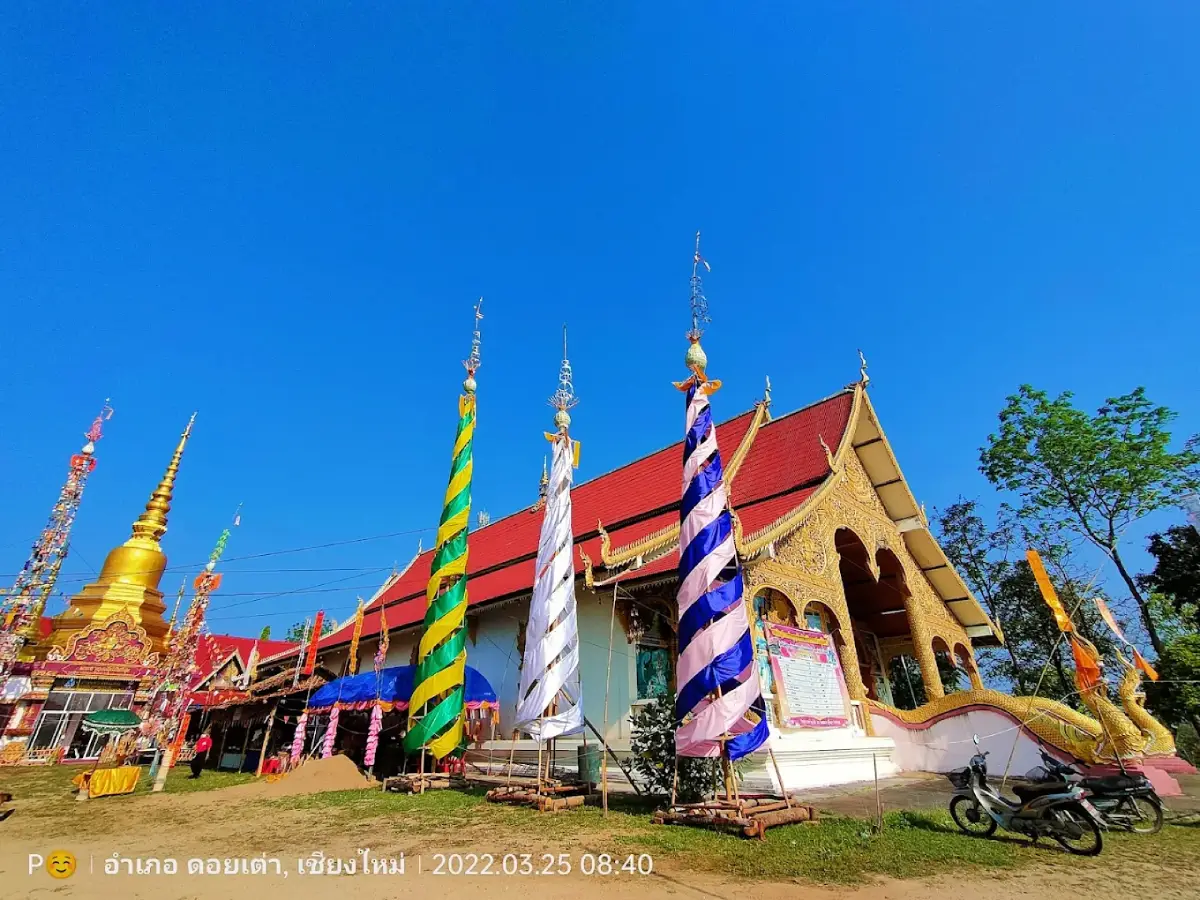
Wat Santisuk is located in Moo 7, Ban Santisuk, Doi Tao Subdistrict, Doi Tao District, Chiang Mai Province 50260. It is a local Buddhist temple under the Maha Nikaya order. The temple was officially permitted to become a temple in 1989. According to the source information used for this article, the abbot is Phra Charoen Satthachiko. Wat Santisuk serves as the community temple of Ban Santisuk and forms part of the local Buddhist landscape of Doi Tao, a quiet district in southern Chiang Mai connected with village life, agriculture, local temples, and Doi Tao Lake.
The name Wat Santisuk carries a direct meaning of peace and well-being. In the context of a local village temple, this name is more than a formal title. It reflects the temple’s role as a calm spiritual place where villagers make merit, listen to Dhamma, observe Buddhist traditions, and gather for religious activities. Wat Santisuk is therefore a shared center of faith for Ban Santisuk, linking people of different generations through merit-making, community participation, and Buddhist values.
Wat Santisuk is a local temple under the Maha Nikaya order. A village temple of this kind is closely connected with everyday life in rural northern Thailand. It provides a place for Buddhist ceremonies, local gatherings, seasonal merit-making, and the continuation of Lanna Buddhist culture at community level. The temple is therefore important not only as a religious site but also as a social space that helps hold the village together.
The temple’s official establishment in 1989 gave Wat Santisuk clear status within the Buddhist administrative system. Although it is newer than some older temples in Doi Tao Subdistrict, such as Wat Doi Tao, Wat Den Kha, or Wat Ban Rai, a temple’s community value is not measured only by age. Local temples often grow from the practical and spiritual needs of villagers. As the Ban Santisuk community developed, the temple became a necessary center for worship, merit-making, and community identity.
Doi Tao Subdistrict is a rural area in southern Chiang Mai, connected with Hot District, Li District in Lamphun Province, and the wider Doi Tao Lake area. Local information describes the subdistrict as an agricultural area, especially known for longan cultivation, an important crop in the local economy. Wat Santisuk should therefore be understood within this farming landscape, where temple life follows the rhythms of family, seasons, Buddhist holy days, and village merit-making.
Ban Santisuk is Moo 7 of Doi Tao Subdistrict. Local information identifies the village as one of the communities in the subdistrict, with Ban Santisuk School serving the educational life of the village and Wat Santisuk serving its religious life. These local institutions show that the village has both educational and spiritual foundations. The temple supports the moral and cultural life of the community alongside families and schools.
Within the temple network of Doi Tao Subdistrict, Wat Santisuk is one of seven temples listed by the local administrative organization, together with Wat Thin Samran, Wat Ban Rai, Wat Luang Doi Tao, Wat Chimplee, Wat Mon Chom Tham, and Wat Pha Chuk. This network shows that Doi Tao is not only a natural destination known for the lake, but also a district of village temples. Each temple serves its own community and together they form the religious landscape of the district.
The main appeal of Wat Santisuk is its quiet community character. It is suitable for travelers who want to visit a local temple without the crowds of major tourist attractions. Visitors can pay respect, make merit, and observe how a village temple continues to function in daily Buddhist life. The temple is best appreciated slowly, with respect for monks, local residents, and the sacred atmosphere of the place.
Publicly confirmed details about individual temple buildings at Wat Santisuk are limited. Specific information on structures such as the viharn, ubosot, chedi, principal Buddha image, bell tower, or sermon hall is not sufficiently documented in accessible public sources. For accuracy, this article focuses on the temple’s verified location, official status, establishment year, abbot name from the source material, community role, and travel context rather than adding architectural details that cannot be confirmed.
In terms of traditions and merit-making, Wat Santisuk follows the general rhythm of a northern Thai local temple. Important activities typically include Buddhist holy days, Makha Bucha, Visakha Bucha, Asalha Bucha, Buddhist Lent, the end of Lent, Kathin, robe-offering ceremonies, and community merit-making. These activities bring monks, villagers, elders, youth, and families together and help preserve local Buddhist identity.
The appearance of Wat Santisuk in contemporary Kathin temple listings also confirms that it remains an active Buddhist place. Kathin is one of the most important annual merit-making events after the end of Buddhist Lent. Villagers and supporters offer robes and temple necessities, strengthening the relationship between monks and the community. For a local temple such as Wat Santisuk, Kathin activity is an important sign of continuing religious life.
Doi Tao District has a broader historical and cultural context connected with the Ping River, Doi Tao Lake, and landscape changes after the construction of Bhumibol Dam. The area includes old communities, agricultural villages, reservoir-side settlements, and cultural routes linking Doi Tao and Tha Duea. Wat Santisuk gives visitors another perspective on the district: the perspective of a village community and the temple that supports its spiritual life.
Wat Santisuk works well as part of a Doi Tao temple route. It can be combined with Wat Mon Chom Tham, Wat Ban Rai, Wat Doi Tao, Wat Den Kha, Wat Pha Chuk, and Doi Tao Lake. For travelers who want to understand the wider temple network of Doi Tao Subdistrict, Wat Santisuk adds the story of Ban Santisuk and Moo 7 to the route.
Visitors should approach Wat Santisuk as a living community temple rather than a large tourist site. Modest dress, quiet behavior, and respect for monks and local residents are important. If a merit-making event or ceremony is taking place, visitors should allow local worshippers to use the space first. Photography should be done carefully and respectfully, especially around ceremonies or people making merit.
Getting There is easiest by private car, rental car, or local hired transport. From Chiang Mai city, travel south through Chom Thong and Hot District, then continue to Doi Tao District on Highway 1103, the Hot – Doi Tao – Mae Tuen route. From there, proceed into Doi Tao Subdistrict and Ban Santisuk, Moo 7. Because the temple is located in a village area, using the temple name, Ban Santisuk, and Doi Tao Subdistrict together in a navigation app is recommended.
A useful cultural route can begin at Wat Santisuk for a quiet community temple visit, continue to Wat Mon Chom Tham, Wat Doi Tao, Wat Ban Rai, or Wat Den Kha, and then connect with Doi Tao Lake and Tha Duea Subdistrict. Travelers with more time can add Phra Borommathat Doi Koeng, the Ban Chang Plot 8 weaving learning area, or lakeside restaurants around Doi Tao Lake to combine temples, community culture, nature, and local food.
A short visit to Wat Santisuk may take around 20 to 40 minutes for worship and quiet observation. Travelers who want to understand Doi Tao more deeply should allow half a day or a full day and combine the temple with nearby community and lake attractions. This style of travel suits visitors who prefer slow cultural exploration rather than a rushed itinerary.
Overall, Wat Santisuk is a Maha Nikaya local temple of Ban Santisuk, Moo 7, Doi Tao Subdistrict, Doi Tao District, Chiang Mai Province. It was officially established in 1989 and continues to serve the religious life of the village. The temple is suitable for travelers seeking a quieter, more community-based cultural route in Doi Tao, especially when combined with nearby temples and Doi Tao Lake.
| Name | Wat Santisuk |
| Type | Local Buddhist Temple, Maha Nikaya Order |
| Location | Moo 7, Ban Santisuk, Doi Tao Subdistrict, Doi Tao District, Chiang Mai Province 50260, Thailand |
| Temple Code | 350170105 |
| Abbot | Phra Charoen Satthachiko |
| Related Community | Ban Santisuk, Moo 7, Doi Tao Subdistrict |
| Highlights | Peaceful local temple of Ban Santisuk, suitable for worship, merit-making, and slow cultural travel in Doi Tao |
| History | Officially permitted as a temple in 1989 and listed as a Maha Nikaya local temple of Ban Santisuk |
| Name Origin | The name is connected with Ban Santisuk and expresses the idea of peace, calmness, and community well-being. |
| Distinctive Features | Quiet community temple suitable for worship, merit-making, and learning about village Buddhist life in Doi Tao District |
| Community Role | Religious and community center for Ban Santisuk, used for Buddhist ceremonies, merit-making, Kathin, robe offerings, and local religious activities |
| Travel Information | From Chiang Mai, travel through Chom Thong and Hot District, then continue to Doi Tao on Highway 1103, the Hot – Doi Tao – Mae Tuen route, toward Ban Santisuk, Moo 7, Doi Tao Subdistrict. |
| Current Status | Active local Buddhist temple appearing in temple databases and Doi Tao Kathin activity listings |
| Facilities | Temple grounds, open courtyard, and spaces for Buddhist community activities |
| Nearby Tourist Attractions | 1. Wat Mon Chom Tham, about 4 km 2. Wat Ban Rai, about 6 km 3. Wat Doi Tao / Wat Luang Doi Tao, about 8 km 4. Wat Den Kha, about 8 km 5. Doi Tao Lake, about 16 km |
| Nearby Restaurants | 1. Bandin in the Doi, about 14 km, Tel. 087-951-6778, 084-810-5058 2. Check In Doi Tao Cafe’ and Resort, about 16 km, Tel. 062-969-8264 3. Krua Than Thip And Ruean Pha Than Thip, about 16 km, Tel. 091-026-4970 4. Ruean Pha Luk Mae Ping, about 16 km, Tel. 081-993-4162, 081-724-5470 5. Ruean Pha Doi Tao Rim Ping, about 16 km, Tel. 081-961-1854, 084-885-5982 |
| Nearby Accommodations | 1. The Creek Resort, about 8 km, Tel. 097-282-8982 2. Check In Doi Tao Cafe’ and Resort, about 16 km, Tel. 062-969-8264 3. Ruean Pha Than Thip, about 16 km, Tel. 091-026-4970 4. Ruean Pha Luk Mae Ping, about 16 km, Tel. 081-993-4162, 081-724-5470 5. Ruean Pha Doi Tao Rim Ping, about 16 km, Tel. 081-961-1854, 084-885-5982 |
Frequently Asked Questions (FAQ)
Q: Where is Wat Santisuk located?
A: Wat Santisuk is located in Moo 7, Ban Santisuk, Doi Tao Subdistrict, Doi Tao District, Chiang Mai Province 50260, Thailand.
Q: When was Wat Santisuk officially established?
A: Wat Santisuk was officially permitted as a temple in 1989 and is a local Buddhist temple under the Maha Nikaya order.
Q: Who is the abbot of Wat Santisuk?
A: The abbot listed in the source information for this article is Phra Charoen Satthachiko.
Q: Why is Wat Santisuk important to the local community?
A: It serves as a spiritual center for Ban Santisuk, supporting Buddhist ceremonies, merit-making, Kathin, robe offerings, and local religious activities.
Q: What is special about Wat Santisuk?
A: Its value lies in its peaceful village atmosphere, its role as a community temple, and its connection with the Buddhist life of Moo 7 in Doi Tao Subdistrict.
Q: How do travelers get to Wat Santisuk?
A: From Chiang Mai, travel through Chom Thong and Hot District, then continue on Highway 1103, the Hot – Doi Tao – Mae Tuen route, toward Ban Santisuk, Moo 7, Doi Tao Subdistrict.
Q: What nearby places can be visited with Wat Santisuk?
A: Nearby places include Wat Mon Chom Tham, Wat Ban Rai, Wat Doi Tao, Wat Den Kha, and Doi Tao Lake.
 Category: ●Places of Worship
 Group: ●Temple
Last Update : 1 MonthAgo
 Last Update : 1 MonthAgo
 Click to Access the Navigation Map GPS

 Muang Chiang Mai(121)Chom Thong(47)Mae Chaem(25)Chiang Dao(33)Doi Saket(68)Mae Taeng(85)Mae Rim(69)Samoeng(29)Fang(71)Mae Ai(59)Phrao(70)San Pa Tong(103)San Kamphaeng(66)San Sai(73)Hang Dong(73)Hot(32)Doi Tao(22)Omkoi(11)Saraphi(74)Wiang Haeng(15)Chai Prakan(28)Mae Wang(32)Mae On(22)Doi Lo(33)Galyani Vadhana(1)


