
lovethailand home >North Travel Attractions >Chiang Mai Travel Attractions >Doi Tao >Tha Duea > Wat Wang Luang
TL;DR: Wat Wang Luang is located at Moo 4, Ban Wang Luang, Tha Duea Subdistrict, Doi Tao District, Chiang Mai Province, Thailand.

Wat Wang Luang
Operating day: Daily
Operating time: 08.00 - 17.00
Wat Wang Luang is located in Moo 4, Ban Wang Luang, Tha Duea Subdistrict, Doi Tao District, Chiang Mai Province. It is a local Buddhist temple under the Maha Nikaya order and was officially permitted to become a temple in 1999. The temple serves as the spiritual center of Ban Wang Luang and forms part of the cultural landscape of Doi Tao, where village life, Buddhist faith, the Hot – Mae Tuen route, and the wider Doi Tao Lake area are closely connected. Although it is not a large tourist temple, Wat Wang Luang has clear value as a living community temple used for worship, merit-making, and local Buddhist activities.
Ban Wang Luang is Moo 4 of Tha Duea Subdistrict in Doi Tao District. The area lies within the responsibility of Tha Duea Subdistrict Administrative Organization, which covers several villages in Tha Duea and Mued Ka. One of the important routes through the area is Highway 1103, the Hot – Doi Tao – Mae Tuen road, linking Doi Tao with Hot District, Chiang Mai, and Li District, Lamphun. Wat Wang Luang therefore stands in a community landscape that combines village settlement, agriculture, Buddhist life, and local travel routes through southern Chiang Mai.
The importance of Wat Wang Luang begins with its role as the temple of Ban Wang Luang. In Doi Tao communities, temples are closely tied to village life. They are places for merit-making, listening to Dhamma, joining Kathin ceremonies, robe offerings, memorial merit-making, and Buddhist holy day activities. A village temple gives local people a shared spiritual center, a place for gatherings across generations, and a setting for maintaining Lanna Buddhist culture in everyday life.
Wat Wang Luang was officially permitted as a temple in 1999, making its formal temple status relatively recent compared with some older Doi Tao temples such as Phra Borommathat Doi Koeng, Wat Doi Tao, or Wat Tha Duea. However, a recent official registration does not reduce its importance to the community. Many rural temples begin from local devotion and village needs before receiving formal recognition. Wat Wang Luang should therefore be understood as a community temple that grew from the religious and social needs of Ban Wang Luang.
Tha Duea and Mued Ka have a distinctive background shaped by settlement, relocation, and the changing landscape after the construction of Bhumibol Dam. Many communities in Doi Tao are connected with the old Ping River area, Doi Tao Lake, freshwater fishing, agriculture, and resettlement patterns. Temples in this area are therefore not only religious places. They also help maintain continuity for communities that have experienced changes in land, water, and livelihood. Wat Wang Luang belongs to this wider context of village resilience and Buddhist continuity.
As a village temple, Wat Wang Luang supports the religious life of a real local community rather than functioning mainly as a tourist attraction. This is important for cultural travel because it shows that Lanna temples are not limited to old city centers or famous landmarks. They are also found in villages, where they continue to shape everyday religious life. For visitors, Wat Wang Luang offers a quieter and more grounded view of Buddhist community life in Doi Tao.
The temple’s continuing role is visible through its use in current Buddhist activities, including Kathin ceremonies. Kathin is one of the major merit-making events after the end of the Buddhist Lent. It brings monks, villagers, and supporters together to offer robes and support the temple. The presence of Kathin activity shows that Wat Wang Luang remains an active temple with monks, supporters, and a functioning religious community.
In terms of traditions and merit-making, Wat Wang Luang is connected with the ordinary annual rhythm of a northern Thai local temple: Buddhist holy days, Makha Bucha, Visakha Bucha, Asalha Bucha, Buddhist Lent, the end of Lent, Kathin, robe-offering ceremonies, and community merit-making. Even though detailed public records of a specific annual temple festival are limited, its status as a local temple makes it an important venue for the religious life of Ban Wang Luang.
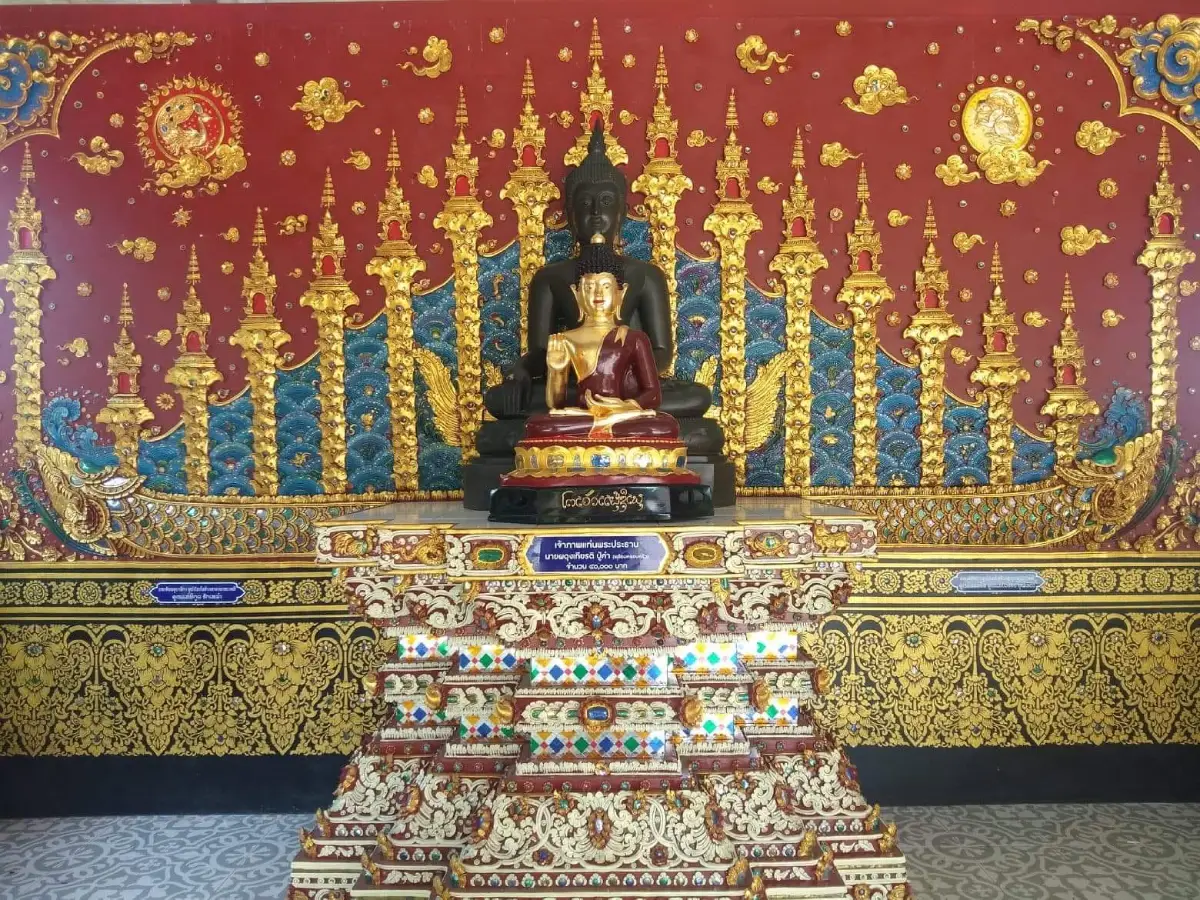
Specific architectural details inside Wat Wang Luang should be presented carefully because available public sources do not provide enough confirmed information on individual structures such as a viharn, ubosot, chedi, principal Buddha image, bell tower, or sermon hall. What can be stated confidently is that Wat Wang Luang is a Maha Nikaya local temple in Ban Wang Luang and provides space for Buddhist ceremonies, merit-making, and community religious activities. Its value lies more in community faith and continuing use than in documented architectural detail.
The temple’s main appeal is its identity as a peaceful community temple in Doi Tao. It does not offer the scale or elaborate presentation of famous temples in Chiang Mai city. Instead, it gives visitors a chance to experience a living village temple where monks and residents maintain religious life together. Travelers who appreciate quiet cultural routes, local Buddhist practice, and village-based travel will find Wat Wang Luang meaningful.
Wat Wang Luang can be included in a broader Doi Tao cultural route. Nearby places include Phra Borommathat Doi Koeng, Doi Tao Lake, Wat Tha Duea, Wat Doi Tao, and the Ban Chang Plot 8 weaving learning area. This route combines Buddhism, village culture, local craft, lake scenery, and the wider history of Doi Tao. For travelers who want to understand the district beyond its natural attractions, Wat Wang Luang adds a community-based religious dimension.
Ban Wang Luang is also connected with local environmental and community activities, including community forest-related work. This shows that the village has more than a religious dimension; it also reflects cooperation, local resource care, and community life. A temple in this kind of village context is linked not only with merit-making but also with the broader life of the settlement.
Getting There is most convenient by private car, rental car, or local hired transport. From Chiang Mai city, travel south through Chom Thong toward Hot District, then continue to Doi Tao on Highway 1103, the Hot – Doi Tao – Mae Tuen route. Once in Tha Duea Subdistrict, proceed toward Moo 4, Ban Wang Luang. Since the temple is located within a village area, using both the temple name and Ban Wang Luang in a navigation app is recommended.
From the Doi Tao Lake area, Wat Wang Luang can be combined easily with Phra Borommathat Doi Koeng and Wat Tha Duea. Doi Tao Lake is a major local attraction with wide lake scenery and floating restaurant services during high-water periods. Adding Wat Wang Luang to this route gives travelers a fuller view of Doi Tao by combining nature, local food, Buddhist worship, and village culture in one trip.
A short visit to Wat Wang Luang may take around 20 to 40 minutes for worship and quiet observation. Travelers who want a deeper local route should allow half a day to a full day and combine the temple with nearby cultural and natural sites. This style of travel suits visitors who prefer a slower pace and a more respectful understanding of local context rather than simply collecting many stops quickly.
Visitors should dress modestly, keep noise low, and avoid disturbing monks or local residents. If a merit-making event or religious ceremony is taking place, visitors should give priority to local worshippers. Photography should be done respectfully, especially during ceremonies. These manners help keep a visit to a community temple appropriate and meaningful.
Overall, Wat Wang Luang is a Maha Nikaya local temple of Ban Wang Luang, Moo 4, Tha Duea Subdistrict, Doi Tao District. Its value lies in its role as the spiritual center of the village, its official temple status since 1999, and its continued use in Buddhist activities such as Kathin. Although detailed architectural information is limited, the temple is meaningful as a real living temple in a Doi Tao village community and is suitable for travelers interested in quiet Buddhist and cultural routes in southern Chiang Mai.
| Name | Wat Wang Luang |
| Type | Local Buddhist Temple, Maha Nikaya Order |
| Location | Moo 4, Ban Wang Luang, Tha Duea Subdistrict, Doi Tao District, Chiang Mai Province, Thailand |
| Temple Code | 350170204 |
| Community Reference Coordinates | 17.992521511, 98.682242773 |
| Highlights | Local temple of Ban Wang Luang, spiritual center of Moo 4, Tha Duea Subdistrict, and a peaceful Buddhist stop in Doi Tao District |
| History | Officially permitted as a temple in 1999 and listed as a Maha Nikaya local temple of Ban Wang Luang |
| Name Origin | The name is connected with Ban Wang Luang, the Moo 4 village where the temple is located. |
| Distinctive Features | Peaceful community temple suitable for worship, merit-making, and learning about village Buddhist life in Doi Tao |
| Community Role | Place for Buddhist ceremonies, merit-making, Kathin, and community religious activities of Ban Wang Luang |
| Travel Information | From Chiang Mai, travel through Hot District, then continue to Doi Tao on Highway 1103, the Hot – Doi Tao – Mae Tuen route, toward Moo 4, Ban Wang Luang. |
| Current Status | Active local Buddhist temple used for Kathin and Buddhist community activities |
| Facilities | Temple grounds, open courtyard, and spaces for Buddhist community activities |
| Nearby Tourist Attractions | 1. Phra Borommathat Doi Koeng, about 6 km 2. Doi Tao Lake, about 8 km 3. Wat Tha Duea, about 10 km 4. Wat Doi Tao, about 12 km 5. Ban Chang Plot 8 Weaving Learning Area, about 14 km |
| Nearby Restaurants | 1. Check In Doi Tao Cafe’ and Resort, about 8 km, Tel. 062-969-8264 2. Krua Than Thip And Ruean Pha Than Thip, about 8 km, Tel. 091-026-4970 3. Ruean Pha Luk Mae Ping, about 8 km, Tel. 081-993-4162, 081-724-5470 4. Ruean Pha Doi Tao Rim Ping, about 8 km, Tel. 081-961-1854, 084-885-5982 5. Bandin in the Doi, about 14 km, Tel. 087-951-6778 |
| Nearby Accommodations | 1. Check In Doi Tao Cafe’ and Resort, about 8 km, Tel. 062-969-8264 2. Ruean Pha Than Thip, about 8 km, Tel. 091-026-4970 3. Ruean Pha Luk Mae Ping, about 8 km, Tel. 081-993-4162, 081-724-5470 4. Ruean Pha Doi Tao Rim Ping, about 8 km, Tel. 081-961-1854, 084-885-5982 5. The Creek Resort, about 20 km, Tel. 097-282-8982 |
Frequently Asked Questions (FAQ)
Q: Where is Wat Wang Luang located?
A: Wat Wang Luang is located in Moo 4, Ban Wang Luang, Tha Duea Subdistrict, Doi Tao District, Chiang Mai Province, Thailand.
Q: When was Wat Wang Luang officially established?
A: Wat Wang Luang was officially permitted as a temple in 1999 and is a Maha Nikaya local Buddhist temple.
Q: Why is Wat Wang Luang important to the local community?
A: It serves as the spiritual center of Ban Wang Luang and supports Buddhist ceremonies, merit-making, Kathin, and community religious activities.
Q: What is special about Wat Wang Luang?
A: Its value lies in its peaceful village temple atmosphere and its role in the Buddhist life of Ban Wang Luang in Doi Tao District.
Q: How do travelers get to Wat Wang Luang?
A: From Chiang Mai, travel through Hot District and continue on Highway 1103, the Hot – Doi Tao – Mae Tuen route, toward Moo 4, Ban Wang Luang in Tha Duea Subdistrict.
Q: Who should visit Wat Wang Luang?
A: The temple is suitable for travelers interested in local Buddhist temples, quiet cultural routes, village life, and the religious landscape of Doi Tao.
Q: What nearby places can be visited with Wat Wang Luang?
A: Nearby places include Phra Borommathat Doi Koeng, Doi Tao Lake, Wat Tha Duea, Wat Doi Tao, and the Ban Chang Plot 8 weaving learning area.
 Category: ●Places of Worship
 Group: ●Temple
Last Update : 2 MonthAgo
 Last Update : 2 MonthAgo
 Click to Access the Navigation Map GPS

 Muang Chiang Mai(121)Chom Thong(47)Mae Chaem(25)Chiang Dao(33)Doi Saket(68)Mae Taeng(85)Mae Rim(69)Samoeng(29)Fang(71)Mae Ai(59)Phrao(70)San Pa Tong(103)San Kamphaeng(66)San Sai(73)Hang Dong(73)Hot(32)Doi Tao(22)Omkoi(11)Saraphi(74)Wiang Haeng(15)Chai Prakan(28)Mae Wang(32)Mae On(22)Doi Lo(33)Galyani Vadhana(1)


