
lovethailand home >North Travel Attractions >Chiang Mai Travel Attractions >Muang Chiang Mai >Fa Ham > Wat San Sai Ton Kok
TL;DR: Wat San Sai Ton Kok is located at Ban San Sai Ton Kok, Village No. 7, Fa Ham Subdistrict, Mueang Chiang Mai District, Chiang Mai Province, open Daily, hours 08.00 – 17.00.

Wat San Sai Ton Kok
Open Days: Daily
Opening Hours: 08.00 – 17.00
Wat San Sai Ton Kok is an old Buddhist temple in Ban San Sai Ton Kok, Village No. 7, Fa Ham Subdistrict, Mueang Chiang Mai District, Chiang Mai Province. Its former name was Wat Sali Ping Chai Kaew Kwang, a name deeply connected with the Ping River, auspicious Buddhist symbolism, and the memory of the local community. The temple later became known as Wat San Sai Ton Kok to match the name of the village and to preserve the identity of the place. It is an important community temple for understanding Lanna history, the settlement of Tai Khuen people from Sipsong Panna, the restoration of Chiang Mai during the time of King Kawila, Lanna Buddhist architecture, old Buddha images with Tai Khuen and Burmese artistic influence, and the living cultural traditions of Fa Ham.
The temple is located at No. 141, Soi Ban San Sai Ton Kok 2, Village No. 7, Fa Ham Subdistrict, Mueang Chiang Mai District, Chiang Mai Province. The temple grounds cover 3 rai, 3 ngan, and 16 square wah. Its location places it in the northern part of Fa Ham, close to San Phi Suea and the Ping River communities. Wat San Sai Ton Kok is not a large mass-tourism temple, but it has strong cultural value because it preserves local history, community faith, Lanna art, and the story of people who helped restore sacred spaces after periods of conflict and decline.
The former name, Wat Sali Ping Chai Kaew Kwang, carries a rich symbolic meaning. “Sali” refers to the Bodhi tree, “Ping” refers to the Ping River, “Chai” conveys auspiciousness or victory, and “Kaew Kwang” suggests a broad and radiant jewel-like prosperity. The name can be understood as an auspicious Bodhi tree by the Ping River, shining widely like a precious gem. This name has not disappeared from the community. It continues through the Sali Ping Chai Kaew Kwang Learning Center and cultural activities linked with the village.
The present name, Wat San Sai Ton Kok, reflects the identity of the village. “San Sai” is the village name, while “Ton Kok” refers to a large makok tree that once stood in the temple area. Because the name San Sai is used in many places in Chiang Mai, the community added Ton Kok to identify this particular temple more clearly. The name therefore records both a geographical identity and a remembered natural landmark. It shows how local people used landscape, memory, and language to preserve the uniqueness of their temple.
The history of Wat San Sai Ton Kok is linked with the period when Burmese influence was strong in Lanna. The temple is associated with an old brick-and-stucco Buddha image in Lanna style mixed with Tai Khuen artistic influence. The image is in the posture of subduing Mara and has a lap width of 50 inches. It is connected with the period before or around the time when Lanna came under Burmese rule in the 21st Buddhist century, around 2105 B.E. This Buddha image is central to the temple’s sacred identity and to the faith of the local community.
The temple’s most important Buddha image is known as Luang Pho Duang Dee Sali Ping Chai, or Luang Pho Duang Dee Sali Ping Chai Saksit. Local tradition explains that when villagers restored the damaged Buddha image and brought it back to beauty and dignity, they named it with a meaning connected to good fortune, auspicious success, and spiritual protection. Luang Pho Duang Dee has therefore become both a sacred image and a symbol of the temple’s revival.
In Lanna history, Chiang Mai experienced long periods of conflict, population movement, and political change. During the time of King Kawila, Chiang Mai was restored through a policy often remembered as “collect vegetables into the basket, collect people into the city.” This meant gathering people back to rebuild settlements, strengthen the city, and restore religious life. During this period, people from Sipsong Panna and the Shan states came into Chiang Mai. Among them were Tai Khuen communities that played an important role in the area around Ban San Sai Ton Kok.
The Tai Khuen people from Sipsong Panna first settled around Mueang Lang before crossing the Ping River to the eastern side. There, they found an old chedi and a brick-and-stucco Buddha image that was beautiful but damaged. They cleared the area, settled around the temple, and restored the sacred site. This story makes Wat San Sai Ton Kok important as a temple of return, restoration, and renewed community life. It records how people, faith, and sacred architecture came together during the rebuilding of Chiang Mai.
The community invited Khru Ba Daeng to become the first abbot and to lead the restoration of the temple and Buddha image. His role shows how monks in Lanna society often served not only as ritual specialists but also as community leaders, restorers of sacred places, and organizers of collective faith. Through this leadership, a damaged temple space became a living religious center again.
The value of Wat San Sai Ton Kok lies in several layers of history. The first layer is the old Buddha image and chedi associated with Lanna and Burmese-era influence. The second layer is the arrival and settlement of Tai Khuen people. The third layer is the restoration of Chiang Mai during the time of King Kawila. The fourth layer is the renaming of the temple to reflect local village identity. The fifth layer is the temple’s current role as a place of worship, merit-making, cultural learning, and community activity.
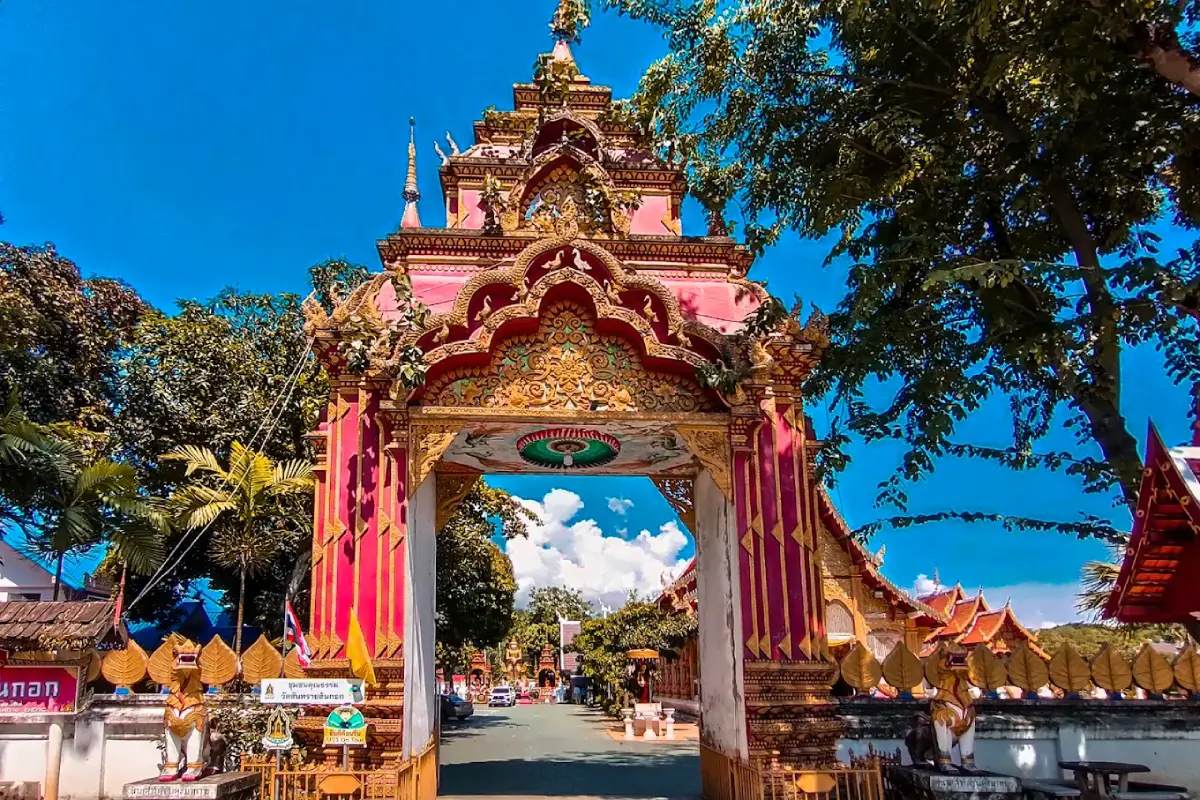
The viharn is one of the most important structures to visit. It displays Lanna architectural character through its roof form, decorative elements, entrance, and naga stairway. Inside the viharn, visitors can pay respect to sacred Buddha images and experience the atmosphere of a community temple that has been cared for over generations. The viharn should be viewed not only as a beautiful building but also as a space where craftsmanship, devotion, restoration, and local identity meet.
The ubosot is another important structure in the temple compound. In Buddhist practice, the ubosot is used for formal monastic ceremonies, including ordination and Sangha rites that require a consecrated boundary. Its Lanna architectural form gives the temple compound visual unity and religious completeness. Visitors should view the ubosot together with the viharn and chedi to understand the temple’s main sacred layout.
The chedi confirms the long continuity of faith at Wat San Sai Ton Kok. In Lanna temples, the chedi is often the symbolic heart of sacred space. It is a place for reverence, circumambulation, and reflection on Buddhism. Visitors should walk around the chedi respectfully and observe its proportions, base, upper structure, finial, and surrounding sacred features. These details reflect both Buddhist belief and northern Thai craftsmanship.
The temple is also known today for several sacred points of worship. Many visitors begin by paying respect to Luang Pho Duang Dee Sali Ping Chai and then continue to other sacred images and figures around the temple. This route shows that Wat San Sai Ton Kok is still a living temple. It is not an abandoned historical site but an active place where people come to make merit, pray, and connect with the sacred traditions of the community.
Wat San Sai Ton Kok has become especially known among visitors who pay respect to Thao Wessuwan and other sacred figures associated with protection, fortune, and success. Important worship points include Phra Chao Maha Setthi Than Jai, Phra Singh Saen Lan, Luang Pho Phet Phan Lan, Luang Pho Samret Som Pratthana, Phra Siwali Maha Lap, Khru Ba Chao Siwichai, revered monks, Thao Phaya Yommarat, Thao Wessuwan Chaturamaharat, Phaya Purisat, Maha Ammat Ek, and Phra Phikanet. These sacred points give the temple a strong contemporary role as a place for merit-making and prayer.
Each sacred point has a different meaning for visitors. Luang Pho Duang Dee represents the original faith of the community. Phra Chao Maha Setthi Than Jai is associated with quick success in prayer. Phra Siwali Maha Lap is linked with fortune and abundance. Thao Wessuwan is connected with protection and wealth. Khru Ba Chao Siwichai represents Lanna Buddhist devotion. Together, these figures show how old Buddhist faith and contemporary devotional practice coexist within the temple.
The deepest cultural value of Wat San Sai Ton Kok is its role in preserving Lanna culture. The former name of the temple continues through the Sali Ping Chai Kaew Kwang Learning Center, which is driven by local cultural teachers and the San Sai Ton Kok community. The center serves as a learning space for Lanna performing arts, traditional play, and community knowledge. Learners range from young children to adults, showing that cultural transmission remains active in this area.
The Sali Ping Chai Lanna Port is another cultural space connected with the memory of the temple’s former name. It supports river-based activities and cultural learning linked with life along the Ping River. This connection is important because the Ping River is not only a geographical feature. It is a route of settlement, livelihood, culture, memory, and community identity in Chiang Mai.
Wat San Sai Ton Kok remains an active community temple in Fa Ham. It appears in Fa Ham Municipality’s tourism information and has been used for religious and community activities, including Tak Bat Thewo Rohana and community merit-making events. These activities show that the temple is still open and functioning as a religious and cultural center for the local community.
Visitors can understand the temple best by dividing the visit into five zones: the viharn zone, the ubosot zone, the chedi zone, the Luang Pho Duang Dee worship zone, and the contemporary sacred worship zone that includes Thao Wessuwan and other sacred figures. A wider cultural route can also include the Sali Ping Chai Kaew Kwang Learning Center and the Sali Ping Chai Lanna Port. This route helps visitors see the temple as part of a broader cultural landscape.
The best time to visit is in the morning or late afternoon, when the weather is more comfortable and natural light is suitable for viewing the architecture. Visitors who want to pay respect at the main worship points should allow about 45 minutes to 1 hour. Those who want to study the temple’s history, architecture, community role, and nearby cultural sites should plan a half-day route around Fa Ham and San Phi Suea.
Getting There is convenient from central Chiang Mai. Travelers can head toward Fa Ham and San Phi Suea, then enter the local roads leading to Soi Ban San Sai Ton Kok 2. Drivers can use the coordinates 18.824988, 98.998973. Those using red songthaews, hired vehicles, or app-based transport should specify “Wat San Sai Ton Kok, Soi Ban San Sai Ton Kok 2, Village No. 7, Fa Ham” to avoid confusion with similarly named temples in other districts.
Travel from Chiang Mai’s old city is usually manageable when traffic is light, but extra time should be allowed during morning and evening peak periods. Visitors staying in Fa Ham, Pa Tan, San Phi Suea, or the Ping River area will find the temple especially convenient. Those staying in central Chiang Mai can combine the temple with Wat Ket, Warorot Market, Wat Langka, Wat Tha Kradat, Wat Kha Chao, and Wat Fa Ham in a single cultural route.
Nearby places that fit well with Wat San Sai Ton Kok include the Sali Ping Chai Kaew Kwang Learning Center, Sali Ping Chai Lanna Port, Wat Kha Chao, Wat Langka, Wat Tha Kradat, Wat Fa Ham, the public park along the Ping River, Wat Ket Karam, and Warorot Market. This route gives visitors a broader understanding of Chiang Mai’s riverside communities, old temples, cultural learning spaces, and traditional market life.
Restaurants near the temple include local Thai restaurants, northern Thai food, pizza, casual dining, and well-known restaurants in the Fa Ham and San Phi Suea area. Pad Thai Khun Ann and PIZZA PHU PING are especially close to the temple. Other practical options include Baanrai Yarmyen, Khao Soi Samer Jai Fa Ham, Brownie Steak & Bakery, and Jia Tong Heng Fa Ham Branch. This makes it easy to plan a morning temple visit followed by lunch nearby.
Accommodations near Wat San Sai Ton Kok include guesthouses, homestays, resorts, and hotels around Fa Ham, Pa Tan, and San Phi Suea. Nearby options include Liam’s Suan Dok Mai Guesthouse, Fa Ham Village Homestay, Baan Singkham Resort, Rimthara Residence, Tonnam Homestay, and The Rise Suites Hotel Chiang Mai. This area is suitable for travelers who want to stay slightly outside the old city while remaining close to Wat Ket, Warorot Market, the Ping River, and northern Chiang Mai routes.
Visitors should dress respectfully when entering Wat San Sai Ton Kok. Shoulders and knees should be covered, shoes should be removed before entering the viharn or ubosot, and voices should be kept low inside sacred areas. Visitors should not touch Buddha images, decorative elements, ritual objects, or sacred items without permission. If monks, novices, or local residents are performing religious activities, visitors should give them space and ask before taking photographs.
Wat San Sai Ton Kok is suitable for travelers searching for Chiang Mai temples, northern Thai temples, Lanna architecture, old Buddha images, Tai Khuen history, riverside community culture, and places to make merit in Chiang Mai. Its appeal comes from the combination of history, art, faith, community identity, and living tradition. It is a temple for visitors who want to understand Chiang Mai beyond the most famous tourist routes.
Compared with major temples in the old city, Wat San Sai Ton Kok offers a more local and layered experience. Visitors do not come only to see beautiful buildings. They also encounter the story of Tai Khuen settlement, King Kawila’s restoration of Chiang Mai, Luang Pho Duang Dee, the makok tree, the Sali Ping Chai cultural learning network, and the temple’s continuing community role. Reading the history before visiting makes the temple much more meaningful.
In summary, Wat San Sai Ton Kok is an old temple in Fa Ham with strong historical, artistic, religious, and cultural value. It grew from the earlier name Wat Sali Ping Chai Kaew Kwang and is connected with Luang Pho Duang Dee Sali Ping Chai, Tai Khuen settlement, the restoration of Chiang Mai during the time of King Kawila, Lanna architecture, the viharn, ubosot, chedi, contemporary sacred worship points, and community-based Lanna cultural learning. For travelers who want a quieter and deeper Chiang Mai temple experience, Wat San Sai Ton Kok is a meaningful destination in the Fa Ham and San Phi Suea area.
| Name | Wat San Sai Ton Kok |
| Former Name | Wat Sali Ping Chai Kaew Kwang |
| Location | Ban San Sai Ton Kok, Village No. 7, Fa Ham Subdistrict, Mueang Chiang Mai District, Chiang Mai Province |
| Address | No. 141, Soi Ban San Sai Ton Kok 2, Village No. 7, Fa Ham Subdistrict, Mueang Chiang Mai District, Chiang Mai Province 50300, Thailand |
| Coordinates | 18.824988, 98.998973 |
| Temple Area | 3 rai, 3 ngan, and 16 square wah |
| Highlights | Old temple in Fa Ham with Lanna viharn, ubosot, chedi, Luang Pho Duang Dee Sali Ping Chai, old Lanna-Tai Khuen Buddha image, Thao Wessuwan worship point, and the cultural story of Ban San Sai Ton Kok |
| History | Associated with the 21st Buddhist century, Burmese-era influence in Lanna, Tai Khuen settlement from Sipsong Panna, and the restoration of Chiang Mai during the time of King Kawila |
| Name Origin | Formerly named Wat Sali Ping Chai Kaew Kwang, later renamed Wat San Sai Ton Kok to match the village name and the large makok tree that once marked the temple area |
| Important Features Inside The Temple | Luang Pho Duang Dee Sali Ping Chai, viharn, ubosot, chedi, Phra Chao Maha Setthi Than Jai, Phra Singh Saen Lan, Luang Pho Phet Phan Lan, Luang Pho Samret Som Pratthana, Phra Siwali Maha Lap, Thao Wessuwan Chaturamaharat, and Phra Phikanet |
| Distinctive Art And Architecture | Lanna architecture, old Buddha image in Lanna style mixed with Burmese and Tai Khuen influence, naga staircase, decorative viharn details, and a riverside community temple atmosphere |
| Suggested Visit Zones | Viharn zone, ubosot zone, chedi zone, Luang Pho Duang Dee zone, Thao Wessuwan and contemporary sacred worship zone, and cultural community zone linked with the Sali Ping Chai Kaew Kwang Learning Center |
| Related Traditions / Activities | Tak Bat Thewo Rohana, community merit-making, and Lanna cultural activities connected with the Fa Ham community |
| Travel Information | Travel from central Chiang Mai toward Fa Ham and San Phi Suea, then enter Soi Ban San Sai Ton Kok 2. Private cars, red songthaews, hired vehicles, and app-based transport are practical options |
| Current Status | Active community temple and religious site in Fa Ham Subdistrict, with ongoing religious and community activities |
| Open Days | Daily |
| Opening Hours | 08.00 – 17.00 |
| Abbot / Caretaker | Phra Khru Kosol Pariyattikhun |
| Contact Number | 061-361-3164 |
| Facilities | Viharn, ubosot, chedi, temple courtyard, sacred worship points, and community activity areas |
| Nearby Tourist Attractions | 1. Sali Ping Chai Kaew Kwang Learning Center, about 1 km 2. Sali Ping Chai Lanna Port, about 1 km 3. Wat Kha Chao, about 3 km 4. Wat Langka, about 3 km 5. Wat Tha Kradat, about 3 km 6. Wat Fa Ham, about 4 km 7. Public Park Along The Ping River, about 4 km 8. Wat Ket Karam, about 6 km |
| Nearby Restaurants | 1. Pad Thai Khun Ann, about 0.1 km, Tel. 098-260-5451 2. PIZZA PHU PING, about 0.1 km, Tel. 093-046-8222 3. Baanrai Yarmyen, about 2 km, Tel. 053-247-999, 053-244-796, 084-808-3119 4. Khao Soi Samer Jai Fa Ham, about 4 km, Tel. 053-242-928, 081-764-8723 5. Brownie Steak & Bakery, about 4 km, Tel. 053-306-667, 086-915-5858 6. Jia Tong Heng Fa Ham Branch, about 5 km, Tel. 053-242-242 |
| Nearby Accommodations | 1. Liam’s Suan Dok Mai Guesthouse, about 0.5 km, Tel. 063-329-1724 2. Fa Ham Village Homestay, about 2 km, Tel. 083-080-0195 3. Baan Singkham Resort, about 3 km, Tel. 082-386-8887 4. Rimthara Residence, about 3 km, Tel. 053-110-430 5. Tonnam Homestay, about 4 km, Tel. 089-853-4402 6. The Rise Suites Hotel Chiang Mai, about 6 km, Tel. 098-661-6422 |
Frequently Asked Questions (FAQ)
Q: Where is Wat San Sai Ton Kok located?
A: Wat San Sai Ton Kok is located at No. 141, Soi Ban San Sai Ton Kok 2, Village No. 7, Fa Ham Subdistrict, Mueang Chiang Mai District, Chiang Mai Province, near the Fa Ham and San Phi Suea area.
Q: What was the former name of Wat San Sai Ton Kok?
A: The former name was Wat Sali Ping Chai Kaew Kwang. The temple was later renamed Wat San Sai Ton Kok to match the village name and the large makok tree that once marked the temple area.
Q: Why is Wat San Sai Ton Kok important?
A: The temple is important for its connection with Fa Ham community history, Tai Khuen settlement from Sipsong Panna, the restoration of Chiang Mai during the time of King Kawila, and the preservation of Lanna culture.
Q: What can visitors see inside Wat San Sai Ton Kok?
A: Visitors can see Luang Pho Duang Dee Sali Ping Chai, the Lanna viharn, ubosot, chedi, Phra Chao Maha Setthi Than Jai, Thao Wessuwan, Phra Siwali Maha Lap, Khru Ba Chao Siwichai, and several other sacred worship points.
Q: What kind of Buddha image is Luang Pho Duang Dee Sali Ping Chai?
A: Luang Pho Duang Dee Sali Ping Chai is a brick-and-stucco Buddha image in Lanna style mixed with Tai Khuen influence. It is in the posture of subduing Mara and has a lap width of 50 inches.
Q: What are the opening hours of Wat San Sai Ton Kok?
A: Wat San Sai Ton Kok is open daily from 08.00 to 17.00.
Q: How can travelers get to Wat San Sai Ton Kok?
A: Travelers can go from central Chiang Mai toward Fa Ham and San Phi Suea, then enter Soi Ban San Sai Ton Kok 2. Private cars, red songthaews, hired vehicles, and app-based transport are convenient options.
Q: What nearby places can be visited with Wat San Sai Ton Kok?
A: Nearby places include the Sali Ping Chai Kaew Kwang Learning Center, Sali Ping Chai Lanna Port, Wat Kha Chao, Wat Langka, Wat Tha Kradat, Wat Fa Ham, the public park along the Ping River, and Wat Ket Karam.
 Category: ●Places of Worship
 Group: ●Temple
Last Update : 1 WeekAgo
 Last Update : 1 WeekAgo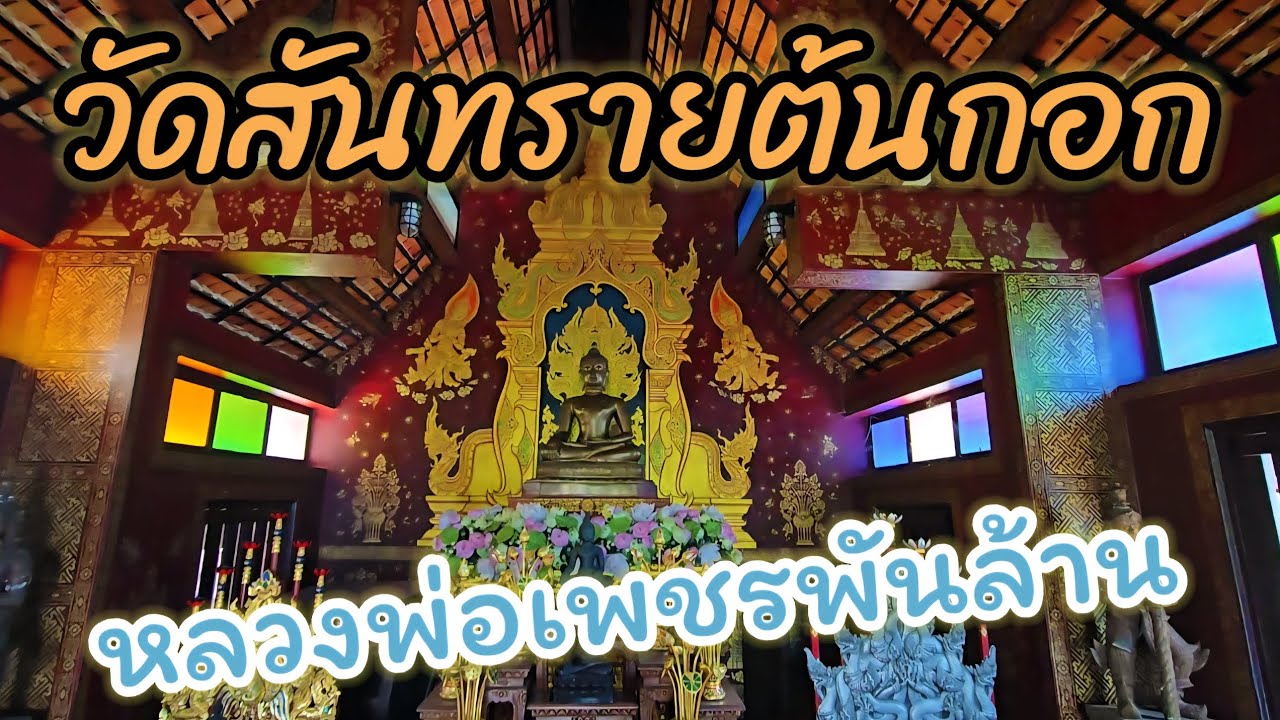
 Click to Access the Navigation Map GPS
Wat San Sai Ton Kok Map
Recommend

 Muang Chiang Mai(121)Chom Thong(47)Mae Chaem(25)Chiang Dao(33)Doi Saket(68)Mae Taeng(85)Mae Rim(69)Samoeng(29)Fang(71)Mae Ai(61)Phrao(70)San Pa Tong(105)San Kamphaeng(66)San Sai(73)Hang Dong(74)Hot(32)Doi Tao(22)Omkoi(11)Saraphi(74)Wiang Haeng(15)Chai Prakan(28)Mae Wang(32)Mae On(22)Doi Lo(34)Galyani Vadhana(1)


