
lovethailand home >North Travel Attractions >Chiang Mai Travel Attractions >Muang Chiang Mai >Phra Sing > Wat Sri Koed
TL;DR: Wat Sri Koed is located at Ratchadamnoen Road, Phra Sing Subdistrict, Mueang Chiang Mai District, Chiang Mai Province, open Daily, hours 08.30 – 16.00.

Wat Sri Koed
Open Days: Daily
Opening Hours: 08.30 – 16.00
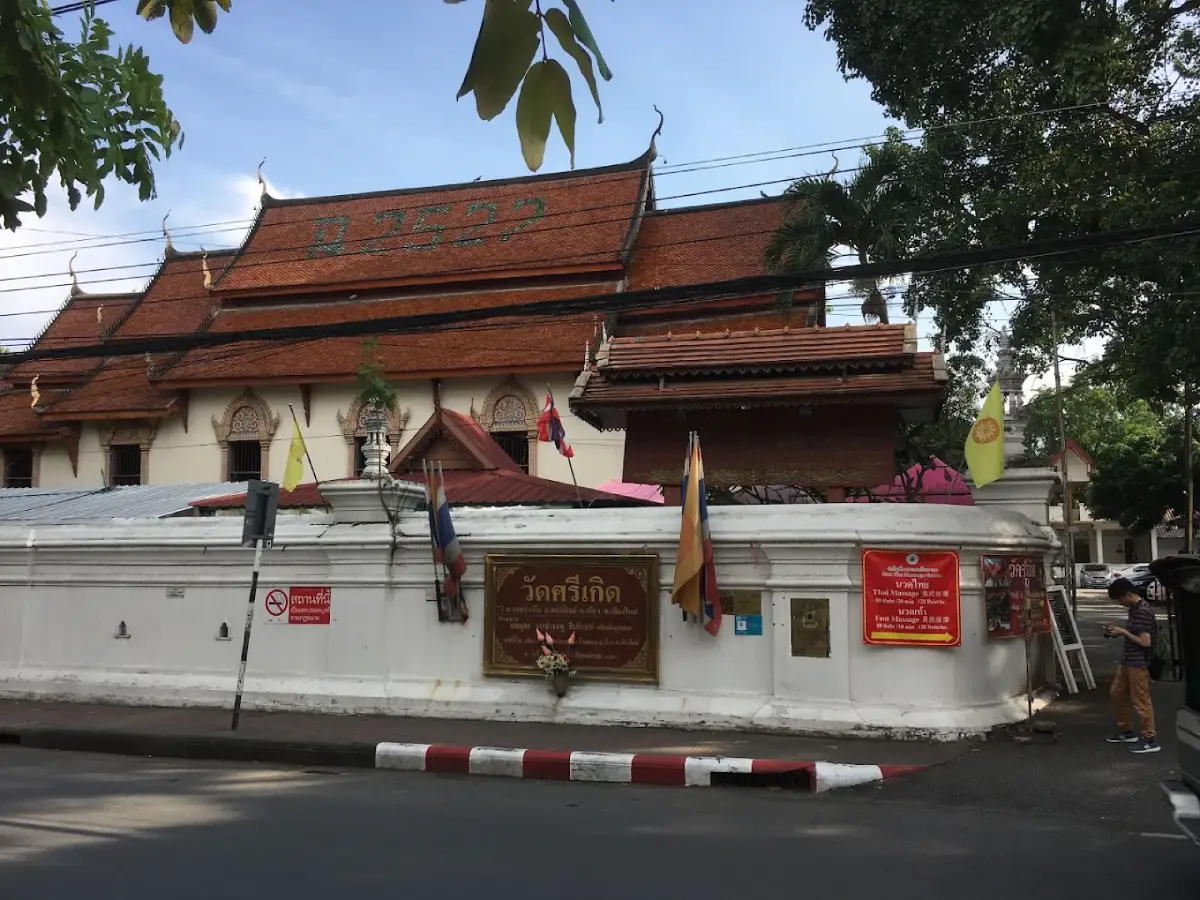
Wat Sri Koed is a historic community Buddhist temple in the Maha Nikaya tradition, located on Ratchadamnoen Road in Phra Sing Subdistrict, Mueang Chiang Mai District, Chiang Mai Province. Set inside Chiang Mai Old City, the temple is especially important for travelers interested in Lanna history, Buddhist art, and quieter cultural sites beyond the city’s most crowded landmarks. Its most significant sacred image is Phra Chao Khaeng Khom, a large bronze Buddha image covered with lacquer and gold leaf, known for its distinctive sharp shin form that gives the image its name.
Wat Sri Koed is a compact but meaningful temple. It stands on one of the most important streets in the old city, close to Wat Phra Singh, Wat Thung Yu, Wat Chedi Luang, Wat Phan Tao, Tha Phae Gate, and the Sunday Walking Street on Ratchadamnoen Road. This location makes the temple easy to include in a walking route through Chiang Mai Old City. Visitors who want to understand Chiang Mai through historical temples rather than only famous landmarks will find Wat Sri Koed a worthwhile stop.
The temple’s value comes from the way it brings together several layers of Chiang Mai’s cultural memory. It is connected with King Kawila’s period of city restoration, an old inscription related to Phra Chao Khaeng Khom, references to the temple name in old Lanna literature, and a registered heritage status. Wat Sri Koed is therefore not only a place of worship but also a site where history, art, faith, and urban community life meet.
Historically, Wat Sri Koed was established during the reign of King Kawila around 1800. A name associated with the temple in earlier evidence is Wat Luang Phothirukkha Phitcharam, which appears in relation to the inscription connected with bringing Phra Chao Khaeng Khom to the temple’s viharn. The temple is therefore closely tied to the revival of Chiang Mai after a long period of political and cultural change. In this context, sacred images, temples, inscriptions, and local communities played an important role in restoring religious life in the city.
The name Wat Sri Koed also appears in the old Lanna poetic work Khlong Hariphunchai, composed around 1482–1517. This reference gives the temple’s name an additional historical layer, linking it to the literary memory of the Lanna world. When this literary trace is read together with the stone inscription and the history of Phra Chao Khaeng Khom, Wat Sri Koed becomes a temple with strong cultural depth rather than a simple roadside monastery.
The viharn of Wat Sri Koed was built around 1809 to enshrine Phra Chao Khaeng Khom. Although the present architectural form has changed through restoration and long-term use, the viharn remains the central point of the temple visit. Travelers should take time inside the viharn to observe the Buddha image respectfully, because this is where the temple’s religious significance and art-historical importance come together most clearly.
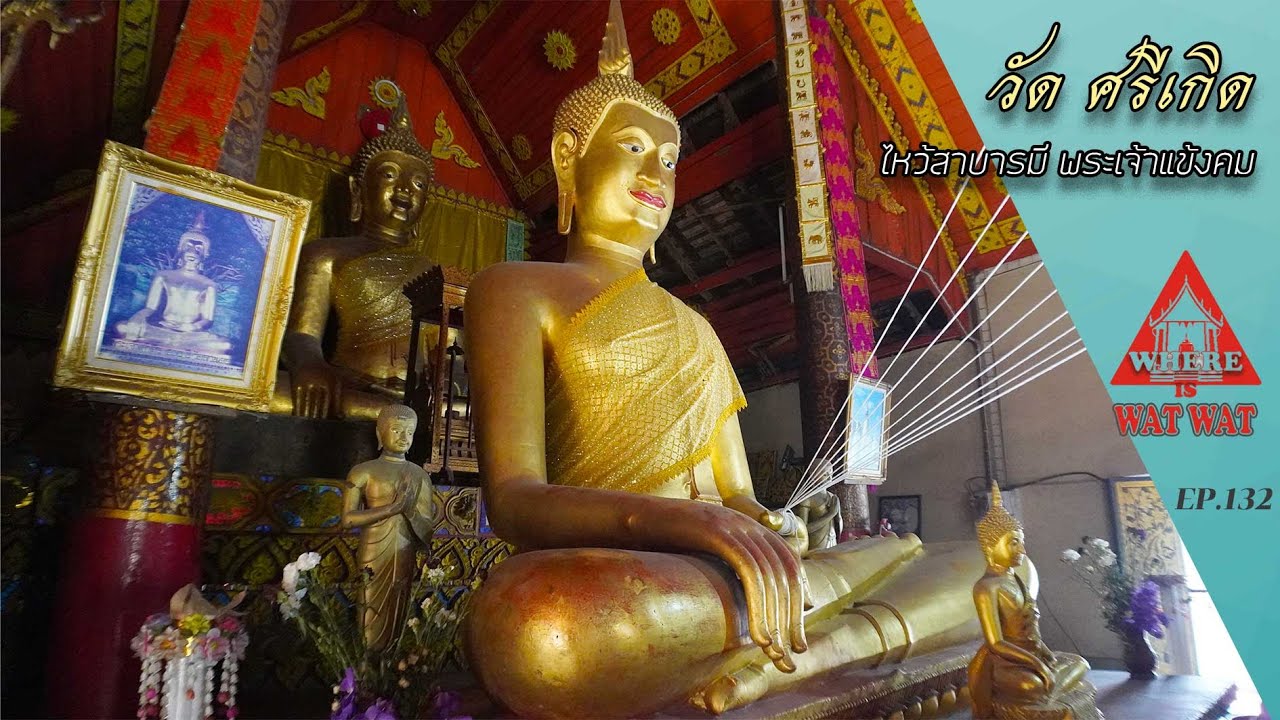
Phra Chao Khaeng Khom is a seated Buddha image in the posture of subduing Mara. It is made of bronze, covered with lacquer and gold leaf, with a lap width of 94 inches, a height of 112 inches, and an estimated weight of 3,960 kilograms. The name “Khaeng Khom” refers to the sharp ridge-like form of the Buddha image’s shins. This feature is visually distinctive and separates the image from many more familiar Lanna Buddha types.
Phra Chao Khaeng Khom is associated with King Tilokkarat, one of the most important rulers of Lanna. The image was cast at Wat Pa Tan Noi, also known as Wat Tanwan Maha Vihara, in 1484. Its style reflects Lanna art with strong influence from early Ayutthaya U-Thong type 2 art and elements related to Lopburi and Khmer Bayon forms. Key features include a square face, wide open eyes, thick lips, a square chin, a visible hairline, small hair curls, a tall flame finial, a large robe fold reaching down toward the abdomen, and the sharp shin form that defines the image.
For travelers interested in Buddhist art, this image is one of the most important reasons to visit Wat Sri Koed. Many Lanna Buddha images are known for softer facial forms and rounded proportions, but Phra Chao Khaeng Khom has a stronger and more angular presence. The mixture of artistic influences shows that Chiang Mai was not isolated in its artistic development. Instead, Lanna artists and patrons could adopt forms from other regions and reinterpret them within a northern Thai Buddhist context.
During the reign of King Kawila, Phra Chao Khaeng Khom was brought from Wat Pa Tan Noi and enshrined as the principal Buddha image at Wat Sri Koed. This act had religious and cultural importance. Chiang Mai at that time was undergoing restoration, and the movement of sacred images helped strengthen Buddhist life and civic identity. The image therefore represents more than artistic beauty; it also reflects the restoration of faith, community, and city life in Chiang Mai.
The Wat Sri Koed inscription is another essential part of the temple’s history. The inscription, written in Fakkham script in Thai on grey sandstone, is dated to 1809. Its summary refers to the celebration ceremony for the Khaeng Khom Buddha image of Wat Pa Tan, with Phra Maha Somdet Pawattaluang Phothirukkha Phitcharam, also known as Nonthawiriyawangso, presiding over the ceremony, and Sathu Chao Kawirapanyochotilawangso serving as a religious patron. This inscription gives the temple strong documentary value for the study of Chiang Mai history.
Wat Sri Koed was registered by the Fine Arts Department in the Government Gazette, volume 52, section 75, dated March 8, 1935. This registered status reflects the temple’s value as a cultural and artistic heritage site. Visitors should therefore treat the temple as a heritage space as well as a living place of worship. The Buddha image, viharn, ordination hall, chedi, Bodhi tree, and temple grounds all form part of the site’s cultural setting.
The main areas inside Wat Sri Koed include the viharn, the ordination hall, the chedi, the Bodhi tree, and the temple grounds used for Buddhist activities. The viharn is the main focus because it houses Phra Chao Khaeng Khom. The ordination hall represents the temple’s active religious role, while the chedi and Bodhi tree add to the atmosphere of an old Lanna temple. The temple is not large, but its elements reward careful observation.
Wat Sri Koed remains an active Buddhist temple. Current temple information identifies Phra Khru Sunthon Khantirat as the abbot, and the temple has resident monks. Visitors should dress modestly, speak quietly, remove shoes before entering designated buildings, avoid touching sacred objects, and avoid disturbing monks or worshippers. Respectful behavior is important because Wat Sri Koed is not only a tourist attraction but also a working religious site.
The atmosphere of Wat Sri Koed differs from the more crowded landmark temples in Chiang Mai. The temple sits on a busy old-city route, yet the interior feels calm and reflective. This contrast is part of its appeal. It allows visitors to step away from the movement of Ratchadamnoen Road and enter a quieter religious space where the details of Lanna architecture and Buddhist art can be appreciated at a slower pace.
Getting to Wat Sri Koed is easy. The temple is located on Ratchadamnoen Road within Chiang Mai Old City. Travelers staying near Wat Phra Singh, Sam Lan Road, Rachamankha Road, or Tha Phae Gate can walk to the temple conveniently. From other parts of Chiang Mai, visitors can take a red songthaew, local taxi, private car, or ride-hailing service to Ratchadamnoen Road. Walking is the best way to explore this area because many temples, cafés, restaurants, and historic points are close together.
A practical walking route can begin at Wat Phra Singh, continue to Wat Sri Koed, Wat Thung Yu, Wat Phan Tao, Wat Chedi Luang, the Three Kings Monument, and then toward Tha Phae Gate. This route gives travelers a strong overview of Chiang Mai Old City through its religious and urban landscape. The best times to visit are in the morning or late afternoon, when the weather is more comfortable for walking.
On Sundays, Wat Sri Koed can be paired naturally with the Ratchadamnoen Sunday Walking Street. Visitors can come during the afternoon to pay respect to Phra Chao Khaeng Khom and then continue walking through the evening market. This makes the visit useful for travelers who want one route that combines Buddhist heritage, Lanna art, local food, crafts, and old-city street life.
Wat Sri Koed is also suitable for photography, especially for travelers who prefer quieter temple scenes. The viharn, chedi, Bodhi tree, and temple grounds provide calm visual details. Unlike heavily visited landmark temples, Wat Sri Koed offers a more local atmosphere. Photographs taken here often show the relationship between a historic temple and the everyday life of Chiang Mai Old City.
For art-focused visitors, seeing Phra Chao Khaeng Khom in person is more meaningful than reading about the image alone. The size, weight, posture, facial structure, robe details, and shin form are best understood inside the viharn. The image demonstrates how Lanna Buddhist art could absorb outside influences and create a form that remained spiritually important in Chiang Mai.
Wat Sri Koed deserves a place in any detailed Chiang Mai temple itinerary. It combines King Kawila-era history, the earlier literary reference in Khlong Hariphunchai, an 1809 inscription, the important Phra Chao Khaeng Khom Buddha image associated with King Tilokkarat, and registered heritage status from 1935. These elements make it one of the most rewarding small temples to visit in Chiang Mai Old City.
In summary, Wat Sri Koed is a historic temple in Chiang Mai Old City with outstanding cultural and artistic value. Its main highlight is Phra Chao Khaeng Khom, a large bronze Buddha image with a sharp shin form and a distinctive blend of Lanna, Ayutthaya, Lopburi, and Khmer-related artistic features. The temple is easy to reach, close to major old-city attractions, and suitable for travelers who want a thoughtful cultural visit rather than a rushed stop.
| Name | Wat Sri Koed |
| Location | Ratchadamnoen Road, Phra Sing Subdistrict, Mueang Chiang Mai District, Chiang Mai Province |
| Address | 171 Ratchadamnoen Road, Phra Sing Subdistrict, Mueang Chiang Mai District, Chiang Mai Province 50200, Thailand |
| Coordinates | 18.7881, 98.9842 |
| Temple Type | Community Buddhist temple in the Maha Nikaya tradition |
| Highlights | Phra Chao Khaeng Khom, a large bronze Buddha image covered with lacquer and gold leaf, showing Lanna art with Ayutthaya and Lopburi influence |
| History | Established during the reign of King Kawila around 1800. The viharn was built around 1809 to enshrine Phra Chao Khaeng Khom. The temple was registered by the Fine Arts Department in the Government Gazette, volume 52, section 75, dated March 8, 1935. |
| Former / Recorded Name | Wat Luang Phothirukkha Phitcharam, a name associated with inscription evidence related to the enshrinement of Phra Chao Khaeng Khom |
| Main Sacred Object | Phra Chao Khaeng Khom, a bronze Buddha image in the posture of subduing Mara |
| Distinctive Features Of Phra Chao Khaeng Khom | Lap width 94 inches, height 112 inches, weight about 3,960 kilograms, with a sharp ridge-like shin form that gives the image its name |
| Main Areas / Zones | Viharn housing Phra Chao Khaeng Khom, ordination hall, chedi, Bodhi tree, and temple grounds for worship and merit-making |
| Abbot / Caretaker | Phra Khru Sunthon Khantirat |
| Travel Information | Reach Ratchadamnoen Road by private car, red songthaew, local taxi, or ride-hailing service. Travelers staying near Wat Phra Singh or inside the old city can walk to the temple conveniently. |
| Current Status | Open to visitors and remains an active Buddhist temple in Chiang Mai Old City |
| Open Days | Daily |
| Opening Hours | 08.30 – 16.00 |
| Fees | No admission fee |
| Facilities | Limited parking; best visited on foot from the Wat Phra Singh or Ratchadamnoen Road area |
| Main Contact Number | 053-277-147 |
| Nearby Tourist Attractions | 1. Wat Thung Yu, about 0.1 km 2. Wat Phra Singh Woramahawihan, about 0.3 km 3. Wat Chedi Luang Worawihan, about 0.7 km 4. Wat Phan Tao, about 0.8 km 5. Ratchadamnoen Sunday Walking Street, about 0.1 km 6. Tha Phae Gate, about 1 km |
| Nearby Restaurants | 1. Akha Ama La Fattoria Phra Singh, about 0.1 km 2. Baan Buri Café & Restaurant, about 0.1 km, Tel. 053-416-500, 093-490-0878 3. It’s Good Kitchen, about 0.2 km, Tel. 089-432-2323 4. Huen Phen, about 0.6 km, Tel. 053-814-548, 094-628-4312 5. SP Chicken, about 0.7 km 6. Fern Forest Café, about 1.1 km, Tel. 084-616-1144 |
| Nearby Accommodations | 1. Buri Gallery House, about 0.2 km, Tel. 053-416-500, 093-490-0878 2. 99 The Heritage Hotel, about 0.4 km, Tel. 053-326-287, 097-920-4252 3. U Chiang Mai, about 0.6 km, Tel. 053-327-000, 081-960-5584 4. The Inside House, about 0.7 km, Tel. 053-904-699 5. Rachamankha Hotel, about 0.8 km, Tel. 053-904-111 to 112 |
Frequently Asked Questions (FAQ)
Q: Where is Wat Sri Koed located?
A: Wat Sri Koed is located on Ratchadamnoen Road in Phra Sing Subdistrict, Mueang Chiang Mai District, Chiang Mai Province, inside Chiang Mai Old City.
Q: Why is Wat Sri Koed important?
A: Wat Sri Koed is important because it is connected with Phra Chao Khaeng Khom, an 1809 inscription, King Kawila-era Chiang Mai history, and registered heritage status from 1935.
Q: What is Phra Chao Khaeng Khom?
A: Phra Chao Khaeng Khom is a large bronze Buddha image covered with lacquer and gold leaf. It is known for its sharp ridge-like shin form, which gives the image its name.
Q: What are the opening hours of Wat Sri Koed?
A: Wat Sri Koed is open daily from 08.30 to 16.00.
Q: Is there an admission fee for Wat Sri Koed?
A: No. Wat Sri Koed has no admission fee.
Q: How can travelers get to Wat Sri Koed?
A: Travelers can reach the temple by private car, red songthaew, local taxi, or ride-hailing service to Ratchadamnoen Road. Those staying near Wat Phra Singh can walk there easily.
Q: What nearby attractions can be visited with Wat Sri Koed?
A: Nearby attractions include Wat Thung Yu, Wat Phra Singh Woramahawihan, Wat Chedi Luang, Wat Phan Tao, Ratchadamnoen Sunday Walking Street, and Tha Phae Gate.
Q: Who should visit Wat Sri Koed?
A: Wat Sri Koed is suitable for travelers interested in old Chiang Mai temples, Lanna Buddhist art, Phra Chao Khaeng Khom, King Kawila-era history, and quiet old-city walking routes.
 Category: ●Places of Worship
 Group: ●Temple
Last Update : 2 MonthAgo
 Last Update : 2 MonthAgo
 Click to Access the Navigation Map GPS
Wat Sri Koed Map
Recommend

 Muang Chiang Mai(121)Chom Thong(47)Mae Chaem(25)Chiang Dao(33)Doi Saket(68)Mae Taeng(85)Mae Rim(69)Samoeng(29)Fang(71)Mae Ai(59)Phrao(70)San Pa Tong(103)San Kamphaeng(66)San Sai(73)Hang Dong(73)Hot(32)Doi Tao(22)Omkoi(11)Saraphi(74)Wiang Haeng(15)Chai Prakan(28)Mae Wang(32)Mae On(22)Doi Lo(33)Galyani Vadhana(1)


