
lovethailand home >North Travel Attractions >Chiang Mai Travel Attractions >Hang Dong >Khun Khong > Wat Wong Metha (Wat Nong Khong)
TL;DR: Wat Wong Metha (Wat Nong Khong) is located at Ban Nong Khong, Moo 3, Khun Khong Subdistrict, Hang Dong District, Chiang Mai Province, open Open According To Temple And Community Activities, hours Daytime Visits Are Recommended.

Wat Wong Metha (Wat Nong Khong)
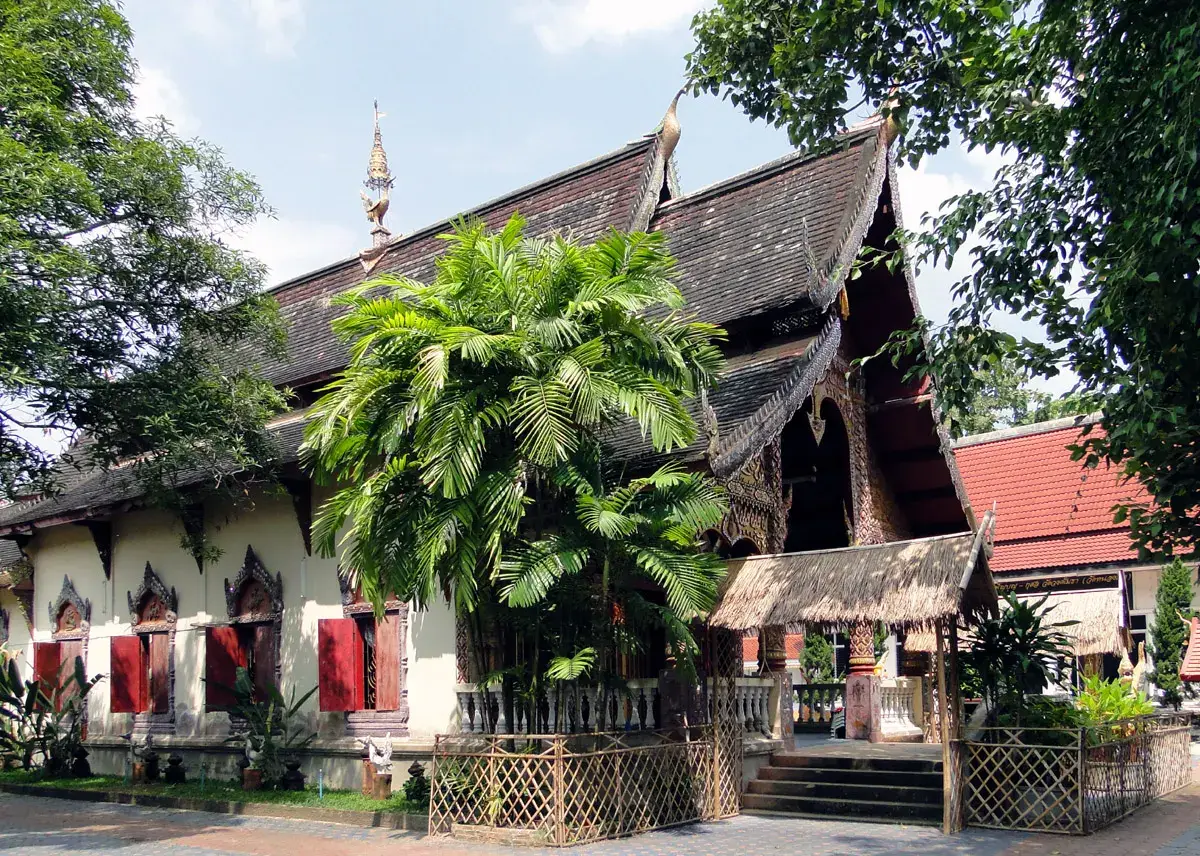
Open Days: Open According To Temple And Community Activities
Opening Hours: Daytime Visits Are Recommended
Wat Wong Metha (Wat Nong Khong) is a local Buddhist temple located in Ban Nong Khong, Moo 3, Khun Khong Subdistrict, Hang Dong District, Chiang Mai Province. It is a community temple under the Mahanikaya order and has long been a spiritual center for the people of Ban Nong Khong. The temple is also associated with the name Wat Nong Khong and, in local religious memory, Wat Phra That Nong Khong because of its connection with a sacred relic stupa, Buddhist relic traditions, and the annual ritual of bathing the relics.
The temple is meaningful because it preserves the faith, legends, and local identity of Ban Nong Khong. It is not a large commercial tourist site, but a living community temple where villagers continue to make merit, worship the relic stupa, and preserve Lanna Buddhist traditions that connect the temple with ancestors, sacred water, and local history.
Wat Wong Metha (Wat Nong Khong) is located in Ban Nong Khong, Moo 3, Khun Khong Subdistrict, Hang Dong District, Chiang Mai 50230. The temple area is closely connected with local irrigation channels and the village landscape. Its northern, eastern, and western boundaries connect with irrigation waterways, while the southern boundary connects with a school. This setting reflects the temple’s position within an agricultural community shaped by water, education, and village life.
The temple covers 4 rai, 8 ngan, and 8 square wah of land. Although it is not a very large temple, its importance comes from its role as a spiritual and ceremonial center for Ban Nong Khong. It is a place where local people gather for merit-making, dhamma listening, Buddhist ceremonies, and community traditions connected with the temple’s sacred relics.
The name Wat Wong Metha is widely used in public map and business-directory sources, while Wat Nong Khong is the local name connected with the village. Some temple-listing sources spell the name in Thai as Wat Wongkh Metha. For an English article, the title Wat Wong Metha (Wat Nong Khong) clearly covers both the public temple name and the name known by the local community.
The temple’s history has deep local roots. Temple records identify Wat Wong Metha as having been established in 1017, while another line of temple history places its origin around 913. The villagers traditionally called it Wat Nong Khong. Whether approached through historical records or local legend, the temple is understood as one of the old sacred places of Khun Khong Subdistrict.
The name Ban Nong Khong is connected with an old local water source. According to village memory, the area was once associated with a pond, and villagers wove bamboo into a covering structure known locally as a “khong.” This story gave the village the name Nong Khong and links the temple with the landscape, water, and collective effort of the community.
The most important legend of Wat Wong Metha (Wat Nong Khong) connects the temple with the sacred relic tradition of Wat Phra That Si Chom Thong. Local tradition tells of two villagers, Muen Kham Khong or Chao Noi Kham Khong and Ai Saen Kham Tong, who offered worship in a Buddhist legend connected with the Buddha. The sacred object in the story was divided into two parts: one was enshrined at Phra That Si Chom Thong, and the other was enshrined at Wat Nong Khong. A chedi was then built to contain the relic for public worship.
This legend gives Wat Wong Metha (Wat Nong Khong) a special position in local religious life. The relic stupa is not only a sacred structure but also a symbol of shared faith, ancestral memory, and the identity of Ban Nong Khong. Paying respect to the relic stupa therefore connects visitors with the deeper spiritual meaning of the community.
The important temple structures include a sermon hall and monks’ residences. The important sacred objects include Buddha images and the chedi or relic stupa. The chedi is the central sacred point of the temple, while the sermon hall supports dhamma listening, merit-making, village meetings, and annual Buddhist activities.
The relic stupa should be the first point of worship for visitors. It is the spiritual heart of Wat Wong Metha (Wat Nong Khong) and the focus of the temple’s annual relic-bathing tradition. Visitors should approach the stupa respectfully, walk calmly, and treat the space as a sacred community site rather than a casual sightseeing spot.
The Buddha images at the temple are also important objects of devotion. Worshipping the Buddha images is a way to remember the Buddha and reflect on Buddhist teachings. Visitors should speak quietly, dress modestly, and avoid touching sacred objects inappropriately.
The sermon hall serves as a shared space for the community. It supports merit-making, dhamma listening, temple meetings, and ceremonies during important Buddhist occasions. In village temples, the sermon hall is often one of the most frequently used areas because it brings monks and laypeople together throughout the year.
The monks’ residences allow the temple to function as an active Buddhist place. Together with the sermon hall, Buddha images, and relic stupa, they form the essential structure of a living community temple: worship space, monastic space, and communal ceremonial space.
The most distinctive tradition of the temple is the ritual bathing of the sacred relics and relic stupa. Local tradition associates this ceremony with 3 – 4 June. The ceremony helps preserve the community’s respect for its sacred relics and encourages villagers to maintain love and pride in their home village.
The key element of this tradition is the use of coconut water to bathe or sprinkle the sacred relics and the relic stupa. Coconut water is regarded by the local community as pure, clean, auspicious, and sacred. Using coconut water in the ritual expresses reverence, purity, and collective devotion toward the sacred relics of the temple.
After the ritual, villagers and visitors may take blessed water home to sprinkle around their houses for auspiciousness. This practice shows how the blessing of the temple extends into family life, homes, and the everyday world of the community. The sacredness of the temple is therefore carried back into the village through water, faith, and shared belief.
The relic-bathing tradition also has value for cultural tourism. Visitors who attend the ceremony can experience a distinct Lanna community ritual rather than only visiting a temple building. The ceremony brings together coconut water, relic worship, blessed water, village identity, and the preservation of local Buddhist heritage.
Wat Wong Metha (Wat Nong Khong) plays an important role in the life of Ban Nong Khong. It is a place for merit-making, a spiritual center, and a site where local traditions are preserved. Through annual ceremonies and community support, the temple continues to strengthen the relationship between villagers, Buddhism, and their home village.
The atmosphere of the temple is quiet and local. It is suitable for travelers interested in community temples, relic traditions, Lanna beliefs, and village-based cultural tourism. It is not a mass-tourism attraction, but it offers a meaningful experience for visitors who want to understand Chiang Mai through local sacred places.
Visitors should pay attention to the relic stupa, Buddha images, sermon hall, and the overall village-temple atmosphere. Those who visit during the relic-bathing festival can see the community’s faith in action, while visitors at other times can still make merit and learn about the temple’s legend and importance to Ban Nong Khong.
A cultural route around Wat Wong Metha (Wat Nong Khong) can include nearby places in Khun Khong Subdistrict, such as Wat Khun Khong, Wat Khun Khong Luang, Wat Thawai, Wat Ton Kaeo, Wat Thammapradit Sathan, and Ban Tawai, the well-known woodcarving and handicraft village of Hang Dong District.
Visitors with more time can continue toward central Hang Dong, Grand Canyon Chiang Mai, Royal Park Rajapruek, and accommodation areas around Khun Khong and Ban Waen. A private car or rental car is the most convenient option for visiting several temples, craft villages, restaurants, and cultural sites in one day.
Getting There is easiest by private car, rental car, or local transport. From Chiang Mai city, travel toward Hang Dong District, then continue to Khun Khong Subdistrict and Ban Nong Khong, Moo 3. Set the destination to Wat Wong Metha (Wat Nong Khong), or use the approximate coordinates 18.68007, 98.94722 for navigation.
Visitors should dress modestly, speak quietly, respect monastic areas, and behave carefully around the relic stupa, Buddha images, and ceremonial spaces. During the relic-bathing ceremony, visitors should follow the flow of the local ritual, avoid crowding the sacred area, and participate with respect for the community’s tradition.
Wat Wong Metha (Wat Nong Khong) is a valuable temple for those who want to understand Chiang Mai through community faith rather than only famous city temples. Its relic legend, connection with Phra That Si Chom Thong, coconut-water bathing tradition, and continuing role in Ban Nong Khong make it a meaningful cultural and religious stop in Hang Dong District.
| Name | Wat Wong Metha (Wat Nong Khong) |
| Thai Temple-Listing Name | Wat Wongkh Metha / Wat Wong Metha |
| Local Name | Wat Nong Khong / Wat Phra That Nong Khong |
| Type | Local Buddhist Temple Under The Mahanikaya Order |
| Location | Ban Nong Khong, Moo 3, Khun Khong Subdistrict, Hang Dong District, Chiang Mai Province |
| Address | 45 Ban Nong Khong, Moo 3, Khun Khong Subdistrict, Hang Dong District, Chiang Mai 50230, Thailand |
| Approximate Coordinates | 18.68007, 98.94722 |
| Phone | 053-433-806 |
| Land Area | 4 Rai, 8 Ngan, And 8 Square Wah |
| Boundaries | North: Irrigation Channel South: School East: Irrigation Channel West: Irrigation Channel |
| History | Temple History Records An Establishment In 1017, With Another Local Historical Line Referring To Around 913; The Temple Is Locally Known As Wat Nong Khong |
| Known Former Abbots | 1. Kruba Ya 2. Kruba Mi 3. Kruba Tanan Chai 4. Phra Athikan Wan 5. Phra Athikan O |
| Important Structures | Sermon Hall, Monks’ Residences, And Community Buddhist Activity Areas |
| Sacred Objects | Buddha Images, Chedi, Relic Stupa, And Sacred Relics Revered By The Local Community |
| Temple Zones | 1. Relic Stupa And Chedi Zone 2. Buddha Image And Worship Zone 3. Sermon Hall Zone 4. Monks’ Residence Zone 5. Temple Courtyard And Community Activity Zone |
| Highlights | An Old Community Temple Of Ban Nong Khong, Connected With Phra That Si Chom Thong, Sacred Relics, And A Coconut-Water Relic-Bathing Tradition |
| Community Role | A Spiritual Center For Ban Nong Khong, Used For Merit-Making, Buddhist Ceremonies, Local Tradition Preservation, And Community-Based Cultural Tourism |
| Main Tradition | Bathing The Sacred Relics And Relic Stupa With Coconut Water According To Local Tradition |
| Open Days | Open According To Temple And Community Activities |
| Opening Hours | Daytime Visits Are Recommended |
| Travel Information | Best Reached By Private Car, Rental Car, Or Local Transport; Set The Route To Wat Wong Metha (Wat Nong Khong), Ban Nong Khong, Moo 3, Khun Khong Subdistrict, Hang Dong District, Chiang Mai |
| Current Status | An Active Community Religious Place Listed In Temple Databases, Public Maps, And Government Religious-Place Records |
| Nearby Tourist Attractions | 1. Ban Tawai, About 4 km 2. Wat Thawai, About 4 km 3. Wat Ton Kaeo, About 5 km 4. Wat Khun Khong, About 5 km 5. Wat Khun Khong Luang, About 5 km 6. Wat Thammapradit Sathan, About 5 km 7. Grand Canyon Chiang Mai, About 12 km 8. Royal Park Rajapruek, About 13 km |
| Nearby Restaurants | 1. Sathani Khao Kaeng Lae Khanom Chin - Ban Tawai, About 4 km, Tel. 092-527-8191 2. Baan Nong Kan Kan Ban Tawai, About 4 km, Tel. 083-908-2686 3. Moo Kata Pon Thawai Hang Dong, About 4 km, Tel. 081-885-6874 4. Binary Cafe, About 5 km, Tel. 065-945-5417 5. Good Drink Good Cups Baantawai, About 5 km, Tel. 062-396-4289 6. Rock Star Cafe, About 5 km, Tel. 085-107-3303 |
| Nearby Accommodations | 1. Baan Tonglong Homestay 2, About 4 km, Tel. 086-185-8796 2. Tongna Cottage Natural Resort, About 6 km, Tel. 065-005-5352 3. Buffalo Island Resort, About 7 km, Tel. 065-123-3828 4. Laan Mai Fai Chang Resort, About 8 km, Tel. 082-994-7888 5. North Hill City Resort, About 9 km 6. Rice Barn And Rooms, About 12 km, Tel. 081-960-3997 |
Frequently Asked Questions (FAQ)
Q: Should The Temple Be Called Wat Wong Metha Or Wat Nong Khong?
A: The recommended English title is Wat Wong Metha (Wat Nong Khong), because it includes both the public temple name and the local village-based name.
Q: Where Is Wat Wong Metha (Wat Nong Khong) Located?
A: The temple is located in Ban Nong Khong, Moo 3, Khun Khong Subdistrict, Hang Dong District, Chiang Mai 50230.
Q: What Buddhist Order Does Wat Wong Metha (Wat Nong Khong) Belong To?
A: It is a local Buddhist temple under the Mahanikaya order.
Q: Why Is Wat Wong Metha (Wat Nong Khong) Important?
A: The temple is an important spiritual center of Ban Nong Khong and is connected with sacred relic traditions, Phra That Si Chom Thong, and the annual relic-bathing ceremony.
Q: What Is The Main Tradition Of Wat Wong Metha (Wat Nong Khong)?
A: The main tradition is the ritual bathing of the sacred relics and relic stupa with coconut water, which local people regard as pure and auspicious.
Q: What Important Things Can Visitors See At The Temple?
A: Visitors can see the relic stupa, chedi, Buddha images, sermon hall, monks’ residences, and the community temple grounds.
Q: What Kind Of Travelers Is Wat Wong Metha (Wat Nong Khong) Suitable For?
A: It is suitable for travelers interested in community temples, sacred relic traditions, Lanna Buddhist beliefs, merit-making, and cultural travel in Hang Dong District.
Q: What Nearby Places Can Be Visited With Wat Wong Metha (Wat Nong Khong)?
A: Nearby places include Ban Tawai, Wat Thawai, Wat Ton Kaeo, Wat Khun Khong, Wat Khun Khong Luang, Wat Thammapradit Sathan, Grand Canyon Chiang Mai, and Royal Park Rajapruek.
 Category: ●Places of Worship
 Group: ●Temple
Last Update : 4 DayAgo
 Last Update : 4 DayAgo
 Click to Access the Navigation Map GPS
Wat Wong Metha (Wat Nong Khong) Map
Recommend

 Muang Chiang Mai(121)Chom Thong(47)Mae Chaem(25)Chiang Dao(33)Doi Saket(68)Mae Taeng(85)Mae Rim(69)Samoeng(29)Fang(71)Mae Ai(59)Phrao(70)San Pa Tong(103)San Kamphaeng(66)San Sai(73)Hang Dong(73)Hot(32)Doi Tao(22)Omkoi(11)Saraphi(74)Wiang Haeng(15)Chai Prakan(28)Mae Wang(32)Mae On(22)Doi Lo(34)Galyani Vadhana(1)


