
lovethailand home >North Travel Attractions >Chiang Mai Travel Attractions >San Kamphaeng >Mae Pu Kha > Wat Pa Sak Noi
TL;DR: Wat Pa Sak Noi is located at Ban Pa Sak Noi, Village No. 3, Mae Pu Kha Subdistrict, San Kamphaeng District, Chiang Mai Province.

Wat Pa Sak Noi
Operating day: Daily
Operating time: 08.00 - 17.00
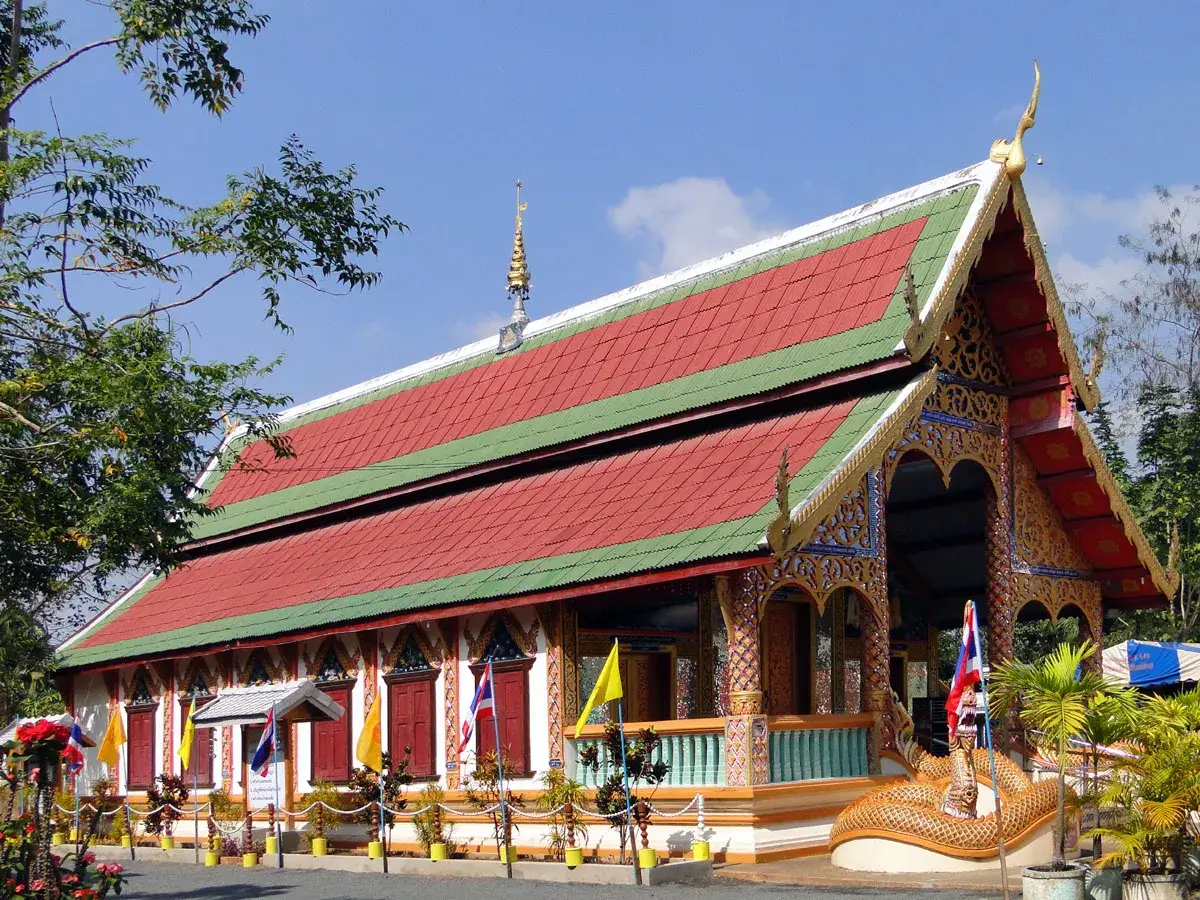
Wat Pa Sak Noi is a local Buddhist temple in Ban Pa Sak Noi, Village No. 3, Mae Pu Kha Subdistrict, San Kamphaeng District, Chiang Mai Province. It is a community temple under the Mahanikaya sect and serves as a place for Buddhist ceremonies, merit-making, religious gatherings, and village activities. For travelers looking for a quiet local temple near San Kamphaeng, Wat Pa Sak Noi offers a calm and authentic view of Buddhist community life outside Chiang Mai’s main tourist zone.
The temple is not a large commercial tourist attraction. Its value lies in its role as a living temple connected to the daily life of Ban Pa Sak Noi. Visitors will find a simple, peaceful atmosphere rather than crowds or staged attractions. This makes Wat Pa Sak Noi suitable for travelers who want to understand Chiang Mai through local temples, community faith, and the slower rhythm of villages in Mae Pu Kha.
The history of Wat Pa Sak Noi contains two important time references. Temple history records that the temple was built around 1957, while provincial registration records state that it was established as a temple on 15 January 1834. This layered record gives the temple historical depth. It suggests that the site should be viewed both as a community temple that developed in modern times and as a religious place connected to older local memory in the Pa Sak Noi area.
The temple land covers 3 rai, 2 ngan, and 2 square wah, with three plots of monastic land totaling 3 rai, 1 ngan, and 51 square wah. This scale gives the temple a compact village-temple character. It is not overwhelming in size, but it has enough space to support monastic activities, religious ceremonies, and gatherings of local residents. The overall impression is modest, practical, and closely tied to the community.
Important temple structures recorded for Wat Pa Sak Noi include the viharn, dining hall, alms pavilion, Tripitaka hall, and kitchen. These buildings show the essential functions of a Thai Buddhist community temple. The viharn is used for worship and religious ceremonies. The dining hall supports the daily routine of monks. The alms pavilion and kitchen support merit-making events and community gatherings. The Tripitaka hall reflects the importance of Buddhist teachings within the temple environment.
The main sacred object recorded at the temple is a brass Buddha image in the meditation posture. This image is an appropriate focal point for visitors who come to pay respect. The meditation posture represents calmness, mindfulness, and mental stability, which fits well with the quiet atmosphere of Wat Pa Sak Noi. Travelers should approach the temple with a respectful attitude and allow time to experience its peaceful setting.
Wat Pa Sak Noi is important because of its relationship with Ban Pa Sak Noi and Mae Pu Kha Subdistrict. The temple functions as a spiritual center, a place for merit-making, and a gathering space for local Buddhist life. Like many community temples in northern Thailand, it supports Buddhist calendar activities such as regular merit-making days, the Buddhist Lent season, robe-offering ceremonies, and local religious gatherings. Its role is less about spectacle and more about continuity, faith, and community connection.
Mae Pu Kha is a lowland area with local waterways and road connections to San Kamphaeng and nearby districts. Ban Pa Sak Noi is Village No. 3 of Mae Pu Kha Subdistrict, and the temple’s name directly reflects its community location. The name “Pa Sak Noi” connects the temple to the village identity, helping visitors understand that this is a temple rooted in place, not a stand-alone attraction detached from local life.
For cultural travelers, Wat Pa Sak Noi works best as part of a San Kamphaeng route. A visit can be combined with Wat Phra Non Mae Pu Kha, Bo Sang Umbrella Village, MAIIAM Contemporary Art Museum, Baan Jang Nak, and San Kamphaeng Hot Springs. This route gives visitors a broader picture of eastern Chiang Mai, combining Buddhist temples, craft villages, contemporary art, woodcarving, and local food.
The temple’s appeal is its quietness. Travelers who enjoy small local temples will appreciate the calm setting and the absence of heavy tourist traffic. Wat Pa Sak Noi is a good place to pause, pay respect, and observe how a village temple continues to serve its community. Visitors should dress modestly, keep noise low, avoid entering monastic areas without permission, and ask before taking photos inside important religious buildings or during ceremonies.
Getting There is easiest by private car, rental car, or local hired transport. From Chiang Mai city, take the Chiang Mai–San Kamphaeng route toward San Kamphaeng District, then continue into Mae Pu Kha Subdistrict and Ban Pa Sak Noi, Village No. 3. The route is suitable for a half-day or full-day cultural trip, especially if combined with nearby temples, craft villages, restaurants, and accommodations in the San Kamphaeng area.
Visitors without private transport should plan in advance because public transport within smaller subdistrict communities may be less frequent than in Chiang Mai city. For families or small groups, a private vehicle is the most practical option because it allows easy stops at Wat Pa Sak Noi, Wat Phra Non Mae Pu Kha, Bo Sang Umbrella Village, MAIIAM, and Baan Jang Nak in one connected route.
| Name | Wat Pa Sak Noi |
| Location | Ban Pa Sak Noi, Village No. 3, Mae Pu Kha Subdistrict, San Kamphaeng District, Chiang Mai Province |
| Address | 38 Moo 3, Mae Pu Kha Subdistrict, San Kamphaeng District, Chiang Mai 50130, Thailand |
| Type | Local Buddhist temple under the Mahanikaya sect |
| Highlights | Quiet community temple suitable for merit-making, respectful temple visits, and learning about local Buddhist life in San Kamphaeng |
| History | Temple history records construction around 1957, while provincial registration records state establishment on 15 January 1834 |
| Name Origin | Named after Ban Pa Sak Noi, the village where the temple is located |
| Important Sacred Object | Brass Buddha image in meditation posture |
| Main Structures | Viharn, dining hall, alms pavilion, Tripitaka hall, and kitchen |
| Distinctive Features | Compact village temple with a strong community role in religious ceremonies and local merit-making |
| Temple Land | Main temple land covers 3 rai, 2 ngan, and 2 square wah, with three plots of monastic land totaling 3 rai, 1 ngan, and 51 square wah |
| Travel Information | Travel from Chiang Mai city via the Chiang Mai–San Kamphaeng route, then continue to Mae Pu Kha Subdistrict and Ban Pa Sak Noi; best accessed by private car, rental car, or local hired transport |
| Current Status | Active community Buddhist temple used for religious ceremonies |
| Open Days | Daily |
| Main Contact Number | 053-390-034, 053-955-209 |
| Main Areas / Zones | Viharn area, temple courtyard, alms pavilion, dining hall, Tripitaka hall, and kitchen |
| Nearby Tourist Attractions | 1. Wat Phra Non Mae Pu Kha, about 4 km 2. Bo Sang Umbrella Village, about 8 km 3. MAIIAM Contemporary Art Museum, about 8 km 4. Baan Jang Nak, about 12 km 5. San Kamphaeng Hot Springs, about 22 km |
| Nearby Restaurants | 1. Som Tam Sut Soi Suan Bua, about 2 km, Tel. 096-184-5769 2. Puka Khao Phat Pu, about 3 km, Tel. 062-949-9587 3. Khao Soi Puka Nuea, about 3 km, Tel. 065-995-6998 4. Happy Munich San Kamphaeng, about 4 km, Tel. 095-097-3140 5. Kin Teak Kun San Kamphaeng, about 5 km, Tel. 086-774-7852, 084-033-7373 |
| Nearby Accommodations | 1. Viewdoi Art and Resort, about 4 km, Tel. 088-866-2562 2. Lanna Resort, about 4 km, Tel. 053-390-900 3. Baan Rai Plai Na San Kamphaeng, about 5 km, Tel. 065-349-4403 4. The Puka Boutique Resort, about 5 km 5. Baan Ping Kan Longstay, about 12 km, Tel. 088-295-4947 |
Frequently Asked Questions (FAQ)
Q: Where is Wat Pa Sak Noi located?
A: Wat Pa Sak Noi is located in Ban Pa Sak Noi, Village No. 3, Mae Pu Kha Subdistrict, San Kamphaeng District, Chiang Mai Province.
Q: Why is Wat Pa Sak Noi important?
A: It is a local community temple used for Buddhist ceremonies, merit-making, and religious gatherings in Ban Pa Sak Noi.
Q: What is the history of Wat Pa Sak Noi?
A: Temple history records that it was built around 1957, while provincial registration records state that it was established on 15 January 1834.
Q: What can visitors see inside Wat Pa Sak Noi?
A: Visitors can pay respect to a brass Buddha image in meditation posture and see temple structures such as the viharn, dining hall, alms pavilion, Tripitaka hall, and kitchen.
Q: How should visitors dress when visiting Wat Pa Sak Noi?
A: Visitors should dress modestly, keep noise low, and respect the temple as an active Buddhist religious site.
Q: What type of traveler is Wat Pa Sak Noi suitable for?
A: It is suitable for travelers interested in quiet local temples, northern Thai Buddhist culture, and community-based routes in San Kamphaeng.
Q: What nearby places can be visited with Wat Pa Sak Noi?
A: Nearby places include Wat Phra Non Mae Pu Kha, Bo Sang Umbrella Village, MAIIAM Contemporary Art Museum, Baan Jang Nak, and San Kamphaeng Hot Springs.
 Category: ●Places of Worship
 Group: ●Temple
Last Update : 2 MonthAgo
 Last Update : 2 MonthAgo
 Click to Access the Navigation Map GPS

 Muang Chiang Mai(121)Chom Thong(47)Mae Chaem(25)Chiang Dao(33)Doi Saket(68)Mae Taeng(85)Mae Rim(69)Samoeng(29)Fang(71)Mae Ai(59)Phrao(70)San Pa Tong(103)San Kamphaeng(66)San Sai(73)Hang Dong(73)Hot(32)Doi Tao(22)Omkoi(11)Saraphi(74)Wiang Haeng(15)Chai Prakan(28)Mae Wang(32)Mae On(22)Doi Lo(33)Galyani Vadhana(1)


