
lovethailand home >North Travel Attractions >Chiang Mai Travel Attractions >Muang Chiang Mai >Mae He Ya > Wat Suan Phrik
TL;DR: Wat Suan Phrik is located at Moo 3, Mae Hia Subdistrict, Mueang Chiang Mai District, Chiang Mai Province, near the Doi Kham route and Ratchaphruek Road, open Daily, hours 09.00 – 17.00.

Wat Suan Phrik
Open Days: Daily
Opening Hours: 09.00 – 17.00
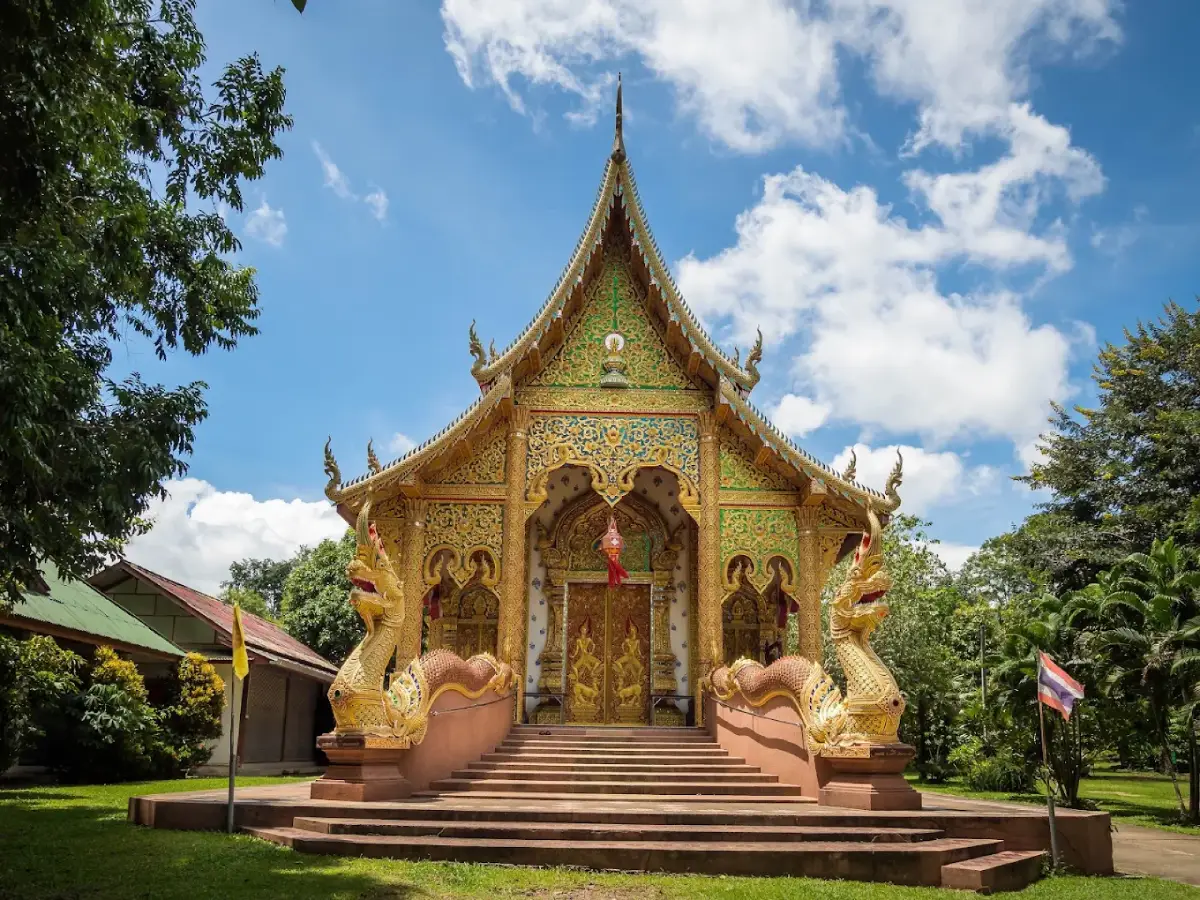
Wat Suan Phrik in Chiang Mai is a community Buddhist temple under the Mahanikaya order, located at 201/1 Moo 3, Mae Hia Subdistrict, Mueang Chiang Mai District, Chiang Mai Province. It is a small but meaningful temple in the Mae Hia area, close to the Doi Kham route, Ratchaphruek Road, Royal Park Rajapruek, and Wat Phra That Doi Kham. The temple is especially interesting because it was once an abandoned temple before being restored by local residents and supporting organizations in 1980. A viharn was later built in 1982, and traces of the older temple remain visible through the old foundation, red fired-brick remains, old boundary lines, and an old temple gateway.
Wat Suan Phrik is one of the important temples in Mae Hia, a southern area of Chiang Mai where religious heritage, local culture, nature, and family-friendly attractions are found close together. Nearby places include Wat Phra That Doi Kham, Wat Pa Chi, Wat Ton Pin, Wat Tha Kham, Wat Ubosot, Wat Tamnak Suan Khwan Sirimangkalachan, Royal Park Rajapruek, and Chiang Mai Night Safari. Visiting Wat Suan Phrik therefore gives travelers more than a short temple stop. It helps them understand the cultural route of Mae Hia and the religious landscape around Doi Kham.
The temple’s setting gives it a different feeling from temples in Chiang Mai’s old city or the Tha Phae Road area. Wat Suan Phrik is connected with the green slopes and local roads around Doi Kham. The approach road passes through a quieter neighborhood landscape with cafés, restaurants, village roads, and natural surroundings. This makes the temple suitable for visitors who prefer a calm, local, and less crowded side of Chiang Mai.
The known modern history of Wat Suan Phrik centers on its restoration. The temple had previously become abandoned. In 1980, villagers and relevant organizations began restoring the site. In 1982, a viharn was constructed. This restoration is the key story of the temple because it shows how a forgotten religious site can return to active use when local faith, community effort, and Buddhist support come together. Wat Suan Phrik is therefore not only a place for worship but also a symbol of revival.
The most important historical traces at Wat Suan Phrik are the old foundation and the red fired-brick remains in the viharn area. These brick remains show that the present temple compound has an older layer beneath the modern restoration. For visitors interested in local history, these traces are important because they prove that the temple was not created entirely in recent decades. The restored buildings stand on a place that already carried religious memory.
The old boundary lines and old gateway around the viharn area also add historical depth to the temple. A temple gateway is more than a practical entrance. In Thai Buddhist culture, it marks the transition from ordinary space into sacred space. At Wat Suan Phrik, the remaining old gateway and boundary elements help visitors imagine the earlier temple layout and understand how the compound once functioned before later restoration.
After the restoration began in 1980, Wat Suan Phrik gradually developed its religious buildings and functional areas, including the viharn, monks’ residences, ubosot, and merit-making space. These developments allowed the temple to return to the normal role of a Buddhist community temple. It became a place where monks could live, local people could make merit, and visitors could worship while traveling through the Doi Kham and Mae Hia area.
The viharn should be the first area to observe. Although the current hall was built after the restoration period, it stands in relation to the old viharn foundation. This makes it a bridge between the earlier abandoned temple and the temple’s present religious life. Visitors should look carefully at the foundation area, the old bricks, and the way the restored hall occupies the site. Wat Suan Phrik is best appreciated through these quiet details rather than through monumental scale.
The ubosot is another important religious area. In Buddhist practice, an ubosot is connected with formal monastic acts and major Sangha ceremonies. Even though the available public information on its architectural details is limited, the presence of an ubosot confirms that Wat Suan Phrik is not merely an archaeological or abandoned site. It functions as an active Buddhist temple for the Mae Hia community.
The monks’ residences are equally important for understanding the temple’s current role. A temple with residences is a living religious institution, not just a place for sightseeing. The restoration of monks’ residences together with the viharn and ubosot shows that the revival of Wat Suan Phrik was intended to restore the temple’s practical Buddhist function, including worship, monastic life, community merit-making, and religious continuity.
The atmosphere of Wat Suan Phrik is one of its main strengths. The temple is quiet and close to the green landscape of Doi Kham and Mae Hia. Visitors who enjoy peaceful temples or meditation-oriented places will find a slower rhythm here than in the busiest central temples. The temple compound is suitable for walking slowly, paying respect, sitting quietly, and observing old traces without the pressure of heavy tourist crowds.
The beauty of Wat Suan Phrik lies in simplicity. It is not a temple of grand architecture or large-scale monuments. Its appeal comes from the story of an abandoned temple restored through faith, the calmness of the site, and the remaining red-brick traces that preserve the memory of the earlier temple. Visitors who come with this perspective will understand why small community temples can be culturally significant even when they are not widely known.
Wat Suan Phrik should also be seen as part of the wider Mae Hia temple network. Wat Pa Chi is associated with the sacred cloth used in the Liang Dong tradition. Wat Ton Pin is connected with Khruba Siwichai and Ban Don Pin. Wat Tamnak Suan Khwan Sirimangkalachan is connected with the great Lanna scholar Phra Sirimangkalachan. Wat Suan Phrik stands out within this network as a restored former abandoned temple in the natural route around Doi Kham.
The surrounding area adds to the travel value of Wat Suan Phrik. The temple is close to Wat Phra That Doi Kham, one of the most popular sacred sites in southern Chiang Mai. Visitors who go to Doi Kham to worship or enjoy the view can continue to Wat Suan Phrik without returning directly to the city. This makes it easy to combine a major pilgrimage temple with a quieter local temple in the same itinerary.
Getting to Wat Suan Phrik is straightforward for travelers with private transport or hired vehicles. From central Chiang Mai or the Airport Intersection, follow the Chiang Mai–Hang Dong route or Ratchaphruek Road toward Wat Phra That Doi Kham. After reaching the Doi Kham area, continue along the local road past cafés and restaurants, then follow the signs into the lane leading to Wat Suan Phrik. The route is suitable for private cars, motorcycles, red songthaews, tuk-tuks, and taxi-app services.
When using hired transport, give the destination as “Wat Suan Phrik, Moo 3, Mae Hia, near Doi Kham.” This helps avoid confusion with similarly named temples in other provinces. From Royal Park Rajapruek or Wat Phra That Doi Kham, the temple can be reached by a short local ride. Travelers staying in the old city or Nimmanhaemin should allow extra travel time during morning and evening traffic.
The best time to visit Wat Suan Phrik is from morning to late afternoon. Morning is suitable for worship and a quieter atmosphere. Late afternoon works well when combining the temple with Wat Phra That Doi Kham, Royal Park Rajapruek, or nearby cafés. A typical visit takes about 30–45 minutes, enough time to pay respect, see the viharn, observe the old foundation, brick remains, old boundary lines, gateway, and surrounding temple compound.
Visitors should follow standard Thai temple etiquette. Dress modestly, remove shoes before entering sacred buildings, keep voices low, and do not touch Buddha images, old brick remains, foundations, old boundary elements, or historic structures. Do not climb on old features or enter monastic areas without permission. These traces are important parts of the temple’s heritage and should be treated carefully.
For photography, Wat Suan Phrik is best suited to quiet cultural images rather than dramatic landmark photos. Good subjects include the temple sign, entrance, viharn, old foundation, red fired-brick traces, old gateway, boundary remains, shaded areas, and the local road atmosphere around Doi Kham. Photography should be done respectfully and without disturbing monks, worshippers, or people using the temple for religious purposes.
Compared with better-known temples in Chiang Mai, Wat Suan Phrik is distinctive because of its restoration story. Many temples attract visitors through large chedis, famous Buddha images, or royal history. Wat Suan Phrik is important because it shows how a local community brought an abandoned temple back into active Buddhist use. The 1980 restoration and the 1982 viharn construction are therefore central to understanding the temple’s identity.
For itinerary planning, Wat Suan Phrik combines well with Wat Phra That Doi Kham, Royal Park Rajapruek, Chiang Mai Night Safari, Baan Kang Wat, and Wat Pa Chi. This route gives visitors a balanced experience of sacred sites, viewpoints, gardens, family attractions, cafés, and quieter community temples. A half-day trip can begin at Wat Phra That Doi Kham, continue to Wat Suan Phrik, stop for food or coffee nearby, and then move on to Royal Park Rajapruek or Chiang Mai Night Safari.
For travelers interested in local history, Wat Suan Phrik is a temple to read through traces rather than long inscriptions. Its surviving foundation, old bricks, boundary remains, gateway, and location within Mae Hia all tell a meaningful story. The temple shows that smaller places can preserve important community memory. Even without the fame of major Chiang Mai temples, Wat Suan Phrik remains part of the city’s wider Buddhist and cultural landscape.
Overall, Wat Suan Phrik is a quiet old temple in Mae Hia worth visiting when exploring Doi Kham and Ratchaphruek. It was once abandoned, restored in 1980, and given a new viharn in 1982. Its old foundation, red fired-brick remains, old boundary lines, and old gateway preserve the memory of the earlier temple. Today, it remains open for worship, merit-making, and temple visits during operating hours. For travelers seeking a calm, local, and culturally meaningful temple outside the busiest tourist areas of Chiang Mai, Wat Suan Phrik is a worthwhile stop.
| Name | Wat Suan Phrik |
| Location | Moo 3, Mae Hia Subdistrict, Mueang Chiang Mai District, Chiang Mai Province, near the Doi Kham route and Ratchaphruek Road |
| Address | 201/1 Moo 3, Mae Hia Subdistrict, Mueang Chiang Mai District, Chiang Mai 50100, Thailand |
| Coordinates | 18.75998, 98.90778 |
| Temple Type | Community Buddhist Temple Under The Mahanikaya Order |
| Highlights | A former abandoned temple restored by community faith, old viharn foundation, red fired-brick remains, old boundary lines, old temple gateway, peaceful setting near Doi Kham, and the Mae Hia cultural route |
| Key History | Formerly an abandoned temple. Villagers and supporting organizations restored it in 1980, and the viharn was built in 1982. |
| Historic Features | Old foundation in the viharn area, red fired-brick remains, old boundary traces, and an old temple gateway within the compound |
| Main Areas / Zones | Viharn, old viharn foundation, red fired-brick remains, old boundary lines, old gateway, ubosot, monks’ residences, temple courtyard, and merit-making area |
| Facilities | Parking area, viharn, ubosot, monks’ residences, merit-making area, and walking areas inside the temple compound |
| Open Days | Daily |
| Opening Hours | 09.00 – 17.00 |
| Fees | Free Entry |
| Main Contact Number | 053-039-845 |
| Travel Information | From central Chiang Mai or the Airport Intersection, take Chiang Mai–Hang Dong Road or Ratchaphruek Road toward Wat Phra That Doi Kham, then continue along the local Doi Kham road to Wat Suan Phrik. |
| Current Status | Open for worship, merit-making, and temple visits during operating hours |
| Visitor Guidelines | Dress modestly, remove shoes before entering sacred buildings, do not touch old brick remains, old foundations, boundary traces, or historic features, and respect monks and worshippers. |
| Nearby Tourist Attractions | 1. Wat Phra That Doi Kham, About 1.2 km 2. Doi Kham Viewpoint, About 1.2 km 3. Royal Park Rajapruek, About 2 km 4. Chiang Mai Night Safari, About 2.2 km 5. Northern Queen Sirikit 60th Anniversary Forest Park, About 2.2 km 6. Hom Hak Bridge, About 2.7 km 7. Baan Kang Wat, About 4.7 km 8. Bhubing Palace, About 5 km |
| Nearby Restaurants | 1. CHAMCHA AT DOI KHAM, About 0.2 km, Tel. 083-473-9494 2. Praw & Plean Green House, About 0.3 km, Tel. 081-992-7439 3. Ozark By Food4Thought, About 0.3 km, Tel. 092-816-3244 4. Baan Suan Coffee, About 0.6 km, Tel. 084-821-7357 5. Bake Me Home, About 0.5 km, Tel. 061-698-7995 6. The CAVE Doikam, About 0.7 km, Tel. 099-142-9924 7. Cup Fine Day Coffee & Cuisine, About 1.6 km, Tel. 081-992-2249 |
| Nearby Accommodations | 1. E-outfitting Doi Kham Chiangmai, About 1.6 km, Tel. 099-046-6542 2. Rajapruek Place, About 1.8 km, Tel. 053-114-153 3. Veranda High Resort Chiang Mai - MGallery, About 2.1 km, Tel. 053-365-007 4. Chiang Mai Night Safari Resort, About 2.4 km, Tel. 053-999-000 5. Ratchapruek Lanna Boutique, About 2.9 km, Tel. 053-114-006, 094-706-3335 6. R1 Resort Rajapruek Chiangmai, About 4.6 km, Tel. 088-138-0525 7. Royal Train Garden Resort, About 3.3 km, Tel. 061-274-0999 |
Frequently Asked Questions (FAQ)
Q: Where is Wat Suan Phrik located?
A: Wat Suan Phrik is located at 201/1 Moo 3, Mae Hia Subdistrict, Mueang Chiang Mai District, Chiang Mai Province, near the Doi Kham route, Ratchaphruek Road, Wat Phra That Doi Kham, and Royal Park Rajapruek.
Q: What are the opening hours of Wat Suan Phrik?
A: Wat Suan Phrik is open daily from 09.00 to 17.00.
Q: Is there an entrance fee at Wat Suan Phrik?
A: No. General entry to Wat Suan Phrik is free.
Q: What is the main history of Wat Suan Phrik?
A: Wat Suan Phrik was formerly an abandoned temple. Villagers and supporting organizations restored it in 1980, and the viharn was built in 1982, allowing the temple to return to active religious use.
Q: What should visitors see inside Wat Suan Phrik?
A: Key features include the viharn, old viharn foundation, red fired-brick remains, old boundary lines, old gateway, ubosot, monks’ residences, and merit-making areas.
Q: Who is Wat Suan Phrik suitable for?
A: Wat Suan Phrik is suitable for visitors who enjoy quiet temples, restored former abandoned temples, local Mae Hia culture, and temple routes around Doi Kham.
Q: How can travelers get to Wat Suan Phrik?
A: From central Chiang Mai or the Airport Intersection, take Chiang Mai–Hang Dong Road or Ratchaphruek Road toward Wat Phra That Doi Kham, then continue along the local Doi Kham road and follow signs to Wat Suan Phrik. The temple can be reached by private car, motorcycle, red songthaew, tuk-tuk, or taxi-app service.
Q: What nearby places can be visited with Wat Suan Phrik?
A: Nearby places include Wat Phra That Doi Kham, Doi Kham Viewpoint, Royal Park Rajapruek, Chiang Mai Night Safari, Northern Queen Sirikit 60th Anniversary Forest Park, Hom Hak Bridge, Baan Kang Wat, and Bhubing Palace.
 Category: ●Places of Worship
 Group: ●Temple
Last Update : 6 DayAgo
 Last Update : 6 DayAgo
 Click to Access the Navigation Map GPS
Wat Suan Phrik Map
Recommend

 Muang Chiang Mai(121)Chom Thong(47)Mae Chaem(25)Chiang Dao(33)Doi Saket(68)Mae Taeng(85)Mae Rim(69)Samoeng(29)Fang(71)Mae Ai(62)Phrao(70)San Pa Tong(105)San Kamphaeng(66)San Sai(73)Hang Dong(74)Hot(32)Doi Tao(22)Omkoi(11)Saraphi(74)Wiang Haeng(15)Chai Prakan(28)Mae Wang(32)Mae On(22)Doi Lo(34)Galyani Vadhana(1)


