
lovethailand home >North Travel Attractions >Chiang Mai Travel Attractions >Muang Chiang Mai >Chang Khlan > Wat Hua Fai
TL;DR: Wat Hua Fai is located at Chang Khlan Subdistrict, Mueang Chiang Mai District, Chiang Mai Province, open Daily, hours 08.00 – 17.00.
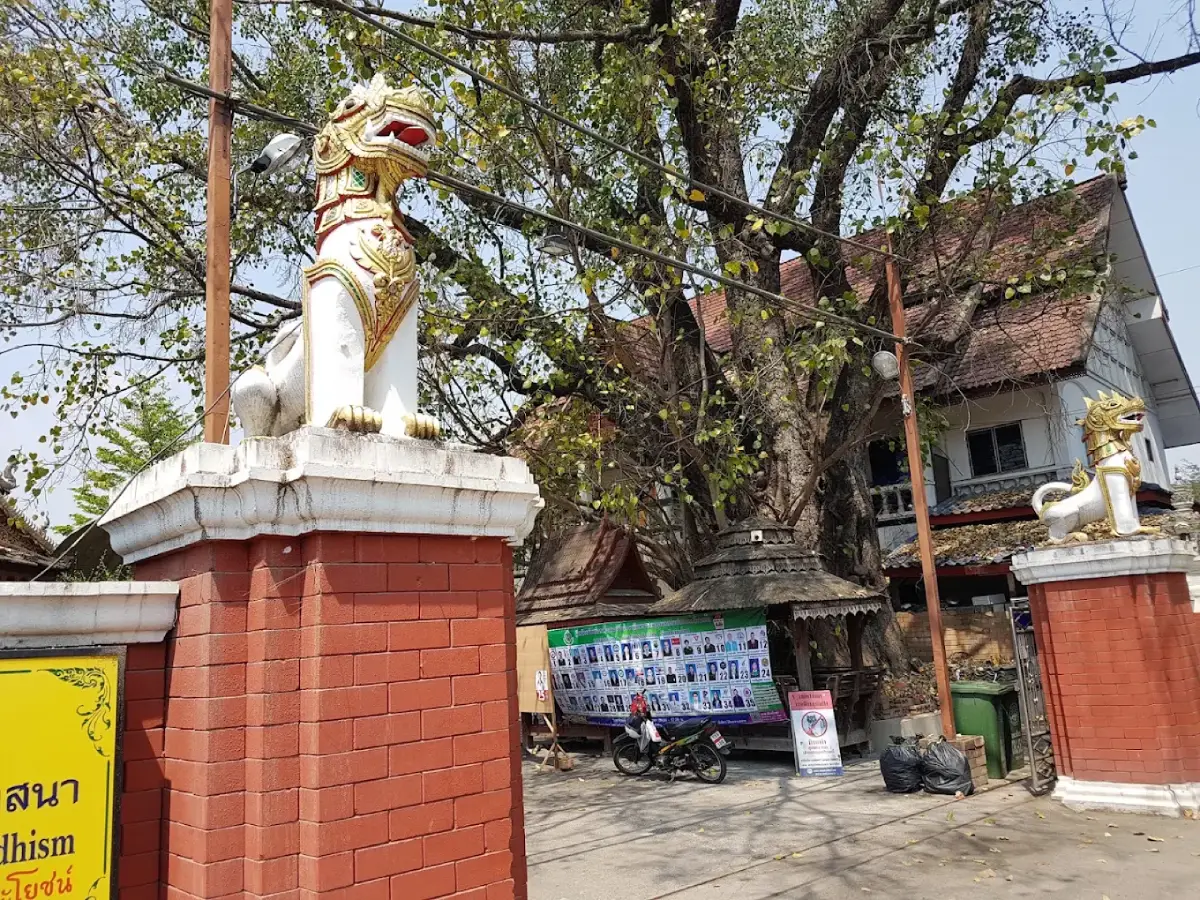
Wat Hua Fai
Open Days: Daily
Opening Hours: 08.00 – 17.00
Wat Hua Fai in Chiang Mai is a historic Buddhist temple in Chang Khlan, Mueang Chiang Mai District. It is a community temple under the Mahanikaya order and has a recorded foundation date of 1587. Formerly known as Wat Si Soi Sai Mun, the temple later became associated with the names Wat Pu Kham, Wat Nam Pu, and finally Wat Hua Fai. Its history is closely tied to old rice fields, water-management systems, the Mae Kha waterway, and the everyday religious life of the Chang Khlan community.
Wat Hua Fai is a suitable temple for travelers who want to see a quieter and more local side of Chiang Mai. It is not a large showcase temple, yet it preserves a layered story of place, water, agriculture, belief, and community devotion. The temple is located within reach of Mahidol Road, Chang Khlan Road, Chiang Mai Gate, the Mae Kha Canal area, Wua Lai Walking Street, and the Night Bazaar district, making it easy to include in a cultural route around the southern and eastern edge of the old city.
The name Wat Hua Fai reflects the original landscape of this part of Chiang Mai. In the past, the temple stood outside the city wall in an area of rice fields. A branch of the Mae Kha water system flowed near the temple, and a weir in front of the temple was used by local residents for daily water use and agriculture. As the area gradually changed from farmland into a residential and urban neighborhood, the name “Hua Fai,” referring to the head of the weir, remained as a memory of the old water landscape.
Before the name Wat Hua Fai became widely used, the temple was known as Wat Si Soi Sai Mun. Local people later called it Wat Pu Kham, a name connected with crabs that once lived in large numbers in the surrounding rice fields. Local oral tradition tells of silver and golden crabs seen near the temple’s collapsed chedi, as though they were guarding the sacred monument. This story helped make the name Wat Pu Kham part of the temple’s local identity.
The temple was also known as Wat Nam Pu, a name related to the abundance of crabs in the old rice fields and to the local food culture of the area. When villagers were free from farm work, they caught crabs and used them to make nam pu, a traditional northern Thai crab paste. This name is valuable because it links the temple not only with Buddhist faith but also with agriculture, foodways, wetland ecology, and the everyday life of old Chang Khlan.
The foundation date of 1587 gives Wat Hua Fai more than four centuries of history. The temple has the character of a village temple created by local devotion rather than a royal temple founded by a ruler or noble official. It served as a spiritual anchor, a place for Buddhist ceremonies, and a center of community life. This background makes Wat Hua Fai important for understanding Chiang Mai from the perspective of ordinary local communities outside the city wall.
The temple’s position outside the old fortified city is significant. The areas beyond Chiang Mai’s moat and city wall were not empty margins; they were agricultural zones, paths, irrigation landscapes, and religious communities. Wat Hua Fai stood in the old Thung Chang Khlan area, where people moved between the city, fields, water channels, and village temples. Visiting the temple helps travelers see Chiang Mai as a city shaped by water systems and surrounding communities, not only by the monuments inside the old city.
Wat Hua Fai received its consecrated boundary for Buddhist ordination purposes on 8 November 1983. The consecrated area measures 40 meters wide and 80 meters long. This confirms the temple’s formal religious role and its ability to serve important monastic ceremonies. Wat Hua Fai therefore remains more than a historic site; it is an active Buddhist temple connected with local worship and community religious life.
One of the most important structures in the temple is the chedi. The original chedi was a brick-and-plaster structure in the Lanna style. Over time, it deteriorated and partially collapsed. Local devotees and the temple community later restored the chedi and covered it with glass decoration. This gives the chedi a distinctive appearance while also showing how local faith helped preserve the temple’s sacred architecture.
The chedi is closely connected with the temple’s identity as Wat Pu Kham. The story of silver and golden crabs near the sacred monument gives the chedi a deeper place in local memory. For visitors, the chedi should be understood not only as an architectural structure but also as a focus of belief, storytelling, and community attachment. Many small temples in Chiang Mai hold this kind of meaning, where architecture and oral history support each other.
In recent years, the chedi at Wat Hua Fai has received attention from heritage authorities because cracks were found on the structure. The 7th Regional Office of Fine Arts in Chiang Mai carried out emergency bracing and protective work around the chedi to reduce risk and prepare for further restoration. Visitors should follow any signs or barriers at the temple, avoid touching old structures, and keep a safe distance from restricted areas.
The viharn is another major area of interest. Inside the viharn is the Thammas Luang, an old sermon pulpit used for the Mahachat sermon during Duean 4 Peng, an important period in the northern Buddhist calendar. The pulpit is hundreds of years old and displays artistic influence associated with Burmese-style decorative work. It is both a ritual object and a piece of craftsmanship that reflects the temple’s role in the transmission of Buddhist teachings.
The Thammas Luang has several local stories attached to it. Some oral traditions connect it with northern nobility, while others link it with old lineages and objects carried by water to the area near the weir. These stories should be read as community memory and oral heritage. The most important point for visitors is that the pulpit remains a significant ritual object connected with the Mahachat sermon tradition and the religious life of Wat Hua Fai.
Another important object inside the viharn is the Black Crystal Buddha Figure Base, known locally as Thaen Kaew Phra Sarup Chao Ong Dam. It is made from translucent black stone and was carved into a sacred figure. Work began on 25 February 2001 and was completed on 25 May 2001. The object was created through the faith of the Wat Hua Fai community and is linked with Phra Khru Chonlathan Phithak Kham Pan Mahawanno, a former abbot who played an important role in the temple’s history.
This Black Crystal Buddha Figure Base adds a contemporary layer to the temple. It shows that Wat Hua Fai is not only a place of old architecture but also a living religious space where new sacred objects continue to be created through community devotion. For visitors, it is worth seeing because it connects modern faith, local memory, and the continuing importance of former temple leaders.
The old Buddha images associated with Wat Hua Fai are also important. Temple history records four old Buddha images: three Phra Phuttha Sing Nueng images, two of which were lost, and one marble Buddha image in the Chiang Saen artistic style. These objects show the temple’s connection with northern Buddhist art and help explain why Wat Hua Fai is valuable as a local cultural and religious site.
The ubosot, or ordination hall, is used for important Buddhist ceremonies such as ordination and other monastic rites. Its presence confirms the temple’s continuing function as an active Buddhist institution. Visitors should treat the ubosot with respect, dress modestly, remove shoes before entering sacred buildings, and avoid disturbing monks or worshippers during ceremonies.
The temple’s multipurpose halls also show how Wat Hua Fai serves the community. One older hall has been used for funeral ceremonies and for storing temple equipment, while a newer hall supports community activities and temple events. This reflects the broader role of Thai temples as religious, social, ceremonial, and community support spaces.
The temple’s recorded list of former abbots and caretakers includes Phra Di Khanawangso from 1933 to 1935, Phra Ta Rattanarattawatano from 1935 to 1946, Phra Yan Khemangkalo from 1946 to 1961, Phra Khru Chonlathan Phithak Kham Pan Mahawanno from 1961 to 1995, Phra Palat Montri Apiwanno from 1995 to 1997, Phra Phaithika Ekarat Paphassaro from 1997 to 1998, Phra Athikan Sukit Khonsilo from 1998 to 2004, and Phra Pradit Tinnayano, who appears in historical records as an acting abbot or caretaker.
What makes Wat Hua Fai distinctive is the way every name of the temple preserves part of the local landscape. Wat Si Soi Sai Mun preserves the old temple name. Wat Pu Kham preserves the story of crabs and the chedi. Wat Nam Pu preserves the memory of rice fields, food culture, and wetland life. Wat Hua Fai preserves the importance of the weir and the water system. These layers make the temple especially meaningful for travelers interested in local history rather than only famous landmarks.
A good visit to Wat Hua Fai takes around 30–60 minutes. Begin at the viharn, pay respect to the Buddha images, observe the Thammas Luang, and see the Black Crystal Buddha Figure Base. Then continue to the chedi, the ubosot, and the surrounding temple grounds. If any area near the chedi is restricted, visitors should follow the temple’s instructions carefully. A slower visit allows travelers to appreciate both the religious atmosphere and the detailed history of the place.
Getting to Wat Hua Fai is convenient from central Chiang Mai. From the Chiang Mai Gate, Kotchasarn Road, Mahidol Road, or Chang Khlan Road area, travelers can reach the temple by private car, red songthaew, tuk-tuk, taxi app, or on foot from nearby accommodation. The temple is situated near the 3rd Public Relations Office of Chiang Mai and the Chiang Mai Health Promoting Hospital area, making it relatively easy to locate within the Chang Khlan district.
Travelers staying around the Night Bazaar, Chang Khlan Road, Loi Kroh Road, Tha Phae Gate, or Mahidol Road can combine Wat Hua Fai with nearby cultural stops. Useful nearby places include the Mae Kha Canal area, Wua Lai Walking Street, Wat Sri Suphan, Wat Nantararam, Chiang Mai Gate, Wat Si Ping Mueang, the Night Bazaar, and Art in Paradise Chiang Mai. This route gives a broader view of the old city’s southern and eastern neighborhoods.
The best time to visit Wat Hua Fai is in the morning or late afternoon. Morning is suitable for worship, merit-making, and quiet photography. Afternoon works well as a shaded cultural stop during a city itinerary. During the rainy season, visitors should be careful around old surfaces and temple courtyards. Those who want to photograph the chedi and architectural details should visit when natural light is sufficient.
Visitors should follow basic temple etiquette. Dress modestly, avoid sleeveless or overly short clothing, remove shoes before entering sacred buildings, keep voices low, and do not touch Buddha images, old religious objects, the sermon pulpit, or the chedi. Do not climb on the chedi base or enter monastic areas without permission. Respectful behavior helps preserve the calm atmosphere of the temple and protects its historic objects.
Wat Hua Fai is also suitable for cultural photography, especially for travelers who enjoy small details rather than wide landmark scenes. Key subjects include the glass-decorated chedi, the viharn, the Thammas Luang, the Black Crystal Buddha Figure Base, and the atmosphere of a local temple in an urban neighborhood. Photography should never disturb worshippers or monks, and flash should be avoided near sacred objects.
For local-history travelers, Wat Hua Fai is valuable because it explains Chiang Mai through community memory. The temple connects Buddhist practice with irrigation, agriculture, the Mae Kha water system, folk names, food culture, sacred objects, and neighborhood identity. This makes it a strong stop for anyone who wants to understand Chiang Mai beyond the main temples inside the old city walls.
Compared with larger and more famous temples in Chiang Mai, Wat Hua Fai can be described as a small temple with a large story. It has a recorded foundation date in 1587, multiple historical names, a Lanna-style chedi covered with glass decoration, a centuries-old sermon pulpit, a sacred black crystal figure, and old Buddha images connected with northern Buddhist art. These elements make the temple meaningful for travelers who enjoy deeper cultural context.
Overall, Wat Hua Fai is a historic Chang Khlan temple that tells the story of Chiang Mai through water, rice fields, weirs, community devotion, and Buddhist heritage. It remains open for worship and temple visits during operating hours. For travelers planning a cultural route in central Chiang Mai, Wat Hua Fai works well with Mae Kha Canal, Wua Lai Walking Street, Wat Sri Suphan, Chiang Mai Gate, Wat Nantararam, the Night Bazaar, and other nearby sites.
| Name | Wat Hua Fai |
| Location | Chang Khlan Subdistrict, Mueang Chiang Mai District, Chiang Mai Province |
| Address | 154 Chang Khlan Subdistrict, Mueang Chiang Mai District, Chiang Mai 50100, Thailand |
| Coordinates | 18.77357, 98.99359 |
| Highlights | Historic Chang Khlan temple founded in 1587, formerly known as Wat Si Soi Sai Mun, with local names Wat Pu Kham and Wat Nam Pu, a Lanna-style glass-decorated chedi, Thammas Luang sermon pulpit, and Black Crystal Buddha Figure Base |
| History | Founded in 1587 as a community temple under the Mahanikaya order. It received its consecrated boundary on 8 November 1983, measuring 40 meters wide and 80 meters long. |
| Name Origin | The name Hua Fai refers to a weir that once stood near the temple and supported local water use and agriculture. Earlier names include Wat Si Soi Sai Mun, Wat Pu Kham, and Wat Nam Pu. |
| Distinctive Features | Lanna-style chedi decorated with glass, viharn, ubosot, Thammas Luang pulpit for Mahachat sermons during Duean 4 Peng, Black Crystal Buddha Figure Base, and old Buddha images |
| Travel Information | Accessible from central Chiang Mai via Chang Khlan Road, Mahidol Road, Chiang Mai Gate, or nearby neighborhoods by private car, red songthaew, tuk-tuk, taxi app, or on foot from nearby accommodation. |
| Current Status | Open for worship, merit-making, and temple sightseeing during operating hours |
| Open Days | Daily |
| Opening Hours | 08.00 – 17.00 |
| Fees | Free Entry |
| Facilities | Viharn, ubosot, multipurpose halls, merit-making areas, walking areas, and shaded temple grounds |
| Main Areas / Zones | Chedi, viharn, ubosot, Thammas Luang pulpit, Black Crystal Buddha Figure Base, old Buddha images, multipurpose halls, and community religious areas |
| Visitor Caution | Follow temple signs and avoid touching or approaching the chedi, old religious objects, or any restricted heritage area. |
| Nearby Tourist Attractions | 1. Mae Kha Canal, About 1 km 2. Wua Lai Walking Street, About 1 km 3. Wat Sri Suphan, About 1 km 4. Chiang Mai Gate, About 1 km 5. Wat Nantararam, About 1 km 6. Wat Si Ping Mueang, About 1 km 7. Chiang Mai Night Bazaar, About 2 km 8. Art In Paradise Chiang Mai, About 2 km |
| Nearby Restaurants | 1. Im Sen Rim Khong, About 0 km, Tel. 084-406-8224 2. Ked Teahouse And Bistro, About 1 km, Tel. 062-358-0088 3. Pho Vientiane Chang Khlan Branch, About 2 km, Tel. 053-271-174 4. Ruammit Halal Restaurant, About 2 km, Tel. 053-819-085, 089-853-7217 5. Changklan Halal Bakery, About 2 km, Tel. 094-684-3137 |
| Nearby Accommodations | 1. WE Terminal Hotel Chiang Mai, About 1 km, Tel. 053-271-100 2. Yellotel Hotel Chiang Mai, About 1 km, Tel. 053-277-977, 094-757-5737 3. The Park Hotel Chiang Mai, About 1 km 4. Shangri-La Chiang Mai, About 2 km, Tel. 053-253-888 5. Chiang Mai Marriott Hotel, About 2 km, Tel. 053-253-666 6. At Gate Thaphae Hotel, About 2 km, Tel. 053-272-878, 092-694-9798 |
Frequently Asked Questions (FAQ)
Q: Where is Wat Hua Fai located?
A: Wat Hua Fai is located in Chang Khlan Subdistrict, Mueang Chiang Mai District, Chiang Mai Province, near Mahidol Road, Mae Kha Canal, Chiang Mai Gate, and Chang Khlan Road.
Q: What are the opening hours of Wat Hua Fai?
A: Wat Hua Fai is open daily from 08.00 to 17.00.
Q: Is there an entrance fee at Wat Hua Fai?
A: No. General entry to Wat Hua Fai is free.
Q: What is the history of Wat Hua Fai?
A: Wat Hua Fai was founded in 1587. It was formerly known as Wat Si Soi Sai Mun, later called Wat Pu Kham or Wat Nam Pu, and finally became known as Wat Hua Fai because of the old weir near the temple.
Q: What should visitors see inside Wat Hua Fai?
A: Key features include the glass-decorated Lanna-style chedi, viharn, ubosot, Thammas Luang sermon pulpit, Black Crystal Buddha Figure Base, and old Buddha images.
Q: How can travelers get to Wat Hua Fai?
A: Travelers can reach the temple by private car, red songthaew, tuk-tuk, taxi app, or on foot from nearby areas in Chang Khlan, Mahidol Road, Chiang Mai Gate, and the Night Bazaar district.
Q: Who is Wat Hua Fai best suited for?
A: Wat Hua Fai is best suited for travelers interested in old Chiang Mai temples, Chang Khlan community history, Mae Kha water heritage, Lanna Buddhist art, and quieter cultural sites in the city.
Q: What nearby places can be visited with Wat Hua Fai?
A: Nearby places include Mae Kha Canal, Wua Lai Walking Street, Wat Sri Suphan, Wat Nantararam, Chiang Mai Gate, Wat Si Ping Mueang, Chiang Mai Night Bazaar, and Art In Paradise Chiang Mai.
 Category: ●Places of Worship
 Group: ●Temple
Last Update : 12 HourAgo
 Last Update : 12 HourAgo
 Click to Access the Navigation Map GPS
Wat Hua Fai Map
Recommend

 Muang Chiang Mai(121)Chom Thong(47)Mae Chaem(25)Chiang Dao(33)Doi Saket(68)Mae Taeng(85)Mae Rim(69)Samoeng(29)Fang(71)Mae Ai(62)Phrao(70)San Pa Tong(105)San Kamphaeng(66)San Sai(73)Hang Dong(74)Hot(32)Doi Tao(22)Omkoi(11)Saraphi(74)Wiang Haeng(15)Chai Prakan(28)Mae Wang(32)Mae On(22)Doi Lo(34)Galyani Vadhana(1)


