
lovethailand home >North Travel Attractions >Chiang Mai Travel Attractions >Mae Rim >San Pong > Wat Phra That Chom Taeng
TL;DR: Wat Phra That Chom Taeng is located at Ban Mai Chom Taeng, Village No. 11, San Pong Subdistrict, Mae Rim District, Chiang Mai Province, open Daily, hours 08.00 – 17.00.
Wat Phra That Chom Taeng
Open Days: Daily
Opening Hours: 08.00 – 17.00
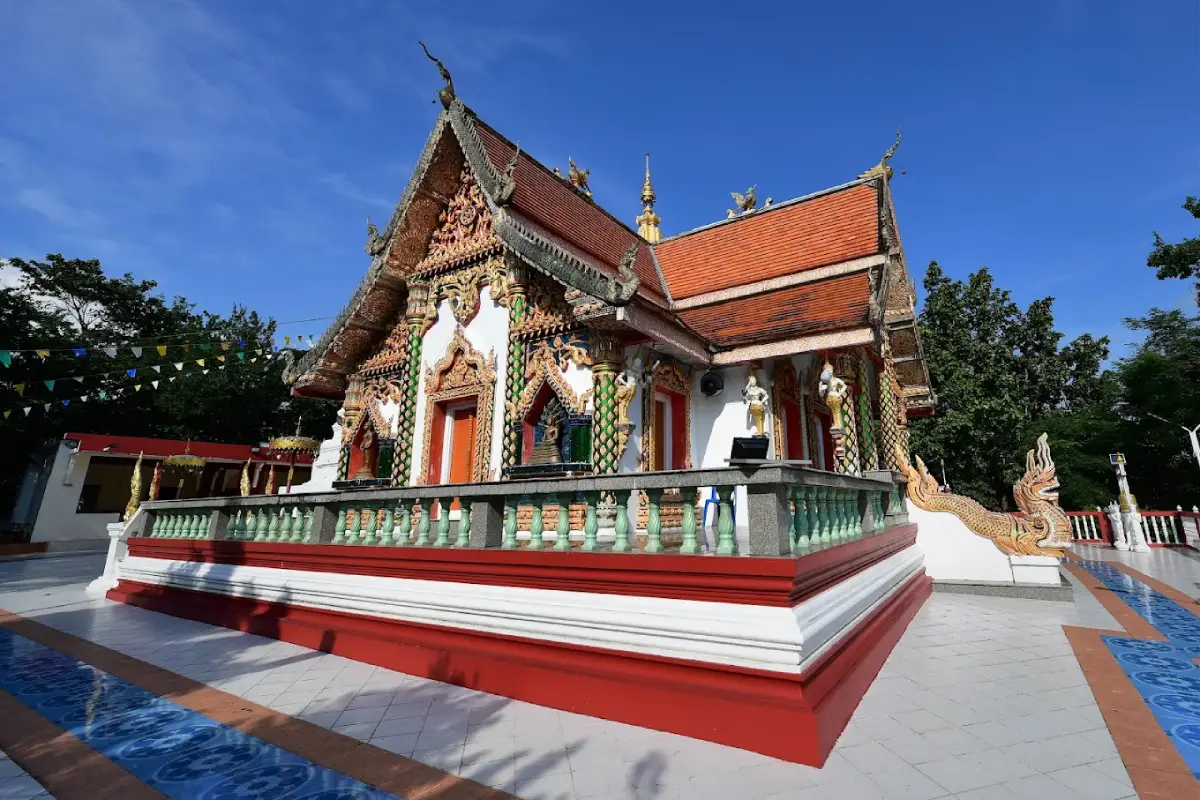
Wat Phra That Chom Taeng is located at 50 Moo 11, San Pong Subdistrict, Mae Rim District, Chiang Mai Province. It is a private Buddhist temple under the Mahanikaya order and one of the important sacred sites of Mae Rim. The temple stands on a hill about 300 meters above the surrounding area and is best known for Phra That Chom Taeng, an ancient chedi registered as a historic monument by the Fine Arts Department. The temple combines religious faith, local legend, forested hill scenery, and the cultural memory of San Pong community.
The temple land covers 23 rai, 3 ngan, and 25 square wa according to title deed no. 9362. It also has monastic land of 5 rai, 2 ngan, and 93 square wa according to title deed no. 29585. The temple is located on a sloping hill surrounded by trees. In the past, access was difficult because the road was only a walking path and later a laterite road. During the rainy season, vehicles could not easily reach the temple because the road became muddy and slippery. Today, a reinforced concrete road connects the main Chiang Mai–Fang road, near kilometer 25, with the Buddhist temple area for about 500 meters, making access much easier.
Wat Phra That Chom Taeng is important as a registered historic site. The Fine Arts Department surveyed and registered the Phra That Chom Taeng chedi as a sacred monument, with the announcement published in the Royal Gazette, Volume 71, Section 3, on 5 January 1954. This recognition confirms that the chedi is not only a local object of worship but also a heritage site that deserves preservation as part of Chiang Mai’s cultural landscape.
The temple received its royal consecrated boundary on 10 January 1985, under the sixth round of the 1984 annual allocation. The announcement appeared in the Royal Gazette, Volume 106, Section 9, on 24 January 1985. The Department of Religious Affairs processed the temple’s Buddhist religious site documentation on 22 February 1985. Receiving a royal consecrated boundary gives the temple a proper area for formal monastic ceremonies and confirms its full role within the Thai Sangha system.
The name “Phra That Chom Taeng” is rooted in a local Buddhist legend. According to accounts preserved in Mae Rim local histories and writings associated with Luang Pu Phra Khru Suphatkhun, also known as Luang Pu Kham Pan Suphattho, the story begins after the Buddha placed the fourth overlapping footprint at Phra Phutthabat Si Roi. The Buddha then traveled along the mountain slope until reaching a hill associated with a herd of rhinoceroses, known locally as Doi Khi Raet or Khao Khi Raet.
The legend says that near the hill lived Lawa villagers who farmed at the foothill. When the Buddha arrived with his disciples near midday, an elderly Lawa couple working in the garden saw him and became deeply joyful. They carried cucumbers up the hill and offered them to the Buddha. He received the cucumbers and distributed them among his disciples. By his spiritual power, one cucumber remained and became the center of the sacred story.
After teaching the elderly couple, the Buddha was visited by a rhinoceros king and its followers. The Buddha blessed them with compassion. When they departed, he placed one of his hair relics inside the remaining cucumber. When the disciples asked why he smiled, the Buddha said that in the future this place would be known as “Phra That Chom Taeng.” This legend links the name of the chedi with the cucumber offered by the Lawa couple and the Buddha’s hair relic preserved within it.
After the Buddha left, the Lawa villagers came to the place and found only the cucumber containing the hair relic. They placed it in a proper location, dug a pit one khawut deep, and built a mandapa over it for worship. On Buddhist observance days, villagers came to pray, chant, and meditate. The story also explains the origin of the old village name San Lua O, associated with the joyful commotion caused by the villagers after hearing the news of the Buddha’s visit.
Although the legendary events cannot be verified as literal history, the legend is important as a sacred memory of the local community. It explains why the hill became holy, why the chedi is revered, and how the local landscape was connected with the Buddha. Such legends are an essential part of northern Thai religious culture because they root Buddhist faith in local geography, ethnic memory, and community identity.
The Phra That Chom Taeng chedi consists of two white chedis standing on the same base. One is larger and the other smaller. The base is about 8 meters wide and 8 meters long, and the chedi rises about 15 meters high. The structure has several receding tiers and a bell-shaped upper section. Standing on a hill, the chedi is visually prominent and remains the main sacred focus of the temple.
Phra That Chom Taeng has been restored several times. Around 1902, Phra In Ta, abbot of Wat Chedi Sathan, together with Phor Khun San Pong Prasit Thawon, Phor Nan Dam, and village elders, helped restore the chedi. Around 1927, a Burmese devotee known as Nai Mong Ae or Mong Ki, who had settled in Chiang Mai, restored the chedi, built a more permanent viharn, created Buddha images for worship, and built a stairway leading to the viharn entrance.
During the major restoration around 1927, a celebration was organized on the full moon day of the eighth northern lunar month, which was associated with the bathing ceremony of the chedi. Later, because this period coincided with the rainy season and travel became difficult, the annual bathing ceremony was moved to the full moon day of the fifth northern lunar month. This tradition continues as one of the temple’s most important annual events.
Wat Phra That Chom Taeng is also connected with several meditation masters and respected monks. Records mention that Luang Pu Mun Bhuridatto spent a rains retreat at Wat Phra That Chom Taeng in 1930. Other respected teachers and meditation monks associated with the temple include Luang Pu Fan Acharo, Khru Ba Intharachakraksa, Khru Ba Phromma, Luang Pu Waen Suchinno, and Luang Pu Kham Pan Suphattho. These associations give the temple a deeper spiritual dimension beyond its role as an ancient hilltop chedi.
At one point, the temple became deteriorated and was sometimes without resident monks. In 1964, an irrigation canal was dug near the front of the temple area, and because of the hill’s slope, the chedi area gradually subsided. Later, the Sangha and local supporters helped restore the temple. In 1970, Phra Khru Amornthammaprayut, together with monks of Mae Rim District, Phra Khru Wirunthammakowit, Luang Pu Kham Pan Suphattho, and local devotees, rebuilt the old viharn in a cruciform style. The work was completed in 1973, followed by a celebration and the continuation of the annual bathing ceremony.
Important areas inside the temple include the Phra That Chom Taeng chedi, viharn, principal Buddha image, Buddha images within the viharn, chedi courtyard, stairway, Buddhist sacred area, and the surrounding shaded landscape. The chedi is the spiritual center, while the viharn serves as a place for worship and merit-making. The hilltop setting also allows visitors to see the surrounding Mae Rim landscape from a calm and elevated point.
Visitors should begin with the white chedis of Phra That Chom Taeng, then pay respect to the Buddha image inside the viharn, walk quietly around the chedi courtyard, and observe the areas shaped by different periods of restoration. Morning and late afternoon are especially suitable for a calm visit because the light is softer and the weather is usually more comfortable.
The current abbot recorded in temple information is Phra Samu Sura Wisutthiyano. The abbot succession information mentions Phra Khru Piyathammaphani serving from 1981 to 2005, followed by Phra Samu Sura Wisutthiyano from 2005 onward. The continuing presence of resident monks confirms that the temple remains an active religious site with merit-making, ceremonies, and ongoing community care.
The most important annual tradition is the bathing ceremony of Phra That Chom Taeng, held on the full moon day of the fifth northern lunar month. Local people and devotees come to pay homage, bathe the chedi, make merit, offer food, listen to Dhamma, and participate according to their faith. This ceremony keeps the temple alive as a spiritual center of Ban Mai Chom Taeng and San Pong Subdistrict.
San Pong Subdistrict connects local villages, temples, agricultural areas, and travel routes between Mae Rim and Mae Taeng. Wat Phra That Chom Taeng can be included in several itineraries. Temple and heritage routes can connect it with Wat San Pong, Wat Si Chomphu, Wat Chedi Sathan, Wat Kumpapradit, and Wat Den Sali Sri Muang Kaen. Nature and family routes can continue to Mae Sa Waterfall, Mae Sa Elephant Camp, Queen Sirikit Botanic Garden, or Mon Jam.
A good route can begin with Wat Phra That Chom Taeng in the morning, followed by nearby temples in San Pong or Rim Nuea, lunch in San Pong or Mae Rim, and an afternoon visit to Wat Den Sali Sri Muang Kaen, Wat Pa Dara Phirom, Daraphirom Palace Museum, or the Mae Sa Valley attractions. This makes the temple a strong starting point for a day trip combining religious heritage, local food, hill scenery, and northern Thai culture.
Getting There from Chiang Mai city is convenient by following Highway 107, also known as Chotana Road, the Chiang Mai–Fang route, toward Mae Rim District. Continue into San Pong Subdistrict near around kilometer 25. From the main road, a reinforced concrete road leads about 500 meters uphill to the temple area. A private car, rental car, or hired vehicle is recommended because the temple is on a hill and the road should be driven carefully.
Visitors should dress respectfully, keep their voices low, and avoid touching or climbing on historic structures. During the annual bathing ceremony, extra travel time is recommended because local devotees and visitors may come in large numbers. The temple is both a sacred place and a registered historic monument, so cleanliness, quietness, and respectful behavior are important.
Wat Phra That Chom Taeng brings together many layers of meaning: the legend of the Buddha’s hair relic inside a cucumber, a registered historic chedi, a royal consecrated boundary, the annual bathing ceremony, connections with meditation masters, and a shaded hilltop landscape in San Pong. A visit here offers a deeper view of Mae Rim as a district shaped not only by nature and tourism, but also by old sacred sites and enduring local faith.
| Name | Wat Phra That Chom Taeng |
| Local Names | Phra That Doi Chom Taeng / Wat Chom Taeng / Wat Doi Taeng |
| Location | Ban Mai Chom Taeng, Village No. 11, San Pong Subdistrict, Mae Rim District, Chiang Mai Province |
| Address | 50 Moo 11, San Pong Subdistrict, Mae Rim District, Chiang Mai Province 50180, Thailand |
| Highlights | A registered hilltop historic chedi, two white chedis on one base, the legend of the Buddha’s hair relic in a cucumber, and the annual bathing ceremony of Phra That Chom Taeng |
| History | Connected with a Buddhist legend involving Lawa villagers, later restored in several periods including 1902, 1927, and the major rebuilding of the viharn around 1970–1973 |
| Royal Consecrated Boundary | Granted on 10 January 1985, with the announcement published in the Royal Gazette, Volume 106, Section 9, on 24 January 1985 |
| Historic Monument Status | The Phra That Chom Taeng chedi was registered as a historic monument, announced in the Royal Gazette, Volume 71, Section 3, on 5 January 1954 |
| Name Origin | According to legend, the Buddha placed a hair relic in a cucumber offered by an elderly Lawa couple and said that the place would later be known as Phra That Chom Taeng |
| Temple Land | Temple land of 23 rai, 3 ngan, and 25 square wa, with additional monastic land of 5 rai, 2 ngan, and 93 square wa |
| Distinctive Features | A Mahanikaya community temple located on a hill about 300 meters high, surrounded by trees and offering scenic views of Mae Rim |
| Important Structures | Phra That Chom Taeng chedi, viharn, principal Buddha image, Buddha images in the viharn, chedi courtyard, stairway, Buddhist sacred area, and surrounding shaded grounds |
| Chedi Characteristics | Two white chedis on the same base, about 8 meters wide and 8 meters long, rising about 15 meters high with a bell-shaped upper section |
| Abbot / Caretaker | Phra Samu Sura Wisutthiyano |
| Associated Teachers | Luang Pu Mun Bhuridatto, Luang Pu Fan Acharo, Khru Ba Intharachakraksa, Khru Ba Phromma, Luang Pu Waen Suchinno, and Luang Pu Kham Pan Suphattho |
| Travel Information | From Chiang Mai city, follow Highway 107 / Chotana Road toward Mae Rim District and San Pong Subdistrict. Near around kilometer 25, a reinforced concrete road leads about 500 meters uphill to the temple area. |
| Current Status | An active private Buddhist temple and registered historic site in San Pong Subdistrict, Mae Rim District, Chiang Mai Province |
| Open Days | Daily |
| Opening Hours | 08.00 – 17.00 |
| Traditions / Merit-Making Events | Annual bathing ceremony of Phra That Chom Taeng on the full moon day of the fifth northern lunar month, Buddhist observance days, major Buddhist holy days, Kathin, robe-offering ceremonies, almsgiving, and Dhamma listening |
| Nearby Tourist Attractions | 1. Wat San Pong, about 3 km 2. Wat Si Chomphu, San Pong Subdistrict, about 4 km 3. Wat Chedi Sathan, Rim Nuea Subdistrict, about 5 km 4. Wat Pa Dara Phirom, about 8 km 5. Daraphirom Palace Museum, about 8 km 6. Queen Sirikit Botanic Garden, about 17 km |
| Nearby Restaurants | 1. Baan Suan Mae Rim, about 3 km 2. Mae Rim Tam Sang, about 4 km, Tel. 092-459-0615 3. Tong O Maerim, about 5 km, Tel. 095-452-6949 4. Sunni Food Krapao, about 5 km, Tel. 093-636-2063 5. My Dearest Son Bakery, about 6 km, Tel. 094-664-0456 |
| Nearby Accommodations | 1. Bonnie Baan Pool Villa & Gardens, about 4 km, Tel. 095-781-9623 2. Mon Chang Nature Home, about 7 km, Tel. 094-287-4956 3. Rim Thung Homestay Mae Rim, about 5 km 4. Khankhew Resort, about 6 km 5. Mae Rim Lodge Resort, about 7 km |
Frequently Asked Questions (FAQ)
Q: Where is Wat Phra That Chom Taeng located?
A: Wat Phra That Chom Taeng is located at 50 Moo 11, Ban Mai Chom Taeng, San Pong Subdistrict, Mae Rim District, Chiang Mai Province.
Q: What are the opening hours of Wat Phra That Chom Taeng?
A: Wat Phra That Chom Taeng is open daily from 08.00 to 17.00.
Q: Why is Wat Phra That Chom Taeng important?
A: Wat Phra That Chom Taeng is an important Buddhist temple and registered historic site in San Pong, known for its ancient hilltop chedi and the local legend of the Buddha’s hair relic in a cucumber.
Q: When was Phra That Chom Taeng registered as a historic monument?
A: The Phra That Chom Taeng chedi was registered as a historic monument, with the announcement published in the Royal Gazette, Volume 71, Section 3, on 5 January 1954.
Q: When did Wat Phra That Chom Taeng receive its royal consecrated boundary?
A: The temple received its royal consecrated boundary on 10 January 1985, with the announcement published in the Royal Gazette on 24 January 1985.
Q: What is the main annual tradition at Wat Phra That Chom Taeng?
A: The main annual tradition is the bathing ceremony of Phra That Chom Taeng, held on the full moon day of the fifth northern lunar month.
Q: Who is the abbot of Wat Phra That Chom Taeng?
A: The current abbot recorded in temple information is Phra Samu Sura Wisutthiyano.
Q: What nearby places can be visited with Wat Phra That Chom Taeng?
A: Nearby places include Wat San Pong, Wat Si Chomphu, Wat Chedi Sathan, Wat Pa Dara Phirom, Daraphirom Palace Museum, and Queen Sirikit Botanic Garden.
 Category: ●Places of Worship
 Group: ●Temple
Last Update : 4 WeekAgo
 Last Update : 4 WeekAgo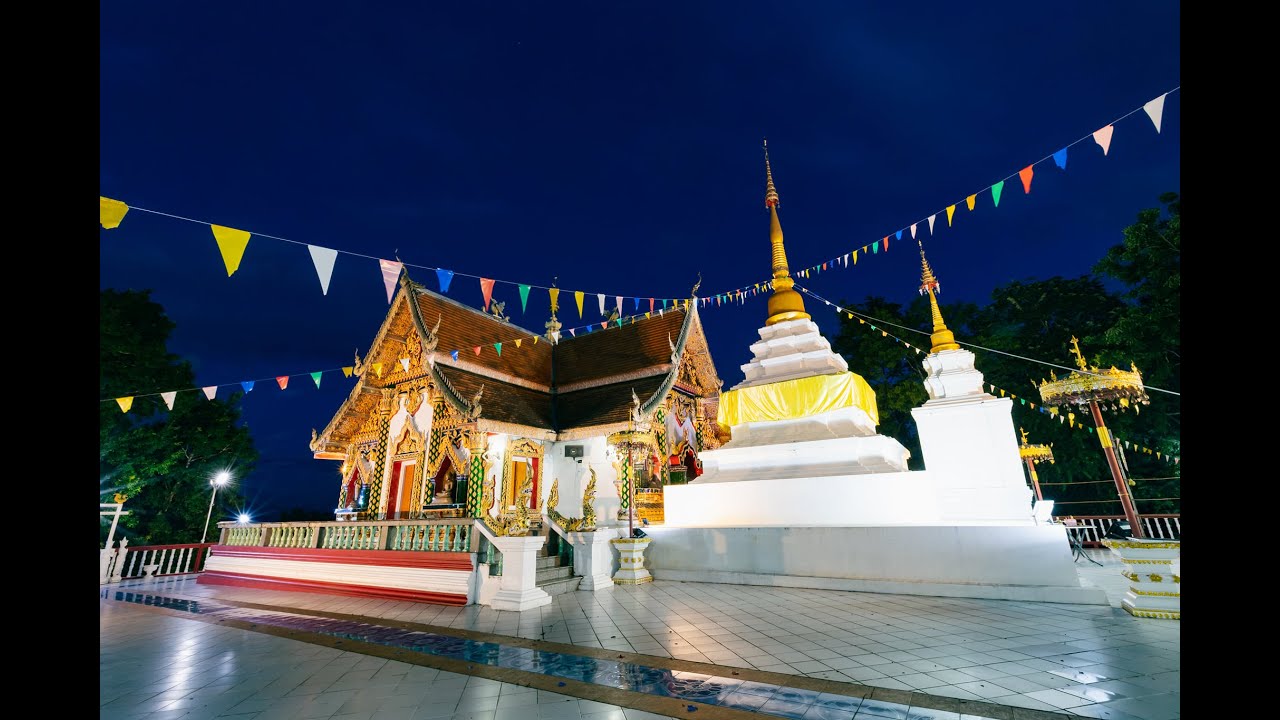
 Click to Access the Navigation Map GPS
Wat Phra That Chom Taeng Map
Recommend

 Muang Chiang Mai(121)Chom Thong(47)Mae Chaem(25)Chiang Dao(33)Doi Saket(68)Mae Taeng(85)Mae Rim(69)Samoeng(29)Fang(71)Mae Ai(59)Phrao(70)San Pa Tong(103)San Kamphaeng(66)San Sai(73)Hang Dong(73)Hot(32)Doi Tao(22)Omkoi(11)Saraphi(74)Wiang Haeng(15)Chai Prakan(28)Mae Wang(32)Mae On(22)Doi Lo(33)Galyani Vadhana(1)


