
lovethailand home >North Travel Attractions >Chiang Mai Travel Attractions >Chom Thong >Ban Pae > Wat Tham Tong
TL;DR: Wat Tham Tong is located at Moo 4, Ban Pae Subdistrict, Chom Thong District, Chiang Mai Province, open Daily, hours 08.00 – 17.00.

Wat Tham Tong
Open Days: Daily
Opening Hours: 08.00 – 17.00
Wat Tham Tong, also known as Tham Tong Meditation Center, is located in Moo 4, Ban Pae Subdistrict, Chom Thong District, Chiang Mai Province. Set in a quiet valley along the Chiang Mai-Chom Thong-Hot route, the temple is known for its natural cave, forested surroundings, meditation atmosphere, and role as a Buddhist practice center. It is a meaningful destination for visitors who want to make merit, pay respect to Buddha images, experience a calm cave temple, or spend time in a peaceful place connected with Vipassana practice.
Wat Tham Tong stands in Ban Pae, a southern subdistrict of Chom Thong. The main access route is Highway 108, the Chiang Mai-Hot road. From Chiang Mai city, travelers follow the route toward Chom Thong and Hot. After passing Chom Thong, the common landmark is around kilometer markers 82-83, where signs point toward Wat Tham Tong or Tham Tong. From the main road, the entrance road continues for about 3.5 kilometers through local community and natural surroundings before reaching the temple.
The temple has two important identities. First, it is a cave temple and cultural site with a natural cave inside the temple grounds. Second, it is a meditation center where monks, nuns, laymen, laywomen, and Buddhist practitioners come to train the mind. This combination gives Wat Tham Tong a character different from ordinary roadside temples. Its value is not only in the cave, but also in the quiet environment that supports mindfulness and spiritual practice.
Cultural records describe Wat Tham Tong as an old cultural site, a beautiful natural place, and a meditation center in Moo 4, Ban Pae Subdistrict, Chom Thong District. It is about 26 kilometers from Chom Thong town. Inside the temple area is one cave that has been associated with the storage of Buddhist scriptures. Records mention 16 scripture containers, some of which were deposited at the National Library and at Wat Ban Pae. This gives the temple historical and cultural value beyond its natural landscape.
The surrounding landscape is one of the strongest features of Wat Tham Tong. The temple sits in a valley with granite and limestone formations, deep cave areas, dense forest, and a small Mae Pae stream flowing near the path to the cave. The shade of large trees, the coolness of the stream, and the quiet soundscape create a suitable atmosphere for meditation. Visitors arriving from the main road can clearly feel the shift from travel mode into a slower and calmer state of mind.
The word sappaya, meaning supportive conditions for practice, explains Wat Tham Tong well. The temple is not centered on crowds or commercial tourism. Its atmosphere supports silence, reflection, and self-observation. Visitors can pay respect to Buddha images, walk quietly around the cave area, listen to the natural surroundings, and sit peacefully in appropriate areas. For travelers seeking a deeper and quieter side of Chiang Mai, Wat Tham Tong offers a strong sense of place.
The development of Tham Tong Meditation Center is closely linked with Phra Ajarn Suchin Wimlo, also known as Phra Khru Wirat Phawananusit. He played an important role in developing this place as a meditation center. As a monk connected with the Wat Phrathat Si Chom Thong meditation tradition, he came to develop the area from 1973 onward so it could serve monks, nuns, lay practitioners, and Buddhists who wished to train in Dhamma practice.
The development of Wat Tham Tong has focused on working with the natural landscape rather than replacing it with large-scale tourist structures. Areas once dominated by bamboo were gradually planted with larger trees and fruit trees to reduce dry-season fire risk and create a cooler environment for practice. This approach allows the temple to grow with the valley landscape and maintain a natural atmosphere suitable for meditation.
Inside the temple are meditation halls and areas for Vipassana practice. One important building mentioned in descriptions of the temple is Sala Vipassana Mukei, built through the faith of a Japanese supporter who respected the practice of Phra Ajarn Suchin. The temple also includes separate accommodation zones for monks, nuns, laymen, and laywomen. This zoning reflects the structure of a meditation center that must preserve silence, discipline, and appropriate living conditions for practitioners.
The practice at Wat Tham Tong is associated with the Four Foundations of Mindfulness: body, feeling, mind, and Dhamma. Practitioners may train through walking meditation, sitting meditation, restraint of body and speech, and mindful daily living. The natural surroundings help practitioners step away from everyday distractions and return to direct observation of the mind. This makes the temple especially suitable for those who want a serious and quiet practice environment.
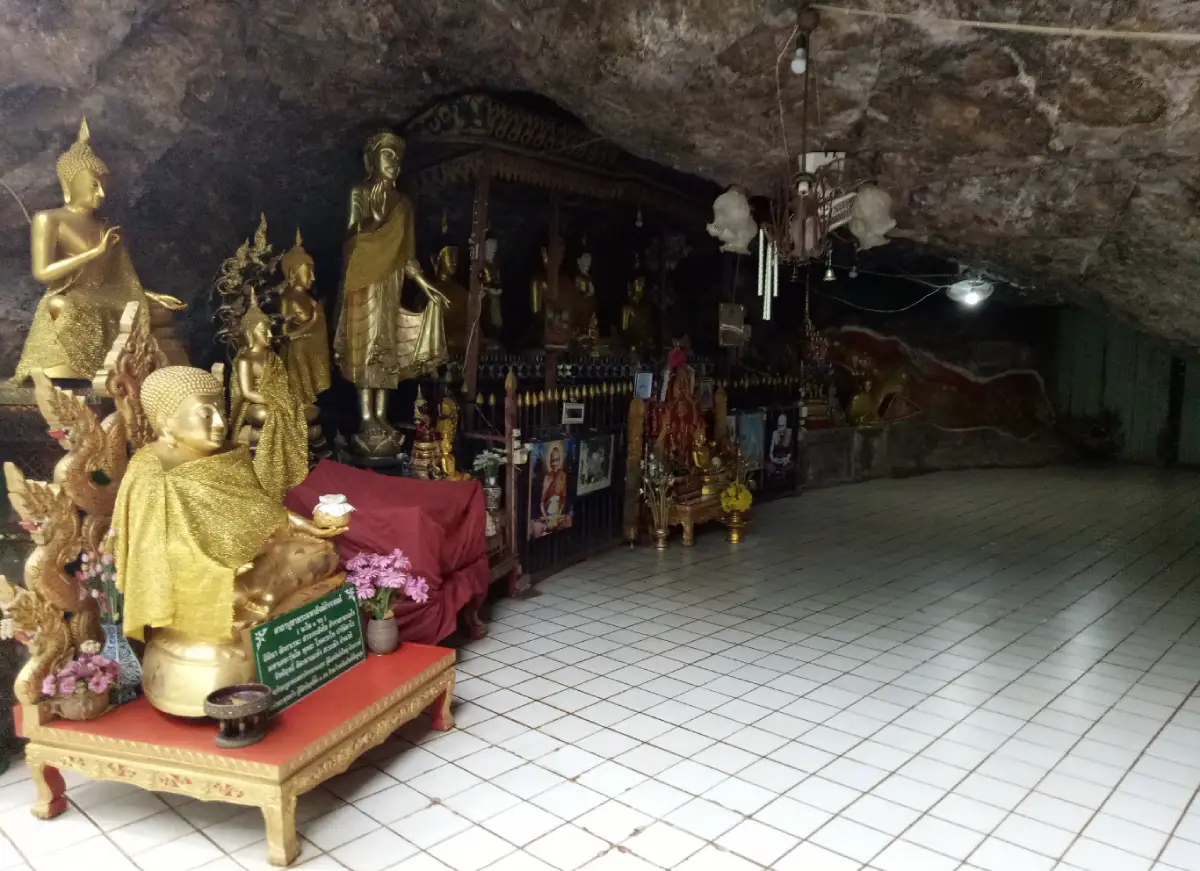
For general visitors, the cave area is the main point of interest. A stairway leads up to the cave entrance. The cave chamber near the entrance is about 5-19 meters wide and about 3 meters high. Buddha images are enshrined there, and old scripture chests are placed along the cave wall. The open area in front of the cave is used for religious activities, especially on Buddhist holy days, and visitors can pay respect there quietly.
The deeper part of the cave is blocked by a wooden door for safety. This is because the inner cave area is deep and may present risks such as poisonous animals, slipping, or getting lost. Visitors should not attempt to enter restricted areas. Respecting these limits helps protect both visitors and the peaceful character of the temple.
Local stories add another layer of meaning to Tham Tong Cave. Some legends describe the cave as having a long passage connected with distant mountain areas. Such stories are best understood as local belief and cultural memory rather than scientific documentation. They show how local people have connected caves with sacredness, protection, mystery, and meditation for generations.
The small Mae Pae stream near the cave path adds to the temple’s calm atmosphere. Its water, together with the forest shade and valley landscape, makes the area feel cool and refreshing. This natural setting is not merely a background; it is part of the temple’s meditation identity. Visitors should walk slowly, observe the surroundings, and treat the temple as a sacred natural space rather than a quick photo stop.
Visitors should remember that Wat Tham Tong is an active meditation site. Monks, nuns, and lay practitioners may be staying or practicing within the temple grounds. Loud conversation, music, careless photography, or entering restricted practice areas is inappropriate. Visitors should dress modestly, speak softly, and respect the quiet atmosphere of the temple.
When visiting the cave area, caution is important. Cave floors may be damp or slippery, and natural caves can be dark and uneven. Visitors should wear suitable shoes, avoid climbing on rocks, avoid touching old scripture chests or religious objects unnecessarily, and never write on cave walls. These simple practices help preserve both the sacredness and the natural condition of the place.
Wat Tham Tong is suitable for travelers interested in Buddhist practice, cave temples, nature-based temple visits, and quiet cultural travel. It can be included in a route along Chiang Mai-Chom Thong-Hot, together with Wat Ban Pae, Wat Sop Pae, Phra Borommathat Doi Pha Khao, Ob Luang, or other Ban Pae community sites. Those who wish to join meditation practice should contact the temple in advance to confirm rules, schedule, clothing, and accommodation conditions.
Getting There from Chiang Mai city is straightforward by private car, rental car, or motorbike. Take Highway 108 toward Chom Thong and Hot. The overall distance to the Tham Tong area is about 76 kilometers. After passing Chom Thong, continue for about 23 kilometers and look for signs around kilometer markers 82-83. From the main road entrance, continue about 3.5 kilometers to the temple.
Visitors relying on public transport can use services along the Chiang Mai-Chom Thong-Hot route and then arrange local transport from the main road into the temple area. Because the temple is several kilometers away from Highway 108, travelers without a private vehicle should plan return transport in advance, especially in the late afternoon.
The best time to visit is from morning to late afternoon, when there is enough daylight for walking around the cave area and temple grounds. A general visit may take one to two hours, while meditation visits require more time and preparation. The temple is best experienced slowly, with attention to its silence, forest, cave, and religious character.
In summary, Wat Tham Tong is a meaningful destination in Chom Thong District for those who want to explore a cave temple and meditation site surrounded by nature. It combines a natural cave, Buddha images, old scripture chests, meditation halls, practitioner accommodation zones, forest shade, and the Mae Pae stream. For travelers who want to understand the quieter spiritual landscape of southern Chiang Mai, Wat Tham Tong is a place worth visiting with respect and attention.
| Name | Wat Tham Tong / Tham Tong Meditation Center |
| Location | Moo 4, Ban Pae Subdistrict, Chom Thong District, Chiang Mai Province |
| Address | Ban Pae, Chiang Mai-Hot Road, Ban Pae Subdistrict, Chom Thong District, Chiang Mai 50240, Thailand |
| Coordinates | 18.255754486230327, 98.58007947685708 |
| Highlights | Natural cave, meditation center, valley atmosphere, shaded forest, Mae Pae stream, Buddha images inside the cave, and old scripture chests |
| History / Significance | An old cultural and natural site in Ban Pae with a cave associated with the storage of Buddhist scriptures; developed as a meditation center by Phra Ajarn Suchin Wimlo |
| Distinctive Features | A cave temple that combines a religious site, cultural site, natural landscape, and Vipassana meditation center in one place |
| Travel Information | Use Highway 108 on the Chiang Mai-Chom Thong-Hot route. After passing Chom Thong, continue about 23 km and turn at the sign around kilometer markers 82-83, then drive about 3.5 km to the temple |
| Current Status | Open for worship, merit-making, access to permitted areas, and meditation activities according to temple rules |
| Open Days | Daily |
| Opening Hours | 08.00 – 17.00 |
| Facilities | Worship area, cave-front courtyard, meditation hall, and accommodation zones for monks, nuns, laymen, and laywomen |
| Main Areas / Zones | Cave entrance, Buddha image area, cave-front courtyard, Sala Vipassana Mukei, meditation zones, monk accommodation, nun accommodation, lay practitioner accommodation, and Mae Pae stream area |
| Abbot / Key Figure | Phra Ajarn Suchin Wimlo, also known as Phra Khru Wirat Phawananusit, played a key role in developing and guiding Tham Tong Meditation Center |
| Main Contact Numbers | 081-884-9561, 098-790-2527 |
| Nearby Tourist Attractions | 1. Wat Ban Pae, about 7 km 2. Wat Sop Pae, about 12 km 3. Phra Borommathat Doi Pha Khao, about 18 km 4. Ob Luang, about 22 km 5. Wat Phrathat Si Chom Thong Worawihan, about 30 km 6. Khun Pae Village, about 40 km |
| Nearby Restaurants | 1. Krua Fueang Fa, Ban Sop Pae, about 20 km, Tel. 053-341-274, 086-182-5031 2. Ing Than Rim Nam Mae Chaem Restaurant, about 20 km, Tel. 093-189-2839 3. Khao Soi Muen Jai, about 35 km, Tel. 085-720-7522 4. Ros Ong Giant Meatball Noodles, about 28 km, Tel. 086-671-9054, 095-140-4191 5. Shabu Khun Chai Chom Thong, about 28 km, Tel. 063-051-6692 |
| Nearby Accommodations | 1. Khun Pae Meena Krathom Noi, about 35 km, Tel. 081-231-8664 2. Khun Pae Krathom View Doi Bla Ae Cho, about 35 km, Tel. 065-965-1299 3. Ban Suk Jai, Ban Pae, about 20 km 4. Touch Star Resort, about 35 km, Tel. 092-419-4142, 053-033-595 5. Doi Inthanon View Resort, about 35 km, Tel. 053-033-567 |
Frequently Asked Questions (FAQ)
Q: Where is Wat Tham Tong located?
A: Wat Tham Tong is located in Moo 4, Ban Pae Subdistrict, Chom Thong District, Chiang Mai 50240, on the Chiang Mai-Chom Thong-Hot route.
Q: What are the opening days and hours of Wat Tham Tong?
A: Wat Tham Tong is open daily from 08.00 to 17.00.
Q: What is Wat Tham Tong known for?
A: It is known for its natural cave, shaded valley setting, Mae Pae stream, meditation atmosphere, Buddha images inside the cave, and role as a Vipassana practice center.
Q: Who should visit Wat Tham Tong?
A: The temple is suitable for visitors who want to make merit, visit a cave temple, enjoy a quiet natural setting, or practice meditation in a peaceful environment.
Q: Can visitors enter the deeper part of the cave?
A: The deeper part of the cave is restricted for safety. Visitors should remain only in permitted areas and follow temple instructions.
Q: How is Wat Tham Tong connected with meditation practice?
A: Wat Tham Tong functions as a meditation center associated with mindfulness practice and the Four Foundations of Mindfulness, with halls and accommodation zones for practitioners.
Q: How can travelers get to Wat Tham Tong?
A: From Chiang Mai city, take Highway 108 toward Chom Thong and Hot. Around kilometer markers 82-83, follow the sign for Wat Tham Tong and continue about 3.5 kilometers to the temple.
Q: What nearby places can be visited with Wat Tham Tong?
A: Nearby places include Wat Ban Pae, Wat Sop Pae, Phra Borommathat Doi Pha Khao, Ob Luang, Wat Phrathat Si Chom Thong Worawihan, and Khun Pae Village.
 Category: ●Places of Worship
 Group: ●Temple
Last Update : 2 WeekAgo
 Last Update : 2 WeekAgo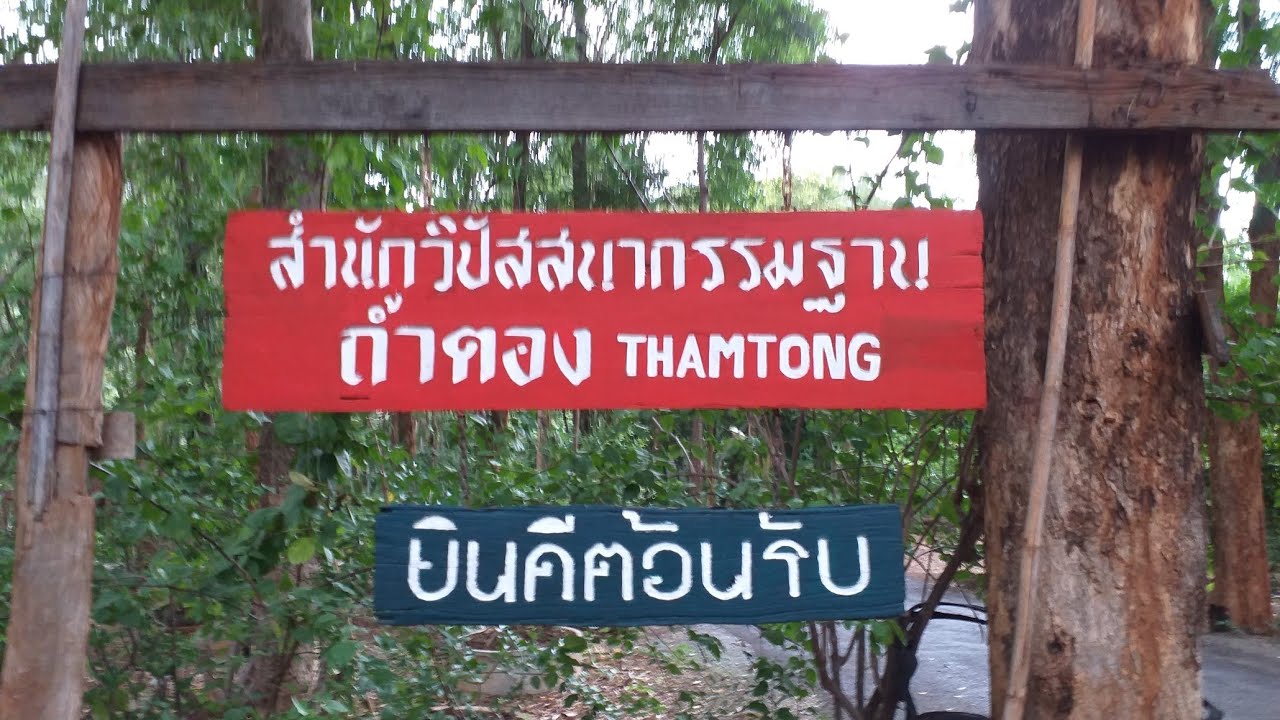
 Click to Access the Navigation Map GPS
Wat Tham Tong Map
Recommend

 Muang Chiang Mai(121)Chom Thong(47)Mae Chaem(25)Chiang Dao(33)Doi Saket(68)Mae Taeng(85)Mae Rim(69)Samoeng(29)Fang(71)Mae Ai(59)Phrao(70)San Pa Tong(103)San Kamphaeng(66)San Sai(73)Hang Dong(73)Hot(32)Doi Tao(22)Omkoi(11)Saraphi(74)Wiang Haeng(15)Chai Prakan(28)Mae Wang(32)Mae On(22)Doi Lo(34)Galyani Vadhana(1)


