
lovethailand home >North Travel Attractions >Chiang Mai Travel Attractions >Galyani Vadhana >Ban Chan > Wat Chan
TL;DR: Wat Chan is located at Ban Wat Chan, Moo 3, Ban Chan Subdistrict, Galyani Vadhana District, Chiang Mai 58130, Thailand, open Daily, hours 08.00 - 17.00.

Wat Chan
Open Days: Daily
Opening Hours: 08.00 - 17.00
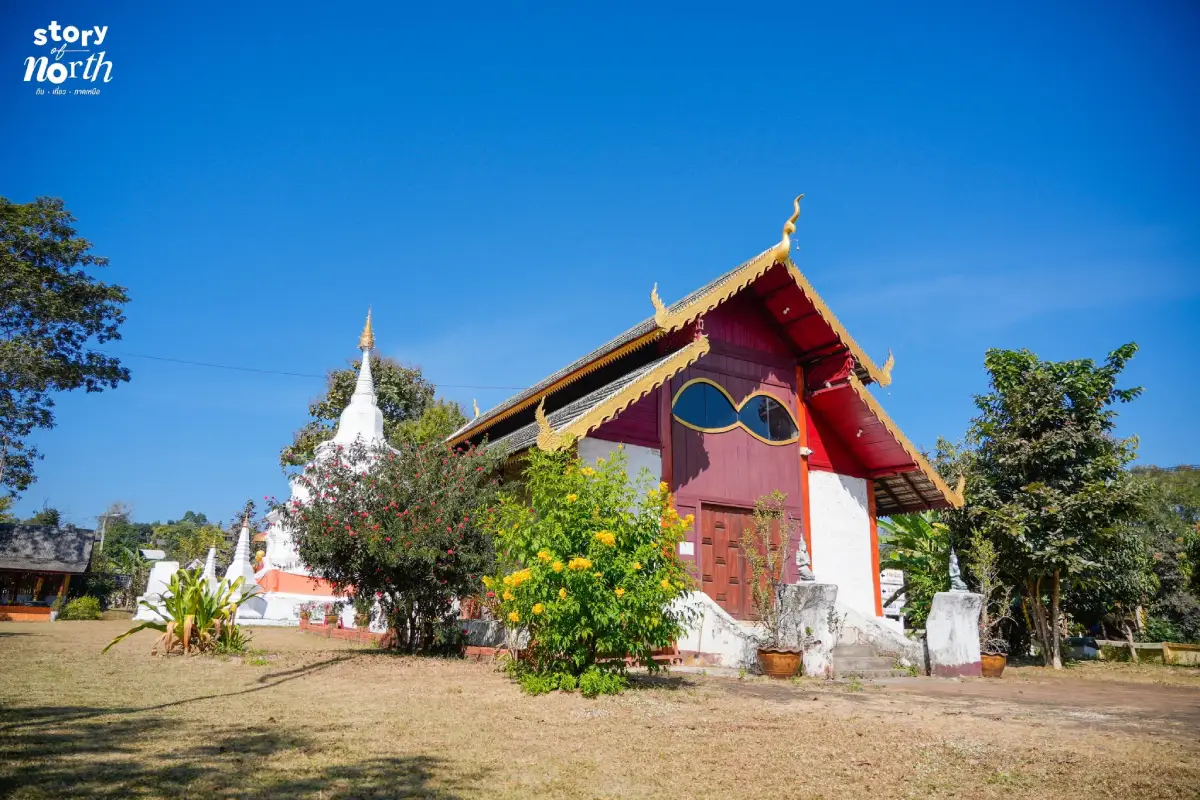
Wat Chan is located in Ban Wat Chan, Moo 3, Ban Chan Subdistrict, Galyani Vadhana District, Chiang Mai Province 58130. It is a community Buddhist temple of the Maha Nikaya tradition, registered under temple code 350250201, and has served as one of the most important spiritual centers of Ban Wat Chan for more than 300 years. Its best-known landmark is the extraordinary Black Sunglasses Vihara, a small temple hall whose two dark openings on the front gable resemble a large pair of sunglasses. The unusual appearance has become one of the most recognizable cultural images of Galyani Vadhana District.
The significance of Wat Chan goes far beyond its unusual architecture. The temple is deeply connected with the history of the highland community, particularly the Karen or Pga K'nyau people who have lived in the surrounding mountains and pine forests for generations. At an elevation of roughly 970 meters above sea level, the temple is surrounded by a cool highland landscape of forests, farmland, village houses, and pine-covered hills.
Wat Chan is located at approximately 19.07324, 98.30515, with the Plus Code 7MFW38F4+73. It stands within Ban Wat Chan, Moo 3, close to the area's school, hospital, small shops, local government facilities, Wat Chan Pine Forest, and community attractions. Its central position makes the temple a practical starting point for exploring both the village and the surrounding highland landscape.
The history of the site reaches back more than three centuries. Local community history connects the area with earlier Lua settlements and groups who established a number of Buddhist religious sites across the highlands. As populations later moved, several monasteries and stupas in the wider area were abandoned. Wat Chan survived through continued restoration and community care and gradually became one of the principal Buddhist centers of the present-day village.
The statement that the temple is more than 300 years old should be understood as the history of the sacred site and local Buddhist community rather than the age of every building visible today. Structures have been repaired, rebuilt, and added during different periods, while the temple's religious role has continued through generations.
The Black Sunglasses Vihara is approximately 80 years old and was built by a Pga K'nyau craftsman. The hall faces east. Its floor is made of concrete, the side walls are plastered, and teak forms an important part of the entrance and front gable. The architecture is relatively modest, reflecting the practical character of a rural community temple rather than monumental construction.
The famous “sunglasses” were not originally designed as a tourist attraction. When the front of the vihara was enclosed with teak boards, the interior became too dark. The craftsman therefore opened two sections in the upper front gable to allow morning sunlight to enter. His intention was to create openings resembling eyes, but the completed shapes looked unexpectedly like a pair of eyeglasses.
Originally, the two openings contained no dark glass. They were simply openings for daylight. Later, the community became concerned about the security of the old Buddha images and other sacred objects inside the hall. Dark filtering glass was installed over the openings. Viewed from outside, the two black panels now resemble sunglasses, giving the vihara the distinctive appearance for which it is famous today.
The most important sacred image inside the vihara is an ancient Phra Singh 3 Buddha image believed to be more than 300 years old. It serves as the principal Buddha image of the hall and remains one of the temple's most revered religious objects. Concern for this old image and other Buddha statues was one reason the community later enclosed the unusual openings with protective dark glass.
The Phra Singh 3 style belongs to the wider tradition of Lanna Buddhist art. While visitors may appreciate its historical and artistic qualities, the image remains first and foremost an object of worship. Travelers should therefore approach it with the same respect given to active sacred images in other Thai monasteries.
Wat Chan also contains a sacred stupa and other religious structures used by the community. Newer buildings have been developed as the monastery's needs changed, including an ubosot incorporating extensive wooden elements. These newer structures stand beside the older vihara, allowing visitors to see different periods of temple development within the same grounds.
The temple has also held a formal boundary-marking and luk nimit ceremony connected with its ubosot. Such ceremonies formally establish the sacred monastic boundary used for important acts of the Sangha, including ordination. The development of the newer ubosot demonstrates that Wat Chan remains an active Buddhist institution rather than simply a preserved historic attraction.
The current abbot is Phra Khru Chantharakitcharak. Kathin information for 2025 recorded five monks residing at Wat Chan during the Buddhist rains retreat, with the annual kathin ceremony held on 12 October 2025 at 09.00. This continued monastic residence and annual merit-making activity confirm the temple's active religious role.
Kathin is an important annual event after the rains retreat. Local residents and Buddhist supporters offer robes, donations, and essential supplies to the monastic community. In rural highland communities, such festivals also provide an opportunity for relatives and residents who have moved away to return home and reconnect with the village.
The temple's architecture is inseparable from Pga K'nyau community culture. The builder of the sunglasses vihara was a local Karen craftsman, and the wider community has a long history of woodworking, weaving, agriculture, and forest-based knowledge. Wat Chan is therefore both a Buddhist site and an expression of local highland craftsmanship.
Ban Wat Chan is surrounded by extensive pine forest containing both two-needle and three-needle pine species. The cool highland climate creates a very different atmosphere from lowland Chiang Mai. During the cool season, mornings can be cold and misty, while the rainy season brings intense green landscapes and quieter visitor numbers.
The surrounding forest is central to local identity. Pga K'nyau communities have traditionally depended on careful relationships with forests, agricultural land, streams, and village resources. A visit to Wat Chan is therefore particularly meaningful when combined with time in the nearby pine forest and local community.
Wat Chan also played a small but notable role in the modern administrative history of the district. During preparations for the creation of Galyani Vadhana District in 2009, the temple area was involved in preparations for temporary district administration. This belongs to the historical period surrounding the district's establishment and does not mean that Wat Chan serves as the present district office.
This episode illustrates the broader role of rural temples in Thailand. In communities where large public facilities are limited, temples often function as familiar common spaces that can temporarily support important community or administrative activities.
Galyani Vadhana District was formally created in 2009 from Ban Chan, Chaem Luang, and Mae Daet areas formerly associated with Mae Chaem District. Older documents may therefore list Wat Chan under Mae Chaem, while the current address is in Galyani Vadhana District.
The current address for travelers is Ban Wat Chan, Moo 3, Ban Chan Subdistrict, Galyani Vadhana District, Chiang Mai 58130. Using the full location is important because several Buddhist temples in Thailand share the name Wat Chan.
The temple is open daily from 08.00 to 17.00. No official admission fee is publicly listed. Visitors may make voluntary merit donations. Morning is generally the best time to visit, especially during the cool season, when the highland air is comfortable and the temple grounds are particularly peaceful.
Shoes should be removed before entering the vihara where required. Visitors should dress modestly, covering shoulders and knees, speak quietly inside religious buildings, and avoid touching sacred images or architectural elements unnecessarily.
The best place to appreciate the sunglasses effect is directly in front of the vihara. From the center of the courtyard, the two dark openings clearly resemble a pair of oversized black glasses. Visitors can then enter the building to pay respect to the ancient Phra Singh 3 image before exploring the stupa and other parts of the temple grounds.
Architecture enthusiasts should look closely at the relationship between the timber gable, doorway, plastered side walls, and daylight openings. The unusual appearance emerged from practical craftsmanship rather than from an attempt to create a novelty building.
Travelers interested in local culture can use Wat Chan as a starting point for exploring the Pga K'nyau community. Handwoven textiles, embroidery, bamboo crafts, highland agriculture, and local food traditions remain important aspects of community identity.
Wat Chan Pine Forest is the most natural destination to combine with the temple. The forest contains broad stands of pine, grassland, reservoir scenery, and misty morning viewpoints. During the cool season, fog often forms above the water and creates one of the area's most recognizable landscapes.
Visiting the temple and pine forest together provides a fuller understanding of Ban Wat Chan. The temple represents religion, history, and community craftsmanship, while the forest reflects the natural environment and the relationship between highland residents and their land.
Phra That Khow Pho Lu, also known as Phra That Chom Chaeng, provides another culturally meaningful stop. The Pga K'nyau name is associated with a small stupa hill, and the site lies within a forested landscape outside the main village.
Huai Or Reservoir is another relaxing destination in the surrounding area. Pine-covered scenery and open water make it suitable for quiet sightseeing and photography, particularly in the morning and late afternoon.
Wat Chan Royal Project Development Center adds an agricultural and community-development dimension to the journey. Visitors can learn about highland crops, local produce, and efforts to improve livelihoods while reducing pressure on watershed forests.
Travelers with more time can continue to Huai Hom and other communities in Galyani Vadhana District, where local weaving, agriculture, and Pga K'nyau culture remain important parts of everyday life. Spending at least one night in the district is strongly recommended because the road journey from Chiang Mai is long and winding.
Food and café options near the temple are small local establishments rather than large commercial chains. Pine Forest Ban Chan Coffee, Porwa Pizza & drip coffee, Le Pler, Mueang Nuea Restaurant, and Pakayor Coffee are practical places to stop during a day exploring the temple, village, and pine forest.
Most of these businesses are approximately 1-4 km from Wat Chan, depending on the road used. Opening hours can vary, especially during the rainy season and on quieter weekdays, so checking on the day of travel is advisable.
Accommodation options include FIO Watchan in the pine forest area, Sawa Hostel, Ta Pluk Khao Yai Tham Suan, Ban Chan Khwa Dao Homestay, and Karen Hill Tribe Lodge in the wider Galyani Vadhana area. Staying locally allows travelers to enjoy early-morning mist and explore the temple without rushing back to Chiang Mai after dark.
Accommodation capacity in the district is limited compared with major Chiang Mai tourist centers. Advance booking is particularly important during the cool season, when Ban Wat Chan and the pine forest attract more visitors.
Getting There from Chiang Mai city normally involves driving north toward Mae Rim and continuing through the Samoeng route into Galyani Vadhana. The journey generally takes around four hours or longer depending on road and weather conditions. The mountain road contains many curves, so vehicles should be in good condition and drivers should avoid excessive speed.
Another route can connect Ban Wat Chan with Pai, allowing travelers to create a larger loop through the mountains. Road conditions should always be checked during the rainy season, when fog, heavy rain, or landslide risk may affect mountain travel.
Local yellow public transport between Chiang Mai and Wat Chan has traditionally operated from Chang Phueak Bus Station with only a limited number of departures each day. Travelers using public transport should confirm the current timetable before departure and plan to stay within the village rather than attempting a rushed day trip.
A practical one-day local itinerary begins at Wat Chan to see the sunglasses vihara, the ancient Phra Singh 3 image, and the stupa. Continue to the Royal Project and Wat Chan Pine Forest, then stop at a village restaurant or café. With a second day, add Phra That Khow Pho Lu and a community cultural experience.
The cool season is the most popular time to visit because of low temperatures and morning mist. The rainy season offers lush green scenery and fewer visitors, although mountain roads can be wet. Even during the hot season, mornings and evenings at this high elevation are generally cooler than central Chiang Mai.
Wat Chan suits several types of traveler. Architecture enthusiasts can study the unique vihara, cultural travelers can learn about Pga K'nyau life, nature lovers can continue into the pine forest, and visitors interested in modern local history can explore the temple's connection with the early development of Galyani Vadhana District.
The value of Wat Chan comes from these layers existing together. A sacred site more than three centuries old, an ancient Phra Singh 3 Buddha image, an 80-year-old vihara designed by a Pga K'nyau craftsman, and the living religious role of the modern monastery all occupy the same village landscape.
Visitors should therefore allow at least 45-60 minutes rather than stopping only for a photograph of the sunglasses façade. Paying respect inside the vihara, observing the craftsmanship, and exploring the temple grounds provide a much fuller understanding of the place.
Combined with the pine forest, Pga K'nyau community, Royal Project, and surrounding sacred sites, Wat Chan helps define the character of Galyani Vadhana. The district is best experienced slowly, with attention to landscape, community, and culture rather than as a checklist of tourist attractions.
Wat Chan may first attract attention because its vihara appears to be wearing black sunglasses, but its deeper significance lies in the people and history behind that image: local craftsmanship, natural light, protection of ancient sacred objects, generations of Buddhist faith, and a highland community whose cultural identity has endured for centuries.
| Name | Wat Chan |
| Type | Community Buddhist Temple, Maha Nikaya Tradition |
| Temple Code | 350250201 |
| Address | Ban Wat Chan, Moo 3, Ban Chan Subdistrict, Galyani Vadhana District, Chiang Mai 58130, Thailand |
| Coordinates | Approximately 19.07324, 98.30515 |
| Plus Code | 7MFW38F4+73 |
| Temple Age | More than 300 years |
| Abbot | Phra Khru Chantharakitcharak |
| Signature Feature | Black Sunglasses Vihara with distinctive dark eye-shaped daylight openings built by a Pga K'nyau craftsman |
| Age Of Sunglasses Vihara | Approximately 80 years |
| Principal Buddha Image | Phra Singh 3 Buddha image, more than 300 years old |
| Important Religious Features | Black Sunglasses Vihara, ancient Buddha images, sacred stupa, and ubosot |
| Community Context | Spiritual center of Ban Wat Chan and the surrounding Pga K'nyau highland community |
| Modern Historical Role | Connected with preparations for temporary district administration during the establishment of Galyani Vadhana District in 2009 |
| 2025 Kathin | 12 October 2025 at 09.00; five monks recorded during the rains retreat |
| Open Days | Daily |
| Opening Hours | 08.00 - 17.00 |
| Admission Fee | No official admission fee listed; voluntary merit donations are welcome |
| Getting There | Drive from Chiang Mai through Mae Rim and Samoeng toward Galyani Vadhana. The journey generally takes around four hours or longer depending on road conditions. Limited local public transport also connects Chiang Mai and Ban Wat Chan. |
| Nearby Attractions | 1. Wat Chan Pine Forest, approximately 2 km 2. Wat Chan Royal Project Development Center, approximately 2-3 km 3. Huai Or Reservoir, approximately 3 km 4. Phra That Khow Pho Lu, approximately 5 km 5. Ban Wat Chan Pga K'nyau Community, approximately 1 km 6. Huai Hom and surrounding community routes, approximately 10 km or more |
| Nearby Restaurants And Cafés | 1. Pine Forest Ban Chan Coffee, approximately 2 km, Tel. +66 93 248 7949 2. Porwa Pizza & drip coffee, approximately 2 km, Tel. +66 63 469 6354 3. Le Pler, approximately 2-3 km, Tel. +66 98 054 9833 4. Mueang Nuea Restaurant, approximately 2-3 km, Tel. +66 97 995 3138 5. Pakayor Coffee, approximately 2-3 km, Tel. +66 89 998 9052 |
| Nearby Accommodation | 1. FIO Watchan, approximately 2 km 2. Sawa Hostel, approximately 2-3 km, Tel. +66 90 329 6660 3. Ta Pluk Khao Yai Tham Suan, approximately 2 km 4. Ban Chan Khwa Dao Homestay, approximately 2-4 km, Tel. +66 98 111 2191 / +66 89 929 6778 5. Karen Hill Tribe Lodge, within the wider Galyani Vadhana area, Tel. +66 53 273 746 |
Frequently Asked Questions (FAQ)
Q: Where is Wat Chan located?
A: Wat Chan is located in Ban Wat Chan, Moo 3, Ban Chan Subdistrict, Galyani Vadhana District, Chiang Mai Province 58130. The approximate coordinates are 19.07324, 98.30515.
Q: How old is Wat Chan?
A: The temple has a history extending back more than 300 years and is closely connected with the long-term settlement and Buddhist traditions of the Ban Wat Chan highland community.
Q: Why is the vihara called the Black Sunglasses Vihara?
A: A Pga K'nyau craftsman opened two sections of the front gable to let daylight into the building. The shapes unexpectedly resembled eyeglasses, and dark filtering glass was later installed for security, making the façade look like it is wearing black sunglasses.
Q: What is the principal Buddha image inside the vihara?
A: The principal image is an ancient Phra Singh 3 Buddha image believed to be more than 300 years old.
Q: Who is the abbot of Wat Chan?
A: The abbot is Phra Khru Chantharakitcharak. The 2025 kathin record lists five monks residing at the temple during the rains retreat.
Q: Was Wat Chan once used as the Galyani Vadhana District Office?
A: During preparations for establishing Galyani Vadhana District in 2009, the temple area was connected with temporary administrative preparations. This is a historical role and does not represent the current district office.
Q: What are the opening hours and admission fee?
A: Wat Chan is open daily from 08.00 to 17.00. No official admission fee is listed, and visitors may make voluntary merit donations.
Q: What places can be visited after Wat Chan?
A: Nearby destinations include Wat Chan Pine Forest, Wat Chan Royal Project Development Center, Huai Or Reservoir, Phra That Khow Pho Lu, and local Pga K'nyau community attractions. Staying at least one night is recommended because the district is far from central Chiang Mai.
 Category: ●Places of Worship
 Group: ●Temple
Last Update : 2 MonthAgo
 Last Update : 2 MonthAgo
 Click to Access the Navigation Map GPS

 Muang Chiang Mai(121)Chom Thong(47)Mae Chaem(25)Chiang Dao(33)Doi Saket(68)Mae Taeng(85)Mae Rim(69)Samoeng(29)Fang(71)Mae Ai(59)Phrao(70)San Pa Tong(103)San Kamphaeng(66)San Sai(73)Hang Dong(73)Hot(32)Doi Tao(22)Omkoi(11)Saraphi(74)Wiang Haeng(15)Chai Prakan(28)Mae Wang(32)Mae On(22)Doi Lo(33)Galyani Vadhana(1)


