
lovethailand home >North Travel Attractions >Chiang Mai Travel Attractions >Mae Chaem >Tha Pha > Wat Yang Laung
TL;DR: Wat Yang Laung is located at Ban Yang Luang, Tha Pha Subdistrict, Mae Chaem District, Chiang Mai Province (approx. coordinates 18.4755462, 98.3711313), open Daily, hours 06.00–17.00.

Wat Yang Laung
Open Days: Daily
Opening Hours: 06.00–17.00
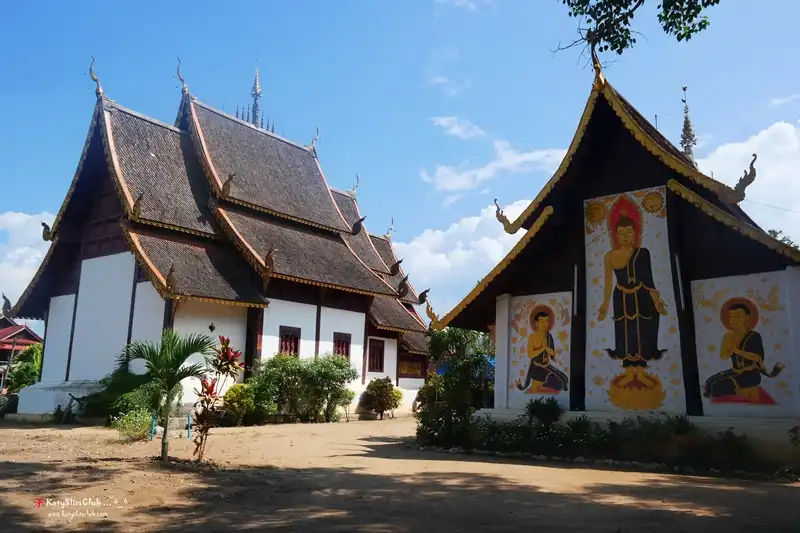
Wat Yang Luang is located in Tha Pha Subdistrict, Mae Chaem District, Chiang Mai Province, along the same route as Wat Pa Daet and not far from it. The temple is well suited for a short stopover while traveling in Mae Chaem, or as a primary destination for visitors interested in local temple art with a distinctive character. Wat Yang Luang is valued not only for its age—believed to date back to around the 24th Buddhist century—but also for the layers of meaning embedded in its architecture and belief system. The most memorable feature for many visitors is the “Ku Prasat,” also known as the “Kitchakut,” located behind the principal Buddha image in the vihara, traditionally regarded as a symbolic “gateway to heaven.”
One of the most striking aspects of Wat Yang Luang is its atmosphere as a living community temple rather than a staged tourist attraction. This authenticity highlights the close relationship between the temple and local life. The temple was established by the Karen people, locally known as “Yang,” and the name “Yang Luang” is closely associated with the history of this community. As a result, the temple’s name is not merely a label but a trace of the people who settled here and created a spiritual center for future generations.
The essence of visiting Wat Yang Luang lies not only in paying respects and leaving, but in observing the craftsmanship and understanding why the community chose to place the Kitchakut structure behind the principal Buddha image as an additional sacred axis of the space. Local accounts describe the Kitchakut as a representation of Mount Kitchakut (Mount Gridhrakuta), a sacred mountain in Buddhist tradition associated with the Buddha’s sermons in Indian legend. Incorporating this sacred mountain into temple architecture effectively transforms cosmological belief into a tangible, experiential space within a rural Mae Chaem temple.
To appreciate the Ku Prasat or Kitchakut in greater depth, it is helpful to view it as standing at the intersection of two artistic languages: Bagan and Lanna–Chiang Saen. Tourism and cultural sources consistently describe this structure as a fusion of Bagan-style architecture from Myanmar and Lanna craftsmanship of the Chiang Saen school. This makes the Kitchakut not merely an auxiliary building, but concrete evidence of regional artistic exchange.
From the Bagan influence, the structure reflects the concept of a layered sanctuary that draws the eye upward, conveying solidity, balance, and a strong sense of sacred centrality—hallmarks of Bagan architecture from the 20th–24th Buddhist centuries. From the Lanna–Chiang Saen tradition, the temple gains refined proportions, subtle decorative restraint, and spatial harmony that integrates the structure seamlessly into a functioning vihara rather than presenting it as a purely monumental form.
Where these two traditions meet in Wat Yang Luang’s Kitchakut, several layers of meaning emerge. First is its placement behind the principal Buddha image, aligning vertical sacred symbolism—ascension toward heaven or a sacred mountain—with horizontal ritual space focused on the Buddha image. This spatial arrangement led to the traditional belief that the Kitchakut functions as a symbolic “gateway to heaven,” not as a literal portal, but as a guided transition from the human realm toward spiritual elevation.
The second layer reflects the historical context of Lanna as a region shaped by long-standing interaction with Myanmar and neighboring polities. The fusion of Bagan and Lanna styles is not ornamental rhetoric, but evidence that local artisans selectively adapted external influences into a form compatible with Mae Chaem’s community temple context.
The third layer lies in the meaning of the Kitchakut itself, tied to the sacred Mount Gridhrakuta, which symbolizes spiritual ascent and the pursuit of enlightenment. Positioning the Kitchakut behind the principal Buddha image suggests that worship does not end with making offerings or seeking blessings, but invites contemplation and moral refinement. In this sense, Wat Yang Luang is designed not only to inspire faith, but also to encourage reflection.
Another source of the temple’s distinctive character is its connection to the Karen (Yang) community. Karen belief systems often blend Buddhism with reverence for ancestral spirits, forest spirits, and the natural environment as a living, sacred presence. When integrated into temple life, this worldview produces a form of devotion that is deeply woven into daily living rather than formal ceremony alone. The temple thus functions as a spiritual refuge, a communal gathering place, and a cultural anchor that emphasizes coexistence between humanity and nature.
This living tradition is evident in communal ceremonies such as the Julakathin ritual, which involves spinning cotton, weaving, and sewing robes within a limited timeframe, preserving ancient merit-making customs. Wat Yang Luang also continues to host the Tan Kuai Salak Luang ceremony, a traditional Lanna merit-making event centered on generosity and dedication of merit, reaffirming the temple’s role as an active cultural institution rather than a static historical site.
Getting There From Chiang Mai city, visitors can drive toward Chom Thong District and continue along Highway 1009 toward Doi Inthanon, then connect to the Mae Chaem route before entering Tha Pha Subdistrict. Public transport options include buses operating between Chom Thong and Mae Chaem, with local transportation available onward to the temple.
Upon arrival, visitors are encouraged to explore the temple slowly—beginning with the principal Buddha image, then moving behind the vihara to observe the Kitchakut as a secondary sacred center. Pay attention to how the structure’s proportions guide the eye upward, giving the impression that the architecture itself is telling a story.
For photography enthusiasts, Wat Yang Luang offers natural beauty with minimal effort. Morning and late-afternoon light enhances the depth and form of the Kitchakut’s structure. Visitors are kindly reminded to photograph respectfully and avoid disturbing worshippers or ongoing religious activities.
| Name | Wat Yang Luang |
| Location | Ban Yang Luang, Tha Pha Subdistrict, Mae Chaem District, Chiang Mai Province (approx. coordinates 18.4755462, 98.3711313) |
| Key Features | Historic community temple featuring the Ku Prasat or Kitchakut behind the principal Buddha image, regarded as a symbolic gateway to heaven; architecture blending Bagan and Lanna (Chiang Saen) styles |
| Period | Estimated construction around the 24th Buddhist century |
| Important Evidence | Kitchakut structure representing Mount Gridhrakuta, combining Bagan and Lanna architectural traditions |
| Name Origin | Derived from the Karen (“Yang”) community who founded the temple and settled in the area |
| Current Status | Open to visitors and active as a community temple |
Frequently Asked Questions (FAQ)
Q: What is the Ku Prasat or Kitchakut at Wat Yang Luang?
A: It is a sacred architectural structure located behind the principal Buddha image, representing Mount Gridhrakuta in Buddhist belief and traditionally regarded as a symbolic gateway to heaven.
Q: Why is the Kitchakut described as Bagan–Lanna style?
A: Cultural sources identify it as a fusion of Bagan architectural principles from Myanmar and Lanna craftsmanship of the Chiang Saen school, reflecting regional artistic exchange.
Q: How is Wat Yang Luang connected to the Karen people?
A: The temple was established by the Karen, locally known as “Yang,” and its name and identity are closely tied to this community’s history and beliefs.
Q: Are there traditional ceremonies held at the temple?
A: Yes, the temple continues to host Julakathin ceremonies involving cotton spinning and weaving, as well as the Tan Kuai Salak Luang merit-making tradition.
Q: When is the best time to visit or take photos?
A: Morning and late afternoon provide the best lighting to highlight architectural details, especially the Kitchakut structure.
 Category: ●Places of Worship
 Group: ●Temple
Last Update : 9 MonthAgo
 Last Update : 9 MonthAgo
 Click to Access the Navigation Map GPS
Wat Yang Laung Map
Recommend

 Art, Culture and Heritage
 Historical Sites and Monuments(8)
 Landmarks and Memorials(5)
 Royal Palace(2)
 Art, Craft Centres, Tradition(43)
 Museums(24)
 Educational Places
 Museum for Study(2)
 Educational Gardens, Farm(5)
 Training Center(1)
Temple(79)
Training Center(1)
Temple(79)
 Mosque(2)
 Other Sacred Sites(17)
 Research and Development
 Royal Project(44)
 Suburban Living
 Village, Community(41)
 Local Market(14)
 Nature and Wildlife
 National Parks and Marine Reserves(16)
 Mountain (Doi)(21)
 Dam, Reservoir, Lake(26)
 Waterfalls(43)
 Hot Springs(12)
 Caves(11)
 River, Canal(6)
 Other natural attractions(14)
 Entertainment and Agricultural
 Zoos and Aquariums(2)
 Animal camps and shows(3)
 Stadium(1)
 Farms, Parks and Ecotourism(19)
 Waterpark(2)
 Theater(1)
 Outdoor and Adventure Activities(10)
 Shopping
 Shopping and Night Market(6)
 Restaurant
 Michelin Star(1)
 Michelin Guide(23)
 Call Customer Service in Tourism
 Call Customer Service in Tourism(1)
 Travel Articles, Recipes
 Travel Review, Food Review(15)
 Food Menu, North Recipes(30)
 Thai Desserts, North Recipes(17)


