
lovethailand home >North Travel Attractions >Uttaradit Travel Attractions >Mueang Uttaradit >Tha It > Uttaradit Rajabhat University
TL;DR: Uttaradit Rajabhat University, Uttaradit attractions : University, Rajabhat University.

Uttaradit Rajabhat University
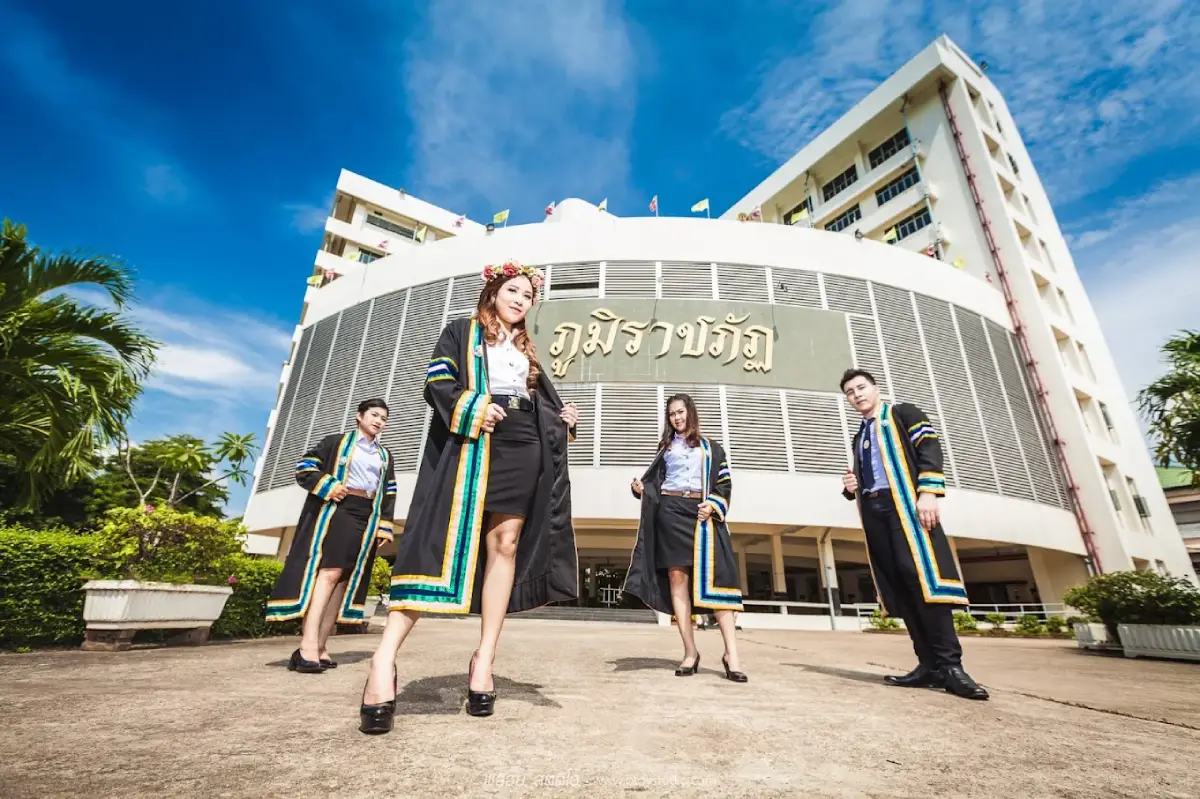
Open Days: Monday–Friday (University Administrative Offices, Excluding Public Holidays and Officially Announced University Closures)
Opening Hours: 08:30 – 16:30 (Central Administrative Office Hours; These Are Not General Visiting Hours for Every Campus Facility)
Uttaradit Rajabhat University is a public university in Uttaradit Province, northern Thailand, with an educational history dating back to August 1, 1936. Originally established as a provincial teacher-training school, the institution developed into Uttaradit Teachers College and later Uttaradit Rajabhat Institute before officially becoming a university on June 15, 2004. Today, it plays a significant role in higher education, teacher preparation, professional development, scientific research, community services, and the preservation of local culture. Its academic activities cover education, agriculture, science, information technology, engineering, nursing, humanities, social sciences, business, and management. Through its faculties, academic centers, and educational services in neighboring provinces, the university contributes to human resource development and sustainable regional growth.
The year 2026 marks the 90th anniversary of the institution's establishment. This milestone reflects an important transformation from a relatively small teacher-training school into a multidisciplinary university. Although the institution's academic offerings have expanded substantially, its longstanding commitment to education and local development remains central to its identity. Its relationship with schools, communities, government agencies, local businesses, and educational institutions across northern Thailand illustrates the continuing importance of regional universities in making higher education more accessible.
The university's main address is 27 Injaimee Road, Tha It Subdistrict, Mueang Uttaradit District, Uttaradit Province 53000, Thailand. Its central administrative area is situated within Uttaradit city, where educational institutions, residential neighborhoods, commercial districts, and public facilities form part of the surrounding urban landscape. This location places the university close to the community it serves, allowing academic knowledge and local experience to interact through teaching, research, public activities, and institutional partnerships.
To understand the history of Uttaradit Rajabhat University, it is useful to consider Thailand's educational development during the early twentieth century. Before World War II, expanding public education required more qualified teachers, particularly in provincial areas distant from Bangkok. Regional teacher-training institutions were therefore essential to the development of the national education system. The establishment of a teacher-training school in Uttaradit formed part of this wider effort to prepare educators and improve access to schooling in northern Thailand.
On August 1, 1936, the institution was officially established under the Thai name "โรงเรียนฝึกหัดครูประกาศนียบัตร จังหวัดอุตรดิตถ์," a provincial certificate-level teacher-training school. Its original site occupied approximately 42 rai of state-owned land in Tha It Subdistrict, Mueang Uttaradit District. In its early years, the institution concentrated on preparing teachers for schools and supporting the development of basic education. This educational mission established the foundations upon which the university would develop over subsequent decades.
The university's historical records identify several individuals who contributed to its early administration. Mr. Chawk Buaphong served in an acting leadership capacity at the beginning of August 1936, followed by Mr. Tuan Rodthiang, who subsequently assumed responsibility for the institution. Their roles illustrate the administrative foundations of the early teacher-training school. Rather than originating from the efforts of a single individual, the university developed through the work of public educational authorities, administrators, teachers, and successive generations of staff.
Following its establishment, the institution gradually changed in response to national education policies and the increasing need for professional teachers. Developments between 1942 and 1968 formed part of its transition toward a broader teacher-training institution. The name Uttaradit Teachers College eventually became closely associated with its educational role and remains familiar to many former students. During this period, the college helped prepare teachers who would go on to work in schools throughout Uttaradit and other northern provinces.
The influence of the former teachers college extended beyond Uttaradit Province. Its historical educational network was connected with provinces including Phrae, Nan, Lampang, Chiang Rai, and Phetchabun. Graduates who entered the teaching profession carried the institution's educational traditions into schools and local communities. This network of former students became an important part of the institution's lasting contribution to regional education.
Another significant milestone occurred on February 14, 1992, when King Bhumibol Adulyadej bestowed the name "Rajabhat Institute" upon the group of institutions previously known as teachers colleges. The change represented an important development in institutional identity. It reflected a broader educational mission encompassing fields beyond teacher training and strengthened the relationship between higher education, academic development, and community service.
The name "Rajabhat" has a royal association and expresses an educational ideal linking knowledge, public responsibility, and service to society. For Uttaradit Rajabhat Institute, the change of name also marked a period in which its academic profile expanded beyond its original teacher-training role. The institution increasingly represented a model of higher education designed to respond to the educational and developmental needs of its region.
On June 15, 2004, Uttaradit Rajabhat Institute officially became Uttaradit Rajabhat University under the Rajabhat University Act B.E. 2547 (2004). The legislation was published in the Royal Gazette on June 14, 2004, and took effect the following day. University status represented a major development in governance, academic responsibilities, institutional organization, and the expansion of higher education programs.
Two dates are therefore particularly important when discussing the university's history. August 1, 1936, marks the establishment of the original educational institution, while June 15, 2004, marks its transition into a university. In 2026, Uttaradit Rajabhat University commemorated 90 years since its original founding and 22 years since acquiring university status. Understanding this distinction helps provide a more accurate account of the institution's development.
The university is led by Associate Professor Dr. Supavinee Sattayaphorn, whose name is recorded in Thai as รองศาสตราจารย์ ดร.สุภาวิณี สัตยาภรณ์. Its administration operates through the University Council, the Office of the President, faculties, colleges, institutes, offices, and academic support units. Together, these organizations coordinate educational policy, teaching, research, student development, cultural activities, public services, and cooperation with external organizations.
Uttaradit Rajabhat University has seven principal faculties: the Faculty of Education, Faculty of Agriculture, Faculty of Science and Technology, Faculty of Humanities and Social Sciences, Faculty of Industrial Technology, Faculty of Management Science, and Faculty of Nursing. The university also operates Nan College and maintains educational services associated with other regional areas. This academic structure demonstrates how a former teacher-training institution has evolved into a university offering a wide range of professional and academic disciplines.
The Faculty of Education maintains a particularly close connection with the university's historical roots. Teacher preparation was the original purpose of the institution, and education remains a major field of study. The faculty provides academic preparation related to teaching methods, child development, curriculum design, educational assessment, classroom learning, and digital educational technologies. Its undergraduate fields include Primary Education, Early Childhood Education, Thai Language, Mathematics, General Science, Social Studies, Physical Education, Thai Classical Dance, Agriculture Education, Foreign Languages, and Computers and Digital Technology for Education.
Beyond classroom teaching, the Faculty of Education contributes to teacher development, teaching practice, educational research, and cooperation with schools. These activities support the professional development of educators and help connect university-based academic knowledge with the practical needs of schools. The relationship is particularly important in provincial communities, where teachers have a direct influence on educational opportunities and the long-term development of children and young people.
The Faculty of Agriculture contributes to education and knowledge development in agriculture, food production, and related scientific applications. Its principal undergraduate programs include Agriculture and Food Technology. The university also provides teacher preparation in Agriculture through academic cooperation involving the Faculty of Education. The subject areas associated with agricultural education include crop production, natural resource management, food processing, agricultural technology, and the development of higher-value agricultural products.
Agriculture is closely connected to the economy and daily life of many communities in Uttaradit and neighboring provinces. Academic work in this field can address practical issues such as product quality, production costs, sustainable resource use, food safety, and the processing of local agricultural materials. By connecting scientific knowledge with real production challenges, agricultural education can contribute to the improvement of local livelihoods and the competitiveness of regional businesses.
The Faculty of Science and Technology provides education in fundamental sciences, applied sciences, computing, data-related fields, and selected health disciplines. Its undergraduate subject areas include Computer Science, Data Science, Information Technology, Applied Mathematics, Chemistry, Biology, Environmental Science, Food and Nutrition, Sports and Exercise Science, and Public Health. This academic diversity allows the faculty to develop graduates with skills relevant to scientific investigation, digital technologies, analytical work, health promotion, and environmental management.
Scientific education at the university also has a practical connection with community development. Knowledge and technical expertise can be applied to laboratory analysis, environmental assessment, health-related projects, information systems, and the development of technological solutions. Students are encouraged through their academic disciplines to combine theoretical understanding with practical skills and the ability to communicate scientific findings effectively.
The Faculty of Industrial Technology prepares students for technical and engineering professions. Its undergraduate fields include Electrical Technology, Digital Technology for Design, Industrial Technology, Surveying and Geoinformatics Technology, Computer Engineering, Logistics Engineering, Industrial Energy Management Engineering, and Construction Management Engineering. Several programs were revised in 2026 to reflect developments in technology, engineering practice, and workforce requirements.
Industrial technology education combines theoretical principles with technical problem-solving, design, production, system operation, and engineering applications. Depending on their fields of study, students develop the ability to work with technical equipment, digital systems, industrial processes, and analytical methods. Experience-based learning and cooperation with industry can help students understand professional expectations and adapt to technological changes in the workplace.
The Faculty of Humanities and Social Sciences offers an academically diverse environment covering languages, society, culture, public administration, law, the arts, and tourism. Programs recorded in university academic information include Thai, English, Business English, Business Chinese, Japanese for Tourism Business Management, Tourism and Hospitality, Community Development, Social Sciences for Development in the Digital Era, Public Administration, Law, Visual Arts, Visual Communication Design, and Music.
Humanities and social sciences play an important role in understanding people, languages, social relationships, government, legal systems, and cultural heritage. In Uttaradit Province, the study of local history and cultural traditions has particular relevance to the university's community-oriented mission. Academic work in these fields can support cultural preservation, language education, intercultural communication, community development, and tourism that respects local identity.
The Faculty of Management Science focuses on business, accounting, economics, communication, and management. Its undergraduate programs include Business Computing, Modern Business Management, Service Business Management, Digital Marketing, Accounting, Digital Economy, Communication Arts, and Management. These subjects prepare students to understand organizational operations, financial and economic processes, marketing, business communication, and contemporary approaches to management.
Business development is particularly relevant to the economic conditions of provincial communities. Small enterprises, service businesses, agricultural product distributors, tourism operators, and community-based producers all benefit from stronger management and marketing capabilities. By connecting knowledge in accounting, business administration, digital marketing, and communications with practical economic activities, the university can contribute to local entrepreneurship and enterprise development.
The Faculty of Nursing represents an important expansion of the university's academic activities into professional healthcare education. Its Bachelor of Nursing Science program is designed to develop knowledge and skills relating to patient care, nursing practice, health promotion, and cooperation within healthcare teams. The university has also announced a Practical Nursing Assistant Certificate program for the 2026 academic year.
Preparing nursing personnel is connected to broader public needs for qualified healthcare workers, including hospital care, elderly care, and community health services. Nursing education requires both academic study and supervised practical preparation, together with adherence to relevant professional standards. Through its healthcare-related programs, the university contributes to developing a workforce capable of supporting the health and wellbeing of local communities.
In addition to undergraduate programs, the university supports postgraduate study and lifelong learning. Advanced education provides opportunities for professionals to strengthen their academic knowledge, research abilities, and specialized skills. Lifelong learning initiatives also allow working adults and members of the public to develop capabilities relevant to changing occupational and social needs.
Nan College extends the educational reach of Uttaradit Rajabhat University into Nan Province. Located in Wiang Sa District, the college provides academic opportunities connected with Public Administration and Business Administration. Its presence helps broaden access to higher education for residents of the surrounding area and demonstrates the regional service role of the Rajabhat university system.
The university is also connected with educational services in Phrae Province through its relevant academic service units. Such regional arrangements can support learning opportunities, academic services, and cooperation between the university and local communities. Prospective students should nevertheless confirm the actual teaching location of any program before applying, since the presence of an educational service center does not mean that every university degree is delivered at that location.
The university's official colors are green and yellow. They represent values associated with peace, harmony, order, and the institution's connection with its local community. Its emblem belongs to the Rajabhat university tradition and reflects the relationship between the institution, the monarchy, knowledge, cultural heritage, the environment, and intellectual development. These symbols form an important part of the university's visual identity and institutional history.
The university's official tree is the Royal Poinciana, commonly known as the Flame Tree. Recognized for its striking flowers, the tree symbolizes elegance and prosperity. Institutional colors, emblems, and commemorative symbols create a sense of shared identity among students, academic staff, employees, and alumni. They are especially meaningful during university ceremonies, anniversaries, and activities celebrating the institution's history.
Uttaradit Rajabhat University also maintains academic and institutional responsibilities related to local arts and culture. These include studying, preserving, developing, and sharing aspects of the region's cultural heritage. Uttaradit has a rich local history shaped by communities, traditional knowledge, religious beliefs, ceremonies, artistic practices, and everyday ways of life. Academic engagement with this heritage helps preserve cultural knowledge while making it accessible to younger generations and the wider public.
The university's traditions combine Thai cultural practices with the customs of higher education. One example is the Wai Khru ceremony, during which students express respect and gratitude toward their teachers. In July 2026, the Faculty of Science and Technology organized a Wai Khru ceremony as part of its academic activities. Such ceremonies emphasize respect, gratitude, responsibility, and the cultural significance of the teacher-student relationship.
University Foundation Day is another important occasion for remembering the institution's history. On August 1, 2026, Uttaradit Rajabhat University marked its 90th anniversary with activities emphasizing the preservation of institutional traditions, creative development, and sustainable local progress. The anniversary provided an opportunity for students, staff, alumni, and cooperating organizations to reflect on the university's development from a teacher-training school into a modern institution of higher education.
University departments also participate in cultural activities connected with the traditions of northern Thailand. In 2026, activities associated with the preservation of local Lanna cultural heritage demonstrated the relationship between academic learning and regional traditions. By incorporating culture into university activities, students gain opportunities to understand the history and identity of the communities with which their institution is closely connected.
Important university facilities include academic buildings, faculty offices, science and technology laboratories, student activity areas, the Office of Academic Resources and Information Technology, and units responsible for arts and cultural activities. Each facility serves a different purpose and may operate under its own access arrangements. Visitors planning an academic study tour, group visit, library visit, or specialist learning activity should contact the relevant university department in advance.
The Office of Academic Resources and Information Technology provides important support for teaching, learning, and research. Its responsibilities involve information resources, digital services, and technology-related infrastructure used by the university community. Access to information systems, electronic resources, and library facilities is increasingly important as students and academic staff use a combination of printed materials, online databases, and digital tools for their work.
The university's Office of Contemporary Arts and Cultural Innovation reflects its commitment to preserving cultural knowledge while also developing new ways of communicating that heritage. Cultural preservation is not limited to recording the past. It can also involve creative activities, educational programs, community cooperation, and the presentation of traditions in formats accessible to contemporary audiences.
Research and development are also central to the university's responsibilities. Its research support units help encourage academic investigation and the practical application of research findings. In the context of a regional university, research may address education, agriculture, public health, environmental management, community business, cultural heritage, and social development. Collaboration with local organizations can help ensure that research responds to actual needs and contributes to improvements in community wellbeing.
Community-oriented academic services form another essential aspect of the university's mission. Expertise from different faculties can support occupational training, local business development, community products, professional skills, and public education. At the same time, cooperation with community organizations provides students and academic staff with valuable experience outside the classroom, helping them understand the challenges and opportunities faced by people in the region.
The integration of education with professional work is an increasingly important element of university learning. Through relevant support units and cooperation with employers, the institution works to connect academic study with workplace experience. Students benefit from opportunities to apply theoretical knowledge, strengthen communication skills, develop teamwork, and understand professional expectations before graduation.
For prospective students, choosing a faculty or academic program involves more than selecting a subject based on its title. Applicants should consider their interests, academic strengths, entry requirements, teaching arrangements, professional accreditation where applicable, practical training requirements, and future career opportunities. It is also important to understand that a program appearing in the university's curriculum database may not necessarily be accepting new students during every admission round.
For the 2026 academic year, applicants should consult the university's official admission announcements to confirm available programs, selection criteria, application deadlines, and study locations. Programs scheduled for revision or introduction in 2027 should be distinguished from those already operating in 2026. This distinction is especially important for applicants comparing degree names or planning their academic pathways.
University life also includes activities that contribute to personal and professional development. Students can develop communication, teamwork, leadership, and social responsibility through academic and extracurricular experiences. Participation in student activities and community projects helps connect classroom learning with wider society and encourages students to develop relationships with people from different academic backgrounds.
For travelers interested in the educational history of Thailand, Uttaradit Rajabhat University represents an important example of the country's development of regional higher education. Its history illustrates the evolution of teacher training, the expansion of educational opportunities outside Bangkok, and the changing relationship between higher education and local development. Understanding its institutional background adds an educational dimension to a visit to Uttaradit Province.
Members of the public who wish to visit university facilities should distinguish between administrative office hours and access to individual locations. Administrative visits, such as contacting central offices or requesting university information, can be planned around the published weekday office schedule. Access to classrooms, laboratories, libraries, research areas, and cultural facilities is subject to the rules of the responsible department. Advance arrangements are particularly advisable for organized groups and academic visits.
Visitors interested in local history may combine an authorized university visit or a public university event with other cultural attractions in Uttaradit city. Places of interest include the Phraya Phichai Dap Hak Monument, Wat Tha Thanon, and local commercial neighborhoods. Such a visit offers a broader perspective on the relationship between education, regional history, community life, and cultural heritage in northern Thailand.
Getting There is possible by private car, local transport, or a hired vehicle. The main university address is on Injaimee Road in Tha It Subdistrict, Mueang Uttaradit District. Visitors arriving from another province should first travel to Uttaradit city and then continue to the campus. Those attending appointments, academic activities, or study visits should confirm the specific building and campus location in advance, since some university faculties and facilities operate outside the central administrative area.
Before traveling, visitors should contact the department responsible for their intended activity. Prospective students should consult the admissions office and current application announcements, while enrolled students should use the university's academic service systems or their faculty offices. Groups wishing to visit laboratories, libraries, or specialist learning facilities should request guidance from the relevant department to ensure that their planned visit complies with access arrangements and institutional schedules.
Ninety years after its establishment, Uttaradit Rajabhat University continues to reflect the importance of regional higher education in Thailand. Its transformation from a teacher-training school into a multidisciplinary university demonstrates the changing educational and professional needs of Thai society. Through teaching, research, cultural preservation, community services, and professional development, the institution maintains a significant role in connecting academic knowledge with the wellbeing and future development of local communities.
Uttaradit Rajabhat University Summary Table
| University Name | Uttaradit Rajabhat University |
| Thai Name | มหาวิทยาลัยราชภัฏอุตรดิตถ์ |
| Institution Type | Public University in Thailand's Rajabhat University System |
| Original Institution | Uttaradit Provincial Certificate-Level Teacher-Training School |
| Original Founding Date | August 1, 1936 (B.E. 2479) |
| University Establishment Date | June 15, 2004 (B.E. 2547) |
| Institutional Development | Provincial Teacher-Training School → Uttaradit Teachers College → Uttaradit Rajabhat Institute → Uttaradit Rajabhat University |
| Historical Milestone | 90th Anniversary of the Original Institution on August 1, 2026 |
| University President | Associate Professor Dr. Supavinee Sattayaphorn (รศ.ดร.สุภาวิณี สัตยาภรณ์) |
| Address | 27 Injaimee Road, Tha It Subdistrict, Mueang Uttaradit District, Uttaradit 53000, Thailand |
| Main Faculties | 1. Faculty of Education 2. Faculty of Agriculture 3. Faculty of Science and Technology 4. Faculty of Humanities and Social Sciences 5. Faculty of Industrial Technology 6. Faculty of Management Science 7. Faculty of Nursing |
| Other Academic Units | Nan College, Educational Service Units Associated with Phrae Province, and University Research, Cultural, and Academic Support Centers |
| Important Campus Areas | Main Tha It Campus, Mon Mai and Thung Kalo Areas in Uttaradit Province, and Nan College in Nan Province |
| University Colors | Green and Yellow |
| Official University Tree | Royal Poinciana (Flame Tree) |
| Principal Missions | Higher Education, Teacher Preparation, Research, Community Academic Services, Cultural Preservation, and Local Development |
| Administrative Office Days | Monday–Friday, Excluding Public Holidays and Officially Announced University Closures |
| Administrative Office Hours | 08:30 – 16:30 |
| Campus Visiting Arrangements | Access to Classrooms, Laboratories, Libraries, and Specialist Facilities Is Subject to Individual Department Rules and Schedules. Advance Coordination Is Recommended. |
| Important University Units | Office of the President, Academic Services Division, Office of Academic Resources and Information Technology, Office of Contemporary Arts and Cultural Innovation, Research and Development Institute, and Lifelong Learning Units |
| Main Telephone | +66 55 416601 to +66 55 416620 |
| Admissions Contact | +66 65 024 4343 (SmartURU) |
| Central Email | saraban@uru.ac.th |
| Official Website | www.uru.ac.th |
| Getting There | Travel to Uttaradit City and Continue to Injaimee Road in Tha It Subdistrict. Confirm the Specific Building or Campus Before Traveling. |
| Attractions in Uttaradit City and Surrounding Areas | 1. Phraya Phichai Dap Hak Monument 2. Wat Tha Thanon 3. Wat Thammathipatai 4. Khlong Pho Market District 5. Nam Phi Iron Sword Museum and Local Historical Learning Sites |
| Restaurants in the University and City Areas | 1. Rosthip Chicken Rice 2. Lang Suan Barbecue Buffet 3. Phi Yai Traditional Tom Yum Noodles 4. Pak Mud Uttaradit 5. Lim Dry Rice Porridge and Pork Blood Noodle Restaurant, Uttaradit Branch |
| Accommodation in the University and City Areas | 1. U-Sabai@URU 2. K2 Living Hotel 3. Friday Hotel 4. Seeharaj Hotel 5. Sunee Boutique Hotel |
Academic Programs and Fields of Study at Uttaradit Rajabhat University The following table summarizes academic fields listed in the university's curriculum database and official faculty information, including programs revised through 2026. It is an overview of documented academic offerings rather than a confirmation that every program is accepting applicants in every admission round.
| Faculty / Academic Unit | Documented Programs and Fields of Study |
| Faculty of Education | Bachelor of Education 1. Primary Education 2. Early Childhood Education 3. Thai Classical Dance Education 4. Mathematics Education 5. Agriculture Education 6. Physical Education 7. Thai Language Education 8. General Science Education 9. Social Studies Education 10. Computers and Digital Technology for Education 11. Foreign Languages Education Documented Postgraduate Fields 1. Educational Administration 2. Curriculum and Instruction |
| Faculty of Agriculture | Bachelor of Science 1. Agriculture 2. Food Technology The Agriculture Education Program Is Associated with Teacher Education Cooperation. |
| Faculty of Science and Technology | Undergraduate Programs 1. Food and Nutrition 2. Sports and Exercise Science 3. Applied Mathematics 4. Data Science 5. Information Technology 6. Environmental Science 7. Computer Science 8. Chemistry 9. Biology 10. Public Health Documented Postgraduate Field 1. Applied Science |
| Faculty of Humanities and Social Sciences | Undergraduate Programs 1. Visual Communication Design 2. Social Sciences for Development in the Digital Era 3. Tourism and Hospitality 4. Japanese for Tourism Business Management 5. Visual Arts 6. Community Development 7. Public Administration 8. English 9. Thai Language 10. Law 11. Business English (International Program) 12. Business Chinese 13. Music |
| Faculty of Industrial Technology | Bachelor of Technology 1. Electrical Technology 2. Digital Technology for Design 3. Industrial Technology 4. Surveying and Geoinformatics Technology Bachelor of Engineering 5. Computer Engineering 6. Logistics Engineering 7. Industrial Energy Management Engineering 8. Construction Management Engineering (Existing Curriculum Prior to Its 2027 Revision) Master of Engineering 1. Engineering Management 2. Computer Engineering and Artificial Intelligence |
| Faculty of Management Science | Undergraduate Programs 1. Business Computing 2. Modern Business Management 3. Service Business Management 4. Digital Marketing 5. Accounting 6. Digital Economy 7. Communication Arts 8. Management Documented Postgraduate Fields 1. Business Administration 2. Accounting |
| Faculty of Nursing | Bachelor's Degree 1. Bachelor of Nursing Science Certificate Program 1. Practical Nursing Assistant |
| Nan College | Documented Undergraduate Academic Fields 1. Public Administration 2. Business Administration Teaching Locations and Admission Arrangements Follow the College's Official Announcements. |
Frequently Asked Questions (FAQ)
Q: Where is Uttaradit Rajabhat University located?
A: The university's main address is 27 Injaimee Road, Tha It Subdistrict, Mueang Uttaradit District, Uttaradit Province 53000, Thailand. It also operates academic activities and services at other locations.
Q: When was Uttaradit Rajabhat University founded?
A: The institution was founded on August 1, 1936, as a provincial teacher-training school and officially became Uttaradit Rajabhat University on June 15, 2004.
Q: How old was Uttaradit Rajabhat University in 2026?
A: The institution celebrated its 90th anniversary on August 1, 2026, counting from the establishment of the original teacher-training school in 1936.
Q: How many faculties does Uttaradit Rajabhat University have?
A: The university has seven principal faculties: Education, Agriculture, Science and Technology, Humanities and Social Sciences, Industrial Technology, Management Science, and Nursing. It also has Nan College and additional academic support units.
Q: Is Uttaradit Rajabhat University open on weekends?
A: The published central administrative office schedule is Monday through Friday, from 08:30 to 16:30. Academic activities, classes, and individual facility schedules may differ. Visitors should confirm arrangements directly with the relevant department.
Q: Can members of the public visit Uttaradit Rajabhat University?
A: Access depends on the rules of individual university facilities. Visitors wishing to tour academic buildings, laboratories, libraries, or specialist learning centers should contact the responsible university unit in advance.
Q: Does Uttaradit Rajabhat University offer nursing programs?
A: Yes. The university has a Faculty of Nursing offering a Bachelor of Nursing Science program, as well as a Practical Nursing Assistant Certificate program. Admission requirements and intake arrangements should be checked against the relevant academic year's announcements.
Q: How can prospective students apply to Uttaradit Rajabhat University?
A: Applicants can consult the official university website at www.uru.ac.th and the Academic Services Division's admission announcements. SmartURU can also be contacted at +66 65 024 4343 for admissions information.
 Category: ●University
 Group: ●Rajabhat University
Last Update : 1 WeekAgo
 Last Update : 1 WeekAgo

 Click to Access the Navigation Map GPS
Uttaradit Rajabhat University Map
Recommend

 Art, Culture and Heritage
 Historical Sites and Monuments(2)
 Landmarks and Memorials(8)
 Art, Craft Centres, Tradition(3)
 Museums(1)
 Historic Homes and Cities(1)
Rajabhat University(1)
 Places of Worship
 Temple(42)
 Other Sacred Sites(6)
 Suburban Living
 Village, Community(4)
 Nature and Wildlife
 National Parks and Marine Reserves(5)
 Mountain (Doi)(3)
 Dam, Reservoir, Lake(3)
 Waterfalls(11)
 Caves(3)
 River, Canal(3)
 Other natural attractions(3)
 Entertainment and Agricultural
 Farms, Parks and Ecotourism(1)
 Travel Articles, Recipes
 Travel Review, Food Review(1)


