
lovethailand home >South Travel Attractions >Yala Travel Attractions >Muang Yala >Sateng > Yala Rajabhat University
TL;DR: Yala Rajabhat University is located at 133 Thetsaban 3 Road, Sateng Subdistrict, Mueang Yala District, Yala Province 95000, Thailand.
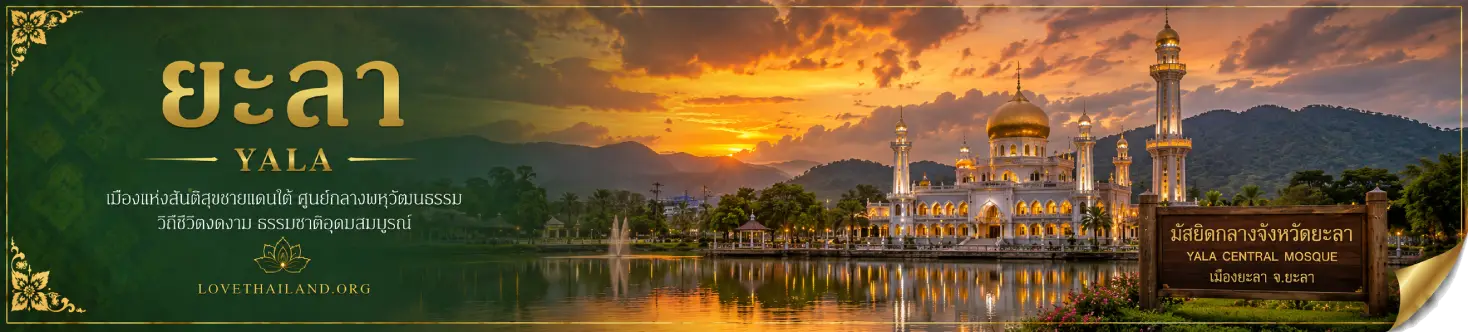
Yala Rajabhat University
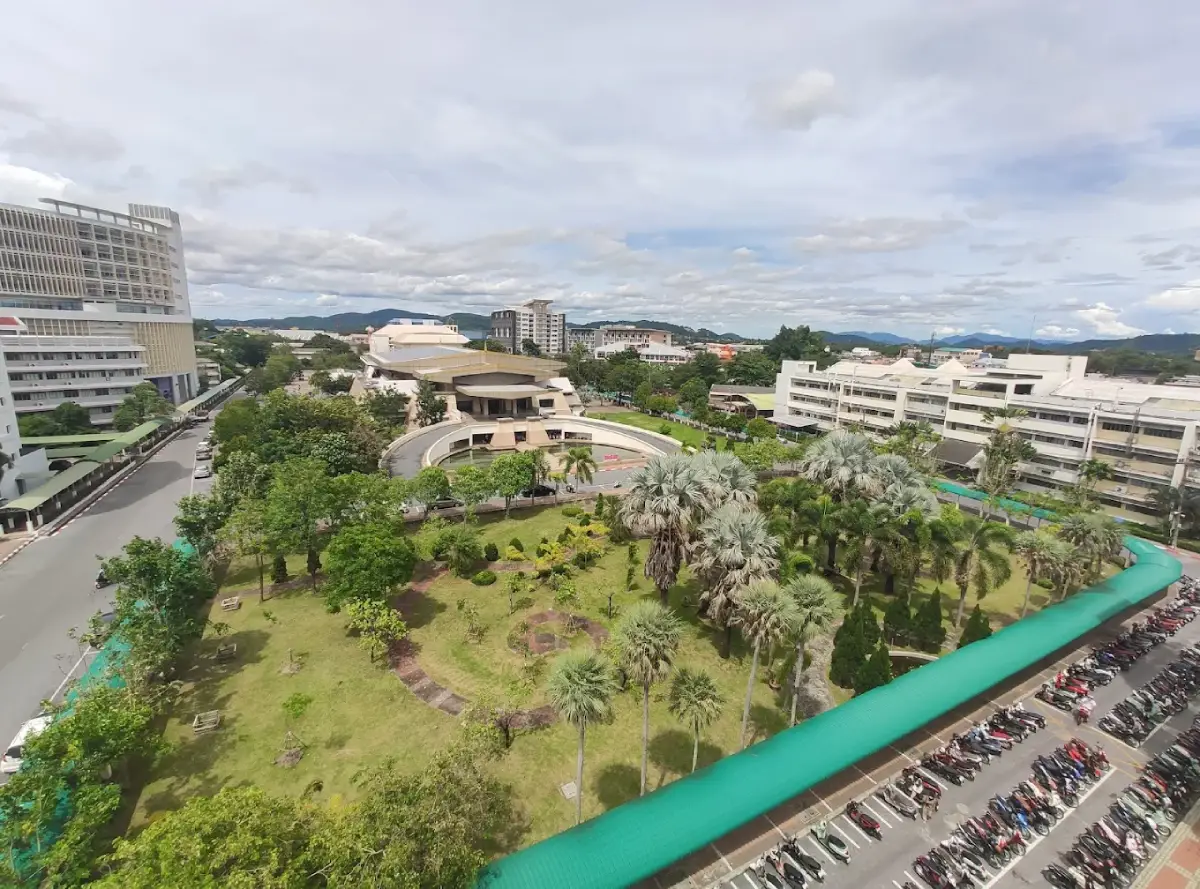
Open Days (General Administrative Offices): Monday – Friday, excluding public holidays
Opening Hours (General Administrative Offices): 08:30 – 16:30
Yala Rajabhat University (YRU) is a public university with more than 90 years of educational history, located at 133 Thetsaban 3 Road, Sateng Subdistrict, Mueang Yala District, Yala Province 95000, Thailand. Established on 1 July 1934 as a teacher training school, the institution gradually developed into Yala Teachers College, Yala Rajabhat Institute, and finally Yala Rajabhat University on 15 June 2004. Today, it plays a major role in teacher education, higher education, research, innovation, and community development across Thailand's southern border region, particularly Yala, Pattani, and Narathiwat provinces. Guided by the philosophy of creating intellectual strength for the development of southern border communities, the university has five main faculties: the Faculty of Education, the Faculty of Humanities and Social Sciences, the Faculty of Science, Technology and Agriculture, the Faculty of Management Science, and the Faculty of Public Health and Allied Health Sciences. As of 2026, the university is led by Assistant Professor Dr. Sirichai Namburi as President.
The university occupies a central location in Yala City, an important administrative, commercial, and educational center in southern Thailand. Its campus includes academic buildings, administrative offices, laboratories, auditoriums, learning facilities, and student activity spaces. Modern buildings are integrated with landscaped grounds and green areas, creating an environment that supports formal learning, university events, and everyday student life.
Yala Rajabhat University's importance extends beyond the provincial capital. It serves a region characterized by linguistic, religious, and cultural diversity, where Thai Buddhist and Thai Muslim communities have long contributed to the area's distinctive social identity. This environment has shaped the university's academic priorities, including teacher preparation, Thai and Malay language education, Arabic and English studies, community development, professional training, and the cultivation of knowledge relevant to multicultural societies.
The university's history began on 1 July 1934, during a period when the Thai government was expanding compulsory education and strengthening the training of schoolteachers. Yala Province needed qualified educators capable of teaching children and young people in local communities. The provincial governor therefore initiated the establishment of a vocational school that also functioned as a teacher training institution in the Malayu Bangkok village area. An initial construction budget of 2,000 baht was provided through the education levy system of the period.
This education levy was a form of public funding used to support educational development under the regulations then in force. Its use to establish the school demonstrates the institution's origins in the expansion of public education rather than in private educational initiatives. During its early years, the school provided elementary-level education and introductory teacher training courses designed to meet the growing demand for teachers in southern Thailand.
On 17 May 1935, the school relocated from Malayu Bangkok to an area beside Wat Phutthaphum, now associated with the location of Kanaratbamrung Yala School. The original site was on elevated ground and was considered unsuitable for practical agricultural training, particularly gardening and vegetable cultivation, which formed part of teacher education at the time. The relocation took place during the administration of Yala Provincial Governor Phra Phumiphichai.
Another relocation followed on 22 August 1937, when the institution moved to a newly developed kindergarten school site, in an area now occupied by Yala Technical College. The repeated changes in location reflected the practical difficulties of developing an educational institution during its early years and the continuing search for facilities that could support its expanding training activities.
In 1939, the school experienced a temporary interruption when no students enrolled for the academic year. Teaching resumed on 17 May 1940 with a special secondary education program, which expanded to its third year in 1941. In 1943, the program was reorganized as training for public elementary schoolteachers, aligning the institution more closely with the national teacher preparation system.
On 15 December 1943, the school moved again, this time to the Sateng area, where it occupied buildings formerly used by the provincial administration. Several government properties, including the former provincial hall and district offices, were transferred for educational use. These buildings provided an important foundation for more permanent operations and helped the institution expand its training capacity.
During the 1950s, the school continued to adapt to national reforms in teacher education. In 1950, it introduced an elementary teacher training course for students who had completed the required secondary education. Additional certificate programs and changes to teacher qualifications followed in subsequent years. These developments reflected the government's efforts to improve teacher preparation and meet the growing needs of elementary schools.
A particularly important development occurred in 1961, when the Yala Teacher Training School began moving from the former provincial administrative area in Sateng to its present location. Initial construction included a classroom building, dormitory facilities, and a temporary dining hall. Because the new campus could not immediately accommodate all activities, the institution continued using some of its older premises during the transition. The planning of the new educational site was associated with Professor Mom Luang Pin Malakul, a prominent Thai educator and former Minister of Education.
In 1962, the Department of Teacher Training upgraded the institution to Yala Teachers College. This change represented a major step toward higher-level teacher education and institutional expansion. In the following academic year, 1963, the college began offering its first higher-level education certificate program, gradually introducing additional teaching specializations and expanding its physical facilities.
By 1966, government funding had supported the construction of further classrooms, male and female dormitories, an auditorium, staff residences, kitchens, and campus utilities. These improvements gave Yala Teachers College a more complete educational infrastructure and strengthened its capacity to serve students from Yala and neighboring provinces.
Another major turning point came with the Teachers College Act of 1975, which enabled teacher colleges across Thailand to offer degree-level education. Yala Teachers College subsequently introduced bachelor's degree studies, including early programs involving English as a major subject and Thai as a minor. The expansion meant that more students from the southern border region could pursue higher education without having to relocate to distant university cities.
During the following decade, the institution gradually moved beyond its original teacher education mission. In 1985, it expanded into diploma programs in communication, applied arts, home economics, and food-related studies. Programs in music and performing arts followed in 1986. Community development studies were introduced in 1987, general management in 1988, and additional science-related fields thereafter. The broadened curriculum reflected the increasing demand for professionals in education, business, culture, and community development.
On 14 February 1992, King Bhumibol Adulyadej, Rama IX, graciously bestowed the name Rajabhat upon the former teachers colleges, together with the royal emblem that became the institutional symbol of the Rajabhat system. This historic event established a shared identity among institutions dedicated to education and community development. Consequently, 14 February is commemorated annually as Rajabhat Day.
The Rajabhat Institute Act of 1995, published in the Royal Gazette on 24 January 1995, formally transformed Yala Teachers College into Yala Rajabhat Institute. This change expanded the institution's academic responsibilities, allowing it to develop programs beyond the bachelor's degree level and strengthen research, community services, and local development activities.
During its period as a Rajabhat institute, the institution developed educational facilities beyond the main campus. One important example was the Mae Lan educational area in Pattani Province, established in 1995. It was associated with the development of agricultural education, community learning, and educational opportunities for working adults. The area subsequently evolved into the Mae Lan Learning Center, which continues to support fieldwork and practical learning.
On 15 June 2004, Yala Rajabhat Institute officially became Yala Rajabhat University under the Rajabhat University Act B.E. 2547. The new status provided the university with its own legal identity and a broader statutory mission. This mission includes higher education, research, academic services, technology transfer, teacher development, cultural preservation, and the sustainable development of local communities.
The university's historical development can therefore be understood through four major stages: its establishment as a teacher training school in 1934, its transition to Yala Teachers College in 1962, its transformation into Yala Rajabhat Institute in 1995, and its elevation to university status in 2004. The original founding year and the university establishment year are distinct historical milestones. By 2026, the institution had completed 92 years since its original establishment.
Across these decades, Yala Rajabhat University has responded to changes in local and national educational needs. Its original mission of preparing teachers has been complemented by programs in languages, humanities, social sciences, science, agriculture, information technology, business, management, and public health. At the same time, the university has maintained its emphasis on practical learning and the application of academic knowledge to real community challenges.
The university's philosophy, expressed in Thai as “สร้างพลังปัญญาเพื่อพัฒนาท้องถิ่นชายแดนใต้,” emphasizes the creation of intellectual strength for southern border development. Its vision positions the university as a center of knowledge for the southern border region, striving for excellence in sustainable community development with an international outlook. These principles demonstrate the institution's commitment to combining academic progress with social responsibility.
The university emblem consists of two surrounding oval forms enclosing the royal insignia of King Bhumibol Adulyadej. The university's Thai name appears above the emblem, with its English name below. The colors incorporated into the emblem carry symbolic meanings: blue represents the monarchy, green represents nature and the environment, gold symbolizes intellectual prosperity, orange reflects the advancement of local arts and culture, and white represents purity of thought and wisdom.
The university's official colors are pink and gray, symbolizing thoughtful judgment, harmony, and unity. Its designated tree and flower are associated with the Chanthakapho tree, a fragrant flowering tree native to the region. These institutional symbols help strengthen the sense of belonging among students, lecturers, university staff, and alumni.
As of 2026, Assistant Professor Dr. Sirichai Namburi serves as President of Yala Rajabhat University. The university's leadership works with faculty deans, administrators, and service units to develop academic quality, research activities, professional education, and university governance in response to current social and technological changes.
Yala Rajabhat University currently has five principal faculties. Together, they provide academic programs at undergraduate and graduate levels, including opportunities for learners who pursue their education while maintaining employment. Although each faculty has its own disciplinary focus, all contribute to the wider university mission of strengthening human resources and supporting regional development.
The Faculty of Education has the strongest historical connection to the university's origins as a teacher training institution. It prepares future educators through courses related to early childhood education, Islamic education, physical and health education, English, and educational technology. The faculty also contributes to graduate education in educational administration and Islamic teaching. Its role remains particularly important in preparing teachers who understand the educational and cultural circumstances of the southern border region.
Teacher education in this region requires more than mastery of classroom instruction. Educators must also understand the linguistic and cultural backgrounds of their students, communicate effectively with families, and develop inclusive approaches to teaching. Yala Rajabhat University's long history in teacher preparation provides an important foundation for strengthening education in local schools and communities.
The Faculty of Humanities and Social Sciences offers education across languages, cultural studies, law, political science, public administration, community development, and creative arts. Programs involving Thai, English, Malay, Arabic, and Chinese are especially relevant in an area with extensive linguistic diversity and social connections with Malaysia and other ASEAN countries.
Malay and Arabic studies connect academic learning with regional language needs and cultural understanding, while public administration, political science, and law prepare graduates for careers in government, local administration, and public service. The Community Development Innovation program further emphasizes the importance of applying knowledge to local economic and social challenges.
The Faculty of Science, Technology and Agriculture encompasses basic and applied sciences, information technology, computing, renewable energy, microbiology, agriculture, animal science, food innovation, and halal food entrepreneurship. Its programs emphasize the practical use of scientific knowledge to solve problems and improve production, business, and community development.
Halal food education is particularly relevant to the cultural and economic environment of southern Thailand. The halal food sector serves Muslim consumers in Thailand and international markets. Academic training in this field can connect food science, nutrition, product development, entrepreneurship, quality management, and consumer needs, creating professional opportunities in a region with strong cultural links to halal industries.
The Faculty of Management Science prepares students for careers in accounting, marketing, finance, management, digital business, tourism, hospitality, event management, and border trade. Its programs are particularly relevant to the regional economy of Yala and neighboring provinces. Border Trade and Logistics studies are closely related to commercial and transport links between southern Thailand and Malaysia, while business and tourism programs support the development of local enterprises.
The Faculty of Public Health and Allied Health Sciences focuses on the preparation of health-related professionals. Fields represented in the 2026 admissions information include Cosmetic Science, Health and Anti-Aging, Public Health with specializations in Environmental Health and Occupational Health and Safety, and Public Health and Health Business. These disciplines contribute to public health services, workplace safety, environmental health, and the development of health-related enterprises.
Research and knowledge transfer are additional components of the university's mission. Its work addresses topics associated with grassroots economic development, local products, entrepreneurship, food innovation, agriculture, public health, and educational opportunity. Collaboration with local authorities and community organizations helps connect academic expertise with the practical needs of residents across the southern border region.
In June 2026, the university opened YRU Fresh Mart, a community products center that brings together goods from southern border communities and innovations developed through university teaching, research, and academic services. Products include food and beverages, health and beauty items, clothing, handicrafts, and creative goods produced or developed with the involvement of students, lecturers, and local entrepreneurs.
YRU Fresh Mart is situated behind the Café Amazon outlet within the university and opens Monday through Friday from 08:30 to 16:30. Enquiries can be made by calling +66 (0) 73-299618. The initiative demonstrates how an educational institution can create practical sales opportunities for community businesses while helping local producers increase the visibility and value of their products.
Another distinctive facility associated with the university is @INN YRU, a hotel located on the university grounds. It was developed both as visitor accommodation and as a professional learning environment for students, particularly those interested in hospitality and service-related careers. By operating within a real hotel setting, students can connect theoretical learning with workplace experience. The property also supports visitors attending academic meetings, university events, and activities in Yala.
Important campus buildings include the 50th Birthday Anniversary of Maha Vajiralongkorn Building, which accommodates administrative and meeting activities, and the 80th Birthday Anniversary Auditorium, associated with 5 December 2007. The latter serves as a venue for major university events, including student orientations, Rajabhat Day ceremonies, and activities honoring teachers and academic staff.
The university's Academic Resource and Information Technology Center supports education through library services, information resources, and digital systems. These facilities help students and academic staff access information, undertake research, and use technology as part of their studies. The development of digital services is increasingly important in higher education, particularly as teaching and professional work become more dependent on information systems.
The Language and ASEAN Studies Center supports language development and regional knowledge. Its activities are relevant to students and communities who use multiple languages for education, commerce, tourism, and cultural exchange. The university's location near Malaysia makes language skills and an understanding of ASEAN particularly valuable for regional engagement.
For practical education in agriculture and community development, the university operates the Mae Lan Learning Center in Pattani Province. Originating in 1995 as the Mae Lan campus of Yala Rajabhat Institute, the center now supports field-based learning, educational visits, agricultural training, and community-oriented activities. Its continuing development demonstrates the university's interest in extending educational opportunities beyond its main urban campus.
Rajabhat Day, observed annually on 14 February, is one of the most meaningful occasions in the university calendar. It commemorates the royal bestowal of the Rajabhat name and emblem by King Bhumibol Adulyadej in 1992. In 2026, Yala Rajabhat University organized commemorative ceremonies and activities under the theme “Rajabhat Tribute to the Great Chakri Dynasty,” including royal tribute ceremonies, the presentation of the royal emblem, volunteering, tree planting, and blood donation.
A particularly meaningful feature of the university's 2026 Rajabhat Day activities was the inclusion of religious observances from both Buddhist and Islamic traditions. On 11 February 2026, the university organized merit-making activities in accordance with Buddhist and Islamic practices. The event reflected the multicultural nature of the university community and demonstrated respect for the different religious traditions represented among students, lecturers, and staff.
The university also maintains its educational heritage through ceremonies honoring teachers. On 24 September 2026, it held an annual Teacher Appreciation Ceremony at the 80th Birthday Anniversary Auditorium. The event provided students with an opportunity to express gratitude to educators and included participation by students from different religious backgrounds. Such activities are especially meaningful for an institution whose earliest purpose was to train teachers for local schools.
Student orientation is another important aspect of campus culture. For the 2026 academic year, Yala Rajabhat University held the YRU IGNITE 2026 orientation program on 8–9 June. Under the theme “Ignite the Next Generation,” the program welcomed 2,308 new students from the university's five faculties. Activities introduced students to academic systems, university regulations, information technology, campus life, and the skills required to adapt successfully to higher education.
Student activities also emphasize creativity, safety, and mutual respect. In 2026, the university published policies and guidelines governing student welcoming activities and cheering practices, encouraging activities that respect individual rights and human dignity while supporting a positive learning environment.
The cultural life of Yala Rajabhat University reflects the broader identity of Thailand's southern border region. Languages, religions, food traditions, local knowledge, and community histories all influence its educational environment. Studies and activities involving Malay language, local culture, halal food, and community development help students understand the region and encourage cooperation among people from different backgrounds.
The university also supports grassroots development initiatives involving poverty reduction, skills development, community entrepreneurship, and local products. Through cooperation with community groups and government agencies, academic knowledge can be translated into practical activities designed to improve livelihoods and educational opportunities. This work aligns with the legal mission of Rajabhat universities as institutions dedicated to local development.
For travelers interested in educational tourism, Yala Rajabhat University offers an opportunity to learn about the history of teacher education and the development of higher education in southern Thailand. Visitors can appreciate the campus environment and explore its relationship with languages, culture, and regional community development. Anyone wishing to visit academic departments, laboratories, or specialist facilities should arrange access through the relevant university office in advance.
The university's location in Yala City also makes it possible to combine a campus visit with an introduction to the city's history and cultural diversity. Nearby places of interest include Yala City Pillar Shrine, Suan Khwan Mueang Park, the White Elephant Ceremonial Ground, Wat Phutthaphum, and the Museum of Yala City. Together, these destinations introduce visitors to civic traditions, Buddhist heritage, public spaces, urban history, and local cultural identity.
Students, parents, and university visitors can find accommodation and food services both on campus and in the surrounding city. @INN YRU is a convenient option within the university grounds, while Yala City offers additional hotels, restaurants, and cafés. Local food reflects a blend of southern Thai and Malay Muslim traditions, giving visitors a chance to explore the area's cultural diversity through its everyday cuisine.
Getting There is relatively straightforward because Yala Rajabhat University is located in the urban area of Yala. Travelers can use a private car or local hired transport and navigate to 133 Thetsaban 3 Road, Sateng Subdistrict, Mueang Yala District. Those arriving by train can get off at Yala Railway Station and arrange onward transport to the campus. Visitors traveling from Pattani, Narathiwat, or neighboring provinces can follow the main routes into Yala City before continuing to Thetsaban 3 Road.
General administrative offices typically provide services Monday through Friday from 08:30 to 16:30, excluding official public holidays. Some departments, particularly those supporting particular academic programs and students, operate different service schedules. Visitors who need admissions information, registration assistance, academic documents, or approval for educational visits should confirm arrangements with the relevant office. The university can be contacted at +66 (0) 73-299699, and official information is available at https://www.yru.ac.th/
Over its 92-year history, Yala Rajabhat University has developed from a small teacher training school into a multidisciplinary university serving a diverse region of Thailand. Each institutional transition has reflected wider educational and social needs, from the early expansion of teacher training and public education to contemporary developments in professional education, research, digital technologies, and community innovation.
Today, Yala Rajabhat University is more than a place of higher education. It is an important center for knowledge creation, human resource development, cultural understanding, and cooperation across southern Thailand's multicultural border region. Its historical foundations and continuing commitment to local development give the university an enduring role in expanding educational opportunity and improving community well-being.
| University Name | Yala Rajabhat University (YRU) |
| Thai Name | มหาวิทยาลัยราชภัฏยะลา |
| Institution Type | Public Rajabhat university dedicated to local development |
| Address | 133 Thetsaban 3 Road, Sateng Subdistrict, Mueang Yala District, Yala Province 95000, Thailand |
| Coordinates | 6°32'54.4"N, 101°17'21.7"E |
| Original Foundation Date | 1 July 1934 |
| University Establishment Date | 15 June 2004 |
| Institutional Age in 2026 | 92 years since the original teacher training school was established |
| Institutional Development | 1. Teacher Training School — 1934 2. Yala Teachers College — 1962 3. Yala Rajabhat Institute — 1995 4. Yala Rajabhat University — 2004 |
| Important Historical Figures | The Yala provincial governor who initiated the school in 1934; Governor Phra Phumiphichai, associated with the 1935 relocation; and Professor Mom Luang Pin Malakul, associated with the planning of the present educational site |
| University President in 2026 | Assistant Professor Dr. Sirichai Namburi |
| University Philosophy | Creating intellectual strength for the development of southern border communities |
| Vision | A knowledge center for the southern border region, achieving excellence in sustainable community development with an international outlook |
| University Colors | Pink and Gray |
| University Tree and Flower | Chanthakapho |
| Number of Principal Faculties | 5 |
| Faculties | 1. Faculty of Education 2. Faculty of Humanities and Social Sciences 3. Faculty of Science, Technology and Agriculture 4. Faculty of Management Science 5. Faculty of Public Health and Allied Health Sciences |
| Off-Campus Learning Sites | Mae Lan Learning Center in Pattani Province and the Lam Phaya learning area in Yala Province |
| Academic Strengths | Teacher Education, Languages and ASEAN Studies, Science and Technology, Agriculture, Halal Food, Business Management, Border Trade, and Public Health |
| Important Campus Facilities | 1. 50th Birthday Anniversary of Maha Vajiralongkorn Building 2. 80th Birthday Anniversary Auditorium, 5 December 2007 3. Academic Resource and Information Technology Center 4. Language and ASEAN Studies Center 5. YRU Fresh Mart 6. @INN YRU Hotel 7. Academic and Student Activity Buildings |
| Traditions and Activities | 1. Rajabhat Day — 14 February 2. Teacher Appreciation Ceremonies 3. New Student Orientation 4. Buddhist and Islamic Community Activities 5. Volunteering and Community Development Programs |
| General Office Open Days | Monday – Friday, excluding public holidays |
| General Office Hours | 08:30 – 16:30; some departments have separate service schedules |
| YRU Fresh Mart Opening Hours | Monday – Friday, 08:30 – 16:30 |
| Visitor Access | Visits to academic departments, classrooms, laboratories, and specialist facilities should be coordinated in advance with the responsible university office |
| Facilities | Library and information services, meeting facilities, student activity spaces, campus shops, @INN YRU Hotel, and community product sales facilities |
| Getting There | Travel into central Yala and continue to Thetsaban 3 Road in Sateng. Access is available by private car, local hired transport, or onward transport from Yala Railway Station. |
| Nearby Attractions | 1. Yala City Pillar Shrine — Central Yala 2. Suan Khwan Mueang Park — Central Yala 3. White Elephant Ceremonial Ground — Thetsaban 2 Road 4. Wat Phutthaphum — Phiphit Phakdi Road 5. Museum of Yala City — Krung Saeng Road |
| Nearby Restaurants and Cafés | 1. Rice and Curry Shop Behind Yala Rajabhat University — Thetsaban 10 Road 2. @Home Yala — Behind the university, +66 88-909-0799 3. Sud Yot Rad Na — Khotchaseni Road 4. Phi Noi Restaurant — Krung Saeng Road 5. Chuan Chim 2 — Ruam Mit Road |
| Nearby Accommodation | 1. @INN YRU — On campus, +66 62-182-2662 2. Hotel The Guest Yala G8 — Central Yala 3. Yala Rama Hotel — Si Bamrung Road 4. PP Inn — Mueang Yala 5. Minimal@Yala — Phiphit Phakdi Road |
| University Telephone | +66 (0) 73-299699 |
| YRU Fresh Mart Telephone | +66 (0) 73-299618 |
| Official Website | https://www.yru.ac.th/ |
| Current Status | Operating as a public university offering undergraduate and graduate education in the 2026 academic year |
Academic Programs and Fields of Study at Yala Rajabhat University — Academic Year 2026 (B.E. 2569) The undergraduate fields below are based on the university's 2026 YRU Road Show admissions data, while the postgraduate fields are drawn from its 2026 graduate admissions records. Credit-transfer options and specializations are grouped with their respective degree programs to avoid double-counting. Admission availability varies by application round.
| Faculty | Academic Programs and Fields of Study |
| Faculty of Education | Bachelor's Degree 1. Bachelor of Education — Early Childhood Education 2. Bachelor of Education — Islamic Education 3. Bachelor of Education — Physical Education and Health Education 4. Bachelor of Education — English and Educational Technology Doctoral Degree 1. Doctor of Education — Educational Administration 2. Doctor of Philosophy — Teaching Islamic Education (International Program) |
| Faculty of Humanities and Social Sciences | Bachelor's Degree 1. Bachelor of Education — Thai 2. Bachelor of Education — English 3. Bachelor of Education — Social Studies 4. Bachelor of Education — Malay Language Teaching 5. Bachelor of Education — Art Education 6. Bachelor of Arts — Malay for Business 7. Bachelor of Arts — English 8. Bachelor of Arts — Chinese for Communication 9. Bachelor of Arts — Thai 10. Bachelor of Arts — Community Development Innovation 11. Bachelor of Arts — Arabic for Health Care and Tourism Business 12. Bachelor of Arts — Information Management for Public and Private Organizations 13. Bachelor of Public Administration — Public Administration 14. Bachelor of Political Science — Government and Public Law 15. Bachelor of Laws — Law 16. Bachelor of Fine Arts — Creative Design Master's Degree 1. Master of Public Administration — Public Administration |
| Faculty of Science, Technology and Agriculture | Bachelor's Degree 1. Bachelor of Education — General Science 2. Bachelor of Education — Mathematics 3. Bachelor of Education — Computer Education 4. Bachelor of Science — Renewable Energy 5. Bachelor of Science — Applied Physics 6. Bachelor of Science — Applied Chemistry 7. Bachelor of Science — Applied Biology 8. Bachelor of Science — Medical and Industrial Microbiology 9. Bachelor of Science — Crop Production Technology and Agribusiness 10. Bachelor of Science — Animal Science and Livestock Business 11. Bachelor of Science — Computer Science and Digital Technology 12. Bachelor of Science — Information Technology (including a credit-transfer pathway) 13. Bachelor of Science — Halal Food Entrepreneurship and Nutrition (including a credit-transfer pathway) 14. Bachelor of Science — Food Innovation and Business Master's Degree 1. Master of Education — Teaching Science, Mathematics and Computer 2. Master of Science — Natural Resources and Environmental Management Doctoral Degree 1. Doctor of Philosophy — Teaching Science, Mathematics and Computer 2. Doctor of Philosophy — Natural Resources and Environmental Management |
| Faculty of Management Science | Bachelor's Degree 1. Bachelor of Communication Arts — Communication Arts 2. Bachelor of Business Administration — Marketing 3. Bachelor of Business Administration — Management (including a credit-transfer pathway) 4. Bachelor of Business Administration — Business Computer and Digital Technology (including a credit-transfer pathway) 5. Bachelor of Business Administration — Tourism, Hospitality and Event Business 6. Bachelor of Business Administration — Finance 7. Bachelor of Business Administration — Border Trade Management and Logistics 8. Bachelor of Business Administration — Digital Business Management 9. Bachelor of Accounting — Accounting (including a credit-transfer pathway) Doctoral Degree 1. Doctor of Philosophy — Public and Private Management |
| Faculty of Public Health and Allied Health Sciences | Bachelor's Degree 1. Bachelor of Science — Cosmetic Science, Health and Anti-Aging 2. Bachelor of Science — Public Health (Environmental Health; Occupational Health and Safety specializations) 3. Bachelor of Public Health — Public Health and Health Business |
Frequently Asked Questions (FAQ)
Q: Where is Yala Rajabhat University located?
A: Yala Rajabhat University is located at 133 Thetsaban 3 Road, Sateng Subdistrict, Mueang Yala District, Yala Province 95000, Thailand.
Q: What are the opening hours of Yala Rajabhat University?
A: General administrative offices normally operate Monday through Friday from 08:30 to 16:30, excluding public holidays. Individual departments may have different service schedules.
Q: When was Yala Rajabhat University founded?
A: The institution was originally established as a teacher training school on 1 July 1934 and became Yala Rajabhat University on 15 June 2004.
Q: Who originally established Yala Rajabhat University?
A: The institution began as a teacher training school established through the initiative of the Yala provincial governor in 1934, using an initial education levy budget of 2,000 baht.
Q: How many faculties does Yala Rajabhat University have?
A: In 2026, it has five principal faculties: Education; Humanities and Social Sciences; Science, Technology and Agriculture; Management Science; and Public Health and Allied Health Sciences.
Q: What is Yala Rajabhat University known for?
A: The university is particularly known for teacher education, community development, multicultural education, language and ASEAN studies, halal food, border trade, science and technology, and public health.
Q: Does Yala Rajabhat University offer master's and doctoral degrees?
A: Yes. Its 2026 graduate admissions information includes programs related to educational administration, Islamic teaching, science and mathematics education, natural resource management, public administration, and public and private management.
Q: What is Rajabhat Day and when is it celebrated?
A: Rajabhat Day is celebrated on 14 February each year to commemorate King Bhumibol Adulyadej's bestowal of the Rajabhat name and royal emblem upon the former teachers colleges in 1992.
Q: Is there a hotel inside Yala Rajabhat University?
A: Yes. @INN YRU is located within the university grounds. It provides accommodation and supports professional training in hospitality-related fields. Reservations can be made by calling +66 62-182-2662.
Q: How can visitors travel to Yala Rajabhat University?
A: Visitors can travel by private car or local hired transport to Thetsaban 3 Road in central Yala. Those arriving at Yala Railway Station can arrange onward transport to the university.
 Category: ●University
 Group: ●Private University
Last Update : 4 DayAgo
 Last Update : 4 DayAgo
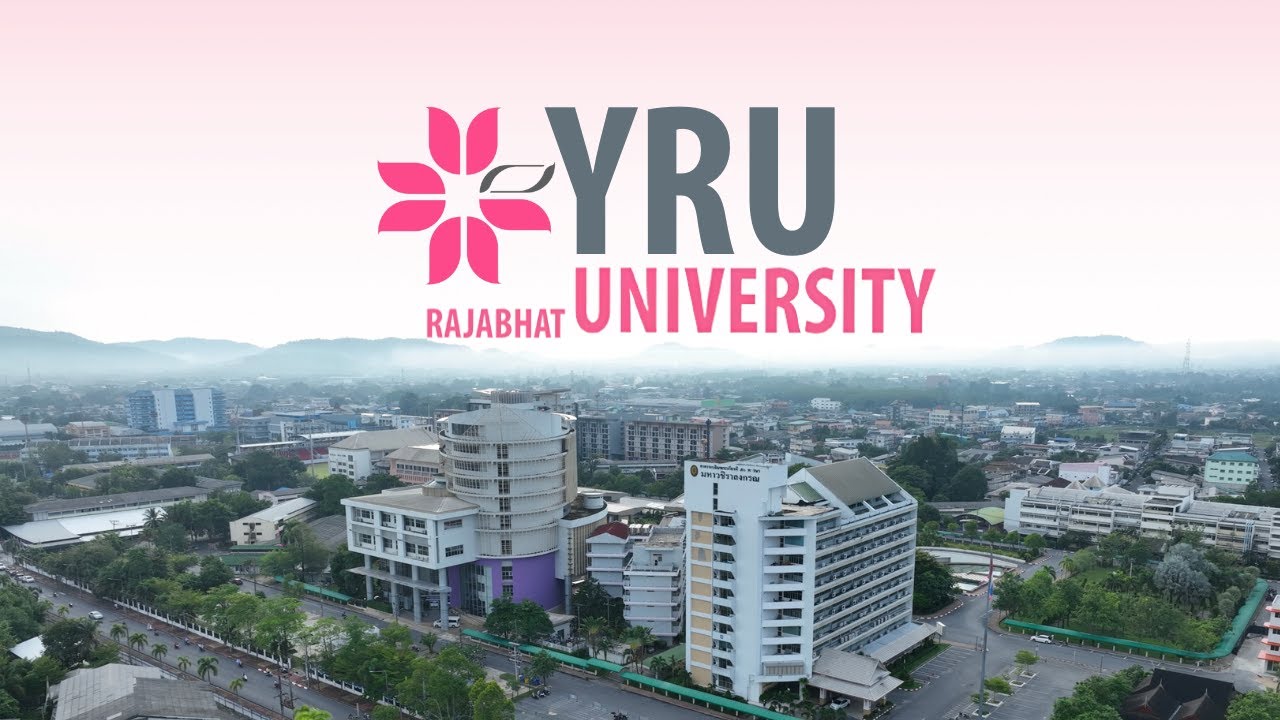
 Click to Access the Navigation Map GPS
Yala Rajabhat University Map

 Art, Culture and Heritage
 Landmarks and Memorials(1)
 Art, Craft Centres, Tradition(2)
 Museums(2)
 Educational Places
 Educational Gardens, Farm(1)
 Public university(1)
Private University(1)
 Places of Worship
 Temple(6)
 Mosque(2)
 Other Sacred Sites(3)
 Suburban Living
 Village, Community(4)
 Nature and Wildlife
 National Parks and Marine Reserves(2)
 Mountain (Doi)(5)
 Dam, Reservoir, Lake(5)
 Waterfalls(13)
 Hot Springs(2)
 Caves(7)
 River, Canal(4)
 Islands(1)
 Other natural attractions(8)
 Entertainment and Agricultural
 Stadium(1)
 Farms, Parks and Ecotourism(4)
 Outdoor and Adventure Activities(1)
 Travel Articles, Recipes
 Travel Review, Food Review(2)


