
lovethailand home >South Travel Attractions >Yala Travel Attractions >Be Tong >Be Tong > Swallows of Betong
TL;DR: Swallows of Betong is located at Around Betong Clock Tower, Central Betong Municipality, Betong District, Yala Province, open Daily, hours 24 Hours.

Swallows of Betong
Open Days: Daily
Opening Hours: 24 Hours
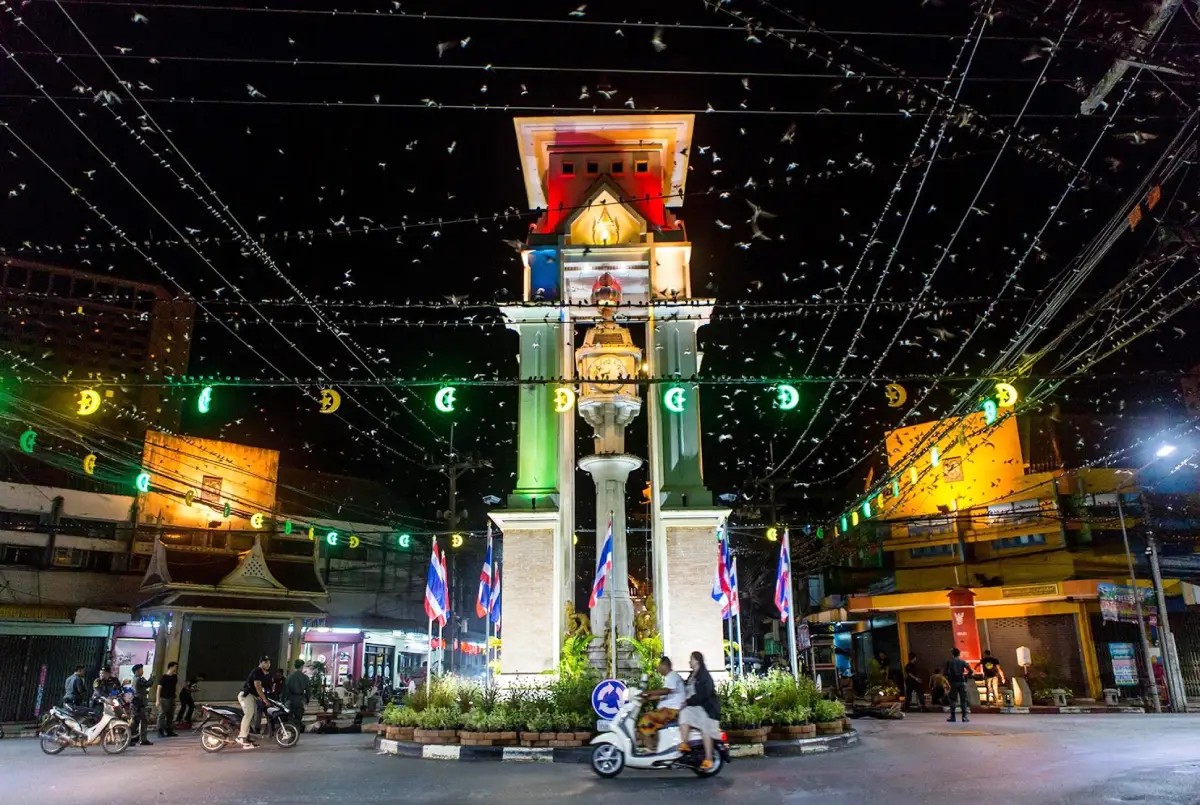
The Swallows of Betong are one of the most memorable natural scenes in Betong District, Yala Province. The best place to see them is around Betong Clock Tower in the town center, especially at dusk when the sky above the community fills with large flocks of swallows returning to rest on overhead wires and buildings. This scene is most impressive from September to March, when the birds are widely described in local tourism information as migrating from Siberia to escape the cold. The result is a rare urban nature experience where the illuminated clock tower, old shopfronts, traffic, street food, and thousands of birds become part of the same evening landscape.
Betong is a distinctive border town in southern Thailand. Set among mountains near the Malaysian border, it is known for cool air, frequent mist, rich local food, and a cultural mix shaped by Thai, Chinese, Malay, and borderland communities. Betong Clock Tower stands at the junction of Sukyang Road and Rattanakit Road in the municipality of Betong. For many travelers, this is the natural starting point for exploring the town because several key attractions, restaurants, shops, and hotels are located within walking distance.
The clock tower itself is a long-standing landmark of Betong. Built with marble from Yala Province, it stands prominently in the middle of a roundabout and marks the heart of the town. During the day, the tower is admired for its pale marble structure and central position. At night, lighting gives the area a warmer and more photogenic atmosphere. What makes Betong Clock Tower different from many other town landmarks is the movement of swallows above it. The birds fly across the sky and perch densely on the wires around the roundabout, turning an urban intersection into a living natural spectacle.
Dusk is the best time to watch the swallows. Visitors should arrive shortly before dark to see the town gradually shift from late afternoon to evening. As daylight fades, the birds begin to return in groups from different directions. Their calls and fast movement bring the area to life. Soon, many of them settle on wires, rooftops, and nearby buildings around the clock tower. Local people are familiar with this daily seasonal scene, but for first-time visitors it is often one of the most surprising and memorable images of Betong.
The swallows are most numerous from September to March. Tourism information about Betong commonly describes them as birds escaping the cold from Siberia and resting in the town during this period. Their decision to gather in the middle of the town creates a scene that feels unusual because large flocks of birds are more often associated with forests, wetlands, or open countryside. In Betong, however, the birds become part of the urban fabric, sharing space with traffic, shops, old buildings, restaurants, and the illuminated clock tower.
The appeal of the Betong swallows lies not only in their number, but also in how they shape the rhythm of the town. During the day, Betong serves as a base for visitors heading to Aiyerweng Skywalk, Betong Hot Spring, Piyamit Tunnel, the Winter Flower Garden, and other mountain destinations. In the evening, however, the clock tower area becomes a nature-viewing spot without requiring visitors to leave the town center. Travelers can stand on the sidewalk, photograph the clock tower with the swallows, and then continue on foot to nearby restaurants or night scenes.
This scene also reflects the close relationship between nature and urban life in Betong. The town is surrounded by mountains and forests, while its center remains active with shops, hotels, markets, roads, and everyday community life. The birds feed outside the town and return to rest in the urban area, making the clock tower a meeting point between mountains, forest, town, and people. This is why the swallows are more than a seasonal sight; they are part of Betong’s identity.
For photography, the area around Betong Clock Tower offers several strong compositions. Visitors can capture the tower in the center of the roundabout, the birds flying against the evening sky, the dark silhouettes of swallows on overhead wires, and the warm lights of the town after sunset. The most balanced light usually occurs around dusk, when the sky still holds some color while the clock tower lights are already visible. This timing makes it easier to photograph both the birds and the landmark in the same frame.
Visitors should remain careful because the clock tower is located at a busy urban roundabout. It is best to stand on sidewalks or safe public areas, avoid blocking traffic, and never stop in the road for photographs. Visitors should not climb structures, approach electrical wires, or disturb the birds with loud noises or bright lights. The area belongs to the public life of the town, so responsible behavior helps keep the place pleasant for residents, travelers, and the birds themselves.
Because the birds perch in large numbers on overhead wires, visitors should also be aware of bird droppings. Avoid standing directly under crowded wires for too long, and do not place bags, food, or personal items under the lines where birds are resting. With a little care, travelers can enjoy the scene comfortably while still getting excellent views of the clock tower and the moving flocks above the town.
The swallows have also become part of Betong’s local storytelling. A popular local saying suggests that anyone who gets hit by bird droppings near the clock tower will return to Betong again. This is not a scientific travel fact, but it adds a humorous and affectionate layer to the visitor experience. Such small stories help travelers feel the personality of the town and the easy familiarity of local life.
The clock tower area is also useful for planning a walking route through central Betong. The Giant Mailbox is very close to the clock tower and is another famous city symbol. Betong Mongkhonrit Tunnel is within a short walk and is especially photogenic at night. Betong City Museum helps visitors understand the history and local lifestyle of the town. Betong Municipal Park and Betong Central Mosque add more variety to the urban experience. Starting at the clock tower allows travelers to see several aspects of Betong within a compact area.
Food is another reason why this part of Betong is lively. The town is known for Betong chicken, kau yuk, stir-fried watercress, Betong noodles, curry noodles, dim sum, and Betong grass jelly. Many long-established restaurants are located close to the clock tower, including Ta Yern, Baiyok Restaurant, Thai Si Hee, Charoen Betong Chicken Rice, and the famous Betong grass jelly shop at Kilometer 4. Watching the swallows before dinner is one of the easiest ways to combine sightseeing with local food.
To understand Betong more deeply, visitors should see the swallows as part of the whole town rather than as a single photo stop. Betong has a history of border trade, Chinese community life, old shophouses, historic communication landmarks, and mountain routes that connect it with the rest of Yala Province. When the swallows return to rest above the clock tower, they add a layer of natural movement to a townscape that local people still use every day.
The swallows of Betong are suitable for many types of travelers. Families can enjoy the easy walking environment around the town center. Photographers can capture evening movement and light. First-time visitors can use the clock tower as a simple introduction to Betong. Cultural travelers can connect the scene with old town life, local food, and the mixed identity of the border region. Children are often impressed by the number of birds, while adults can enjoy the surrounding shops and restaurants.
The recommended time to visit is from about 17.30 onward, especially between September and March. Betong has a humid mountain climate and frequent rain, so the atmosphere can change quickly. On clear evenings, the transition from golden light to blue dusk creates a particularly attractive background for the birds. After watching the swallows, travelers can continue to the Giant Mailbox, Betong Mongkhonrit Tunnel, nearby street food stalls, or local restaurants around the clock tower.
Traveling from Yala town to Betong involves a mountain road of about 140 km along Highway 410. The route, especially between Than To and Betong, is winding and scenic, passing forested hills, lakeside views, rubber plantations, and borderland landscapes. Drivers should allow enough time and take breaks. Once in Betong town, head toward Betong Clock Tower or Sukyang Road. Parking should be done only in appropriate areas, after which the clock tower area is best explored on foot.
Getting There within Betong town is easy because the clock tower is a central landmark. Travelers staying in central hotels such as Grand Mandarin, Betong Merlin, Grandview Landmark, Garden View, or accommodations around Rattanakit Road and Sukyang Road can usually reach the clock tower on foot. Evening walking is pleasant because the weather is cooler, the city lights are attractive, and restaurants are close by. Visitors should still pay attention to traffic around the roundabout and cross roads only at safe points.
Compared with other Betong landmarks, the swallows offer a living, seasonal experience. Visitors are not only looking at a monument; they are watching the daily return of birds to their urban roost. They hear the flock, see the lights of the clock tower come on, and feel the evening rhythm of the border town. Whether a traveler comes to Betong for misty mountains, food, culture, or nature, this short dusk experience makes the trip feel more complete.
The uniqueness of the Betong swallows comes from several elements happening at once: seasonal bird migration, a mountain town setting, a marble clock tower, evening lights, local restaurants, and daily urban life. By day, the clock tower may look like a typical town landmark. By dusk, it becomes a living stage where nature enters the center of the town. This transformation is what makes the scene so memorable.
Travelers who want the fullest experience should allow at least one hour in the area. Start with the Giant Mailbox and daytime photographs of the clock tower, then wait for the swallows to return as the light fades. After dark, photograph the illuminated tower before walking to a nearby restaurant for local food. This simple route combines history, urban identity, nature, photography, and Betong cuisine in one compact experience.
The swallows of Betong show that a meaningful travel experience does not always require a large attraction or complicated activity. The value lies in being there at the right time, watching carefully, and respecting the place. During the right season, the image of birds circling above Betong Clock Tower and resting on the wires becomes one of the clearest reasons why Betong feels different from other towns in southern Thailand.
For Yala Province, this scene also broadens the image of travel in the southern border region. Yala is not only about mountains, mist, religious sites, or natural attractions. It also has living towns where food, culture, local people, and nature meet in everyday spaces. Watching the swallows at Betong Clock Tower is a simple but powerful way to see that softer, more detailed side of Yala.
| Name | Swallows In Betong / Betong Clock Tower |
| Location | Around Betong Clock Tower, Central Betong Municipality, Betong District, Yala Province |
| Address | Junction Of Sukyang Road And Rattanakit Road, Betong Subdistrict, Betong District, Yala 95110, Thailand |
| Coordinates | 5.77186, 101.07148 |
| Highlights | Large flocks of swallows return at dusk to rest on wires and buildings around Betong Clock Tower, especially from September to March |
| History / Importance | Betong Clock Tower is a long-standing town landmark built with marble from Yala Province. Together with the seasonal swallows, it has become one of Betong’s most recognizable symbols. |
| Name Origin | The attraction is named after the swallows that gather and rest around the central community area of Betong, especially near the clock tower |
| Distinctive Features | An urban nature scene combining migratory birds, the illuminated clock tower, old town buildings, local food streets, and border-town life |
| Best Time To Visit | Dusk, especially from September to March |
| Travel Information | From Yala town, travel to Betong via Highway 410, about 140 km. Once in Betong town, head to the clock tower at the junction of Sukyang Road and Rattanakit Road. Visitors staying in the town center can usually walk to the site. |
| Current Status | Open as a public urban landmark and viewing area in central Betong |
| Open Days | Daily |
| Opening Hours | 24 Hours |
| Fees | No Admission Fee |
| Main Areas / Zones | Betong Clock Tower Roundabout, overhead wires and buildings around the tower, night photography area, Giant Mailbox area, and the central food district |
| Caretaker / Local Authority | Betong Municipality |
| Main Contact Number | Betong Municipality, Tel. 0-7323-1214 |
| Nearby Tourist Attractions | 1. Giant Mailbox, about 34 m 2. Betong Mongkhonrit Tunnel, about 189 m 3. Betong City Museum, about 234 m 4. Betong Municipal Park, about 318 m 5. Betong Central Mosque, about 365 m |
| Nearby Restaurants | 1. Ta Yern (Kitti), about 260 m, Tel. 073-230-461 2. Baiyok Restaurant, about 130 m, Tel. 086-964-4692 3. Thai Si Hee, about 500 m, Tel. 073-230-459 4. Charoen Betong Chicken Rice, about 600 m, Tel. 084-015-2058 5. Betong Grass Jelly Km.4, about 4 km, Tel. 073-230-413, 063-965-9499 |
| Nearby Accommodations | 1. Grand Mandarin Betong Hotel, about 350 m, Tel. 073-235-777 2. Betong Merlin Hotel, about 400 m, Tel. 081-478-6622 3. Garden View Betong Hotel, about 800 m, Tel. 073-235-881 4. Grandview Landmark Betong Hotel, about 1 km, Tel. 073-245-510 5. Butterfly Princess Betong Hotel, about 1 km, Tel. 073-230-888 |
Frequently Asked Questions (FAQ)
Q: Where can visitors see the swallows in Betong?
A: The main viewing area is around Betong Clock Tower in central Betong, where the birds rest on overhead wires and nearby buildings.
Q: When is the best season to see the Betong swallows?
A: The swallows are most numerous from September to March, and dusk is the best time of day to see them return to the town center.
Q: Why are the swallows of Betong famous?
A: They gather in large numbers around the town’s clock tower, creating a striking urban nature scene that has become one of Betong’s symbols.
Q: Is there an admission fee for Betong Clock Tower and the swallow viewing area?
A: No. The clock tower area is a public landmark in central Betong and has no admission fee.
Q: What should visitors be careful about when watching the swallows?
A: Visitors should stand in safe areas, avoid blocking traffic, avoid disturbing the birds, and avoid standing directly under crowded wires for a long time.
Q: Can visitors combine the swallows with nearby attractions?
A: Yes. The Giant Mailbox, Betong Mongkhonrit Tunnel, Betong City Museum, Betong Municipal Park, and Betong Central Mosque are all close to the clock tower.
Q: How do visitors travel from Yala town to Betong?
A: Travel from Yala town to Betong via Highway 410, a mountain route of about 140 km, then continue to Betong Clock Tower at the junction of Sukyang Road and Rattanakit Road.
 Category: ●Nature and Wildlife
 Group: ●Other natural attractions
Last Update : 1 DayAgo
 Last Update : 1 DayAgo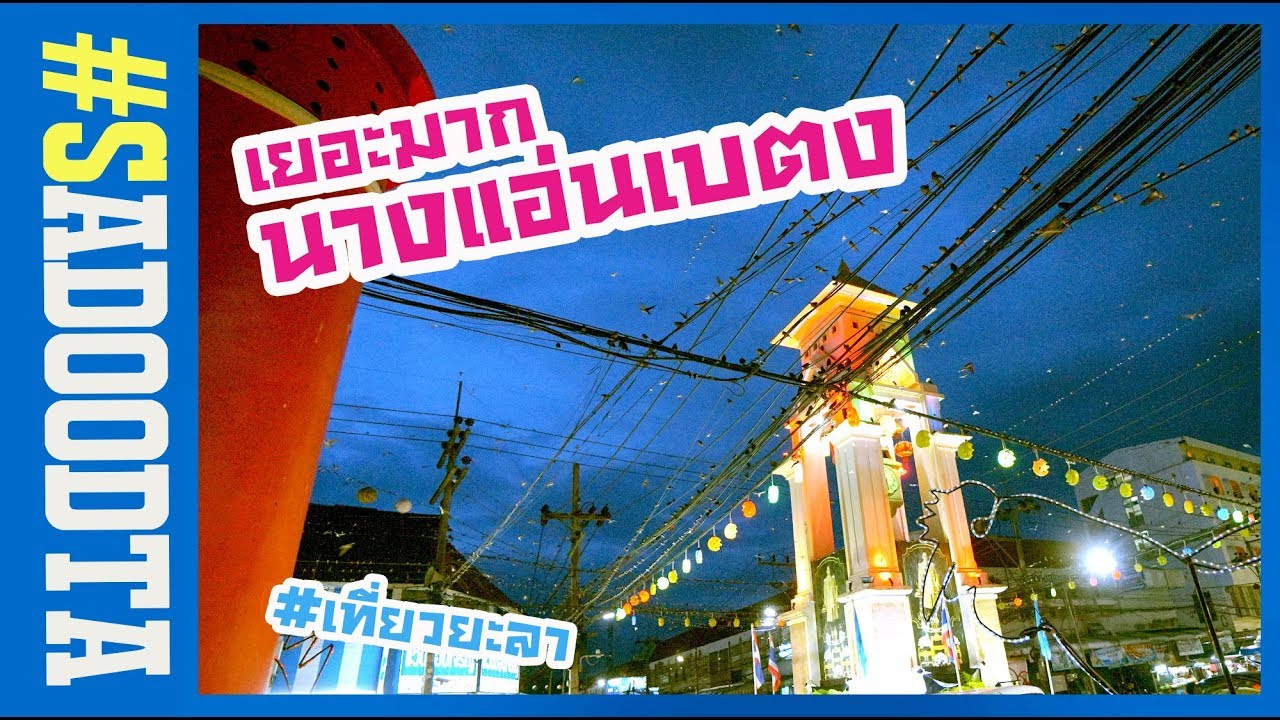
 Click to Access the Navigation Map GPS
Swallows of Betong Map

 Art, Culture and Heritage
 Landmarks and Memorials(1)
 Art, Craft Centres, Tradition(2)
 Museums(2)
 Educational Places
 Educational Gardens, Farm(1)
 Places of Worship
 Temple(6)
 Mosque(2)
 Other Sacred Sites(3)
 Suburban Living
 Village, Community(4)
 National Parks and Marine Reserves(2)
 Mountain (Doi)(5)
 Dam, Reservoir, Lake(5)
 Waterfalls(13)
 Hot Springs(2)
 Caves(7)
 River, Canal(4)
 Islands(1)
Other natural attractions(8)
Islands(1)
Other natural attractions(8)
 Entertainment and Agricultural
 Stadium(1)
 Farms, Parks and Ecotourism(4)
 Outdoor and Adventure Activities(1)
 Travel Articles, Recipes
 Travel Review, Food Review(2)


