
lovethailand home >South Travel Attractions >Yala Travel Attractions >Be Tong >Ta Nor Maero > Piyamit Tunnel
TL;DR: Piyamit Tunnel is located at Ban Piyamit 1, Tano Maero Subdistrict, Betong District, Yala Province 95110, Thailand, open Daily, hours 08.00 – 16.30.

Piyamit Tunnel
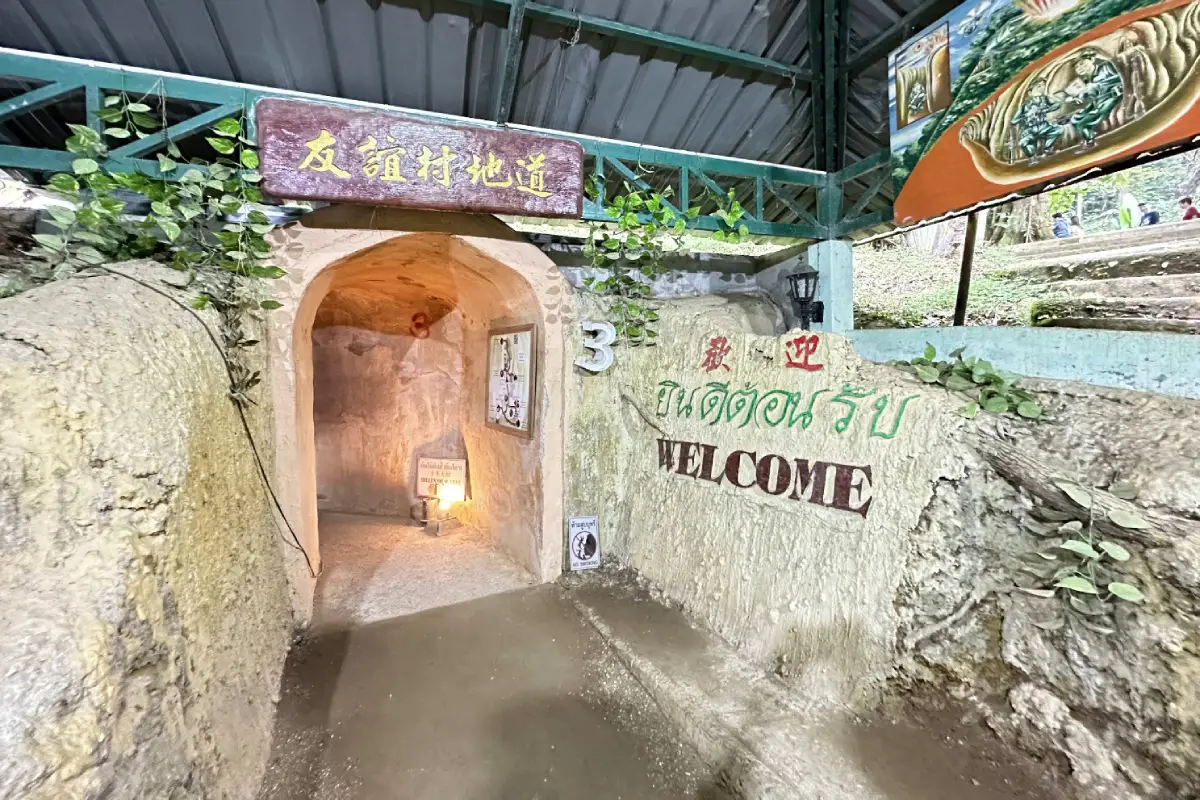
Open Days: Daily
Opening Hours: 08.00 – 16.30
Piyamit Tunnel in Yala Province is one of the most important historical attractions in Betong District. Located at Ban Piyamit 1 in Tano Maero Subdistrict, the tunnel was once a stronghold of the Communist Party of Malaya, Region 2. Built in 1976, it was excavated into the mountain in only 3 months and extends for about 1 kilometer. The tunnel had several entrances and exits and was used as an air-raid shelter, food storage area, communication base, meeting space, and living area during a period of political conflict along the Thai–Malaysian border. Today, Piyamit Tunnel is open to visitors as a historical learning site and community-based attraction that can be combined with Betong Hot Spring, Inthason Waterfall, and Betong Winter Flower Garden.
Piyamit Tunnel sits in a cool forested mountain area at Ban Piyamit 1. The route to the site follows the same direction as Betong Hot Spring and Inthason Waterfall. From Betong town, travelers take Highway 410 toward Tano Maero Subdistrict and continue along the paved local road to Ban Piyamit. The tunnel is about 4 kilometers beyond Betong Hot Spring. The surrounding village is closely connected with former members of the Thai National Development community, giving the site both historical and social meaning.
The landscape explains why this area was suitable for a hidden wartime base. Dense greenery, humid forest, mountain slopes, and natural cover helped conceal the tunnel from view. Before entering the tunnel, visitors walk through a shaded environment that still gives a sense of how the forest once supported daily life, movement, concealment, and survival. This setting makes Piyamit Tunnel more than an underground passage; it is a historical landscape shaped by geography, politics, and community memory.
The history of Piyamit Tunnel is tied to the Communist Party of Malaya and the political situation in the borderlands of southern Thailand and northern Malaysia. The tunnel was created to protect people from air attacks, store supplies, and allow movement inside the mountain without exposing the base. It functioned as a shelter, workplace, and temporary living area. The structure shows the practical intelligence of people who had to survive in a difficult landscape during a tense period of regional history.
The tunnel is about 1 kilometer long and has a winding internal route. Some public references describe parts of the tunnel as about 50–60 feet wide, or nearly 20 meters at certain points. Originally, there were several entrances and exits that allowed movement and escape in emergencies. Inside, the tunnel was divided into different functional spaces, including sleeping areas, food storage rooms, command areas, communication points, and work zones. These details help visitors understand how the tunnel was organized as a hidden base rather than a simple cave-like passage.
Walking inside Piyamit Tunnel gives visitors a direct impression of life underground. The walls and passages have been maintained for tourism, and lighting has been installed in parts of the route. The temperature inside is cooler than outside, and the atmosphere is quiet and reflective. The different rooms and corners make it easier to imagine how people once rested, stored food, communicated, planned, and moved through the network while remaining concealed inside the mountain.
Outside the tunnel, a historical exhibition presents photographs, tools, daily-life objects, and information about forest living and the former political movement. These displays turn the visit into a structured learning experience. Instead of simply walking through a tunnel, visitors can understand the human side of the site: how people cooked, slept, worked, communicated, and organized life under pressure. This is what gives Piyamit Tunnel its lasting value as a historical attraction.
The name “Piyamit” carries a meaning of friendship and reconciliation. It reflects the transformation of the site from a place associated with conflict into a place of public learning. In the past, the tunnel was connected with concealment, struggle, and survival. Today, it is a community heritage site where visitors can learn about a difficult chapter of borderland history in a calm and respectful way.
Another reason Piyamit Tunnel remains popular is the natural setting around the site. The walking path is shaded by trees, and parts of the route function as a light nature trail. Visitors can see forest plants, large trees, and humid mountain vegetation before and after entering the tunnel. This combination of nature and history gives the attraction a wider appeal, especially for travelers who want to experience Betong beyond the town center.
After visiting the tunnel, many travelers continue to the thousand-year-old tree in the same area. This large ancient tree is one of the signature photo points near the tunnel and strengthens the site’s identity as both a forest attraction and a historical destination. The tree, the tunnel entrance, the exhibition area, and the walking route together create a complete visitor experience.
Piyamit Tunnel is suitable for history lovers, students, families, cultural travelers, and visitors interested in nature. The site helps explain Betong from a deeper perspective. Betong is often known for cool weather, border-town culture, food, hot springs, waterfalls, and misty mountain scenery, but Piyamit Tunnel reveals another layer: a borderland history shaped by political conflict, forest life, and eventual social transition.
Visitors should allow at least 1–2 hours for the site. This gives enough time to walk through the entrance area, view the exhibition, enter the tunnel, observe the internal rooms, continue toward the ancient tree, and rest along the nature path. Groups should move at a steady pace because some passages are narrower than others. A slower visit also makes it easier to absorb the historical details instead of treating the tunnel as only a quick photo stop.
Visitors should follow the designated walking route, avoid climbing on structures, avoid writing on walls, avoid touching display objects unnecessarily, and keep the area clean. Children should be supervised closely. Although parts of the tunnel are lit, some sections can still feel dim. Elderly visitors and people who are uncomfortable in enclosed spaces should move carefully and take their time. The tunnel is comfortable for many visitors, but its winding route and enclosed setting require attention.
Getting There is easiest by private car, rental car, or local transport from Betong town. From central Betong, take Highway 410 toward Tano Maero Subdistrict, then turn onto the local route used for Betong Hot Spring and Inthason Waterfall. Continue for about 4 kilometers beyond Betong Hot Spring to Ban Piyamit 1. The road is paved, but parts of the route pass through hilly terrain with curves, so careful driving is recommended, especially during rain or mist.
Travelers coming from Yala city must first travel to Betong, a mountain route of about 140 kilometers by the main road. From Betong town, Piyamit Tunnel is around 15–18 kilometers away depending on the exact route. Visitors without a private vehicle can hire local transport in Betong and combine the tunnel with Betong Hot Spring, Inthason Waterfall, and Betong Winter Flower Garden in one trip.
The best time to visit is from morning to early afternoon. This allows enough time to walk through the tunnel, study the exhibition, enjoy the natural surroundings, and return before late afternoon. A practical route is to start with Piyamit Tunnel in the morning, continue to Betong Hot Spring or Inthason Waterfall, and return to Betong town later in the day for food and accommodation. This route reduces backtracking and uses time efficiently in Tano Maero Subdistrict.
The admission fee is 40 baht per person. Visitors should carry cash for admission, drinks, snacks, local products, or small expenses in the community area. Although digital payment is increasingly common in Thailand, community-based attractions are still easier to visit with some cash on hand.
Piyamit Tunnel is also important as part of broader southern Thai history. It connects the Cold War period, border politics, the Communist Party of Malaya, and the transformation of former movement members into Thai National Development participants. The tunnel shows that history is not only preserved in documents. It also remains in mountain paths, underground rooms, old photographs, community memory, and the physical landscape of Betong.
The natural environment around Ban Piyamit is cool and shaded. Visitors should dress comfortably but respectfully, wear shoes suitable for walking, and bring rain protection during the rainy season. Betong is known for humidity and frequent seasonal rain, so being prepared makes the visit smoother, especially if travelers plan to combine the tunnel with waterfalls or forest routes.
The strength of Piyamit Tunnel is the completeness of the experience. In one site, visitors can walk through forest, enter a mountain tunnel, learn border history, see exhibitions, photograph the tunnel entrance, visit the ancient tree, and understand why the landscape once mattered strategically. The attraction combines human history and natural setting in a way that few places in Betong can match.
Popular photo points include the circular entrance arch, historical information boards, internal passageways, exhibition rooms, and the thousand-year-old tree. Photography inside the tunnel should be done with care. Visitors should not block the path, should not touch display items, and should avoid using flash in a way that disturbs other visitors. The best images of Piyamit Tunnel often capture its warm tunnel lighting, earthen-toned passageways, and quiet historical atmosphere.
Reading the site’s history before visiting makes the experience more meaningful. Once visitors know that the tunnel was built in 1976, excavated in 3 months, and used for shelter, supplies, communication, and command functions, the internal spaces become easier to understand. A sleeping area is no longer just an empty recess. A storage area becomes part of a survival system. A winding corridor becomes part of a concealed underground network created for a specific historical purpose.
Piyamit Tunnel should be seen as both a historical site and a community tourism destination. It is not only an unusual underground attraction. It represents the transformation of a hidden conflict site into a public learning space. Its value comes from the way it connects former political struggle, community identity, forest ecology, and modern tourism. For travelers visiting Betong, it is one of the most meaningful places to understand the district beyond its scenic and culinary appeal.
In summary, Piyamit Tunnel is one of Betong’s essential attractions for visitors interested in history, nature, and the southern border region. The 1-kilometer tunnel was once a stronghold of the Communist Party of Malaya, Region 2, and later became a community learning site associated with the Thai National Development community. Today, it is open daily and offers exhibitions, forest paths, underground rooms, the ancient tree, and several nearby attractions. Travelers visiting Betong should combine Piyamit Tunnel with Betong Hot Spring, Inthason Waterfall, and Betong Winter Flower Garden for a complete view of Tano Maero’s history, landscape, and local life.
| Name | Piyamit Tunnel |
| Location | Ban Piyamit 1, Tano Maero Subdistrict, Betong District, Yala Province 95110, Thailand |
| Address | 282 Moo 2, Ban Piyamit 1, Tano Maero Subdistrict, Betong District, Yala Province 95110, Thailand |
| Coordinates | 5.889491, 101.048259 |
| Highlights | A mountain tunnel about 1 km long, historical exhibition, former forest-life displays, underground rooms, nature trail, and thousand-year-old tree |
| History | Built in 1976 by the Communist Party of Malaya, Region 2, and excavated in about 3 months as an air-raid shelter and supply storage base |
| Name Origin | The name Piyamit reflects friendship and the transformation of a former conflict site into a public learning space connected with the Thai National Development community |
| Distinctive Features | A winding tunnel inside the mountain with several entrances and exits, including former sleeping areas, supply rooms, command areas, communication points, and display zones |
| Main Areas / Zones | Entrance arch, internal tunnel route, sleeping area, supply room, command area, historical exhibition, nature trail, and thousand-year-old tree |
| Travel Information | From Betong town, take Highway 410 toward Tano Maero, then follow the route to Betong Hot Spring and Inthason Waterfall. Continue about 4 km beyond Betong Hot Spring to Ban Piyamit 1 |
| Current Status | Open as a historical tourist attraction and community learning site |
| Open Days | Daily |
| Opening Hours | 08.00 – 16.30 |
| Fees | 40 baht per person |
| Facilities | Ticket area, tunnel walkway, partial lighting, historical exhibition, rest areas, nature trail, and local community shops |
| Caretaker / Related Community | Ban Piyamit community and Thai National Development community in Tano Maero Subdistrict |
| Main Contact Number | 073-378-055 |
| Official Website / Official Page | Facebook: Piyamit Tunnel Betong |
| Nearby Tourist Attractions | 1. Piyamit Thousand-Year-Old Tree, about 1 km 2. Inthason Waterfall, about 3 km 3. Betong Hot Spring, about 4 km, Tel. 062-176-4760 4. Betong Winter Flower Garden, about 6 km 5. Betong Clock Tower, about 16 km 6. Aiyerweng Skywalk, about 54 km, Tel. 096-259-7649 |
| Nearby Restaurants | 1. PIYAMIT Cafe, about 1 km, Tel. 073-378-055 2. Lam Tharn Restaurant, about 1 km, Tel. 065-037-6748 3. Riverside Restaurant Betong, about 13 km, Tel. 063-112-7163 4. Iam cafe’, about 13 km, Tel. 095-198-8770 5. Tukti Anywhere, about 13 km, Tel. 080-712-4049 6. Ta Yern Kitti Betong, about 14 km, Tel. 073-230-461 |
| Nearby Accommodations | 1. Butterfly Hotel Betong, about 14 km, Tel. 073-230-888 2. Garden View Betong Hotel, about 14 km, Tel. 086-488-7190 3. River Inn Resort, about 14 km, Tel. 073-234-176 4. Grand Mandarin Betong Hotel, about 15 km, Tel. 073-235-777 5. Grand View Landmark Hotel Betong, about 15 km, Tel. 073-245-510 6. Betong Highland Hotel, about 18 km, Tel. 088-298-7506 |
Frequently Asked Questions (FAQ)
Q: Where is Piyamit Tunnel located?
A: Piyamit Tunnel is located at Ban Piyamit 1, Tano Maero Subdistrict, Betong District, Yala Province, on the same route as Betong Hot Spring and Inthason Waterfall.
Q: What are the opening hours of Piyamit Tunnel?
A: Piyamit Tunnel is open daily from 08.00 to 16.30.
Q: How much is the admission fee for Piyamit Tunnel?
A: The admission fee is 40 baht per person.
Q: When was Piyamit Tunnel built?
A: Piyamit Tunnel was built in 1976 and was excavated in about 3 months as a shelter and supply base for the Communist Party of Malaya, Region 2.
Q: What can visitors see inside Piyamit Tunnel?
A: Visitors can see winding tunnel passages, sleeping areas, supply rooms, command areas, communication points, historical exhibitions, and traces of forest life.
Q: How long should visitors spend at Piyamit Tunnel?
A: Visitors should allow at least 1–2 hours to explore the tunnel, exhibition, nature trail, and thousand-year-old tree without rushing.
Q: Is Piyamit Tunnel suitable for children and elderly visitors?
A: Children and elderly visitors can visit with close supervision, but they should walk carefully because the tunnel has winding passages and some dim sections.
Q: What attractions can be visited with Piyamit Tunnel?
A: Good nearby stops include Betong Hot Spring, Inthason Waterfall, Betong Winter Flower Garden, Betong Clock Tower, and Aiyerweng Skywalk.
 Category: ●Nature and Wildlife
 Group: ●Caves
Last Update : 2 WeekAgo
 Last Update : 2 WeekAgo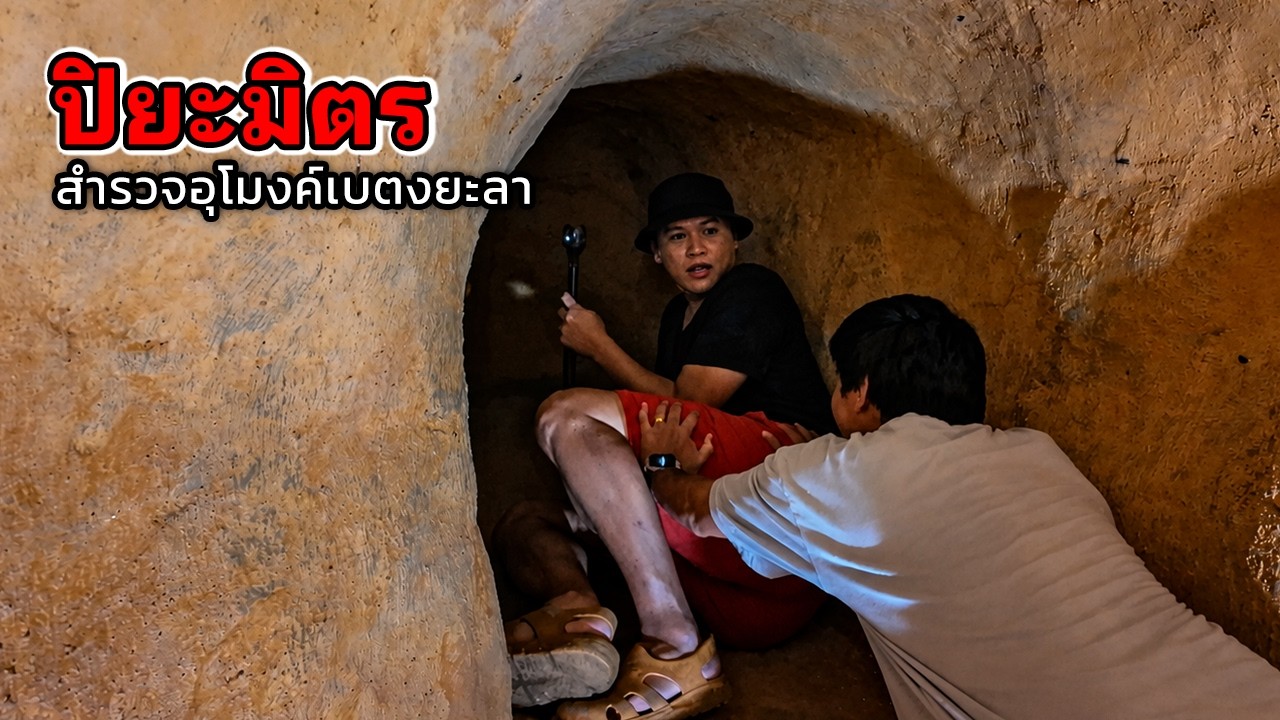
 Click to Access the Navigation Map GPS
 Art, Culture and Heritage
 Landmarks and Memorials(1)
 Art, Craft Centres, Tradition(2)
 Museums(2)
 Educational Places
 Educational Gardens, Farm(1)
 Places of Worship
 Temple(6)
 Mosque(2)
 Other Sacred Sites(3)
 Suburban Living
 Village, Community(4)
 National Parks and Marine Reserves(2)
 Mountain (Doi)(5)
 Dam, Reservoir, Lake(5)
 Waterfalls(13)
 Hot Springs(2)
Caves(7)
Hot Springs(2)
Caves(7)
 River, Canal(4)
 Islands(1)
 Other natural attractions(8)
 Entertainment and Agricultural
 Stadium(1)
 Farms, Parks and Ecotourism(4)
 Outdoor and Adventure Activities(1)
 Travel Articles, Recipes
 Travel Review, Food Review(2)


