
lovethailand home >South Travel Attractions >Yala Travel Attractions >Be Tong >Be Tong > Phra Maha That Chedi Phra Phuttha Thammaprakat
TL;DR: Phra Maha That Chedi Phra Phuttha Thammaprakat is located at Wat Phutthathiwat, Rattanakit Road, Betong Subdistrict, Betong District, Yala Province, open Daily, hours 08.00 - 17.00.
Phra Maha That Chedi Phra Phuttha Thammaprakat
Open Days: Daily
Opening Hours: 08.00 - 17.00
Phra Maha That Chedi Phra Phuttha Thammaprakat is located within Wat Phutthathiwat on Rattanakit Road in Betong Subdistrict, Betong District, Yala Province. This golden hilltop chedi is one of Betong’s most important Buddhist landmarks. Built in an adapted Srivijaya style, it measures 39.9 meters high and 39 meters wide, enshrines sacred Buddha relics, and offers one of the most impressive viewpoints over Betong city. Visitors can come daily without an admission fee, making it a meaningful stop for merit-making, Buddhist heritage travel, architecture, photography, and a deeper understanding of Betong’s cultural identity.
Phra Maha That Chedi Phra Phuttha Thammaprakat is a defining landmark of Betong because the golden chedi stands on a hill within Wat Phutthathiwat and can be seen from several points around the city. Its elevated position, gleaming surface, and mountain backdrop create a strong visual identity for this southern border town. For many travelers, the chedi is one of the first places to visit in Betong because it combines religious significance, panoramic scenery, and a calm temple atmosphere in one place.
Wat Phutthathiwat is an important royal monastery in Betong. The temple sits on sloping hillside terrain, so a visit here feels like a gradual ascent from the city into a quieter sacred space. The temple grounds include worship areas, the large Buddha image, the main chedi area, viewing points, and spaces used for Buddhist ceremonies. This layered layout gives Wat Phutthathiwat a distinctive sense of movement and perspective that differs from temples located on flat ground.
The chedi was built to commemorate the 60th birthday anniversary of Her Majesty Queen Sirikit, the Queen Mother. Its purpose goes beyond architecture. It was created as a sacred place for enshrining Buddha relics and as a spiritual center for Buddhists in Thailand’s southern border region. In a city located far from the country’s central region, the chedi carries strong symbolic value as a place of faith, unity, and Buddhist devotion.
The history of Phra Maha That Chedi Phra Phuttha Thammaprakat is linked to several important figures and events. The idea for the chedi was initiated by Sawat Chotepanich, a former President of the Supreme Court of Thailand. Princess Srinagarindra, the Princess Mother, presided over the foundation stone-laying ceremony on 28 March 1969. The chedi was later designed by Mom Rajawongse Mitrarun Kasemsri, a royal architect and National Artist in Thai Architecture, who created the adapted Srivijaya-style design seen today.
Her Majesty Queen Sirikit also contributed royal funds toward the construction and graciously bestowed the name “Phra Maha That Chedi Phra Phuttha Thammaprakat.” The name is associated with the proclamation of Buddhist teaching and the enshrinement of sacred Buddha relics. For this reason, the chedi is both a commemorative royal monument and a sacred Buddhist structure that holds deep meaning for people in Betong and the wider southern region.
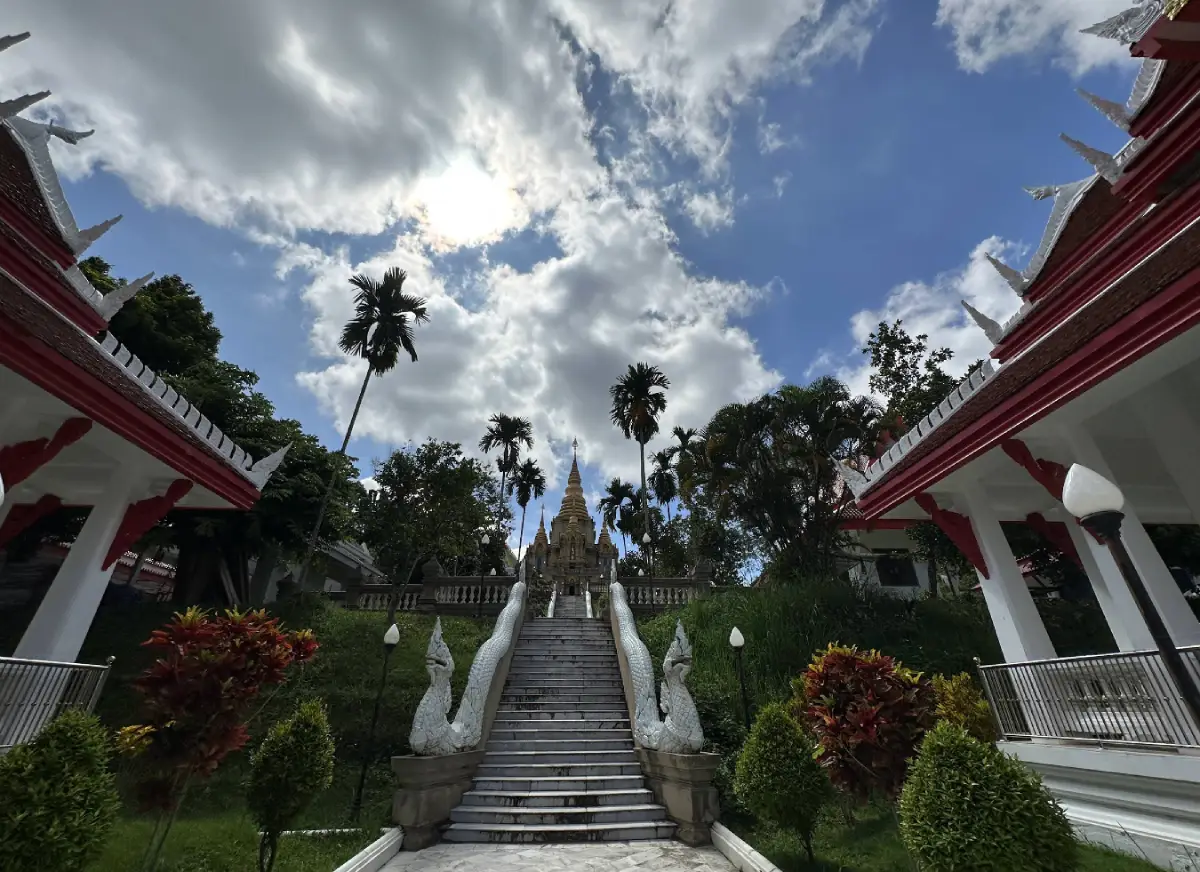
The chedi’s architecture is one of its main highlights. Its adapted Srivijaya style gives the structure a southern Buddhist character while its gold finish makes it striking from both near and far. The chedi rises from a high base with steps leading upward to the worship area. Its proportions, tiered elements, surrounding smaller chedis, and hilltop placement create a composition that feels ceremonial, balanced, and visually powerful.
Inside the chedi are sacred Buddha relics, which form the spiritual heart of the site. Many visitors come specifically to pay respect, make merit, and pray before spending time on the viewing area. The act of ascending toward the chedi helps create a natural pause between the busy rhythm of the city and the quiet atmosphere of the sacred space above.
The viewpoint from the chedi area is another reason this place is highly recommended. From the upper grounds of Wat Phutthathiwat, visitors can see Betong city surrounded by hills and mountain ridges. The view helps explain Betong’s character as a border town set within a natural highland landscape. This is not only a place for photographs; it is also a point where travelers can understand the relationship between the city, the temple, and the surrounding geography.
Morning is one of the best times to visit because the weather is usually more comfortable and Betong often has a cool highland atmosphere. Late afternoon is also suitable, especially for photography, as the softer light enhances the golden surface of the chedi. Travelers who want clearer views of the city should choose a day with good visibility, while those who enjoy a quiet atmosphere should visit on weekdays.
Wat Phutthathiwat also houses another important sacred object: Phra Phuttha Thammakai Mongkhon Prayun Ketsanon Suphithan, a large bronze Buddha image associated with Betong. The image measures 9.99 meters across the lap and 14.29 meters in height. Many Buddhist visitors pay respect to both the large Buddha image and the chedi during the same visit, making Wat Phutthathiwat one of the most complete Buddhist destinations in Betong.
The temple remains active in the religious life of Betong. It is used for Buddhist ceremonies, merit-making, sermons, royal kathin ceremonies, and community gatherings on important Buddhist occasions. This active role makes Wat Phutthathiwat more than a scenic temple. It is a functioning religious center for local Buddhists and an important part of the cultural life of the southern border provinces.
The temple grounds are arranged across 5 hillside levels. This gives visitors several areas to explore, including the entrance zone, worship areas, the large Buddha image area, the viewing terrace, and the hilltop chedi. The arrangement creates a strong sense of progression as visitors move from the lower parts of the temple toward the most prominent sacred structure at the top.
Travelers interested in Buddhist architecture should take time to observe the details of the chedi: the base, stairway, doorways, central form, smaller surrounding chedis, decorative elements, and the relationship between the structure and its hilltop setting. The adapted Srivijaya design connects the chedi with the broader Buddhist art heritage of southern Thailand while presenting it in a modern ceremonial form.
A comfortable visit usually takes about 1 hour. This allows enough time to pay respect, walk around the chedi area, observe the large Buddha image, enjoy the city view, and take photographs without rushing. Travelers who are planning a half-day Betong city route can combine Wat Phutthathiwat with Betong Mongkollit Tunnel, Betong Clock Tower, Betong Mailbox, Betong Museum, or street art in the city center.
Getting there is easiest by private car, rental car, or local hired vehicle. From Betong Clock Tower or the central city area, the journey to Wat Phutthathiwat takes only a short time. The temple is located on Rattanakit Road, and vehicles can access the temple grounds. Travelers without their own car can ask their hotel to arrange local transport or use a hired vehicle from the town center.
Travelers coming from Yala city should allow several hours for the mountain road to Betong. The route is scenic but winding, so careful driving and sufficient travel time are important. Those traveling from Hat Yai can reach Betong by van, bus, or rental car, then stay overnight in town before visiting Wat Phutthathiwat and nearby attractions.
For visitors entering from Malaysia, Betong is a convenient border town connected with Perak State. Once in Betong town, Wat Phutthathiwat is close to the central area and can be visited early in the trip before continuing to other attractions such as Betong Hot Spring, Piyamit Tunnel, Winter Flower Garden, and Aiyerweng Skywalk.
Visitors should observe proper temple etiquette. Dress modestly, speak quietly, respect active religious areas, and avoid touching sacred objects or decorative elements unless they are clearly intended for worship. When monks or local worshippers are performing ceremonies, keep a respectful distance and avoid intrusive photography.
Elderly visitors and families with children should plan the visit carefully because the temple sits on a slope and some areas require walking up and down steps. Morning or late afternoon is more comfortable than midday. Bring drinking water, walk slowly, and allow enough time to rest between areas.
Phra Maha That Chedi Phra Phuttha Thammaprakat is suitable for several types of travelers. Buddhist pilgrims can pay respect to the Buddha relics and the large Buddha image. Cultural travelers can study the adapted Srivijaya architecture. Photographers can capture both the golden chedi and the city view. Visitors interested in border-town culture can use the site to understand how Buddhist life continues within Betong’s multicultural setting.
Betong is known for its geography, food, multicultural community, and border-town character. A visit to this chedi is best understood within that wider context. After paying respect at Wat Phutthathiwat, travelers can explore Chinese-influenced local restaurants, the clock tower area, the Betong Mailbox, and nearby city streets to experience the mix of Thai Buddhist, Thai-Chinese, Muslim, and cross-border cultural influences that shape the town.
Historically, Wat Phutthathiwat was also known locally as Wat Betong before becoming one of the most important Buddhist temples in the area. Its status as a royal monastery and the presence of the large sacred chedi give the temple a special role in the southern border region. Visiting the temple gives travelers a clearer picture of Betong’s religious development, civic identity, and community faith.
The golden chedi also works as a visual and spiritual reference point for Betong. Its position above the town makes it visible from several directions, and reaching the upper terrace gives visitors a strong sense of why this hilltop location was chosen. The chedi, the city, and the surrounding mountains form a single landscape that expresses Betong’s identity clearly.
What makes this place different from an ordinary landmark is the combination of beauty, faith, and viewpoint. Taking photographs is only one part of the visit. The fuller experience comes from walking slowly, paying respect, observing the Buddhist art details, and looking back over Betong from above. This helps visitors understand why Betong is often described as a misty highland town at the southern edge of Thailand.
A 1-day route can begin at Phra Maha That Chedi Phra Phuttha Thammaprakat in the morning, continue to Betong Mongkollit Tunnel and Betong Clock Tower, then include local food such as Betong chicken, kau yok, watercress dishes, or Betong grass jelly. In the afternoon, travelers can visit Betong Hot Spring or Piyamit Tunnel. With 2 days, it is worth adding Aiyerweng Skywalk and Winter Flower Garden to combine Buddhist heritage, food, nature, and mountain scenery in one trip.
For photography, a wide-angle lens is useful for capturing the chedi, its stairway, and the hilltop approach. City-view photos are best on clear days. Those who prefer quiet photos should visit early on a weekday, while travelers who want to see more local activity may prefer weekends or Buddhist ceremony periods. In all cases, respect for worshippers and the temple atmosphere should come first.
There is no admission fee to visit Phra Maha That Chedi Phra Phuttha Thammaprakat. Visitors may make merit or donate inside the temple according to their faith. The free entry makes the site accessible to local residents, Thai travelers, and visitors from neighboring countries. Keeping the area clean and using the sacred space respectfully helps preserve the dignity of the site for future visitors.
Compared with other attractions in Betong, Phra Maha That Chedi Phra Phuttha Thammaprakat does not require a long visit but offers deep value. It brings together worship, architecture, city views, modern religious history, and the cultural character of a southern border town. First-time visitors to Betong should include this temple in their itinerary, especially if they want to begin the journey with a meaningful and auspicious stop.
In summary, Phra Maha That Chedi Phra Phuttha Thammaprakat is more than a golden chedi on a hill. It is a symbol of faith, Buddhist architecture, and Betong’s local identity. The sacred relics, the large Buddha image, and the panoramic view over the mountain-framed city make Wat Phutthathiwat a worthwhile destination for worship, photography, cultural learning, quiet reflection, and a deeper appreciation of Betong in Yala Province.
| Name | Phra Maha That Chedi Phra Phuttha Thammaprakat |
| Location | Wat Phutthathiwat, Rattanakit Road, Betong Subdistrict, Betong District, Yala Province |
| Address | 65 Rattanakit Road, Moo 1, Betong Subdistrict, Betong District, Yala Province 95110, Thailand |
| Coordinates | Wat Phutthathiwat, Rattanakit Road, Betong Subdistrict, Betong District, Yala Province |
| Highlights | Golden hilltop chedi in Betong, 39.9 meters high and 39 meters wide, enshrining sacred Buddha relics and offering panoramic views of Betong city |
| History | Built to commemorate the 60th birthday anniversary of Her Majesty Queen Sirikit. Princess Srinagarindra presided over the foundation stone-laying ceremony on 28 March 1969 |
| Name Origin | The name “Phra Maha That Chedi Phra Phuttha Thammaprakat” is associated with the proclamation of Buddhist teaching and the enshrinement of sacred Buddha relics |
| Distinctive Features | Adapted Srivijaya-style golden chedi located on a hill and visible from several points in Betong city |
| Important Buddha Image | Phra Phuttha Thammakai Mongkhon Prayun Ketsanon Suphithan, a large bronze Buddha image measuring 9.99 meters across the lap and 14.29 meters high |
| Travel Information | From Betong Clock Tower or the central city area, travel by private car, rental car, or local hired vehicle to Rattanakit Road and enter Wat Phutthathiwat |
| Current Status | Open as an active Buddhist site and an important faith-based attraction in Betong District |
| Open Days | Daily |
| Opening Hours | 08.00 - 17.00 |
| Fees | No Admission Fee |
| Facilities | Temple parking area, worship areas, stairways, viewpoint area, and Buddhist ceremony spaces |
| Main Areas / Zones | The hillside temple grounds are arranged across 5 levels, including the chedi area, large Buddha image, ordination hall, viewpoint terrace, and Buddhist activity areas |
| Main Contact Number | Wat Phutthathiwat Tel. 073-231-019 |
| Nearby Tourist Attractions | 1. Betong Mongkollit Tunnel, about 1 km 2. Betong Clock Tower, about 2 km 3. Betong Mailbox, about 2 km 4. Wat Kuan Im Betong, about 2 km 5. Betong City Street Art, about 2 km 6. Betong Hot Spring, about 12 km 7. Piyamit Tunnel, about 19 km |
| Nearby Restaurants | 1. Ta Yern Kitti Betong, about 2 km, Tel. 073-230-461 2. Baiyok Restaurant, about 2 km, Tel. 086-964-4692 3. Chao Kuai Km.4, about 5 km, Tel. 073-230-413, 063-965-9499 4. Whai Rhoy Lee Boutique Restaurant, about 5 km, Tel. 073-235-368 5. Bor Pla Nin Sai Nam Lai Ko Ngiu, about 18 km |
| Nearby Accommodations | 1. Grand Mandarin Betong Hotel, about 2 km, Tel. 073-235-777, 061-695-9222 2. Garden View Betong Hotel, about 2 km, Tel. 073-235881-4, 086-4887190 3. Butterfly Hotel Betong, about 2 km, Tel. 073-230-888, 081-963-8276 4. Grand View Landmark Hotel Betong, about 3 km, Tel. 073-245510 5. Betong Highland Hotel, about 4 km, Tel. 088-298-7506 6. Baan Ton Mai Resort Betong, about 4 km, Tel. 063-9562451 |
Frequently Asked Questions (FAQ)
Q: Where is Phra Maha That Chedi Phra Phuttha Thammaprakat located?
A: It is located within Wat Phutthathiwat on Rattanakit Road in Betong Subdistrict, Betong District, Yala Province.
Q: What are the opening days and hours?
A: The chedi is open daily from 08.00 to 17.00.
Q: Is there an admission fee?
A: No. There is no admission fee, although visitors may make merit or donate inside the temple according to their faith.
Q: Why is Phra Maha That Chedi Phra Phuttha Thammaprakat important?
A: It enshrines sacred Buddha relics, was built to commemorate the 60th birthday anniversary of Her Majesty Queen Sirikit, and serves as an important Buddhist landmark in Betong.
Q: How tall is the chedi?
A: The chedi is 39.9 meters high and 39 meters wide, with a golden adapted Srivijaya-style design.
Q: When is the best time to visit?
A: Morning and late afternoon are the best times because the weather is more comfortable, the light is softer, and the city view is especially pleasant.
Q: What else can visitors see inside Wat Phutthathiwat?
A: Visitors can also pay respect to Phra Phuttha Thammakai Mongkhon Prayun Ketsanon Suphithan, a large bronze Buddha image, and explore the ordination hall, viewpoint areas, and Buddhist activity spaces.
Q: Which nearby attractions can be combined with this visit?
A: Nearby attractions include Betong Mongkollit Tunnel, Betong Clock Tower, Betong Mailbox, Wat Kuan Im Betong, Betong City Street Art, Betong Hot Spring, and Piyamit Tunnel.
 Category: ●Places of Worship
 Group: ●Other Sacred Sites
Last Update : 2 WeekAgo
 Last Update : 2 WeekAgo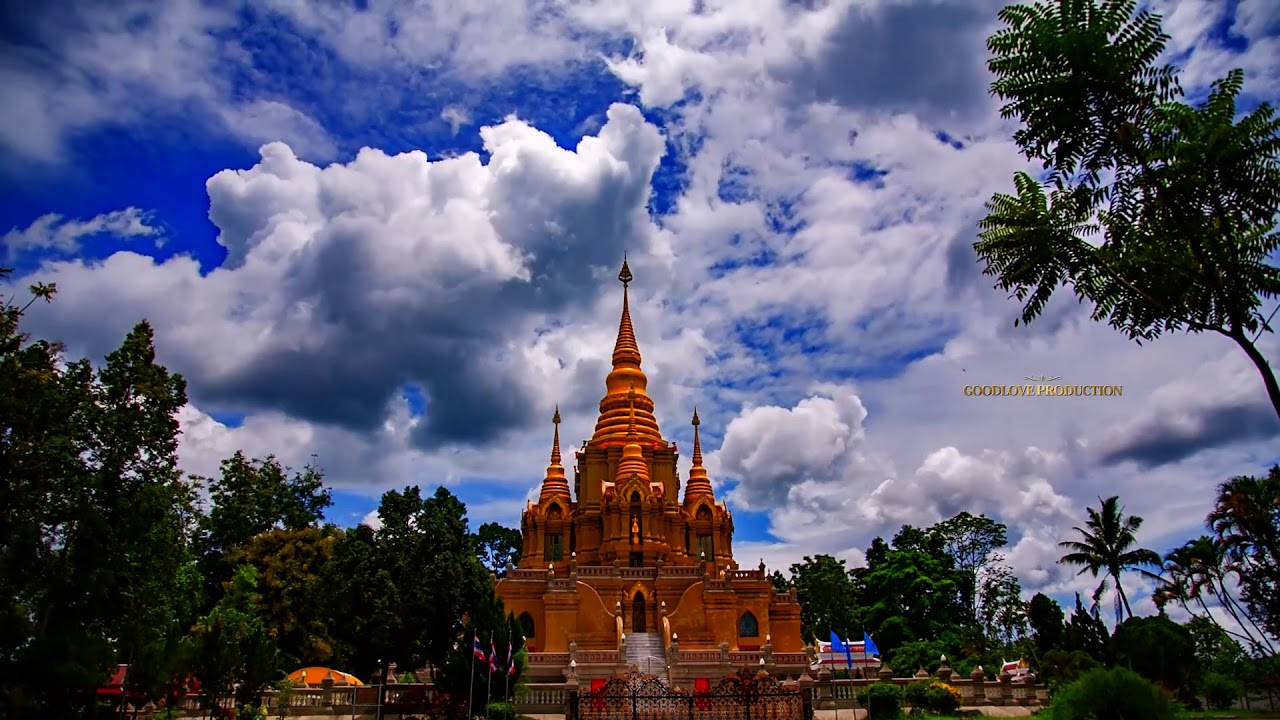
 Click to Access the Navigation Map GPS
Phra Maha That Chedi Phra Phuttha Thammaprakat Map

 Art, Culture and Heritage
 Landmarks and Memorials(1)
 Art, Craft Centres, Tradition(2)
 Museums(2)
 Educational Places
 Educational Gardens, Farm(1)
 Temple(6)
 Mosque(2)
Other Sacred Sites(3)
Mosque(2)
Other Sacred Sites(3)
 Suburban Living
 Village, Community(4)
 Nature and Wildlife
 National Parks and Marine Reserves(2)
 Mountain (Doi)(5)
 Dam, Reservoir, Lake(5)
 Waterfalls(13)
 Hot Springs(2)
 Caves(7)
 River, Canal(4)
 Islands(1)
 Other natural attractions(8)
 Entertainment and Agricultural
 Stadium(1)
 Farms, Parks and Ecotourism(4)
 Outdoor and Adventure Activities(1)
 Travel Articles, Recipes
 Travel Review, Food Review(2)


