
lovethailand home >South Travel Attractions >Trang Travel Attractions >Palian >Koh Sukon > Koh Takiang
TL;DR: Koh Takiang is located at Ko Sukorn Subdistrict, Palian District, Trang Province, open Open according to the local boat season, with the best travel period from, hours Best visited by boat during daylight hours; boat timing depends on operators.
Koh Takiang
Open Days: Open according to the local boat season, with the best travel period from November – April
Opening Hours: Best visited by boat during daylight hours; boat timing depends on operators, sea conditions, and tide level
Koh Takiang in Trang Province is a small Andaman Sea island in Ko Sukorn Subdistrict, Palian District. It is also recorded in local and official area information as Ko Beng. The island is known for its compact white-sand beach, clear water, shallow coral reefs, colourful reef fish, clownfish, dark shoreline rocks, and a quiet atmosphere that feels more private than many better-known islands in Trang. Koh Takiang is best suited to travelers who want a simple nature-focused boat trip and easy snorkelling rather than resort facilities or a crowded beach scene.
Koh Takiang is not a residential island and does not have permanent tourism facilities. There are no hotels, restaurants, shops, or regular overnight services on the island itself. Visitors usually come as a day trip by chartered fishing boat or local longtail boat from nearby areas such as Koh Sukorn, Koh Libong, or Laem Ta Sae. A typical visit includes beach time, shallow-water snorkelling, photography, a simple picnic, and a combined island route with Koh Lao Liang or other nearby marine attractions.
Koh Takiang remains accessible as a seasonal natural attraction and is not permanently closed. Current local tourism information still identifies the island as a snorkelling site in the Trang sea, and recent area activity has referred to Ko Beng, or Koh Takiang, as a coastal nature area receiving environmental attention. Access depends on the boat operator, tide, weather, and sea conditions. Because the island is small, remote, and without scheduled public ferry service, travelers should arrange the boat before traveling.
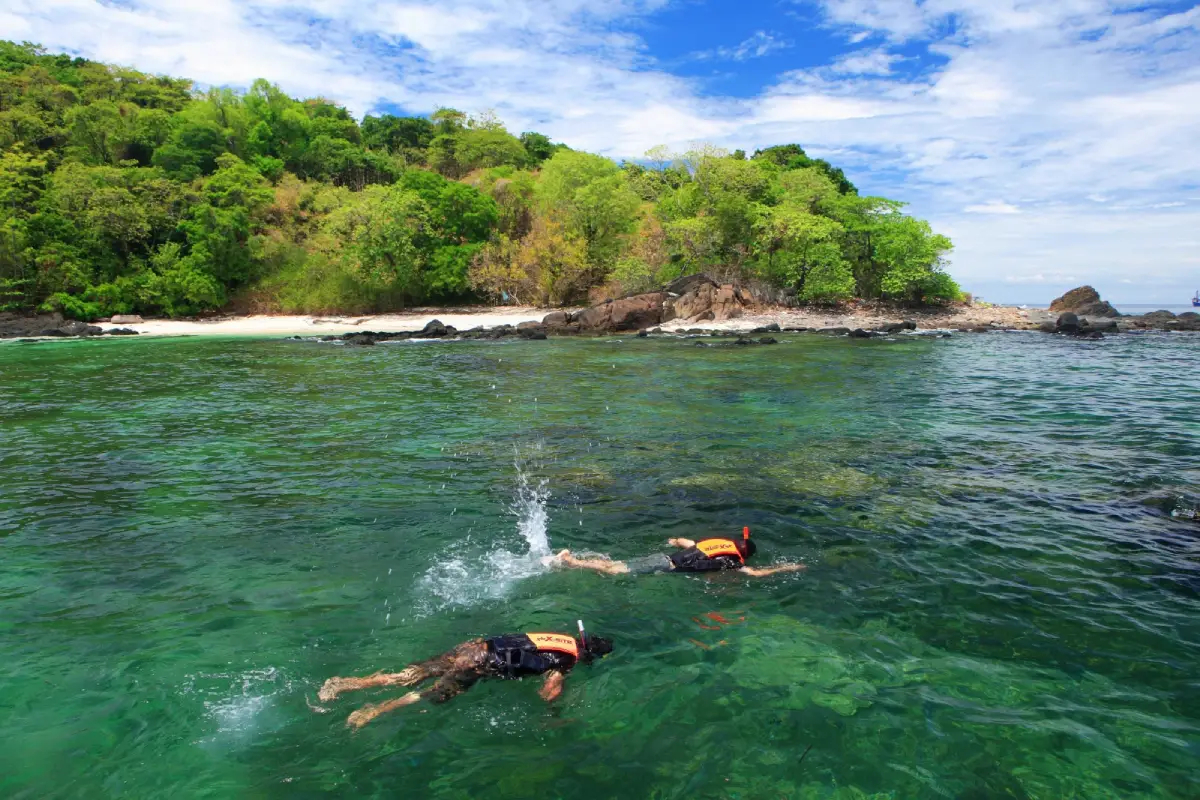
The beauty of Koh Takiang comes from 3 main features: a short white beach, transparent seawater, and broad shallow coral areas in front of the beach. The beach is only about 100 metres long, but its small scale gives the island a secluded character. On clear days, the colour of the coral patches and fish movement can be seen through the water. This makes Koh Takiang an attractive place for travelers who want to snorkel without heading to deeper or more difficult dive sites.
The reef is the main reason to visit Koh Takiang. The shallow area near the beach supports coral, small reef fish, sea anemones, and natural rock habitats. Many visitors come specifically to see fish moving among the coral and to enjoy the clear water. The site is suitable for beginners when the sea is calm, but all swimmers should wear life jackets, use snorkelling equipment properly, and follow local boat guidance.
Koh Takiang’s coral should be treated carefully. Coral is fragile and can be damaged by stepping, touching, standing, or kicking too strongly with fins. Visitors should float above the reef, keep distance from marine animals, avoid chasing fish, avoid collecting shells or coral fragments, and take all rubbish back to the boat. Responsible snorkelling is essential if Koh Takiang is to remain one of Trang’s appealing shallow-water coral spots.
Clownfish and colourful reef fish are part of the island’s appeal. Sea anemones, coral heads, small rocks, and shallow reef structures provide shelter for many marine species. Seeing fish in clear water helps visitors understand that Koh Takiang is not only a small beach island but also a living coastal ecosystem. The island combines beach, reef, rock, current, fish habitat, and conservation needs in one compact site.
The land area of Koh Takiang is small and forested, with limited beach space and rocky edges. Because the usable beach area is limited, visitors should avoid crowding the island, setting up intrusive activities, or damaging vegetation. The island is best used for a short low-impact visit: resting on the beach, taking photos, having a simple meal brought from the boat, and entering the water only at points recommended by the boat operator.
Koh Takiang has no permanent facilities, so preparation matters. Visitors should bring drinking water, food, rubbish bags, dry bags, personal medication, towel, hat, sunglasses, and sun protection. Tour operators may provide masks, life jackets, meals, or boat services depending on the package, but travelers should not expect shops or services on the island. Preparing before boarding the boat keeps the trip smooth and reduces pressure on the island environment.
Getting There requires a chartered fishing boat or local longtail boat. One common route is from the pier on Koh Sukorn, taking about 1 hour depending on sea conditions. Other routes can start from Koh Libong or Laem Ta Sae, especially for day-trip operators. Travelers should book the boat in advance, confirm the number of passengers, check the weather, and set a clear return time because Koh Takiang has no regular ferry schedule.
Travelers starting from Trang town should first reach a pier linked to Koh Sukorn, Laem Ta Sae, or another operator-arranged departure point. Since the road journey from Trang town to the southern coast takes time, leaving early is recommended. Staying overnight on Koh Sukorn makes a Koh Takiang trip easier because local boats can be arranged directly from the island, and the visit can be combined with Koh Lao Liang or nearby marine routes.
The best season for Koh Takiang is November to April, when the lower Andaman Sea has a better chance of calm water and clear visibility. Mid-year to the rainy season is less suitable for casual boat trips because waves, wind, and rain can make access unsafe and reduce underwater visibility. Timing is important because Koh Takiang’s main value is clear water and shallow coral viewing.
The best time of day is during daylight, especially when the sky is bright and the water is not too rough. Morning to late morning is often good for clear-water photography and snorkelling. Late afternoon can be pleasant for softer beach light. The exact timing should follow the tide and boat operator’s advice. At low tide, rocks and coral areas may become more visible, but visitors must avoid walking on coral or marine life in shallow pools.
A practical itinerary for Koh Takiang should be simple. Travelers can leave Koh Sukorn or another departure point in the morning, reach Koh Takiang, rest on the beach, snorkel in the safe area recommended by the boat operator, have lunch without leaving rubbish, then continue to Koh Lao Liang or return to Koh Sukorn. This route gives enough time for clear water, reef viewing, beach rest, and scenery without rushing the trip.
Koh Lao Liang is the strongest nearby companion destination. Koh Lao Liang is known for high limestone cliffs, clear water, a white beach, climbing, snorkelling, and seasonal sea camping. Koh Takiang is smaller and more focused on shallow reef snorkelling. Combining both islands gives travelers a good contrast between dramatic limestone scenery and an intimate beach-and-reef experience.
Koh Sukorn is a practical base for visiting Koh Takiang. Koh Sukorn has accommodation, local restaurants, charter boats, fishing-village life, rubber plantations, rice fields, and seasonal watermelon farms. Staying on Koh Sukorn for 1 night allows travelers to plan the Koh Takiang boat trip around suitable sea conditions while also experiencing the slower local life of southern Trang.
Koh Libong is another possible starting point for Koh Takiang, especially for travelers already staying on Koh Libong and interested in a quieter snorkelling route. This option can combine seagrass habitats, coastal community life, dugong-related nature awareness, and a day trip to Koh Takiang. The route should be arranged with an experienced boat operator because Koh Takiang is small and exposed to sea conditions.
Environmental care is especially important on Koh Takiang. The island is small and has previously been mentioned in relation to marine waste clean-up activity under the name Ko Beng or Koh Takiang. Plastic and foam waste can damage scenery, coral, fish habitat, and marine animals. Visitors should take back every item they bring, including food packaging, bottles, bags, and small waste pieces.
Photographers will find several strong compositions on Koh Takiang: longtail boats in clear shallow water, the small white beach framed by forest and rocks, underwater coral and reef fish, views toward the Koh Lao Liang area, and colour changes in the water under the sun. Morning and late morning usually work well for clear water, while late afternoon gives softer light for beach atmosphere.
Families with children or elderly travelers should choose only calm-sea days, use a stable boat, prepare life jackets, and keep non-swimmers close to supervisors. Shallow water may look easy, but currents and rocks can still be risky. Safety should come before photos or attempts to approach coral areas too closely.
Koh Takiang is suitable for couples, small groups, families, beginner snorkellers, photographers, and travelers who prefer quiet nature. It is not suitable for visitors who need hotels, shops, fixed toilets, many restaurants, or nightlife. The island should be seen as a short, low-impact nature trip rather than a fully serviced beach destination.
Compared with Trang’s more famous islands, Koh Takiang has a clear role. Koh Kradan is known for long beaches and international recognition. Koh Muk is known for Emerald Cave. Koh Libong is known for dugong habitats and community life. Koh Lao Liang is known for limestone cliffs and sea camping. Koh Takiang fills a different niche: a small, quiet island with shallow coral, clear water, and a private-feeling beach.
The key rule for visiting Koh Takiang is to respect the sea. The boat schedule depends more on weather and tide than on a fixed clock. If waves, rain, or visibility are poor, travelers should postpone the trip or choose activities on Koh Sukorn instead. For a small offshore island without permanent services, local boat judgment is the best safety guide.
In summary, Koh Takiang in Trang Province is a small island in Ko Sukorn Subdistrict, Palian District, ideal for travelers who love clear water, quiet beaches, and shallow-water snorkelling. Its highlights are a 100-metre white-sand beach, broad coral areas, reef fish, clownfish, and a peaceful natural setting. Access requires a chartered local boat from Koh Sukorn, Koh Libong, or Laem Ta Sae, with November to April being the best travel period. For a quiet Trang island trip focused on reef life rather than facilities, Koh Takiang is one of the most rewarding options.
| Name | Koh Takiang |
| Alternative Name | Ko Beng |
| Location | Ko Sukorn Subdistrict, Palian District, Trang Province |
| Address | Ko Sukorn Subdistrict, Palian District, Trang Province 92120, Thailand |
| Coordinates | Approx. 7.07561, 99.39332 |
| Highlights | A white-sand beach about 100 metres long, clear water, broad shallow coral reef, colourful reef fish, clownfish, rocky shoreline, and a quiet private-feeling atmosphere |
| Distinctive Features | A small island in the lower Trang sea, suitable for local boat trips and shallow-water snorkelling directly from the beach area |
| History / Significance | A natural island in Ko Sukorn Subdistrict known as one of Trang’s shallow coral snorkelling sites and a coastal environment that has received local conservation attention |
| Travel Information | Hire a local fishing boat or longtail boat from nearby areas such as Koh Sukorn, Koh Libong, or Laem Ta Sae. From Koh Sukorn pier, the boat ride takes about 1 hour depending on sea conditions |
| Current Status | Open as a seasonal natural attraction and shallow snorkelling site; not permanently closed |
| Open Days | Open according to the local boat season, with the best travel period from November – April |
| Opening Hours | Best visited by boat during daylight hours; boat timing depends on operators, sea conditions, and tide level |
| Fees / Costs | Mu Ko Phetra National Park Group 1 entrance fee: Thai adults 20 baht, Thai children 10 baht, foreign adults 100 baht, foreign children 50 baht. Boat and tour package costs are separate |
| Facilities | No permanent shops, accommodation, or visitor facilities on the island. Boat service, snorkelling gear, life jackets, and meals depend on the operator or charter package |
| Main Areas / Zones | White-sand beach, shallow coral reef area, rocky shoreline, shallow snorkelling zone, small forested island area, and boat anchoring area depending on tide conditions |
| Caretaker / Local Authority | Mu Ko Phetra National Park, Department of National Parks, Wildlife and Plant Conservation, with local authorities and communities around Ko Sukorn Subdistrict |
| Main Contact Number | Mu Ko Phetra National Park, Tel. 074-740-272 |
| Nearby Tourist Attractions | 1. Koh Lao Liang Phi, about 5 km 2. Koh Lao Liang Noi, about 6 km 3. Ko Phetra, about 10 km 4. Koh Libong, about 19 km 5. Koh Sukorn, about 21 km 6. Mu Ko Phetra National Park Headquarters / Ao Nun, about 18 km |
| Nearby Restaurants | 1. Laoliang Beach Restaurant, about 5 km, Tel. 097-252-6563 2. Dugong Bar Koh Sukorn, about 22 km, Tel. 087-495-9460 3. Ruen Mai Cafe Koh Sukorn, about 23 km, Tel. 061-882-7800 4. Koh Sukorn Phu Chee Lee Seafood @ Si Yaek Sarika, about 23 km, Tel. 080-146-3549 5. Krua Rojana Koh Sukorn, about 23 km, Tel. 083-168-6630 6. Baan Suan Na Nin Palian, about 35 km, Tel. 061-985-1538 |
| Nearby Accommodations | 1. Laoliang Beach Sea Camping, about 5 km, Tel. 097-252-6563 2. Dugong Koh Sukorn, about 22 km, Tel. 087-495-9460 3. Cameron Island Resort Koh Sukorn, about 22 km, Tel. 061-297-9890 4. Sukorn Andaman Beach Resort, about 23 km, Tel. 081-416-2526 5. Inglay Koh Sukorn Trang Resort, about 23 km, Tel. 065-450-6959 6. Koh Sukorn Homestay, about 24 km, Tel. 090-545-9614 7. Yataa Island Resort, about 24 km, Tel. 089-647-5550 |
Frequently Asked Questions (FAQ)
Q: Where is Koh Takiang located?
A: Koh Takiang is in Ko Sukorn Subdistrict, Palian District, Trang Province, near Koh Lao Liang, Koh Sukorn, and Koh Libong in the lower Trang sea.
Q: Does Koh Takiang have another name?
A: Yes. Koh Takiang is also recorded in local and official area information as Ko Beng, a small island in Ko Sukorn Subdistrict, Palian District, Trang Province.
Q: What is Koh Takiang known for?
A: Koh Takiang is known for its 100-metre white-sand beach, clear water, broad shallow coral reef, colourful reef fish, clownfish, and quiet private-feeling atmosphere.
Q: How do travelers get to Koh Takiang?
A: Travelers need to hire a local fishing boat or longtail boat from nearby areas such as Koh Sukorn, Koh Libong, or Laem Ta Sae. From Koh Sukorn pier, the boat ride takes about 1 hour depending on sea conditions.
Q: Can travelers stay overnight on Koh Takiang?
A: No. Koh Takiang has no permanent accommodation and is best visited as a day trip. Travelers usually stay on Koh Sukorn, Koh Libong, or Koh Lao Liang during the operating season.
Q: When is the best time to visit Koh Takiang?
A: The best period is from November to April, when the lower Andaman Sea is more likely to be calm, clear, and suitable for snorkelling.
Q: Is there an entrance fee for Koh Takiang?
A: Koh Takiang is within the Mu Ko Phetra National Park area, so the Group 1 national park entrance fee applies. Boat, tour package, and equipment costs are separate.
Q: What should visitors be careful about on Koh Takiang?
A: Visitors should wear life jackets, avoid stepping on or touching coral, avoid collecting shells, take all rubbish back, avoid disturbing marine animals, and travel only when local boat operators confirm safe sea conditions.
 Category: ●Nature and Wildlife
 Group: ●Islands
Last Update : 2 MonthAgo
 Last Update : 2 MonthAgo
 Click to Access the Navigation Map GPS
Koh Takiang Map
Recommend

 Art, Culture and Heritage
 Historical Sites and Monuments(1)
 Landmarks and Memorials(2)
 Art, Craft Centres, Tradition(3)
 Museums(2)
 University
 Public university(3)
 Rajamangala University of Technology(1)
 Places of Worship
 Temple(15)
 Mosque(1)
 Other Sacred Sites(7)
 Research and Development
 Royal Project(1)
 Suburban Living
 Village, Community(5)
 National Parks and Marine Reserves(6)
 Mountain (Doi)(8)
 Dam, Reservoir, Lake(1)
 Waterfalls(20)
 Hot Springs(1)
 Caves(11)
 Bays and Beaches(11)
Islands(12)
 Other natural attractions(3)
 Entertainment and Agricultural
 Farms, Parks and Ecotourism(8)
 Outdoor and Adventure Activities(1)
 Shopping
 Department Store(2)
 Travel Articles, Recipes
 Travel Review, Food Review(1)
 Southern Food Menu, Southern Food Recipes(1)


