
lovethailand home >South Travel Attractions >Trang Travel Attractions >Ratsada >Nong Bua > Wang Phraya Phichai Songkhram Cave
TL;DR: Wang Phraya Phichai Songkhram Cave is located at Ban Nai Wang, Moo 4, Nong Bua Subdistrict, Ratsada District, Trang Province, open Monday – Sunday, hours 09.00 – 12.00 For Community-Based Tourism Activities.
Wang Phraya Phichai Songkhram Cave
Open Days: Monday – Sunday
Opening Hours: 09.00 – 12.00 For Community-Based Tourism Activities
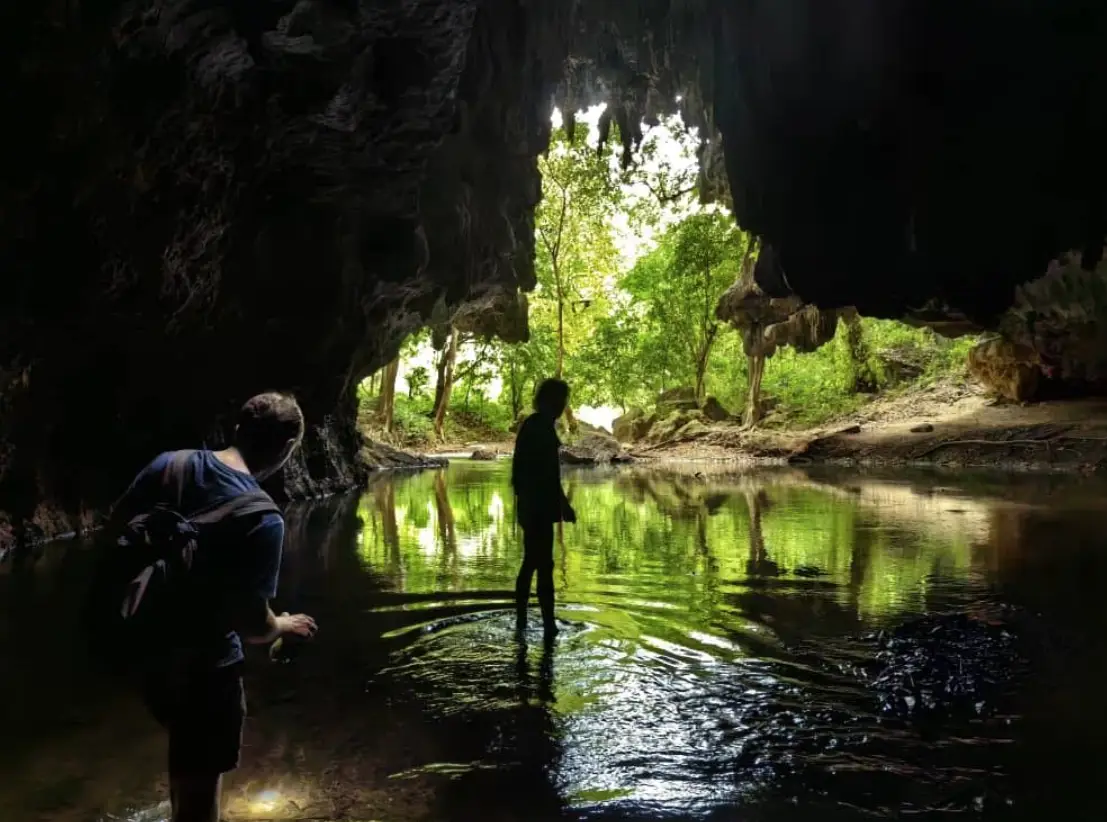
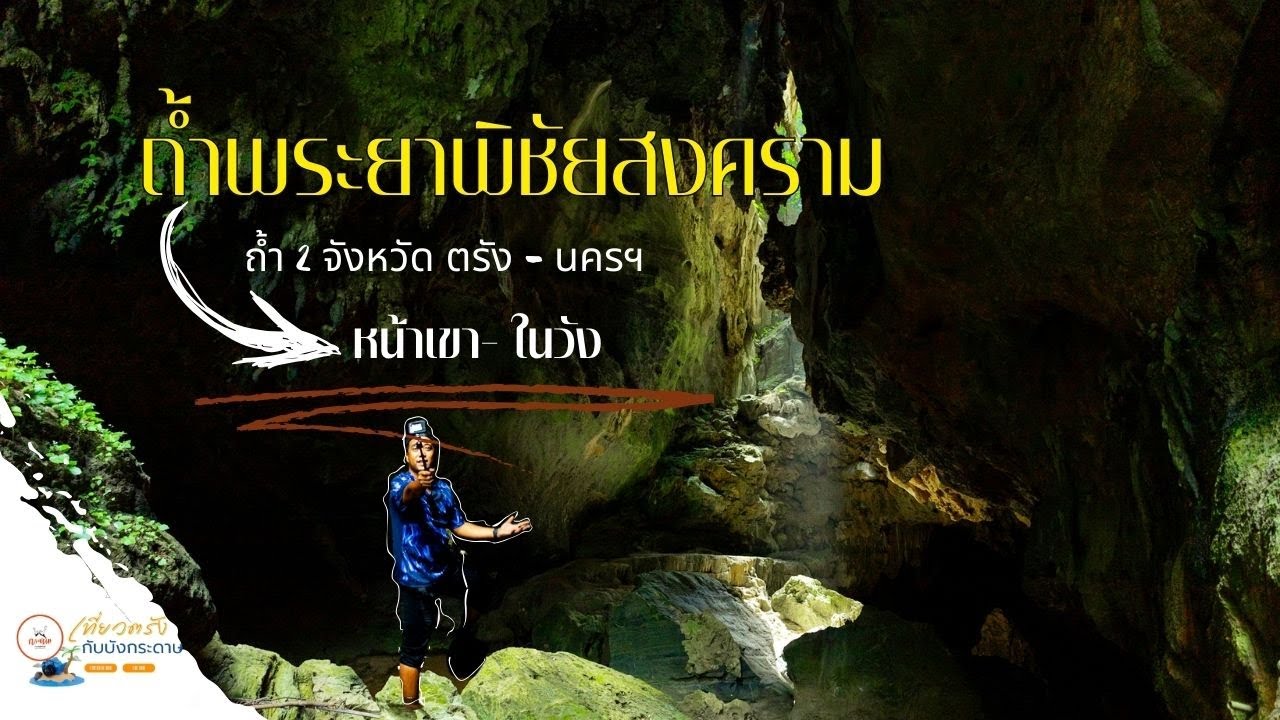
Wang Phraya Phichai Songkhram Cave in Trang Province is located at Ban Nai Wang, Moo 4, Nong Bua Subdistrict, Ratsada District, near the provincial border between Trang and Nakhon Si Thammarat. It is a natural river-through cave where Khlong Pang flows through limestone passages and emerges as clear emerald-green water. The entrance area has a natural pool suitable for resting, swimming, and light paddling, while the interior contains a large cave chamber about 50 meters high in some sections, with colorful stalactites and stalagmites. Visitors may need to wade through water and should bring a flashlight. The cave is connected with Ban Na Khao-Nai Wang community-based tourism, kayaking, local forest-stream ecology, edible local freshwater shellfish known as hoi lo, and a local historical story related to Phra Phichai Songkhram in the early Rattanakosin period.
Wang Phraya Phichai Songkhram Cave is one of the most distinctive inland nature attractions in Ratsada District, Trang Province. Unlike a typical dry cave with only rock formations, this cave combines flowing water, limestone chambers, emerald-green pools, forested hills, local historical memory, and community-based tourism. It is especially suitable for travelers who want to experience the forest-stream side of Trang rather than the province’s better-known islands, beaches, and urban food routes.
The cave is located at Ban Nai Wang, Moo 4, Nong Bua Subdistrict, Ratsada District, Trang Province. The surrounding area lies close to the border between Trang and Nakhon Si Thammarat and is connected with Khlong Pang, a stream that flows through and out of the cave. Nong Bua Subdistrict is a highland area surrounded by hills, connected with the Banthat mountain range and forest-reserve landscapes. This setting gives the cave its cool, shaded, and water-rich atmosphere.
The original travel information describes Wang Phraya Phichai Songkhram Cave as a cave with naturally beautiful stalactites and stalagmites. Visitors must wade through water inside the cave and should carry a flashlight. Near the cave, there are local shellfish called hoi lo, similar to river snails and used as edible local food. Access uses the same route as Tham Phra Phut or Wat Tham Phra Phutthakosi, then turns left toward Ban Nai Wang along Highway 4151 for about 3 km.
Wang Phraya Phichai Songkhram Cave is a year-round water-through cave. Clear water flows from the cave, passes through rock channels, and forms a large natural pool at the cave entrance. When light reflects on the stream, the water appears emerald green. This entrance pool is one of the most memorable features of the site because visitors can rest beside it, play in the water when conditions are safe, or join light paddling activities according to water level and local supervision.
Inside the cave, the chamber is broad and can reach about 50 meters high in some sections. The cave walls and ceiling contain stalactites, stalagmites, mineral curtains, and colorful limestone deposits formed over long periods by mineral-rich water. When a flashlight shines on the formations, some surfaces appear sparkling. The beauty of the cave therefore depends on darkness, water, mineral texture, and careful observation.
The key difference between this cave and many other Trang caves is the need to wade through water. Some areas are shallow enough to walk through, while some sections may be suitable for paddling or kayaking when the water level is right. A flashlight is essential because the cave interior becomes dark quickly. Visitors should be ready to get wet, wear suitable footwear, and protect phones, cameras, and valuables with waterproof bags.
The cave is connected with the Ban Na Khao-Nai Wang community-based tourism group. This community emphasizes sustainable tourism, forest and watershed conservation, and local participation in tourism management. The route can include forest walks, stream activities, swimming, kayaking, local food, and learning about forest resources. For this reason, a visit to the cave is more meaningful when understood as part of a wider community landscape.
Khlong Pang is the natural heart of the cave landscape. It flows through several villages in Nong Bua Subdistrict and supports local ecology, water use, tourism, and community identity. The clear water at the cave depends on upstream forest and watershed health. The cave should therefore be seen as one connected system of forest, hill, stream, limestone, pool, and village rather than as a single isolated attraction.
The emerald pool in front of the cave is a major resting area. The water flows out from the cave through natural rock channels, and fish may be seen in the clear stream. Trees around the pool provide shade, creating a cool atmosphere suitable for resting after cave exploration. This combination of cave and stream gives Wang Phraya Phichai Songkhram Cave a wilder and more refreshing character than many developed cave attractions.
Hoi lo, the local freshwater shellfish mentioned in travel descriptions, reflects the richness of the stream ecosystem. Visitors should not collect shellfish or disturb aquatic habitats independently. If they want to taste local food, they should do so through local community services or properly prepared food vendors. This helps preserve the stream ecosystem and supports community income.
The name Wang Phraya Phichai Songkhram comes from a local historical story. In the early Rattanakosin period, Nakhon Si Thammarat was a major southern administrative center. Local memory says that Phra Phichai Songkhram, also known as Matanuchit Sittisongkhram, led troops toward Phatthalung and stopped at Ban Nai Wang or the Wang Phraya Phichai area because it had water and food resources. After victory, the army returned to rest and celebrate there. The community later called the place Wang Phraya Phichai Songkhram Cave.
This story adds cultural meaning to the cave. The site is not only a natural cave with water and rock formations; it is also a remembered military resting place in local tradition. In the past, water sources were critical for travel, cooking, and troop movement. A cave area with a clear stream and abundant surroundings would naturally become a memorable stopping place in community memory.
The cave route is also linked with Nakarat Cave, another water-through cave in Nong Bua Subdistrict. Nakarat Cave is longer and more adventurous, requiring more time, stronger physical readiness, and local guiding. Visitors can treat Wang Phraya Phichai Songkhram Cave as an accessible introduction to the cave-stream landscape before considering more demanding routes.
Main activities at Wang Phraya Phichai Songkhram Cave include water-wading cave exploration, viewing stalactites and stalagmites, resting at the emerald pool, paddling or kayaking when conditions allow, photographing the forested cave entrance, learning the cave’s local history, and joining community-based travel around Ban Na Khao-Nai Wang. All activities should prioritize safety and conservation.
The best time to visit is when water level is safe and local caretakers or community guides are available. Community-based tourism information lists Monday to Sunday operation from 09.00 to 12.00, with a typical activity duration of about 60 minutes. Morning visits are practical because there is enough daylight outside the cave, the weather is cooler, and visitors have time to check water conditions before entering.
Some online business listings show wider kayaking hours, but this article uses the clearer community-tourism operating period as the main planning reference. Travelers who want to visit outside the morning period should contact Nong Bua Subdistrict Administrative Organization or local operators before traveling. Actual access depends on rain, water level, route condition, and local supervision.
Preparation is important. Visitors should wear water-friendly shoes with strong grip, avoid loose sandals, wear quick-drying clothing, bring a waterproof bag, and carry a personal flashlight. Cave floors may be slippery and uneven. Water depth can vary, and rocks may not be visible without proper light.
Visitors who paddle or kayak should wear a life jacket and follow local instructions. They should not enter deep cave sections without a guide because the water channel, rock edges, current, and low ceiling areas can change according to water level. After rain, conditions may become unsafe quickly.
Visitors who prefer an easier experience can enjoy the entrance pool and surrounding forest area without going deep into the cave. The outer area still offers the main atmosphere of clear water, limestone, shade, and stream scenery. Those who enter the cave should go as a group and avoid exploring alone.
Good visitor behavior is essential. Do not write on cave walls, touch stalactites or stalagmites, break or collect rocks, leave trash, use soap or shampoo in the stream, catch aquatic animals, or make loud noise. The clear water is the site’s most important resource, and it must be protected by every visitor.
Limestone caves are fragile natural systems. Stalactites and stalagmites form very slowly. Even a single touch can leave oil on the surface and affect mineral deposition. Strong light, shouting, smoke, litter, and careless movement can disturb cave wildlife and damage the cave environment. Responsible cave travel depends on quiet observation and restraint.
Getting There uses the same general route as Tham Phra Phut or Wat Tham Phra Phutthakosi. From Ratsada District, travel toward Nong Bua Subdistrict and Ban Tham Phra Phut, then turn left toward Ban Nai Wang along Highway 4151 for about 3 km. Travelers can also follow the road network toward Wat Tham Phra Phutthakosi first, then continue to Ban Nai Wang.
From Trang city, travel toward Ratsada District and continue into Nong Bua Subdistrict. Nong Bua Subdistrict is about 57 km from Trang city and takes about 1 hour to reach the subdistrict area before continuing into the village route. A private car, rental car, motorcycle, or pre-arranged local transport is the most practical option.
Travelers coming from Nakhon Si Thammarat can approach from Thung Song District and nearby border routes, then continue toward Nong Bua Subdistrict in Ratsada District. Because the cave lies near a provincial boundary and local roads may pass through farms and forest-edge villages, travelers should use navigation together with local confirmation.
The cave can be planned as a half-day or full-day trip. A simple visit to the cave entrance, pool, and basic cave route may take 1–2 hours. A fuller community-based program with paddling, local food, forest learning, and nearby temple visits should allow at least half a day. Combining it with Nakarat Cave or longer adventure routes requires advance coordination and a full-day schedule.
Wat Tham Phra Phutthakosi, also known as Wat Nai Tao, is the strongest nearby cultural stop. It is an important archaeological and Buddhist site in Nong Bua Subdistrict, known for a reclining Buddha image and many old objects. Combining the temple with Wang Phraya Phichai Songkhram Cave gives visitors both a natural water cave and a cultural cave-temple experience in one route.
Nakarat Cave is directly connected with the Ban Na Khao-Nai Wang community route. It is a longer water-through cave and is more suitable for physically prepared visitors with local guides. It should not be attempted independently because the route requires knowledge of water level, darkness, distance, and safety.
Bang Khan Hot Spring, on the Nakhon Si Thammarat side, can be added for travelers using the Thung Song route. It is useful as a relaxing stop after water and cave activities. Wat Khao Ro, Wat Kang Pla, and other Thung Song-area attractions may also be combined when travelers stay in Thung Song.
For photography, the cave offers entrance signs, forested hills, the emerald pool, limestone openings, bridges or walking access, stream channels, cave formations, and flashlight-lit mineral surfaces. Visitors should protect cameras and phones from water, avoid stepping backward near the stream, and avoid using flash in ways that disturb wildlife or other visitors.
The cave is suitable for families, nature travelers, student groups, community-tourism visitors, and people who enjoy light adventure. It is less suitable for visitors who cannot wade through water, are uncomfortable in dark spaces, have difficulty walking on slippery surfaces, or are not comfortable in humid cave environments. Children should be supervised closely at all times near water.
The special value of the cave lies in the connection between nature and community. Nong Bua residents rely on agriculture, rubber plantations, orchards, and small local businesses, while community tourism helps create income and strengthen watershed conservation. The cave and stream are not just attractions; they are local resources linked with livelihoods, memory, food, and environmental stewardship.
Compared with more famous Trang caves such as Tham Le Khao Kob, Tham Khao Chang Hai, or Tham Khao Pina, Wang Phraya Phichai Songkhram Cave feels more raw and close to nature. Its charm lies in water-wading, clear stream sound, emerald pools, forest shade, local stories, and a stronger sense of adventure. It is a good choice for travelers who want a less conventional Trang cave route.
Because the site is natural and water-dependent, planning matters. Travelers should contact local authorities or operators before visiting during rainy periods. They should avoid entering after heavy rain or when water levels rise. A place that is safe in the morning can become risky after continuous rainfall, especially inside a water-through cave.
In conclusion, Wang Phraya Phichai Songkhram Cave is a meaningful inland Trang destination for travelers who want forest, water, limestone, local history, and community-based tourism in one place. It combines Khlong Pang, an emerald stream, a natural cave pool, stalactites and stalagmites, Ban Nai Wang, Ban Na Khao, hoi lo shellfish, kayaking, and the story of Phra Phichai Songkhram. With good preparation, local guidance, and respect for nature, the cave offers one of Trang’s most distinctive forest-stream travel experiences.
| Name | Wang Phraya Phichai Songkhram Cave |
| Related Names | Tham Phraya Phichai Songkhram / Wang Phraya Phichai Cave / Ban Nai Wang / Khlong Pang Water-Through Cave |
| Location | Ban Nai Wang, Moo 4, Nong Bua Subdistrict, Ratsada District, Trang Province |
| Address | Ban Nai Wang, Moo 4, Nong Bua Subdistrict, Ratsada District, Trang 92160, Thailand |
| Coordinates | 8.008003, 99.751808 |
| Highlights | Year-round water-through cave, clear emerald-green stream, cave-front pool, colorful stalactites and stalagmites, water-wading route, kayaking or paddling, and the Phra Phichai Songkhram local story |
| Background | An eco-tourism attraction of Nong Bua Subdistrict and the Ban Na Khao-Nai Wang community route, located near the Trang–Nakhon Si Thammarat provincial border |
| Name Origin | The name comes from a local story about Phra Phichai Songkhram or Matanuchit Sittisongkhram resting with troops at Ban Nai Wang during the early Rattanakosin period |
| Landscape | Highland terrain surrounded by hills, connected with the Banthat mountain range, with Khlong Pang flowing through the cave and villages in Nong Bua Subdistrict |
| Cave Features | Limestone water-through cave with a year-round stream, broad cave chamber reaching about 50 meters high in some sections, limestone formations, and water routes for wading or paddling according to water level |
| Main Activities | Water-wading cave exploration, stalactite and stalagmite viewing, kayaking or paddling, swimming at the cave-front pool, resting by the stream, and joining Ban Na Khao-Nai Wang community-based tourism |
| Activity Duration | About 60 minutes for the standard community-based tourism activity |
| Travel Information | Use the same general route as Tham Phra Phut or Wat Tham Phra Phutthakosi, then turn left toward Ban Nai Wang along Highway 4151 for about 3 km. From Trang city, travel toward Ratsada District and continue into Nong Bua Subdistrict |
| Current Status | Open As An Eco-Tourism And Community-Based Tourism Site, With Actual Access Depending On Water Level, Weather, And Local Caretaker Availability |
| Open Days | Monday – Sunday |
| Opening Hours | 09.00 – 12.00 For Community-Based Tourism Activities |
| Facilities | Bridge or walking access to the cave area, toilets, resting areas, cave-front pool, paddle boats, inner tubes, some water-play equipment, and community parking area |
| Main Areas / Zones | Entrance sign, forested cave area, emerald-green pool, cave mouth, water-wading route, limestone chamber, stalactite and stalagmite areas, Khlong Pang, and connecting route toward Nakarat Cave |
| Caretaker / Related Authorities | Nong Bua Subdistrict Administrative Organization And Ban Na Khao-Nai Wang Community-Based Tourism Enterprise |
| Contact Numbers | Nong Bua Subdistrict Administrative Organization, Tel. 075-290948 / Local Kayak Service, Tel. 093-5953409, 087-2801599 |
| Visitor Rules | Bring a flashlight, wear water-friendly shoes, follow local instructions, avoid entering during high water, do not touch cave formations, do not litter, do not use soap or shampoo in the stream, and do not catch aquatic animals |
| Nearby Tourist Attractions | 1. Nakarat Cave, About 3 km 2. Wat Tham Phra Phutthakosi / Wat Nai Tao, About 9 km 3. Bang Khan Hot Spring, About 20 km 4. Wat Khao Ro, About 24 km 5. Thung Song District Area, About 25 km |
| Nearby Restaurants | 1. Gaga Service Khlong Pang, About 19 km, Tel. 082-9947861 2. Bang Khan 101, About 22 km, Tel. 074-426188 3. Chan Mueang Restaurant Thung Song, About 24 km, Tel. 081-5975077 4. Midnight Khao Tom Kui Thung Song, About 25 km, Tel. 093-7148805, 082-1427114 5. Yang Noey Thung Song, About 27 km, Tel. 081-6911016 |
| Nearby Accommodations | 1. Ratsada Resort, About 20 km, Tel. 083-9699244 2. Tara Cave Ratsada, About 22 km 3. Suchada Palace Thung Song, About 27 km, Tel. 090-1539922 4. Le Park Hotel Thung Song, About 28 km, Tel. 075-355168 5. Metro Hotel & Spa Thung Song, About 28 km, Tel. 075-466765 |
Frequently Asked Questions (FAQ)
Q: Where Is Wang Phraya Phichai Songkhram Cave Located?
A: The cave is located at Ban Nai Wang, Moo 4, Nong Bua Subdistrict, Ratsada District, Trang Province, near the Trang–Nakhon Si Thammarat provincial border.
Q: What Makes The Cave Special?
A: It is a water-through limestone cave where Khlong Pang flows through the cave. The site has an emerald-green stream, a cave-front pool, stalactites and stalagmites, water-wading access, and paddling or kayaking when water level is suitable.
Q: What Should Visitors Bring?
A: Visitors should bring a flashlight, water-friendly shoes, quick-drying clothes, a waterproof bag for phones or cameras, and should check water conditions with local caretakers before entering.
Q: What Are The Opening Hours?
A: Community-based tourism activities are listed from Monday to Sunday, 09.00 to 12.00. Actual entry depends on water level, weather, and local caretaker availability.
Q: Why Is It Called Wang Phraya Phichai Songkhram Cave?
A: The name comes from a local story about Phra Phichai Songkhram or Matanuchit Sittisongkhram resting with troops at Ban Nai Wang and later returning to celebrate victory there.
Q: Is The Water Deep Inside The Cave?
A: Water level changes by season and rainfall. Some sections may be shallow enough to wade, while some sections can be suitable for paddling when conditions allow. Local caretakers should assess conditions before entry.
Q: Is The Cave Suitable For Children And Older Visitors?
A: The entrance pool and outer area can be suitable with close supervision, but entering the cave requires comfort with water, darkness, slippery surfaces, and changing water levels.
Q: What Nearby Places Can Be Combined With The Cave?
A: Nearby places include Nakarat Cave, Wat Tham Phra Phutthakosi, Bang Khan Hot Spring, Wat Khao Ro, and the Thung Song or Ratsada route depending on travel direction and available time.
 Category: ●Nature and Wildlife
 Group: ●Caves
Last Update : 2 MonthAgo
 Last Update : 2 MonthAgo
 Click to Access the Navigation Map GPS
Wang Phraya Phichai Songkhram Cave Map
Recommend

 Art, Culture and Heritage
 Historical Sites and Monuments(1)
 Landmarks and Memorials(2)
 Art, Craft Centres, Tradition(3)
 Museums(2)
 University
 Public university(3)
 Rajamangala University of Technology(1)
 Places of Worship
 Temple(15)
 Mosque(1)
 Other Sacred Sites(7)
 Research and Development
 Royal Project(1)
 Suburban Living
 Village, Community(5)
 National Parks and Marine Reserves(6)
 Mountain (Doi)(8)
 Dam, Reservoir, Lake(1)
 Waterfalls(20)
 Hot Springs(1)
Caves(11)
 Bays and Beaches(11)
 Islands(12)
 Other natural attractions(3)
 Entertainment and Agricultural
 Farms, Parks and Ecotourism(8)
 Outdoor and Adventure Activities(1)
 Shopping
 Department Store(2)
 Travel Articles, Recipes
 Travel Review, Food Review(1)
 Southern Food Menu, Southern Food Recipes(1)


