
lovethailand home >South Travel Attractions >Surat Thani Travel Attractions >Muang Surat Thani >Khun Thale > Suratthani Rajabhat University
TL;DR: Suratthani Rajabhat University, Surat Thani attractions : University, Rajabhat University.
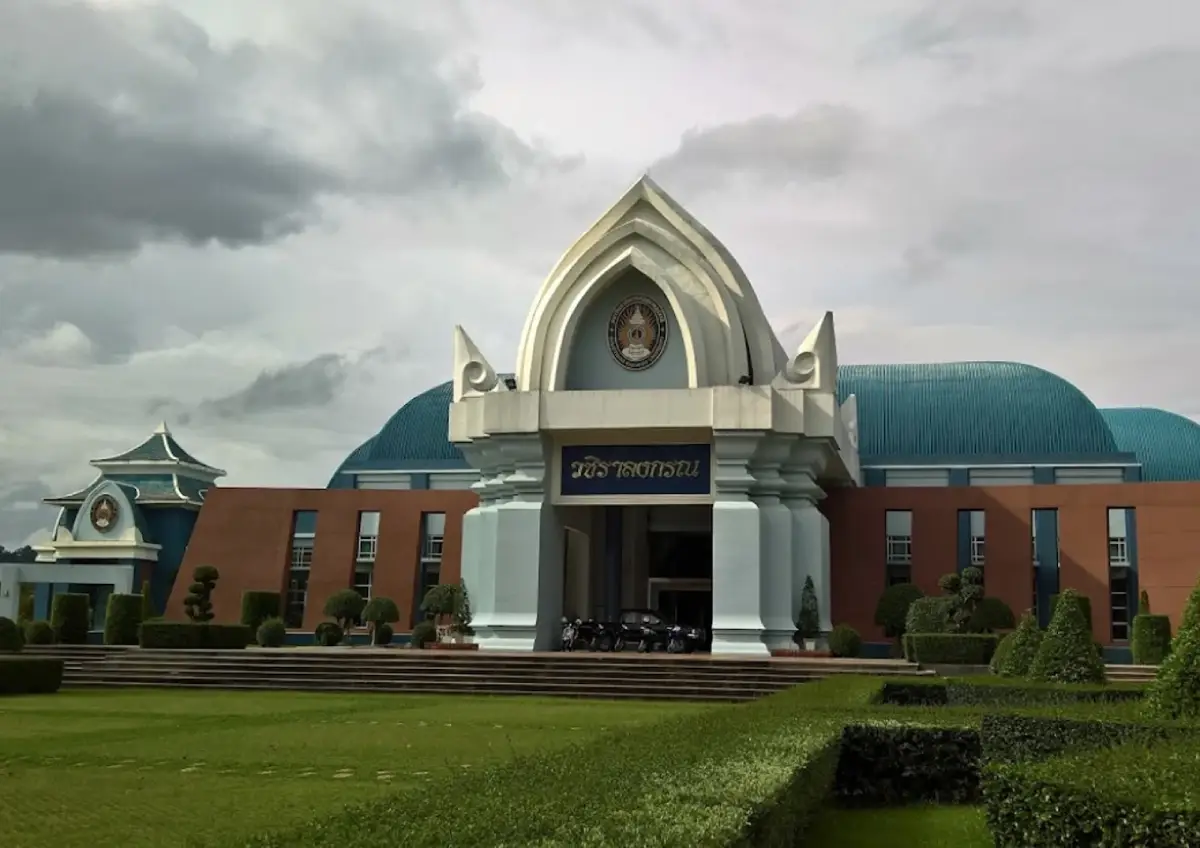
Suratthani Rajabhat University
Open Days: Monday – Friday (General Administrative and Registration Services, excluding public holidays)
Opening Hours: 8:30 AM – 4:30 PM (Administrative Contact Hours, not the opening hours of the entire campus)
Suratthani Rajabhat University (มหาวิทยาลัยราชภัฏสุราษฎร์ธานี), commonly abbreviated as SRU, is a public university located at 272 Moo 9, Surat Thani–Na San Road, Khun Thale Subdistrict, Mueang Surat Thani District, Surat Thani Province, southern Thailand. The institution traces its origins to Surat Thani Teachers College, established in 1973 to support teacher education and regional educational development. It later became Surat Thani Rajabhat Institute before attaining university status on June 15, 2004, under the Rajabhat University Act B.E. 2547. Today, the university offers education in teaching, humanities, social sciences, science, technology, management, nursing, law, and tourism, while continuing its long-standing mission of strengthening local communities through education, research, cultural preservation, and academic services.
With more than five decades of institutional history, Suratthani Rajabhat University represents an important part of the development of higher education in upper southern Thailand. Beginning as a teacher-training institution, it gradually expanded into a multidisciplinary university serving students from Surat Thani and neighboring provinces. Its transformation reflects wider changes in Thai education, particularly the expansion of opportunities beyond major cities and the growing need for qualified professionals in education, business, technology, healthcare, public administration, and community development.
The university's main campus is located in Khun Thale, approximately 15 kilometers from central Surat Thani. The surrounding area combines educational institutions, residential neighborhoods, local businesses, and natural landscapes associated with the Khun Thale area. Within the campus are academic buildings, faculty offices, administrative facilities, a library and information center, cultural learning spaces, a major auditorium, student accommodation services, and areas used for educational and recreational activities. Together, these facilities create an academic environment in which classroom learning, professional training, student life, and community engagement can take place.
Surat Thani Province occupies an important position in southern Thailand's economy. Its agricultural production, commercial activities, transportation infrastructure, and tourism industry contribute significantly to regional development. The province is also closely associated with major Gulf of Thailand destinations such as Ko Samui, Ko Pha-ngan, and Ko Tao. At the same time, mainland communities depend on farming, fisheries, services, and small businesses. This diverse economic environment provides a practical context for the university's academic programs, research priorities, and role in developing professional skills for the region.
The history of Suratthani Rajabhat University began in 1973, when Surat Thani Teachers College was established as part of Thailand's efforts to expand educational opportunities under the Third National Economic and Social Development Plan, covering 1972 to 1976. During this period, teacher training was a national priority because schools across the country required more qualified educators. Establishing teacher-training institutions outside the major metropolitan centers helped strengthen the education system and provided local residents with greater access to professional qualifications.
Although the institution was established in 1973, it admitted its first students in 1976. These students enrolled in the Certificate in Education program, a qualification associated with teacher preparation at that time. The first intake marked the practical beginning of the college's educational mission. Teacher education became the foundation of the institution's academic identity and remains an important part of its activities today.
In 1977, the college developed its administrative and academic structure under the Teachers College Act B.E. 2518. Its major units included the Office of the President, the Faculty of Education, the Faculty of Humanities and Social Sciences, and the Faculty of Science. These organizational foundations supported the management of teaching, academic staff, and educational resources. They also created the conditions necessary for the college to expand its curriculum in later years.
In 1978, the institution began offering the Higher Certificate in Education, providing students with an additional pathway for developing professional teaching qualifications. In 1979, a weekend education program was introduced for teachers and other educational personnel already working in the profession. This arrangement was especially valuable for people who needed to continue their employment while pursuing further education and professional advancement.
A significant milestone occurred in 1980, when Surat Thani Teachers College began admitting students to bachelor's degree programs in education. The transition from certificate-level instruction to undergraduate degree education reflected the increasing academic requirements of the teaching profession. Students were able to pursue more advanced studies in educational theory, subject knowledge, teaching methods, and professional practice.
During the 1980s, the college gradually broadened its educational mission. Cooperation with physical education institutions in Chumphon Province supported programs relating to sports and physical education, while vocational and professional subjects were also developed. Amendments to the Teachers College Act in 1984 allowed teachers colleges to provide education in disciplines beyond teacher training. This legal change helped institutions such as Surat Thani Teachers College diversify their academic programs and respond to the changing demands of society.
In 1987, the college reorganized its academic structure to include Education, Humanities and Social Sciences, Management Sciences, and Science and Technology. Additional units supported research, cultural activities, student affairs, academic administration, and institutional development. This organizational expansion was an important stage in the transition from a specialist teacher-training college to a broader institution of higher education.
International academic cooperation became increasingly important during the following years. In 1990, the college developed a cooperative program with a Canadian science and technology institution to strengthen management-related academic programs. In 1991, cooperation involving a Japanese government agency supported the development of teaching personnel in chemistry and computing. These initiatives reflected the institution's growing interest in scientific knowledge, information technology, and the professional development of academic staff.
February 14, 1992, is a particularly important date in the history of Thailand's Rajabhat institutions. On that day, King Bhumibol Adulyadej granted the name “Rajabhat” to the teachers college system. The name carries the idea of serving the King, the nation, and the people, and it became central to the identity of Rajabhat institutions throughout Thailand. The historical connection between the name and the public-service mission remains an important element of the university's values and traditions.
The Rajabhat Institute Act of 1995 established the legal framework under which Surat Thani Rajabhat Institute developed its educational and administrative activities. The institute expanded beyond teacher education into additional disciplines in science, social sciences, management, and professional training. This transformation enabled it to prepare graduates for a wider range of occupations in government agencies, businesses, educational organizations, and local communities.
In 1999, the institute established its graduate education unit and admitted its first master's degree students in Social Sciences for Development. This was a major academic milestone because it extended the institution's responsibilities into postgraduate education and advanced research. Graduate studies provided opportunities for educators, public-sector personnel, and other professionals to strengthen their knowledge and develop the analytical skills needed for regional and organizational development.
Between 2000 and 2003, Surat Thani Rajabhat Institute continued expanding educational opportunities for working adults and local residents. Off-campus education centers were developed in areas including Ranong Province and Ko Samui District. These initiatives increased access to education for people who could not easily attend classes at the main campus. The institution also prepared its academic programs, administrative systems, and organizational structure for the transition to university status.
On June 15, 2004, Surat Thani Rajabhat Institute officially became Suratthani Rajabhat University following the implementation of the Rajabhat University Act B.E. 2547, which had been published in the Royal Gazette on June 14, 2004. This change marked a major development in its legal and institutional status. The university was able to further strengthen its work in higher education, research, academic services, teacher development, and the preservation of arts and culture.
In 2005, the university established a revised organizational structure that included academic faculties, administrative offices, a research and development institute, the Academic Resources and Information Technology Center, the Office of Arts and Culture, the Academic Promotion and Registration Office, and the International School of Tourism. These units supported the university's expanding educational programs and its responsibilities toward students and the wider community.
Another important expansion occurred in 2008, when the Faculty of Law and the Faculty of Nursing were introduced. The university began admitting students to these professional fields, broadening its academic responsibilities into legal education, healthcare, and public-service professions. During the same period, tourism-related and aviation business programs also became an important part of the university's response to the growth of southern Thailand's service economy.
In 2010, tourism and aviation-related education was expanded in Ko Samui. The university also developed doctoral-level studies in educational leadership during this period. Its activities in Ko Samui reflected the island's importance as an international tourism destination and the demand for professionally trained personnel in hospitality, hotel operations, aviation-related services, and tourism management.
During the years that followed, the university adopted policies encouraging international cooperation, language development, ASEAN-related studies, and educational innovation. New academic activities and subjects included disaster management, retail management, agribusiness, and food business. This diversification demonstrated the institution's efforts to keep its education relevant to technological change, economic development, and the evolving requirements of the labor market.
On June 22, 2017, the university opened its new commemorative library and information center, strengthening the facilities available for academic research and independent learning. On February 14, 2018, a new Office of the President building was formally opened in connection with Rajabhat Day celebrations. These developments were part of the university's continuing investment in its physical environment and its ability to provide modern academic and administrative services.
In 2023, Suratthani Rajabhat University marked the 50th anniversary of its establishment. The anniversary provided an opportunity to reflect on the institution's development from a teachers college to a multidisciplinary university. Particular emphasis was placed on the university's contribution to community development and its ambition to prepare graduates with the capabilities of social engineers who can apply their knowledge to real problems within society.
As of 2026, the university is led by Assistant Professor Dr. Wattana Rattanaprom as President. Its educational philosophy emphasizes developing knowledge for the benefit of local communities. This approach connects university education with real-world problems, encouraging students and academic staff to understand the needs of communities and contribute to sustainable solutions through research, collaboration, and practical learning.
The name Rajabhat reflects the institution's public-service identity and historical connection with the Thai monarchy. The geographical name Surat Thani identifies the province in which the university is based. Together, the names express a commitment to applying education and knowledge to the development of the province and neighboring areas. This local development mission distinguishes Rajabhat universities as institutions closely connected with the communities they serve.
The university's official emblem is based on the royal insignia of King Rama IX. It features symbolic elements including a central Unalom design within a circular wheel, radiating light, and a seven-tiered royal umbrella. The colors of the emblem carry meanings related to the monarchy, the natural environment, intellectual progress, local arts and culture, and purity of thought. The university's official colors are light blue and red, while the Ratchaphruek, or golden shower flower, is its official university flower.
An important feature of the university's educational philosophy is the concept of the social engineer. This approach seeks to develop four essential capabilities: analytical thinking, communication, coordination, and innovation. Students are encouraged to examine problems critically, communicate knowledge effectively, collaborate with different groups, and develop solutions that provide practical benefits to communities. The concept applies to students across academic disciplines rather than to engineering students alone.
For example, education students can use their professional knowledge to improve learning activities in schools, science students can investigate environmental and public-health challenges, management students can support local entrepreneurship, and humanities students can contribute to cultural preservation. These applications demonstrate how university education can connect academic knowledge with community needs and practical social development.
Suratthani Rajabhat University currently has major academic units covering Education, Humanities and Social Sciences, Science and Technology, Management Sciences, Nursing, Law, and Tourism. The university also operates the Koh Samui Interdisciplinary College, which provides educational opportunities in tourism-related fields on the island. Other important units include the Graduate Studies Office, academic service and research organizations, and the university's demonstration school.
The Faculty of Education has a particularly important position in the university's history because it is closely connected to the institution's original teacher-training mission. Its responsibilities include preparing future teachers through studies in subject knowledge, educational psychology, teaching methodology, assessment, curriculum development, and professional practice. The university's 2026 undergraduate admissions information identifies teacher-education majors in Early Childhood Education, Mathematics, Computer Education, Chemistry, Biology, Physics, Thai, English, General Science, Art Education, and Social Studies.
The Faculty of Humanities and Social Sciences provides education relating to language, culture, politics, public administration, community development, and information studies. Its 2026 admissions listing includes Public Administration, Political Science, Cultural Management, Community Development, Chinese, Thai, English, and Information Science and Library Science. These subjects support professional careers in government, education, cultural organizations, community-based institutions, and language-related services.
The Faculty of Science and Technology offers education across scientific, technological, agricultural, environmental, industrial, and public-health fields. Its 2026 admissions information includes Information Technology, Software Development and User Experience, Agricultural, Food and Environmental Sciences, Science and Mathematics, Environmental Health, Occupational Health and Safety, Community Public Health, and Industrial Technology. These disciplines respond to the need for scientifically and technologically skilled personnel in the regional economy and public-service sector.
The Faculty of Management Sciences specializes in business administration, accounting, economics, and contemporary communication. Its 2026 admissions listing includes fields relating to Finance and Investment, General Management, International Business, Smart Business Management, Logistics, Marketing, Human Resource Management, Entrepreneurship, Agribusiness, Food Business, Accounting, Community Economy, and Digital Communication Arts. These areas help prepare graduates for work in private enterprises, public organizations, and a business environment increasingly shaped by digital technology.
The Faculty of Law offers the Bachelor of Laws degree, providing education in Thai law, legal systems, rights and responsibilities, and the foundations of the justice system. Legal education is relevant to careers in the legal profession, public administration, organizational compliance, and other fields requiring knowledge of law and regulation. The university also publishes postgraduate programs relating to law and justice process development.
The Faculty of Nursing offers the Bachelor of Nursing Science degree, preparing students for professional responsibilities in healthcare. Nursing education requires the integration of health sciences, clinical skills, ethics, patient care, and professional standards. The faculty contributes to the development of healthcare personnel who are essential to hospitals, health services, and community healthcare systems.
The International School of Tourism is closely connected with the importance of tourism to Surat Thani Province and southern Thailand. Its academic offerings include Tourism and Hospitality Management as well as Aviation Business. These subjects involve the study of hospitality operations, tourism management, customer service, communication, and the organization of travel-related services. They contribute to the preparation of professionals for an industry that serves both domestic and international travelers.
The Koh Samui Interdisciplinary College is an important example of the university's educational expansion into a major tourism destination. Its published programs include Hotel and Cruise Business Management and Thai and International Culinary Arts. These fields are especially relevant to Ko Samui's hotel, food-service, and tourism industries. Educational activities on the island can help students develop an understanding of hospitality operations and the commercial environment of an international resort destination.
Postgraduate education is another part of the university's academic mission. Published graduate programs include educational administration, curriculum and instruction, business administration, law, local community management, justice process development, tourism and hospitality business management, politics and government, and public policy. The university also offers a Graduate Diploma in the Teaching Profession. Individual admission periods and program availability are determined by official university announcements.
Research and innovation contribute to the university's mission of supporting regional development. Through its Research and Development Institute and academic faculties, the university promotes research relating to education, community development, science, technology, environmental management, agriculture, food systems, entrepreneurship, and local culture. Research activities provide opportunities to apply academic knowledge to practical challenges faced by communities and organizations in southern Thailand.
The university places particular emphasis on community engagement in Surat Thani, Chumphon, and Ranong provinces. Its educational and research activities are designed to strengthen links between academic knowledge and local needs. Cooperation with community organizations, businesses, government agencies, and local administrative bodies helps create opportunities for training, knowledge exchange, and development projects. This relationship with the surrounding region is one of the university's defining characteristics.
Cultural preservation is also an important responsibility of Suratthani Rajabhat University. Its Office of Arts and Culture studies, preserves, and promotes southern Thai cultural heritage, including local traditions, religious knowledge, traditional crafts, and community history. In 2026, for example, the university organized educational activities connecting southern Thai woven textiles with science education. Such initiatives demonstrate how traditional knowledge can be incorporated into contemporary teaching and learning.
One of the university's most significant cultural learning sites is the Buddhadasa Dhamma Ghosana Hall, known in Thai as หอพุทธทาสธรรมโฆษณ์. This institution is associated with the study and dissemination of the teachings of Buddhadasa Bhikkhu, an influential Thai Buddhist monk with strong historical connections to Surat Thani Province. The hall supports Buddhist studies, cultural learning, and activities relating to the preservation of religious and intellectual heritage.
The significance of Buddhadasa Dhamma Ghosana Hall extends beyond its physical facilities. It represents an effort to preserve and communicate an important aspect of southern Thailand's intellectual and religious history. For students, scholars, and visitors interested in Buddhism, Thai cultural heritage, and regional history, it is a meaningful educational resource. Those wishing to arrange a visit or study session should contact the university's Office of Arts and Culture in advance.
The university's commemorative library and information center is another essential academic facility. It provides access to information resources, research materials, online databases, and services supporting independent learning. The Academic Resources and Information Technology Center also supports digital learning and modern educational technologies, helping students and academic staff obtain information and develop the skills needed for research and professional work.
Modern learning facilities include smart training rooms, smart classrooms, digital media services, creative innovation spaces, and audiovisual technology. These facilities support seminars, professional training, group learning, and technology-assisted education. Their development reflects the university's efforts to create an academic environment suited to contemporary learning methods and changing professional requirements.
The Vajiralongkorn Auditorium is a major venue within the university. It is used for formal ceremonies, academic gatherings, cultural events, and other large university activities. The auditorium has hosted important institutional occasions, including Rajabhat Day celebrations. Its role as a gathering place helps strengthen connections among students, university personnel, external organizations, and members of the wider community.
Rajabhat Day, celebrated on February 14, is one of the university's most important annual observances. It commemorates the royal granting of the Rajabhat name in 1992 and emphasizes the institution's identity as a university dedicated to public service and local development. On February 14, 2026, Suratthani Rajabhat University held Rajabhat Day activities under the theme “People of the King, Servants of the Land” at Vajiralongkorn Auditorium, bringing together members of the university community to reflect on their shared institutional values.
The traditional Wai Khru, or teacher-honoring ceremony, is another important part of university culture. On July 2, 2026, the university organized its annual Wai Khru ceremony under a theme recognizing teachers as the creators of social engineers. The event reflected traditional Thai values of gratitude, respect for teachers, and the importance of moral responsibility in education. It also connected these cultural values with the university's ambition to prepare graduates who can contribute to society.
The university's cultural involvement is also evident in the annual Chak Phra, Thot Pha Pa, and long-boat racing traditions of Surat Thani Province. These events are closely associated with Buddhist faith, riverside communities, local craftsmanship, and the period following the end of Buddhist Lent. In October 2026, university personnel participated in Pha Pa offerings near the Tapi River, while students contributed to cultural performances and artistic activities, including a presentation inspired by the landscape and local identity of Bueng Khun Thale.
Such participation demonstrates the university's relationship with living cultural traditions rather than treating local heritage solely as an academic subject. Students have opportunities to learn about the history, beliefs, artistic practices, and community significance of important provincial festivals through direct involvement. These experiences help connect younger generations with the cultural knowledge of their communities and reinforce the university's role in cultural preservation.
Student life at Suratthani Rajabhat University includes academic study, professional training, group projects, student organizations, sports, cultural activities, and community service. Facilities and services supporting student welfare include student accommodation and educational support systems. The university experience is intended to develop not only subject-specific expertise but also teamwork, communication, independence, responsibility, and the practical capabilities needed for employment and social participation.
The Demonstration School of Suratthani Rajabhat University forms part of the institution's wider educational environment. Its existence reflects the university's continuing historical connection with teacher education and educational development before the university level. The relationship between the school and the university represents another dimension of the institution's long-term mission to support education in the region.
For visitors interested in educational and cultural tourism, Suratthani Rajabhat University offers several points of interest, particularly Buddhadasa Dhamma Ghosana Hall, the university library and information center, and facilities associated with the development of education in southern Thailand. The university's history also provides an opportunity to understand the transformation of Thailand's teachers college system into Rajabhat universities. Organized study visits should be arranged with the appropriate university department, especially when specialist buildings, classrooms, or cultural facilities are involved.
Suratthani Rajabhat University should not be treated as a conventional tourist attraction with a single daily opening and closing time for all areas. It is an operating educational institution with administrative offices, classrooms, laboratories, libraries, event venues, and other facilities following different schedules. Registration and general administrative services can normally be contacted Monday to Friday from 8:30 AM to 4:30 PM, excluding public holidays. Some units provide weekend services according to the academic calendar, and visitors should follow the instructions of the department they intend to contact.
Getting There: Suratthani Rajabhat University is located at 272 Moo 9, Surat Thani–Na San Road, Khun Thale Subdistrict, Mueang Surat Thani District, Surat Thani Province 84100. The main campus is approximately 15 kilometers from central Surat Thani. Visitors traveling by private car can use Surat Thani–Na San Road and follow a navigation application to the university. Hired vehicles and available local transportation services can also be used. The destination should be clearly identified as Suratthani Rajabhat University in Khun Thale, as it is a different institution from Prince of Songkla University's Surat Thani Campus.
Travelers arriving from other provinces may reach Surat Thani by road, intercity bus, train, or air, before continuing to the university by local transport. Those attending entrance examinations, interviews, administrative appointments, or university events should confirm the exact building and appointment time before traveling. Allowing additional travel time from central Surat Thani is advisable, particularly during busy periods and major university activities.
The surrounding region also offers opportunities to explore the natural and cultural character of Surat Thani Province. Bueng Khun Thale is an important local wetland and recreation area, while the city center contains civic landmarks, riverside public spaces, and places associated with the Tapi River. A visit to the university can therefore be combined with an exploration of the local environment, helping visitors appreciate the relationship between education, community life, and the broader cultural landscape of upper southern Thailand.
Over more than five decades, Suratthani Rajabhat University has developed from a specialist teachers college into an institution offering education across numerous academic and professional fields. Its historical commitment to teacher development has expanded into broader responsibilities involving research, innovation, cultural preservation, professional training, and community engagement. Through its academic faculties, Koh Samui educational programs, and continuing public-service mission, the university remains an important contributor to the educational and social development of Surat Thani and upper southern Thailand.
Summary Table
| University Name | Suratthani Rajabhat University |
| Thai Name | มหาวิทยาลัยราชภัฏสุราษฎร์ธานี |
| Abbreviation | SRU / มรส. |
| Institution Type | Public university dedicated to local development |
| Location | Khun Thale Subdistrict, Mueang Surat Thani District, Surat Thani Province, Thailand |
| Full Address | 272 Moo 9, Surat Thani–Na San Road, Khun Thale, Mueang Surat Thani, Surat Thani 84100, Thailand |
| Original Establishment | 1973, as Surat Thani Teachers College |
| First Student Intake | 1976, Certificate in Education program |
| Royal Granting of the Rajabhat Name | February 14, 1992 |
| Rajabhat Institute Status | Under the Rajabhat Institute Act of 1995 |
| University Status Granted | June 15, 2004 |
| Institutional Age in 2026 | 53 years since the original establishment in 1973; 22 years with university status since 2004 |
| University President | Assistant Professor Dr. Wattana Rattanaprom |
| Educational Philosophy | Developing Knowledge for Local Community Development |
| Graduate Identity | Social Engineer: Thinker, Communicator, Coordinator, and Innovator |
| Official University Colors | Light Blue and Red |
| University Flower | Ratchaphruek (Golden Shower Flower) |
| University Emblem | Emblem based on the royal insignia of King Rama IX |
| Academic Faculties and Colleges | 1. Faculty of Education 2. Faculty of Humanities and Social Sciences 3. Faculty of Science and Technology 4. Faculty of Management Sciences 5. Faculty of Nursing 6. Faculty of Law 7. International School of Tourism 8. Koh Samui Interdisciplinary College |
| Educational Locations | Main campus in Khun Thale, Mueang Surat Thani; Koh Samui Interdisciplinary College in Ko Samui District, Surat Thani Province |
| Major Academic Fields | Education, Humanities, Social Sciences, Science, Technology, Business, Law, Nursing, Tourism, Hospitality, and Culinary Arts |
| Important Campus Facilities | 1. Buddhadasa Dhamma Ghosana Hall 2. Commemorative Library and Information Center 3. Vajiralongkorn Auditorium 4. Office of the President 5. Faculty Buildings and Laboratories 6. Student Activity Facilities and Dormitories |
| Important Traditions and Events | Rajabhat Day on February 14, Wai Khru ceremonies, student activities, cultural events, and participation in Surat Thani's Chak Phra, Thot Pha Pa, and long-boat racing traditions |
| Administrative Open Days | Monday – Friday, excluding public holidays |
| Administrative Opening Hours | 8:30 AM – 4:30 PM |
| Weekend Services | Selected departments provide services according to the academic calendar and individual operating schedules |
| Organized Campus Visits | Contact the relevant university department in advance. Specialized facilities and academic buildings have their own access requirements. |
| Getting There | Approximately 15 km from central Surat Thani via Surat Thani–Na San Road. Accessible by private car and local hired transportation. |
| Attractions and Learning Sites in the Wider Area | 1. Buddhadasa Dhamma Ghosana Hall, inside the university 2. Bueng Khun Thale, Khun Thale area 3. Surat Thani City Pillar Shrine, Mueang Surat Thani 4. Saphan Narit and the Tapi River waterfront, Mueang Surat Thani 5. Ko Lamphu Public Park, Mueang Surat Thani |
| Restaurants in and Around Khun Thale | 1. SRU Food Center, on campus 2. Rangsit Boat Noodles near the university junction, Tel. +66 61 186 8109 3. Suan Isan, near the university, Tel. +66 89 802 1164 4. Kiao Pla Nikom Surat Thani, Tel. +66 77 355 116 5. Rim Rua Saep Isan, Tel. +66 96 212 5624 |
| Nearby Accommodation | 1. OK Mansion, near the university entrance, Tel. +66 84 246 2290 2. Nuan Mansion, near the university entrance, Tel. +66 80 538 0255 3. VIP Room, Surat Thani–Na San Road, Tel. +66 83 643 9182 4. Saengduean Mansion, Khun Thale Soi 1 5. Ploy's Pearl Hotel, Khun Thale, Tel. +66 77 962 566 |
| Main Telephone | +66 77 913 333 |
| Undergraduate Admissions Telephone | +66 77 913 357 or +66 77 913 333, extensions 3902, 3904, 3905, 3906, 3911 |
| Graduate Admissions Telephone | +66 77 913 381 |
| Official Email | saraban@sru.ac.th |
| Official Website | https://sru.ac.th/ |
| Current Status | Operating as an active public university offering higher education, research, and academic services |
Academic Programs and Fields of Study at Suratthani Rajabhat University, Academic Year 2026 (B.E. 2569)
| Faculty and Degree Level | Programs, Fields of Study, and Majors Listed by the University |
| Faculty of Education Bachelor's Degree | Four-Year Bachelor of Education in Teacher Education 1. Early Childhood Education 2. Mathematics 3. Computer Education 4. Chemistry 5. Biology 6. Physics 7. Thai 8. English 9. General Science 10. Art Education 11. Social Studies |
| Faculty of Humanities and Social Sciences Bachelor's Degrees | 1. Bachelor of Public Administration in Public Administration 2. Bachelor of Political Science in Political Science 3. Bachelor of Arts in Cultural Management 4. Bachelor of Arts in Community Development 5. Bachelor of Arts in Chinese 6. Bachelor of Arts in Thai 7. Bachelor of Arts in English 8. Bachelor of Arts in Information Science and Library Science |
| Faculty of Management Sciences Bachelor's Degrees | 1. Bachelor of Communication Arts in Digital Communication Arts Bachelor of Business Administration, Business Administration Majors 2. Finance and Investment 3. General Management 4. International Business Management 5. Smart Business Management 6. Logistics Management 7. Marketing 8. Human Resource Management 9. Entrepreneurship 10. Agribusiness 11. Food Business 12. Bachelor of Accountancy 13. Bachelor of Economics in Community Economy |
| Faculty of Science and Technology Bachelor's Degrees | Bachelor of Science in Information Technology 1. Multimedia 2. Software Development and User Experience 3. Information Technology Bachelor of Science in Agricultural, Food and Environmental Sciences 4. Disaster Management 5. Natural Resources and Environment 6. Renewable Energy Technology 7. Agricultural Innovation 8. Food and Nutrition Innovation 9. Fisheries 10. Plant Science 11. Animal Science Bachelor of Science in Science and Mathematics 12. Mathematics 13. Chemistry 14. Biology 15. Bachelor of Science in Environmental Health 16. Bachelor of Science in Occupational Health and Safety 17. Bachelor of Public Health in Community Public Health Bachelor of Industrial Technology in Industrial Technology 18. Industrial Management Technology 19. Industrial Production Technology and Product Development |
| International School of Tourism Bachelor's Degrees | 1. Bachelor of Arts in Tourism and Hospitality Management (Thai-Language Program) 2. Bachelor of Arts in Tourism and Hospitality Management (Bilingual Program) 3. Bachelor of Arts in Aviation Business |
| Koh Samui Interdisciplinary College Bachelor's Degrees | 1. Bachelor of Arts in Hotel and Cruise Business Management 2. Bachelor of Arts in Thai and International Culinary Arts |
| Faculty of Law Bachelor's Degree | 1. Bachelor of Laws (LL.B.) |
| Faculty of Nursing Bachelor's Degree | 1. Bachelor of Nursing Science |
| Graduate Studies Graduate Diploma | 1. Graduate Diploma in the Teaching Profession |
| Graduate Studies Master's Degrees | 1. Master of Education in Educational Administration 2. Master of Education in Curriculum and Instruction 3. Master of Laws 4. Master of Business Administration 5. Master of Political Science in Politics and Government 6. Master of Arts in Local Community Management 7. Master of Arts in Justice Process Development 8. Master of Arts in Tourism and Hospitality Business Management 9. Master of Public Administration in Public Policy |
Frequently Asked Questions (FAQ)
Q: Where is Suratthani Rajabhat University located?
A: The university is located at 272 Moo 9, Surat Thani–Na San Road, Khun Thale Subdistrict, Mueang Surat Thani District, Surat Thani Province 84100, Thailand, approximately 15 kilometers from central Surat Thani.
Q: What are the opening days and hours of Suratthani Rajabhat University?
A: General administrative and registration services are normally available Monday to Friday from 8:30 AM to 4:30 PM, excluding public holidays. Some departments provide weekend services according to the academic calendar, and individual campus facilities have separate access arrangements.
Q: When was Suratthani Rajabhat University established?
A: The institution was founded in 1973 as Surat Thani Teachers College. It admitted its first students in 1976 and officially became Suratthani Rajabhat University on June 15, 2004.
Q: What faculties and colleges does Suratthani Rajabhat University have?
A: Its main academic units include the faculties of Education, Humanities and Social Sciences, Science and Technology, Management Sciences, Nursing, and Law, along with the International School of Tourism and Koh Samui Interdisciplinary College.
Q: Does Suratthani Rajabhat University have a campus in Ko Samui?
A: Yes. The university operates the Koh Samui Interdisciplinary College, which publishes programs in Hotel and Cruise Business Management and Thai and International Culinary Arts.
Q: What is Suratthani Rajabhat University known for?
A: The university is known for its historical role in teacher education, its commitment to local community development, and its academic programs in education, science, technology, management, healthcare, law, and tourism.
Q: Are there any cultural learning sites within the university?
A: Yes. Buddhadasa Dhamma Ghosana Hall is an important cultural and religious learning site associated with the teachings and intellectual legacy of Buddhadasa Bhikkhu. Visitors interested in organized visits should contact the Office of Arts and Culture.
Q: How can I apply to Suratthani Rajabhat University?
A: Prospective students can review official admissions information at https://admission.sru.ac.th/. Undergraduate admissions inquiries can be made at +66 77 913 357, while graduate admissions can be contacted at +66 77 913 381.
 Category: ●University
 Group: ●Rajabhat University
Last Update : 4 DayAgo
 Last Update : 4 DayAgo

 Click to Access the Navigation Map GPS
Suratthani Rajabhat University Map
Recommend

 Art, Culture and Heritage
 Landmarks and Memorials(1)
 Art, Craft Centres, Tradition(8)
 Museums(5)
 Educational Places
 Educational Gardens, Farm(1)
 Public university(1)
Rajabhat University(1)
 Private University(1)
 Places of Worship
 Temple(32)
 Other Sacred Sites(8)
 Research and Development
 Royal Project(1)
 Suburban Living
 Village, Community(6)
 Local Market(1)
 Nature and Wildlife
 National Parks and Marine Reserves(8)
 Mountain (Doi)(2)
 Dam, Reservoir, Lake(8)
 Waterfalls(34)
 Hot Springs(7)
 Caves(18)
 River, Canal(11)
 Bays and Beaches(30)
 Islands(16)
 Other natural attractions(10)
 Entertainment and Agricultural
 Animal camps and shows(6)
 Farms, Parks and Ecotourism(7)
 Outdoor and Adventure Activities(2)
 Shopping
 Shopping and Night Market(1)
 Travel Articles, Recipes
 Travel Review, Food Review(1)
 Southern Food Menu, Southern Food Recipes(1)


