
lovethailand home >South Travel Attractions >Surat Thani Travel Attractions >Ban Na San >Phru Phi > Ban Chong Chang Memorial
TL;DR: Ban Chong Chang Memorial is located at Ban Chong Chang, Phru Phi Subdistrict, Ban Na San District, Surat Thani Province, open Daily, hours 08.00 – 17.00.

Ban Chong Chang Memorial
Open Days: Daily
Opening Hours: 08.00 – 17.00
Ban Chong Chang Memorial is located in Ban Chong Chang, Phru Phi Subdistrict, Ban Na San District, Surat Thani Province. It is one of the most meaningful historical memorial sites in upper southern Thailand, especially for travelers interested in local history, political memory, community-based tourism, and places that preserve stories beyond mainstream tourist routes. The memorial is closely connected with the former armed struggle led by the Communist Party of Thailand, which ended in 1982, and with the later efforts of former comrades and local residents to preserve the memory of those who died in the forests and mountains around Khao Chong Chang.
For visitors looking for a different side of Surat Thani beyond islands, beaches, dams, and well-known temples, Ban Chong Chang Memorial offers a deeper cultural and historical experience. This is not simply a monument for photography. It is a memorial landscape where names, symbolic architecture, sculpted reliefs, ashes, annual remembrance ceremonies, local storytelling, forest geography, and community tourism all come together. A visit here helps travelers understand how a small mountain village became part of Thailand’s modern political history and how local people continue to preserve that memory for future generations.
Ban Chong Chang is surrounded by forested hills and mountainous terrain. This geography played an important role in the area’s past. The village became associated with Camp 508, recognized as the first stronghold of the Communist Party of Thailand in the South. The forested landscape made the area strategically significant during the period of political conflict. After the armed struggle came to an end in 1982, many former comrades from Surat Thani, the upper southern region, and urban intellectual circles returned to ordinary life. Yet the bonds formed during years of living together in the forest remained strong, eventually leading to reunion gatherings, religious merit-making, the recovery of remains, and the creation of a permanent memorial.
In 1992, around ten years after the end of the conflict, former comrades who had once lived and worked in the forest met again at Ban Nuea Khlong in Wiang Sa District. This gathering became an important turning point. It led to discussions about meeting regularly, searching for the remains of those who had died, and creating a place where their memories could be honored. In 1994, some remains were recovered, and a merit-making ceremony was held at Wat Phra In in Don Sak District. This ceremony marked an important step in bringing the memory of the deceased back into public and community recognition.
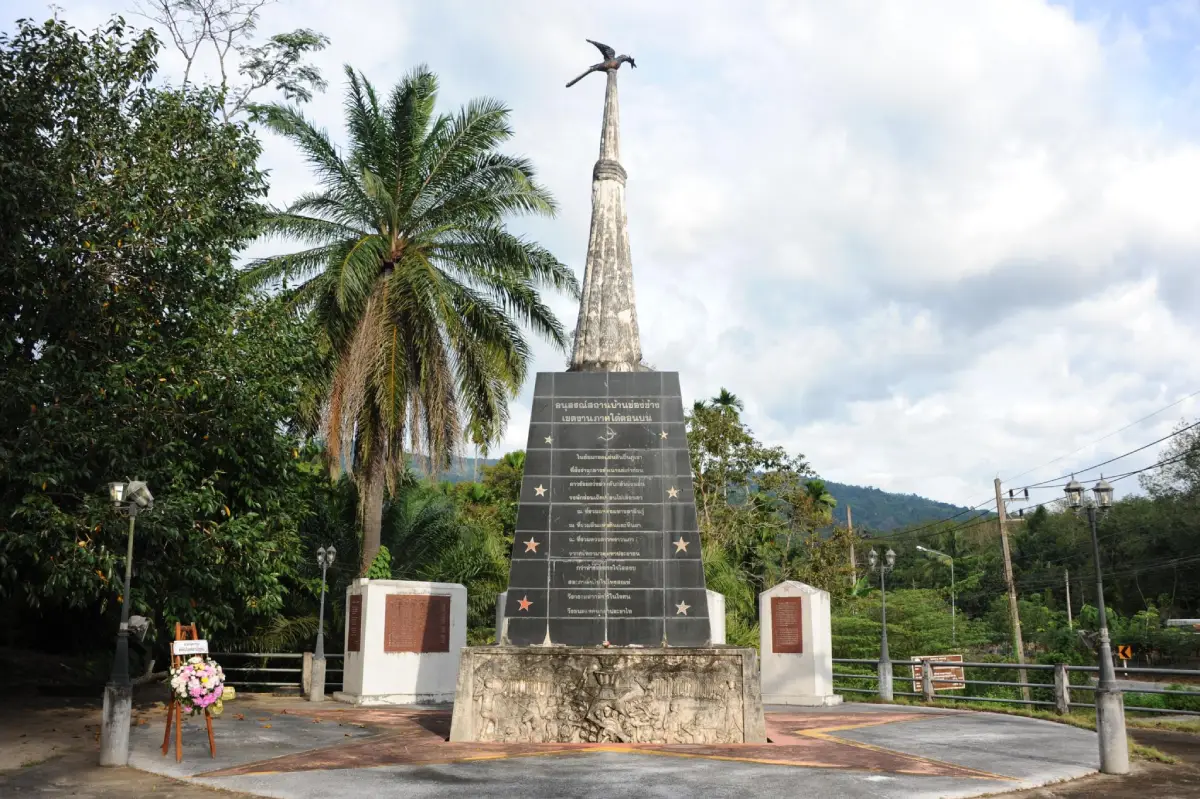
The first version of Ban Chong Chang Memorial was built in 1996 in front of Ban Chong Chang School. It was a concrete base about 1.50 meters high, topped with a hand holding a constitutional tray and a five-pointed red star. A large remembrance ceremony was held after its construction. The current form of the memorial was completed in 1999 after a major redesign and reconstruction. This later version added more symbolic depth, giving the memorial the appearance and meaning it carries today.
The present memorial is marked by a tall vertical structure rich in symbolism. At the top is a red-whiskered bulbul, locally associated with the forest, holding a red star and facing toward Khao Chong Chang. The bird is interpreted as a symbolic reference to students and urban intellectuals who joined the struggle after the political violence of the 1970s. The tall pillar has also been interpreted as a bundle of rubber trees tied together, representing unity among southern farmer-comrades, many of whom came from rubber-growing communities. Through these elements, the memorial connects political memory, local occupations, forest geography, and symbolic art.
The names of those who died during the struggle in the upper southern region are inscribed on several sides of the memorial. These names make the site deeply personal. The memorial is not only about an abstract event; it is about real people whose lives ended in the mountains and forests around this region. The front side contains the memorial name and a commemorative poem, while the base features sculpted reliefs representing respect for the fallen and key activities associated with the movement, including production work, mass work, and military work. Some reliefs also depict historical episodes linked to the upper southern region.
Another important feature is the Kiao Kiao Dao Historical Wall, added in 2012. The rear side contains compartments for the ashes of former comrades. This makes the site more than a monument. It functions as a place of remembrance, ritual, mourning, and return. Families, former comrades, and visitors can come here not only to learn history but also to pay respect to people whose stories remain connected with the community.
The annual remembrance ceremony keeps the memorial alive. A major ceremony after the completion of the current memorial was held on 3–4 April 1999, and remembrance activities have continued in April. Cultural records identify 16 April as an annual remembrance date. These gatherings bring together former comrades, families of the deceased, local residents, and people interested in history. Activities such as merit-making, wreath-laying, ceremonial marching, conversation, and storytelling transform the memorial from a static structure into a living place of shared memory.
For cultural travelers, Ban Chong Chang Memorial can be explored as part of a half-day or full-day route. Visitors can begin with the main memorial, read the inscriptions, observe the sculpted reliefs, and understand the symbolic meanings of the bird, red star, constitutional tray, rubber-tree pillar, and historical wall. From there, they can continue to nearby community landmarks such as the twin elephant gate, the tank replica, local learning areas, viewpoints, cafés, and camping sites. This route helps travelers see how history, geography, memory, and local tourism are connected.
The twin elephant gate and related elephant symbols also help explain the name Ban Chong Chang. The area was once associated with forest and elephant routes, and the name refers to a passage or landscape linked with elephants. This older natural meaning later became layered with political and historical significance. For visitors, the gateway is therefore more than a photo stop. It represents the combination of natural memory and social memory that gives the village its unique identity.
Today, Ban Chong Chang has developed into a historical and nature-based community tourism destination. The village and surrounding area now offer cafés, local restaurants, camping grounds, viewpoints, waterfalls, and community shops. Morning visits are suitable for misty mountain views around viewpoints or Chong Chang Camping. Late morning and afternoon are ideal for visiting the memorial, learning area, cafés, and nearby natural attractions such as Muang Tuad Waterfall. Travelers who enjoy slow travel will find this area especially rewarding because the experience depends on observing, reading, listening, and understanding rather than rushing through a checklist.
What makes Ban Chong Chang Memorial especially valuable is that it was shaped by people with direct memories of the events. Former comrades organized a memorial committee to manage the site, and a community-based tourism group was later developed to help interpret the village’s history for visitors. When stories are told by people connected with the events, the memorial becomes more powerful than a simple historical signboard. It is particularly suitable for students, researchers, cultural travelers, history enthusiasts, and anyone seeking a more complex understanding of southern Thailand.
Visitors should approach the memorial with respect. The site is associated with loss, remembrance, and human remains. Photography is acceptable as part of travel and learning, but visitors should avoid inappropriate poses on the memorial base or near name inscriptions. Those who want to understand the place properly should allow enough time to read the inscriptions, observe the reliefs, and listen to local explanations when available. A slow and respectful visit will reveal much more than a quick stop.
Getting There is easiest by private car or rental car. Travelers can drive to Ban Na San District and continue to Phru Phi Subdistrict and Ban Chong Chang. The local road network connects with Highway 4009, the Na San–Ban Song route, and Highway 4229, the Chong Chang–Mueang Tuad route. Travelers arriving by train can get off at Phru Phi Railway Station, which is about 6.5 km from the memorial, and continue by local transport. Those planning to visit viewpoints or camping areas on the hills should use a suitable vehicle or arrange local transport, especially on steep sections.
The best time to visit is in the morning or late afternoon, when the weather is more comfortable for walking around the memorial. Travelers who want to combine the memorial with mountain viewpoints or Chong Chang Camping should start early to catch the morning mist. Those interested in the remembrance ceremony should plan a trip in April, when the village’s commemorative atmosphere is most meaningful. With careful planning, visitors can experience both historical learning and nature-based community travel in the same trip.
Ban Chong Chang Memorial should be understood as a learning site rather than only a tourist stop. It brings together modern political history, local memory, symbolic architecture, annual ritual, community identity, and the natural landscape of Ban Na San. A visit here shows how one small village can function as a memorial, an outdoor classroom, a community archive, and a gateway to local tourism at the same time.
| Name | Ban Chong Chang Memorial |
| Location | Ban Chong Chang, Phru Phi Subdistrict, Ban Na San District, Surat Thani Province |
| Address | Near Ban Chong Chang School, Village No. 7, Ban Chong Chang, Phru Phi Subdistrict, Ban Na San District, Surat Thani 84120, Thailand |
| Coordinates | 8.699922, 99.390022 |
| Highlights | Historical memorial of upper southern Thailand, Camp 508 history, annual remembrance ceremony, historical wall, twin elephant gate, tank replica, learning center, and surrounding community attractions |
| History | Connected with political conflict after 1965, the end of armed struggle in 1982, a reunion of former comrades in 1992, merit-making for recovered remains in 1994, the first memorial in 1996, and the current memorial completed in 1999 |
| Name Origin | The name Ban Chong Chang is linked with forest geography and former elephant routes before the area later became known as a historical village and Camp 508 site |
| Distinctive Features | Tall symbolic memorial, red-whiskered bulbul holding a red star, inscribed names of the deceased, sculpted reliefs, Kiao Kiao Dao Historical Wall, and ash compartments |
| Travel Information | Best reached by private car or rental car via Ban Na San District and Phru Phi Subdistrict. Travelers by train can get off at Phru Phi Railway Station and continue about 6.5 km by local transport. |
| Current Status | Open as a historical learning site and community tourism attraction in Ban Chong Chang, Phru Phi Subdistrict |
| Open Days | Daily |
| Opening Hours | 08.00 – 17.00 |
| Facilities | Memorial plaza, historical inscriptions, learning areas, community tourism services, cafés, restaurants, camping grounds, and viewpoints in the Ban Chong Chang area |
| Main Areas / Zones | Main memorial, name inscriptions, sculpted reliefs, Kiao Kiao Dao Historical Wall, ash compartments, twin elephant gate, tank replica, and community learning center |
| Caretaker / Related Organizations | Ban Chong Chang Memorial Committee, Ban Chong Chang Historical Village Community-Based Tourism Group, and Phru Phi Subdistrict Municipality |
| Local Authority Contact | Phru Phi Subdistrict Municipality, Tel. 077-380584 |
| Official Website / Official Page | Phru Phi Subdistrict Municipality website and official government tourism databases |
| Nearby Tourist Attractions | 1. Twin Elephant Gate, Ban Chong Chang, about 1 km 2. San Mai Ngam Viewpoint, Ban Chong Chang, about 4 km 3. Chong Chang Camping, about 7 km 4. Phru Phi Railway Station, about 7 km 5. Muang Tuad Waterfall, about 20 km |
| Nearby Restaurants | 1. Chor Chang Cafe’, about 3 km 2. Long Leng Bar, about 4 km 3. Suan Chan Forest, about 6 km 4. Ban Nai Suan Homestay / Krua Dahla, about 14 km, Tel. 077-341447 5. Baan Suan Khun Longkong, about 25 km, Tel. 077-345052, 099-4716475 |
| Nearby Accommodations | 1. Nok Noi Chong Chang Homestay, about 2 km 2. Chong Chang Camping, about 7 km, Tel. 084-2878742 3. Phetkanlaya Resort, about 13 km, Tel. 080-9456936 4. Ban Nai Suan Homestay / Krua Dahla, about 14 km, Tel. 077-341447 5. Baan Suan Khun Longkong, about 25 km, Tel. 077-345052, 099-4716475 |
Frequently Asked Questions (FAQ)
Q: Where is Ban Chong Chang Memorial located?
A: Ban Chong Chang Memorial is located in Ban Chong Chang, Phru Phi Subdistrict, Ban Na San District, Surat Thani Province, near Ban Chong Chang School.
Q: Why is Ban Chong Chang Memorial important?
A: It commemorates people who died during political conflict in upper southern Thailand and serves as a historical learning site connected with Camp 508.
Q: What are the opening days and hours?
A: The memorial is open daily from 08.00 to 17.00.
Q: What are the main highlights of the memorial?
A: Highlights include the main memorial, name inscriptions, sculpted reliefs, the Kiao Kiao Dao Historical Wall, ash compartments, the twin elephant gate, and the tank replica.
Q: When is the Ban Chong Chang remembrance ceremony held?
A: The remembrance tradition takes place in April. Cultural records identify 16 April as an annual remembrance date, while the major ceremony after the completion of the current memorial was held on 3–4 April 1999.
Q: Can travelers visit by train?
A: Yes. Travelers can get off at Phru Phi Railway Station and continue by local transport for about 6.5 km to Ban Chong Chang Memorial.
Q: How much time should visitors spend here?
A: A half-day visit is recommended to see the memorial, read the inscriptions, observe the reliefs, and continue to nearby community landmarks, cafés, viewpoints, or camping areas.
Q: Are there accommodations near Ban Chong Chang Memorial?
A: Yes. Nearby options include Nok Noi Chong Chang Homestay, Chong Chang Camping, Phetkanlaya Resort, Ban Nai Suan Homestay / Krua Dahla, and Baan Suan Khun Longkong.
 Category: ●Art, Culture and Heritage
 Group: ●Landmarks and Memorials
Last Update : 2 MonthAgo
 Last Update : 2 MonthAgo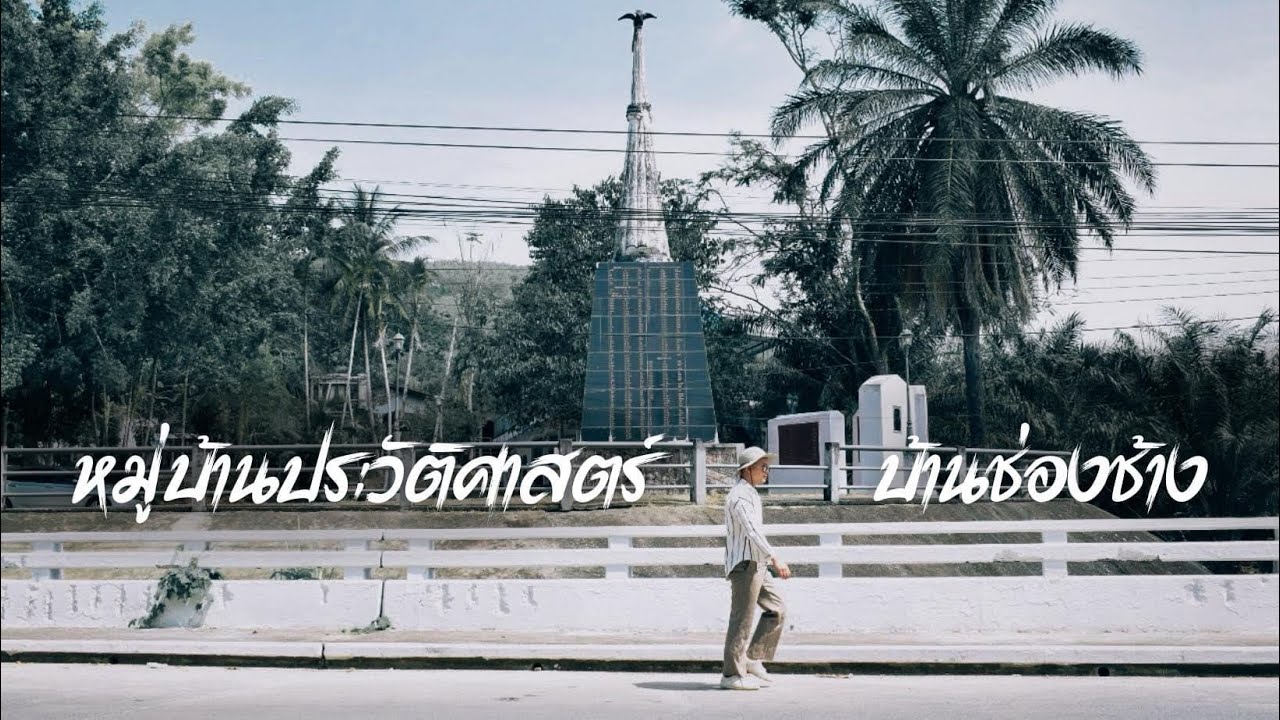
 Click to Access the Navigation Map GPS
Ban Chong Chang Memorial Map
Recommend
 Landmarks and Memorials(1)
 Art, Craft Centres, Tradition(8)
 Museums(5)
 Educational Places
 Educational Gardens, Farm(1)
 Places of Worship
 Temple(32)
 Other Sacred Sites(8)
 Research and Development
 Royal Project(1)
 Suburban Living
 Village, Community(6)
 Local Market(1)
 Nature and Wildlife
 National Parks and Marine Reserves(8)
 Mountain (Doi)(2)
 Dam, Reservoir, Lake(8)
 Waterfalls(34)
 Hot Springs(7)
 Caves(18)
 River, Canal(11)
 Bays and Beaches(30)
 Islands(16)
 Other natural attractions(10)
 Entertainment and Agricultural
 Animal camps and shows(6)
 Farms, Parks and Ecotourism(7)
 Outdoor and Adventure Activities(2)
 Shopping
 Shopping and Night Market(1)
 Travel Articles, Recipes
 Travel Review, Food Review(1)
 Southern Food Menu, Southern Food Recipes(1)


