
lovethailand home >South Travel Attractions >Surat Thani Travel Attractions >Koh Samui >Ang Thong > Koh Samsao
TL;DR: Koh Samsao is located at Mu Ko Ang Thong National Park, Ang Thong Subdistrict, Koh Samui District, Surat Thani Province, open Normally open for the visitor season from 16 December to 31 October each year, hours 08.00 – 17.00.
Koh Samsao
Open Days: Normally open for the visitor season from 16 December to 31 October each year
Opening Hours: 08.00 – 17.00
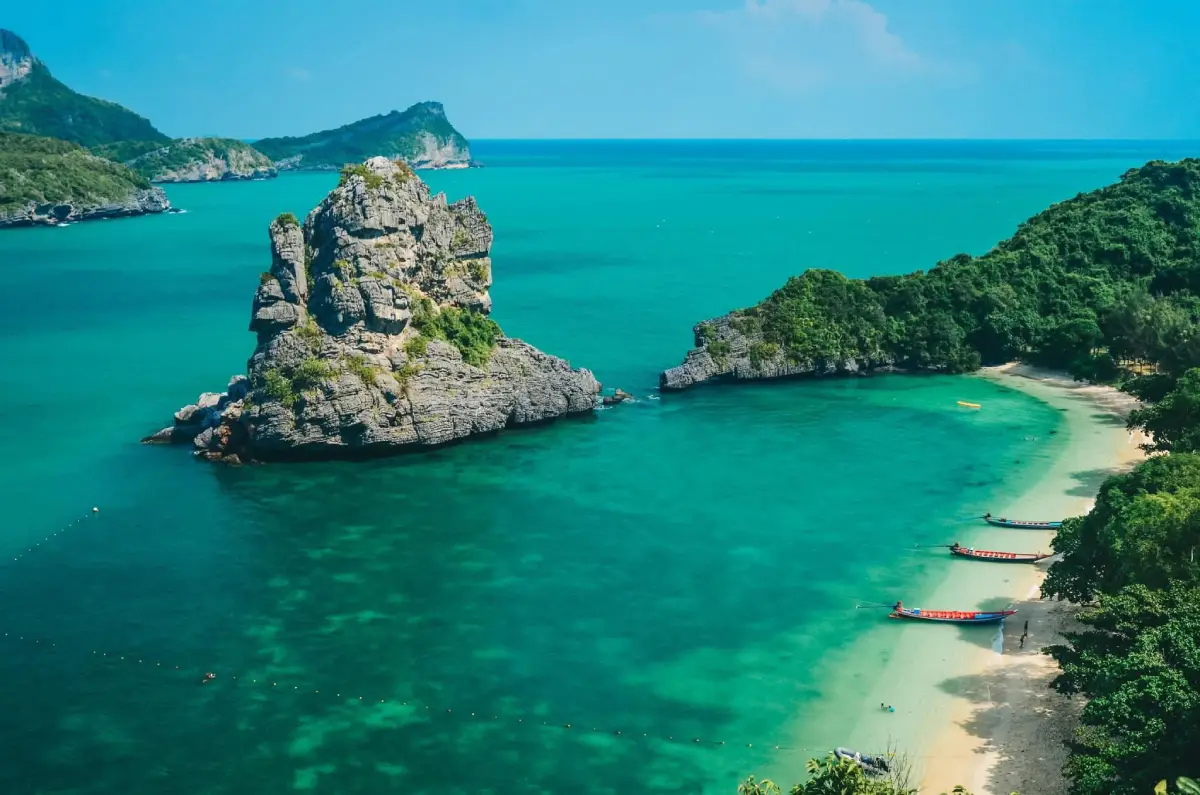
Ko Sam Sao in Surat Thani Province is one of the notable islands within Mu Ko Ang Thong National Park. Located opposite Ko Mae Ko, the island is known for its coral reef, white beach, natural stone bridge curving out into the sea, and scenic view toward the limestone formations of Ko Mae Ko. It is a quiet marine-nature destination for travelers who want to experience the Ang Thong archipelago beyond the better-known stops of Ko Wua Ta Lap and the Emerald Lagoon. Ko Sam Sao is suitable for scenic boat trips, snorkeling in suitable sea conditions, kayaking, photography, beach relaxation and simple camping under national park rules.
The appeal of Ko Sam Sao lies in its natural setting rather than commercial facilities. It is a small island in a protected marine national park, surrounded by limestone islands, shallow coral areas, beaches and blue-green water. The island gives visitors a more intimate view of the Ang Thong landscape: a white beach, a coral reef, a stone bridge shaped by natural erosion, and a direct visual relationship with Ko Mae Ko across the water. This makes Ko Sam Sao an important stop for travelers who want a fuller understanding of Mu Ko Ang Thong National Park.
Ko Sam Sao sits opposite Ko Mae Ko, the island famous for Thale Nai, or the Emerald Lagoon. From Ko Sam Sao, visitors can see limestone scenery rising above the sea, including a natural formation on Ko Mae Ko that resembles a stone castle standing on the hilltop. The view combines steep limestone, tropical vegetation, clear water and the distinctive form of the natural stone bridge. This visual composition makes Ko Sam Sao a worthwhile photography stop during an Ang Thong island route.
The natural stone bridge is the signature feature of Ko Sam Sao. It curves outward toward the sea and reflects the long process of coastal erosion, limestone weathering, wave action and wind exposure. Such formations are part of the karst seascape that gives Ang Thong its dramatic character. Visitors should admire the stone bridge from a safe position and avoid climbing on risky sections, because limestone along the shore can be sharp, slippery or fragile.
The coral reef around Ko Sam Sao is another key feature. Tourism data describes the reef as relatively complete and aligned north–south for about 1 kilometer, with beautiful sea anemones in the area. Snorkeling can be rewarding when the water is clear and the sea is calm, but it must be done carefully. Visitors should wear a life jacket when advised, avoid standing on coral, avoid touching marine animals, avoid feeding fish and avoid collecting shells or coral. Responsible snorkeling is essential in a marine national park because shallow reef systems can be damaged easily.
Ko Sam Sao also has a clean white beach that softens the island’s rocky limestone scenery. The beach is suitable for resting, photography, walking and starting coastal activities when sea conditions allow. It is not a commercial beach with shops and full services. Visitors should prepare personal items in advance and keep the beach clean. The value of the beach lies in its simplicity and its protected natural setting.
Most visits to Ko Sam Sao are part of a broader Mu Ko Ang Thong National Park trip. Day-tour routes often depart from Koh Samui or Koh Phangan and combine several highlights, such as Ko Wua Ta Lap, Ko Mae Ko, Thale Nai and Ko Sam Sao. This type of route allows travelers to experience the national park’s main viewpoints, emerald lagoon, coral areas, beaches and limestone formations in one journey. Visitors should confirm with the tour operator whether Ko Sam Sao is included in the itinerary, because not every Ang Thong program stops at the island.
Ko Sam Sao offers a different experience from Ko Wua Ta Lap. Ko Wua Ta Lap is the main headquarters island of the national park, with the visitor center, bungalows, camping area, welfare restaurant, Bua Bok Cave and Pha Chan Charat viewpoint. Ko Sam Sao is quieter and more nature-focused, with a coral reef, white beach, natural stone bridge and views toward Ko Mae Ko. Travelers who visit both islands gain a more complete picture of Ang Thong’s marine landscape.
Ko Mae Ko is an important nearby island because it contains Thale Nai, the emerald saltwater lake enclosed by limestone cliffs. When visitors stand on or near Ko Sam Sao and look toward Ko Mae Ko, they can better understand how the islands of Ang Thong relate to one another. Ko Sam Sao is therefore not just a snorkeling stop; it is a viewpoint for appreciating the spatial relationship between reef, beach, stone arch, limestone cliffs and the famous island opposite.
Activities suitable for Ko Sam Sao include scenic boat travel, photographing the stone bridge, swimming only in safe conditions, snorkeling when visibility is good, kayaking along operator-approved routes and camping under national park regulations. Travelers who camp must bring their own food and fresh water because there are no permanent shops or restaurants on the island. Camping is suitable only for visitors who are prepared for basic conditions and understand national park rules.
Overnight camping on Ko Sam Sao offers a very different experience from a short daytime visit. After day-tour boats leave the area, the island becomes quieter and more natural. Visitors may hear waves, wind and coastal wildlife rather than boat engines and group activity. This peaceful atmosphere comes with responsibility. Campers must bring enough fresh water, manage food carefully, avoid unnecessary waste, use only permitted camping areas, avoid fires in prohibited places and take all rubbish out of the island.
Snorkeling at Ko Sam Sao should always depend on the real sea conditions of the day. Even though the island is known for its coral reef, visibility and safety depend on wind, current, rain and seasonal conditions. If the water is cloudy or the sea is rough, visitors should choose boat sightseeing or beach time instead. Those who are not strong swimmers should stay near the boat or guide and wear a life jacket at all times.
The normal visitor season for Ko Sam Sao follows the seasonal opening of Mu Ko Ang Thong National Park. The park is normally open from 16 December to 31 October and closed from 1 November to 15 December for natural recovery and marine safety. Even during the open season, boat trips may be changed or cancelled due to rough sea, heavy rain, strong wind or official safety announcements. Travelers should check with the national park and tour operator before departure.
Getting There is usually by tour boat from Koh Samui or Koh Phangan. From Koh Samui, boats commonly depart from Nathon Pier or other piers arranged by tour companies. A large boat trip to the national park usually takes about 2 hours, while a speedboat takes less time depending on the route and sea conditions. Most tour programs include hotel transfer, lunch, life jacket, snorkeling equipment, guide service and selected island stops. Visitors should confirm whether Ko Sam Sao is included before booking.
Travel costs should be understood as a combination of national park entrance fee and boat or tour costs. The national park fee for Thai visitors is 40 baht for adults and 20 baht for children. For foreign visitors in the Ang Thong special-fee areas, the rate is 300 baht for adults and 150 baht for children. These fees do not include boat fare, tour packages, equipment rental, kayaking, food, camping gear or personal expenses. Tour prices vary by operator and by what is included.
Useful items for a Ko Sam Sao visit include swimwear, a towel, quick-dry clothing, a hat, sunglasses, marine-friendly sun protection, a dry bag, water shoes or secure sandals, a camera, drinking water, personal medication and a small bag for taking rubbish back out of the park. Campers should also bring food, fresh water, a flashlight, spare battery, mosquito protection and suitable camping equipment. Good preparation makes the trip safer and reduces impact on the island.
Ko Sam Sao suits travelers who appreciate nature, conservation rules and simple island scenery. Families can visit if activities are chosen according to age and ability. Couples can enjoy the beach, stone bridge and views. Photographers will find strong compositions of limestone, sea and natural arch. Snorkelers can enjoy the reef when conditions are suitable. Travelers expecting restaurants, large toilets or full island services should use the main facilities at Ko Wua Ta Lap or stay on Koh Samui instead.
Responsible travel is especially important on Ko Sam Sao. Visitors should not collect coral, shells, rocks or living things. They should not leave food waste, make loud noise, step on coral or disturb beach vegetation. Visitors should use only the areas and routes permitted by the national park or tour operator. These small actions help protect the island’s reef, beach and limestone formations for future travelers.
Overall, Ko Sam Sao makes a trip to Mu Ko Ang Thong National Park more complete. Ko Wua Ta Lap represents the park’s visitor center and main viewpoint, Ko Mae Ko represents the Emerald Lagoon, and Ko Sam Sao represents the reef, white beach and natural stone bridge. Travelers who prepare well, choose the right season and follow park rules will find Ko Sam Sao to be more than a brief tour stop. It is one of the islands that reveals the quieter, more delicate beauty of Ang Thong’s protected marine landscape.
| Name | Ko Sam Sao |
| Location | Mu Ko Ang Thong National Park, Ang Thong Subdistrict, Koh Samui District, Surat Thani Province |
| Address | Ang Thong Subdistrict, Koh Samui District, Surat Thani 84140, Thailand |
| Coordinates | 9.659835, 99.681336 |
| Highlights | A coral reef about 1 km long, white beach, natural stone bridge curving into the sea and views toward the limestone formations of Ko Mae Ko |
| History / Importance | An important island in Mu Ko Ang Thong National Park, a marine national park established on 12 November 1980 and made up of many limestone islands in the Gulf of Thailand |
| Distinctive Features | Small limestone island with a beach, coral reef, sea anemones, natural stone bridge and location opposite Ko Mae Ko |
| Main Areas / Zones | White beach, natural stone bridge, coral reef, snorkeling area, Ko Mae Ko viewing area and camping area under national park conditions |
| Travel Information | Travel by tour boat from Koh Samui or Koh Phangan into Mu Ko Ang Thong National Park. From Koh Samui, tours commonly use Nathon Pier or other operator-designated piers. Visitors should confirm whether Ko Sam Sao is included in the route |
| Current Status | Normally open during the Mu Ko Ang Thong National Park visitor season, except during annual closure and any temporary closure caused by weather or marine safety conditions |
| Open Days | Normally open for the visitor season from 16 December to 31 October each year |
| Opening Hours | 08.00 – 17.00 |
| Fees | Thai visitors: adult 40 baht, child 20 baht Foreign visitors: adult 300 baht, child 150 baht Fees exclude boat fare, tour packages, snorkeling equipment, kayaking, food and personal expenses |
| Facilities | Camping area under national park conditions. There are no permanent shops or restaurants on the island. Campers must bring their own food, fresh water and essential supplies |
| Caretaker / Related Authority | Mu Ko Ang Thong National Park, Department of National Parks, Wildlife and Plant Conservation |
| Main Contact Number | Mu Ko Ang Thong National Park: 077-286025, 077-286588, 077-280222 |
| Official Website / Official Page | Department of National Parks website, Tourism Authority of Thailand website and Thailand Tourism Directory |
| Nearby Tourist Attractions | Approximate distances from Ko Sam Sao or within typical national park tour routes 1. Ko Mae Ko / Thale Nai, about 1 km by boat 2. Ko Sam Sao Natural Stone Bridge, 0 km 3. Ko Wua Ta Lap, about 5 km by boat 4. Bua Bok Cave on Ko Wua Ta Lap, about 5 km by boat and walking 5. Pha Chan Charat Viewpoint on Ko Wua Ta Lap, about 5 km by boat and walking 6. Ko Tai Plao, about 6 km by boat 7. Ko Wua Kan Tang, about 7 km by boat |
| Nearby Restaurants | Approximate distances from Nathon Pier, Koh Samui, the main gateway used for Ang Thong trips 1. Krua Savoey Nathon, about 1 km, Tel. 077-420380, 081-3674585 2. Bang Por Seafood Takho, about 15 km, Tel. 085-5759999 3. Krua Samui Bophut, about 23 km, Tel. 077-901999, 077-421399 4. National Park Welfare Restaurant on Ko Wua Ta Lap, about 5 km by boat 5. I-Talay Beach Bar Taling Ngam, about 28 km from Nathon Pier, Tel. 081-7213683 |
| Nearby Accommodations | Approximate distances from Ko Sam Sao or Nathon Pier depending on travel context 1. Ko Sam Sao Camping Area, 0 km, Tel. 077-286025, 077-286588 2. National Park Bungalows on Ko Wua Ta Lap, about 5 km by boat, Tel. 077-286025, 077-286588 3. Ko Wua Ta Lap Camping Ground, about 5 km by boat, Tel. 077-286025, 077-286588 4. Four Seasons Resort Koh Samui, about 30 km from Nathon Pier, Tel. 077-243000 5. Mai Samui Beach Resort & Spa, about 29 km from Nathon Pier, Tel. 077-914600-4 6. TUI BLUE The Passage Samui, about 29 km from Nathon Pier, Tel. 077-950045 |
Frequently Asked Questions (FAQ)
Q: Where is Ko Sam Sao located?
A: Ko Sam Sao is located in Mu Ko Ang Thong National Park, Ang Thong Subdistrict, Koh Samui District, Surat Thani Province. It sits opposite Ko Mae Ko.
Q: What is Ko Sam Sao known for?
A: Ko Sam Sao is known for its coral reef, white beach, natural stone bridge curving into the sea and views toward the limestone formations of Ko Mae Ko.
Q: Can visitors snorkel at Ko Sam Sao?
A: Yes. Snorkeling is possible when sea conditions are suitable. Visitors should enter the water only where guides or park staff recommend and must avoid stepping on coral or disturbing marine life.
Q: Can visitors stay overnight on Ko Sam Sao?
A: Camping is possible under national park conditions. Campers must bring their own food, fresh water and essential supplies because there are no permanent shops or restaurants on the island.
Q: When is Ko Sam Sao open?
A: Ko Sam Sao follows the Mu Ko Ang Thong National Park visitor season, normally from 16 December to 31 October each year. The park normally closes from 1 November to 15 December.
Q: How do visitors get to Ko Sam Sao?
A: Visitors usually travel by tour boat from Koh Samui or Koh Phangan into Mu Ko Ang Thong National Park. Before booking, they should confirm whether the tour route includes Ko Sam Sao.
Q: What is the entrance fee for Ko Sam Sao?
A: The national park fee is 40 baht for Thai adults and 20 baht for Thai children. Foreign visitors pay 300 baht for adults and 150 baht for children. Boat fare and tour services are separate.
Q: What should visitors bring to Ko Sam Sao?
A: Visitors should bring swimwear, a towel, water shoes, a hat, sun protection, a dry bag, drinking water, personal medicine and a bag for taking rubbish back out. Campers must also bring food and fresh water.
 Category: ●Nature and Wildlife
 Group: ●Islands
Last Update : 4 WeekAgo
 Last Update : 4 WeekAgo
 Click to Access the Navigation Map GPS
Koh Samsao Map
Recommend

 Art, Culture and Heritage
 Landmarks and Memorials(1)
 Art, Craft Centres, Tradition(8)
 Museums(5)
 Educational Places
 Educational Gardens, Farm(1)
 Places of Worship
 Temple(32)
 Other Sacred Sites(8)
 Research and Development
 Royal Project(1)
 Suburban Living
 Village, Community(6)
 Local Market(1)
 National Parks and Marine Reserves(8)
 Mountain (Doi)(2)
 Dam, Reservoir, Lake(8)
 Waterfalls(34)
 Hot Springs(7)
 Caves(18)
 River, Canal(11)
 Bays and Beaches(30)
Islands(16)
Bays and Beaches(30)
Islands(16)
 Other natural attractions(10)
 Entertainment and Agricultural
 Animal camps and shows(6)
 Farms, Parks and Ecotourism(7)
 Outdoor and Adventure Activities(2)
 Shopping
 Shopping and Night Market(1)
 Travel Articles, Recipes
 Southern Food Menu, Southern Food Recipes(1)


