
lovethailand home >South Travel Attractions >Surat Thani Travel Attractions >Chai Ya >Wiang > Chaiya National Museum
TL;DR: Chaiya National Museum is located at Eastern side of Wat Phra Borommathat Chaiya Ratchaworawihan, Wiang Subdistrict, Chaiya District, Surat Thani Province, open Wednesday – Sunday, hours 09.00 – 16.00.
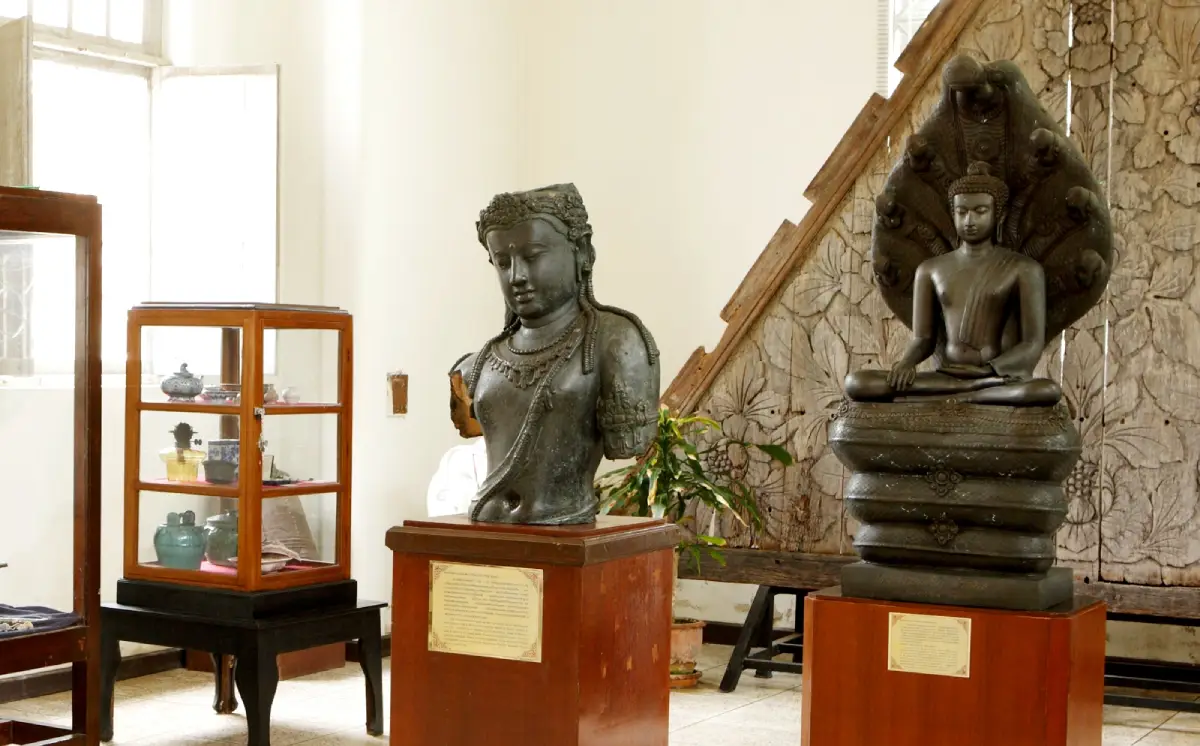
Chaiya National Museum
Open Days: Wednesday – Sunday
Opening Hours: 09.00 – 16.00
Chaiya National Museum in Surat Thani is located on Rak Nakharit Road in Wiang Subdistrict, Chaiya District, on the eastern side of Wat Phra Borommathat Chaiya Ratchaworawihan. It is a national museum specializing in art history and archaeology, and it is one of the most important places for understanding the ancient town of Chaiya, the cultural landscape around Ban Don Bay, and the development of Southern Thailand’s early religious and artistic traditions. The museum is not merely a storage space for old objects; it is a carefully organized learning site that explains how Chaiya became an important center of settlement, religion, maritime contact, and Srivijaya-related art.
The location of the museum is one of its strongest advantages. It stands directly beside the historical and religious landscape of Wat Phra Borommathat Chaiya, one of Surat Thani’s most revered sacred sites. A visit to the museum is therefore best combined with the temple. The temple presents the living dimension of faith and architecture, while the museum preserves and explains archaeological evidence found in old Chaiya and nearby areas. Together, they give visitors a fuller understanding of why Chaiya is so central to the history of Surat Thani.
The museum began with the collection of artifacts discovered in Chaiya District by Phra Khru Sophon Chetasikaram, also known as Iam, a former ecclesiastical chief of Chaiya District. He recognized the value of the antiquities and art objects found in the area and helped gather them for preservation. In 1935, the Fine Arts Department accepted the collection as a branch of the National Museum. This early development shows how local religious leadership and national heritage management worked together to protect Chaiya’s cultural remains.
In the early period, many artifacts were kept in the ordination hall, main assembly hall, and galleries of Wat Phra Borommathat Chaiya. As the collection became more important, a dedicated museum building was constructed to house and display the objects properly. The first museum building was developed during the period when Phra Khru Inthapanyachan, widely known as Buddhadasa Bhikkhu, served as abbot of Wat Phra Borommathat Chaiya and played a role in the museum’s development. The building was constructed in an applied Thai architectural style to provide a proper home for the ancient objects of Chaiya.
In 1956, the Fine Arts Department allocated a budget to construct a second museum building to the north of the first one. This larger building increased the display space and supported the transfer of many art objects from the temple areas into a more appropriate museum environment. Later, in 1978, the first building was expanded and renovated, and the displays were reorganized to meet international standards. The improved museum was formally opened on 4 September 1982, marking an important step in the development of Chaiya National Museum as a modern national museum.
The museum consists of 2 main exhibition buildings. The first building displays stone and bronze sculptures discovered in ancient Chaiya, including images of Vishnu, Bodhisattva Avalokitesvara, and important Buddhist images. This gallery helps visitors understand that ancient Chaiya was a place of multiple religious traditions, including Buddhism and Brahmanism. The artworks also reflect long-distance cultural connections that reached Chaiya through maritime routes and regional exchange networks.
The Vishnu images associated with Chaiya are important evidence of Brahmanical belief and cultural contact with the Indian world. Their presence alongside Buddhist objects shows that ancient Chaiya was not a closed or single-tradition settlement. Instead, it was a coastal cultural center where different religious ideas, rituals, and artistic forms could coexist and influence one another.
Bodhisattva Avalokitesvara is one of the most significant figures connected with the museum and with Chaiya’s Srivijaya heritage. This bodhisattva is associated with Mahayana Buddhism and symbolizes compassion, wisdom, and the spiritual commitment to assist all beings. The discovery of Avalokitesvara images in Chaiya confirms that the area was part of a wider Mahayana Buddhist network in the southern peninsula and Southeast Asia.
The second exhibition building presents archaeological and art-historical evidence from the prehistoric period through the historical periods, including Dvaravati, Srivijaya, Lopburi, Sukhothai, Ayutthaya, and Rattanakosin. This broader presentation is important because it shows that Chaiya was not significant only during the Srivijaya period. It had a long sequence of human settlement, cultural change, religious development, and artistic production.
One of the museum’s main values is that it helps visitors see artifacts as evidence of real human life rather than isolated old objects. Ceramics, ornaments, daily-use objects, Buddha images, votive tablets, silver, gold objects, and carved wood all reflect activities of people in the past. They point to trade, ritual, devotion, household life, craftsmanship, and the social values of different periods.
The museum also displays local fine craftsmanship, including carved wood and Phum Riang textiles. This helps expand the meaning of Chaiya beyond archaeology alone. Chaiya is not only an ancient town; it is also a place of living local wisdom. Phum Riang textiles, in particular, show the refinement of local craftsmanship and the ability of community heritage to continue into the present.
Artifacts from archaeological sites in Chaiya District, including Wat Kaeo, Wat Long, and Laem Pho, help explain the wider landscape of ancient Chaiya. Wat Kaeo and Wat Long are linked with religious and architectural remains, while Laem Pho is associated with coastal activity and maritime exchange around Ban Don Bay. By bringing evidence from these sites together, the museum shows that Chaiya was not limited to a single temple compound. It was a network of ancient monuments, settlements, waterways, and coastal communities.
At the regional level, Chaiya is one of the most important places for understanding Srivijaya-related culture in Thailand. The art objects found here point to Mahayana Buddhism, Indian artistic influence, links with Java, and the importance of maritime routes in the spread of religion and art. For visitors interested in Srivijaya, Chaiya National Museum is one of the best starting points because it gathers key evidence into a clear and accessible museum setting.
For historical tourism, the museum offers a deeper view of Surat Thani beyond islands, beaches, and reservoirs. Surat Thani has a long cultural history shaped by ancient towns, archaeological sites, Buddhist monuments, coastal communities, and regional trade. Chaiya National Museum helps visitors read the province as a cultural and historical region, not only as a travel gateway to natural attractions.
Families can use the museum as an open classroom. Children and young visitors can see real objects such as Buddha images, religious sculptures, ceramics, ornaments, and local crafts instead of learning only from textbooks. Seeing actual artifacts makes ideas such as archaeology, ancient town, Srivijaya, Dvaravati, and cultural heritage easier to understand.
For visitors interested in Buddhism, the museum is especially meaningful when visited together with Wat Phra Borommathat Chaiya. The temple represents devotion, sacred architecture, and continuing religious practice, while the museum explains the historical and artistic evidence connected with Buddhism across different periods. Visiting both places allows travelers to experience faith and scholarship together.
For art lovers, the museum offers many opportunities to observe stylistic development. Visitors can compare Brahmanical icons, Avalokitesvara images, naga-protected Buddha images, Buddha images from different periods, ceramics, ornaments, carved wood, and local fine arts. Each period has its own visual language, including form, proportion, material, decoration, and religious meaning.
The museum also provides educational services to the public. It offers museum and archaeological-site guidance, media presentations, occasional lectures, printed learning materials, academic books, guidebooks, local products, and souvenirs. Visitors who want to study Chaiya in depth can use the museum as a serious starting point for learning about local archaeology, Srivijaya art, and the historical sites around Ban Don Bay.
A good way to explore the museum is to begin with an overview of Chaiya and the museum’s position beside Wat Phra Borommathat Chaiya. Then move through the first exhibition building to study stone and bronze sculptures from ancient Chaiya. After that, continue to the second building to follow the sequence from the prehistoric period to later historical periods. This route helps visitors see the museum as a connected story rather than a group of unrelated objects.
Visitors should allow around 1 to 2 hours for the museum. Those who want to read display labels carefully and combine the visit with Wat Phra Borommathat Chaiya should reserve at least half a day for the area. This makes the visit more relaxed and gives enough time to understand both the museum and the temple landscape.
Getting There from Surat Thani city is straightforward by car. Take Highway 41 toward Chaiya District for about 50 km, then turn toward the Chaiya town and Phum Riang route, connecting to Highway 4011 toward Wat Phra Borommathat Chaiya. The museum is located opposite the temple on the eastern side. Travelers arriving by train can get off at Chaiya Railway Station and continue by local transport to the museum.
Visitors should dress respectfully because the museum is located beside an important Buddhist temple and contains many religious art objects. Do not touch artifacts, do not use flash where photography is restricted, avoid loud noise, and supervise children carefully. Respectful behavior helps preserve the atmosphere of learning and protects the artifacts for future generations.
Nearby travel routes are rich and varied. The most important paired visit is Wat Phra Borommathat Chaiya, which stands beside the museum. Visitors can then continue to Suan Mokkhaphalaram, or Wat Than Nam Lai, to learn about Buddhadasa Bhikkhu. Those who want a wider view of Chaiya can also visit Wat Kaeo, Wat Long, Phum Riang, and Laem Pho. These places show Chaiya as a landscape of archaeology, religion, craft, community, and coastal history.
Local food adds another dimension to the trip. Chaiya is known for dishes and products such as Chaiya-style pad thai, Chaiya salted eggs, Southern Thai food, and seafood from the Phum Riang coast. Combining the museum with local food makes the visit more complete because travelers can experience both historical evidence and the living taste of the area.
Accommodation in Chaiya is mostly made up of small local resorts and guesthouses. This works well for visitors who want to stay close to the historical sites before continuing to Chumphon, Surat Thani city, Ratchaprapha Dam, or ferry routes to the islands. Those who prefer more hotel choices can stay in Surat Thani city and visit Chaiya as a day trip.
Chaiya National Museum is suitable for travelers interested in history, art, religion, archaeology, family learning, student trips, and deeper cultural travel. It answers key questions about why Chaiya is closely associated with Srivijaya, why Avalokitesvara is important to Southern Thai art history, and why Wat Phra Borommathat Chaiya and the museum should be visited together.
Overall, Chaiya National Museum is one of the most important historical and archaeological learning sites in Surat Thani. Its space is not overly large, but its content is deep and closely connected with the ancient town of Chaiya. Visitors can see stone and bronze sculptures, Vishnu images, Avalokitesvara images, evidence from Dvaravati, Srivijaya, Lopburi, Sukhothai, Ayutthaya, and Rattanakosin periods, local fine craftsmanship, and the broader story of Wat Phra Borommathat Chaiya. Anyone who wants to understand the cultural roots of Surat Thani and the upper South should visit this museum with enough time and attention.
| Name | Chaiya National Museum |
| Type | National museum specializing in art history and archaeology |
| Location | Eastern side of Wat Phra Borommathat Chaiya Ratchaworawihan, Wiang Subdistrict, Chaiya District, Surat Thani Province |
| Address | 155 Rak Nakharit Road, Chaiya District, Surat Thani, Thailand |
| Coordinates | 9.3847, 99.1851 |
| Highlights | Stone and bronze sculptures, Vishnu images, Bodhisattva Avalokitesvara, naga-protected Buddha images, Srivijaya evidence, and local fine crafts |
| History | Originated from artifacts collected in Chaiya District by Phra Khru Sophon Chetasikaram and accepted by the Fine Arts Department as a branch of the National Museum in 1935; the improved museum was formally opened on 4 September 1982 |
| Main Areas / Zones | Exhibition Building 1 displays stone and bronze sculptures from ancient Chaiya and rotating exhibitions Exhibition Building 2 presents evidence from the prehistoric period through Dvaravati, Srivijaya, Lopburi, Sukhothai, Ayutthaya, and Rattanakosin periods, together with local fine arts and important monastic objects |
| Travel Information | From Surat Thani city, take Highway 41 toward Chaiya for about 50 km, then connect to Highway 4011 toward Wat Phra Borommathat Chaiya. The museum is opposite the temple |
| Current Status | Open as a national museum under the Fine Arts Department, Ministry of Culture |
| Open Days | Wednesday – Sunday |
| Closed Days | Monday, Tuesday, and public holidays |
| Opening Hours | 09.00 – 16.00 |
| Admission Fee | Thai visitors 20 THB; foreign visitors 100 THB |
| Responsible Agency | Fine Arts Department, Ministry of Culture |
| Main Contact Number | 077 431 066 |
| nm_chaiya@finearts.go.th | |
| Facilities / Services | Educational services, museum and archaeological-site guidance, learning media, guidebooks, local products, and souvenirs |
| Nearby Tourist Attractions | 1. Wat Phra Borommathat Chaiya Ratchaworawihan, about 0 km, Tel. 077-431-090, 077-431-402, 086-591-0979 2. Suan Mokkhaphalaram, about 6 km 3. Wat Kaeo, Chaiya District, about 3 km 4. Wat Long, Chaiya District, about 4 km 5. Phum Riang And Laem Pho, about 12 km |
| Nearby Restaurants | 1. Cowboy Country Chaiya Suratthani, about 1 km, Tel. 077-431-228, 081-538-0512, 087-898-1717 2. Ban Phak Wan Cafe & Restaurant, about 3 km, Tel. 063-242-6595, 077-431-500 3. Sabiang Chaiya, about 3 km, Tel. 093-357-3653, 085-790-2056 4. Ruean Chaiya, about 4 km, Tel. 081-821-9022 5. Nam Pad Thai Chaiya Mae Boonserm, about 5 km, Tel. 089-592-8831 |
| Nearby Accommodations | 1. Chomjan Resort Chaiya, about 2 km, Tel. 091-592-8494 2. JP Place, about 3 km, Tel. 096-296-4246 3. Thammachat Resort, about 3 km, Tel. 081-797-7219 4. Phupha Resort Chaiya, about 6 km, Tel. 085-785-0671 5. Don Rak Resort Chaiya, about 8 km, Tel. 099-456-6326 |
Frequently Asked Questions (FAQ)
Q: Where is Chaiya National Museum located?
A: Chaiya National Museum is located at 155 Rak Nakharit Road, Chaiya District, Surat Thani, on the eastern side of Wat Phra Borommathat Chaiya Ratchaworawihan.
Q: When is Chaiya National Museum open?
A: The museum is open from Wednesday to Sunday, 09.00 to 16.00. It is closed on Monday, Tuesday, and public holidays.
Q: How much is the admission fee?
A: The admission fee is 20 THB for Thai visitors and 100 THB for foreign visitors.
Q: What can visitors see inside Chaiya National Museum?
A: Visitors can see 2 main exhibition buildings displaying stone and bronze sculptures, Vishnu images, Bodhisattva Avalokitesvara, naga-protected Buddha images, archaeological evidence from the prehistoric period through Dvaravati, Srivijaya, Lopburi, Sukhothai, Ayutthaya, and local fine crafts.
Q: Why is Chaiya National Museum important to Surat Thani history?
A: The museum preserves and explains key evidence from ancient Chaiya, including Srivijaya-related art, Mahayana Buddhist images, Brahmanical religious objects, archaeological sites around Ban Don Bay, and the cultural development of the upper South.
Q: What nearby place should be visited with the museum?
A: The most important nearby place is Wat Phra Borommathat Chaiya Ratchaworawihan, located beside the museum. Visitors can also continue to Suan Mokkhaphalaram, Wat Kaeo, Wat Long, Phum Riang, and Laem Pho.
Q: How do visitors travel from Surat Thani city to Chaiya National Museum?
A: Take Highway 41 toward Chaiya District for about 50 km, then connect to Highway 4011 toward Wat Phra Borommathat Chaiya. The museum is opposite the temple.
Tel : 077431066
 Tel : 077431066
Fax : 077431066
 Fax : 077431066
 Category: ●Art, Culture and Heritage
 Group: ●Museums
Last Update : 2 MonthAgo
 Last Update : 2 MonthAgo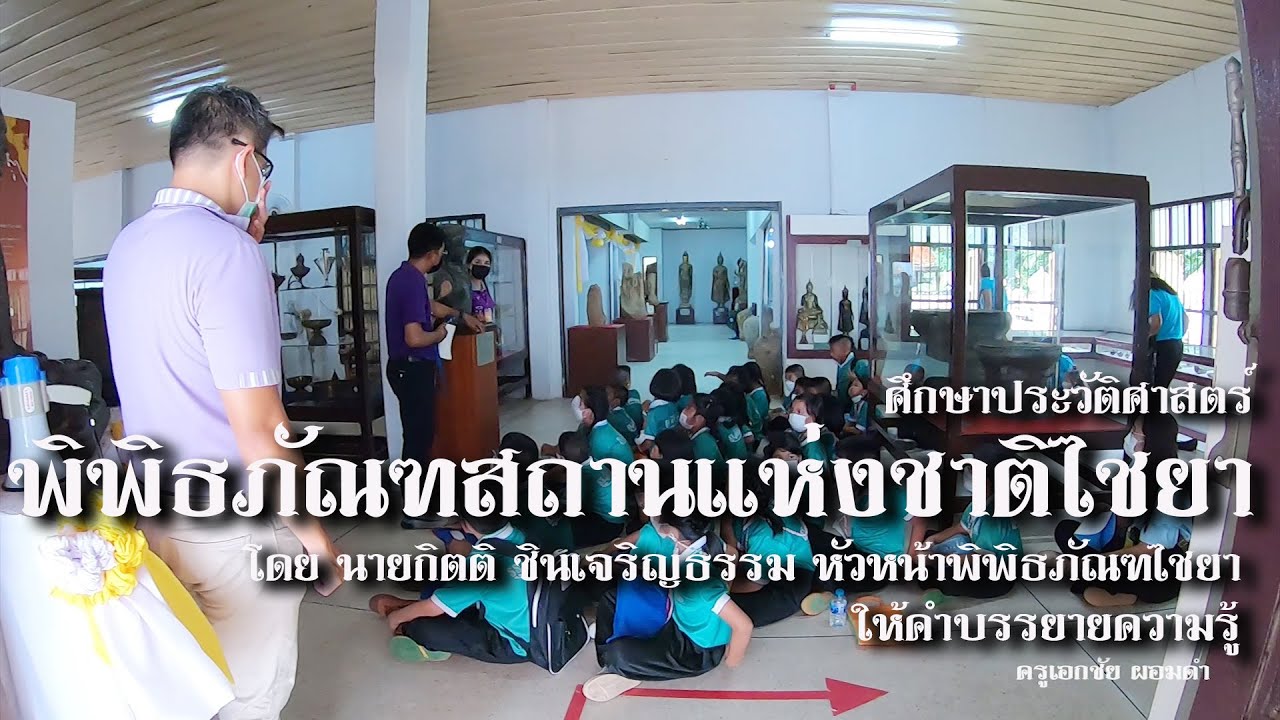
 Click to Access the Navigation Map GPS
Chaiya National Museum Map
Recommend

 Landmarks and Memorials(1)
 Art, Craft Centres, Tradition(8)
Museums(5)
Art, Craft Centres, Tradition(8)
Museums(5)
 Educational Places
 Educational Gardens, Farm(1)
 Places of Worship
 Temple(32)
 Other Sacred Sites(8)
 Research and Development
 Royal Project(1)
 Suburban Living
 Village, Community(6)
 Local Market(1)
 Nature and Wildlife
 National Parks and Marine Reserves(8)
 Mountain (Doi)(2)
 Dam, Reservoir, Lake(8)
 Waterfalls(34)
 Hot Springs(7)
 Caves(18)
 River, Canal(11)
 Bays and Beaches(30)
 Islands(16)
 Other natural attractions(10)
 Entertainment and Agricultural
 Animal camps and shows(6)
 Farms, Parks and Ecotourism(7)
 Outdoor and Adventure Activities(2)
 Shopping
 Shopping and Night Market(1)
 Travel Articles, Recipes
 Travel Review, Food Review(1)
 Southern Food Menu, Southern Food Recipes(1)


