
lovethailand home >South Travel Attractions >Songkhla Travel Attractions >Hat Yai >Hat Yai > Hatyai University
TL;DR: Hatyai University is located at 222 Polpichai–Ban Phru Road, Kho Hong Subdistrict, Hat Yai District, Songkhla 90110, Thailand.
Hatyai University
Open Days (Student One Stop Service Center, SOS): Daily, including public holidays
Opening Hours (Student One Stop Service Center, SOS): 08:15 – 16:30
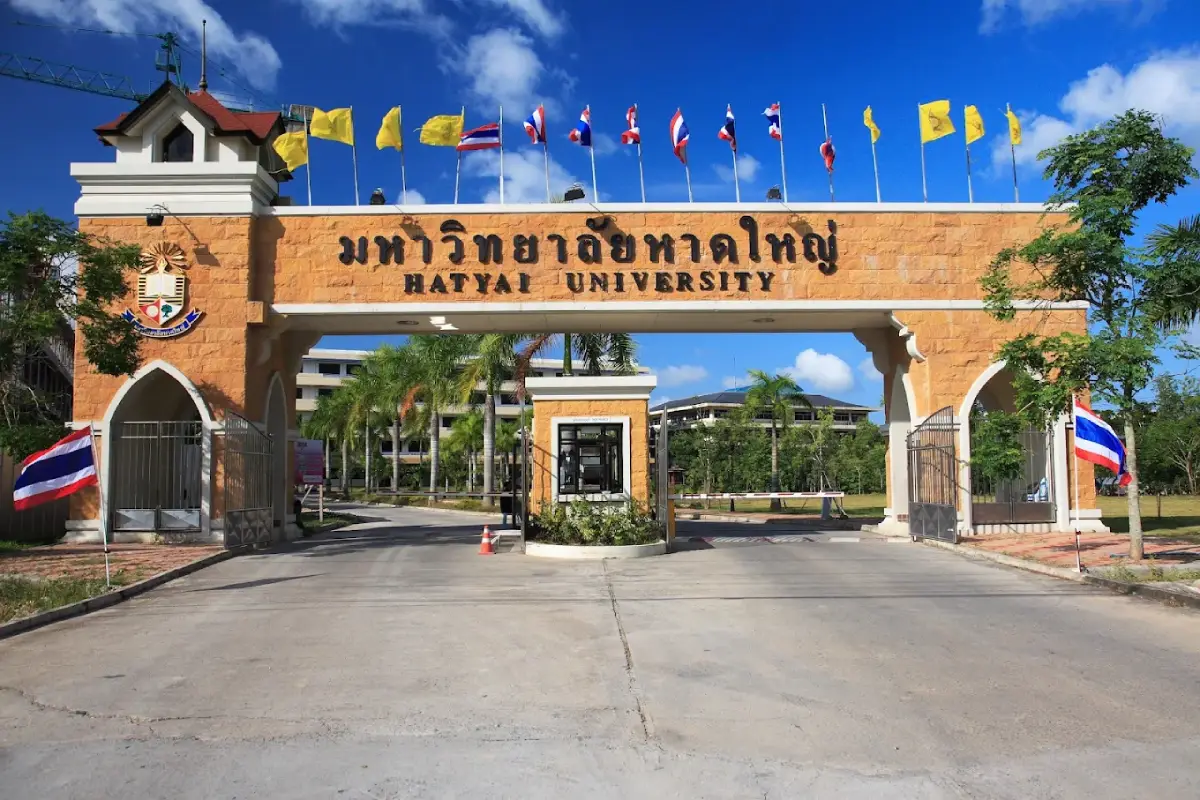
Hatyai University (HU) is a private university that plays an important role in the development of higher education in southern Thailand. The university is located at 222 Polpichai–Ban Phru Road, Kho Hong Subdistrict, Hat Yai District, Songkhla Province 90110. It originated as Mueang Hatyai College, which received permission to operate on April 9, 1997, through the initiative of its founder, Ajarn Praneet Didyasarin. The institution was officially upgraded to university status on May 30, 2003, becoming the first private university in southern Thailand. Today, Hatyai University offers bachelor's degrees, a graduate diploma, master's degrees, and doctoral degrees in business administration, law, education, liberal arts, science and technology, political science, communication arts, and international studies. Its educational philosophy, expressed in Thai as “Ru Khit, Ru Tham, Ru Samret,” emphasizes thoughtful reasoning, ethical conduct, and achievement through the constructive use of knowledge.
In 2026, Hatyai University marked 29 years since the establishment of its original institution in 1997 and 23 years since it received university status. Over this period, it has expanded its academic offerings, learning facilities, and professional development opportunities. Its location in Hat Yai, one of southern Thailand's most important commercial, transportation, service, and educational centers, has strongly influenced the university's academic direction. Business management, applied technology, entrepreneurship, and international cooperation are especially relevant to a city whose economy is connected with domestic trade, regional tourism, and neighboring countries in Southeast Asia.
The university is situated along Polpichai–Ban Phru Road in Kho Hong Subdistrict, an area connecting residential neighborhoods with Hat Yai's wider urban economy. The campus is accessible through the city's road network and contains academic buildings, faculty offices, student service facilities, professional laboratories, a sports and student affairs center, and an arts and cultural learning center. These facilities support conventional classroom instruction alongside practical activities through which students can develop professional skills and apply their knowledge to realistic working situations.
The university's origins are closely associated with Ajarn Praneet Didyasarin, an educator with extensive experience in the Hatyai Amnuaywit school network. Recognizing the need to expand educational opportunities beyond secondary school, she promoted the establishment of a private higher education institution that would allow more young people in southern Thailand to pursue bachelor's degrees closer to home. At the time, Hat Yai was growing as a commercial and service center, creating increasing demand for graduates trained in business administration, management, and professional fields. Establishing a local college was therefore an important response to the region's changing educational and economic needs.
The process of establishing the institution began in 1996, when experienced educators and qualified specialists were invited to help develop its organizational structure. On April 9, 1997, Thailand's Ministry of University Affairs authorized the establishment of the institution under the name Mueang Hatyai College. The official license was presented to Ajarn Praneet Didyasarin on May 8, 1997, by Montri Danpaiboon, who was serving as Minister of University Affairs at the time. The presentation took place at the ministry's meeting room and marked an important formal milestone in the development of the new private higher education institution.
In its first academic year, 1997, Mueang Hatyai College began teaching through the Faculty of Business Administration, its first faculty. The initial undergraduate fields were Management, Accountancy, and Marketing. These subjects were selected because of their close relationship with the demand for skilled personnel in Hat Yai's business and service sectors. The university's historical development records state that 182 students enrolled during the first academic year. This modest beginning laid the foundation for an academic community that would later expand in both student numbers and disciplinary diversity.
The decision to begin with business administration reflected a wider vision of human resource development for the regional economy. Southern Thailand's commercial links with Malaysia and Indonesia were particularly important in the context of the Indonesia–Malaysia–Thailand Growth Triangle, a framework for regional economic cooperation. Graduates who understood business operations, marketing, management, and organizational systems could contribute to both local enterprises and organizations involved in cross-border trade and services.
In the 1998 academic year, the college expanded its business programs to provide additional pathways for students with vocational qualifications, introducing continuing programs in Management, Accountancy, and Marketing. In 1999, Business Computing and Human Resource Management were added. These developments responded to the increasing use of information technology in business operations and the growing importance of systematic personnel management. The expansion of these programs strengthened the foundations of what later became the university's established Faculty of Business Administration.
In 2000, the college expanded into legal education with the introduction of a Bachelor of Laws program. During the same period, it held its first degree-conferral ceremony for graduates of the Faculty of Business Administration's continuing programs. The development of legal education broadened the institution's academic scope to include the study of rights, responsibilities, legislation, and the justice system. Legal knowledge was relevant not only to future lawyers but also to public administration, organizational governance, and the business community.
In 2001, the institution introduced Business English and began offering master's-level education in Educational Administration. These developments marked an important expansion beyond its original business focus into language studies and educational leadership. The college also established academic cooperation with Universiti Utara Malaysia and developed initiatives connected with computer programming education. Such activities strengthened its engagement with international academic networks and modern information technology.
In 2002, an undergraduate Information Technology program was introduced to meet the increasing demand for graduates capable of working with computer systems and digital information. The institution also took part in international academic conferences and collaborations, expanding its role as a place not only for teaching but also for exchanging research, educational practices, and ideas about technological change.
A major turning point occurred on May 30, 2003, when Mueang Hatyai College was authorized to change its institutional status and become Hatyai University. The formal presentation of the new license took place on June 4, 2003. The transition made Hatyai University the first private university in southern Thailand and provided a foundation for further academic development, institutional management, and degree-level education across a wider range of disciplines.
Following the transition, the university continued expanding its programs in political science and public administration. In the 2004 academic year, it introduced studies related to politics and government. This development created opportunities for students interested in political systems, local governance, public policy, and the administration of public organizations. These fields were particularly relevant to the needs of local communities and government agencies across southern Thailand.
During subsequent years, Hatyai University developed programs in communication arts, digital media, health-related sciences, teacher education, and international studies. As new technologies and economic conditions changed the skills required of graduates, the university adapted its curricula and invested in professional learning facilities. Academic development involved not only introducing new areas of study but also supporting practical training, improving teaching resources, and developing partnerships with businesses and other educational institutions.
Ajarn Praneet Didyasarin remains the central figure in the university's founding history. Her work in establishing the institution, developing educational networks, and expanding access to degree-level study helped create new opportunities for students in southern Thailand. Her continued association with the institution is also reflected in scholarship initiatives and university activities. In 2026, Hatyai University publicized her recognition as a distinguished contributor to Thailand's Ministry of Education, acknowledging her longstanding service to education.
Another important figure in the university's educational heritage is Ajarn Pradit Didyasarin, whose work was closely associated with the Hatyai Amnuaywit school network. The university commemorates his contribution to education and the values that helped shape the wider educational community. Remembering educators and institutional benefactors is part of the university's commitment to passing knowledge, professional ideals, and ethical values between generations of students and graduates.
In 2026, the university underwent a leadership transition when Dr. Thanaphat Sattayarak assumed the presidency on May 20, 2026. A formal handover ceremony and university management meeting took place on June 11, 2026, at Blue Ocean Hall in the Faculty of Business Administration building. The transition provided an opportunity for the university to establish its administrative direction for the 2026 academic year and to address evolving needs in education, professional skills, technology, and community development.
The name Hatyai University reflects its close geographical and historical relationship with Hat Yai District in Songkhla Province. Since its establishment, the institution has identified itself with a city that functions as a major commercial center in southern Thailand. The university's own explanation of its institutional symbols also connects the name Hat Yai with local stories about the Mahat tree, a large native tree associated with the area's past. The Mahat tree consequently holds an important place in the university's identity and emblem.
The university's philosophy, “Ru Khit, Ru Tham, Ru Samret,” can be understood as a commitment to thinking carefully, acting ethically, and achieving meaningful success. Students are encouraged to develop the ability to analyze situations, consider the consequences of their decisions, and apply knowledge responsibly. The philosophy places moral character and intellectual development alongside professional competence, reflecting the institution's belief that successful education should benefit both individuals and society.
Hatyai University's official emblem is designed in the shape of a shield and incorporates a ceremonial torch, a Mahat tree, a book, and the Wheel of Dhamma. Each element carries a symbolic meaning. The Wheel of Dhamma represents moral principles and ethical conduct, the torch signifies the light of wisdom, and the book symbolizes knowledge and intellectual development. The Mahat tree reflects local history and environmental awareness. Together, these elements express the institution's intention to educate graduates who combine knowledge, character, and social responsibility.
The university's official colors are blue, white, and red. Blue represents courage and strength, white symbolizes purity, morality, and ethical conduct, while red represents love, unity, and sacrifice. The university tree is the Mahat tree, a native species associated with local historical traditions about the name Hat Yai. Its selection also reflects the university's interest in environmental conservation and the responsible use of natural resources.
The campus contains several sculptures that communicate its educational ideals. A replica of The Thinker, inspired by the famous sculpture of French artist Auguste Rodin, is linked to the university's philosophy of thoughtful reasoning. The figure invites reflection on concentration, intellectual inquiry, and the importance of using the mind before acting. Another significant sculpture is Free World, located near the Phuket Building associated with Didyasarin International College. It represents international communication and the idea of a world in which people from different cultures can exchange knowledge across geographical boundaries.
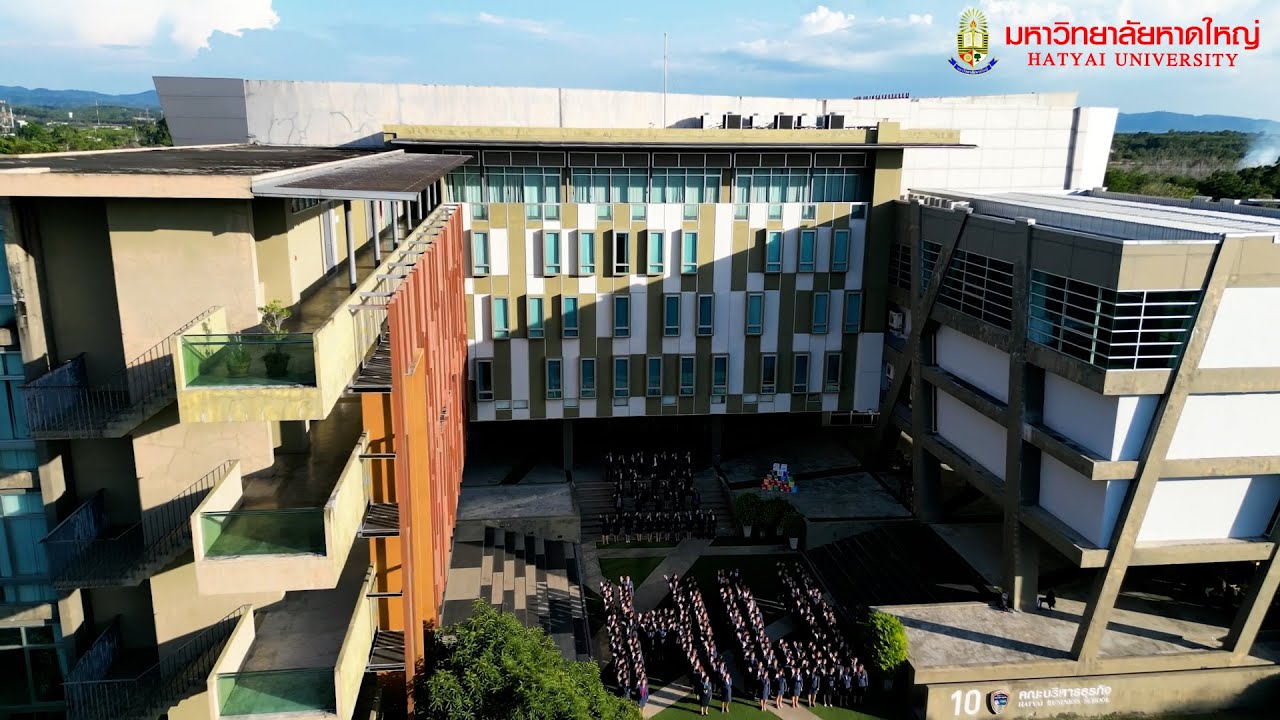
The Faculty of Business Administration building is an important academic landmark. Its development was associated with a Learning Revolution design concept, with architectural inspiration drawn from a sailing boat, a symbol connected with the faculty. The building houses teaching rooms, faculty offices, and meeting facilities, including Blue Ocean Hall, which is used for conferences, university activities, and academic events. The building reflects the university's emphasis on combining classroom education with professional engagement and collaborative learning.
U-Plaza is a major center for student-facing services. Its second floor accommodates the Student One Stop Service Center, commonly known as SOS, which handles registration, financial services, and student fund matters. The center's published service schedule is daily from 08:15 to 16:30, including public holidays. It can be contacted at +66 74 200 395 to +66 74 200 398. U-Plaza also accommodates additional educational and student services, including a bookstore and areas designed to support everyday campus activities.
The university's new student admission center is also located on the second floor of U-Plaza. The university advertises in-person admission services every day from 08:15 to 16:30, while its online admission system allows prospective students to apply electronically. Applicants can obtain information about academic programs, eligibility requirements, tuition fees, and scholarships through the relevant university offices. Choosing a degree program should involve considering personal interests, course content, learning arrangements, and professional opportunities after graduation.
The Sport Center and Student Union building plays an important role in campus life. It supports sports, exercise, meetings, and student activities, as well as facilities associated with fitness and physical recreation. Student organizations and university events provide opportunities for learners to develop teamwork, leadership, organizational skills, and a sense of responsibility beyond their academic studies. Such activities complement professional education by helping students develop broader personal and social capabilities.
The Arts and Cultural Learning Center is one of the campus's most distinctive educational attractions. It houses Hat Yai City Museum and the Hall of Fame, which present information about the development of Hat Yai, local history, photographs, cultural objects, and people connected with the city and the university. These exhibitions provide a valuable link between university education and the preservation of community heritage, allowing visitors to explore aspects of Hat Yai's social and cultural history.
Hat Yai City Museum and the Hall of Fame publish visiting hours from Tuesday to Sunday, 09:00 to 16:00, with closure on Mondays and public holidays. Admission is free. Visitors may contact the university's Arts and Culture Division at +66 74 200 377 for information. Groups should make arrangements in advance so that their visits can be coordinated with the responsible staff and the university's operating requirements.
Other learning facilities at Hatyai University include library and information services, computer laboratories, technology-related testing facilities, a mock courtroom for legal education, and specialist training spaces used by the different faculties. These resources allow students to work with professional equipment, develop technical skills, and practice procedures that resemble real working conditions. Access to classrooms, laboratories, and restricted educational facilities is subject to permission from the responsible academic unit.
Hatyai University's main academic units are the Faculty of Business Administration, Faculty of Law, Faculty of Education and Liberal Arts, Faculty of Science and Technology, Faculty of Political Science, Faculty of Communication Arts, and Didyasarin International College. Together, they offer academic and professional opportunities in business, education, law, technology, public administration, digital communication, creative disciplines, and international studies. Their diversity reflects the institution's evolution from a business-focused college into a multidisciplinary university.
The Faculty of Business Administration is the university's original faculty and remains an important part of its academic identity. Its published undergraduate programs include Management, Marketing, Accountancy, Digital Tourism and Service Entrepreneurship, and Innovation-Based Entrepreneurship and Design. These programs develop knowledge of business planning, financial and organizational management, service development, marketing, and innovation. They are particularly relevant to Hat Yai's commercial economy and southern Thailand's diverse business and service industries.
The development of entrepreneurship programs reflects the changing requirements of the digital economy. Contemporary businesses need to understand consumer behavior, online communication, service design, and innovation as well as conventional management practices. Entrepreneurship education is therefore relevant not only to large organizations but also to small businesses, tourism services, community enterprises, and individuals seeking to develop new products and commercial ideas.
The Faculty of Law offers a Bachelor of Laws program designed to develop knowledge of legal principles and the justice system. Legal education requires careful interpretation of legislation, structured reasoning, and the ability to analyze complex facts. The university provides professional learning facilities such as a mock courtroom to support practical legal exercises and communication skills. Graduates may apply their knowledge in legal practice, public administration, business organizations, and related professional fields, subject to applicable professional requirements.
The Faculty of Education and Liberal Arts combines teacher education with language and arts-related subjects. Its undergraduate fields include Thai Education, Social Studies Education, Elementary Education, General Science Education, Counseling and Guidance Psychology, Thai Language and Culture for Communication, and Western Music. These programs support the preparation of teachers and professionals who work with language, human development, communication, and culture. Teacher education in particular emphasizes the combination of academic knowledge, pedagogical skills, and professional ethics.
The Faculty of Science and Technology offers programs in Information Technology, Occupational Health and Safety, and Community Public Health. These fields are relevant to digital transformation, workplace wellbeing, risk prevention, and community healthcare. Information technology graduates can contribute to businesses and organizations that depend on digital systems, while professionals trained in occupational health and public health can support safer working environments and healthier communities.
The Faculty of Political Science provides studies in Politics and Government and Local Administration Management. These disciplines develop knowledge of political institutions, public administration, local government, policy, and civic participation. Given southern Thailand's social and cultural diversity, the study of political science can also help students understand community needs, public decision-making, and the relationships between government institutions and the people they serve.
The Faculty of Communication Arts focuses on communication and creative media. Its undergraduate programs include Communication and Digital Media and Digital Media Design. Students in these fields develop skills in storytelling, content production, visual design, digital communication, and the use of contemporary media technology. Such capabilities are relevant to public relations, digital marketing, creative production, and organizations seeking to communicate effectively across different media platforms.
Didyasarin International College represents the university's commitment to international education. Its published undergraduate offerings include an international Bachelor of Education program, International Business Management, and Tourism Industry. Studying in an international academic environment provides opportunities to improve language skills, intercultural communication, and understanding of business and tourism across national boundaries. These subjects are particularly relevant to Hat Yai's long-established connections with international visitors and the economies of neighboring Southeast Asian countries.
The university also provides postgraduate education. Its master's-level programs include Business Management and Development, Curriculum and Instruction, Educational Administration, and Innovation in Human and Organizational Development. Doctoral offerings include a Doctor of Philosophy in Business Administration and a Doctor of Education in Educational Administration. A Graduate Diploma in the Teaching Profession is also listed as part of the university's professional education offerings. These programs support working professionals and graduates seeking advanced qualifications and specialist knowledge.
Research and innovation form another important part of Hatyai University's mission. The university promotes the development of knowledge that can be applied in business, education, technology, and social development. Through academic conferences, collaborative projects, and knowledge-sharing activities, researchers and students can present findings, exchange ideas, and build relationships with academic and professional organizations in Thailand and abroad.
One example is the Hatyai National and International Conference, a forum for the presentation and discussion of research. On May 15, 2026, the university organized the 17th conference to provide opportunities for academics, researchers, lecturers, students, and other participants to share their work and professional experience. Such conferences contribute to research quality, scholarly communication, and collaboration between educational institutions and wider communities.
The university also engages with local organizations through academic services and professional development activities. Its work includes training, knowledge exchange, human resource development, and support for entrepreneurship. By connecting university expertise with the needs of businesses and community organizations, these activities can contribute to professional skills, new opportunities for local enterprises, and the practical application of research and innovation.
Environmental responsibility and sustainable development are also reflected in the university's activities. Hatyai University has communicated initiatives connected with carbon neutrality and the United Nations Sustainable Development Goals. Integrating environmental considerations into university administration, education, and campus activities encourages awareness of energy use, responsible resource management, and long-term sustainability.
University traditions are important in building relationships among students, lecturers, staff, and alumni. The Wai Khru ceremony, through which students express gratitude and respect to their teachers, remains a significant cultural activity. The university's 2026 academic calendar identified July 16, 2026, for the university Wai Khru project and associated scholarship activities. The Faculty of Education and Liberal Arts also held a postgraduate Wai Khru ceremony on July 26, 2026, at Blue Ocean Hall.
The Wai Khru tradition is more than a formal ceremony. It provides an opportunity for students to recognize the contribution of educators and reflect on the responsibilities associated with learning and professional development. The presentation of student scholarships during related university activities also reflects the importance of educational opportunity and institutional support for deserving students. Together, these practices connect cultural values with the university's educational mission.
Religious and cultural activities are another part of university life. The 2026 academic calendar included a Buddhist Lent candle-making project scheduled for July 24, 2026. Such activities are associated with Thai Buddhist traditions and cultural preservation. The university also supports arts and cultural activities through which students and staff can learn about the knowledge, customs, and ways of life of communities in southern Thailand.
On September 16, 2026, Hatyai University held an arts and cultural learning event connected with Thai Museum Day. The program included cultural discussions, herbal workshops, traditional games, and activities involving local products and community participation. Events of this kind allow the university to serve as a meeting place for students, researchers, local entrepreneurs, and members of the public interested in cultural heritage and creative learning.
Student development activities extend to clubs, performing arts, leadership, volunteer work, and community engagement. During the 2026 academic year, the university publicized an activity fair where student organizations could present their work and recruit members, as well as outdoor music activities. These experiences create opportunities for students to communicate, collaborate, organize projects, and develop social skills alongside their academic studies.
For visitors interested in educational tourism, Hatyai University offers a particularly valuable attraction through Hat Yai City Museum and the Hall of Fame at the Arts and Cultural Learning Center. The exhibits provide an opportunity to explore local history and cultural heritage within a university setting. Visitors may also follow official announcements about academic conferences, exhibitions, public lectures, and cultural events. Visits to teaching facilities, specialist laboratories, and restricted areas should be arranged in advance through the responsible university offices.
The university's location also provides access to a variety of attractions in Hat Yai District, including traditional markets, religious landmarks, natural areas, and modern shopping destinations. An educational visit can therefore be combined with opportunities to learn about Hat Yai's commercial character, culinary culture, and local communities. These experiences also provide a broader context for the university's programs in business administration, tourism, communication, and entrepreneurship.
Getting There: Hatyai University is located at 222 Polpichai–Ban Phru Road, Kho Hong Subdistrict, Hat Yai District, Songkhla Province. Visitors traveling from central Hat Yai can use Polpichai Road and connecting streets to reach Polpichai–Ban Phru Road. The university can be located through navigation services by searching for Hatyai University. Travelers arriving by train can continue by taxi or local transport from Hat Yai Railway Station, while those arriving by air can take a taxi or other local transport from Hat Yai International Airport. It is advisable to provide the driver with the name of the faculty or building being visited.
Visitors traveling from Songkhla city or other southern provinces can reach Hat Yai through the regional road network and continue to the university by local transport. Groups arranging educational visits may contact the university's new student admission office to inquire about transport assistance, subject to the institution's conditions and availability. General inquiries can be directed to +66 74 200 300 to +66 74 200 303 or through the official website, www.hu.ac.th.
Students and visitors who need registration, finance, or student fund services should contact the SOS center on the second floor of U-Plaza, which publishes daily opening hours from 08:15 to 16:30. Visitors planning to explore Hat Yai City Museum and the Hall of Fame should use the museum's separate visiting schedule of Tuesday to Sunday, 09:00 to 16:00, and arrange group visits in advance. Checking the correct operating hours for each facility helps ensure that a campus visit is planned around the intended activity.
Hatyai University remains an important private higher education institution in southern Thailand. From the establishment of Mueang Hatyai College in 1997 to its elevation to university status in 2003 and its subsequent expansion into professional, scientific, social, and postgraduate education, the institution has maintained a commitment to educational opportunity and regional development. Its activities in teaching, research, academic services, cultural preservation, and community engagement continue to reflect its philosophy of thoughtful reasoning, ethical action, and meaningful achievement.
| University Name | Hatyai University (HU) |
| Thai Name | มหาวิทยาลัยหาดใหญ่ |
| Institution Type | Private university |
| Address | 222 Polpichai–Ban Phru Road, Kho Hong Subdistrict, Hat Yai District, Songkhla 90110, Thailand |
| Establishment Planning Began | 1996 |
| Original Establishment Date | April 9, 1997 |
| Former Name | Mueang Hatyai College |
| University Status Date | May 30, 2003 |
| Institutional Age in 2026 | 29 years since establishment; 23 years as a university |
| Founder | Ajarn Praneet Didyasarin |
| University President | Dr. Thanaphat Sattayarak (as of October 2026) |
| University Philosophy | Ru Khit, Ru Tham, Ru Samret – thoughtful reasoning, ethical conduct, and meaningful achievement |
| University Colors | Blue, white, and red |
| University Tree | Mahat tree |
| University Emblem | Shield-shaped emblem incorporating a ceremonial torch, Mahat tree, book, and Wheel of Dhamma |
| Faculties and College | 1. Faculty of Business Administration
2. Faculty of Law 3. Faculty of Education and Liberal Arts 4. Faculty of Science and Technology 5. Faculty of Political Science 6. Faculty of Communication Arts 7. Didyasarin International College |
| Levels of Study | Bachelor's degrees, graduate diploma, master's degrees, and doctoral degrees |
| Academic Strengths | Business administration and entrepreneurship, teacher education, law, public administration, information technology, health-related sciences, digital media, and international education |
| Important Campus Facilities | U-Plaza, Student One Stop Service Center, Faculty of Business Administration Building, Blue Ocean Hall, Sport Center and Student Union, Arts and Cultural Learning Center, Hat Yai City Museum, Hall of Fame, Phuket Building, mock courtroom, and technology learning facilities |
| Campus Sculptures | Replica of The Thinker and Free World sculpture |
| Traditions and Academic Events | Wai Khru ceremonies, scholarship presentations, Buddhist Lent candle activities, student club events, arts and cultural programs, and the Hatyai National and International Conference |
| SOS Service Days | Daily, including public holidays |
| SOS Opening Hours | 08:15 – 16:30 |
| Hat Yai City Museum Open Days | Tuesday – Sunday, closed Mondays and public holidays |
| Museum Opening Hours | 09:00 – 16:00 |
| Museum Admission Fee | Free admission |
| Visitor Access | Public events and educational visits are subject to university announcements and regulations; teaching and laboratory areas require permission |
| Facilities | Registration and finance services, admission center, library, computer laboratories, sports center, fitness facilities, sports grounds, bookstore, dining areas, and student support services |
| Getting There | Via Polpichai–Ban Phru Road in Kho Hong, Hat Yai District, with connections from Hat Yai Railway Station and Hat Yai International Airport by local transport |
| Tourist Attractions in Hat Yai District | 1. Kim Yong Market
2. Mahattamangkalaram Temple (Wat Hat Yai Nai) 3. ASEAN Night Bazaar 4. Central Hatyai 5. Hat Yai Municipal Park |
| Restaurants in Hat Yai District | 1. Krua Pa-Yad, Tel. +66 87 394 2989
2. Seaspace Hatyai, Tel. +66 96 974 6146 3. Hararu Ramen Hat Yai, Tel. +66 92 846 2924 4. Yamaumi Ramen, Tel. +66 96 465 4496 5. The Second Hatyai, Tel. +66 98 665 0905 |
| Accommodation in Hat Yai District | 1. Hatyai Signature Hotel, Tel. +66 74 598 015
2. PS Thungsao Hotel, Tel. +66 74 363 398 3. We Resident Hotel, Tel. +66 81 540 8156 4. Z Sleep Hotel, Tel. +66 74 241 677 5. Alfahad Hotel, Tel. +66 74 273 799 |
| Main University Telephone | +66 74 200 300 to +66 74 200 303 |
| SOS Telephone | +66 74 200 395 to +66 74 200 398 |
| Hat Yai City Museum Telephone | +66 74 200 377 |
| University Email | sarabun@hu.ac.th |
| Official Website | https://www.hu.ac.th/ |
| Current Status | Operating as an active private university in 2026 |
Academic Programs at Hatyai University, Academic Year 2026
| Faculty / College | Programs and Fields of Study |
| Faculty of Business Administration | Bachelor's Degrees 1. Bachelor of Business Administration in Management 2. Bachelor of Business Administration in Marketing 3. Bachelor of Accountancy in Accounting 4. Bachelor of Business Administration in Digital Tourism and Service Entrepreneurship 5. Bachelor of Business Administration in Innovation-Based Entrepreneurship and Design Master's Degree 1. Master of Business Administration in Business Management and Development Doctoral Degree 1. Doctor of Philosophy in Business Administration |
| Faculty of Law | Bachelor's Degree 1. Bachelor of Laws |
| Faculty of Education and Liberal Arts | Bachelor's Degrees 1. Bachelor of Education in Thai 2. Bachelor of Education in Social Studies 3. Bachelor of Education in Elementary Education 4. Bachelor of Education in General Science 5. Bachelor of Education in Counseling and Guidance Psychology 6. Bachelor of Arts in Thai Language and Culture for Communication 7. Bachelor of Arts in Western Music Graduate Diploma 1. Graduate Diploma in the Teaching Profession Master's Degrees 1. Master of Education in Curriculum and Instruction 2. Master of Education in Educational Administration Doctoral Degree 1. Doctor of Education in Educational Administration |
| Faculty of Science and Technology | Bachelor's Degrees 1. Bachelor of Science in Information Technology 2. Bachelor of Science in Occupational Health and Safety 3. Bachelor of Public Health in Community Public Health |
| Faculty of Political Science | Bachelor's Degrees 1. Bachelor of Political Science in Politics and Government 2. Bachelor of Public Administration in Local Administration Management Master's Degree 1. Master of Management in Innovation in Human and Organizational Development |
| Faculty of Communication Arts | Bachelor's Degrees 1. Bachelor of Communication Arts in Communication and Digital Media 2. Bachelor of Fine and Applied Arts in Digital Media Design |
| Didyasarin International College | International Bachelor's Programs 1. Bachelor of Education (International Program) 2. Bachelor of Business Administration in International Business Management 3. Bachelor of Arts in Tourism Industry |
Frequently Asked Questions (FAQ)
Q: Where is Hatyai University located?
A: Hatyai University is located at 222 Polpichai–Ban Phru Road, Kho Hong Subdistrict, Hat Yai District, Songkhla Province 90110, Thailand.
Q: What are the opening days and hours of Hatyai University?
A: The Student One Stop Service Center (SOS), located on the second floor of U-Plaza, is open daily from 08:15 to 16:30, including public holidays. Other campus buildings and facilities may operate on different schedules.
Q: When was Hatyai University founded?
A: The institution received its original establishment license on April 9, 1997, as Mueang Hatyai College. It was officially upgraded to Hatyai University on May 30, 2003.
Q: Who founded Hatyai University?
A: Hatyai University was founded by Ajarn Praneet Didyasarin, an educator who played a leading role in establishing the institution and expanding higher education opportunities in southern Thailand.
Q: Is Hatyai University a public or private university?
A: It is a private university and became the first private university in southern Thailand when it received university status in 2003.
Q: What faculties and college does Hatyai University have?
A: Its main academic units are the Faculty of Business Administration, Faculty of Law, Faculty of Education and Liberal Arts, Faculty of Science and Technology, Faculty of Political Science, Faculty of Communication Arts, and Didyasarin International College.
Q: Does Hatyai University offer master's and doctoral programs?
A: Yes. The university offers master's programs in business, education, and management, as well as doctoral programs in Business Administration and Educational Administration.
Q: When is Hat Yai City Museum open, and is admission free?
A: The museum is open Tuesday to Sunday from 09:00 to 16:00, except on public holidays. Admission is free. Visitors can contact the museum at +66 74 200 377.
 Category: ●University
 Group: ●Private University
Last Update : 4 DayAgo
 Last Update : 4 DayAgo
 Click to Access the Navigation Map GPS
Hatyai University Map
Recommend

 Art, Culture and Heritage
 Historical Sites and Monuments(2)
 Landmarks and Memorials(7)
 Royal Palace(1)
 Art, Craft Centres, Tradition(4)
 Museums(4)
 Art Gallery(1)
 Educational Places
 Library(1)
 Educational Gardens, Farm(3)
 Public university(2)
 Autonomous Universities(1)
 Rajamangala University of Technology(1)
 Rajabhat University(1)
Private University(1)
 Places of Worship
 Temple(52)
 Mosque(2)
 Other Sacred Sites(11)
 Suburban Living
 Village, Community(3)
 Local Market(3)
 Floating Market(2)
 Nature and Wildlife
 National Parks and Marine Reserves(5)
 Mountain (Doi)(6)
 Dam, Reservoir, Lake(5)
 Waterfalls(12)
 Caves(4)
 River, Canal(2)
 Bays and Beaches(13)
 Islands(3)
 Other natural attractions(2)
 Entertainment and Agricultural
 Zoos and Aquariums(2)
 Animal camps and shows(1)
 Farms, Parks and Ecotourism(6)
 Waterpark(1)
 Travel Articles, Recipes
 Travel Review, Food Review(1)
 Southern Food Menu, Southern Food Recipes(2)


