
lovethailand home >South Travel Attractions >Phuket Travel Attractions >Muang Phuket >Ratsada > Ban Laem Tukkae
TL;DR: Ban Laem Tukkae is located at Moo 4, Ratsada Subdistrict, Mueang Phuket District, Phuket, open Daily As A Living Community Area, hours No Fixed Tourist Opening Hours; Daytime To Late Afternoon Is Recommended.
Ban Laem Tukkae
Open Days: Daily As A Living Community Area
Opening Hours: No Fixed Tourist Opening Hours; Daytime To Late Afternoon Is Recommended
Ban Laem Tukkae in Phuket is a large Chao Lay community located at the far end of Koh Sirey, Moo 4, Ratsada Subdistrict, Mueang Phuket District, Phuket. It is one of the most important coastal communities on the island for understanding the traditional sea-based way of life of Phuket’s Chao Lay, also locally known as Thai Mai. The village is closely tied to fishing, small boats, seafood gathering, local trade, and the annual ritual life of the sea people. For visitors who want to experience a quieter and more authentic side of Phuket, Ban Laem Tukkae offers a rare view of a living fishing community rather than a staged tourist attraction.
Koh Sirey lies east of Phuket Town and is connected to the main island by a short bridge. Although it is easy to reach from Phuket Town, the atmosphere is very different from the busy old town, beach resorts, and commercial districts. The landscape includes coastal roads, small bays, mangroves, fishing areas, hillside views, and local neighbourhoods. At the far end of the island, Ban Laem Tukkae preserves a community rhythm that still depends strongly on the sea.
The people of Ban Laem Tukkae are part of the Chao Lay cultural world, a sea-oriented ethnic community found along the Andaman coast. Their identity is connected with the sea through language, livelihood, ritual, music, dance, boat knowledge, and fishing skills. In the past, many Chao Lay groups moved between islands and coastal areas, living closely with the sea and using boats as their main means of travel and livelihood. Over time, communities such as Ban Laem Tukkae became more settled, but the relationship with the sea remains central to daily life.
Fishing is the heart of the village. Local people work with small boats, nets, traps, hooks, and other traditional or semi-traditional fishing tools. Their knowledge of tides, currents, seasons, winds, and marine resources has been passed down through families and experience. Visitors may see fishing gear near homes, nets being sorted, seafood being prepared, or villagers returning from the sea. These scenes are part of real community life and should be observed respectfully.
The village is best visited in the daytime or late afternoon. In the evening, the community becomes livelier as seafood is brought back, sorted, and sold. Local products may include shellfish, mussels, fish, crabs, or other seasonal catches. This is one of the best times to see the connection between the village and the sea. Visitors who buy seafood or local products should do so politely and fairly, remembering that this is the livelihood of local families.
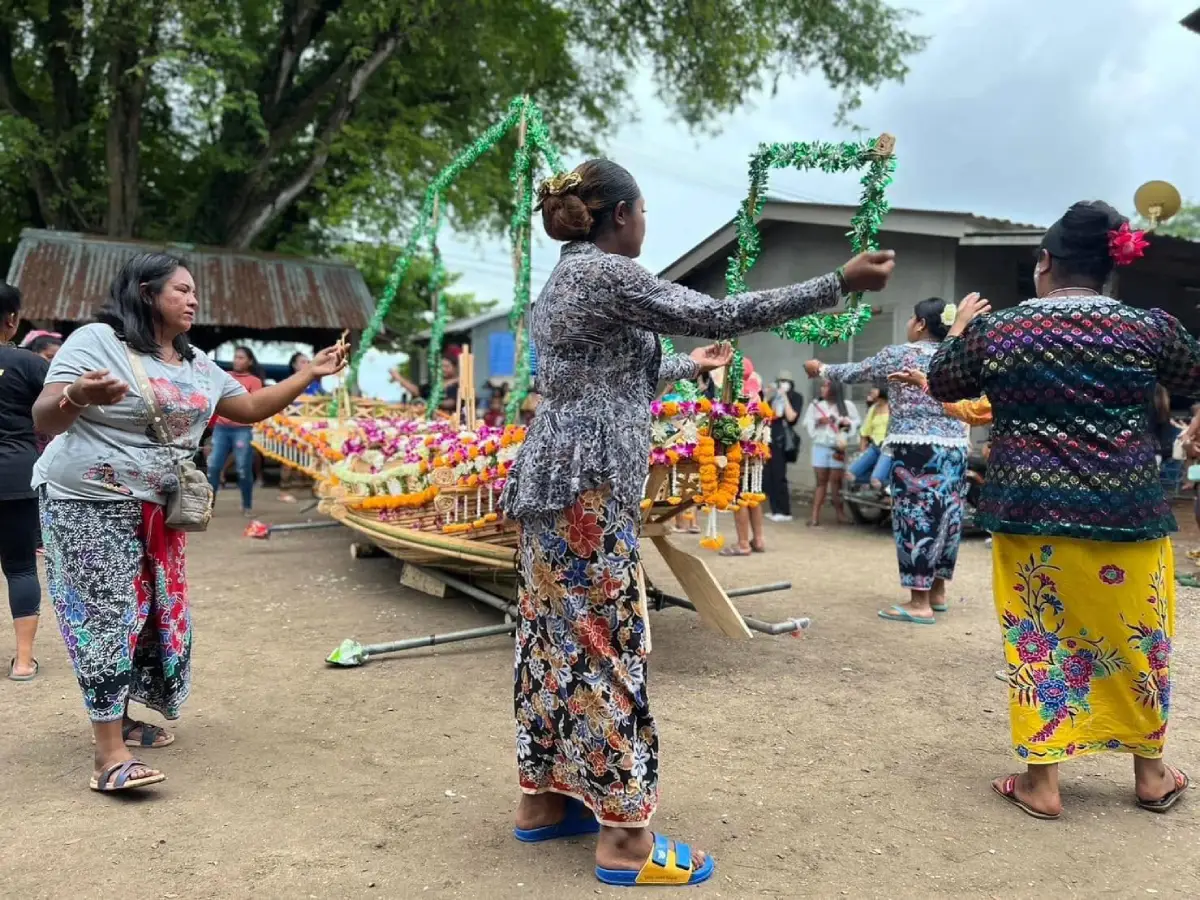
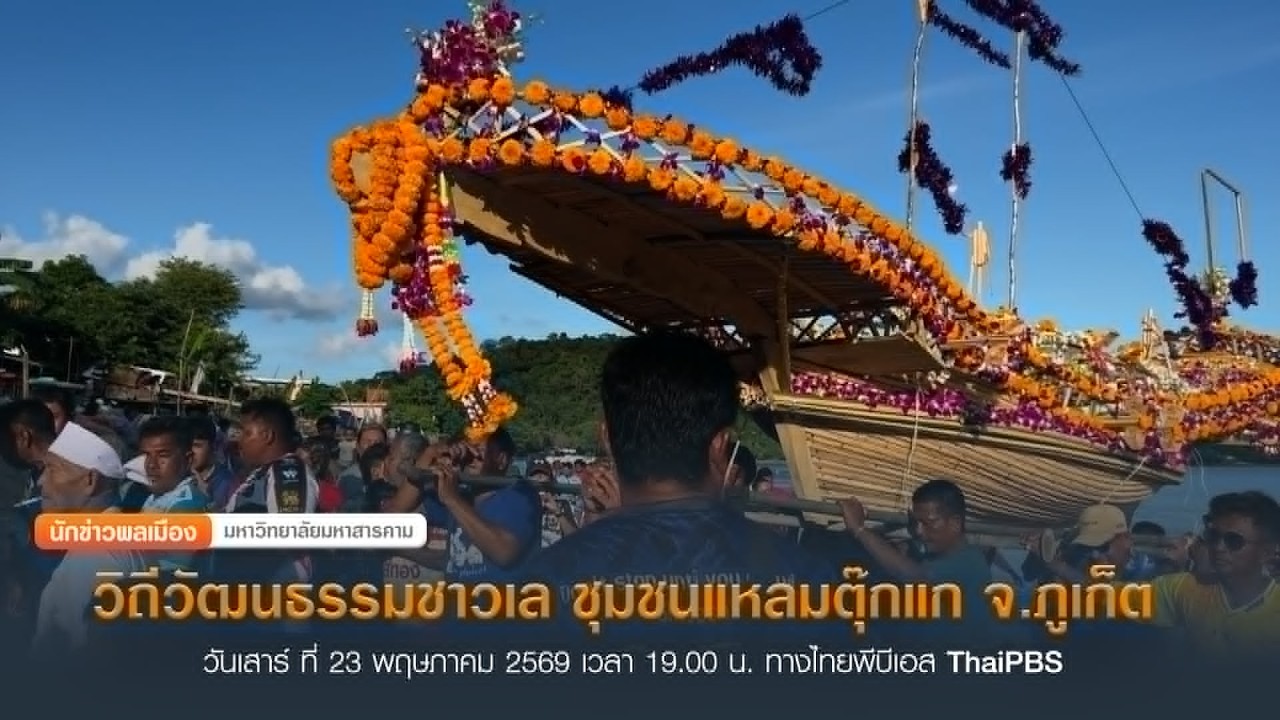
The most important cultural tradition associated with Ban Laem Tukkae is the Chao Lay Boat Floating Ceremony. This ritual is held twice a year, during the sixth and eleventh lunar months. For the Chao Lay group on Koh Sirey, the ceremony is held around the waxing 14th day. The ritual is a form of spiritual cleansing and misfortune removal. A ceremonial boat is made, symbolic items are placed inside, and the boat is floated out to sea to carry away sorrow, illness, bad luck, and harmful forces from the community.
The ceremony includes the making of a boat from traditional materials, the symbolic cutting of hair and nails, the use of wooden human figures, and the placing of these items into the ritual boat. The boat is then taken to the sea. Rong Ngeng dance is performed around the boat, creating both a sacred and communal atmosphere. Another important element is Kayu Hapat, sacred wooden objects used to prevent misfortune from returning to the village. These rituals show how the Chao Lay worldview links the sea, community safety, spiritual balance, and collective renewal.
Visitors who come during the Boat Floating Ceremony should understand that this is not simply a performance. It is a sacred community ritual. Photography should be done with restraint, and visitors should not touch the ritual boat, ceremonial objects, or offerings without permission. Standing in the way of ritual participants or treating the ceremony as entertainment would be inappropriate. A respectful visitor observes quietly, follows local guidance, and allows the community to conduct the ceremony without interruption.
Ban Laem Tukkae also reflects contemporary issues faced by coastal ethnic communities in Phuket. The area around Koh Sirey includes fishing ports, cold storage facilities, seafood-related work, migrant labour communities, resorts, restaurants, and modern development. These changes affect traditional livelihoods, land security, and the ability of local people to maintain cultural practices. A visit to the village should therefore be approached with sensitivity. The village is not an open-air museum; it is a real home for local families.
Respectful behaviour is essential. Visitors should not enter private homes or working areas without permission. Close-up photographs of people, especially children and elderly residents, should not be taken without asking. Noise should be kept low, rubbish should not be left behind, and seafood or local products should be purchased in a fair manner. The best way to experience the village is to walk slowly, observe public areas, support local vendors, and treat the community with dignity.
Getting There from Phuket Town is straightforward. Follow Srisuthat Road toward Koh Sirey, cross the short bridge to the island, and continue along the local road toward the far end of Koh Sirey where Ban Laem Tukkae is located. Travel time from Phuket Town is usually around 15 to 25 minutes depending on traffic and starting point. A private car, rental car, motorbike, local taxi, or hired vehicle is the most convenient way to visit.
The village can be combined with other places on Koh Sirey. Visitors can first stop at Wat Koh Sirey for the hilltop temple atmosphere and sea views, then continue to the monkey area near the Koh Sirey bridge, and finally visit Ban Laem Tukkae in the late afternoon. After the visit, nearby restaurants or hotels on Koh Sirey can be included before returning to Phuket Town.
Ban Laem Tukkae is not a tourist attraction with a ticket booth, entrance gate, or fixed public opening hours. It is a living community. For this reason, daytime and late afternoon visits are most appropriate, while late-night visits without a local purpose should be avoided. Visitors should keep the visit brief and respectful, especially if community members are working, resting, or preparing for ceremonies.
For cultural travelers, Ban Laem Tukkae is one of the most meaningful places on Koh Sirey. It shows how Phuket’s identity has been shaped not only by beaches, Sino-Portuguese buildings, and tourism, but also by sea people, fishing communities, ritual knowledge, and coastal livelihoods. The village helps visitors understand that Phuket’s cultural landscape is wider and deeper than its resort image.
In summary, Ban Laem Tukkae is a living Chao Lay village at the end of Koh Sirey, known for its fishing lifestyle, seafood trade, and Boat Floating Ceremony held twice a year. It is a valuable place for learning about Phuket’s sea people and coastal heritage. Visitors should come with respect, support the community fairly, and treat the village as a home rather than a spectacle. A thoughtful visit here offers one of the clearest glimpses into the living cultural roots of Phuket’s sea communities.
| Name | Ban Laem Tukkae / Laem Tukkae Chao Lay Village / Koh Sirey Sea People Community |
| Location | Moo 4, Ratsada Subdistrict, Mueang Phuket District, Phuket |
| Address / Area | Far End Of Koh Sirey, Ratsada Subdistrict, Mueang Phuket District, Phuket 83000, Thailand |
| Community Coordinates | 7.869313786789269, 98.43546753267579 |
| Highlights | Large Chao Lay fishing community on Koh Sirey, known for traditional seafood livelihoods and the twice-yearly Chao Lay Boat Floating Ceremony |
| History / Significance | A long-established Chao Lay or Thai Mai coastal community with roots in sea-based travel, fishing, and Andaman coastal culture before permanent settlement on Koh Sirey |
| Community Features | Fishing homes, small boats, seafood sorting areas, fishing gear, local seafood sales, and a community lifestyle closely connected with the sea |
| Travel Information | From Phuket Town, follow Srisuthat Road to Koh Sirey, cross the bridge, and continue toward the far end of the island. Travel time is usually around 15–25 minutes from Phuket Town. |
| Current Status | A living residential fishing community where visitors may observe local life respectfully without disturbing residents |
| Open Days | Daily As A Community Area |
| Recommended Visiting Time | Daytime To Late Afternoon; late afternoon is best for observing fishing activity and seafood sales |
| Facilities | Local road access, village shops, coastal areas, and nearby restaurants on Koh Sirey |
| Main Areas / Zones | Chao Lay residential area, shoreline area, small fishing boat area, seafood sorting area, local seafood sales area, and seasonal Boat Floating Ceremony area |
| Main Tradition | Chao Lay Boat Floating Ceremony, held twice a year during the sixth and eleventh lunar months; the Koh Sirey group holds the ceremony around the waxing 14th day |
| Local Administration | Ratsada Subdistrict Municipality, Tel. 076-525779-85 |
| Visitor Notes | Dress modestly, respect private homes, ask before photographing people, do not litter, do not interrupt local work, and support community products fairly |
| Nearby Tourist Attractions | 1. Wat Koh Sirey, about 4 km 2. Koh Sirey Monkey Area Near The Bridge, about 5 km 3. Rassada Pier, about 7 km 4. Saphan Hin Park, about 8 km 5. Phuket Old Town, about 9 km |
| Nearby Restaurants | 1. Restaurant Pita Beach, about 2 km, Tel. 081-919-2273 2. Sireha Cafe Resort & Glamping, about 3 km, Tel. 090-199-1502 3. BEACH RESTAURANT KOH SIREY, about 4 km, Tel. 076-210-459 4. Green Bar Phuket, about 4 km, Tel. 083-525-3636 5. EEST Restaurant, about 6 km, Tel. 076-335-600 |
| Nearby Accommodations | 1. Sinae Phuket, about 3 km, Tel. 076-390-388 2. Hotel Tide Phuket, about 4 km, Tel. 076-530-378 3. Siray Green Resort, about 5 km, Tel. 081-978-8580 4. The Westin Siray Bay Resort & Spa, Phuket, about 6 km, Tel. 076-335-600 5. Craft Resort & Villas, about 8 km, Tel. 076-530-691 |
Frequently Asked Questions (FAQ)
Q: Where is Ban Laem Tukkae located?
A: Ban Laem Tukkae is located in Moo 4, Ratsada Subdistrict, Mueang Phuket District, at the far end of Koh Sirey.
Q: Why is Ban Laem Tukkae important?
A: It is a major Chao Lay fishing community in Phuket, preserving sea-based livelihoods, local culture, and the traditional Boat Floating Ceremony.
Q: What is the best time to visit Ban Laem Tukkae?
A: Daytime to late afternoon is recommended. Late afternoon is best for seeing fishing activity and seafood being brought back and sold.
Q: Is Ban Laem Tukkae an admission-based tourist attraction?
A: No. It is a living community, not a ticketed attraction. Visitors should behave respectfully and support the community fairly.
Q: When is the Chao Lay Boat Floating Ceremony held?
A: It is held twice a year during the sixth and eleventh lunar months. The Koh Sirey Chao Lay group holds the ceremony around the waxing 14th day.
Q: What should visitors be careful about?
A: Visitors should respect private homes, ask before taking close-up photos of people, avoid littering, and not interrupt fishing work or ceremonies.
Q: What nearby places can be combined with a visit?
A: Nearby places include Wat Koh Sirey, the monkey area near the Koh Sirey bridge, Rassada Pier, Saphan Hin Park, and Phuket Old Town.
 Category: ●Suburban Living
 Group: ●Village, Community
Last Update : 3 MonthAgo
 Last Update : 3 MonthAgo
 Click to Access the Navigation Map GPS
Ban Laem Tukkae Map
Recommend

 Art, Culture and Heritage
 Landmarks and Memorials(7)
 Art, Craft Centres, Tradition(5)
 Museums(4)
 Historic Homes and Cities(1)
 Art Gallery(1)
 Educational Places
 Educational Gardens, Farm(2)
 University
 Public university(1)
 Rajabhat University(1)
 Places of Worship
 Temple(14)
 Mosque(47)
 Other Sacred Sites(15)
Village, Community(3)
 Floating Market(1)
 Nature and Wildlife
 National Parks and Marine Reserves(2)
 Mountain (Doi)(2)
 Dam, Reservoir, Lake(1)
 Waterfalls(4)
 Bays and Beaches(32)
 Islands(12)
 Other natural attractions(11)
 Entertainment and Agricultural
 Zoos and Aquariums(3)
 Animal camps and shows(1)
 Stadium(2)
 Farms, Parks and Ecotourism(4)
 Amusement Park(3)
 Waterpark(6)
 Theater(1)
 Outdoor and Adventure Activities(2)
 Shopping
 Shopping and Night Market(2)
 Department Store(17)
 Travel Articles, Recipes
 Travel Review, Food Review(1)
 Southern Food Menu, Southern Food Recipes(5)


