
lovethailand home >South Travel Attractions >Phuket Travel Attractions >Muang Phuket >Wichit > Ao Yon Beach
TL;DR: Ao Yon Beach is located at Moo 8, Wichit Subdistrict, Mueang Phuket District, Phuket 83000, Thailand, open Daily, hours Accessible throughout the day.

Ao Yon Beach
Open Days: Daily
Opening Hours: Accessible throughout the day
Admission Fee: Free public beach access
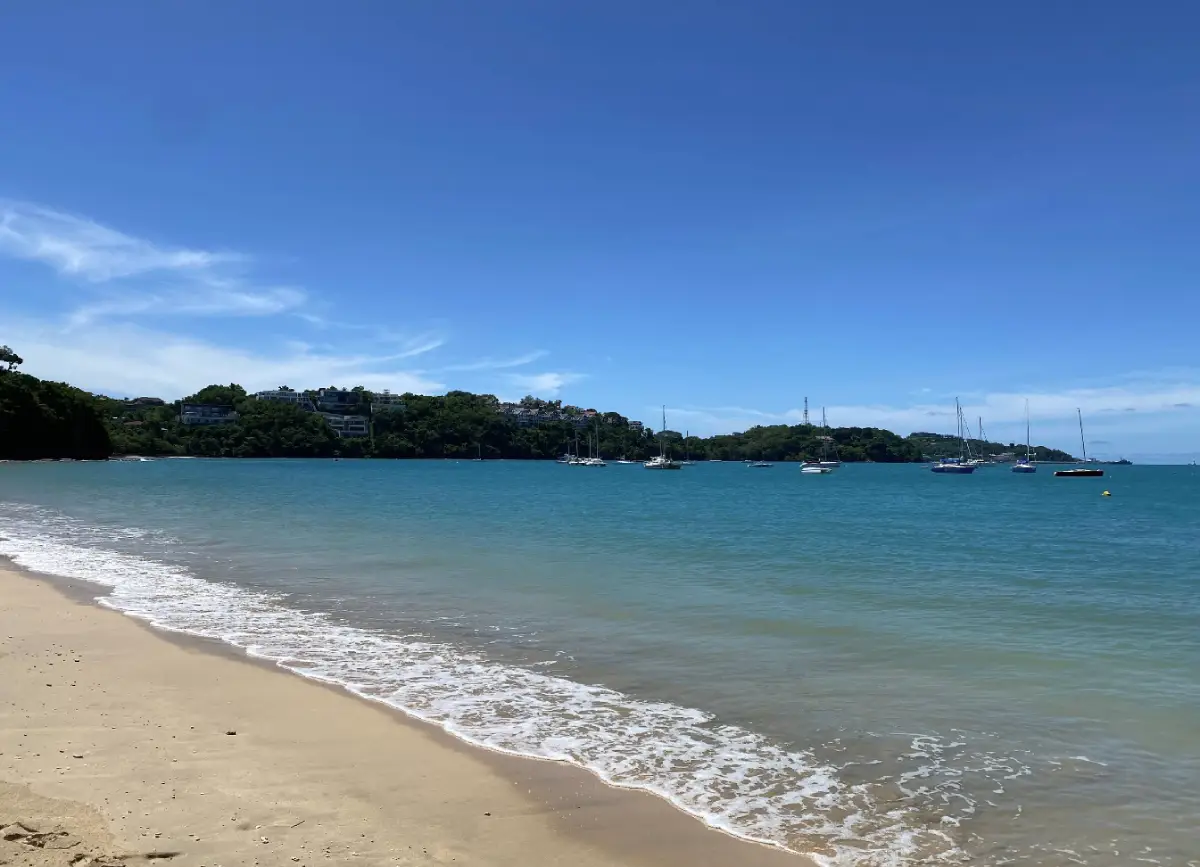
Ao Yon Beach, Phuket, is a peaceful natural beach in Wichit Subdistrict, Mueang Phuket District, on the Cape Panwa peninsula in southeastern Phuket, Thailand. Known for its gently curving sandy shoreline, turquoise-blue water, coconut palms, and picturesque views of sailboats anchored offshore, Ao Yon offers a quieter coastal experience than many of the island's famous tourist beaches. The bay consists of two adjoining beach sections separated by a rocky headland. Each section has its own coastal characteristics, including differences in sand, shallow-water conditions, and tidal exposure. Visitors can enjoy beach walks, scenic relaxation, photography, and swimming when conditions are suitable. The beach is accessible throughout the day without an admission fee, making it an appealing destination for travelers seeking a more relaxed and natural side of Phuket.
The appeal of Ao Yon Beach extends beyond its sandy coastline. Its character comes from the combination of sheltered coastal geography, local maritime life, sailing activities, and tourism that remains relatively modest in scale. The bay is home to traditional fishing boats, sailboats, yachts, beachfront restaurants, boutique accommodation, and established seaside resorts. Despite these developments, sections of Ao Yon retain the atmosphere of a traditional southern Thai coastal community. Visitors can sit beneath coconut palms, watch boats moving gently offshore, explore the shoreline, or appreciate the natural surroundings without having to participate in commercial activities. These qualities make Ao Yon suitable for both short beach visits and overnight stays in one of Phuket's quieter coastal neighborhoods.
Ao Yon is located in Moo 8, Wichit Subdistrict, Mueang Phuket District, Phuket Province. The beach can be reached by Soi Ao Yon–Khao Khad, which connects with Sakdidej Road and other roads around the Cape Panwa peninsula. The bay lies approximately 10 kilometers from Phuket Town along the general approach to the area and is accessible by car or motorcycle. Nearby places of interest include Makham Bay, Panwa Beach, Khao Khad View Tower, and Phuket Aquarium. This location makes Ao Yon particularly convenient for exploring the southeastern side of Phuket without traveling across the island to the major west-coast resort areas.
The physical geography of Ao Yon is closely connected with Cape Panwa, a peninsula extending into the sea south of Phuket Town. The surrounding hills and headlands create a sheltered coastal indentation, forming a bay that is partly protected by the natural landscape. As a result, wave conditions can differ considerably from those at open beaches facing the Andaman Sea. Looking outward from the sand, visitors see green hills surrounding the water, with sailboats and other vessels anchored in the bay. The scenery has a distinctly local maritime character, setting it apart from large resort beaches dominated by extensive entertainment and commercial facilities.
Ao Yon forms part of the coastal landscape associated with Chalong Bay and the waters surrounding Cape Panwa. One side opens toward the sea and offshore islands, while the landward side rises into wooded hills containing houses, small businesses, and accommodation along the coastal road. Changes in elevation provide different perspectives of the bay. From the beach, visitors experience the sea at close range, while higher points along the surrounding roads reveal the broad curve of the shoreline. This combination of hills, beaches, and sheltered water makes Ao Yon especially attractive to travelers interested in coastal scenery and nature-based relaxation.
Ao Yon consists of two principal beach sections, separated by a rocky headland and coastal terrain of varying elevation. The two sections are not identical. One offers a more convenient stretch of sand for relaxing and entering the water, while the other has extensive shallow areas, exposed rocks, and seabed conditions that vary noticeably with the tides. Understanding this distinction is important because visitors arriving at different access points may encounter quite different beach environments, even though they are visiting the same bay.
The western section of Ao Yon is generally more suitable for traditional beach relaxation and water activities. This part features a curving sandy shoreline, shaded areas beneath coastal trees, and views of sailboats and yachts anchored farther out in the bay. Restaurants and beachfront accommodation are situated nearby, allowing visitors to combine time on the sand with dining or refreshments. The area is particularly attractive to people who enjoy walking along the beach, sitting beside the water, or photographing the tropical landscape. Its appearance changes with the tide, especially as the exposed sandy area expands or contracts throughout the day.
The eastern section has a shallower shoreline and is more visibly affected by tidal changes. At high tide, the incoming water covers much of the coastal shallows, creating attractive views across the bay toward boats and surrounding hills. At low tide, the retreating water exposes sections of sand, mud, and rock, while some areas become too shallow for comfortable swimming. These conditions make the eastern section particularly interesting for scenic observation and careful exploration of the shoreline rather than expecting convenient swimming conditions at every hour.
The rocky headland separating the two sections is an important part of Ao Yon's natural character. It prevents the shoreline from forming one uninterrupted stretch of sand and gives each part of the bay a different visual setting. As the tide falls, more rocks become visible, while higher water levels conceal some of the lower areas. Visitors exploring the shoreline should remain aware of these changes because a route that appears accessible at low tide may become covered by water later in the day.
Ao Yon Beach Bridge is another recognizable local landmark. It provides a crossing near the beach and the watercourse that drains toward the bay. The bridge area illustrates the relationship between water flowing down from the land and the changing sea level along the coast. It is also a useful place for observing the shape of the shoreline and photographing boats from a different angle. Wichit Subdistrict Municipality has carried out maintenance and cleaning work on the road and bridge area, including the removal of sand and muddy deposits to improve cleanliness and reduce slipping hazards for road users.
The shoreline of Ao Yon is shaped by several natural processes, including the movement of coastal sediment, tides, currents, and freshwater drainage from higher ground. These forces continually influence the appearance of the beach. Some areas have relatively fine sand suitable for walking, while others contain softer sediment, rocks, or shell fragments. This variation is a normal feature of natural coastal environments and explains why visiting Ao Yon at high tide can feel very different from exploring the same shoreline when the water has retreated.
One of Ao Yon's main attractions is its relatively calm sea. The geographical position of the bay and the surrounding Cape Panwa landscape provide a degree of shelter from waves arriving from certain directions. Consequently, the water is often calmer than that of Phuket's exposed west-coast beaches, particularly during some periods of the southwest monsoon. Nevertheless, a calm surface does not guarantee safe swimming. Wind, rainfall, tides, underwater depth, local currents, and boat movements must all be considered before entering the water.
Comparing Ao Yon with Patong, Kata, and Karon illustrates how different Phuket's beaches can be. The island's major west-coast beaches face the open Andaman Sea and generally feature extensive sandy shorelines supporting substantial tourist activity. Ao Yon, by contrast, occupies a more sheltered bay with a smaller and quieter tourism environment. These differences influence the kinds of activities available and the overall atmosphere. Visitors interested in surfing or high-energy beach entertainment may prefer the west coast, while those looking for peaceful bay views, anchored sailboats, and unhurried relaxation will find a different experience at Ao Yon.
Phuket's principal dry-season tourism period generally extends from November to April, when the northeast monsoon brings a greater likelihood of favorable conditions for outdoor activities and sightseeing. At Ao Yon, these months are well suited to beach walking, photography, and spending time by the sea. Clear skies and natural daylight often make the surrounding hills and coastal scenery particularly attractive. However, Ao Yon's sheltered geography means that the beach remains a destination of interest throughout the year rather than being limited entirely to Phuket's traditional high season.
From May to October, Phuket experiences the influence of the southwest monsoon, which often produces stronger winds and larger waves along the beaches directly exposed to the Andaman Sea. Ao Yon can offer an alternative setting for coastal relaxation during this period because the surrounding landscape provides some protection from particular wave directions. However, weather conditions can still change rapidly. Thunderstorms, strong gusts, heavy rainfall, and locally generated waves remain possible. Visitors traveling during the rainy season should therefore plan activities according to actual weather conditions rather than assuming that the sheltered bay will always be suitable for swimming.
Tides have a considerable influence on swimming conditions at Ao Yon Beach. Some parts of the shoreline slope gently into the sea and contain broad shallow-water areas. When the tide falls, the sea retreats from the sand, and swimmers may have to walk farther before reaching sufficient depth. Exposed rocks, muddy patches, and small coastal organisms may become visible in these areas. At higher tide, the water covers a greater portion of the shoreline, creating a fuller and more continuous view of the bay. Checking the tide schedule is therefore useful for planning both swimming and shoreline exploration.
Swimming is best approached in areas where the seabed is suitable and away from active boat routes. Inexperienced swimmers should remain in water where they can stand comfortably and avoid moving far offshore. Children require close adult supervision at all times. Even when the surface appears calm, water depth and currents may vary between different parts of the beach and at different stages of the tide. Entering the sea during thunderstorms, strong winds, or poor visibility is inappropriate, and swimmers should stay well clear of moving boats and operating engines.
Ao Yon is generally better suited to relaxed swimming and shallow-water recreation on calm days than to surfing or activities requiring large waves. Some sections contain soft sediment, rocks, or uneven underwater surfaces, making careful footing important. Water shoes can be helpful when walking over rocky sections or where the seabed is irregular. Visitors should also avoid stepping on marine organisms or disturbing habitats along the shoreline. Respectful use of the beach contributes to both personal safety and the protection of the coastal environment.
The natural setting of Ao Yon also reflects a coastal ecosystem influenced by seawater, sediment, and changing tides. Rocky and sandy areas can provide habitats for small marine animals such as crabs, mollusks, and other organisms living on or within the seabed. Exploring the coast at low tide can therefore be an educational experience. Marine life should be observed without unnecessary handling, digging, or collection. Protecting these small habitats helps preserve biodiversity and the natural character that makes the bay attractive to visitors.
Sailboats and yachts anchored offshore are among Ao Yon's most recognizable sights. The sheltered water and maritime setting have made the bay associated with sailing activities in the Phuket area. Visitors can often see tall masts rising above the water, with smaller vessels occasionally moving between the coast and the anchored boats. These scenes create an atmosphere quite different from beaches dominated by jet skis or loud waterfront entertainment. They also demonstrate the bay's function as a place for anchoring and enjoying recreational boating.
Alongside recreational sailing, the wider bay is associated with longtail boats and traditional coastal craft, which form part of southern Thailand's maritime culture. Such vessels are used in fishing, local transportation, and tourism according to the needs of different communities. Seeing traditional boats alongside modern yachts illustrates the many ways Phuket's coastal waters are used, from supporting livelihoods to offering leisure experiences. Ao Yon therefore provides a glimpse into local maritime life as well as a picturesque place for beach photography.
Water activities suited to the sheltered character of Ao Yon include kayaking and stand-up paddleboarding. Equipment is offered by selected local operators and accommodation providers according to their services and operating conditions. Paddling allows visitors to view the coastline from the water and appreciate the hills, rocky headlands, and anchored vessels from a different perspective. Participants should use appropriate flotation equipment, remain within designated paddling areas, and keep a safe distance from motorboats. Calm weather is more appropriate for such activities than periods of gusting winds or thunderstorms.
Ao Yon also offers limited opportunities for observing marine life underwater, particularly near suitable rocky sections when water depth and visibility are favorable. However, the bay is not one of Phuket's primary coral-reef snorkeling destinations. Shallow areas containing fine sediment may become cloudy, especially when the water is disturbed. Travelers specifically interested in snorkeling should choose sites appropriate to their abilities and the prevailing conditions. Marine organisms should never be handled unnecessarily, and visitors should avoid walking or standing on delicate underwater habitats.
Longtail boat excursions to nearby islands are another activity associated with Ao Yon and the surrounding Cape Panwa coastline. Destinations in the wider area include Koh Lon and Koh Kai, which can be incorporated into boat excursions from suitable coastal departure points. The availability and route of these trips depend on weather, sea conditions, and local operators. Travelers joining a boat excursion should use licensed or appropriately operated services, check that safety equipment is available, and follow the crew's instructions. Such outings offer an opportunity to expand a beach visit into an exploration of the islands and coastal geography surrounding southern Phuket.
Visitors who prefer to remain on land will find Ao Yon suitable for gentle beach walks and quiet relaxation beneath coastal trees. Coconut palms contribute to the tropical setting, while stretches of open sand offer places to sit and enjoy the sea breeze. The bay does not have the same atmosphere as a continuously busy entertainment beach. Reading, spending time with family, enjoying a conversation, or simply watching the water can be rewarding activities in themselves. The opportunity to appreciate the surroundings without a full schedule of paid attractions is one of Ao Yon's most appealing qualities.
Morning is an attractive time to explore the beach because temperatures are generally more comfortable than during the middle of the day. Soft natural light can reveal the colors of the water, details of the sand, and the shapes of the surrounding hills. The morning also suits photographers looking for a relatively quiet beach scene. Afternoon and early evening offer opportunities for relaxed dining, coastal walks, and watching the sky change color. Each part of the day produces a different atmosphere according to the light, tide, cloud cover, and weather.
Early evening at Ao Yon is particularly appealing for its softer light and peaceful bay scenery. As the sun approaches the horizon, the anchored boats and surrounding hills create attractive silhouettes, while the colors of the sky gradually change. Because of the coastline's orientation and the nearby hills, sunset views are different from those at open west-facing beaches where the sun can be seen setting directly over the sea. Nevertheless, the late-afternoon atmosphere remains excellent for photography and for enjoying the changing light over the water.
Photography at Ao Yon benefits from a variety of natural compositions. Wide views can capture the curve of the bay, while more detailed photographs can emphasize sailboats, coconut palms, coastal rocks, and the bridge. For vibrant turquoise water, clear skies and suitable sunlight are particularly helpful. Boats, fishermen, hillside buildings, and beachfront restaurants can also contribute to photographs illustrating the character of the area. When photographing near homes, hotels, or privately managed premises, visitors should respect the privacy of residents and avoid entering private property without permission.
Facilities at Ao Yon differ from those found at Phuket's larger tourist beaches. Many services are distributed among individual restaurants, cafés, hotels, and other private businesses rather than being concentrated in extensive public visitor facilities. Food and drinks are available from establishments around the bay, but toilets, changing rooms, parking spaces, and recreational equipment may be provided only for customers or hotel guests. The public beach itself has no general admission charge, while the use of commercial facilities and private services is subject to the policies of the relevant operators.
Beach access is an important practical consideration at Ao Yon. The main road lies above parts of the shoreline, and access is provided by smaller lanes or walking routes leading downhill toward the sand. The width, slope, and surface condition of these routes vary. Some access points are close to houses, hotels, or privately managed land. Visitors should use routes open to the public and avoid driving through private entrances or roads marked as restricted. Ao Yon Beach Bridge and Soi Ao Yon–Khao Khad are useful landmarks for identifying the general area and locating access points to the shoreline.
Parking around Ao Yon is distributed along permitted sections of the road and within individual businesses rather than concentrated in a single large public parking facility. Drivers should select authorized spaces and avoid blocking residential entrances, business access, or local traffic. Particular care is necessary near bends and narrow or sloping sections of road. Visitors dining at restaurants or staying at hotels can use parking provided by those establishments in accordance with their respective conditions.
Traveling to Ao Yon by private car is straightforward from Phuket Town. Drivers can follow Sakdidej Road toward Cape Panwa and then turn onto Soi Ao Yon–Khao Khad, which leads toward the beach. An alternative approach passes through the Ban Bo Rae area and along scenic roads overlooking the coast. Sections of the road network contain curves and gradients characteristic of the peninsula's hilly terrain. Careful driving and attention to small junctions are therefore important, particularly near beach access lanes. Navigation applications can be used by entering Ao Yon Beach, Wichit, Phuket, as the destination.
Travelers arriving at Phuket International Airport can reach Ao Yon by taxi, private transfer, or rental car via Mueang Phuket District and Cape Panwa. Travel time depends on the chosen route and prevailing traffic. A journey of approximately 45–60 minutes or longer should be allowed when traffic is heavy. For travelers staying in Phuket Town, Ao Yon is more convenient than many beaches on the far western side of the island and can be visited as either a half-day or full-day excursion.
Public transport options include local buses departing from Phuket Town toward Makham Bay or Cape Panwa, followed by local hired transport to the appropriate section of Soi Ao Yon–Khao Khad. Local buses do not serve every beach access point directly, so travelers should consider the location of the bus stop and the remaining distance to the shoreline. Taxis and app-based ride-hailing services provide more direct access and are particularly convenient for families, groups, or visitors carrying beach equipment and luggage.
For older visitors, wheelchair users, and families with small children, choosing an appropriate access point is particularly important. Some paths leading from the road to the beach are narrow or sloping, and sandy or rocky surfaces may not be suitable for all mobility aids. Restaurants or accommodation with easier access can provide a more comfortable way to enjoy the scenery. Families with children should also choose areas away from boat routes and slippery rocks, where supervision is easier and the shoreline is more suitable for their needs.
Beachfront dining is a significant part of the Ao Yon experience. Several restaurants allow visitors to enjoy meals and refreshments close to the sea without returning to Phuket Town. The local dining scene includes Thai food, seafood, international cuisine, and a variety of drinks. Establishments range from relaxed open-air eateries to restaurants associated with resort hotels. Some emphasize casual dining with simple coastal surroundings, while others offer additional amenities and more elaborate seating areas. This variety allows visitors to combine beach relaxation with a comfortable meal according to their preferences.
The Cove Phuket is a beachfront restaurant and boutique accommodation known for its relaxed seaside setting. Located close to the sand, it offers dining areas overlooking the bay and serves a range of dishes, including Thai cuisine, seafood, and wood-fired pizzas. Its open-air layout, coastal terrace, and natural shade create an atmosphere closely connected with the character of Ao Yon. Travelers wishing to enjoy a meal while watching the sea and anchored boats can incorporate The Cove into their visit.
Flamingo Beach Club is another beachfront establishment combining dining, refreshments, and coastal relaxation. Its facilities include indoor seating and open areas close to the beach, making it suitable for visitors who want to enjoy food and drinks with views of the bay. The venue also provides spaces associated with remote working and leisure according to its operating arrangements. This combination reflects Phuket's growing appeal to both short-stay holidaymakers and longer-term visitors who wish to spend time by the sea while maintaining their daily routines.
Other restaurants associated with the Ao Yon area include Ao Yon Seaside Restaurant, offering a relaxed setting for Thai food and seafood, and Noi's Happy Place, a beachfront restaurant where visitors can dine close to the water. Hill House Restaurant occupies a more elevated position overlooking the bay, providing a different perspective of the coastline. Each offers a distinct experience, from dining beside the sand to enjoying sea views from the surrounding hillside.
Dining around Ao Yon also reflects the wider culinary diversity of Phuket, a province shaped by southern Thai traditions, seafood culture, and the food heritage of communities with different cultural backgrounds. Visitors interested in traditional Phuket cuisine can combine their coastal excursion with a meal in Phuket Town. Local specialties include Hokkien-style noodles, moo hong braised pork, spicy shrimp-paste-based chili dips, and southern-style seafood dishes. Such an itinerary offers an opportunity to experience both the island's natural landscapes and its distinctive food culture.
Accommodation around Ao Yon ranges from intimate beachfront cottages and boutique resorts to larger hotels with swimming pools, restaurants, and additional guest facilities. Properties differ in their position along the coast, degree of privacy, and overall style. Some provide direct access to sandy areas, while others occupy elevated land overlooking the sea. Staying overnight allows visitors to experience the changing atmosphere of the bay during the morning and evening, when natural light and activity on the water differ considerably.
The Mooring Resort is a small beachfront property emphasizing peaceful surroundings and a close connection with the tropical landscape. Its bungalow-style accommodation is set among gardens near the water, with views of the boats anchored in Ao Yon Bay. The resort is also closely associated with nearby dining at The Cove Phuket. This combination of accommodation and beachfront dining makes it suitable for travelers who prefer a quiet stay focused on the bay's natural atmosphere rather than a busy resort environment.
Bandara Beach Resort Phuket is another beachfront accommodation option in Ao Yon. It provides hotel rooms and leisure facilities designed around the coastal setting, including a rooftop swimming pool, dining venues, and other resort amenities. Nearby, Bandara Pool Villas Phuket offers villa-style accommodation with a greater emphasis on privacy. These properties cater to different preferences, allowing visitors to choose between conventional resort facilities and more private villa accommodation close to the beach.
Panwaburi Beachfront Resort is located along Ao Yon–Khao Khad Road near the beach. Its design prominently features swimming pools and resort-style relaxation spaces, including different guest room categories. The property is particularly associated with its swimming pool setting and photogenic architecture. My Beach Resort Phuket, meanwhile, occupies a coastal location in the Cape Panwa area and emphasizes sea views and a peaceful holiday atmosphere. Staying at either property provides convenient access to the southeastern Phuket coastline and nearby attractions around the peninsula.
An additional cultural and educational attraction near Ao Yon is pearl cultivation, a long-established activity connected with Phuket's marine resources. UNG Pearl Farm & Shop, located in the Ao Yon area, is a family-operated pearl farm and jewelry business established in 1973. The farm has continued its operations through successive generations, preserving knowledge associated with pearl oysters and marine aquaculture. Its presence demonstrates that the coastline has economic and cultural importance beyond tourism, including specialized activities based on the sustainable and skilled use of marine resources.
The pearl farm introduces visitors to the process of producing pearls, including oyster care, cultivation methods, harvesting, and the transformation of pearls into jewelry. Visitors can learn about differences in pearl color, shape, and size, as well as the craftsmanship involved in selecting materials and creating finished pieces. The history of the farm is closely related to the development of pearl aquaculture in Phuket over several decades. A visit therefore offers insight into a distinctive coastal occupation and adds an educational dimension to a day spent at Ao Yon Beach.
Ao Yon's importance to the surrounding community extends beyond tourism businesses. The bay is part of the local environment used for transport, livelihoods, recreation, and maritime activities. Maintaining the cleanliness of the beach, roads, and public areas therefore contributes to the everyday well-being of local residents. On August 9, 2025, Wichit Subdistrict Municipality carried out cleaning work on the road and bridge at Ao Yon Beach. The operation focused on removing mud, sand, and accumulated debris from the road surface to improve safety and the appearance of the area. Such activities illustrate the municipality's role in maintaining public infrastructure around the coastline.
Beach maintenance is essential for sustainable tourism because litter left on the sand can be carried into the sea and affect marine organisms. Plastic packaging, bottles, food containers, and other discarded materials can damage the coastal environment and reduce the quality of public spaces. Visitors bringing food or drinks to the beach should dispose of their waste responsibly and avoid leaving leftovers near the water. Keeping the shoreline clean benefits both residents and visitors while helping preserve the natural atmosphere for which Ao Yon is valued.
Environmental care also involves using the coastline responsibly. Marine animals should not be disturbed, coastal vegetation should be protected, and rocky or shallow habitats should not be damaged. Existing access routes should be respected, and visitors should avoid entering private land or fragile natural areas. Keeping an appropriate distance from fishing activities and boats also allows tourism to coexist with the everyday maritime work of the community. These practices contribute to the long-term preservation of Ao Yon's natural and cultural character.
One of the most notable attractions near Ao Yon is Khao Khad View Tower, a hilltop observation structure in Wichit Subdistrict. The tower features a polygonal design and provides extensive views over the surrounding coastline, bays, and offshore islands. From this elevated position, visitors can gain a clearer understanding of Phuket's geography, particularly the relationship between Chalong Bay, Cape Panwa, and nearby islands. Combining a visit to the tower with time at Ao Yon creates an opportunity to appreciate the same coastal landscape from both sea level and an elevated viewpoint.
Reaching the viewing platform at Khao Khad View Tower involves climbing stairs from the lower area. From the top, visitors can look in several directions, with informational signs helping identify important geographical features. The main attraction is the ability to recognize hills, bays, and islands that are less easily understood from street level. Visitors should allow time for the climb and for observing the panoramic views. Those traveling with older adults or anyone with reduced mobility should consider the suitability of the stairs before ascending.
Ton Ao Yon Waterfall is another natural attraction in the hills near the beach. It is a relatively small waterfall whose flow is influenced by seasonal rainfall. The surrounding vegetation provides a shaded environment that contrasts with the bright, open coastal landscape. Water levels generally increase during periods of substantial rain and decrease in drier conditions. As the setting is natural, visitors should take care around wet rocks, uneven paths, and slippery surfaces.
Combining Ton Ao Yon Waterfall with Ao Yon Beach creates a rewarding nature-focused route through both the coastal and hillside environments of Cape Panwa. Travelers can begin by walking along the sand and then continue inland to experience vegetation, streams, and a more enclosed forest setting. The contrast between sea breezes along the coast and the shaded waterfall surroundings highlights the environmental diversity of the peninsula. Visits during heavy rainfall should be avoided because stream levels and the condition of walking routes can change rapidly.
Phuket Aquarium is an important educational attraction located near the tip of Cape Panwa. Established in 1983, it operates in connection with the Phuket Marine Biological Center and Thai government agencies responsible for marine research and conservation. The aquarium presents a variety of aquatic species through exhibition tanks and an underwater viewing tunnel. It provides opportunities to learn about the marine ecosystems of the Andaman Sea, marine biodiversity, and the conservation of aquatic resources. The attraction is particularly suitable for families seeking an educational activity to complement a day at the beach.
Visiting Ao Yon Beach and Phuket Aquarium on the same day connects direct coastal observation with formal environmental education. After seeing boats, tides, the shoreline, and coastal habitats at Ao Yon, visitors can explore aquarium exhibits that introduce the underwater life associated with regional marine ecosystems. The two attractions are connected by roads around Cape Panwa and can be included in a continuous sightseeing route. Unlike the freely accessible beach, Phuket Aquarium operates with its own admission arrangements and fixed opening hours.
Cape Panwa also offers coastal viewpoints and seaside walking areas that broaden the sightseeing experience. The tip of the peninsula provides views across the sea and nearby islands, creating a different atmosphere from the sheltered curve of Ao Yon Bay. Continuing toward Cape Panwa allows travelers to appreciate the contrast between a bay enclosed by hills and a headland extending into more open water. Coastal viewpoints and walking areas around the cape are especially attractive during favorable weather and provide additional opportunities for photography.
Panwa Beach is another coastal destination on the same peninsula. Its shoreline and surrounding development differ from those of Ao Yon, with certain sections closely associated with hotels and other beachfront properties. Exploring the Panwa area provides insight into another style of seaside tourism development in Phuket. Visitors traveling along the peninsula can observe differences between beaches with accessible sandy areas and coastal sections characterized by rocks, shallow water, or more extensive resort development.
Makham Bay is another significant coastal area near Cape Panwa, associated with maritime activities and the peninsula's road network. Its use and coastal character differ from those of Ao Yon, reflecting the range of functions performed by Phuket's bays. Traveling through the Makham Bay area reveals how the island's coastal geography supports transportation, marine activities, and tourism in different ways. Together, Ao Yon, Makham Bay, and Cape Panwa demonstrate the diversity of coastal environments found within a relatively small part of southeastern Phuket.
Travelers with approximately half a day at Ao Yon can begin in the morning by exploring the beach and Ao Yon Bridge, observing the shape of the shoreline and the boats anchored offshore. After enjoying food or drinks at a beachfront restaurant, they can continue to Khao Khad View Tower or Phuket Aquarium. This itinerary is particularly convenient for visitors staying in Phuket Town who wish to explore the southeastern coastline without rushing. The order of activities can also be adjusted according to the weather and tide schedule.
With a full day available, visitors can include a pearl farm experience, Ton Ao Yon Waterfall, a leisurely meal beside the beach, and sightseeing around Cape Panwa or Khao Khad View Tower. Combining the beach, forested hills, educational attractions, and panoramic viewpoints provides a broad impression of the peninsula within a single day. Those particularly interested in nature may also plan their beach visit around the changing tides to observe how the exposed shoreline and shallow-water habitats transform throughout the day.
Staying overnight around Ao Yon allows travelers to experience the bay at a more leisurely pace. The morning is suitable for quiet beach walks and watching boats in soft light. During the day, visitors can enjoy restaurants, resort facilities, or water activities when conditions permit. In the evening, they can relax beside the water and appreciate the changing colors of the sky without needing to return immediately to Phuket Town. Accommodation around Cape Panwa also provides a convenient base for visiting Phuket Aquarium, Khao Khad View Tower, and cultural attractions in Phuket Old Town on the following day.
Phuket Old Town offers an excellent cultural addition to a trip centered on Ao Yon. The historic district is known for Sino-Portuguese architecture, traditional streets, local restaurants, and communities reflecting Phuket's diverse cultural heritage. Visiting Ao Yon in the morning and returning to the Old Town later in the day allows travelers to experience both the island's coastal landscape and the historical character of a former trading town. The two areas can be connected by road within Mueang Phuket District, making them practical components of a combined sightseeing itinerary.
Phuket's history is closely connected with maritime trade, tin mining, fishing, and contact with people from different cultural backgrounds. The province's traditions consequently reflect southern Thai culture, Chinese influences, and the heritage of Muslim coastal communities. Ao Yon illustrates one aspect of this wider history through its relationship with the sea and coastal livelihoods, while Phuket Old Town provides a different perspective through its trading history, architecture, and urban communities. Exploring both helps reveal the island's diversity beyond its internationally famous beaches and nightlife.
For families, Ao Yon provides an appealing setting for spending time together, especially through beach walks, relaxed meals, and observing the marine environment. Parents can use the shoreline as an opportunity to introduce children to boats, tides, and coastal wildlife. However, activities should take place away from active boat routes and slippery rocks. Swimming conditions must be evaluated carefully on the day of the visit because a natural beach does not offer the predictable water depth or controlled environment of a swimming pool.
Visitors seeking peace and quiet may particularly enjoy Ao Yon during weekday mornings, when the beach is often less crowded. The atmosphere suits reading, enjoying sea views, or simply spending time in a calm outdoor environment. Nevertheless, the area is also home to local residents, businesses, and people conducting their daily activities. Visitors should respect the privacy of the community, avoid unnecessarily loud music, and keep public access routes clear. Such consideration helps preserve the quiet atmosphere that makes the bay attractive.
For travelers interested in responsible tourism, Ao Yon provides an opportunity to understand the balance between recreation and the use of natural marine resources. Supporting local businesses, removing litter, and protecting coastal habitats all contribute to reducing the impact of tourism. Respecting public paths, private property, and the daily activities of local residents also supports a positive relationship between visitors and the surrounding community. This balance is essential for maintaining the long-term appeal of a destination whose character depends so strongly on its natural and local setting.
What distinguishes Ao Yon from many other Phuket beaches is the presence of several different coastal experiences within one relatively compact area. The two beach sections have different shoreline conditions, the sheltered bay offers views of anchored sailboats, and the surrounding environment includes fishing activities, restaurants, resorts, rocky headlands, and a long-established pearl farm. These features allow visitors to choose experiences according to their interests, ranging from simple beach relaxation and scenic photography to maritime learning and excursions to nearby attractions around Cape Panwa.
Who should visit Ao Yon Beach? Ao Yon is particularly suitable for travelers seeking a peaceful coastal atmosphere, people who enjoy shoreline walks, families looking for relaxed outdoor time, photography enthusiasts, and visitors wishing to explore lesser-known parts of Phuket. Those seeking large surfing waves, extensive coral-reef snorkeling areas, or lively beachfront nightlife will find that Ao Yon offers a different kind of experience. Its principal attractions are relaxation, sheltered scenery, maritime character, and proximity to the natural and cultural attractions of Cape Panwa.
Enjoying Ao Yon does not require a demanding schedule or numerous organized activities. Much of the bay's appeal lies in the small details that change throughout the day: wind moving through coconut palms, boats shifting gently with the currents, sand emerging as the tide falls, and the changing colors of the water under different lighting conditions. Spending time observing these details reveals the distinctions between the two beach sections and the close relationship between the local geography and coastal community life.
In summary, Ao Yon Beach in Phuket is a natural coastal destination on the Cape Panwa peninsula in Wichit Subdistrict, Mueang Phuket District. Its peaceful atmosphere, two adjoining beach sections, coconut palms, rocky headland, and views of sailboats make it distinctive among Phuket's beaches. The shoreline is accessible throughout the day without an admission fee and is suitable for walking, relaxation, scenic observation, and water activities when conditions are favorable. Nearby attractions include Ton Ao Yon Waterfall, Khao Khad View Tower, UNG Pearl Farm & Shop, Phuket Aquarium, and Cape Panwa. Ao Yon's value therefore lies both in its appeal as a peaceful beach and in the insight it offers into Phuket's coastal environment, maritime traditions, and local community life.
| Name | Ao Yon Beach (Ao Yon Bay) |
| Type | Natural Bay, Sandy Beach, Coastal Tourist Attraction |
| Location | Moo 8, Wichit Subdistrict, Mueang Phuket District, Phuket 83000, Thailand |
| Access Road | Soi Ao Yon–Khao Khad, connected to Sakdidej Road on the Cape Panwa Peninsula |
| Western Beach Coordinates | 7.811791, 98.390182 |
| Eastern Beach Coordinates | 7.814508, 98.394855 |
| Geographical Features | Sheltered bay in southeastern Phuket, with two beach sections separated by a rocky headland and surrounded by coastal hills |
| Highlights | Peaceful Beach, Turquoise Water, Coconut Palms, Anchored Sailboats, Yachts, Coastal Hills and Bay Views |
| Main Areas and Zones | 1. Western Beach Section 2. Eastern Beach Section 3. Rocky Headland 4. Ao Yon Beach Bridge and Watercourse 5. Beachfront Dining and Accommodation Areas 6. Offshore Boat Anchorage Area |
| Activities | Beach Walking, Relaxation, Photography, Swimming When Conditions Permit, Kayaking, Stand-Up Paddleboarding and Boat Excursions |
| Best Time to Visit | Year-Round; November–April Is Phuket's Main Sea Tourism Season. Check Weather and Tides Before Water Activities. |
| Open Days | Daily |
| Opening Hours | Natural Beach Accessible Throughout the Day |
| Admission Fee | Free Public Beach Access; Commercial Services, Equipment Rentals, Accommodation and Private Facilities Are Charged Separately |
| Local Administrative Authority | Wichit Subdistrict Municipality, Mueang Phuket District, Phuket Province |
| Municipal Contact Number | Wichit Subdistrict Municipality, Tel. +66 76 525 100 |
| Facilities | Nearby Restaurants, Cafés, Beachfront Accommodation, Beach Access Paths and Permitted Parking Areas. Private Facilities Are Subject to Individual Business Policies. |
| Getting There | From Phuket Town, Follow Sakdidej Road Toward Cape Panwa and Turn Onto Soi Ao Yon–Khao Khad, or Travel via Ban Bo Rae. Accessible by Car, Motorcycle, Taxi or Local Hired Transport. |
| Distance from Phuket Town | Approximately 10 km Along the General Approach to Ao Yon |
| Safety Considerations | Changing Tides, Rocks, Muddy Seabed in Certain Areas, Boat Routes, Sloping Access Paths and Seasonal Weather Conditions |
| Current Status | Open Natural Beach and Coastal Recreation Area in Wichit Subdistrict, Phuket |
| Nearby Tourist Attractions | 1. Ao Yon Beach Bridge — Within the Ao Yon Beach Area 2. UNG Pearl Farm & Shop — Ao Yon Area, Tel. +66 62 839 8393 3. Ton Ao Yon Waterfall — Hills Near Ao Yon 4. Panwa Beach — Approximately 2 km 5. Khao Khad View Tower — Approximately 3 km, Tel. +66 63 536 7045 6. Phuket Aquarium — Approximately 3 km, Tel. +66 76 391 126 7. Cape Panwa Viewpoint — Approximately 3 km |
| Nearby Restaurants | 1. The Cove Phuket — Ao Yon Beachfront, Tel. +66 62 242 3442 2. Flamingo Beach Club — Ao Yon Beachfront, Tel. +66 86 312 2077 3. Noi's Happy Place — Ao Yon Beachfront, Tel. +66 62 980 5677 4. Ao Yon Seaside Restaurant — Ao Yon Area, Tel. +66 95 372 4889 5. Hill House Restaurant — Ao Yon–Khao Khad Road, Tel. +66 82 002 2360 6. Lae Lay @ Khao Khad — Khao Khad Area, Tel. +66 81 747 8750 |
| Nearby Accommodations | 1. Bandara Beach Resort Phuket — Approximately 0.1 km, Tel. +66 76 316 278 2. Bandara Pool Villas Phuket — Approximately 0.1 km, Tel. +66 76 316 298 3. The Mooring Resort — Approximately 0.3 km, Tel. +66 76 600 020 4. Panwaburi Beachfront Resort — Approximately 0.4 km, Tel. +66 76 212 968 5. The Cove Phuket — Approximately 0.5 km, Tel. +66 62 242 3442 6. My Beach Resort Phuket — Approximately 0.9 km, Tel. +66 76 305 066 |
Frequently Asked Questions (FAQ)
Q: Where is Ao Yon Beach located in Phuket?
A: Ao Yon Beach is located in Moo 8, Wichit Subdistrict, Mueang Phuket District, on the Cape Panwa peninsula in southeastern Phuket. It can be reached from Phuket Town via Sakdidej Road and Soi Ao Yon–Khao Khad.
Q: Is Ao Yon Beach open every day, and is there an admission fee?
A: Yes. Ao Yon is a natural beach accessible throughout the day, every day, with no general beach admission fee. Restaurants, accommodation, equipment rentals, and private facilities charge separately according to their own policies.
Q: Can visitors swim at Ao Yon Beach?
A: Swimming is possible in suitable areas when sea and weather conditions are safe. Some sections have shallow water, rocks, or muddy seabed, so visitors should check the tide, assess local conditions, and stay away from active boat routes before entering the sea.
Q: How is Ao Yon different from Phuket's west-coast beaches?
A: Ao Yon lies in a sheltered bay, which often provides calmer water than exposed west-coast beaches during certain periods of the year. It is also generally quieter and is known for sailboats anchored offshore. Its atmosphere is more suited to relaxed beach activities and scenic enjoyment than surfing or large-scale beachfront entertainment.
Q: How many beach sections does Ao Yon have, and how do they differ?
A: Ao Yon has two principal beach sections separated by a rocky headland. The western section offers a more convenient sandy area for relaxation and swimming, while the eastern section is generally shallower and more visibly affected by the tides, making it particularly suitable for scenic observation.
Q: How can visitors travel from Phuket Town to Ao Yon Beach?
A: Visitors can travel by car, motorcycle, taxi, or local hired transport. The main route follows Sakdidej Road toward Cape Panwa before turning onto Soi Ao Yon–Khao Khad. An alternative route passes through Ban Bo Rae. Local buses toward Cape Panwa can also be used, followed by hired transport to the beach.
Q: What attractions can be visited near Ao Yon Beach?
A: Nearby attractions include Ao Yon Beach Bridge, UNG Pearl Farm & Shop, Ton Ao Yon Waterfall, Panwa Beach, Khao Khad View Tower, Phuket Aquarium, and Cape Panwa Viewpoint. These destinations can be combined with Ao Yon in a day trip around southeastern Phuket.
Q: What is the best time of year to visit Ao Yon Beach?
A: Ao Yon can be visited throughout the year. November to April is Phuket's main sea tourism season, while May to October is influenced by the southwest monsoon. Although the bay is sheltered from waves arriving from certain directions, visitors should always check current weather and tidal conditions before participating in water activities.
 Category: ●Nature and Wildlife
 Group: ●Bays and Beaches
Last Update : 6 DayAgo
 Last Update : 6 DayAgo

 Click to Access the Navigation Map GPS
Ao Yon Beach Map
Recommend

 Art, Culture and Heritage
 Landmarks and Memorials(7)
 Art, Craft Centres, Tradition(5)
 Museums(4)
 Historic Homes and Cities(1)
 Art Gallery(1)
 Educational Places
 Educational Gardens, Farm(2)
 University
 Public university(1)
 Rajabhat University(1)
 Places of Worship
 Temple(14)
 Mosque(47)
 Other Sacred Sites(15)
 Suburban Living
 Village, Community(3)
 Floating Market(1)
 National Parks and Marine Reserves(2)
 Mountain (Doi)(2)
 Dam, Reservoir, Lake(1)
 Waterfalls(4)
Bays and Beaches(32)
 Islands(12)
 Other natural attractions(11)
 Entertainment and Agricultural
 Zoos and Aquariums(3)
 Animal camps and shows(1)
 Stadium(2)
 Farms, Parks and Ecotourism(4)
 Amusement Park(3)
 Waterpark(6)
 Theater(1)
 Outdoor and Adventure Activities(2)
 Shopping
 Shopping and Night Market(2)
 Department Store(7)
 Travel Articles, Recipes
 Travel Review, Food Review(1)
 Southern Food Menu, Southern Food Recipes(5)


