
lovethailand home >South Travel Attractions >Phuket Travel Attractions >Muang Phuket >Wichit > Aquaria Phuket
TL;DR: Aquaria Phuket is located at 199 Moo 4, Wichit, Mueang Phuket District, Phuket 83000, Thailand, open Daily, including public holidays, hours 10:30 AM – 7:00 PM.

Aquaria Phuket
Open Days: Daily, including public holidays
Opening Hours: 10:30 AM – 7:00 PM
Last Admission: 6:00 PM
Aquaria Phuket is a major aquarium and marine-life attraction located on the B1 basement level of Central Phuket Floresta, at 199 Moo 4, Wichit Subdistrict, Mueang Phuket District, Phuket 83000, Thailand. It is an educational and recreational destination featuring freshwater fish, marine animals, reptiles, and natural habitats in a fully indoor, air-conditioned environment. The aquarium is distinguished by a main saltwater exhibit containing more than 3.5 million liters of water, an underwater viewing tunnel, Humboldt penguins, Asian small-clawed otters, sharks, stingrays, jellyfish, and underwater mermaid performances. Aquaria Phuket opens daily from 10:30 AM to 7:00 PM, with last admission at 6:00 PM. Its year-round operation makes it suitable for families, students, nature enthusiasts, and travelers seeking an indoor activity while visiting Phuket.
One of Aquaria Phuket's most appealing features is the way its exhibition route connects freshwater ecosystems with marine environments. Visitors begin among displays inspired by mysterious forests and freshwater streams before moving through reptile habitats, otter exhibits, penguin displays, stingray environments, and an immense marine tank filled with fish. This arrangement creates a different experience from simply viewing a series of unrelated aquariums. The continuous route encourages visitors to consider the relationship between water, habitats, and the ways different animals live in their natural environments.
Aquaria Phuket is situated in one of the main commercial and transportation areas of Mueang Phuket District, near Vichitsongkram Road, Chao Fah West Road, and the neighborhoods surrounding Central Phuket. Its location makes the attraction accessible from Phuket Town and other parts of the island. An important advantage is its position inside a large shopping complex offering restaurants, shops, parking, and numerous visitor facilities. Guests can combine the aquarium with dining, shopping, and other activities without having to travel to another part of the city.
The aquarium was introduced in 2019, with a media launch held on August 23, 2019. It was developed under the Aquawalk Group, an operator involved in contemporary aquarium attractions and educational facilities. The opening of Aquaria Phuket marked an important addition to the island's tourism offerings. It created a marine-life learning destination within the urban area and provided an alternative to beaches, island excursions, and outdoor water activities, which had traditionally dominated Phuket's tourism image.
Aquaria Phuket is operated by Aquawalk (Thailand) Company Limited, which manages the exhibits, animal care, educational activities, ticketing, and visitor services. Its registered operating address is 199 Moo 4, Wichit, Mueang Phuket, Phuket 83000, within Central Phuket Floresta. Running an aquarium of this kind requires specialists in several areas, including aquarists, animal-care professionals, water-system technicians, educators, guest-service personnel, and facility managers. Their combined work supports the daily operation of the exhibits and the care of the animals housed within them.
Dato Simon Foong, the Managing Director of Aquawalk Group, was an important figure at the aquarium's launch. The development was presented as an initiative combining education, entertainment, and tourism. This approach is visible in the attraction's design, which uses themed habitats and learning experiences rather than emphasizing the appearance of the animals alone. Visitors can enjoy the underwater scenery while developing a greater understanding of marine life and the importance of conserving natural ecosystems.
The establishment of Aquaria Phuket was connected with the continued development of urban tourism in Phuket Town, where heritage buildings, museums, local restaurants, and large shopping centers already attract visitors. Placing an aquarium inside a commercial complex expanded the range of experiences available to travelers staying in town or arriving from coastal resort areas. It also made marine-life education accessible without requiring guests to join a boat trip or travel to a distant coastal location.
Aquaria Phuket should not be confused with Phuket Aquarium at Cape Panwa. The older Cape Panwa facility is associated with government marine-resource research and education and is located in the southeastern part of Phuket Island. Aquaria Phuket is a separate, privately operated attraction inside Central Phuket Floresta in Wichit. The two facilities have different addresses, admission prices, operating hours, and exhibition concepts. Distinguishing them is essential when planning transportation and purchasing tickets.
Aquaria Phuket is designed as an immersive indoor aquarium experience. Lighting, sound, themed scenery, and aquarium structures create different atmospheres throughout the exhibition route. Visitors encounter forest-inspired freshwater environments, coastal habitats, penguin displays, and enormous blue-lit marine exhibits. The contrast between the areas provides visual variety and reveals differences in animal size, swimming behavior, water conditions, and environmental characteristics.
The principal exhibition route consists of nine zones: Mystic Forest, Canopy Walk, Jewels of the Jungle, The River Caves, Coastal Haven, Stingray Bay, Largato, South China Sea, and Station Aquarius. Each area follows a different habitat or learning concept. The organization allows visitors to understand animals in relation to their environments and creates a coherent progression from freshwater life to the marine world.
Mystic Forest is the opening zone, inspired by the legendary Himmapan Forest of Thai mythology. It presents small and large freshwater fish alongside planted aquariums recreating underwater environments. Its appeal comes from combining a fantasy-inspired forest atmosphere with the observation of real aquatic creatures. Visitors experience an imaginative setting while learning about freshwater biodiversity and the characteristics of animals living in rivers and other inland waters.
Freshwater fish vary considerably in appearance, size, and behavior. Some species swim in schools, while others move slowly or remain close to the bottom. Exhibiting different forms allows visitors to observe how body shape relates to movement and habitat use. Streamlined bodies, specialized mouths, and camouflage patterns can all reflect the conditions in which fish live and feed. Mystic Forest therefore introduces the concept of biodiversity through animals that can be observed directly.
Planted aquariums provide another opportunity to understand the role of vegetation in freshwater ecosystems. Aquatic plants are more than decorative features. They offer shelter for small animals, take up nutrients from the water, and contribute to the conditions in which aquatic organisms live. Arrangements incorporating plants, rocks, submerged roots, and substrate therefore serve both as attractive underwater landscapes and as illustrations of ecological relationships.
Freshwater habitats are important to Phuket and Thailand as a whole. Rivers, streams, ponds, and wetlands support many groups of animals, even though Phuket is more widely associated with the sea. Beginning the aquarium experience with freshwater environments demonstrates that underwater biodiversity is not limited to oceans. It also includes inland habitats with different physical and biological conditions.
Canopy Walk creates the impression of looking into a watery habitat from the level of trees and forest branches. Visitors observe freshwater fish swimming through exhibits decorated with woody structures and natural scenery. The design evokes places where forests and waterways meet. In tropical environments, vegetation can influence light, temperature, shelter, and the availability of food for aquatic animals, making the forest-water connection an important ecological concept.
Trees beside rivers and streams play important roles in freshwater ecosystems. Fallen leaves and other plant materials provide organic matter supporting small organisms, while roots create shelter and help stabilize riverbanks. By incorporating forest elements into its scenery, Canopy Walk illustrates the relationship between terrestrial and aquatic habitats. The display encourages visitors to connect what they see with the natural streams and tropical forests of southern Thailand.
Another feature of Canopy Walk is the change in how visitors observe the exhibits. Instead of concentrating exclusively on fish behind a glass panel, guests can appreciate the surrounding scenery and its relationship to the animals. This approach emphasizes habitat as well as individual creatures. Observing both the fish and the environment provides a fuller picture of how aquatic life functions within a natural setting.
Jewels of the Jungle introduces various reptiles and highlights animals that occupy terrestrial and humid environments. Reptiles differ considerably in their skin, body shape, movement, and feeding behavior. Some live primarily on the ground, while others climb or spend time near water. The exhibits help visitors recognize the connection between land animals and the wider environmental systems that include streams, forests, and wetlands.
Reptiles depend on environmental heat to regulate many aspects of their body functions. Their behavior is therefore closely related to finding suitable temperatures and places to rest or shelter. Observing reptiles in a managed habitat helps explain why light, temperature, and humidity are essential to their survival. Such environmental conditions must also be considered when designing exhibits that meet the biological needs of different reptile species.
Jewels of the Jungle broadens the aquarium experience beyond animals that live entirely in water. Natural ecosystems consist of different groups of organisms whose lives are connected through habitats, food sources, and environmental conditions. Including reptiles helps visitors understand these relationships and appreciate the broader diversity of wildlife associated with tropical environments.
The River Caves is another popular section, recreating a cave environment with flowing freshwater and featuring Asian small-clawed otters. These playful mammals are capable swimmers and divers that move actively both in water and on land. Watching them allows visitors to compare the behavior of aquatic mammals with that of fish, which remain underwater throughout their lives.
Asian small-clawed otters are associated with freshwater and wetland environments across parts of Asia. They use their sensitive forepaws to investigate food and move efficiently through water. An exhibit combining dry areas with pools allows guests to observe how these mammals use different parts of their habitat. The cave-and-stream design also creates the impression of a natural setting containing sheltered spaces and connected waterways.
Observing otters is especially valuable for learning about animal behavior. Visitors may see swimming, movement on land, resting, and interaction between individuals. Their activities naturally vary throughout the day, which means each viewing experience can be different. Watching without handling the animals encourages an understanding of wildlife as living creatures with their own behavioral patterns rather than simply as displays for entertainment.
Coastal Haven recreates a rocky shoreline and coastal habitat, with penguins and sharks among its highlighted animals. Humboldt penguins attract considerable attention because their movement changes dramatically between land and water. On land, they walk or stand together, while underwater they use their modified wings as powerful swimming flippers.
Humboldt penguins naturally inhabit Pacific coastal areas of South America, especially Peru and Chile, where cold ocean currents help support productive feeding grounds. Their presence at Aquaria Phuket offers an opportunity to learn that penguins are not restricted to Antarctica. Some species occur along temperate coastal regions of the Southern Hemisphere, where ocean conditions support the fish and other marine organisms on which they depend.
The penguin's body is highly adapted to swimming. Its streamlined form reduces resistance in the water, its wings function as flippers, and its feathers help protect the body during aquatic activity. Watching the penguins move makes the relationship between physical form and biological function easy to understand. This is particularly valuable for children who may have previously encountered penguins only in books, films, or illustrations.
Penguin exhibits also provide an opportunity to discuss the importance of marine habitats and food availability. Penguins depend on fish and other marine organisms, while changes in ocean temperature, currents, and ecological conditions can affect their natural populations. Their story therefore connects an indoor animal exhibit with broader questions about marine conservation and the environmental pressures facing coastal ecosystems.
Sharks are another important group represented in the aquarium because they help visitors understand the role of predators in marine ecosystems. Shark species differ in body shape, size, teeth, and feeding strategies. Some are active swimmers in open water, while others spend much of their time near the seabed or coral reefs. Observing sharks in an aquarium can provide a more balanced understanding of their diversity than the exaggerated image often presented in popular entertainment.
Stingray Bay introduces marine animals associated with coral environments and the seabed, with various rays among its main attractions. Rays have flattened bodies and large pectoral fins used for movement. Some appear to glide through the water with movements resembling the flapping of wings. Their distinctive swimming style allows visitors to observe clear differences between rays and many other fish species.
Rays contribute to marine food webs, and their diets and feeding methods vary by species. Some search for food over sand or the seabed, while others swim through the water and feed on small organisms. The position of their mouths and gills relates to how they live and obtain food. Stingray Bay therefore offers an opportunity to learn about animals whose bodies have evolved for specialized movement and feeding behavior.
Coral reefs are among the most important ecosystems of tropical seas because they provide shelter, feeding grounds, and habitats for many organisms. Coral-inspired scenery helps visitors appreciate the complexity of underwater environments, where mobile animals interact with creatures attached to rocks or other surfaces. Reef health is closely related to water quality, temperature, and human activities occurring both on land and at sea.
The Largato zone introduces a replica of the USS Lagarto submarine, which is associated with the history of the Second World War and a sinking in the Gulf of Thailand. This themed display connects underwater environments with human history. The sea is not only a habitat for marine animals but also a setting for navigation, trade, technological development, and major historical events.
Recreating a shipwreck within a marine exhibition creates opportunities to consider how human-made structures interact with underwater environments. Objects submerged for long periods can become surfaces where some marine organisms attach or find shelter. Real shipwrecks are also historical evidence requiring careful study and protection. Presenting these ideas in the aquarium adds a historical and educational dimension to a route otherwise centered on marine life.
The submarine story also connects Southeast Asia with wider world history. The Gulf of Thailand has long been an important area for shipping and regional maritime activity. Including a submarine-themed installation helps visitors understand that underwater environments contain traces of human activity as well as natural ecosystems, and that both contribute to the marine landscapes studied today.
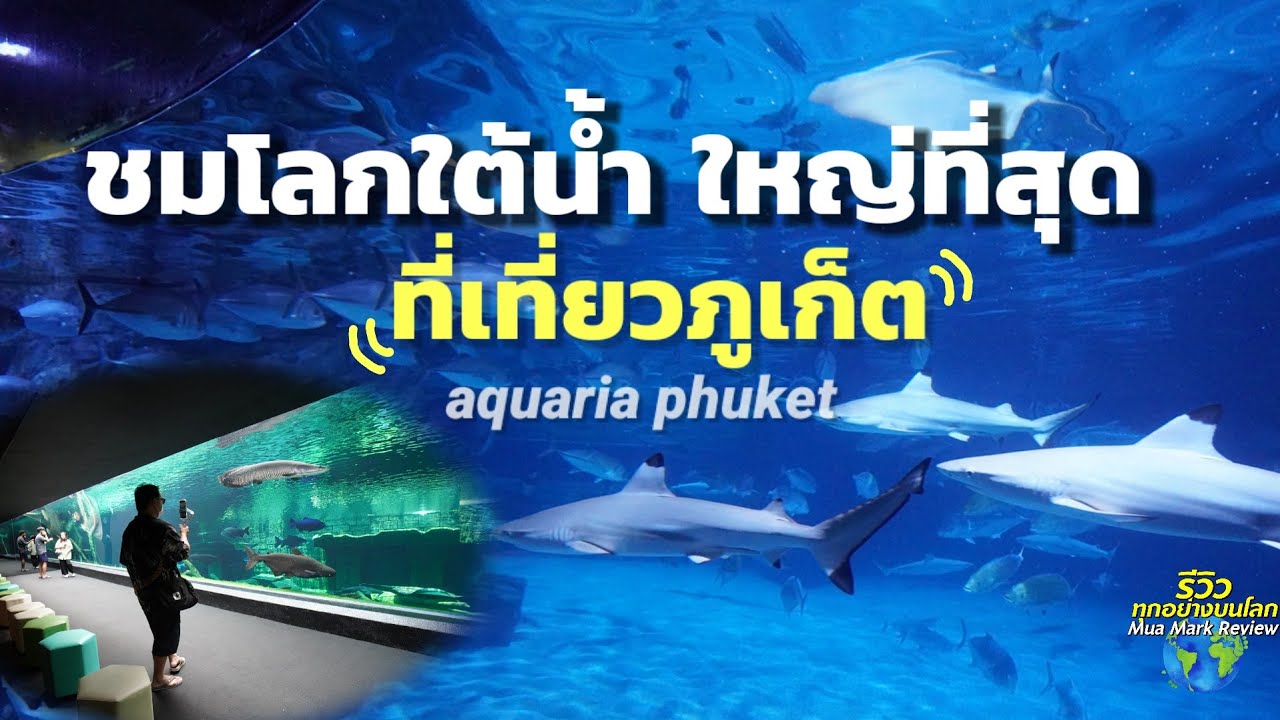
South China Sea is Aquaria Phuket's largest principal exhibit, containing more than 3.5 million liters of saltwater. It is designed for viewing marine animals through large transparent panels from several perspectives. The sweeping movement of schools of fish, larger marine species, and other animals within the same enormous body of water creates a particularly impressive scene. Compared with smaller aquariums, the scale makes it easier to appreciate how animals occupy different parts of a large underwater space.
Constructing and operating an enormous marine tank requires careful attention to structural strength, water circulation, filtration, and environmental conditions suitable for the animals. Saltwater systems must be managed for salinity, temperature, and water chemistry, because different marine species respond differently to changes in their surroundings. The spectacle visible through the glass is therefore supported by substantial scientific and engineering work behind the scenes.
The main viewing windows allow guests to stand or sit and watch fish moving through the large aquarium. Schools of fish can be especially impressive when they pass across the viewing area together. Coordinated swimming is associated with feeding, protection from predators, and responses to environmental conditions. Some schools change direction almost simultaneously, creating a dynamic underwater scene and illustrating collective animal behavior.
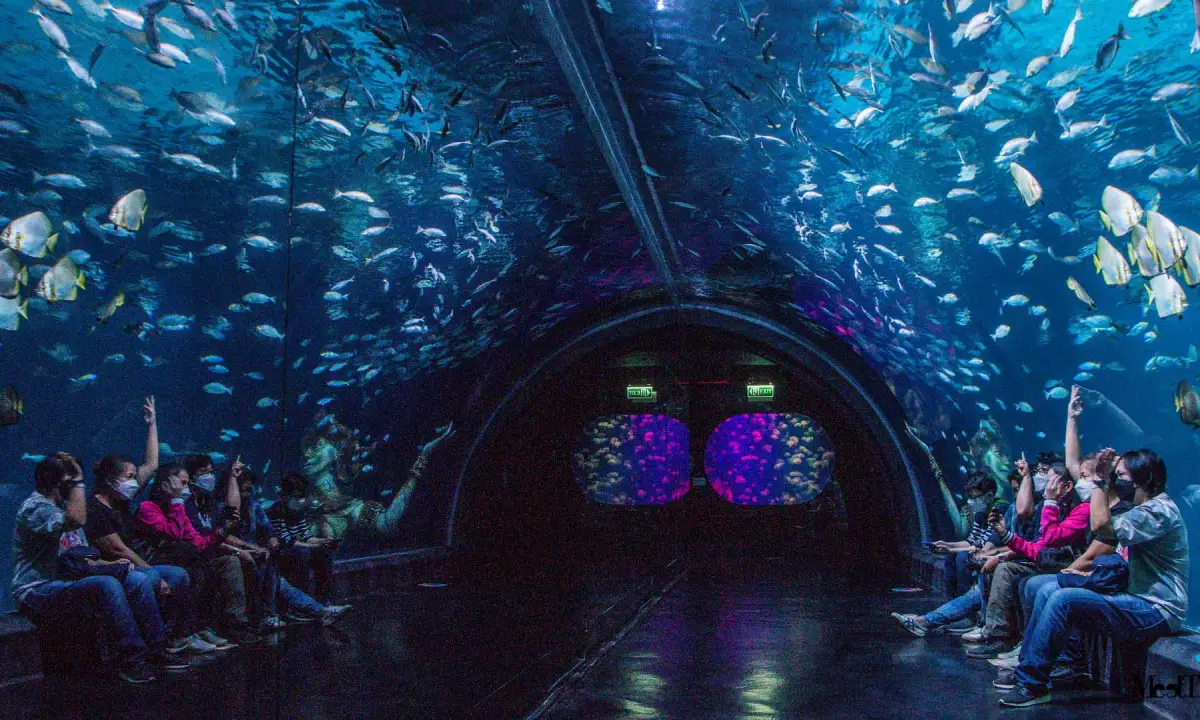
The underwater tunnel allows visitors to walk through a curved viewing structure while fish swim around and above them. Rays and other marine animals passing overhead create the impression of being immersed beneath the surface. Guests remain safely separated from the water while experiencing a perspective unlike that of a conventional glass-fronted aquarium. The tunnel's design makes the movement of marine life visible from several angles and creates one of the attraction's most memorable visual experiences.
The tunnel is particularly useful for observing the shape and movement of animals from beneath. As fish and rays pass overhead, visitors can see their undersides, fins, and swimming motions. The curved viewing surface adds a sense of depth to the surrounding water. This makes the tunnel a popular area for families and visitors interested in underwater photography.
The educational value of the large marine tank extends beyond the appearance of colorful fish. It illustrates how different animals share the same environment while using different parts of the available space. Some swim through open water, others remain near the bottom, and some move according to food availability or lighting conditions. These differences reveal how species occupy distinct ecological roles within a shared habitat.
The mermaid performance is one of Aquaria Phuket's signature experiences, combining fantasy with the main marine exhibit. Introduced as part of the aquarium's entertainment program in 2020, it features trained underwater performers wearing specially designed silicone mermaid tails. The performers use swimming skills, breath control, and graceful underwater movement inside the 3.5-million-liter saltwater tank. Their appearance among the fish creates a scene inspired by mythological mermaids while maintaining the visual authenticity of a real underwater performance.
Underwater mermaid performances require specialized physical training. Performers cannot move in the same way as they would on a conventional stage because water resistance, buoyancy, and breath control affect every movement. Costumes must allow efficient swimming while preserving the appearance of the character. The performance therefore combines artistic choreography with technical underwater skills developed through practice and training.
Using the actual marine tank as the performance setting allows the audience to watch swimmers and aquatic animals occupying the same visual space. The movement of fish and light through the water continually changes the scene. Unlike a filmed or digitally simulated presentation, the performance occurs live inside the aquarium. Showtimes follow the venue's daily program, so mermaid performances are scheduled events rather than activities running continuously throughout opening hours.
Aquaria Phuket also presents animal-feeding activities as part of its daily care and educational program. Experienced staff and professional divers conduct the feedings according to the needs of the relevant species. Visitors can learn about diets, feeding methods, and animal responses while observing the activities. Such demonstrations provide educational value because they reveal the relationship between an animal's biology and the care required in an aquarium environment.
Feeding aquatic animals requires consideration of food type, quantity, frequency, and presentation. Different species have different nutritional needs. Feeding sharks or large fish may involve procedures unlike those used for smaller aquatic species or penguins. Animal-care teams must consider both health and natural behavioral characteristics to ensure that feeding routines are suitable for the animals in their care.
Watching feeding activities can help visitors recognize the differences between animals that catch food with their mouths, species that search for food along the seabed, and animals that actively pursue prey through the water. These behaviors are related to body form and ecological function. When staff provide educational commentary, they can draw attention to details that visitors might otherwise overlook while walking past the exhibits.
Station Aquarius emphasizes interactive learning and closer observation of marine animals. The area includes a touch-pool experience supervised by staff and exhibits featuring different species of jellyfish. Interactive activities create an experience different from viewing animals only through glass. However, participation must follow staff instructions because some aquatic organisms are delicate and can be harmed by inappropriate contact.
Touch-pool activities can help visitors understand the physical characteristics of aquatic animals, including body shapes and surface textures. Nevertheless, animal welfare and visitor safety remain essential. Participants must follow instructions concerning handwashing, appropriate touching, and the handling of animals. Creatures should not be lifted from the water or moved from their designated areas unless authorized by the supervising staff.
Jellyfish are particularly fascinating because their bodies contain a high proportion of water and many move by contracting their bell-shaped structures. Some species are partly transparent, making it possible to observe their delicate anatomy when displayed under suitable lighting. Their gentle movements contrast with the fin-powered swimming of fish and reveal the extraordinary range of body forms found in marine environments.
Jellyfish also play roles in marine food webs, both as predators of smaller organisms and as prey for certain other marine animals. Their ecological importance demonstrates that delicate-looking organisms can contribute significantly to the functioning of the ocean. Jellyfish exhibits therefore provide an opportunity to explore evolutionary diversity and the different biological structures that have developed among marine animals.
Seahorses are another group of marine fish that offer opportunities to learn about unusual anatomy and behavior. Their characteristic heads and body shapes distinguish them from more familiar fish. Many seahorses use their tails to hold onto underwater plants or other structures. Their reproductive biology is especially notable because males possess a brood pouch in which developing embryos are carried. Seahorses illustrate the remarkable diversity of reproductive strategies among fish.
Sea stars represent another major group of marine animals whose structure differs substantially from that of fish. Despite their common name, they are not fish and do not swim using fins. Their movement relies on a water vascular system and numerous small tube feet underneath their bodies. Learning about sea stars provides insight into alternative forms of movement and helps visitors appreciate the variety of animals living on the seabed.
Aquaria Phuket's educational activities also provide opportunities to discuss marine conservation, including plastic pollution, coral-reef degradation, and the effects of unsustainable fishing practices. These issues influence habitat quality and the populations of marine animals in the wild. Seeing sharks, rays, and reef-associated species at close range can make conservation concerns more meaningful by connecting environmental information with living animals that visitors can observe directly.
Another important aspect of Aquaria Phuket's work is its participation in a breeding and recovery initiative for Indo-Pacific leopard sharks, a species associated with coral-reef ecosystems. The project includes caring for breeding adults, raising juvenile sharks, and preparing animals for conservation-related activities. This work demonstrates how an aquarium can contribute beyond public exhibition by connecting animal-care expertise with wider efforts to protect and restore marine species.
The leopard shark conservation initiative involves cooperation with Thai marine-resource agencies, conservation organizations, and specialists from several sectors. Its objective is to support population recovery through breeding, preparation for natural marine conditions, and monitoring after release. Some activities have taken place around Maiton Island, southeast of Phuket. Aquaria Phuket's participation links an educational attraction in the urban area with conservation work taking place in the province's coastal waters.
Indo-Pacific leopard sharks are recognized by their distinctive markings, which change as the animals grow. Young sharks have dark bands, while adults develop spotted patterns. This transformation illustrates how the appearance of a marine animal can change throughout its life cycle. Leopard sharks commonly use seabed and reef-associated habitats and contribute to the balance of marine ecosystems. Their conservation is therefore connected with the protection of habitat quality and food resources.
Breeding marine animals with specialized environmental requirements demands scientific expertise and continuous care. Important considerations include water quality, nutrition, health monitoring, and reproductive conditions. Leopard sharks reproduce by laying eggs, and their successful development requires suitable incubation conditions. Knowledge developed through such work can support wider conservation programs involving marine animals threatened by changes in their natural environments.
As part of the conservation initiative, young leopard sharks have been transferred to marine holding facilities before release into the wild. These temporary enclosures allow the animals to adapt to natural conditions that differ from those of a controlled aquarium system. Tracking devices help researchers study movement and habitat use after release. Monitoring is important because successful conservation depends not only on releasing animals but also on understanding how well they survive and adapt afterward.
Aquaria Phuket's exhibits and conservation activities therefore contribute to education at several levels. Young children can develop an interest in aquatic animals, while older students and adults can explore ecological relationships and conservation issues in greater depth. Seeing living animals helps make scientific ideas more concrete, particularly when visitors can compare body shapes, movement, and habitat requirements across different species and exhibition zones.
Beyond the aquarium itself, the B1 level of Central Phuket Floresta also contains MAYA Museum, a contemporary digital-art attraction operating separately from the main aquatic exhibition route. The museum uses visual media and creative technology to provide a different type of visitor experience. Admission is sold according to the museum's own ticket arrangements. Its location within the same building allows travelers interested in both nature and contemporary art to experience different attractions without leaving the shopping complex.
Digital-art exhibitions differ from aquarium displays because they use imagery, light, and technology as their principal artistic materials. Aquaria Phuket, by contrast, focuses on living organisms and their environments. Having these attractions close together broadens the range of activities available at Central Phuket Floresta. Families and groups with different interests can therefore choose experiences that suit their preferences within the same general location.
The contemporary media-art venue is connected with the development of immersive digital experiences and illusion-based museums that have previously been popular in Phuket. Such attractions use technology to create images and simulated environments that differ from conventional paintings displayed on walls. Their proximity to Aquaria Phuket creates opportunities for combined visits, but admission to the media-art museum is a separate service unless an eligible combination ticket has been purchased.
Another distinctive experience associated with the Aquaria Phuket complex is underwater dining. Restaurants in this setting incorporate views of the marine exhibits into the dining environment. Andasi was an important part of the aquarium's original development, while SuVaNa is a fine-dining establishment operating within the aquarium complex. Dining in such a venue differs from eating in a conventional restaurant because guests can watch marine animals swimming beyond large viewing windows during their meal.
Andasi was among the features highlighted during the early development of Aquaria Phuket. The underwater restaurant was designed with approximately 148 seats and views of the principal marine exhibit. Its concept also included a private dining area inspired by the shape of a submarine. The idea combined food service with the visual experience of observing aquatic life. The availability of particular restaurant services depends on each operator's opening arrangements and reservation conditions.
SuVaNa is a premium restaurant within Aquaria Phuket, offering multi-course dining experiences accompanied by aquarium views. Its seating and lighting are designed around the surrounding marine environment, giving the venue a character distinct from restaurants elsewhere in the shopping center. Dining at SuVaNa is managed separately from ordinary aquarium admission, with its own reservations and operating hours.
Central Phuket Floresta also contains a variety of restaurants and prepared-food outlets serving Thai and international cuisine. These facilities are convenient for families visiting the aquarium because guests can eat before or after their visit without traveling to another location. Dining outside the exhibition galleries also helps visitors organize their time without carrying food or drinks into areas where animals are housed and cared for.
Thai Brasserie by Blue Elephant is a Thai restaurant on the third floor of Central Phuket Floresta, offering traditional flavors in a contemporary dining setting. Chilli Thai Restaurant is located on the ground floor and serves Thai dishes inspired by different regions. Both restaurants are in the same shopping complex as Aquaria Phuket and can be reached using the building's lifts or escalators, providing convenient options for visitors interested in Thai cuisine.
Central Phuket Festival, another section of the larger Central Phuket complex, offers additional dining choices. Ginger Farm Kitchen on its first floor specializes in Thai cuisine with a particular emphasis on northern Thai influences. Other establishments serve noodles, single-portion meals, and international dishes. The interconnected shopping buildings provide a broad selection of food options at different price levels without requiring visitors to travel elsewhere in the city.
Aquaria Phuket sells several admission categories. For Thai citizens and eligible expatriate residents, the published standard aquarium-only rates are THB 690 for adults and THB 410 for children. The official online booking rates displayed are THB 621 for adults and THB 369 for children. For international tourists, standard rates are THB 1,390 for adults and THB 750 for children, with published online prices of THB 1,251 and THB 675 respectively. These are aquarium-only admission categories and do not automatically include special dining services or other separately charged activities.
Family tickets are also available for two adults and two children. The published family admission price for Thai citizens and eligible residents is THB 1,880 for four people, while the corresponding international family ticket costs THB 3,580. These tickets are structured specifically for the stated combination of two adults and two children rather than any arbitrary group of four visitors. Eligibility depends on the operator's ticket-category conditions.
Children's admission is determined by height. Children shorter than 90 centimeters are admitted free of charge. Those measuring 91–140 centimeters qualify for child rates, while visitors measuring 141 centimeters or taller are charged the adult rate. The aquarium distinguishes between prices for Thai citizens and eligible residents and those for international tourists who do not qualify for the domestic category.
Official online ticket bookings must be made at least three hours before the intended visit. Guests use their reservation details and confirmation codes according to the operator's procedures when redeeming admission. Expatriate residents using the Thai-and-resident ticket category must provide acceptable evidence of eligibility, such as a Thai driving license or work permit, as specified in the ticket conditions.
Ticket prices may differ among sales channels because standard rates, official online booking prices, and special promotions are distinct offerings. The aquarium generally applies the same standard admission structure on weekdays, weekends, and public holidays. However, online platforms and temporary promotions may offer different prices. Distinguishing standard admission from advance-purchase rates provides a clearer understanding of the available ticket options.
Some packages previously advertised by Aquaria Phuket combined aquarium admission with attractions at separate venues, including dolphin performances. A published combination offer valid from September 1 to 30, 2026, had its own booking terms and event timetable. Such a time-limited package is not part of the year-round basic admission ticket. Aquarium admission should therefore not be assumed to include dolphin shows or every activity offered elsewhere in Phuket.
Aquaria Phuket opens from 10:30 AM to 7:00 PM daily, including public holidays, and stops admitting visitors at 6:00 PM. This schedule is separate from the operating hours of Central Phuket's shops and restaurants, which follow their own arrangements. Understanding the distinction is useful for visitors planning meals, shopping, and aquarium admission on the same day.
The amount of time required for a visit depends on individual interests. Guests moving steadily through the aquarium may spend approximately one to two hours exploring the exhibits. Families who wish to read information panels, observe animal behavior in greater detail, attend feeding presentations, or watch the mermaid show may spend longer. Taking time at individual viewing windows can reveal behaviors that may not be immediately visible because animals continue moving throughout their habitats.
Visitors arriving in the morning shortly after opening can begin exploring the exhibits before lunch. Afternoon visits are convenient for travelers combining the aquarium with Phuket Town sightseeing or shopping. The best arrival time depends on the visitor's schedule and the presentations they would like to attend. Feeding activities, in particular, follow specific timetables rather than running continuously throughout the day.
Photography is permitted in designated areas of Aquaria Phuket, but visitors must turn off camera flashes. Flash photography may disturb animals and alter the low-light conditions designed for some exhibits. Guests should also avoid tapping or striking aquarium glass, as such disturbances may affect the animals inside. Respecting these rules allows visitors to enjoy photography while supporting appropriate animal care.
Photographing Aquaria Phuket is particularly interesting because the lighting and colors change between exhibition zones. Forest-inspired freshwater areas have a different visual atmosphere from the blue-lit marine tank and underwater tunnel. Visitors can capture the character of each habitat through its colors, scenery, and animals. Paying attention to reflections on the glass and the movement of the creatures can produce better photographs without the need for flash.
For families with young children, the aquarium offers stroller-accessible routes and an environment suitable for shared learning. Parents can use the exhibits to explain colors, body shapes, sizes, and animal behavior in age-appropriate ways. Larger viewing windows make it easier for children to compare animals, including constantly swimming fish, penguins that move between water and land, and otters that actively use both environments.
Students and people interested in biology can connect the exhibitions with subjects such as vertebrate and invertebrate classification, animal adaptation, respiration in water, food chains, and ecological relationships. Observing living animals provides details that are sometimes difficult to communicate through textbook illustrations alone. Differences in swimming movement and the ways animals use their habitats become particularly clear when several groups can be observed during the same visit.
From an environmental education perspective, the aquarium can help explain how activities on land affect the sea. Plastic waste, wastewater, and pollutants may travel through rivers and streams into marine environments. The continuous exhibition route from freshwater to saltwater habitats illustrates that marine conservation begins far beyond the coastline. Protecting aquatic ecosystems requires attention to environmental conditions throughout entire watersheds.
Aquaria Phuket offers facilities for a range of visitors. Restrooms are available in areas associated with the dining facilities, while accessible restrooms are provided within the Central Phuket Floresta complex. Guests requiring a wheelchair can contact staff at the aquarium ticket counter to request assistance under the venue's service conditions. These arrangements make the attraction more convenient for visitors with mobility limitations and families traveling with elderly members.
The aquarium does not provide personal storage lockers according to its published visitor information. Guests should therefore organize their belongings before entering and avoid carrying unnecessarily large bags through the exhibition route. Compact personal items are easier to manage in areas where several visitors may gather around viewing windows. Visitors should also keep their possessions secure while taking photographs or participating in activities in relatively dimly lit spaces.
Because the attraction is indoors and air-conditioned, Aquaria Phuket is especially convenient during periods of rain associated with southern Thailand's monsoon climate. Its principal activities can continue without exposure to heavy rain or strong sunshine. Travelers do not necessarily need to abandon an entire day of sightseeing when sea conditions are unsuitable for boat trips or outdoor excursions. The surrounding shopping complex also provides additional indoor facilities and dining options after the aquarium visit.
Although Aquaria Phuket is located inside a shopping center, the exhibition design creates an atmosphere very different from ordinary retail areas. Aquarium lighting, quieter sections, and the movement of aquatic animals provide a sense of immersion in natural environments. Moving from freshwater exhibits to the underwater tunnel and large marine tank feels like a journey through contrasting habitats, even though the attractions occupy the same indoor complex.
Aquaria Phuket is suitable for multigenerational family visits because its main activities focus on observing animals and learning together. Children can enjoy penguins, otters, and jellyfish, while adults may take a deeper interest in biology and conservation. Elderly visitors who prefer not to undertake lengthy outdoor activities can explore the air-conditioned exhibitions at a comfortable pace. This combination creates opportunities for visitors of different ages to share a learning experience.
Visitors traveling from Phuket Town can reach Aquaria Phuket via Vichitsongkram Road toward Central Phuket Floresta. The shopping complex is a recognizable landmark close to major roads. Drivers can use the mall's parking facilities according to its current parking rules and then take a lift or escalator down to B1, where the aquarium's admission area is located.
From Phuket International Airport, the attraction is approximately 32.7 kilometers away according to the aquarium operator's published travel information. Travelers can use private cars, taxis, or other hired transport to reach Wichit and the Central Phuket complex. Journey times vary with traffic conditions, particularly along the major roads connecting the northern part of Phuket Island with the urban center.
Travelers staying in Patong can reach Central Phuket by road using the main routes toward the urban area. Those staying in Kata, Karon, Chalong, or Rawai can use Chao Fah Road and connecting routes according to their starting point. Aquaria Phuket's location near several major roads makes it accessible to guests who wish to combine shopping, city sightseeing, and other activities in central Phuket.
Getting There: By private car or hired transport, set the destination to Central Phuket Floresta, 199 Moo 4, Wichit, Mueang Phuket, Phuket 83000, Thailand. Enter the Floresta building and proceed to the B1 level to reach the aquarium. Visitors arriving at Central Phuket Festival can use the connecting pedestrian walkway between the buildings rather than crossing the main road at street level.
Taxis and app-based transport services are convenient for visitors who have not rented a car. Central Phuket is a major destination familiar to local drivers. Specifying the Floresta building is helpful because the larger Central Phuket development consists of different commercial sections on opposite sides of the road. Choosing the correct drop-off area makes it easier to reach the aquarium entrance without unnecessary walking.
Several other attractions and activity areas are located near Aquaria Phuket. Central Phuket Festival is part of the same larger shopping development and offers restaurants, retail stores, and additional entertainment. MAYA Museum is located on the B1 level of Central Phuket Floresta, close to the aquarium. These destinations allow visitors to enjoy multiple experiences within the same complex without making a lengthy journey.
Naka Weekend Market is a popular night market on Wirat Hong Yok Road in Wichit, Mueang Phuket District. It is known for regional foods, snacks, fashion products, and souvenirs. Its main weekend market operates on Saturdays and Sundays from 4:00 PM to 10:00 PM, while weekday food-market operations follow separate schedules. Visiting Naka Market after Aquaria Phuket creates an opportunity to combine an indoor daytime attraction with the atmosphere of a local night market.
Wat Nakaram, also known as Wat Naka, is a Buddhist temple near Naka Weekend Market in Wichit. It serves the local community as a place of worship and Buddhist ceremonies. The temple grounds contain religious buildings and spaces used for merit-making and community activities. Combining the temple with Naka Market offers contrasting experiences: a quieter religious environment and a lively commercial market. Visitors should dress respectfully and avoid disrupting religious activities.
Phuket Old Town is another major cultural destination accessible from Aquaria Phuket. It is known for Sino-European architecture, historic streets, local restaurants, and communities connected with the island's tin-mining and trading history. Traditional shophouses along Thalang Road, Dibuk Road, and Krabi Road reflect Phuket's prosperity during earlier periods of mining and international commerce. Exploring the Old Town adds a historical and cultural dimension to a visit centered on marine life.
Phuket Thai Hua Museum is located at 28 Krabi Road in Phuket Old Town. It presents the history of Phuket's Chinese community and the province's local cultural traditions. The museum occupies a historic building constructed in 1934 and contains displays relating to education, trade, and Chinese settlement on the island. Visiting the museum after Aquaria Phuket offers a contrasting learning experience, moving from natural ecosystems to the history of the people and communities of Phuket.
Chillva Market, located in Ratsada, Mueang Phuket District, is a contemporary night market featuring food vendors, beverage shops, clothing stalls, and small local businesses. Colorful shipping containers and modern decorative elements contribute to its lively atmosphere. It is particularly appealing to visitors interested in evening shopping and local street food. The market can be reached from Aquaria Phuket by car or hired transport using the main roads around Phuket Town.
Khao Rang, or Rang Hill, is another important attraction overlooking Phuket Town. Its elevated viewpoint offers broad views of the urban landscape and surrounding terrain. The area contains public spaces for relaxation and features associated with local history. From the viewpoint, visitors can appreciate the relationship between Phuket's hills, built-up districts, and connecting roads. The experience contrasts with Aquaria Phuket's underwater environments and adds a broader geographical perspective to a visit to the city.
King Power Phuket is a major shopping complex on Chao Fah West Road in Wichit. It offers branded goods and selected Thai products and souvenirs. The building's design draws inspiration from aspects of Phuket's cultural and architectural heritage. Although its principal focus is retail rather than marine education, it provides another destination for travelers exploring the central part of Phuket Island.
Hanuman World is an outdoor adventure attraction in Wichit, featuring zipline activities and elevated experiences in a forest environment. Its activities differ substantially from those at Aquaria Phuket because they emphasize physical movement and outdoor adventure under specific safety requirements. Travelers interested in combining contrasting experiences can choose between these forms of nature-related tourism according to their preferences and the abilities of their group.
A range of accommodation options is available near Aquaria Phuket, from contemporary city hotels to properties serving both short-term and extended stays. Travelodge Phuket Town is located at 159 Moo 5, Wichit, close to the Central Phuket shopping complex. It offers modern guest rooms, dining facilities, a swimming pool, and fitness amenities. Its location is convenient for visitors who want easy access to the aquarium, shopping, restaurants, and other attractions in Phuket Town.
Dara Hotel Phuket Town is located along Chao Fah Road in Wichit, near Central Phuket and Surakul Stadium. Its design incorporates a cinema-inspired theme, and the property provides guest rooms, a swimming pool, dining facilities, and a fitness room. Its position near commercial areas and major roads makes it a practical base for exploring Aquaria Phuket, the historic city center, and surrounding attractions.
Little Nyonya Hotel is inspired by the architecture and cultural traditions of Phuket's Baba-Nyonya, or Peranakan, community. Located at 63/2 Moo 4, Wichit, it incorporates Sino-colonial design elements and offers dining associated with Peranakan family cuisine. Staying at the hotel provides a connection between an aquarium visit and Phuket's distinctive cultural heritage through the property's architecture, atmosphere, and food.
HOMA Phuket Town is located in the Samkong area of Ratsada and provides accommodation suitable for both short and extended stays. It offers shared facilities and services adapted to contemporary city living. Its position within the Phuket Town area allows guests to travel to the aquarium, shopping centers, night markets, and other local attractions. The property is particularly relevant to visitors who prefer an urban base rather than a beachfront resort.
Seabed Grand Hotel Phuket is a contemporary hotel on Chao Fa Suan Luang Road in Wichit. The property publishes a distance of approximately 2.1 kilometers to Central Phuket Floresta. It offers modern guest rooms, a swimming pool, restaurants, and services suitable for different types of travelers. Its location makes it another accommodation option for guests wishing to explore the aquarium and other attractions around Phuket Town by car or hired transport.
Ramada Plaza by Wyndham Chao Fah Phuket is another hotel on Chao Fah West Road in Wichit. It offers accommodation, dining facilities, and additional services for visitors exploring the island. Its position provides road access to the central urban area and attractions in the middle of Phuket Island. The presence of hotels in different categories illustrates that Phuket's accommodation choices extend beyond beachfront resorts to include urban properties serving travelers interested in shopping, food, culture, and indoor attractions.
Guests staying in Phuket Town can combine Aquaria Phuket with several other activities in a single day. One possible route begins with historic streets and heritage attractions in the morning, followed by lunch and an afternoon aquarium visit at Central Phuket Floresta. The evening can then be spent at Naka Weekend Market or Chillva Market. This type of itinerary brings together urban history, marine life, local food, and contemporary community commerce without relying on an outdoor sea excursion.
For travelers interested in both natural and cultural history, Aquaria Phuket can be paired with Phuket Thai Hua Museum and the Old Town. The aquarium introduces animal biodiversity and ecological relationships, while the historical museum explains the settlement, commerce, and traditions of Phuket's communities. Experiencing both provides a broader understanding of the island by combining its natural environment with the development of its human society.
Aquaria Phuket also contributes to urban tourism by providing an activity that is accessible to visitors with different schedules and weather-related limitations. Travelers who have not planned a boat excursion can still learn about marine animals through the exhibits. Families with children and elderly members can choose a structured indoor experience with convenient facilities. The attraction therefore broadens Phuket's tourism offering beyond beaches and outdoor adventure.
Another important quality of an aquarium is the opportunity it creates for people to observe animals that may be difficult to encounter in the wild. Many marine species occupy environments that normally require diving equipment or access to deeper waters. Exhibiting animals in managed habitats allows visitors to observe their appearance and behavior closely. At the same time, the experience highlights the responsibility involved in caring for animals under human supervision and maintaining appropriate environmental conditions.
Aquaria Phuket combines recreation with scientific learning. Watching penguins swim, otters move through freshwater habitats, rays glide beyond the glass, and jellyfish drift in illuminated tanks makes biodiversity tangible and memorable. Information about leopard shark breeding and marine conservation also connects the aquarium experience with the challenges of protecting real ocean ecosystems.
Aquaria Phuket is therefore a destination that brings together leisure, animal observation, and education within one location. Its nine themed exhibition zones, 3.5-million-liter marine tank, underwater tunnel, Humboldt penguins, Asian small-clawed otters, sharks, rays, and jellyfish provide varied experiences for visitors. Feeding presentations and mermaid performances add further interest to the exhibition route. Located inside Central Phuket Floresta, the aquarium benefits from convenient transport connections, restaurants, and visitor facilities. It can also be combined with Phuket Old Town, Naka Weekend Market, Chillva Market, and other attractions around the urban center. Aquaria Phuket serves both as a family-friendly destination and as an educational environment encouraging greater understanding of freshwater and marine ecosystems.
| Name | Aquaria Phuket |
| Attraction Type | Aquarium and Educational Attraction Featuring Freshwater and Marine Ecosystems |
| Address | 199 Moo 4, Wichit, Mueang Phuket District, Phuket 83000, Thailand |
| Location Within the Building | B1 Floor, Central Phuket Floresta |
| Operator | Aquawalk (Thailand) Company Limited |
| Opening History | Introduced in 2019, with a Media Launch on August 23, 2019 |
| Highlights | Large Marine Tank, Underwater Viewing Tunnel, Penguins, Otters, Sharks, Stingrays, Jellyfish, Mermaid Performances, and Animal Feeding Presentations |
| Main Marine Exhibit | South China Sea Zone, Containing More Than 3.5 Million Liters of Saltwater |
| Nine Exhibition Zones | 1. Mystic Forest 2. Canopy Walk 3. Jewels of the Jungle 4. The River Caves 5. Coastal Haven 6. Stingray Bay 7. Largato 8. South China Sea 9. Station Aquarius |
| Featured Animals | Humboldt Penguins, Asian Small-Clawed Otters, Sharks, Stingrays, Jellyfish, Seahorses, Sea Stars, Freshwater Fish, and Reptiles |
| Main Activities | Mermaid Performances, Animal Feeding Presentations, Underwater Tunnel, Educational Exhibits, and Supervised Marine-Life Touch Pool |
| Open Days | Daily, Including Public Holidays |
| Opening Hours | 10:30 AM – 7:00 PM |
| Last Admission | 6:00 PM |
| Standard Thai and Resident Admission | Adult: THB 690 / Child: THB 410 |
| Official Online Thai and Resident Admission | Adult: THB 621 / Child: THB 369 |
| Standard International Tourist Admission | Adult: THB 1,390 / Child: THB 750 |
| Official Online International Tourist Admission | Adult: THB 1,251 / Child: THB 675 |
| Four-Person Family Ticket | Thai Citizens and Eligible Residents: THB 1,880 / International Tourists: THB 3,580. Each Package Is for Two Adults and Two Children. |
| Child Ticket Criteria | Children Under 90 cm: Free / 91–140 cm: Child Rate / 141 cm and Above: Adult Rate |
| Online Booking Conditions | Purchase at Least 3 Hours Before Admission and Present Eligibility Documents Where Required |
| Marine Conservation | Indo-Pacific Leopard Shark Breeding and Population Recovery Initiative in Cooperation With Conservation Organizations and Relevant Authorities |
| Attractions Within the Same Building | MAYA Museum, Central Phuket Floresta Dining Areas, and SuVaNa Underwater Restaurant |
| Facilities | Restrooms, Stroller-Accessible Routes, Wheelchair Assistance Subject to Venue Conditions, Shopping Mall Restaurants, and Mall Parking Facilities |
| Important Visitor Rules | Turn Off Camera Flash, Do Not Tap Aquarium Glass, Do Not Touch Animals Outside Authorized Areas, and Follow Staff Instructions |
| Getting There | Travel by Private Car, Taxi, or Hired Transport to Central Phuket Floresta on Vichitsongkram Road, Then Go to B1. Visitors at Central Phuket Festival Can Use the Connecting Walkway Between Buildings. |
| Distance From Phuket International Airport | Approximately 32.7 km According to the Operator's Published Travel Information |
| Nearby Tourist Attractions | 1. MAYA Museum – B1 Floor, Central Phuket Floresta, Tel. +66 76 629 800 2. Central Phuket Festival – Connected Shopping Complex, Tel. +66 76 601 222 3. Naka Weekend Market – Wirat Hong Yok Road, Wichit, Tel. +66 86 943 1140 4. Wat Nakaram – Wichit, Near Naka Weekend Market 5. Phuket Thai Hua Museum – 28 Krabi Road, Talat Nuea, Tel. +66 76 211 224 6. Chillva Market – Ratsada, Tel. +66 99 152 1919 7. Khao Rang Viewpoint – Phuket Town Area 8. King Power Phuket – 88 Chao Fah West Road, Wichit, Tel. +66 2 677 8888 9. Hanuman World – 105 Moo 4, Wichit, Tel. +66 62 979 5533 |
| Nearby Restaurants | 1. SuVaNa – Inside Aquaria Phuket, B1 Floor, Central Phuket Floresta, Tel. +66 63 308 8262 2. Thai Brasserie by Blue Elephant – 3rd Floor, Central Phuket Floresta, Tel. +66 76 624 808 3. Chilli Thai Restaurant – G Floor, Central Phuket Floresta, Tel. +66 76 609 036 4. Tops Eatery – Inside Central Phuket Floresta 5. Four Phraya Boat Noodles – Inside Central Phuket Floresta 6. Ginger Farm Kitchen – 1st Floor, Central Phuket Festival, Tel. +66 63 723 0208 7. Two Grandmas Restaurant – Little Nyonya Hotel, Wichit, Tel. +66 76 355 901 8. Dara Cafe & Bistro – Dara Hotel Phuket Town, Tel. +66 76 612 846 |
| Nearby Accommodations | 1. Travelodge Phuket Town – 159 Moo 5, Wichit, Near Central Phuket, Tel. +66 76 211 699 2. Dara Hotel Phuket Town – 14/18 and 14/21 Moo 4, Chao Fah Road, Wichit, Tel. +66 76 612 846 3. Little Nyonya Hotel – 63/2 Moo 4, Wichit, Tel. +66 76 355 901 4. HOMA Phuket Town – 3/41 Soi Samkong 1, Ratsada, Tel. +66 76 540 799 5. Seabed Grand Hotel Phuket – 63/63 Moo 2, Chao Fa Suan Luang Road, Wichit, Approximately 2.1 km From Central Phuket Floresta According to the Hotel, Tel. +66 76 684 299 6. Ramada Plaza by Wyndham Chao Fah – 88/99 Moo 2, Chao Fah West Road, Wichit, Tel. +66 76 338 699 |
| Contact Number | +66 76 629 800 |
| sales@aquaria-phuket.com | |
| Official Website | https://www.aquaria-phuket.com |
| Current Status | Operating Daily According to the Published Opening Schedule |
Frequently Asked Questions (FAQ)
Q: Where is Aquaria Phuket, and is it the same attraction as Phuket Aquarium at Cape Panwa?
A: Aquaria Phuket is located on the B1 floor of Central Phuket Floresta, 199 Moo 4, Wichit, Mueang Phuket District, Phuket 83000, Thailand. It is a separate attraction from Phuket Aquarium at Cape Panwa, which has a different location and operating organization.
Q: Is Aquaria Phuket still open, and what are its operating hours?
A: Yes. Aquaria Phuket operates daily, including public holidays, from 10:30 AM to 7:00 PM. Last admission is at 6:00 PM.
Q: How much are Aquaria Phuket tickets for Thai and international visitors?
A: Standard Thai and eligible-resident rates are THB 690 for adults and THB 410 for children, with official online rates of THB 621 and THB 369 respectively. International tourist standard rates are THB 1,390 for adults and THB 750 for children, with official online prices of THB 1,251 and THB 675 respectively.
Q: Can children enter Aquaria Phuket for free?
A: Children shorter than 90 cm are admitted free of charge. Those measuring 91–140 cm qualify for child rates, while guests measuring 141 cm or taller pay adult rates. Family tickets are also offered for two adults and two children under the applicable admission category.
Q: What exhibition zones and animals can visitors see at Aquaria Phuket?
A: The nine zones are Mystic Forest, Canopy Walk, Jewels of the Jungle, The River Caves, Coastal Haven, Stingray Bay, Largato, South China Sea, and Station Aquarius. Highlights include Humboldt penguins, Asian small-clawed otters, sharks, rays, jellyfish, seahorses, and numerous freshwater fish.
Q: Does Aquaria Phuket have mermaid performances and animal feeding presentations?
A: Yes. Aquaria Phuket offers an underwater mermaid performance inside its large marine tank and scheduled animal-feeding presentations conducted by trained staff. These activities take place according to the venue's timetable rather than continuously throughout operating hours.
Q: Can visitors take photographs and bring strollers into Aquaria Phuket?
A: Photography is permitted in authorized areas, but camera flash must be turned off. The aquarium's exhibition route is stroller accessible. Visitors requiring wheelchair assistance can request information from the staff at the ticket counter.
Q: What attractions, restaurants, and hotels are near Aquaria Phuket?
A: Nearby attractions include MAYA Museum, Central Phuket Festival, Naka Weekend Market, Wat Nakaram, Phuket Thai Hua Museum, and Chillva Market. The shopping complex offers numerous dining options, while nearby accommodation includes Travelodge Phuket Town, Dara Hotel, Little Nyonya Hotel, and Seabed Grand Hotel Phuket.
 Category: ●Entertainment and Agricultural
 Group: ●Zoos and Aquariums
Last Update : 2 WeekAgo
 Last Update : 2 WeekAgo
 Click to Access the Navigation Map GPS
Aquaria Phuket Map
Recommend

 Art, Culture and Heritage
 Landmarks and Memorials(7)
 Art, Craft Centres, Tradition(5)
 Museums(4)
 Historic Homes and Cities(1)
 Art Gallery(1)
 Educational Places
 Educational Gardens, Farm(2)
 University
 Public university(1)
 Rajabhat University(1)
 Places of Worship
 Temple(14)
 Mosque(47)
 Other Sacred Sites(15)
 Suburban Living
 Village, Community(3)
 Floating Market(1)
 Nature and Wildlife
 National Parks and Marine Reserves(2)
 Mountain (Doi)(2)
 Dam, Reservoir, Lake(1)
 Waterfalls(4)
 Bays and Beaches(32)
 Islands(12)
 Other natural attractions(11)
Zoos and Aquariums(3)
 Animal camps and shows(1)
 Stadium(2)
 Farms, Parks and Ecotourism(4)
 Amusement Park(3)
 Waterpark(6)
 Theater(1)
 Outdoor and Adventure Activities(2)
 Shopping
 Shopping and Night Market(2)
 Department Store(8)
 Travel Articles, Recipes
 Travel Review, Food Review(1)
 Southern Food Menu, Southern Food Recipes(5)


