
lovethailand home >South Travel Attractions >Narathiwat Travel Attractions >Muang Narathiwat >Khok Khian > Princess of Naradhiwas University
TL;DR: Princess of Naradhiwas University, Narathiwat attractions : University, Public university.

Princess of Naradhiwas University
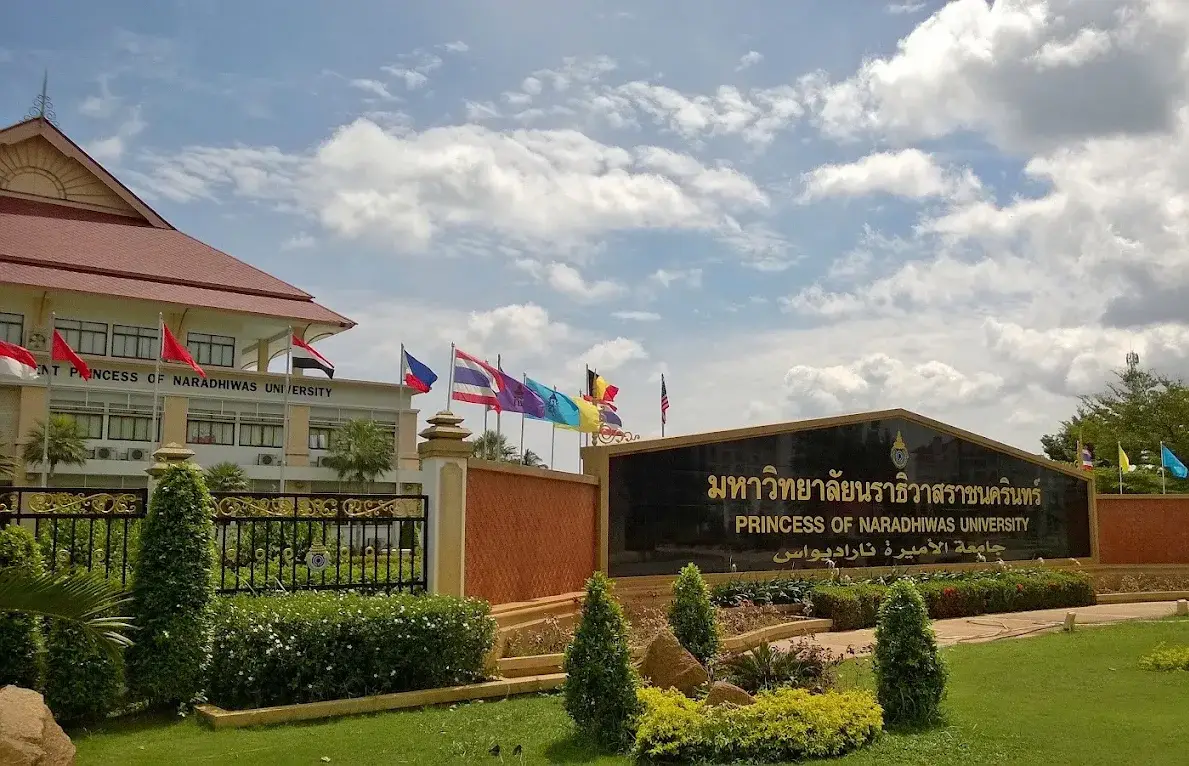
Open Days: Monday – Friday (Administrative Offices and General Services, excluding public holidays)
Opening Hours: 08:30 – 16:30 (Administrative Office Hours)
Princess of Naradhiwas University (PNU), known in Thai as Mahawitthayalai Narathiwat Ratchanakharin, is a public university in Narathiwat Province, southern Thailand. Officially established on 9 February 2005 through the integration of four existing educational institutions, the university was created to expand access to higher education and vocational training in Thailand's southern border provinces. Its academic disciplines encompass engineering, science and technology, agriculture, management, liberal arts, medicine, nursing, Islamic studies, and Arabic language education. With a strong emphasis on community development, public health, innovation, and multicultural understanding, the university has become an important institution for developing skilled professionals and expanding educational opportunities throughout Narathiwat and neighboring provinces. In 2026, Princess of Naradhiwas University marked its 21st anniversary.
The university's main administrative address is 99 Moo 8, Khok Khian Subdistrict, Mueang Narathiwat District, Narathiwat Province 96000, Thailand. Its principal campus serves as a center for university administration, teaching, research, and academic activities. However, the university also maintains educational units in other parts of the province, reflecting its distinctive origins as a merger of several established institutions. Rather than beginning as an entirely new campus with a single academic specialization, Princess of Naradhiwas University inherited buildings, personnel, teaching resources, and institutional expertise from schools and colleges already serving local communities.
One of the university's defining characteristics is its combination of higher education and vocational training. While many Thai universities focus primarily on undergraduate and graduate degrees, Princess of Naradhiwas University also includes colleges that offer vocational certificates and higher vocational diplomas. This structure provides different educational pathways for students who wish to pursue professional qualifications, develop practical skills, enter the workforce, or continue into degree programs. It also strengthens connections between academic knowledge, technical training, local industries, and community needs.
Narathiwat Province lies in the southernmost region of Thailand and is characterized by coastal environments, agricultural areas, urban communities, and a rich mixture of languages, religions, and cultural traditions. These characteristics shape the university's educational mission. Students are encouraged to develop professional knowledge while understanding the cultural contexts in which that knowledge will be used. Thai, Malay, Arabic, and English are particularly relevant to communication, cultural exchange, and professional opportunities within the region. This environment makes multicultural awareness a practical aspect of education rather than simply an abstract academic subject.
The origins of Princess of Naradhiwas University are closely connected with government efforts to decentralize access to higher education. In 2003, the Thai Cabinet approved in principle the establishment of a university in Narathiwat Province through the integration of existing educational institutions. The intention was to make effective use of established facilities, experienced teachers, equipment, and administrative resources while allowing the new university to undertake a broader academic mission. This approach also preserved the vocational education and professional training already available in the province.
The four institutions integrated into the university were Narathiwat Technical College, Narathiwat College of Agriculture and Technology, Tak Bai Vocational College, and Boromarajonani College of Nursing, Narathiwat. Each contributed a different area of expertise. Narathiwat Technical College provided a foundation in industrial and technical education. Narathiwat College of Agriculture and Technology supported agricultural training and rural development. Tak Bai Vocational College expanded professional and technical opportunities for young people in its district. Boromarajonani College of Nursing, Narathiwat, brought experience in training healthcare personnel. Their integration established a university with a remarkably broad academic and vocational foundation.
The Princess of Naradhiwas University Act B.E. 2548 (2005) was published in the Royal Gazette on 8 February 2005 and took effect on 9 February 2005. The latter date is recognized as the university's official foundation day. The Act provided for the integration of the activities, property, financial resources, obligations, and personnel of the four institutions under the newly established university. This legal transformation marked a significant development in the educational history of Narathiwat, allowing the province to develop a public university with both academic and practical training responsibilities.
Although Princess of Naradhiwas University was formally established in 2005, several of its constituent institutions have much older histories. Narathiwat Technical College was elevated to technical college status on 1 September 1980, while Tak Bai Vocational College was founded in 1997. These earlier dates are important because they demonstrate that vocational and professional education in the province had developed over many years before the university itself was created. The history of Princess of Naradhiwas University is therefore best understood as a combination of an official university foundation date and the longer educational traditions of its constituent institutions.
Assistant Professor Dr. Jongrak Palasai served as the university's first rector and played an important role during its formative years. His responsibilities included helping establish the new university's administrative system, coordinating the integration of existing institutions, and supporting the development of academic facilities. He had previously been involved in founding Tak Bai Vocational College and served as its first director. His career illustrates the continuity between the province's earlier vocational education initiatives and the subsequent development of a public university.
After its establishment, the university gradually developed facilities at Khok Khian while retaining specialized educational sites associated with its original colleges. Academic buildings, administrative offices, and shared facilities were developed to support a growing range of disciplines and institutional activities. This process allowed the university to build a recognizable central campus without abandoning the experience and facilities inherited from its constituent institutions. The result is a university with both a principal administrative center and educational units serving different parts of Narathiwat Province.
The development of the university's commemorative and ceremonial buildings was another important stage in its physical growth. Such facilities provide spaces for formal university events, meetings, academic gatherings, and activities involving large numbers of students and staff. They also contribute to the university's architectural identity. Alongside lecture halls and laboratories, these shared spaces represent the transition from a collection of separate colleges into a unified higher education institution.
The university's name honors Her Royal Highness Princess Galyani Vadhana, Princess of Naradhiwas, whose royal title is closely connected to the institution's identity. On 2 September 2006, members of the university council were granted an audience to report on the university's development and seek permission to use the royal monogram as its emblem. This event was a defining moment in the establishment of the university's official identity and remains reflected in its symbols, publications, buildings, and ceremonies.
The university emblem incorporates the royal monogram “ก.ว.” in sea-blue coloring, together with a gold crown and a white ribbon edged in gold. The university's name appears below the emblem. Its official colors are gold and sea blue, also described as turquoise or blue-green. Gold symbolizes prestige, progress, and achievement, while sea blue is associated with the Princess's royal color. These colors are used throughout the institution's visual identity and carry historical significance beyond their decorative appearance.
The university's official tree and flower are the Spanish cherry tree and its blossoms, known in Thai as the pikun tree and pikun flower. The fragrant, creamy-white flowers represent purity, virtue, wisdom, and the enduring qualities expected of graduates. Their delicate petals are associated with intellectual sharpness, while their lasting fragrance symbolizes goodness that remains with a graduate even after leaving the university. The tree also has a connection with local language and geography: in Malay, it is known as tanjong, a name associated with Tanyong Mountain in Narathiwat Province.
Princess of Naradhiwas University places importance on producing knowledgeable and ethical graduates, conducting research, developing innovation, and providing academic services that benefit society. Its strategic plan for the fiscal years 2026–2030 emphasizes six areas: sustainable quality education, research and innovation, knowledge services, healthcare services, multicultural society, and organizational excellence. These priorities demonstrate that the university regards community development and public service as essential elements of its institutional mission, alongside classroom teaching and professional education.
The university's academic structure includes seven faculties: the Faculty of Engineering, Faculty of Science and Technology, Faculty of Management Sciences, Faculty of Agriculture, Faculty of Liberal Arts, Faculty of Nursing, and Faculty of Medicine. It also includes the Academy of Islamic and Arabic Studies and three vocationally oriented colleges: Narathiwat Technical College, Narathiwat College of Agriculture and Technology, and Tak Bai Vocational College. Together, these units offer students a broad range of educational pathways and professional specializations.
The Faculty of Engineering develops professionals with technical and analytical skills relevant to industry, infrastructure, manufacturing, energy, and digital technology. Its undergraduate disciplines include mechanical engineering, electrical engineering, civil engineering, industrial engineering, and computer engineering. Students in these fields study mathematical and scientific foundations while learning to design systems, solve engineering problems, and apply theoretical knowledge through practical work. Their expertise can support both regional development and employment opportunities in industries beyond Narathiwat Province.
The Faculty of Science and Technology provides an academic foundation for scientific learning, applied research, and technological development. Its fields include general science, biology, applied science, and interdisciplinary subjects related to food, innovation, and education. Science education is especially important to the university because it supports other disciplines, including engineering, agriculture, medicine, and health sciences. Research and practical learning in these fields also contribute to understanding local environmental conditions, food resources, and community needs.
The Faculty of Management Sciences prepares graduates for careers in business administration, accounting, management, organizational development, and digital business. These fields are particularly relevant to the southern border provinces, where local entrepreneurship, service industries, cross-border commercial activity, and small businesses contribute to regional economic life. Students develop knowledge that can be applied to public administration, private enterprises, financial management, and the use of information technology in organizational operations.
The Faculty of Agriculture supports education and research related to crop production, animal science, agricultural technology, and the sustainable management of natural resources. Agriculture remains important to the economy and livelihoods of many communities in southern Thailand. The faculty's work connects scientific knowledge with agricultural practice, including production efficiency, value-added products, and technological applications. Its relationship with Narathiwat College of Agriculture and Technology also provides opportunities for students to progress from vocational education into advanced agricultural studies.
The Faculty of Liberal Arts contributes to language education, communication skills, social understanding, and general education across the university. Foreign language proficiency is especially valuable in a province shaped by cross-cultural interaction and connections with neighboring countries. The faculty supports students preparing for careers in services, tourism, communication, and other professions requiring effective interaction with people from different linguistic and cultural backgrounds. It also provides general education courses that help students from other faculties develop critical thinking and communication abilities.
The Faculty of Nursing developed from the educational foundation of Boromarajonani College of Nursing, Narathiwat, one of the university's four founding institutions. Nursing education is essential to strengthening healthcare services in the southern border provinces. In addition to clinical knowledge and practical skills, nurses working in the region benefit from cultural sensitivity, effective communication, and an understanding of the needs of diverse communities. The revised Bachelor of Nursing Science curriculum introduced for the 2026 academic year emphasizes holistic nursing care, evidence-based practice, appropriate technology, and patient safety.
The Faculty of Medicine is responsible for educating future physicians and supporting the development of medical knowledge relevant to the population of the southern border region. Medical training requires the integration of basic sciences, clinical experience, professional ethics, and patient-centered care. The faculty's work contributes to the preparation of medical professionals who can understand not only clinical conditions but also the social and cultural circumstances affecting healthcare access and communication with patients.
Princess of Naradhiwas University is also associated with Galyani Vadhana Karun Hospital, which provides medical services and supports the broader healthcare education environment. Hospital operations, outpatient appointments, and emergency services follow schedules that differ from ordinary university office hours. Visitors seeking medical treatment should therefore consult the hospital's own service information rather than assume that all departments follow the university's administrative schedule.
The Academy of Islamic and Arabic Studies reflects the university's close relationship with the languages, religious traditions, and cultural heritage of the southern border provinces. The academy offers undergraduate programs in Islamic Law, Arabic Language through an international program, and Islamic Studies, as well as a master's degree in Islamic Studies. It also provides academic services involving Arabic and Malay language skills, translation, and Islamic knowledge. These activities support both local educational needs and broader intercultural communication.
Narathiwat Technical College preserves the province's long-standing tradition of vocational and industrial education. Its programs include vocational certificates, higher vocational diplomas, and continuing bachelor's degree pathways in selected technological fields. Training in mechanical systems, electricity, electronics, construction, and related technical disciplines enables students to develop practical competencies relevant to employment, business operations, and independent professional work.
Narathiwat College of Agriculture and Technology provides vocational education in agriculture, including plant production, animal-related studies, and agricultural management. Its educational activities help prepare students for careers in farming and agricultural enterprises while supporting the application of modern technology to traditional livelihoods. Continuing degree pathways in agricultural innovation also allow students to extend their vocational qualifications into higher education.
Tak Bai Vocational College was founded in 1997 in Tak Bai District, Narathiwat Province, and later became part of Princess of Naradhiwas University. The college has a significant role in providing vocational qualifications and employment-related skills to young people in the district. It has offered vocational certificate and higher vocational diploma education as well as dual-education opportunities linking general secondary education with vocational learning. This work reflects the university's commitment to making education accessible beyond its principal campus.
Student traditions and university activities play an important role in connecting the university's different faculties, colleges, and generations of students. Important activities include new student orientations, Wai Khru ceremonies honoring teachers, university foundation celebrations, and sporting events. Between 9 and 13 February 2026, the university celebrated its 21st anniversary through open-house activities, academic competitions, innovation exhibitions, contests, and other public programs. These events allowed prospective students, schools, and members of the public to learn more about the university's educational opportunities and achievements.
The Wai Khru ceremony is a traditional Thai educational practice through which students express respect and gratitude toward their teachers. At a university that includes technical and vocational disciplines, traditions honoring teachers of practical crafts and engineering skills also have particular significance. These ceremonies reinforce the relationship between knowledge, professional ethics, respect for educators, and responsibility toward one's chosen occupation.
The university's sporting events, including the Pikun Games, take their name from the university's symbolic flower. Such activities promote physical health, teamwork, sportsmanship, and connections among students from different academic units. Because the university incorporates faculties and colleges with varied institutional histories and locations, shared activities are important for building a sense of belonging and a common university identity.
Visitors interested in the history of education in Narathiwat can explore the university's historical exhibitions. The university maintains several spaces dedicated to its history, including an exhibition in the Office of the President, a university history room in the Learning Resources Building, and a larger history exhibition at Narathiwat Technical College. These spaces present photographs, institutional records, accounts of the university's establishment, information about important figures, and materials documenting the development of its campuses.
The university history room on the first floor of the Learning Resources Building presents the university's foundation, founding figures, campus development, and commemorative materials. The larger historical exhibition at Narathiwat Technical College includes information about Narathiwat Province, the rebuilding of educational buildings affected by unrest in the southern border provinces, and the physical development of the institution. These exhibitions provide an opportunity to understand both the university's institutional development and the wider social circumstances in which it operates.
The university's historical exhibitions are open to students, staff, and members of the public free of charge during regular government working hours, Monday to Friday, from 08:30 to 16:30. Groups planning educational visits are encouraged to coordinate in advance with the university's public relations office. The exhibitions are particularly suitable for students, educators, researchers, and visitors interested in the development of education and society in southern Thailand.
The university mosque is another significant place within its educational environment. It accommodates religious activities and reflects the needs of the multicultural community served by the institution. The presence of a mosque on campus illustrates the importance of incorporating cultural and religious considerations into the university environment. Visitors should respect the university's access rules and avoid disrupting religious activities when visiting areas associated with worship.
Research and academic services at Princess of Naradhiwas University are closely connected with regional development. Fields of interest include agriculture, environmental management, food technology, engineering, community development, languages, and healthcare. The university's emphasis on practical applications encourages the use of knowledge to address problems faced by local residents, farmers, businesses, and public institutions. Such work helps connect teaching and research with the everyday needs of the communities surrounding the university.
In healthcare, collaboration among medicine, nursing, and related service units supports the development of professional skills and regional health services. Effective healthcare in culturally diverse communities requires more than medical expertise alone. Professionals must also understand language differences, cultural practices, patient dignity, and appropriate communication. The university's healthcare disciplines therefore operate within a broader educational context that recognizes the connection between professional knowledge and society.
In agriculture, the university can draw upon the combined expertise of its Faculty of Agriculture and Narathiwat College of Agriculture and Technology to support agricultural training and community development. Improved production methods, appropriate technology, processing, and value-added agricultural products are important areas for regional economic development. Engineering and technological knowledge can further support these efforts through the improvement of equipment, production systems, and workplace processes.
The university's contributions to language education and cultural understanding are particularly visible through the Academy of Islamic and Arabic Studies. Language education, translation services, and academic engagement with Islamic knowledge help preserve local cultural heritage while improving opportunities for communication beyond the region. These activities are important for young people preparing to work in a society where local identity and international communication increasingly intersect.
For educational tourism, Princess of Naradhiwas University offers opportunities to learn about the history of a public university formed through institutional integration, vocational education in southern Thailand, and multicultural approaches to academic development. Visiting the university's history exhibitions and attending public open-house events are practical ways to gain insight into campus life. Visits to laboratories, medical facilities, vocational workshops, and restricted academic areas should be arranged through the relevant faculty or department.
Visitors may also combine an educational visit with sightseeing in Narathiwat Province. Well-known places include Narathat Beach, the waterfront market area, public parks, and Ao Manao–Khao Tanyong National Park. Such attractions provide different perspectives on the province's coastal environment, local communities, and recreational spaces. Travelers should plan their routes according to the specific university building or campus they intend to visit because some faculties and colleges are located separately.
Getting There is possible by private car, rental car, or local taxi. Travelers visiting the main administrative campus should use the destination Princess of Naradhiwas University, Office of the President, 99 Moo 8, Khok Khian Subdistrict, Mueang Narathiwat District, Narathiwat 96000. Visitors arriving by air can travel to Narathiwat Airport and continue to the university by road. Because the university has several educational locations, it is important to confirm the exact faculty, college, or exhibition venue before departure rather than assume that every department is situated at the main campus.
For administrative inquiries, document requests, admissions-related visits, and general office services, the normal visiting schedule is Monday to Friday, 08:30–16:30, excluding official public holidays. These hours should not be interpreted as applying to every university facility. Libraries, hospitals, laboratories, sporting venues, classrooms, and special events may have different schedules. Visitors should contact the appropriate department when planning a visit involving a specific service or restricted facility.
Today, Princess of Naradhiwas University represents an important chapter in the educational development of Thailand's southern border provinces. Since the integration of four institutions in 2005, it has developed a diverse academic structure combining higher education, vocational training, professional development, research, and public service. Its continuing significance lies in expanding access to education, preparing skilled professionals, supporting communities, and encouraging understanding across cultural differences. These contributions make the university an important institution not only for Narathiwat Province but also for the wider development of southern Thailand.
| University Name | Princess of Naradhiwas University (PNU) |
| Thai Name | มหาวิทยาลัยนราธิวาสราชนครินทร์ |
| Institution Type | Public University |
| Location | Khok Khian Subdistrict, Mueang Narathiwat District, Narathiwat Province, Thailand |
| Main Administrative Address | 99 Moo 8, Khok Khian, Mueang Narathiwat, Narathiwat 96000, Thailand |
| Foundation Date | 9 February 2005 |
| Establishment | Princess of Naradhiwas University Act B.E. 2548 (2005), published on 8 February 2005 and effective on 9 February 2005 |
| Institutional Age | 21 Years in 2026 |
| Founding Institutions | Narathiwat Technical College, Narathiwat College of Agriculture and Technology, Tak Bai Vocational College, and Boromarajonani College of Nursing, Narathiwat |
| First Rector | Assistant Professor Dr. Jongrak Palasai |
| Rector | Assistant Professor Dr. Preecha Salaemae |
| University Emblem | Royal Monogram ก.ว. in Sea Blue with a Gold Crown and Decorative Ribbon |
| Official Colors | Gold and Sea Blue (Turquoise) |
| Official Tree and Flower | Pikun / Spanish Cherry (Mimusops elengi) |
| Faculties | Engineering, Science and Technology, Management Sciences, Agriculture, Liberal Arts, Nursing, and Medicine |
| Specialized Academic Institute | Academy of Islamic and Arabic Studies |
| Colleges | Narathiwat Technical College, Narathiwat College of Agriculture and Technology, and Tak Bai Vocational College |
| Study Levels | Vocational Certificate, Higher Vocational Diploma, Bachelor's Degree, Graduate Diploma, and Master's Degree, depending on the academic program |
| Academic Strengths | Engineering, Technology, Agriculture, Science, Business, Languages, Multicultural Studies, Medicine, Nursing, and Islamic Studies |
| Notable Campus Facilities | Office of the President, Learning Resources Building, University History Exhibitions, University Mosque, Faculty Buildings, Sports Facilities, and Galyani Vadhana Karun Hospital |
| University Activities | University Foundation Day, Wai Khru Ceremonies, Student Orientation, Pikun Games, Academic Competitions, and University Open House |
| Administrative Open Days | Monday – Friday, Excluding Public Holidays |
| Administrative Opening Hours | 08:30 – 16:30 |
| University History Exhibitions | Monday – Friday, 08:30 – 16:30; Free Admission. Group visits should be arranged in advance. |
| Campus Facilities | Academic Buildings, Laboratories, Learning Resources, Sports Areas, Healthcare Facilities, and Academic Event Spaces |
| Main Contact Number | +66 73 709 030 |
| Group History Visit Contact | +66 82 829 1121 |
| Official Website | https://www.pnu.ac.th/ |
| Getting There | By private car, rental car, or local taxi. Visitors arriving at Narathiwat Airport can continue to the main campus by road. |
| Nearby Places of Interest | Road distances below are referenced from the Faculty of Medicine at Princess of Naradhiwas University. 1. University Stadium – Approximately 2.2 km 2. Commemorative Public Park – Approximately 4.1 km 3. Waterfront Market – Approximately 6.4 km 4. Narathat Beach – Approximately 7.3 km 5. Ao Manao–Khao Tanyong National Park – Approximately 11.5 km |
| Restaurants in the Area | Tai Ton Mamuang Restaurant, Peip Restaurant, Khrua Lom Choi, Kaya Sam Yaek Ban Bue Ra Pe, and Nara Halal Barbecue Restaurant |
| Accommodation in the Area | Green View Resort, Marisa Apartment, Xami Place, Heaven Thon Pool Villa, and Really Kind |
| Current Status | Operating as a Public University in 2026 |
Academic Programs and Fields of Study at Princess of Naradhiwas University, Academic Year 2026
| Faculty, College, or Institute | Academic Programs and Fields of Study |
| Faculty of Engineering | Bachelor's Degrees: Mechanical Engineering, Electrical Engineering, Civil Engineering, Industrial Engineering, and Computer Engineering Master's Degree: Technology and Innovation Management |
| Faculty of Science and Technology | Bachelor's Degrees: General Science, Biology, and Food Innovation and Technology Master's Degree: Applied Biology Graduate Diploma: Teaching Profession |
| Faculty of Management Sciences | Bachelor's Degrees: Management, Accountancy, Digital Marketing, and Business Administration and Information Technology Management-related Fields Master's Degree: Public and Private Sector Management Innovation |
| Faculty of Agriculture | Bachelor's Degree: Agriculture Master's Degree: Agricultural Technology and Innovation |
| Faculty of Liberal Arts | Bachelor's Degrees: English and Foreign Languages for Service Business Master's Degree: Teaching English |
| Faculty of Nursing | Bachelor's Degree: Nursing Science, Revised Curriculum 2026 Master's Degree: Adult and Elderly Nursing Certificate Program: Practical Nursing Assistant |
| Faculty of Medicine | Professional Degree: Doctor of Medicine (M.D.) |
| Academy of Islamic and Arabic Studies | Bachelor's Degrees: Islamic Law, Arabic Language (International Program), and Islamic Studies Master's Degree: Islamic Studies |
| Narathiwat Technical College | Vocational Certificates and Higher Vocational Diplomas in Industrial, Technical, and Technology-related Fields Continuing Bachelor's Degrees: Mechanical Technology, Electrical Technology, and Civil Technology |
| Narathiwat College of Agriculture and Technology | Vocational Certificates and Higher Vocational Diplomas in Agriculture, Plant Science, and Animal Science Continuing Bachelor's Degree: Agricultural Innovation |
| Tak Bai Vocational College | Vocational Certificates and Higher Vocational Diplomas in Professional and Technology-related Fields, including Dual-Education Pathways |
Frequently Asked Questions (FAQ)
Q: Where is Princess of Naradhiwas University located?
A: The main administrative campus is located at 99 Moo 8, Khok Khian Subdistrict, Mueang Narathiwat District, Narathiwat Province 96000, Thailand. Some faculties and colleges operate at separate locations.
Q: What are the opening days and hours of Princess of Naradhiwas University?
A: General administrative offices operate Monday through Friday from 08:30 to 16:30, excluding official public holidays. Teaching facilities, hospital services, and other departments may follow different schedules.
Q: When was Princess of Naradhiwas University established?
A: The university was officially established on 9 February 2005 under the Princess of Naradhiwas University Act B.E. 2548 (2005).
Q: Which institutions were merged to establish the university?
A: The four founding institutions were Narathiwat Technical College, Narathiwat College of Agriculture and Technology, Tak Bai Vocational College, and Boromarajonani College of Nursing, Narathiwat.
Q: What faculties are available at Princess of Naradhiwas University?
A: The university has seven faculties covering Engineering, Science and Technology, Management Sciences, Agriculture, Liberal Arts, Nursing, and Medicine. It also includes the Academy of Islamic and Arabic Studies and three colleges.
Q: Can members of the public visit the university's history exhibitions?
A: Yes. The university's historical exhibitions are open to the public free of charge from Monday to Friday, 08:30 to 16:30. Group visits should be arranged in advance.
Q: What are the university's official colors and flower?
A: The official colors are gold and sea blue or turquoise. The university's symbolic tree and flower are the pikun tree and pikun flower, also known as Spanish cherry.
Q: How can I contact Princess of Naradhiwas University?
A: The main telephone number is +66 73 709 030. Official news, academic programs, admissions information, and departmental contacts are available at https://www.pnu.ac.th/.
 Category: ●University
 Group: ●Public university
Last Update : 2 DayAgo
 Last Update : 2 DayAgo
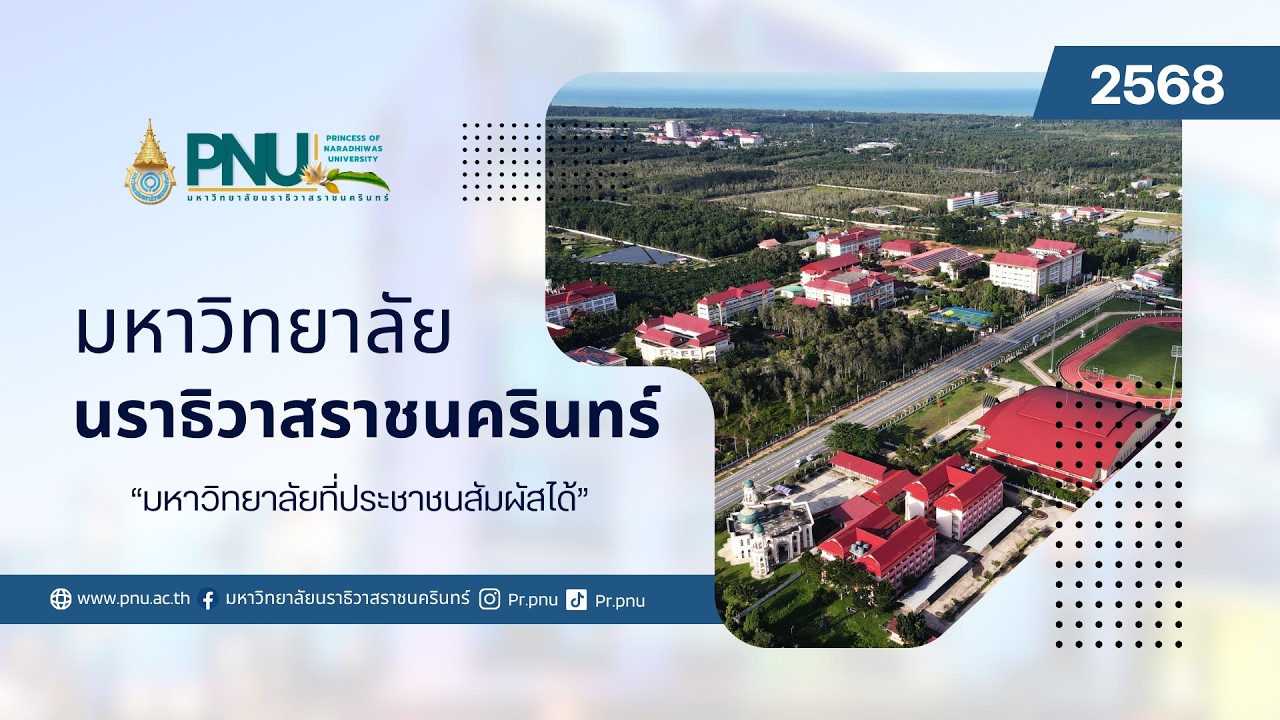
 Click to Access the Navigation Map GPS
Princess of Naradhiwas University Map

 Art, Culture and Heritage
 Landmarks and Memorials(8)
 Royal Palace(1)
 Art, Craft Centres, Tradition(7)
 Museums(4)
 Art Gallery(1)
Public university(1)
 Places of Worship
 Temple(16)
 Mosque(23)
 Other Sacred Sites(5)
 Research and Development
 Royal Project(1)
 Suburban Living
 Village, Community(9)
 Local Market(1)
 Nature and Wildlife
 National Parks and Marine Reserves(5)
 Mountain (Doi)(2)
 Dam, Reservoir, Lake(2)
 Waterfalls(16)
 River, Canal(3)
 Bays and Beaches(5)
 Islands(1)
 Other natural attractions(4)
 Entertainment and Agricultural
 Stadium(1)
 Farms, Parks and Ecotourism(7)
 Shopping
 Shopping and Night Market(1)
 Travel Articles, Recipes
 Travel Review, Food Review(1)


